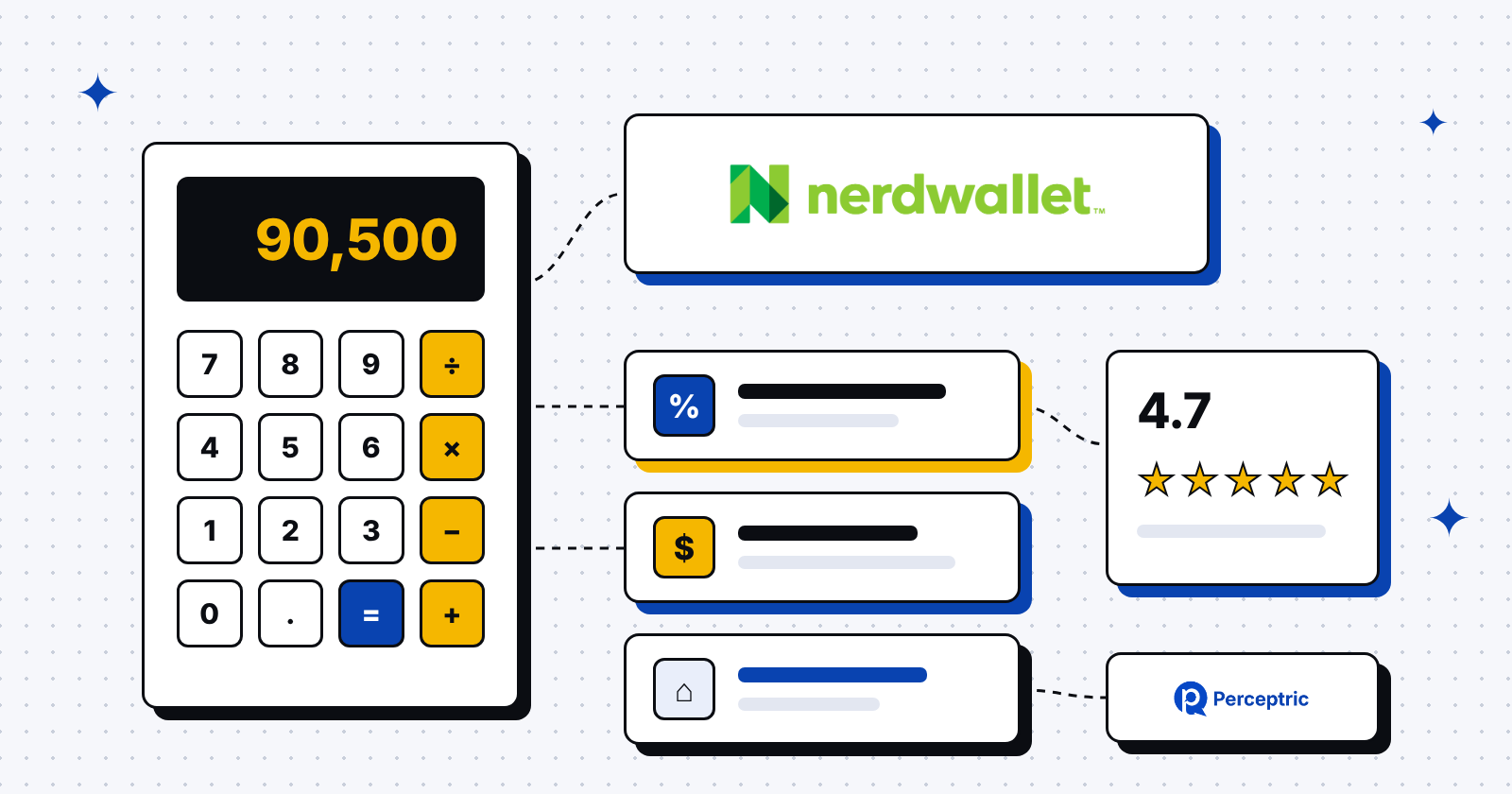
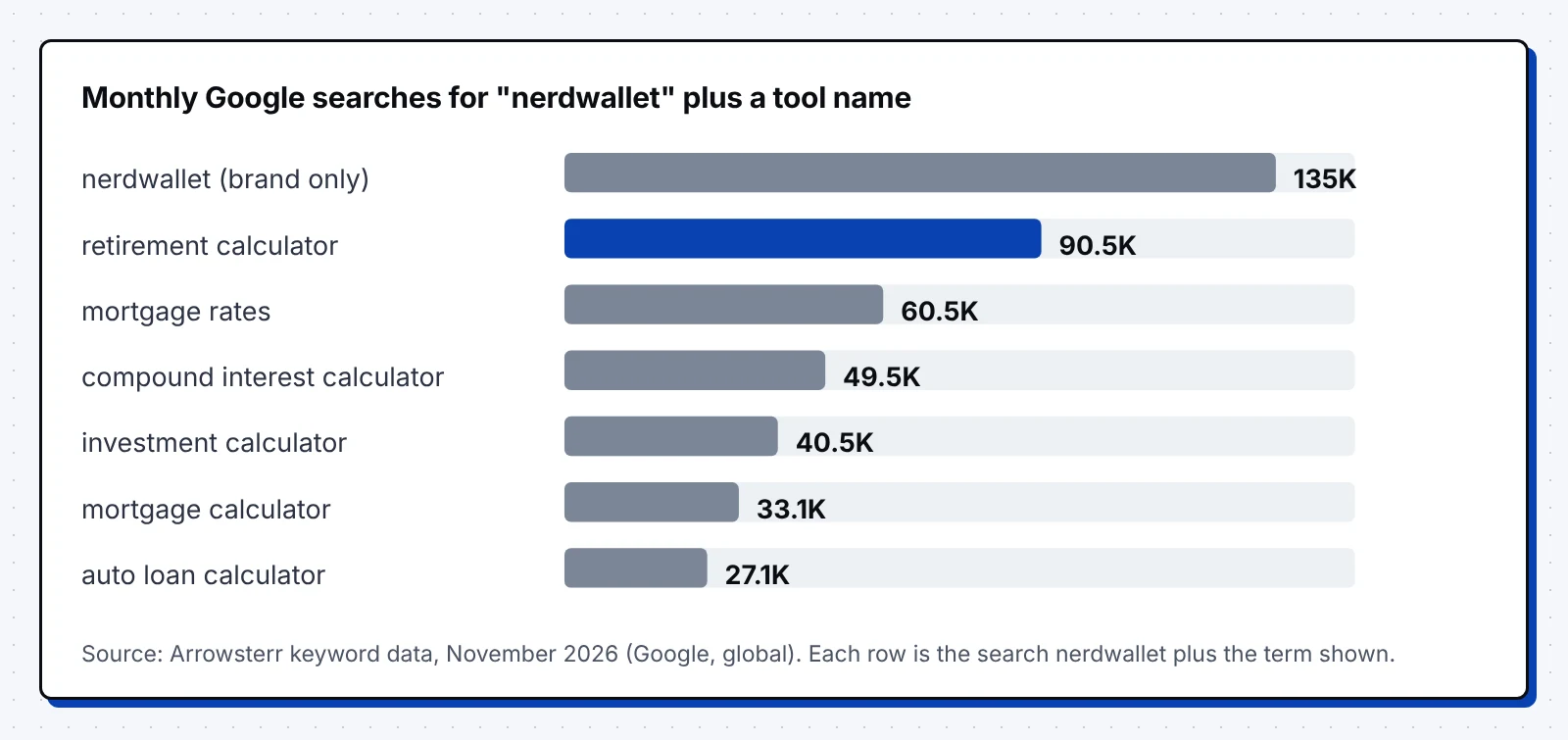
NerdWallet built its SEO around money decisions and gave each decision a page that does the math or makes the call. People now search for those pages by name, and "nerdwallet retirement calculator" draws 90,500 Google searches a month (Arrowsterr keyword data, November 2026).
That is two thirds of the 135,000 monthly searches for the brand name alone, so the tools have become a large part of the brand.
From a credit card spreadsheet to a public company
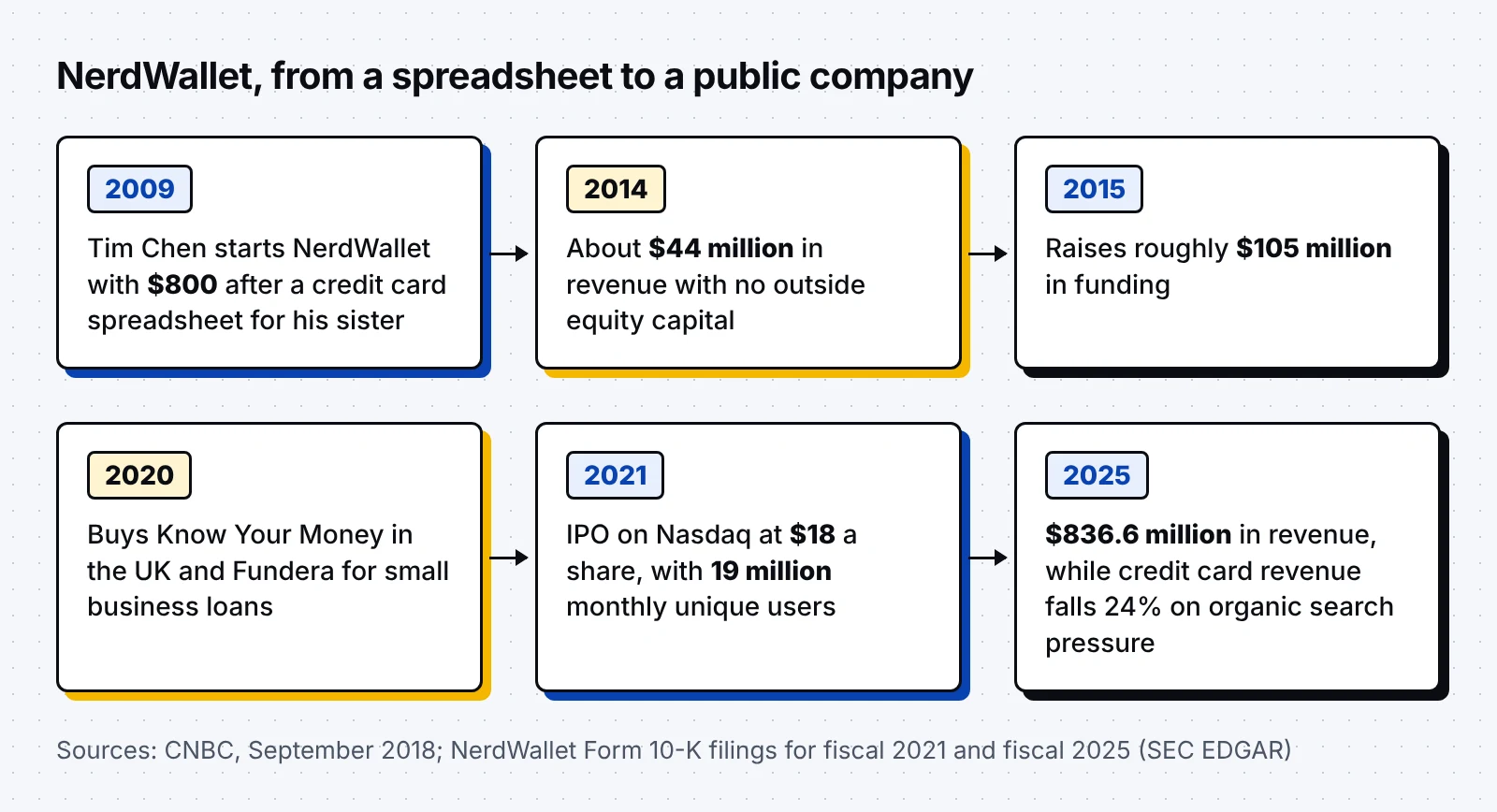
NerdWallet helps consumers and small businesses compare financial products and earns referral fees from the providers they choose. Founder Tim Chen was laid off in 2008 during the financial crisis.
His sister in Australia asked him which credit card had lower foreign transaction fees. Compiling what the big banks offered took him a week, so he sent her an Excel spreadsheet.
The spreadsheet spread far beyond his family, and Chen found little on Google besides marketing material. He spent $800 on hosting, a domain and software and started NerdWallet in 2009.
The site made about $75 in its first year and around $60,000 in its second. By mid-2010, both visitors and revenue on the site were tripling from month to month.
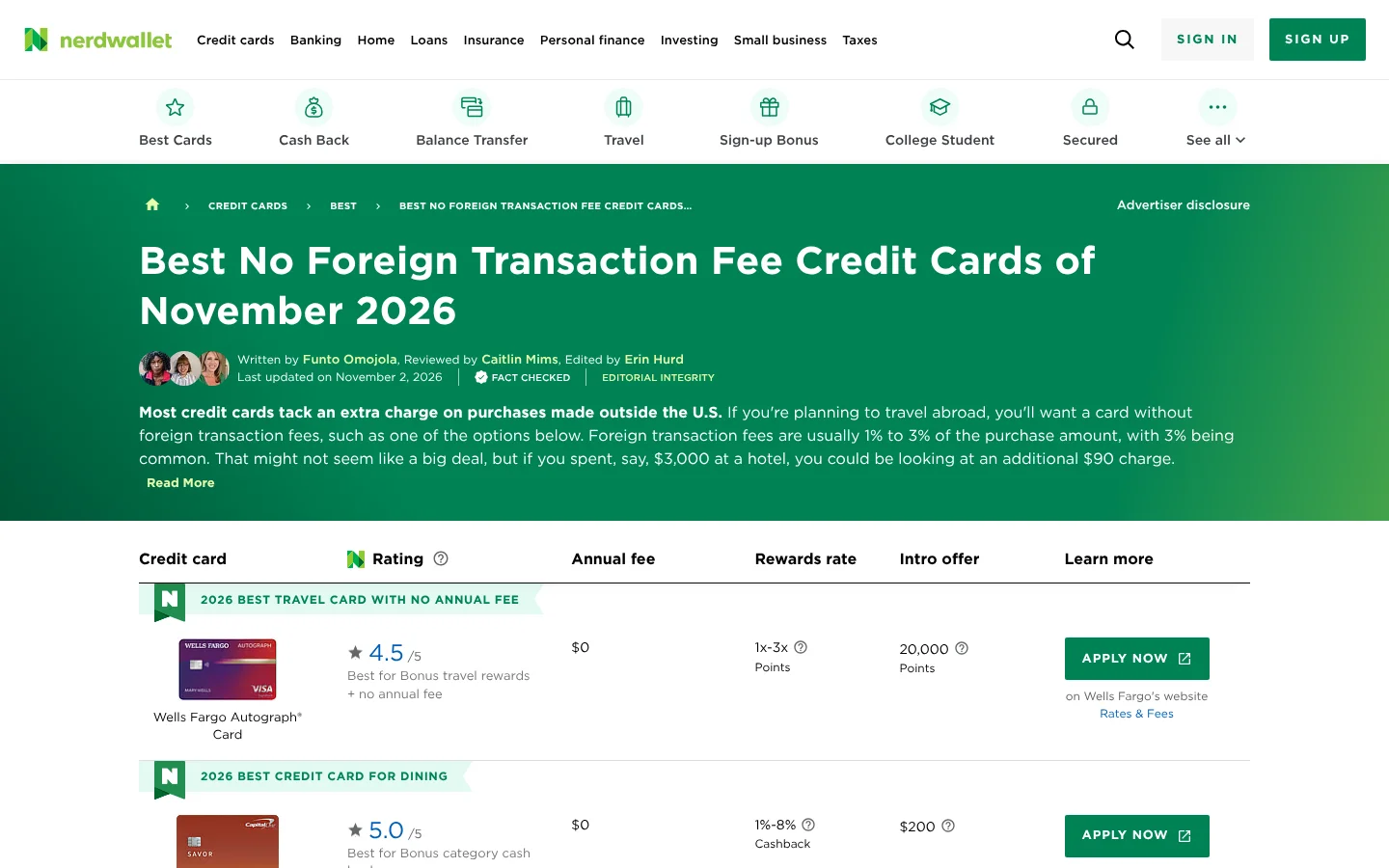
The best no foreign transaction fee credit cards list still answers his sister's question, with a named writer, reviewer and editor on the page.
NerdWallet reached about $44 million in revenue in 2014 with no outside equity capital, then raised roughly $105 million in 2015.
In 2020 it bought Know Your Money in the UK and Fundera for small business loans. In November 2021, NerdWallet listed on Nasdaq at $18 a share and raised $140.0 million in net proceeds.
That year, over 70% of all traffic came through direct or unpaid channels such as organic search. The site averaged 19 million monthly unique users, up 23% from 2020.
The 2023 and 2024 filings repeat the over 70% figure, and monthly unique users averaged 23 million in 2023.
NerdWallet's keyword strategy: one page type for each step of a money decision
NerdWallet's keywords follow the order in which people make a money decision. They run their numbers, check today's rates, look at the best options and then read about the one they like.
Each of those steps has its own search pattern, and NerdWallet answers each pattern with its own page type:
- Searches for a calculator, such as "retirement calculator" or "auto loan calculator," get a free tool with that phrase as its title.
- Searches for rates, such as "mortgage rates," get a rate table with the day's date in its title.
- Searches that start with "best" get a list for one need, such as credit cards with no foreign transaction fee.
- Searches for a product name plus "review" get a full review with a star rating, a verdict and the drawbacks.
Each page type fits what the searcher wants at that moment. Someone typing "compound interest calculator" wants an answer for their own numbers, and a tool gives it faster than any article can.
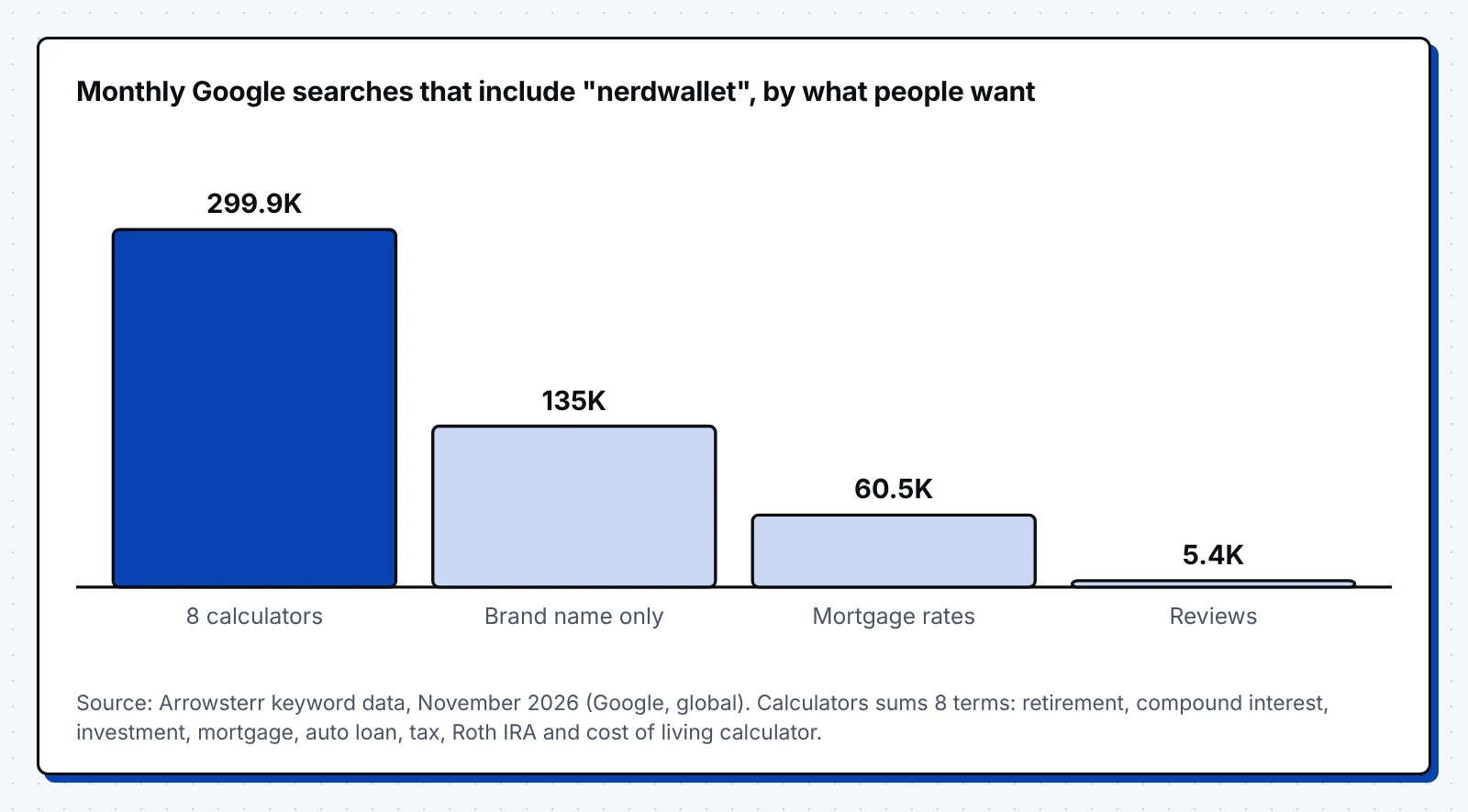
The branded searches show how far the tools have gone. Eight NerdWallet calculators draw about 300,000 searches a month that include the brand name, more than twice the searches for the name on its own.
Branded searches for reviews are much smaller, at 5,400 a month for "nerdwallet reviews." Review and best-of pages earn their visits on searches where people name the product or the need.
NerdWallet's 2021 10-K says its editorial team builds pages for FAQs, featured snippets and video results, and organic marketing personnel costs rose 33% that year.
The strategy also compounds, because each page type helps the others:
- Every tool people search for by name makes the brand stronger, and a known brand earns more clicks on each new page it ranks.
- Calculators link to related tools, best-of lists link into reviews, and hubs group tools by topic, so readers and authority reach the pages that earn money.
- Bylines, review dates and published methods appear across every page type, which matters for advice about people's money.
- NerdWallet earns referral fees when users pick a product, so the tool, the rate table and the review all sit close to an offer.
Play 1: calculators that answer a money question
NerdWallet built free tools for the questions people face before a money decision, from retirement savings to the monthly cost of a car loan.
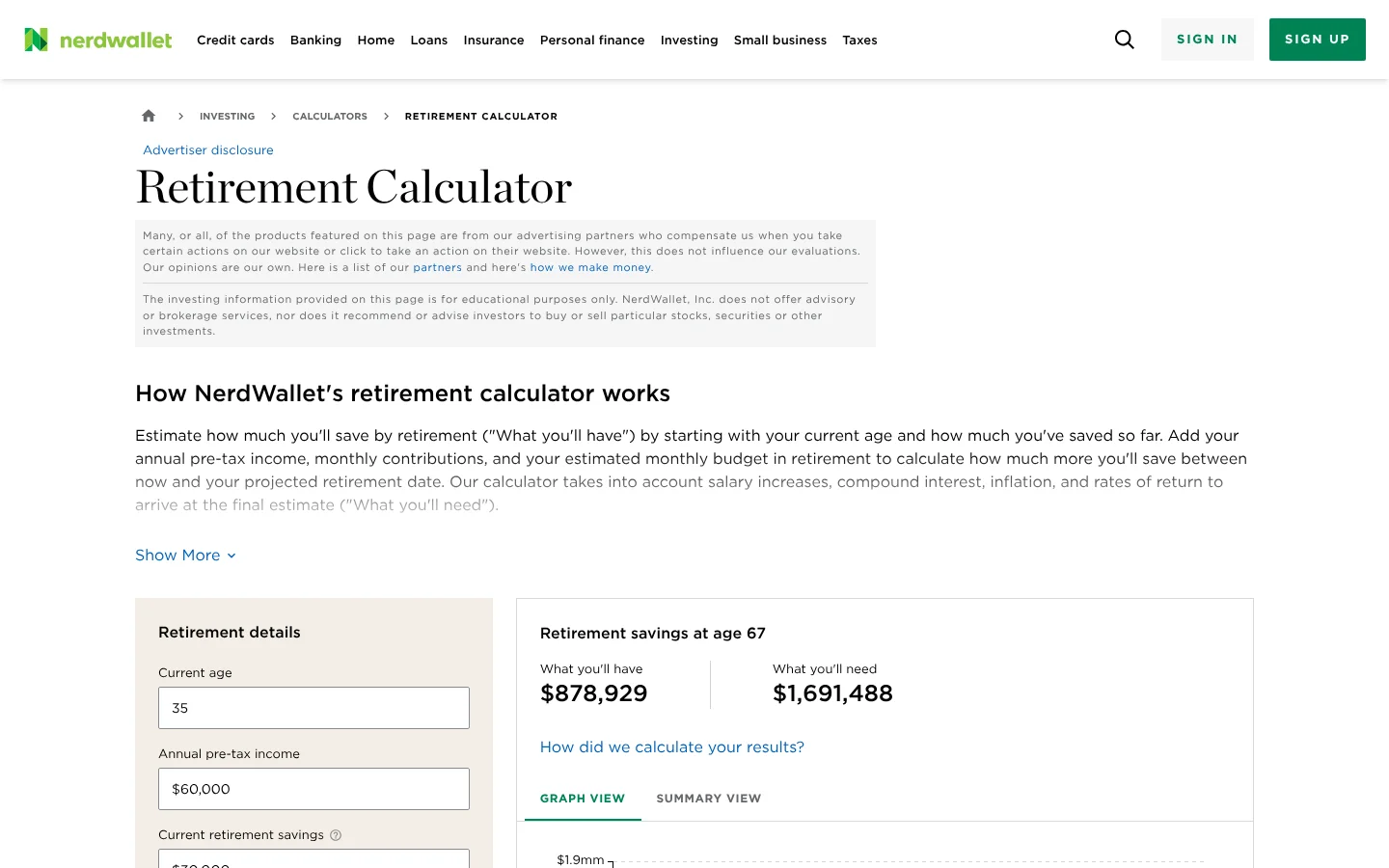
The retirement calculator uses the exact phrase people type, "Retirement Calculator," as its H1, and lists every default above the form.
It assumes retirement at 67, a 6% return before retirement and 5% during it, 3% inflation, 2% yearly raises and a life expectancy of 95. A named writer and editor sign the page, which was fact-checked on June 17, 2026.
A tool answers the search in one visit and gives people a reason to come back when their numbers change. Plain sections below the tool explain each field for readers and for Google.
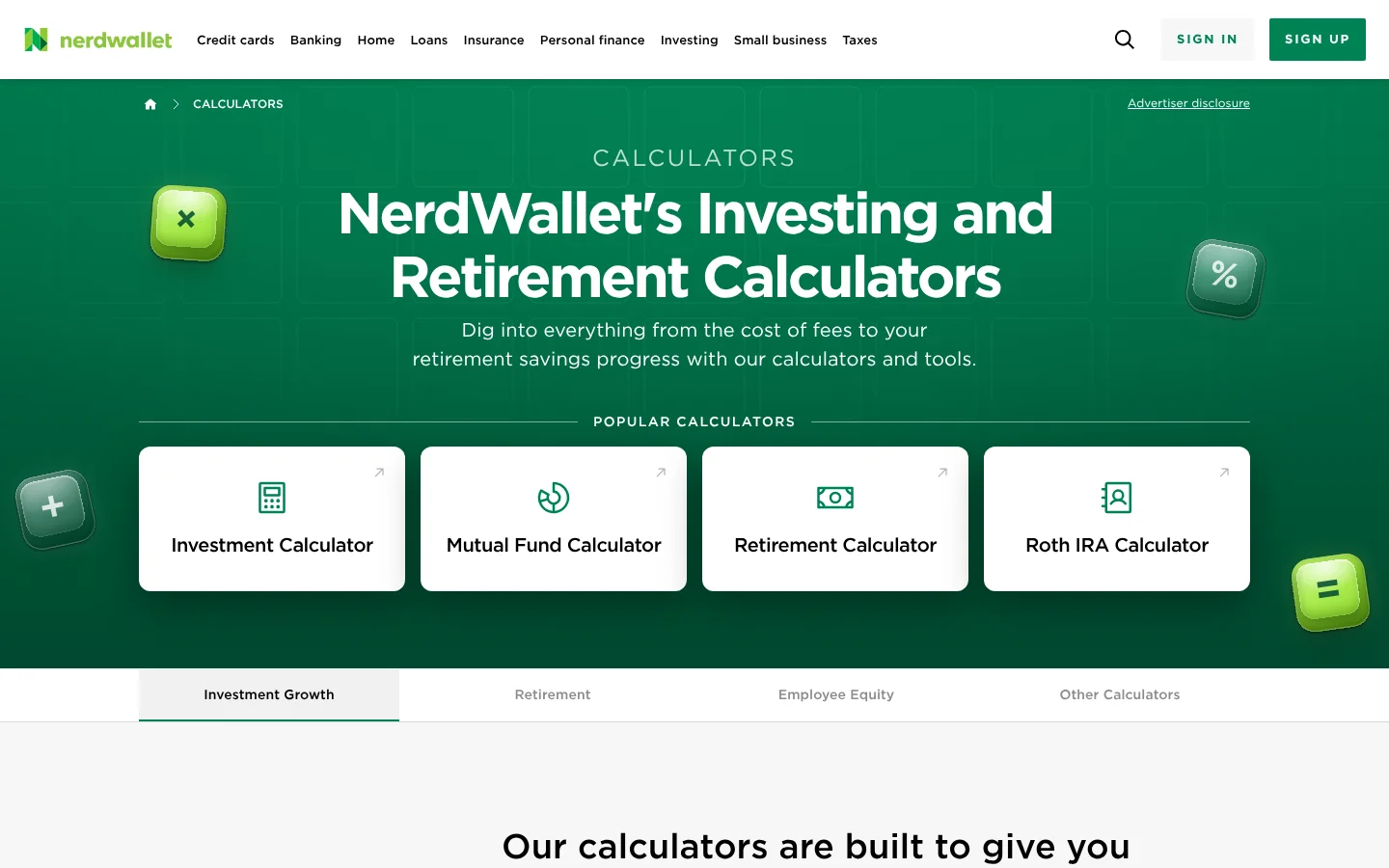
The investing calculators hub groups tools by investment growth, retirement and employee equity. Tool pages such as the compound interest calculator link out to more tools.
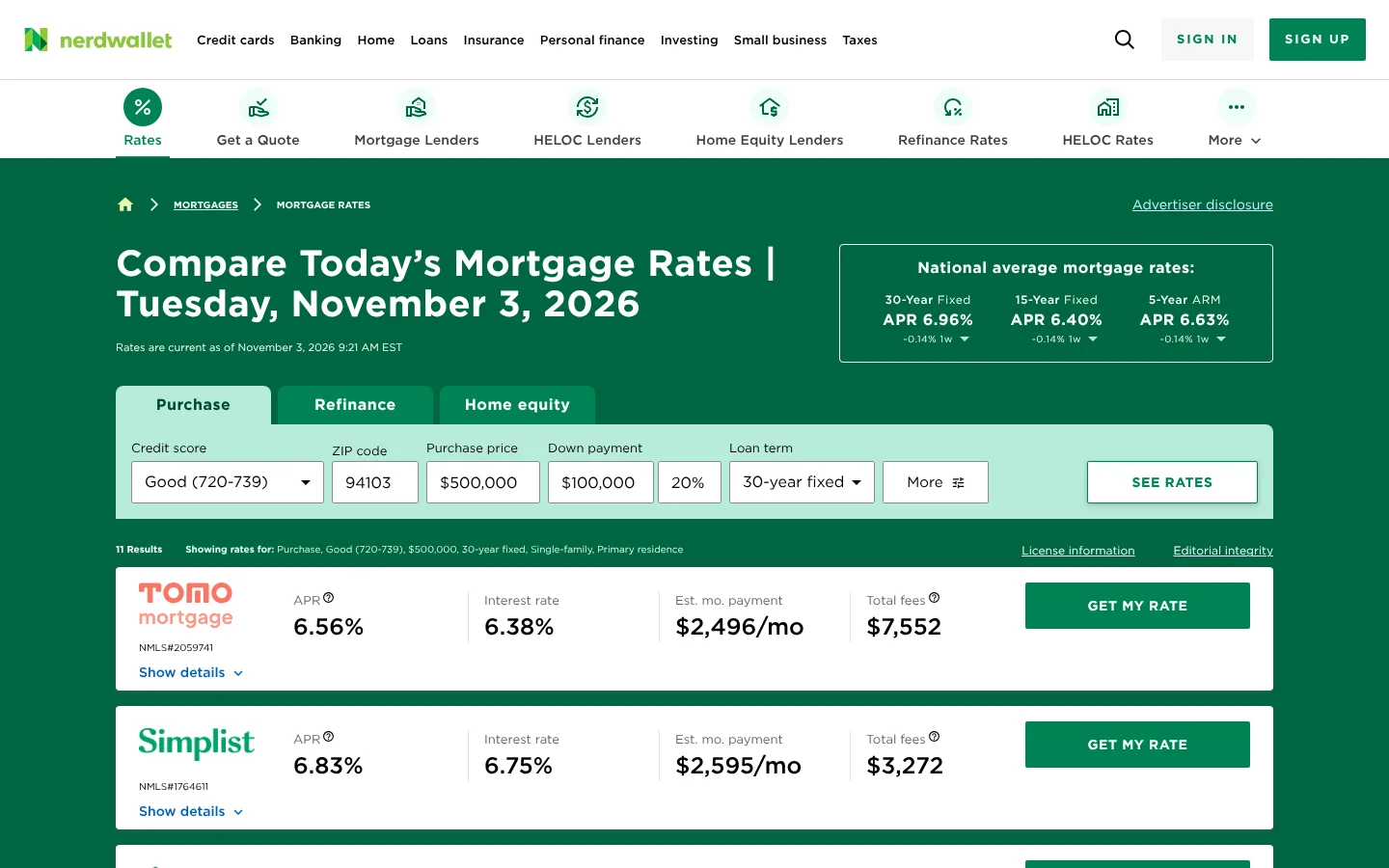
The mortgage rates page carries the day's date in its title, so searchers can see the rates are fresh before they click. It adds an FAQ and links to more mortgage tools.
For a B2B team, the same play is a pricing, ROI or payback calculator named after the phrase your buyers type. List your assumptions in plain words above the form, and sign the tool like an article.
Play 2: reviews and best-of lists for every product
NerdWallet writes a review for each product people consider, then groups the products into best-of lists for each need. The lists catch the early "best" searches and send readers on to the reviews.
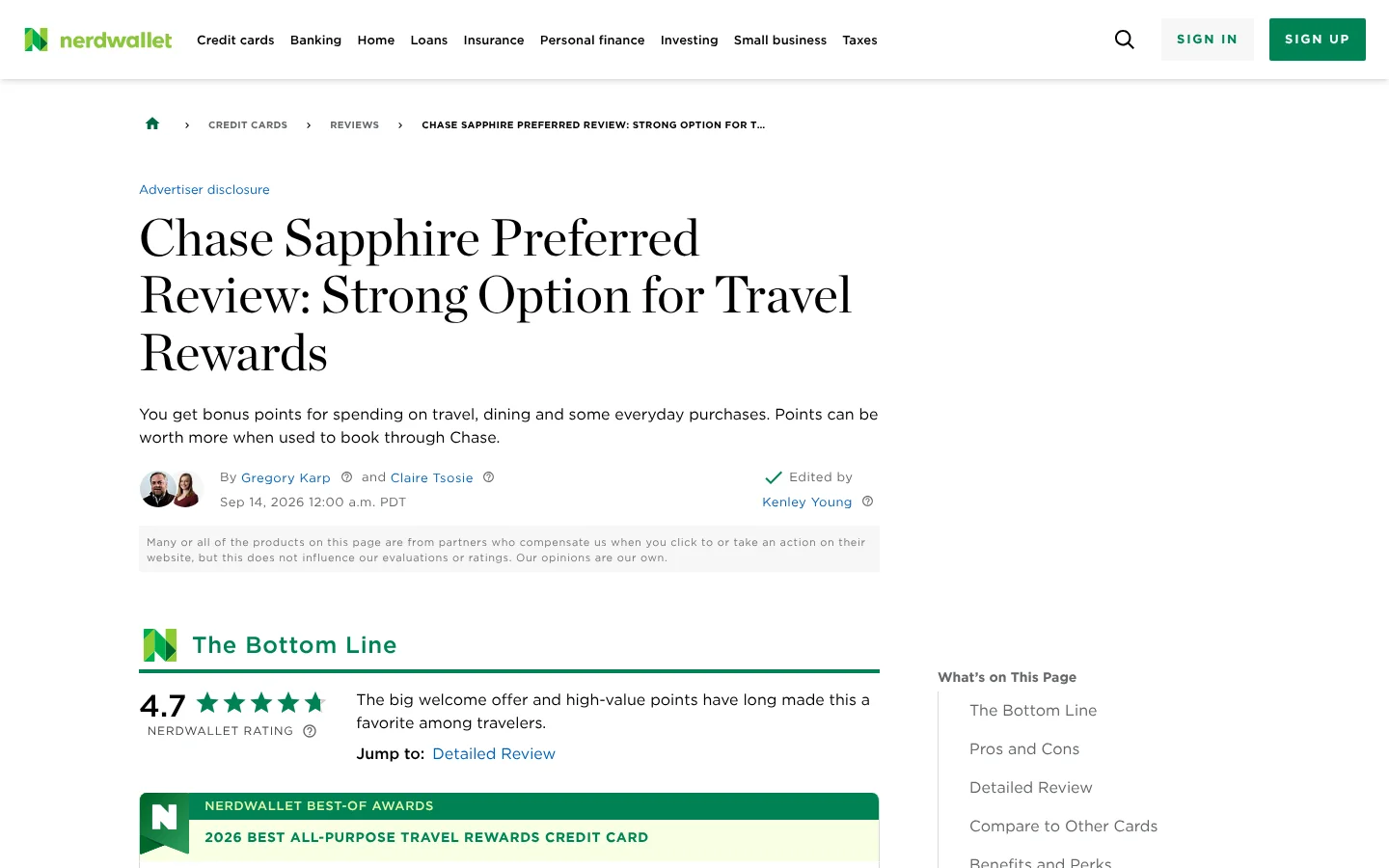
The Chase Sapphire Preferred review opens with a 4.7 NerdWallet rating and a Bottom Line box. Then come pros and cons, a detailed review and a comparison with other cards.
Lower down, "Drawbacks and Considerations" names the card's weak spots, and "How To Decide If It's Right For You" helps readers decide either way.
People who search a product name with "review" are close to a choice, and a page that names the drawbacks reads as fair advice. Best-of pages link into the reviews, which passes on readers and authority.
B2B teams can use this play fastest, because buyers already search for reviews and comparisons of tools in your category. Our guide to BOFU content covers how to write these pages for software.
Play 3: trust signals on every page
NerdWallet's product pages name the people behind them, and most show an advertiser disclosure near the top. Each byline links to a profile, so readers and search engines can see who wrote the advice.
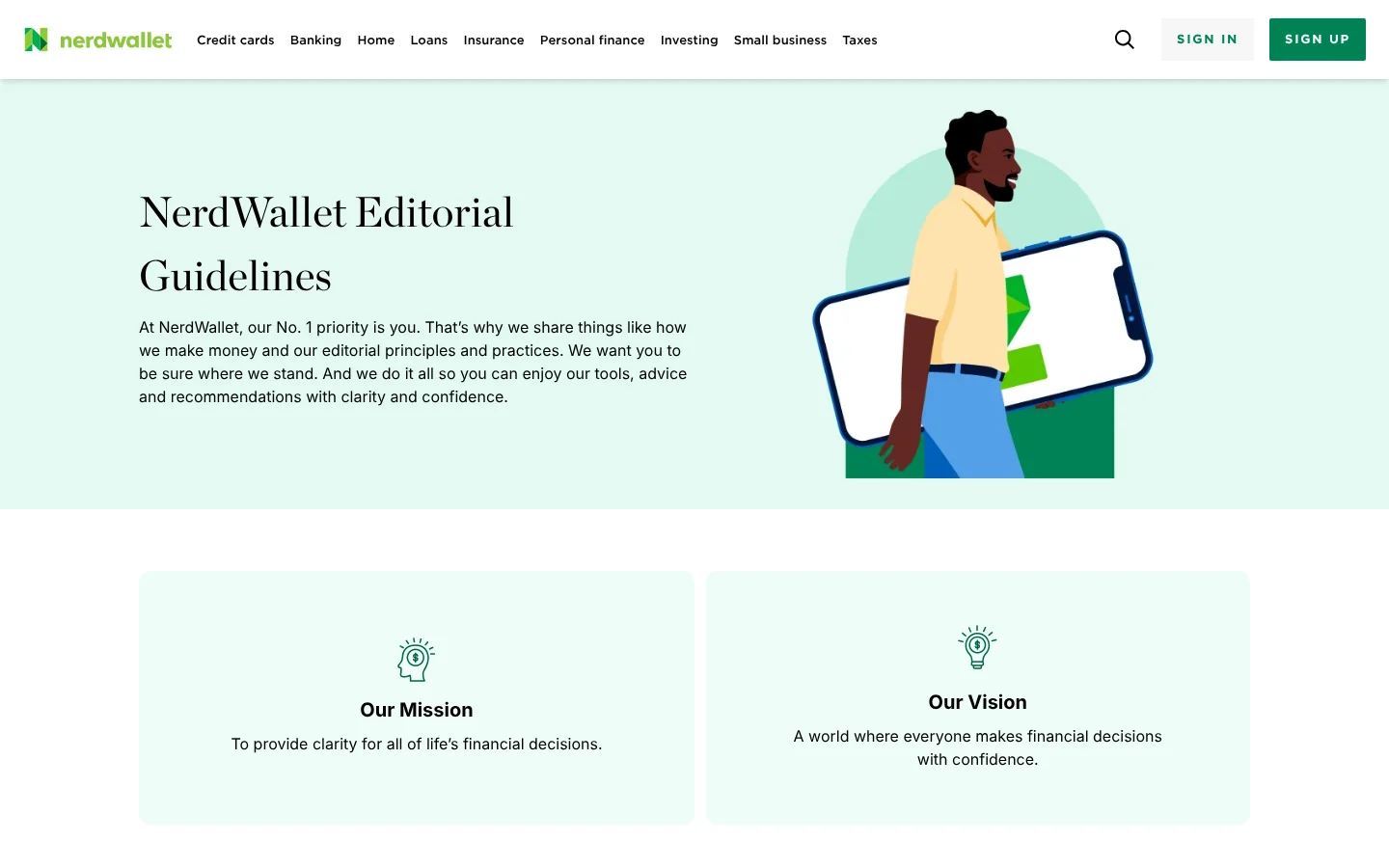
NerdWallet says business relationships don't shape its advice, recommendations or product reviews, and it fact-checks and corrects errors quickly.
NerdWallet publishes the math behind its stars in a credit card methodology. Cards get 1 to 5 stars in tenths, with a formula for each of 8 categories, and 400+ cards have been reviewed.

Gerry Spratt, then NerdWallet's director of content, put the idea plainly in a Q&A with The Hustle. "Our content strategy is writing for a consumer with a very specific problem," he said.
Advice about money needs a reason to be believed. A page that shows who wrote it and how products were scored gives readers and Google that reason.
For banks or fintech buyers, our fintech SEO guide covers these trust signals in a regulated market.
Play 4: take the playbook into new markets
After NerdWallet bought Know Your Money in 2020, organic traffic to its UK site grew from about 10,000 monthly sessions to about 130,000 within a year (2021 10-K).
We read that jump as a sign that the playbook travels. The same page types and trust signals give a team a clear plan for a new site in a new market.
For a B2B team, the lesson is to write down the page types that worked for one product line. Repeat them for the next product or region before you try new formats.
What AI search changes for NerdWallet
NerdWallet's filings say it depends on search engines, mainly Google, and that past algorithm changes have caused declines in its traffic. They also warn that AI-assisted search tools could lower its rankings and cut the traffic that reaches its site.
In the 2025 results, organic search pressure cut credit card revenue 24% to $133.4 million and small business revenue 9%.
Total revenue still grew 22% to $836.6 million, led by insurance, loans and banking. Performance marketing rose to $416.9 million, or 71% of sales and marketing spend, up from 63% in 2024.
NerdWallet is also moving people into registered accounts so it can reach them without relying on search engines. We expect tools that need a reader's own numbers to hold up better in AI answers than short explanations do.
To see how AI answers mention your own brand, start with our GEO guide for B2B SaaS.
What B2B teams can use from NerdWallet's SEO
These plays fit B2B software, where buyers weigh cost and compare vendors before they talk to sales. We would adapt them like this:
- Map the searches your buyers make at each step of a purchase, and give each search pattern one page type.
- Build a pricing, ROI or cost calculator named after the phrase your buyers type into Google.
- Publish review and comparison pages for your category, each with a verdict, drawbacks and a methodology page behind it.
- Sign every page with people who have done the work, and add their profiles and a review date.
- Give visitors a reason to stay in touch, such as a free account, a saved report or a newsletter.
Our B2B SaaS SEO guide shows how a small team can fit these pages into a keyword plan without a large newsroom.
FAQ
What can you learn from NerdWallet's keyword strategy?
Give each step of a buying decision its own page type. NerdWallet answers calculator searches with free tools, rate searches with dated rate tables, "best" searches with lists and product searches with reviews.
Where does NerdWallet's traffic come from?
Most of NerdWallet's traffic comes from direct and unpaid channels such as organic search. Its 10-K filings for 2021, 2023 and 2024 report that over 70% of all traffic came through those channels.
Should you build a calculator if you sell B2B software?
Yes, if your buyers ask a money question before they buy, such as cost, payback or savings. Name the tool after the phrase they type, list your assumptions and put a byline and review date on it.
Has AI search hurt NerdWallet's traffic?
NerdWallet's filings warn that AI-assisted search tools could lower its rankings. In 2025, its credit card revenue fell 24%, primarily due to continued pressures in organic search traffic.
How can you add trust signals like NerdWallet's?
Publish a methodology page for every score or ranking you put out, and name the writer and reviewer on each page. Disclose how you make money near the top of any page that recommends a product, including your own.
Start by listing the money questions your buyers ask on sales calls, then check which ones already have a tool in search results. To see where buyers find you today, get a free AI visibility audit.