Headspace's sitemap holds 2,726 URLs, and 1,237 of them are public pages for single meditations, sleep tracks and podcast episodes from its app.
Each of those pages gives away a piece of the product and ends with a free trial offer. Here is the story from London events in 2010 to the 2026 Sword deal.
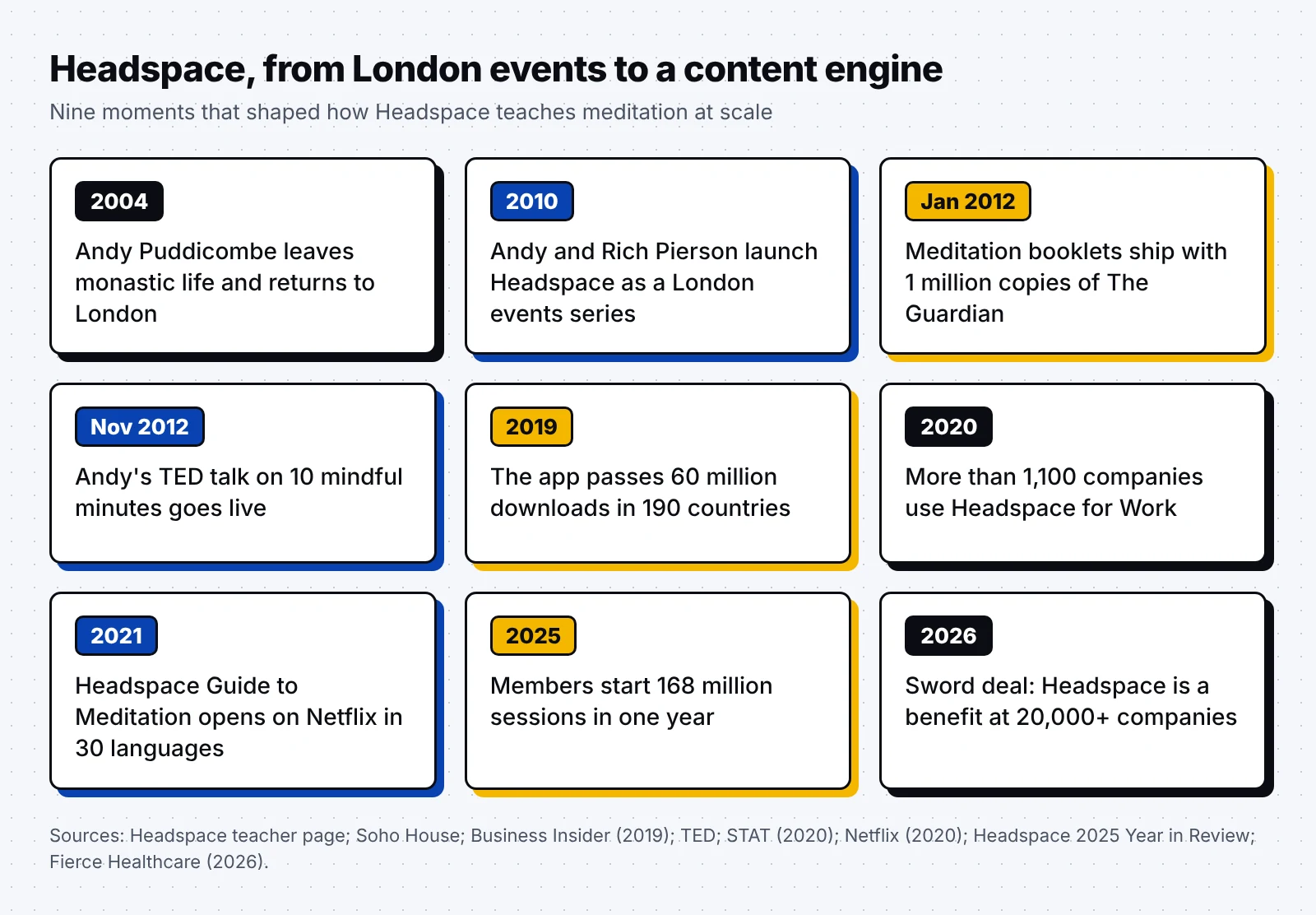
The timeline below shows the whole story, and each chapter ends with lessons for B2B teams:
Where Headspace started: a monk, an ad man and a London events series
Headspace teaches meditation through an app and sells mental health care to employers and health plans.
In his early twenties, Andy Puddicombe left a sports science degree to study meditation in the Himalayas. Ten years later, he was ordained as a Tibetan Buddhist monk in northern India.
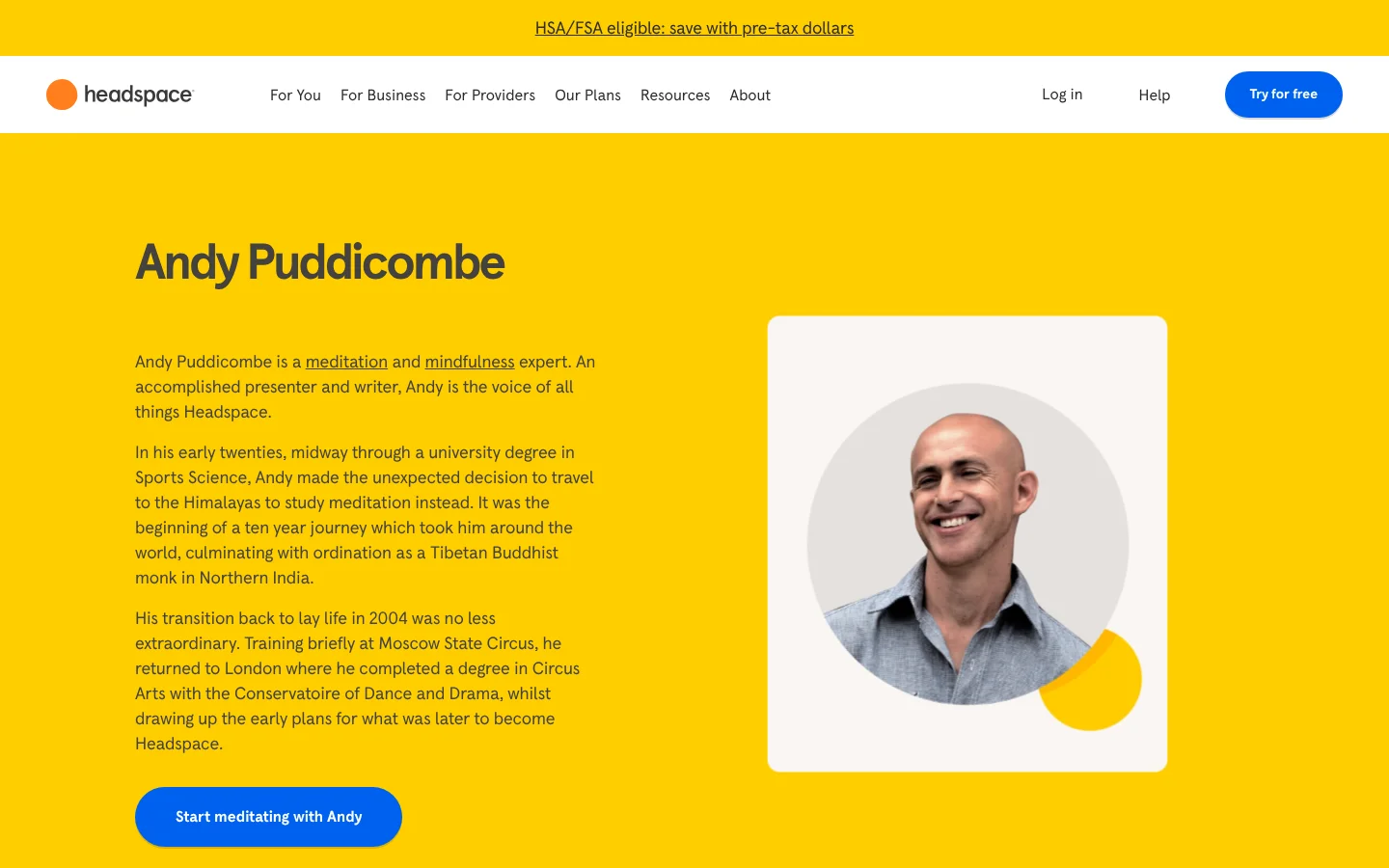
He returned to London in 2004, where he met Rich Pierson, an advertising executive who had burned out at an agency.
The pair launched Headspace as an events series in 2010, and Pierson asked Puddicombe to record his sessions so attendees could keep practicing at home.
Andy's pitch was simple: "If you can sit down, physically uninterrupted for 10 minutes a day, you can meditate." That plain style still shapes every Headspace page we opened for this article.
The founders bootstrapped for five years and recorded the first app in a friend's studio before growth came in clear steps:
- On January 1, 2012, meditation booklets with app download details went out with one million copies of The Guardian.
- In November 2012, Andy's TED talk "All it takes is 10 mindful minutes" went live, and it has passed 15 million plays.
- By January 2015, the app had more than one million downloads from users in 150 countries.
- By 2019, Headspace had passed 60 million downloads across 190 countries, with annual revenue above $100 million.
What to take from this:
- Give your founder's expertise one simple promise a beginner can repeat after hearing it once.
- Package your best teaching in a format people can take home, like the recorded sessions.
- Borrow an audience that already trusts someone else, as the Guardian booklets did in 2012.
The Headspace content marketing engine, by the numbers
We fetched Headspace's robots.txt file and the one sitemap it lists, then grouped all 2,726 URLs by their top folder.
The app library and the articles library hold 2,351 of those URLs, or 86% of the site.
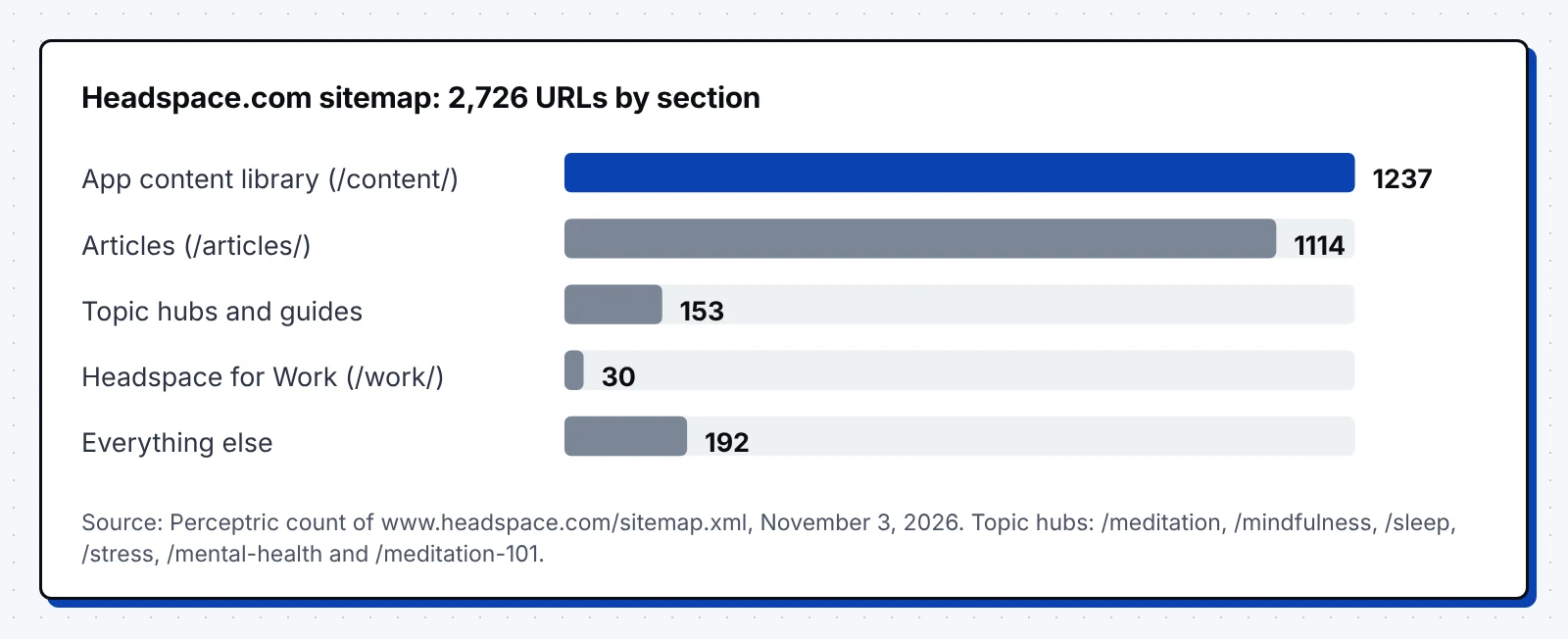
Each of the 1,237 app library pages shows one item from the app, such as a meditation, podcast episode, sleep track or course.
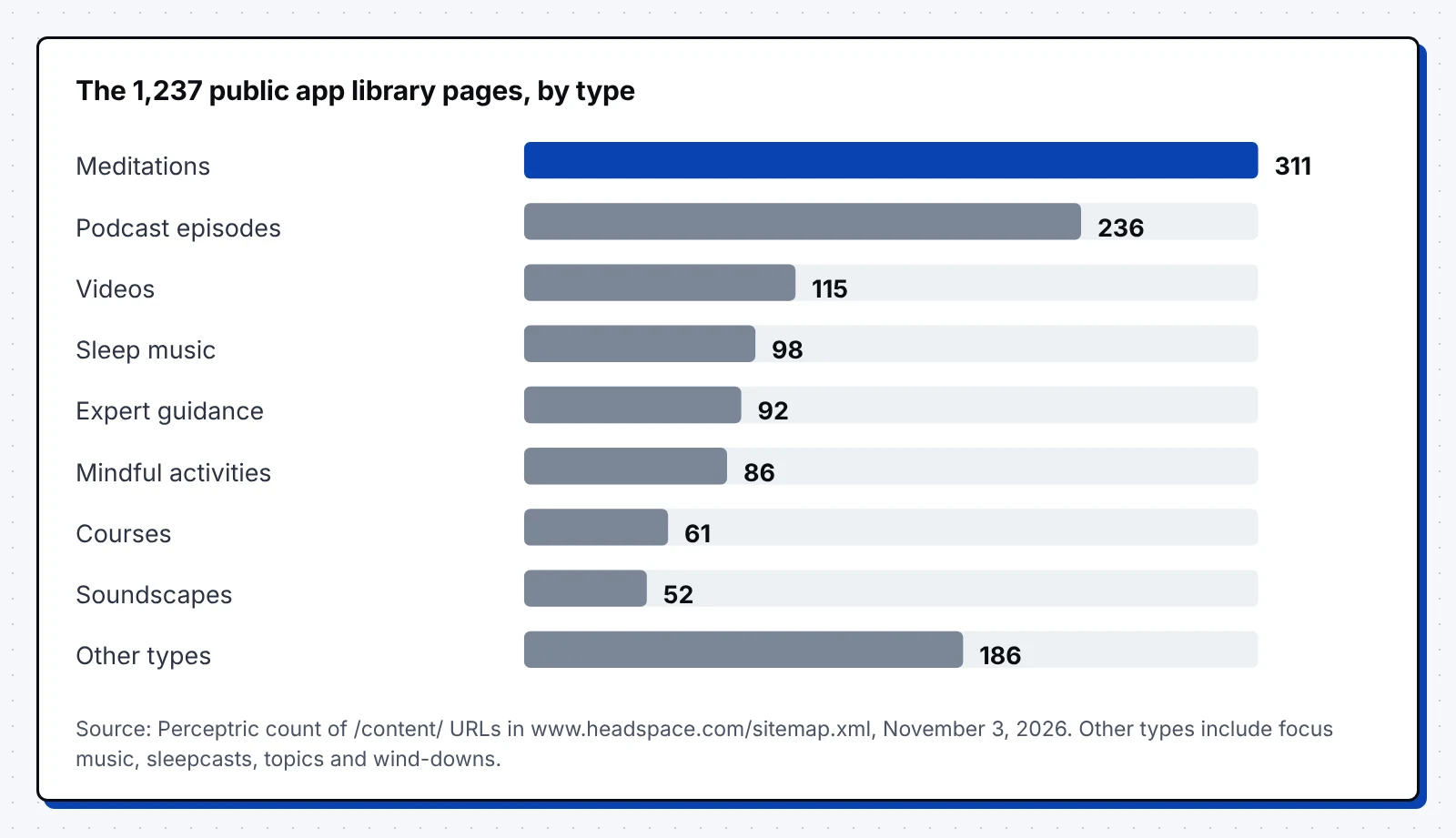
Meditations lead with 311 pages, followed by 236 podcast episodes and 115 videos. The full library holds more than 500 meditations, and the employer offer includes over 5,000 exercises.
Topic hubs and guides add 153 URLs, and Headspace for Work adds 30 pages, so the B2B side is the smallest section.
Lessons to apply:
- Count your own URLs by folder to see what your site really invests in.
- Publish the useful parts of your product as public pages search engines and AI tools can read.
Play 1: topic hubs for meditation and sleep
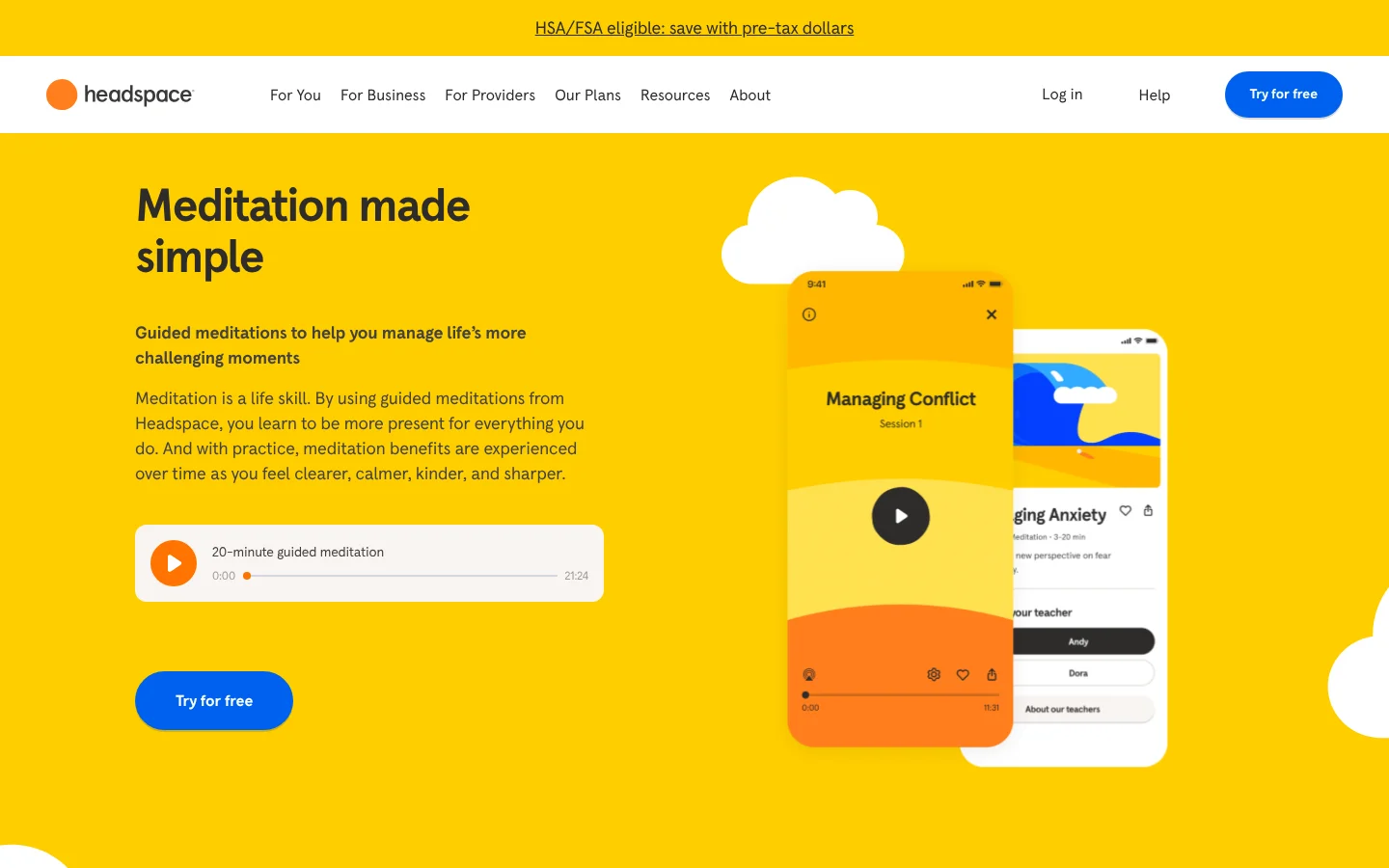
The meditation hub opens with "Meditation made simple," a playable 20-minute guided meditation and a "Try for free" button right below it.
The hub links to 58 guides that each answer one question, from "how to meditate" to "walking meditation."
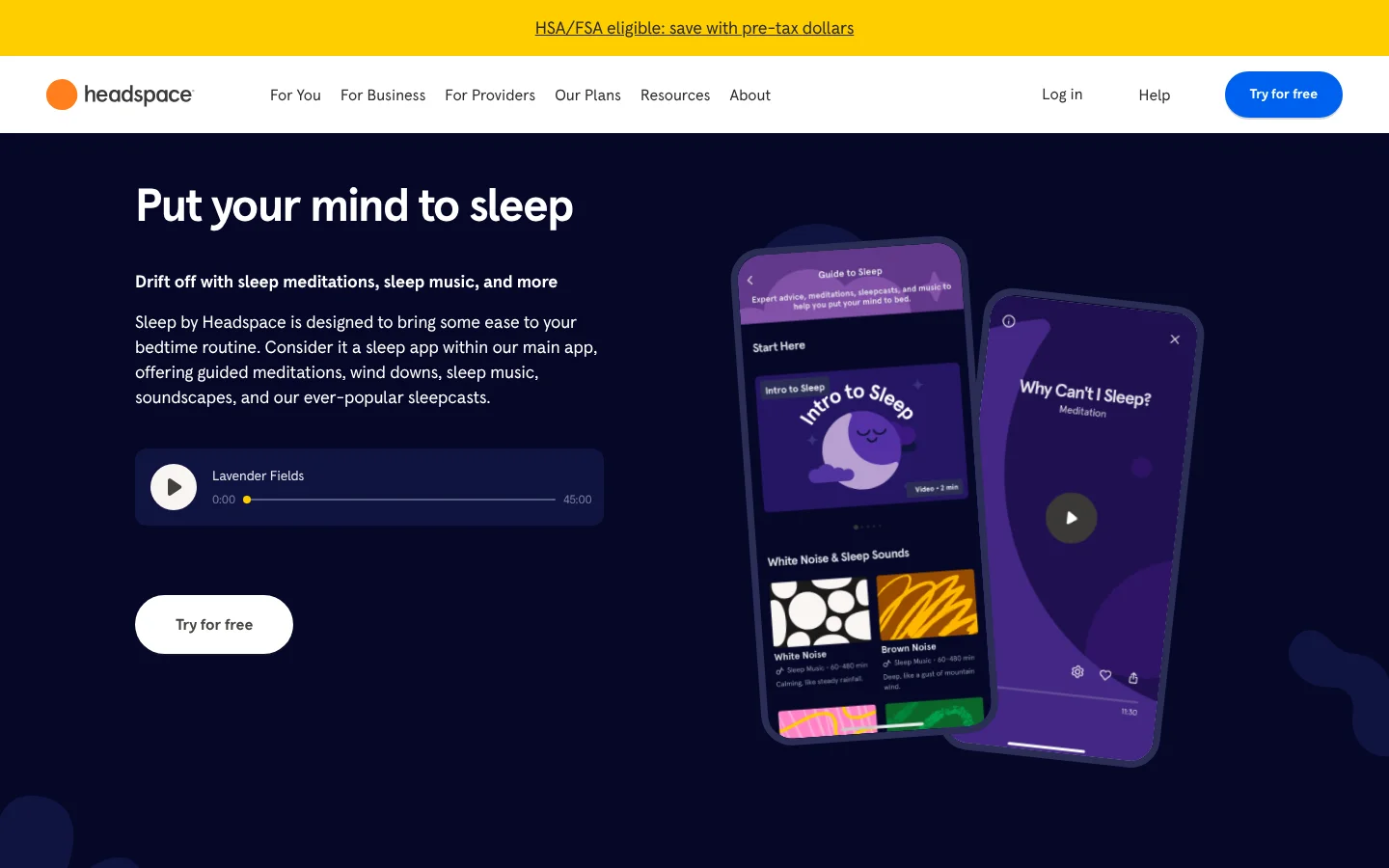
The sleep hub has a dark design, a playable sleep track and 28 sleep pages under it, such as "why do I wake up tired."
In the page code, we counted 18 unique links from the meditation hub into app library pages and 22 from the sleep hub.
What to take from this:
- Build one hub for each problem your buyers search for, with a short promise as its headline.
- Put a product sample at the top of the hub, such as a demo video, template or calculator.
- Link each hub to narrow guides that answer one question, and link those guides back.
Our roundup of pillar page examples shows how B2B and SaaS companies build the same kind of hub.
Play 2: an articles library with one calm voice
The 1,114 article URLs cover mental health, mindfulness, meditation and sleep in a warm, plain tone that usually ends with "Be kind to your mind."

The guide "Meditation for beginners" credits the Headspace Editorial Team and names a Headspace mental health coach as reviewer, with the review date shown.
The page has a table of contents, NewsArticle schema, a mini-meditation near the top and a free trial offer at the end.
Pierson said Headspace "should feel like it's for everyone, and it should feel mainstream," which explains the friendly drawings and plain words.
Lessons to apply:
- Write a short voice guide with the phrases you always use and the words you never use.
- Add a named expert reviewer and a visible date to every article that gives advice.
- Put a small sample of your product near the top of the article.
Guides like these keep working for years, and our guide to evergreen content explains how to keep them ranking.
Play 3: the app library as public pages
Most apps keep content behind a login, while Headspace gives each session a public page with a description, the teacher's name and a transcript.

One example is "You Are Not Your Anxiety," led by Joy Ofodu, with a "Play Sample" button and a "Try 14 days free" button.
Someone who searches for a meditation can hear a sample on its page and start a trial without visiting the homepage.
What to take from this:
- Publish public pages for the parts of your product people search for, such as templates or reports.
- Give each page a sample or preview so it is useful before anyone signs up.
Play 4: shows on YouTube, Netflix and podcasts
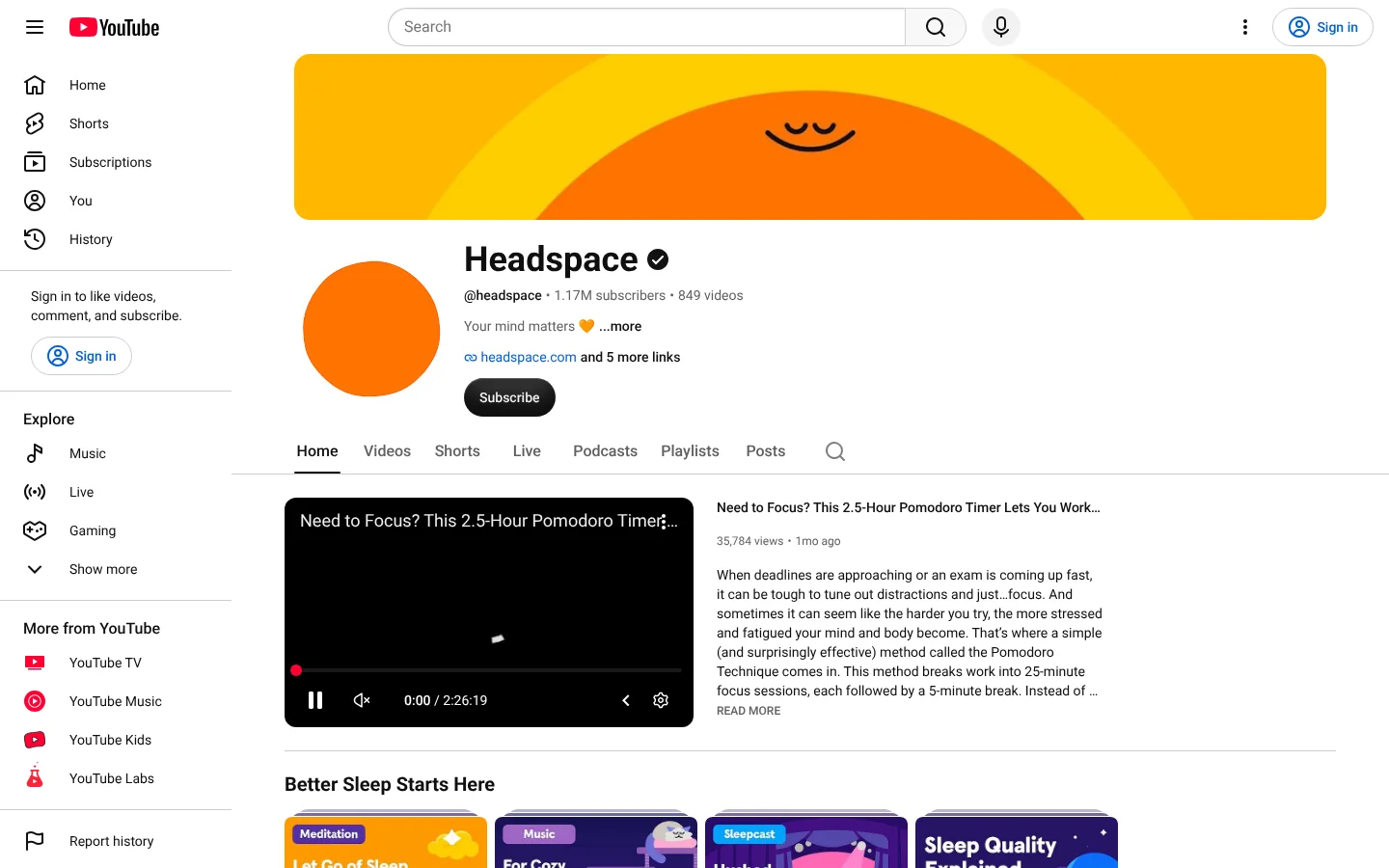
The Headspace YouTube channel has 1.17 million subscribers and 849 videos, with sleep videos and focus timers on its home page.
On December 9, 2020, Netflix announced three shows with Headspace for 2021. The first, Headspace Guide to Meditation, opened worldwide on January 1, 2021, in 30 languages.
Puddicombe narrates all eight episodes of about 20 minutes, each ending with a guided meditation, and the other shows were planned for later in 2021.
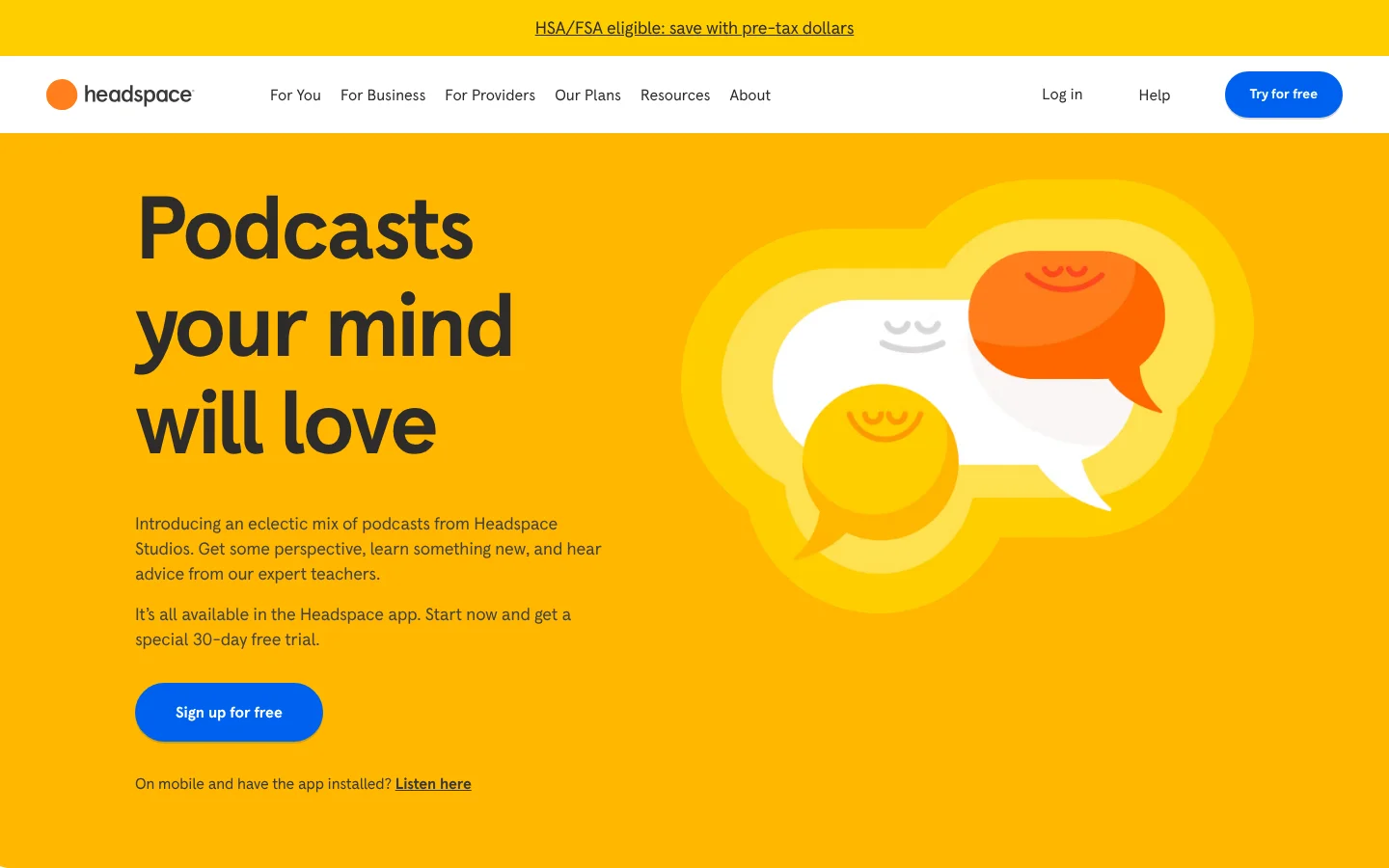
The podcasts page lists Headspace Studios shows, including a sleep show with Sesame Street characters. Its sign-up button offers a 30-day trial in place of the usual 14 days.
Lessons to apply:
- Turn your best expert into a recurring host, since a familiar voice builds trust over time.
- Pitch your format to a partner with a bigger audience, the way Headspace did with The Guardian and Netflix.
- Give each channel its own offer to see which show brings in sign-ups.
Play 5: Headspace for Work, the B2B side
By August 2020, more than 1,100 companies, including Starbucks, Adobe and GE, used Headspace for Work, and partnership requests had grown 500% since mid-March.
In August 2021, Headspace announced a merger with Ginger to form Headspace Health at a combined value of $3 billion, adding coaching, therapy and psychiatry.
When Sword announced its plan to buy Headspace in 2026, Headspace was a benefit at more than 20,000 companies, backed by 84 peer-reviewed studies.
Reports put the all-cash price between $200 million and $300 million, and the acquisition closed in fall 2026.
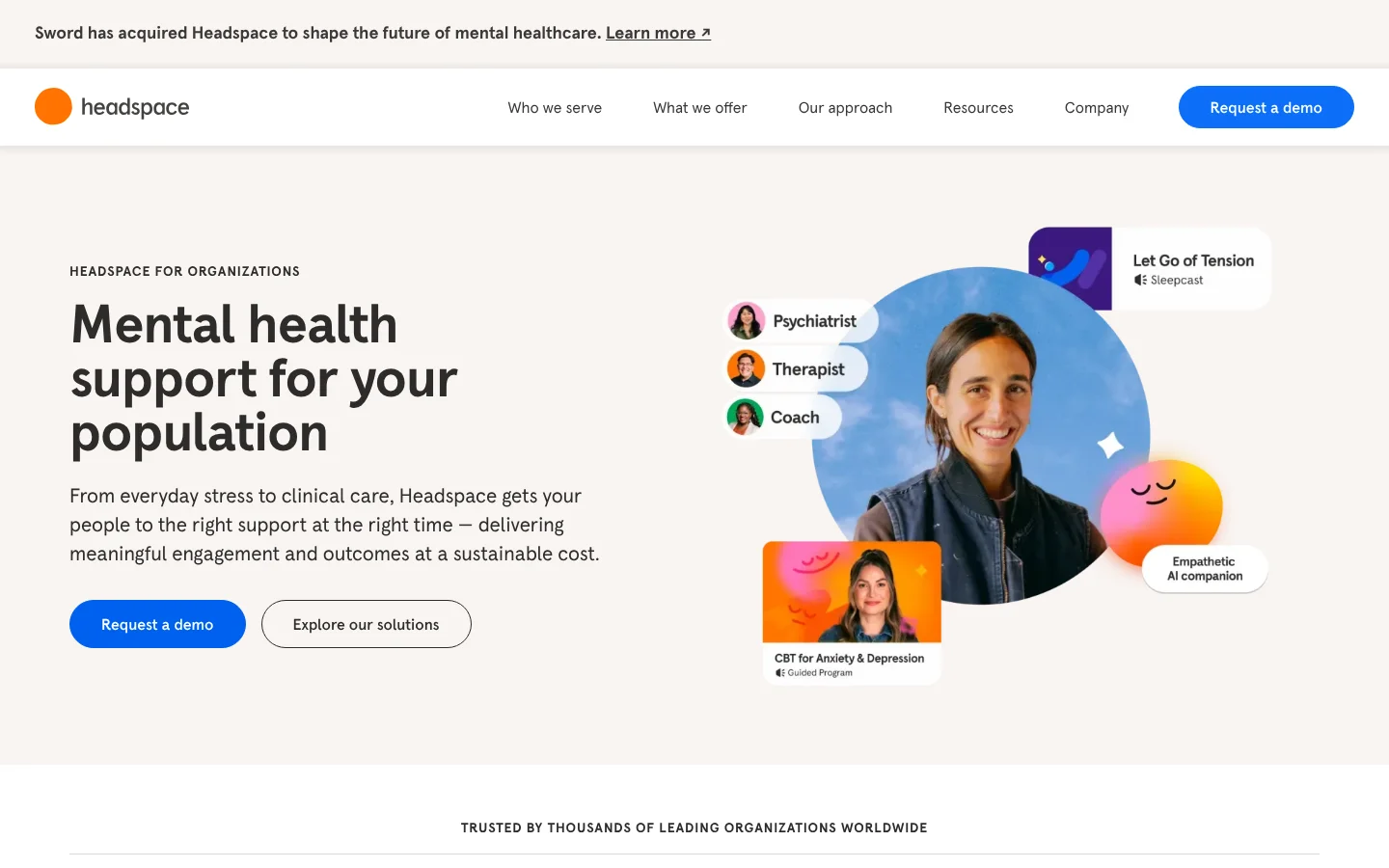
The B2B work page opens with "Mental health support for your population" and a "Request a demo" button, and it cites more than 80 peer-reviewed publications.
The consumer content also helps sales, since an HR leader who knows the app from Netflix may start a sales call with some trust.
What to take from this:
- Let free educational content warm up the buyers your sales team will meet later.
- Build separate pages for the economic buyer, with outcomes, client stories and a demo request.
- Keep one brand voice across both sides so buyers recognize you in the sales meeting.
How the content feeds app sign-ups
Every consumer page carries a free trial of 14 or 30 days, and a new member's path has four steps:
- A reader searches for a problem, such as trouble sleeping or stress before a meeting.
- They land on a hub or guide that answers it in Headspace's calm voice.
- They play a sample session on the page without creating an account.
- They start a free trial once the sample shows what the app feels like.
Members started 168 million sessions in 2025 and spent 11.5 million minutes talking to Ebb, Headspace's AI companion.
Lessons to apply:
- Map your path from search to sign-up, then fix the step where most readers drop off.
- Let readers try something real inside the content, such as a sample report or product tour.
Our guide to the B2B content marketing funnel shows how to match each piece of content to a stage of that path.
A content marketing strategy B2B teams can adapt from Headspace
Here is how we would adapt this strategy for a B2B software or services company, in the order we would build it:
- Write down the one promise your founder or expert repeats, then build a short voice guide around it.
- Pick the three to five problems your buyers search for most and give each a hub page.
- Write narrow guides under each hub, each one answering a single question, with a named expert reviewer.
- Turn useful parts of your product into public pages, such as templates, benchmarks or integration guides.
- Add a free, low-risk next step to every page, such as a trial, sample report or demo video.
For more content marketing strategy examples, see our roundup of content strategy examples from B2B brands.
FAQ
What is Headspace's content marketing strategy?
Headspace publishes free, useful content about meditation, sleep and mental health, then links each page to a free trial of its app. Its sitemap holds 1,114 article URLs, 153 topic hub and guide URLs and 1,237 public pages for sessions from the app library.
How did Headspace grow its audience at the start?
Headspace began as a London events series in 2010, and its founders recorded the sessions so people could keep practicing at home. In January 2012, meditation booklets with app download details went out with one million copies of The Guardian, and Andy Puddicombe's TED talk followed that November.
What is Headspace for Work?
Headspace for Work is the company's offer for employers, which gives staff access to the app along with coaching and therapy. In 2026, Headspace was a benefit at more than 20,000 companies.
What can B2B companies learn from Headspace content marketing?
B2B companies can copy one clear voice, topic hubs built around buyer problems and free value that leads to a trial or demo. Start with one hub for your buyers' biggest problem and put a sample of your product near the top.
Who owns Headspace now?
Sword Health, a digital health company, acquired Headspace, and the deal closed in fall 2026. Reports put the price between $200 million and $300 million, but the companies did not share the terms.
Start by listing the five questions your buyers ask most and checking whether one page on your site answers each well. For help turning those answers into hubs that rank on Google and in AI answers, book a discovery call with us.