Most B2B teams I work with have a content calendar, but far fewer have a content strategy they could explain in two sentences. The calendar tells you what goes out on Tuesday, and the strategy tells you why that piece will win you buyers.
So I pulled together 12 content strategy examples from B2B companies that have explained their approach in public, often in their own words.
For each one, you'll get:
- What the company does and who it sells to
- The strategy broken down into plain steps
- The evidence that it works, with a named source
- A smaller version you can run with a lean team and budget
At the end, I'll share the simple framework I use to build a strategy from scratch.
What is a content strategy?
A content strategy is the plan that connects what you publish to a business goal. It names your reader, the problem you'll own, the formats you'll use and how the work will reach buyers.
A strategy that holds up has five parts:
- A clear reader, such as "RevOps leads at Series B SaaS companies"
- An edge that only your company can bring, like product data, a community or a founder's point of view
- One or two main formats you can produce every single month
- A distribution channel you own or can borrow cheaply
- A way to measure whether the content brings in pipeline
Every example below has all five, and the edge is where they differ most.
12 content strategy examples at a glance
| # | Company | Strategy | The edge it uses |
|---|---|---|---|
| 1 | Zapier | Programmatic SEO | Data on the apps it connects |
| 2 | Ahrefs | Product led content | A product that solves searchable problems |
| 3 | HubSpot | Free tools and courses | Software and teaching skills |
| 4 | Gong | Original research | Sales call and deal data |
| 5 | CB Insights | Newsletter | A research team |
| 6 | Buffer | Guest posts and transparency | Founders willing to write and share |
| 7 | Wistia | Original video series | Video skills and a brand voice |
| 8 | Notion | Community templates | Power users who teach others |
| 9 | dbt Labs | Practitioner community | Open source users |
| 10 | Stripe | Books and magazines | Big ideas for builders |
| 11 | GitLab | Public handbook | Internal documentation |
| 12 | Qualified | Podcast turned into articles | Access to respected guests |
1. Zapier: programmatic SEO
Zapier is an automation software company that lets teams connect the apps they use and move data between them without writing code.
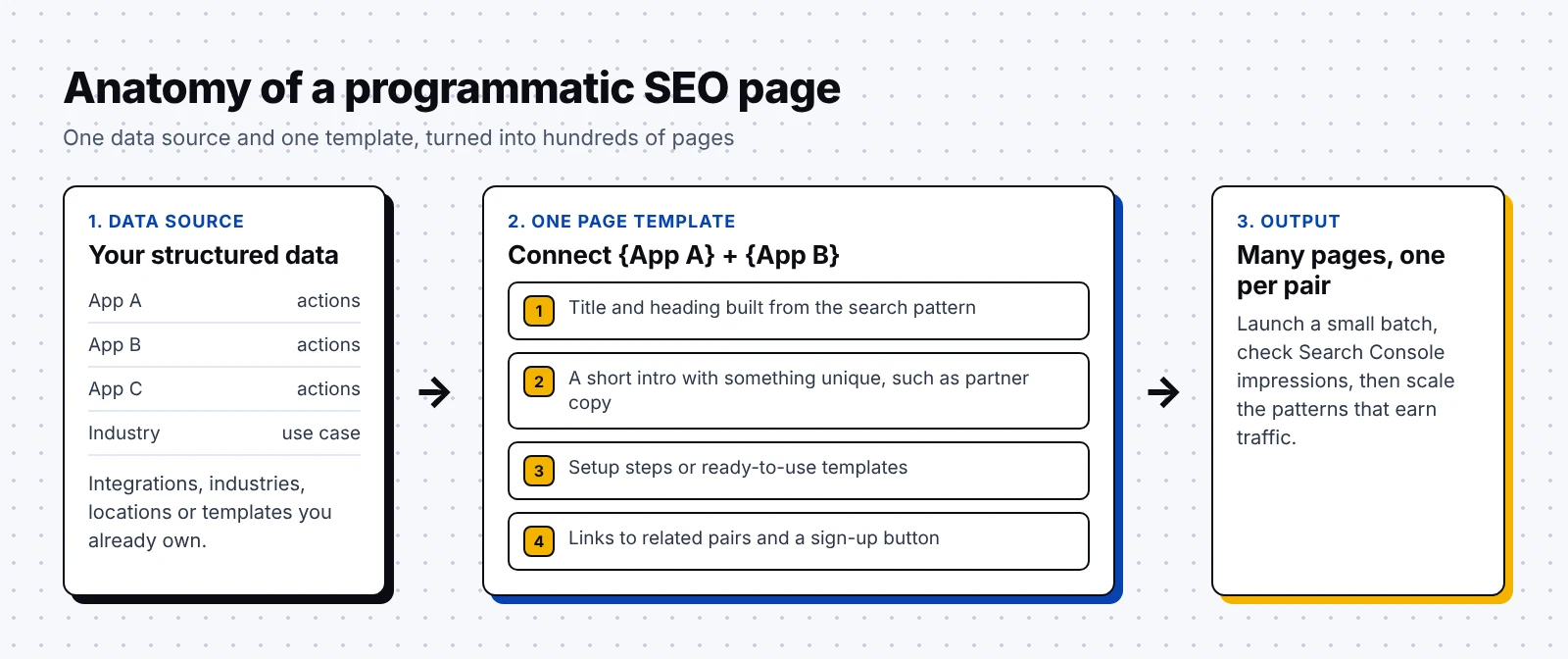
Its most famous content play is the app directory, with a page for each app and pages for the app pairs people want to connect. The strategy works in four steps:
- Start with structured data you already own, which for Zapier is the list of apps and what each one can do.
- Build one page template that fits every app and every pair of apps.
- Generate the pages from that data, so the library grows each time a new app joins.
- Add a human layer, which Zapier did by letting the app makers write part of the copy.
In an August 2022 case study, Ahrefs found that these app integration pages drove 16% of Zapier's entire organic traffic.
Ahrefs also noticed that pages for long combinations got no estimated search traffic, such as one for Sheets, Trello and Slack together.
Fortunately, you can borrow this on a much smaller budget:
- List the data you already have, such as integrations, industries you serve or the templates inside your product.
- Pick the one pattern buyers search for, like "[your product] + [tool]" or "[use case] for [industry]".
- Launch 20 to 50 pages first and check which ones earn impressions in Google Search Console before you build hundreds.
2. Ahrefs: product led content
Ahrefs is an SEO software company that sells tools for keyword research, backlink analysis, rank tracking and site audits.
Its blog and YouTube channel follow one simple rule: pick problems the product solves, then show the reader how to solve them with the product.
- Find search topics where readers are trying to fix a problem.
- Score each topic by how naturally the product fits into the answer.
- Write the tutorial with the product as part of the solution, using real screenshots.
Databox describes the Ahrefs "business potential" score as a 0 to 3 rating of how easily the product can be promoted, naturally and helpfully, in a piece of content.
A 2024 Latka interview with CMO Tim Soulo describes how every blog post and YouTube video shows a real problem and then solves it inside Ahrefs. The same interview puts the site's organic traffic as high as 6 million monthly visits.
Honestly, this is the strategy I suggest most often to B2B SaaS teams, because each article teaches the reader and shows off the product at the same time.
- Score your topic list from 0 to 3 for product fit and write the 3s and 2s first.
- Record a short screen walkthrough for each tutorial and embed it in the post.
- Ask your support team which setup questions come up every week, because those make strong product led topics.
3. HubSpot: free tools and free education
HubSpot is a CRM and marketing software company known for serving small and midsize businesses. Next to its large blog, HubSpot gives away tools and training that each solve a small problem and introduce its software along the way.
- Build a free tool that answers one quick question, like "How good is my website?"
- Link the results to guides and courses that go deeper.
- Offer free courses and certifications that teach the methods behind the product.
HubSpot says its Website Grader has graded over 1 million unique websites since 2008. HubSpot Academy also offers free certifications in topics like inbound marketing and content marketing.
- Turn a spreadsheet your team already uses into a simple calculator or checklist page.
- Run a free email course with five lessons on the problem your product solves.
4. Gong: original research from product data
Gong is a revenue intelligence company whose software records sales calls and analyzes them alongside emails and deal data.
Its research arm, Gong Labs, turns that data into findings that sales teams read and share.
- Ask what your product data can show that nobody else can measure.
- Pick findings that answer a practical question, such as how much top sellers talk compared with how much they listen.
- Publish each finding as a short post with one clear chart.
- Share it on LinkedIn, then pass engaged readers who match your ideal customer profile to sales.
Gong calls Gong Labs an original research engine that turns billions of sales conversations, deals and workflows into insights.
On Qualified's Demand Gen Visionaries podcast, Udi Ledergor, Gong's CMO at the time, described how this works. Prospects who engage with the content and fit the ideal customer profile get a conversation with a rep. The episode notes credit that outbound motion with about 60% of Gong's pipeline and inbound content with about 40%.
- Pull one anonymized number from your product each month and write a short post around it.
- Run a short survey of your customers and publish the results with the sample size.
- Explain your method on the page, so readers and journalists can trust the number.
5. CB Insights: a newsletter as the main growth channel
CB Insights is a market intelligence company that sells data and research on private companies and tech markets.
For years, its main growth channel has been a free email newsletter that mixes research charts with plenty of humor.
- Send a regular email with one or two research findings and a chart.
- Write in a conversational voice with jokes and a personal closing line.
- Link each email to deeper reports that sit inside the paid product.
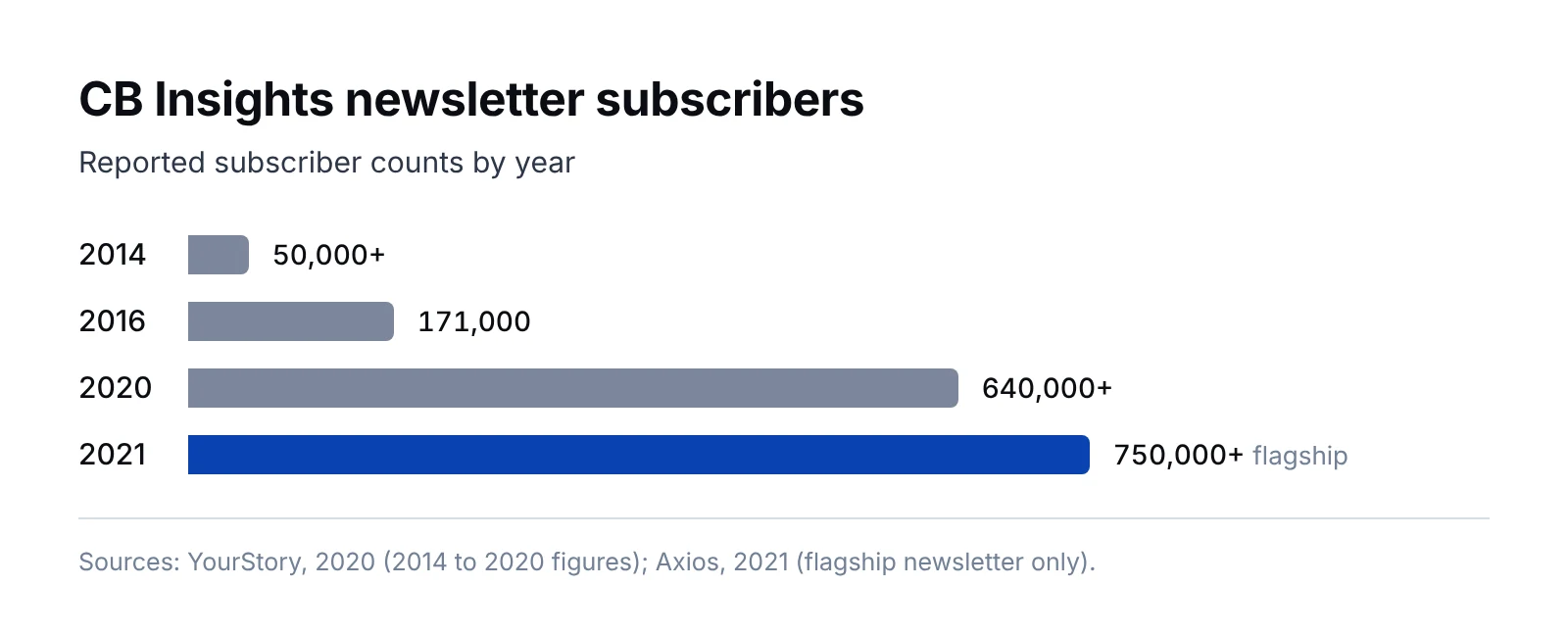
YourStory reported in 2020 that the newsletter grew from just over 50,000 subscribers in 2014 to 171,000 in 2016 and more than 640,000 by 2020.
In 2021, CEO Anand Sanwal told Axios that the company had nearly 1 million email subscribers, with the flagship newsletter reaching more than 750,000 people.
Sanwal summed up the thinking to YourStory: "short, conversational, and highly visual research is more respectful of the reader's time." Admittedly, this works best when you have a writer with a real voice.
- Send one useful chart or finding every two weeks to customers and prospects.
- Track replies and demo requests from the newsletter in your CRM.
6. Buffer: guest posts and radical transparency
Buffer is a social media management software company that helps small businesses and creators plan and publish their posts.
In its early days, Buffer grew by writing for other people's blogs. Later, it became known for publishing details most companies keep private, like salaries.
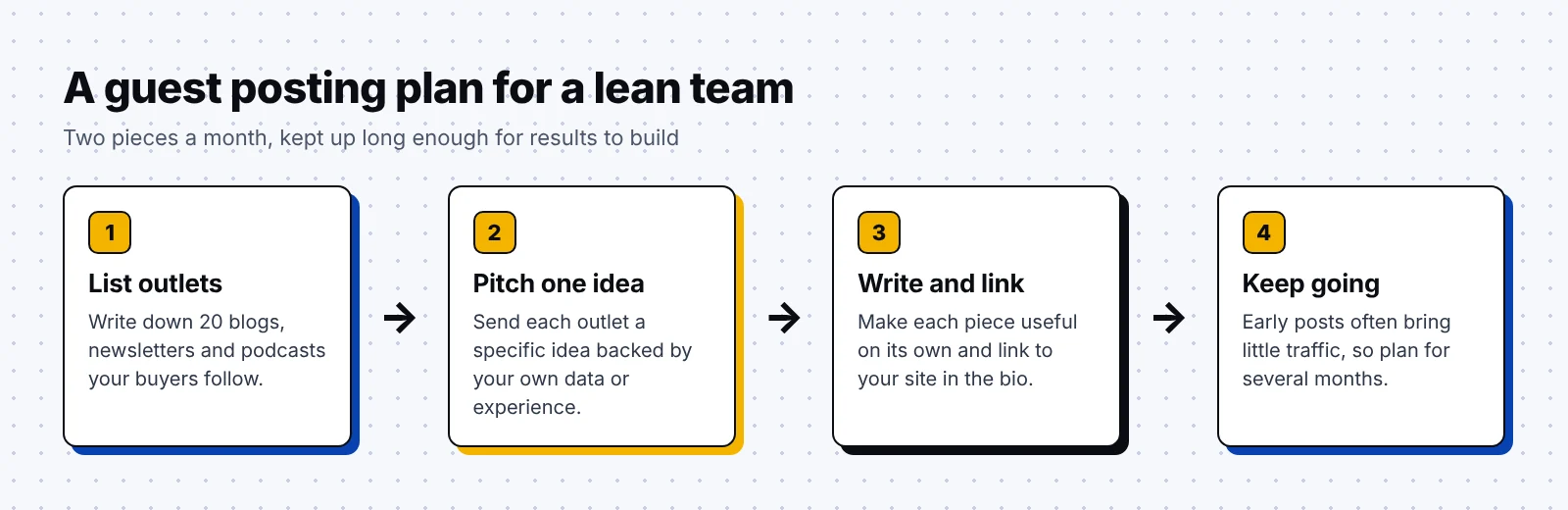
- Write guest posts for blogs your buyers already read, each one useful on its own.
- Include a link to your product or blog in the author bio.
- Keep going for months, because the first posts usually bring very little traffic.
- Share things about your company that others don't, which gives people a reason to talk about you.
In a 2012 interview with Search Engine Watch, cofounder Leo Widrich said he wrote around 150 guest posts in about nine months. He said guest blogging alone brought Buffer around 100,000 users in that time.
Surprisingly, Widrich also said the early posts barely drove any traffic, and the results only built up gradually. Buffer has since published its salaries for about a decade, and its Open Salary System post looks back on that history.
- Make a list of 20 newsletters, blogs, podcasts and communities your buyers follow.
- Pitch each one a specific idea that's backed by your own data or experience.
- Have your founder or subject expert write two guest pieces a month.
When I run GEO programs for clients, the industry sites that AI answers cite are among the first places I look for guest spots.
7. Wistia: original video series
Wistia is a video marketing software company that helps businesses host their videos and see how people watch them.
It runs part of its content like a small TV studio, making original series that teach marketers and build a loyal audience.
- Pick a question your audience debates, like how much a good video ad should cost.
- Turn it into a series with a story arc and the same people in each episode.
- Host the episodes on your own site and use short social clips to bring people back.
- Treat subscribers as fans of the show and keep sales outreach light.
For One, Ten, One Hundred, Wistia asked Sandwich Video to make three ads for its Soapbox product with budgets of $1,000, $10,000 and $100,000. It filmed the whole process as a documentary series.
Wistia's about page says the series won two Webby Awards. A later series, Brandwagon, was built to teach marketers about brand affinity and to grow a fan base that would share the show.
Happily, you can test a video series with one camera and a small crew.
- Start with six short episodes of about five minutes each, filmed on one camera.
- Post a short clip from each episode on LinkedIn with a link to the full video.
- Watch time and returning viewers tell you more than view counts, so track those two.
8. Notion: community templates and ambassadors
Notion is a productivity software company that makes a connected workspace where teams write docs and manage projects.
Much of its content comes from users, through a template gallery and an ambassador program.
- Find the users who already teach others about your product on social media and forums.
- Bring them into a private group and talk to each one about why they care.
- Give them a stage, such as a template gallery that accepts their submissions.
On Dock's Grow and Tell podcast, Camille Ricketts, who led marketing at Notion, described the early days. The team saw people on Twitter and Reddit sharing tips and helping other users. With a small marketing team, community was a clear way to amplify Notion.
Notion hired power user Ben Lang, who invited about 20 of the most vocal users into a Slack space. Those talks shaped programs like event support, executive AMAs and a template gallery with user submissions, among others.
- Search LinkedIn, Reddit, YouTube and niche forums for people who already post about your product.
- Publish their templates, playbooks or setups on your site with their names on them.
9. dbt Labs: a practitioner community
dbt Labs is a data software company that makes dbt, a tool that data teams use to transform data inside their warehouse with SQL.
Its founders started a Slack group to talk with their early clients, and that group grew into the center of the company's content and events.
- Open a public Slack where practitioners can ask questions and help each other.
- Put the community first and expect commercial results to follow.
- Support local meetups that members run themselves.
- Bring everyone together once a year at a conference, which for dbt Labs is Coalesce.
A Common Room case study described dbt Labs supporting more than 24,000 community members. Today, dbt's community pages list more than 100,000 active members.
dbt Labs has said it believes that creating lasting value for its community will lead to commercial success, in that order. Luckily, a small version needs only one channel and one person to run it.
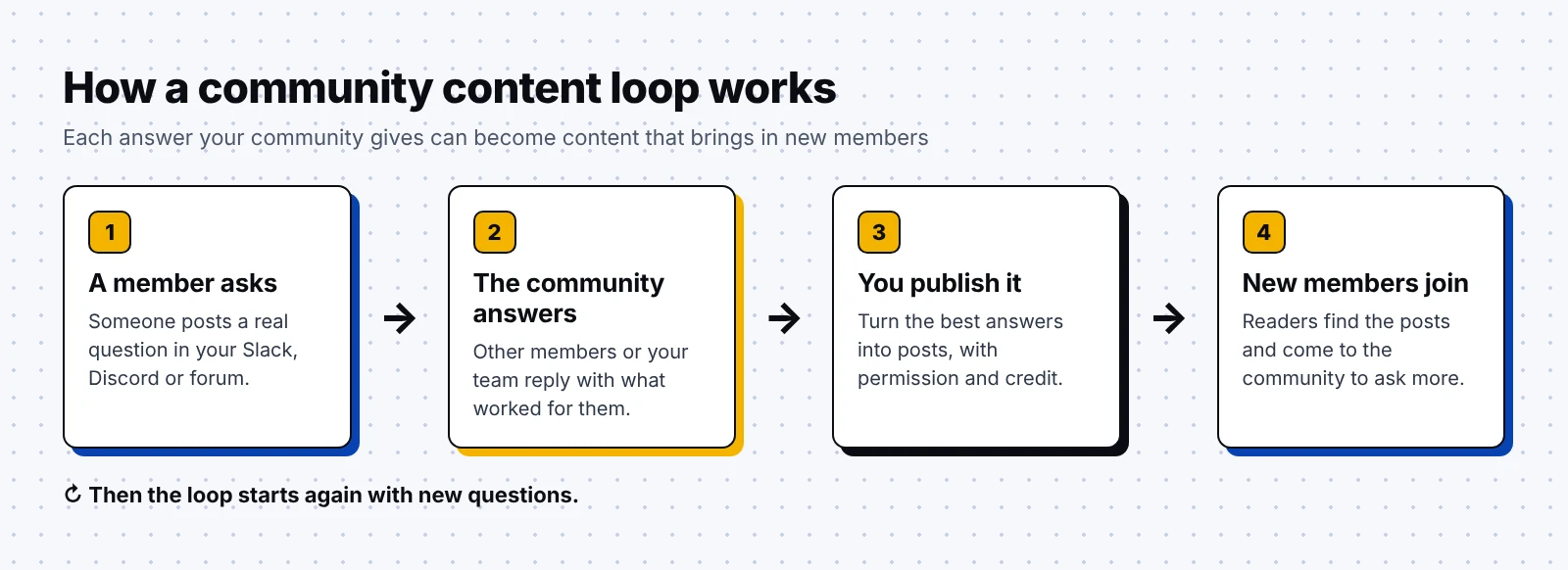
- Open a free Slack or Discord for your users and assign one team member to answer daily.
- Turn the best answers from members into blog posts, with their permission and credit.
- Track which members later become customers or champions inside their accounts.
10. Stripe: books and magazines for builders
Stripe is a financial infrastructure company that sells payment and billing software to online businesses.
It publishes books and long essays for the people it serves, through Stripe Press and, for several years, a software magazine called Increment.
- Choose big ideas your buyers care about that go beyond your own product.
- Publish them in a format with a long shelf life, such as books or a print magazine.
- Design each piece with care, so the work itself says something about the brand.
When Stripe Press launched in 2018, Axios reported that Stripe saw it as a tool for its mission of helping entrepreneurs, with revenue as a minor concern.
Increment, Stripe's magazine about how teams build and run software, published 19 issues between April 2017 and November 2021, and its archive is still online.
Thankfully, you don't need a publishing house to borrow this idea.
- Publish one long, carefully edited essay each quarter on a big question in your industry.
- Turn your best essays into a free ebook with a real designer's touch.
11. GitLab: a public company handbook
GitLab is a DevSecOps software company that runs as a fully remote business.
It publishes its company handbook online, so anyone can read how its teams work.
- Write down how your company works in one shared handbook.
- Make it public by default and keep only sensitive material internal.
- Change the handbook first, then announce each change with a link to it.
- Let people suggest edits, which keeps the content current.
GitLab's handbook says it defaults to the public version for anything that can be made public, with a separate internal handbook for a small set of information.
Its page about putting the handbook first says this approach means there's no duplication and the handbook is always up to date. I couldn't find published traffic numbers for the handbook, so I'd treat it first as a trust and hiring asset.
- Publish your onboarding guide, support process or security practices as public pages.
- Link these pages in sales emails, so buyers can see how you work before they sign.
12. Qualified: a podcast that becomes articles
Qualified is a pipeline generation software company that helps B2B marketing teams talk with website visitors in real time and book meetings.
Its Demand Gen Visionaries podcast interviews marketing leaders, and episodes like the Gong interview also appear on the site as written articles.
- Invite leaders your buyers admire to join a podcast.
- Publish a written article with the highlights of each episode.
- Give guests clips and links, so they share the episode with their own audience.
Interestingly, the Gong numbers I shared earlier came from one of these episodes, which also has its own podcast page. Qualified appears in Demand Gen Report's 2022 Killer Content Awards.
- Interview one customer or industry leader each month for 30 minutes on video.
- Turn each interview into a written post, a few LinkedIn clips and a newsletter section.
- Pick guests whose followers match your buyers, since they'll share the episode.
Which content strategy fits your team?
Here's my rough guide, based on the B2B content programs I've run. The timing column is my own estimate, so adjust it for your market.
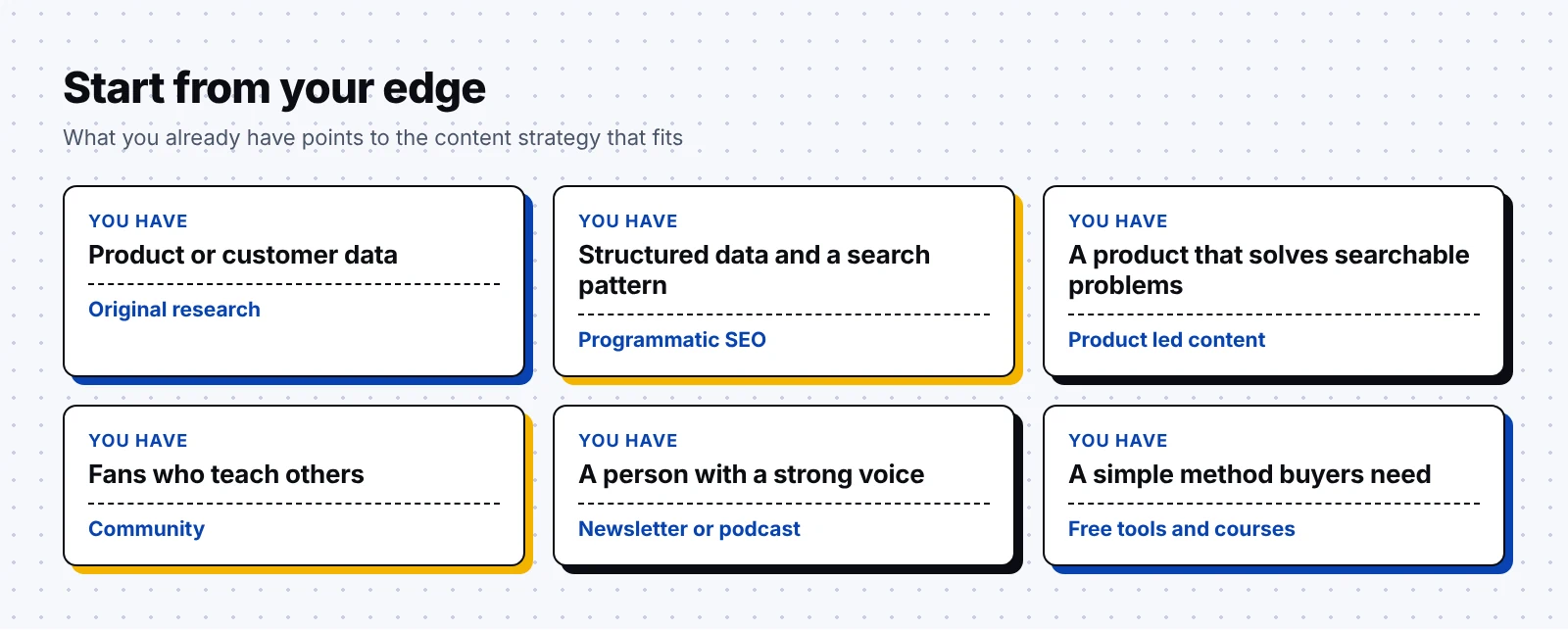
| Strategy | Best when you have | First signal |
|---|---|---|
| Programmatic SEO | Structured data and a clear search pattern | 3 to 6 months |
| Product led content | A product that solves searchable problems | 3 to 6 months |
| Free tools and courses | A simple method or calculation buyers need | 1 to 3 months after launch |
| Original research | Product or customer data | 1 to 3 months per study |
| Newsletter | A person with a strong voice | 3 to 6 months |
| Guest posts | An expert with time to write | 2 to 4 months |
| Video series | Someone comfortable on camera | 6 months or more |
| Community | Users who already help each other | 6 to 12 months |
| Books and long essays | Big ideas and patience | 12 months or more |
| Public documentation | Clear internal processes | Ongoing |
| Podcast | Access to respected guests | 3 to 6 months |
The quickest way to choose is to start from your edge, meaning what you have that competitors can't easily copy.
How to build a content strategy in 5 steps
Here's the framework I use when I build a strategy for a new client at our B2B SaaS content marketing agency.
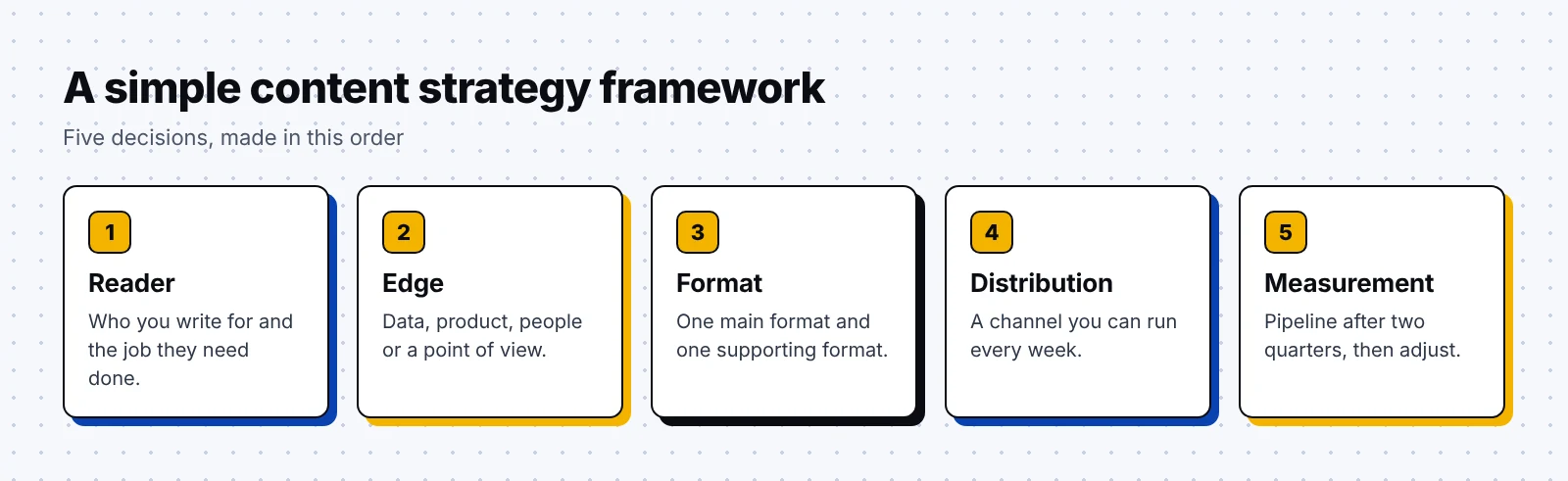
- Name the reader and the job they're trying to get done, using real words from sales calls and support tickets.
- Find your edge, which is usually data, the product itself, people who love you or a strong point of view.
- Pick one main format and one supporting format that your team can produce every month.
- Choose a distribution channel you can run every week, such as search, email, LinkedIn or a partner's audience.
- Measure pipeline after two quarters, then double down on what works or switch to the next strategy on your list.
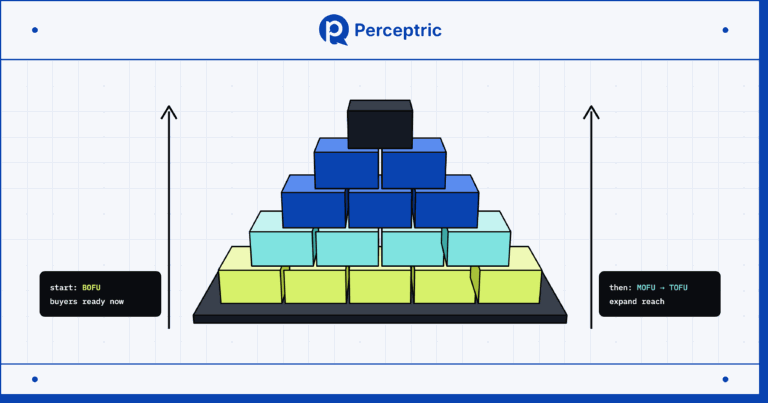
If you're unsure where to start your topic research, I like to start with the buyer questions closest to a purchase. I explain that method in my guide to bottom up content strategy.
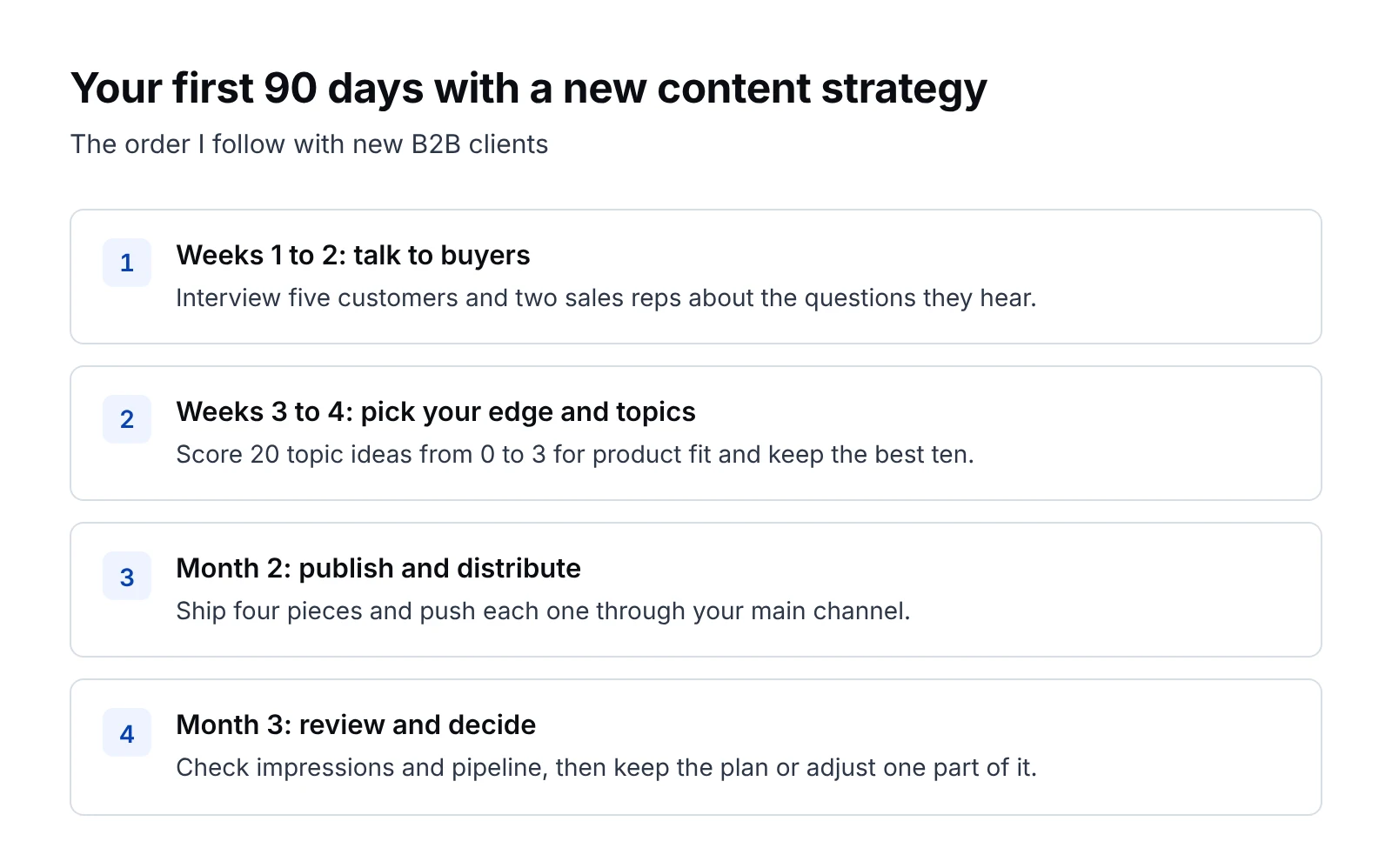
Here's how I map out the first 90 days:
Mistakes to avoid when you copy a content strategy
Copying a famous strategy is a great shortcut, as long as you copy the thinking behind it. These are the do's and don'ts I share with clients.
Do:
- Adapt the logic of a strategy to the edge your own company has.
- Prove one channel works before you add a second one.
Don't:
- Build thousands of programmatic pages when you only have a few dozen real use cases.
- Launch a community without someone who can answer questions every day.
- Publish research without the sample size and the method on the page.
- Switch strategies every month because one post didn't take off.
If you'd like a second pair of eyes on your plan, my team at Perceptric builds content and search programs as a B2B SEO agency. Send us your current content calendar, and we'll tell you which of these strategies fits your edge best.

FAQ
What are some good content strategy examples?
Zapier's programmatic integration pages, Ahrefs' product led tutorials, Gong's research built on sales call data and the CB Insights newsletter are four examples with public evidence behind them. Each one grew out of something the company already had.
What are the main types of content strategy?
Common types include programmatic SEO, product led content, free tools, original research, newsletters, guest posting, video series, community, long form publishing, public documentation and podcasts. Most B2B teams do best with one main type and one supporting type.
How do I create a content strategy for a B2B company?
Name your reader and the job they need done, then find your edge, such as data or product knowledge. Pick one main format and one channel, publish every month and measure pipeline after two quarters.
What is the difference between content strategy and content marketing?
Content strategy is the plan for who you're writing for and why each piece supports the business. Content marketing is the work of creating and distributing that content.
How long does a content strategy take to work?
In my experience, SEO strategies usually show a first signal in three to six months. Community and long form publishing often take a year or more.
Want to keep learning? Read my guide to thought leadership content marketing.