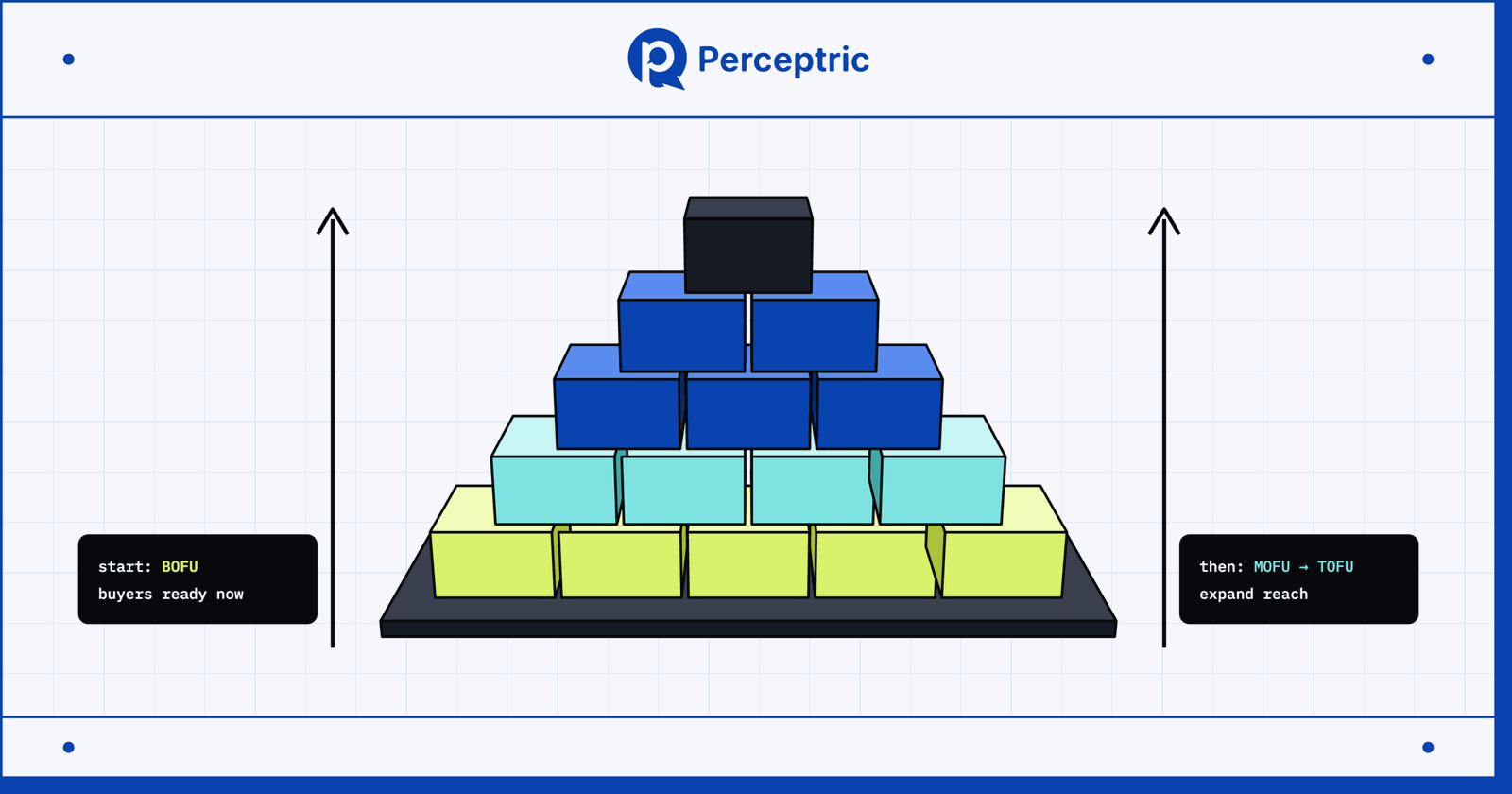
Top-down or bottom-up content strategy is nothing new. It has been around for decades, but not many agencies, or even content marketers, are doing it the right way.
At Perceptric, we want to champion this approach.
The problem with going after TOFU content
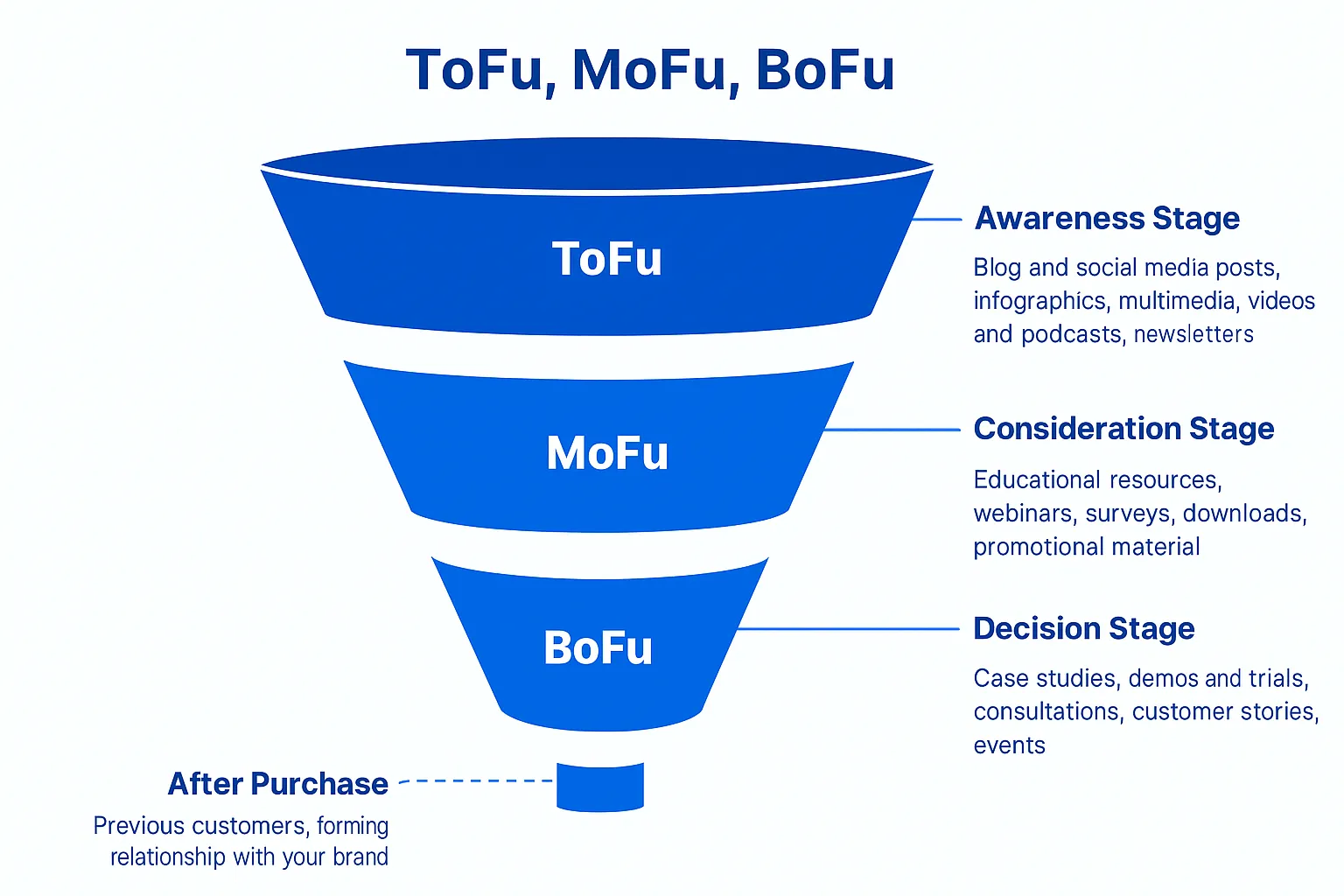
Many content marketers and agencies fall into the trap of creating content for the TOFU crowd. However, there is an inherent issue with that: TOFU content is designed for broad audiences. The general public, the masses, everyone.
TOFU is great for brand awareness, but awareness doesn’t pay the bills. You might get 10,000 visitors a month, but if none of them are ready to buy, your content is just entertainment, not marketing.
When you go too broad, you risk pulling in unqualified leads who will never convert. TOFU readers are often students, researchers, or competitors. They are merely “curious” about you/the topics, and aren’t decision-makers with a budget. You’ll spend months nurturing low-intent leads that would probably never consider a purchase.
Another issue is that the TOFU content is usually heavily covered by the industry leaders. Take “project management” for example. This is a TOFU keyword, and the top search results are Project Management Institute and Wikipedia. It’ll be crazy to compete against these giants.

Instead of writing an incredibly long article on “What is lead generation?”, which attracts beginners, students, researchers, not buyers, write a “Best lead generation tools for B2B sales” article. This is what attracts decision-makers that are ready to buy.
The advantages of a BOFU content strategy
BOFU content attracts buyers already in decision-making mode. These are people actively looking for solutions, comparing tools, and figuring out which product will solve their pain point today.
In marketing terms, BOFU content does the job of “demand capturing”. These people come to Google with a demand, a pain point to be solved, and your job is to solve it with an article ranking at the top of the search result.
BOFU content speaks directly to the pain points of potential customers. Instead of chasing high-volume keywords and hoping for conversions, we focus on intent-driven searches that signal real problems while positioning our clients’ products as the solution.
Sometimes, the clients don’t convert right away, and that’s fine. It’s the nature of B2B SaaS. You need to position your products against competitors in a way that highlight its key strengths. Many brands shy away from mentioning competitors, but here’s the reality: buyers are already comparing options. If you don’t create content that helps them decide, someone else will.
This is a proven process we use to create BOFU content:
Step 1. Identify BOFU keywords
To achieve this, we start by identifying keywords that indicate the searcher is looking for a solution right now. These are typically:
✅ Comparison keywords (“[Product A] vs [Product B]”)
✅ Alternatives keywords (“Best [category] alternatives”)
✅ Use-case keywords (“Best [product use case] tools”)
✅ Pricing & ROI keywords (“[Product] pricing” or “[Product] worth it?”)
For a SaaS company like Ahrefs (SEO software), instead of targeting broad keywords like “SEO best practices”, a better BOFU keyword would be “Ahrefs vs Semrush: Which SEO Tool is Best for Your Business?”, because people searching for that are actively comparing software options and are close to making a purchase.
Step 2. Write stellar content
Not just any kind of content. Good content is what we’re after.
We don’t just hire content writers. We hire industry professionals who have lived and breathed their fields.
Our writers aren’t just skilled at writing. They’ve actually done the work. They come from backgrounds like:
- Software development
- Industrial engineering
- Medicine and healthcare
- Therapy and psychology
- Entrepreneurship and business
These aren’t generic freelancers stitching together information from search results. They have been in the trenches, solving real problems, making critical decisions, and gaining firsthand experience.

To add even more depth, we bring in real practitioners throughout the content creation process. We survey hundreds, sometimes thousands, of industry experts to gather insights straight from the source.
Then, we turn that data into research-backed, experience-driven content.
One survey fuels multiple content pieces. A single round of expert data collection can power an entire content series.
Surveys double as lead generation. The insights don’t just shape great content. They can be repurposed into reports, whitepapers, and in-depth industry analysis.
The insights are pure gold. Businesses get real, actionable knowledge instead of surface-level fluff.
But most importantly, it proves we care. It shows that every piece of content we produce isn’t just another SEO-driven rehash. It is built on real expertise, real effort, and real respect for the audience.
Step 3. Amplify the content
Once your BOFU content is live, the goal is to drive as much high-intent traffic as possible. BOFU content is highly convertible, so running paid traffic to it is a no-brainer. Instead of waiting for SEO, we amplify high-intent pages with PPC and social ads to start generating conversions immediately.
Many prospects won’t convert on the first visit, but that doesn’t mean they’re gone forever. Retargeting keeps your product top of mind and brings them back when they’re ready to buy.
✅ Run LinkedIn & Google retargeting ads to BOFU blog readers
✅ Offer exclusive trials or discounts for returning visitors
✅ Use email sequences to nurture leads who engaged with BOFU content
FAQ
What is a bottom-up content strategy?
A bottom-up content strategy starts with BOFU content for buyers who are ready to decide. It targets searches where people compare tools and look for a fix to a pain point today. Broad TOFU topics tend to draw students and researchers who rarely buy. This approach captures existing demand instead of chasing high-volume keywords.
Why is TOFU content less effective for B2B?
TOFU content targets broad audiences, so it often pulls in readers who will never buy. Many are students or researchers who are only curious and have no budget. Broad keywords are also hard to win, since giants like Wikipedia hold the top results. You might get 10,000 visitors a month and still have no one ready to buy.
What are examples of BOFU keywords?
BOFU keywords show the searcher wants a solution right now. Common types are comparison keywords like Product A vs Product B, alternatives keywords, use-case keywords and pricing or ROI keywords. For an SEO tool like Ahrefs, a better target than SEO best practices would be Ahrefs vs Semrush. People who search that are close to buying.
How do you promote BOFU content after it goes live?
Since BOFU content converts well, run paid traffic to it right away with PPC and social ads. Many prospects will not convert on the first visit, so use LinkedIn and Google retargeting ads to bring them back. You can also offer trials or discounts to returning visitors. Email sequences help you nurture leads who engaged with the content.
Want to keep learning? Read our guides on B2B blog strategy, B2B content marketing examples, B2B website examples and the brand vs. the machines.