Inbound marketing is incredibly powerful because it brings potential buyers to you instead of requiring you to chase them down.
By the time a prospect reaches out, they’ve likely developed an initial level of trust in your brand. As a result, inbound leads typically enter the sales process with stronger intent and can convert at a higher rate than cold outbound prospects.
Inbound marketing takes time, sure, but you know what they say, good things take time.
In this article, we’re going to share with you:
- Why you should choose inbound over outbound?
- Why inbound works spectacularly well for B2B SaaS?
- The inbound marketing strategies that work best for B2B SaaS companies
- A case study of SaaS inbound marketing
Let’s dive right in!
Key Takeaways
- Inbound brings buyers to you. By the time prospects reach out, they have often researched your brand, product, and alternatives, making inbound leads more informed and closer to a buying decision.
- Build for the entire buyer journey. Attract buyers with useful content, convert them with demand-capture assets like product and comparison pages, and turn qualified leads into pipeline and revenue.
- SEO/GEO is the foundation of B2B SaaS inbound. Focus on bottom-of-funnel search demand, create product-led content, build brand mentions, and strengthen your visibility across both search engines and AI platforms.
- Don’t rely on one content format. SEO, LinkedIn, and PPC serve different parts of the buying journey. The strongest inbound engines connect these channels rather than treating them as separate tactics.
What is Inbound Marketing?
Inbound marketing is the practice of attracting potential customers through useful content, search, social media, email, and other channels, rather than interrupting them with cold pitches.
With inbound, you’re building familiarity and trust long before the sales conversation ever begins.
Here’s how the buyer journey of an inbound lead may look like:
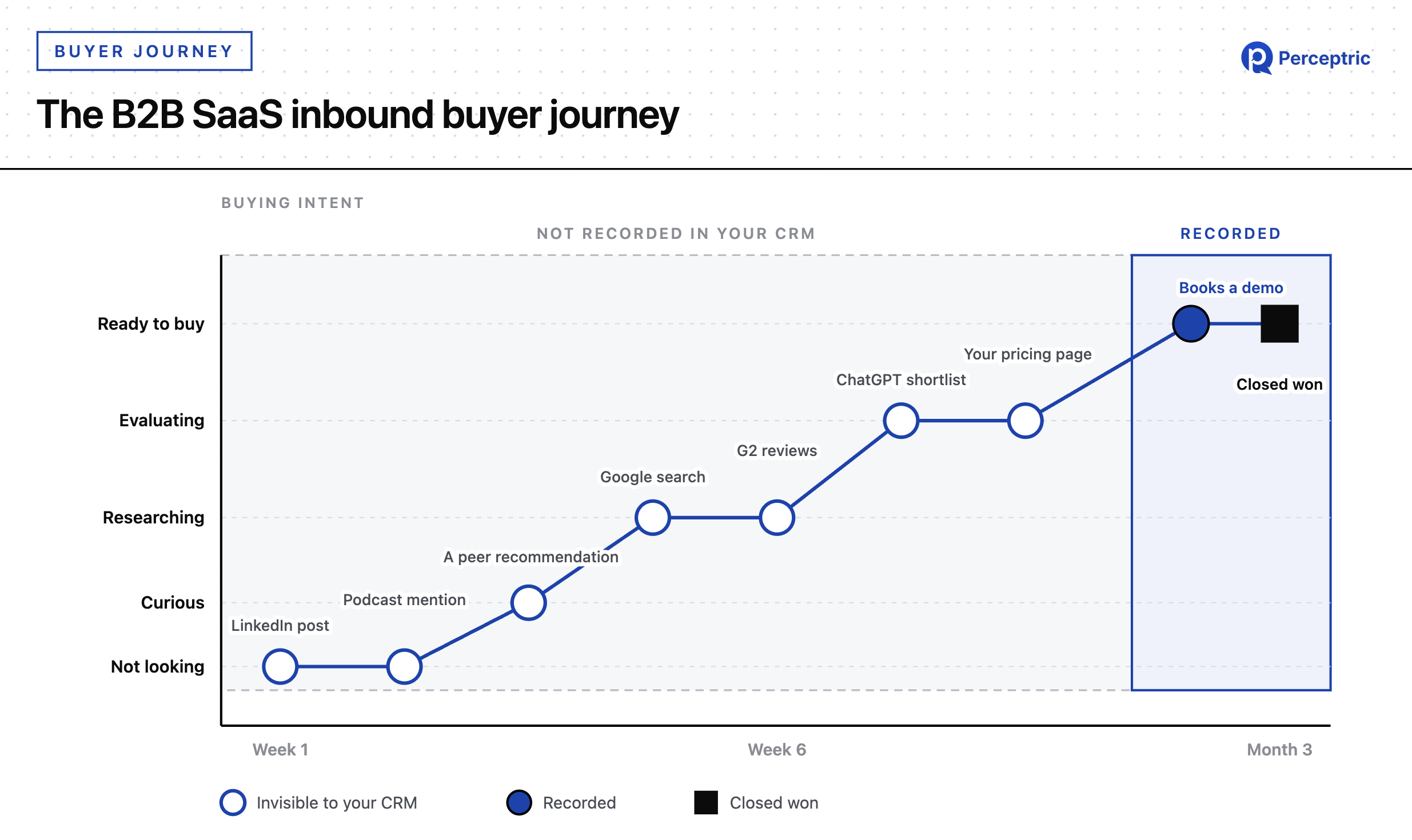
As you can see, the buyer gradually develops an interest in your brand and product.
They may read your LinkedIn posts, listen to a podcast where you’re mentioned, have your product recommended by a peer, or search for you on Google. Only after that do they start comparing vendors, checking reviews and pricing, and booking a demo with your company.
By the time they become an inbound lead, they’ve already researched your brand quite extensively. As a result, the sales process tends to move much more smoothly.
The Effectiveness of Inbound vs Outbound For B2B SaaS
Is inbound marketing better than outbound? Yes, generally speaking, inbound leads have a much higher win rate:
 Inbound vs outbound win rates in B2B SaaS
| Statistic | Source |
|---|---|
| Win rate by deal source | |
| Inbound demo requests win at 30–45%. Inbound content downloads win at 15–25%. Signal-based outbound wins at 15–25%. | LandbaseWin rate benchmarks, 2026 |
| Deals sourced from known contacts win at 37%, against 19% for cold outbound. | Champify, via Zenit Data2025 Impact Report |
| Inbound leads convert at 2 to 3 times the rate of outbound. | Media HouseSaaS lead-to-close benchmarks |
| Inbound conversion from inquiry to closed-won runs 3 to 5 times higher than outbound, with CAC 60–70% lower. | NUMRIQB2B conversion benchmarks, 2026 |
| Lead to close | |
| SEO-generated inbound leads close at 14.6%, against 1.7% for outbound. | Doyen Digital, via G2Lead generation statistics, 2026 |
| In SaaS, inbound leads close at a 12:1 ratio over outbound. | The Small Business ExpoInbound vs outbound leads |
How Does Inbound Marketing Work For B2B SaaS Companies?
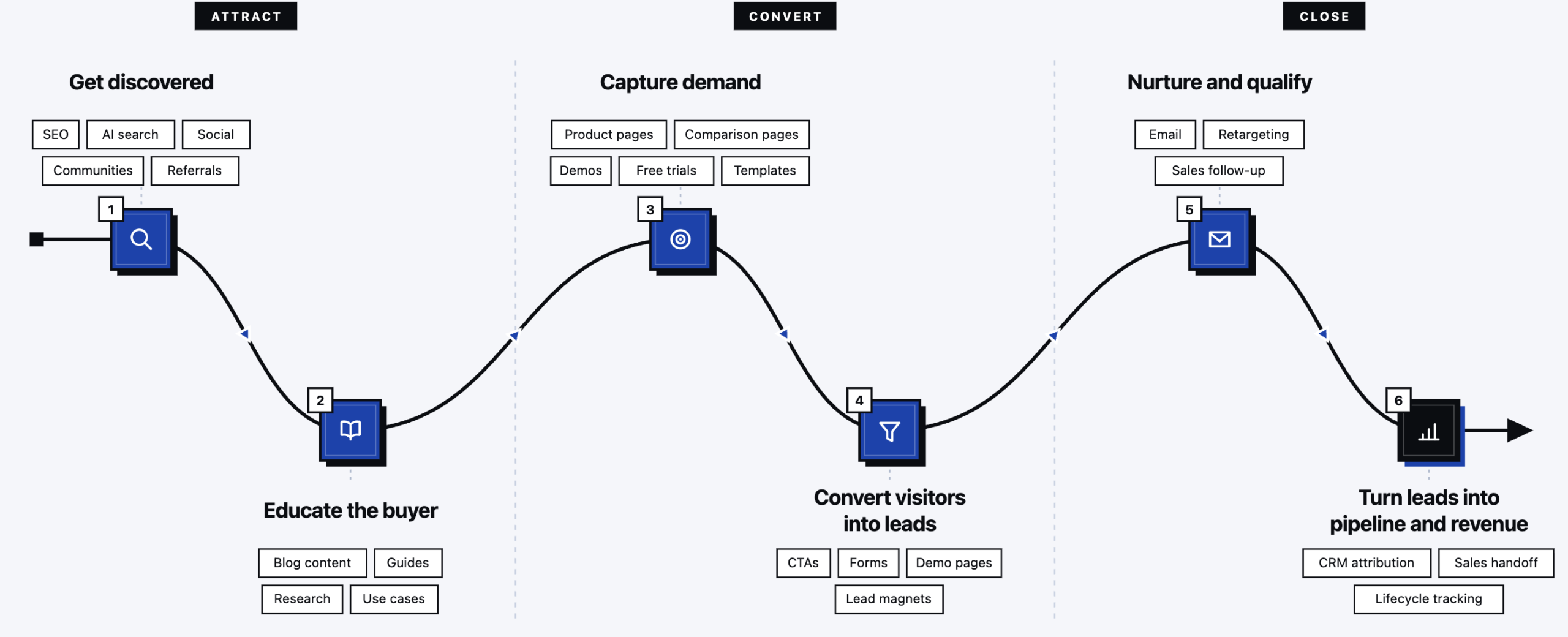
A good B2B SaaS inbound marketing strategy meets buyers wherever they are in their buying journey, from the moment they realize they have a problem to the moment they become a customer.
- Attract (they discover your product): A buyer has a problem they need to solve, so they start looking for a solution. They can search Google or ask an AI tool for recommendations, or hear about you from a trusted colleague. Once they land on your website, the research begins. They read your blog, explore your product pages, look at case studies, and check out your LinkedIn presence to figure out whether your product is a good fit for them.
- Convert (they become a lead): As the buyer gets closer to a decision, they need more than educational content. They want to understand what your product actually does and whether it can solve their specific problem. This is where demand-capture content such as product pages, comparison pages, demos, product videos, and free trials comes in. When the value is clear and the next step is easy to take, a well-designed conversion path turns that interested visitor into an inbound lead, which you can then capture and manage in your CRM.
- Close (they become a customer): This is where Sales takes over. The sales team qualifies the lead, gets on a call to understand their needs, and tailors the conversation and product demo around their specific situation. The goal isn’t simply to book more meetings. It’s to turn qualified inbound demand into real opportunities, pipeline, and ultimately revenue.
3 Best Inbound Marketing Channels For B2B SaaS
There are many inbound marketing channels you can leverage to drive leads for your B2B SaaS. The most popular channels include SEO, PPC, LinkedIn, email, and webinar.
1. SEO/GEO
Despite claims that “SEO is dead”, SEO is still very much alive. In fact, it is the most powerful lead generation channel out there for your business. In fact, in a Databox survey of B2B companies, every company surveyed used organic search, and more than 50% credited it with generating a lot of leads.
Our SEO/GEO playbook for B2B SaaS companies involves 4 steps:
- Target bottom-of-funnel keywords with strong commercial and lead-generation potential.
- Create high-quality, product-led content that answers search intent while naturally showcasing your products or services.
- Build relevant brand mentions by partnering with credible websites, publications, and industry resources.
- Build and optimize profiles across relevant platforms to strengthen your brand’s digital presence and visibility in search and AI-generated recommendations.
2. Organic LinkedIn Content
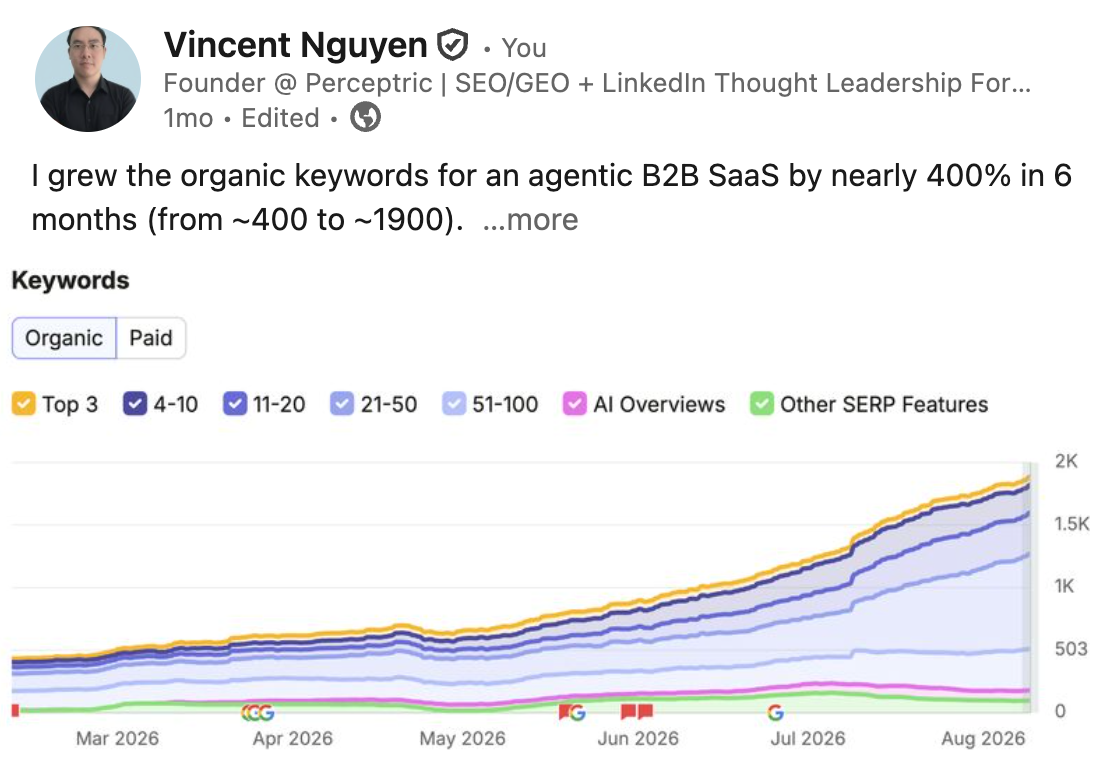
Many people still think of LinkedIn as the place to announce new jobs or career milestones. However, when used strategically, it can be an incredibly powerful lead generation channel.
In fact, founder-led LinkedIn content has been used by so many successful B2B SaaS brands:
- Devin Reed was the content mastermind behind Gong’s explosive growth, helping take the company from $20M to $200M ARR. He then built a LinkedIn strategy for Clari’s CEO that pulled in 6.1 million views in 12 months. This is the kind of reach that would have cost a fortune to buy with LinkedIn ads.
- Tommy Clark started his B2B social media agency as a side hustle while working full-time at Triple Whale. His LinkedIn expertise brought in so much client demand that he had to pick between the salary and the roster (take a wild guess which one won).
- And Kait Stephens, CEO of Brij, grew her company’s revenue 7x in a single year while inbound went from 0 to 40%+ of pipeline, all thanks to LinkedIn.
The playbook is:
Start with one word you want to be known for. Do not write about everything. Be very specific about what you share. You don’t need a massive following to see results; you want to attract people who genuinely care about what you have to say.
You should ideate and build your editorial calendar based on the three levels of intent:
- Top of funnel: Business, entrepreneurship, personal content (once a week is fine)
- Middle of funnel: Industry-specific content (bulk of your content should be this, whatever you want to be known for)
- Bottom of funnel: New product features, book a demo, sign up, etc. (no more than once a week)
- Timely content (like current events): this should definitely be incorporated into your strategy, but only supplemental. Treat those as bonus posts when you can.
If you’re starting from scratch, just write text-based content first. Literally any type of content works on LinkedIn, you just need to make sure what you write resonates with your target audience. Once you’re comfortable with text-based content, lean into other formats like infographics or video clips. These can accelerate trust-building massively since they help viewers put a face and personality (not just a photo of you) to your name and get to know you better.
Being consistent is the hard part. Anyone can post a LinkedIn post, but having the commitment to post every day, over a period of several months, is an entirely different story.
Spend 5-10 minutes throughout your day liking and commenting on posts. Keep in mind your responses don’t have to be anything crazy. Something as simple as “Good stuff” or “love this” can be perfect.
Give your LinkedIn strategy several months to compound, and look beyond likes and followers. Key signals include:
- Recognition: People mention that they follow your content or recognize you from LinkedIn.
- Inbound pipeline: More qualified leads, demos, and opportunities start coming directly from LinkedIn.
- Business impact: LinkedIn contributes to measurable growth in revenue, deals, or pipeline.
- Qualitative feedback: People send messages or comments telling you that your content is useful or has influenced how they think.
- Sales conversations: Prospects mention your posts during sales calls or arrive already familiar with your expertise.
Once you’ve started to see success on LinkedIn, it’s going to be so much easier to get the rest of the team on board. Because you have the receipts to prove how powerful it can be.
3. PPC
PPC is still one of the fastest ways for B2B SaaS companies to put their product in front of the right buyers.
There are two primary types of PPC campaigns you can run:
- Paid Search: You pay to appear at the top of Google immediately, essentially getting the visibility of SEO without waiting months for your pages to rank. The key is choosing the right keywords. If you target searches with strong buying intent, you can bring people to your website when they are already looking for a solution like yours. The trade-off is that the traffic is tied to your ad spend. Once you stop the campaign, the clicks and leads from those ads stop too, unlike SEO, where a page can continue bringing in traffic and leads months after it’s published.
- Paid Social: You pay to put your content (can be an image, video, carousel, or LinkedIn post), in front of a specific group of people while they are scrolling through their feed. You can target people by things like job title, company, industry, interests, or other audience signals. Unlike Paid Search, they are usually not looking for your product at that moment. You are interrupting what they are doing to introduce your brand and make an impression. That’s why Paid Social is often better suited to building awareness and creating demand earlier in the buying process.
Paid search vs paid social
|
Paid search
|
Paid social
|
|
|---|---|---|
| How it works | Someone searches for something on Google, and your ad appears in the results. | Your ad appears in someone’s social media feed while they are browsing. |
| Who you reach | People who are already looking for a product or solution like yours. | People who may need your product but are not looking for it yet. |
| What you know about them | Their search term tells you what they are looking for. Someone searching “CRM for startups” is clearly interested in CRM software. | You choose an audience based on things like their job, company, industry, or interests. |
| Targeting | You choose the words people search for, such as “sales software” or “HubSpot alternative.” | You choose the people you want to reach, such as CEOs at SaaS companies with 50–200 employees. |
| Ad format | Mostly short text ads with a headline and a link. | You can use images, videos, carousels, documents, and other formats. |
| What gets attention | The right keyword, useful ad copy, and a good offer. | The creative matters a lot. A strong image, video, or message needs to make people stop scrolling. |
| How much you can reach | You are limited by how many people search for your keywords. | You can reach a much larger audience, but people may see your ads many times. |
| Best for | Reaching people who are already looking for a solution and may be ready to buy. | Introducing your company to potential buyers before they are ready to buy. |
| How fast it works | You can start getting clicks and leads soon after launching. | You can get clicks quickly, but it often takes longer to see an impact on the sales pipeline. |
| Measuring results | Usually easier to track because you can see the search, click, and conversion. | Harder to track because someone may see your ad several times before they visit your website or talk to sales. |
| Common problem | You can only reach people who are already searching. It is harder to reach buyers who do not know they need your product yet. | You can get lots of clicks or leads from people who are interested in the content but are not good potential customers. |
| Main goal | Capture demand from people who are already looking for a solution. | Build awareness and interest so potential buyers remember you when they are ready to look for a solution. |
3 Best B2B SaaS Inbound Marketing Examples
1. HubSpot
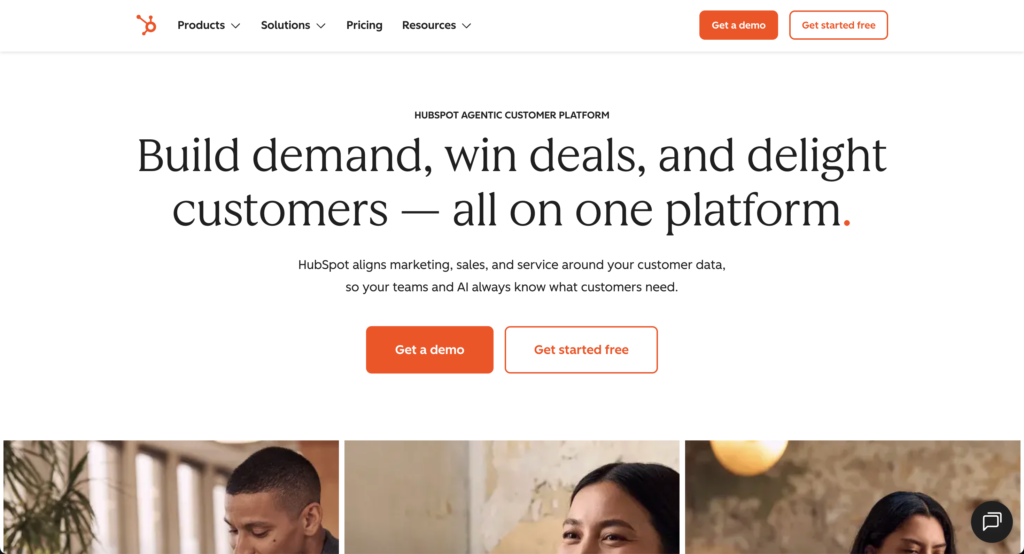
HubSpot is the founder of the modern “inbound marketing” movement. Brian Halligan coined the term “inbound marketing” around 2005, while he and Dharmesh Shah were at MIT. Their basic observation was that buyers were increasingly going online to research products rather than responding to interruptive tactics such as cold calls and mass advertising.
HubSpot built its inbound marketing methodology around three core stages: Attract, Engage, and Delight:
HubSpot’s inbound strategy starts by attracting the right people with content that answers the questions they are already asking. HubSpot built a vast library of blog articles, guides, templates, reports, and social content around marketing, sales, and customer service. Over time, this content helped turn HubSpot itself into a trusted destination for people researching these topics.
Once someone discovers HubSpot, the goal is to build a relationship rather than immediately push for a sale. HubSpot uses educational content, email, personalized experiences, and its sales process to help prospects understand their problems and evaluate potential solutions. Every interaction is designed to demonstrate how HubSpot can create value for the customer.
HubSpot’s inbound philosophy doesn’t end when someone becomes a customer. The company continues to create value through customer support, education, onboarding, and helpful resources. The goal is to help customers succeed with the product so they remain satisfied, become advocates, and continue their relationship with the company.
2. Vanta
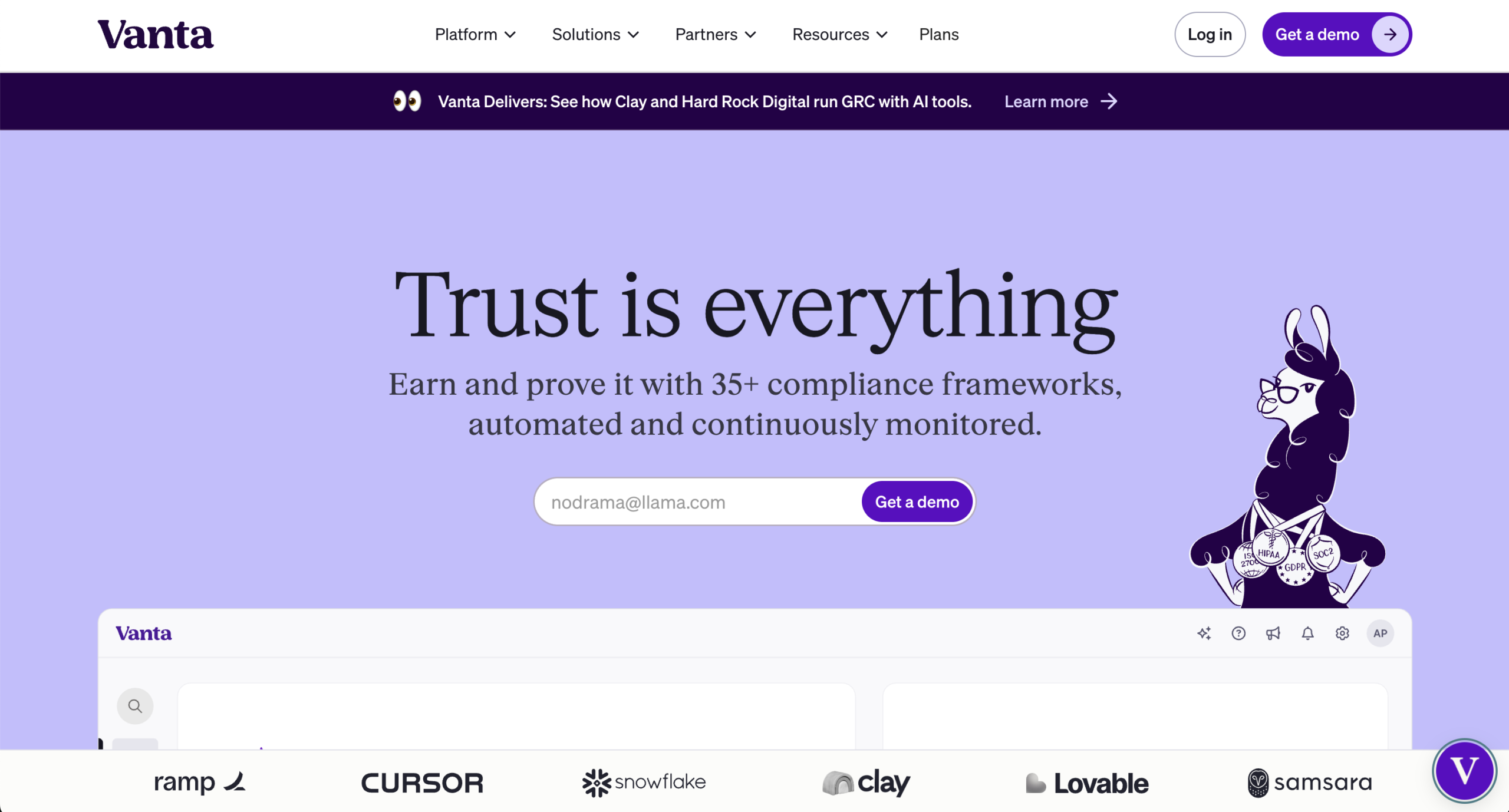
Vanta is another great example of how a B2B SaaS company can turn SEO into a durable inbound engine. Rather than relying on a handful of high-performing articles, Vanta built an interconnected content ecosystem around the compliance topics its customers care about.
The strategy revolves around three things:
Vanta organizes its content into dedicated “Collections” subfolders around major compliance frameworks and concepts, including SOC 2, GRC, and ISO 27001. Each Collection acts as its own topic hub, with educational content covering everything from basic concepts to more advanced compliance questions. These topics map closely to Vanta’s products, so the content works as an SEO asset and a funnel into the product at the same time.
Someone searching “What is SOC 2?” can enter through an educational article, explore related SOC 2 topics, and eventually discover Vanta’s compliance automation product. The content attracts the visitor and then guides them toward a relevant commercial solution.
Vanta doesn’t create one page and hope it ranks for every variation of a topic. Its Collection pages follow a repeatable structure that works the core topic and its long-tail variations into navigation, related-content sections, and other page elements. This builds depth around each compliance framework while creating extra entry points for people searching more specific questions. The result is a large network of pages targeting different stages of the search journey.
- 180+ pages across Vanta’s Collections, according to the source analysis
- ~13.9K monthly visits in US organic traffic across all Collections
- ~9,600 monthly visits from the SOC 2 Collection on its own
Vanta systematically connects pages through contextual links, sidebars, navigation, footers, and “Explore More” sections. This helps visitors discover related content while spreading internal authority throughout the Collection.
That’s what turns a set of articles into an SEO moat. A new page doesn’t have to build authority from scratch, because it sits inside an established network of closely related pages. As the ecosystem grows, the pages reinforce one another and the whole topic cluster gets harder for competitors to replicate.
3. Zapier
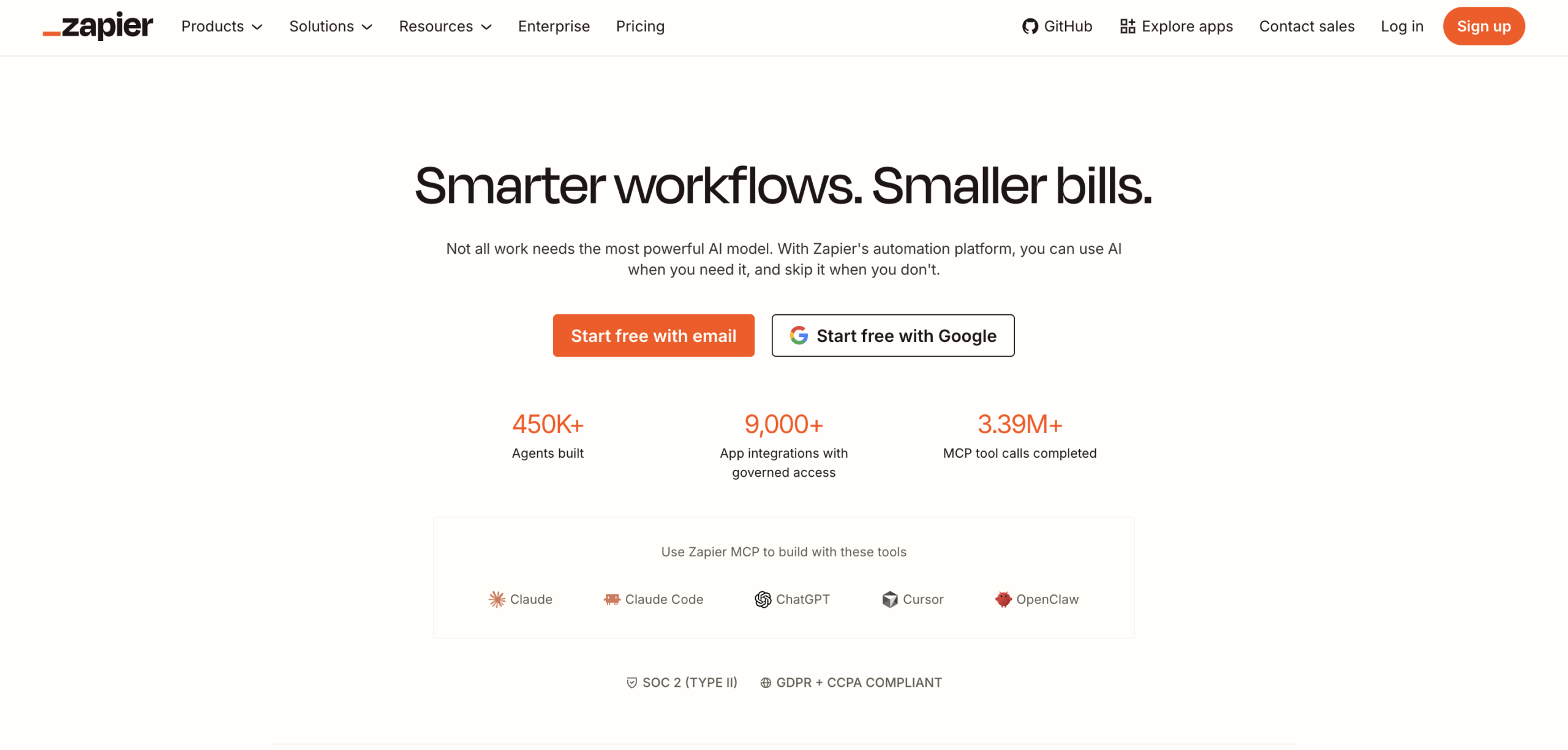
Zapier has built one of the most recognizable examples of programmatic SEO in B2B SaaS. Instead of relying solely on blog content, Zapier turned its massive library of app integrations into thousands of searchable landing pages. The result is an SEO engine that is directly connected to what the product does: connecting apps and automating workflows.
Zapier supports thousands of apps, which creates an enormous number of potential integration combinations. Instead of manually creating a page for each one, Zapier uses a repeatable page structure to generate pages such as Google Sheets + Slack, Google Calendar + Notion, and thousands of other combinations. This lets the company target highly specific searches like “how to connect Google Sheets to Slack” at a scale that would be impossible with traditional content production.
These aren’t generic informational searches. Someone searching for “Google Sheets Slack integration” already has a problem they want to solve and is actively looking for a way to connect the two tools.
The real moat isn’t the page template. Competitors can copy a templated landing page, but Zapier’s pages are powered by its underlying integration infrastructure: the apps it supports, the triggers and actions available for each integration, and the workflows users can actually build.
That gives each page useful information specific to the product rather than generic SEO copy.
Work With Perceptric To Kickstart Your B2B SaaS Inbound Marketing Engine
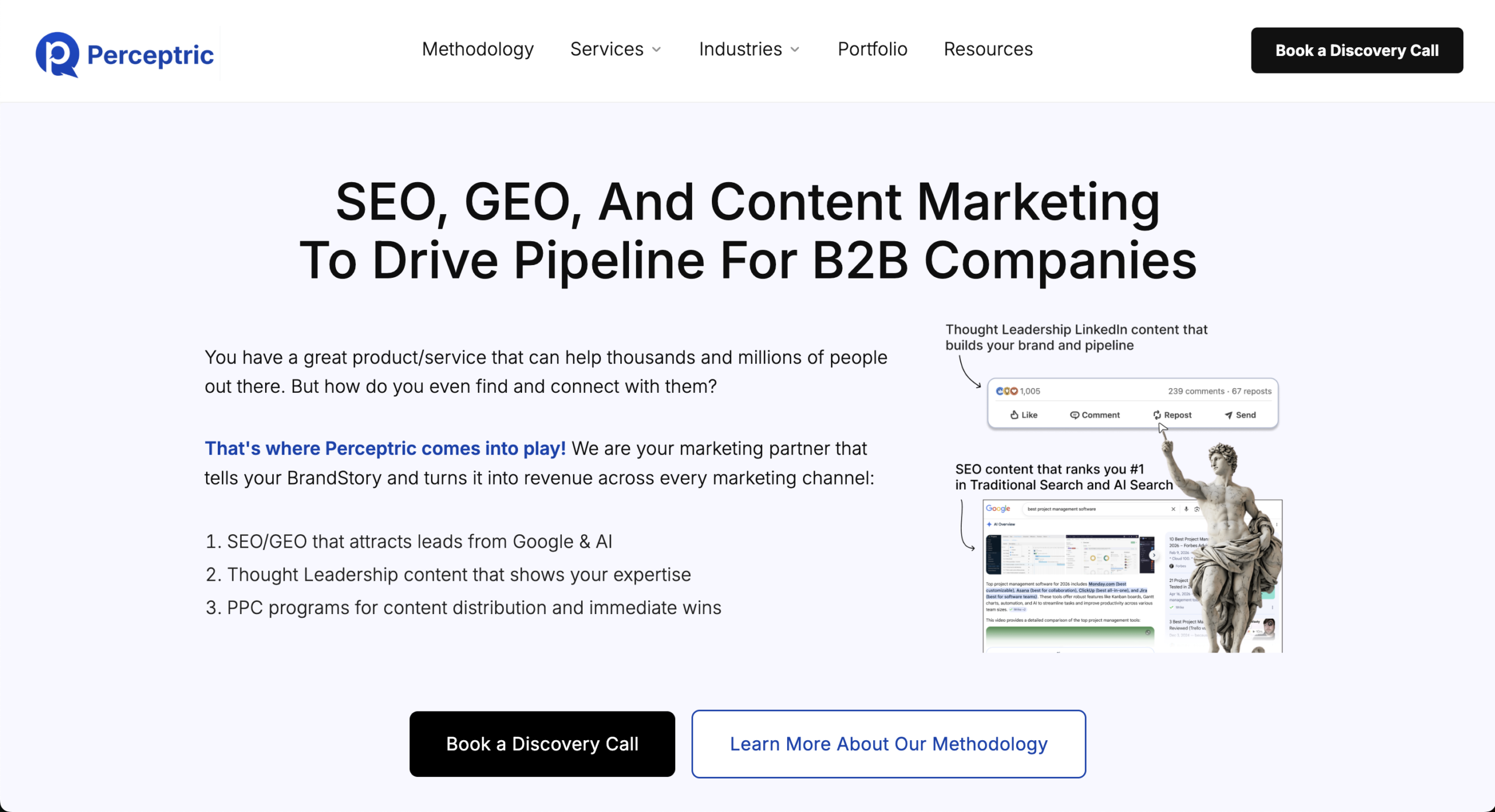
Perceptric is a B2B marketing agency that drives pipeline & revenue growth for SaaS companies. We are an extension of your in-house team. From SEO/GEO to LinkedIn content to PPC, we have the senior experts with unique methodology to help you acquire more customers and grow your ARR.
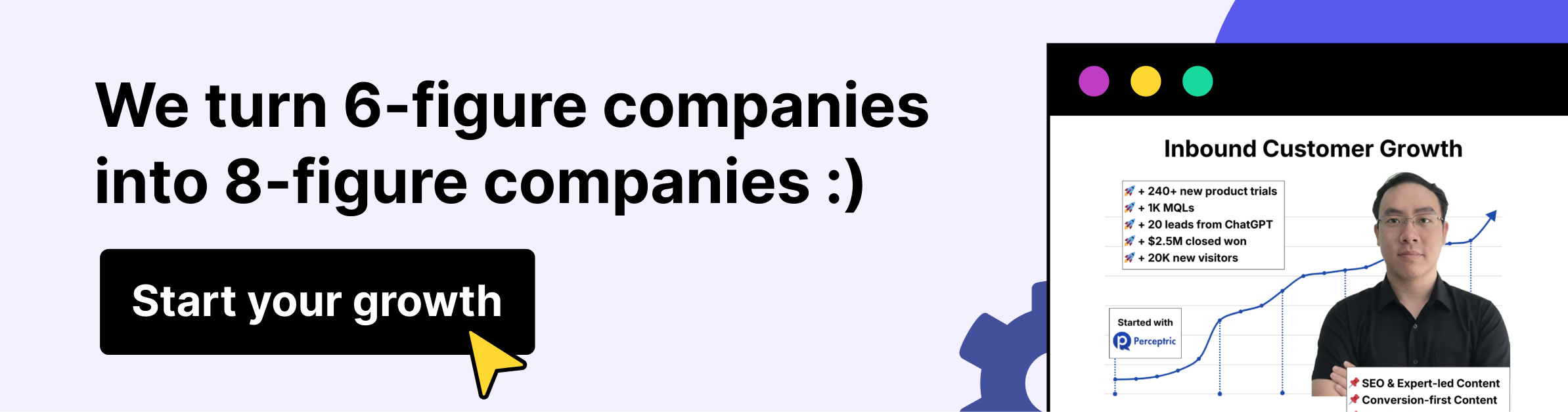
For example, one of our clients in the B2B SaaS industry saw tremendous pipeline growth since working with us in the past 6 months:
Our most notable clients include Katalon (technical SaaS), Momos (AI agent), Anduin Transact (private equity SaaS), ScoutQA (automation testing AI agent), and DeepIDV (KYC software).
See how we grew Katalon’s organic sessions by 150K+ and ARR by 400%.
Perceptric’s key capabilities:
- Conversion-led SEO. Keyword strategy built around commercial intent, targeting the terms buyers search while comparing vendors rather than the ones that only inflate sessions.
- AI SEO (GEO/AEO). A reverse-engineered approach to how LLMs select sources, built to get you cited in ChatGPT, Claude, Perplexity, and AI Overviews for commercial terms.
- Content production. Expert-led articles grounded in SME interviews and original research, written by people who understand the product deeply enough to sound in-house.
- Interactive content experiences. Custom-coded modules embedded in articles that let buyers explore, compare, and self-qualify, driving time on page and brand recall no wall of text can match.
- LinkedIn thought leadership. Story-led posts written in your voice that build demand and funnel a warmed-up audience into the search-led engine.
- Paid search. PPC run off the same bottom-funnel keyword and messaging strategy as your content, so you own the full SERP while organic rankings climb.