In this guide, I’ll break down the SEO/GEO program that generated $500K in pipeline for a B2B SaaS company that I worked with.
I’ll walk through the strategy behind the program, the key moves that made it work, and how we combined traditional SEO with AI search optimization (GEO) to turn organic visibility into real pipeline.
After reading the article, you’ll understand:
- How we identified high-intent search opportunities that could actually generate pipeline, not just traffic
- How we built an SEO/GEO strategy around the entire buyer journey, from problem discovery to solution evaluation
- How to create content that gets cited by ChatGPT, Google AI Overviews, Perplexity, and other AI search engines
- How to connect organic search visibility to commercial pages and conversion paths
- How to measure SEO/GEO performance based on pipeline and revenue
- The key lessons we learned, including what we would do differently if we started from scratch
Let’s dive in.
Four elements that made our SEO/GEO program successful
We attributed that $500K pipeline goal in 6 months to four core elements:
- We have strong product positioning
- We built our program around buyer intent
- We deliver exceptional UI/UX in every single article
- We have solid conversion tracking in place
1. We have strong product positioning
Before we deploy any content programs, it is essential that you understand the product we want to write about.
The B2B SaaS that we built this program for has figured out their identity. They know:
- Who they are: an agentic B2B SaaS that automates workflows of Customer Support teams
- Who they’re selling to: solely for F&B and Hospitality franchises around the world
- How they’re solving their pain points: by leveraging AI to unify Customer Support activities in one dashboard
- Why they’re solving their pain points: because AI can actually help restaurant brands can deliver unforgettable customer experience
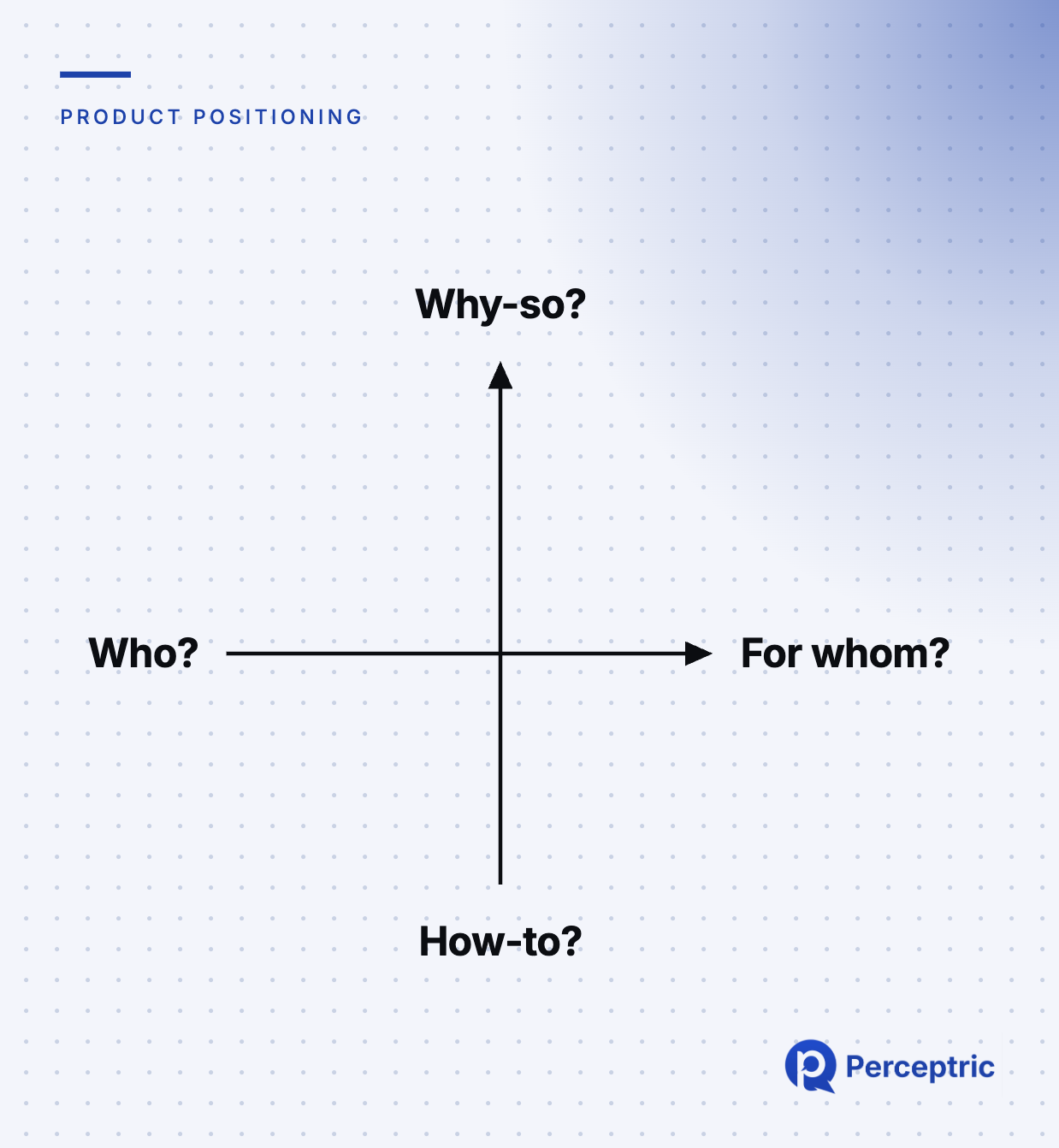
With clear product positioning in the category we want to own and the use cases we can deliver to customers, we can build an SEO/GEO strategy around the searches that matter most to our business.
2. We build our SEO/GEO program around buyer intent
Not all keywords are born equal.
Some have better potential to drive revenue than others. We know that, so we prioritize revenue-generating Commercial keywords, then JTBD keywords, rather than Informational keywords.
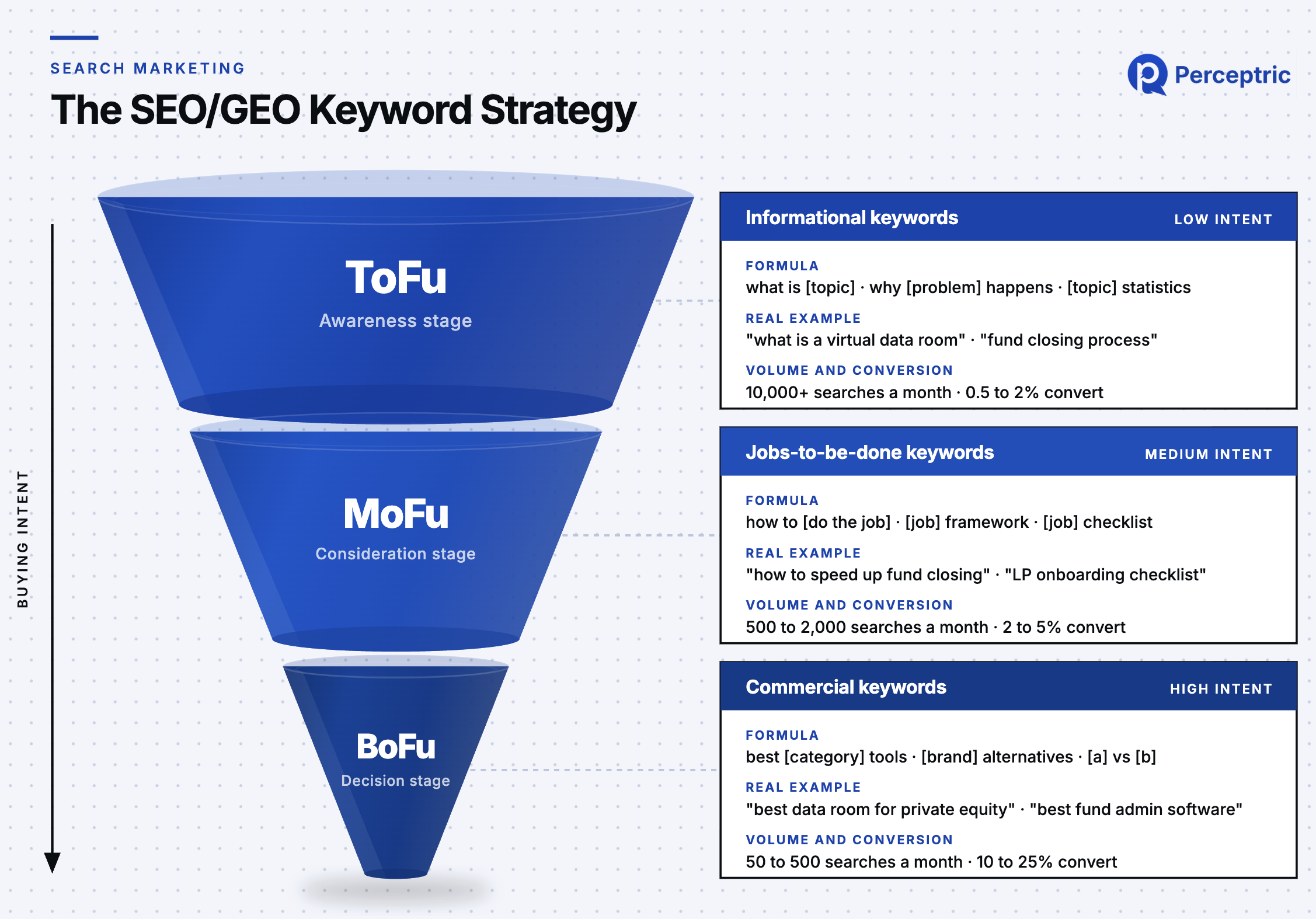
Look at the diagram above and you should see that there are 3 types of keywords:
Type 1: Informational keywords (TOFU)
These are the “what-is” keywords that bring in thousands of traffic every single month. However, they rarely convert, simply because people who search for informational keywords are only looking for a definition of a topic they don’t know much about.
Those people are very, very far from becoming a buyer of your product. In fact, they’re probably some students, or online researchers, or a random guy somewhere that just wants to learn more about the topic.
Moreover, these informational queries have largely been answered by AI Overviews. According to a research from SparkToro, more and more people are not clicking into search results to go to websites anymore. The information they need to find has been served to them by AI.
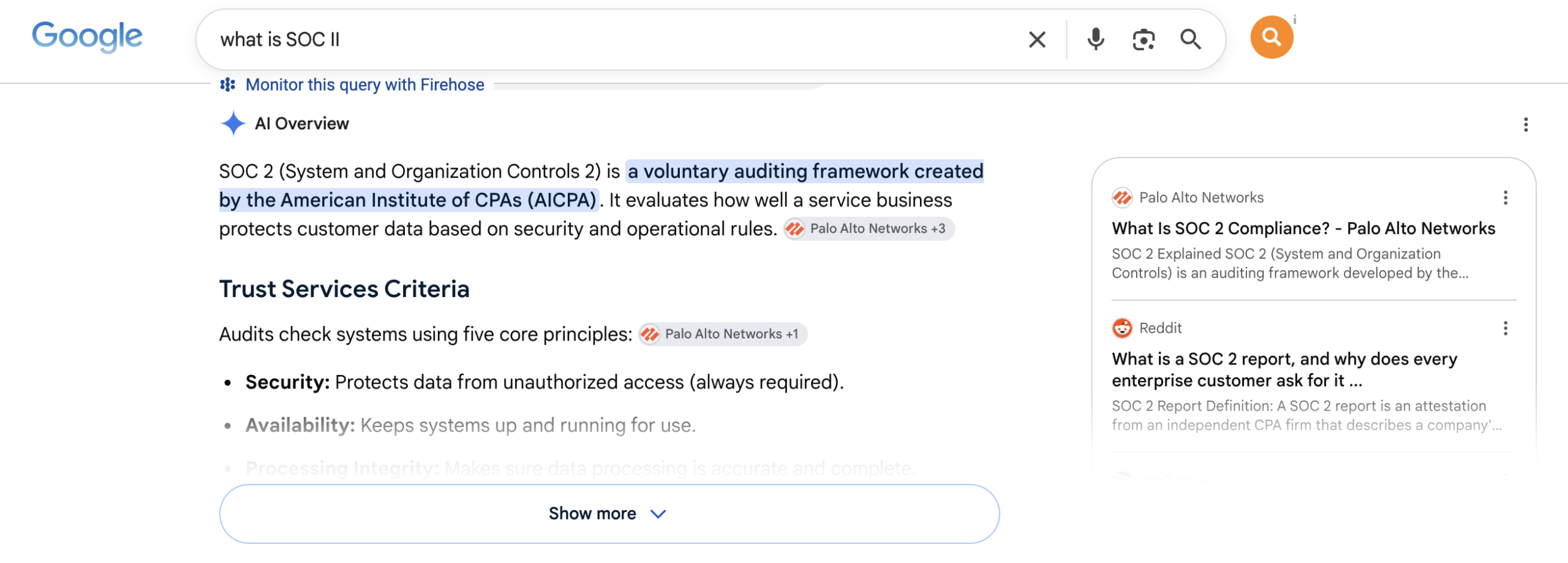
That’s why the old playbook of driving tons and tons of traffic with “ultimate guides” is no longer working.
Type 2: Jobs-to-be-done (JTBD) keywords
These keywords drive conversions because they capture people with a specific problem your product solves. That’s the difference between JTBD keywords and pure informational keywords.
Top of funnel keywords don’t have any buying intent (or hardly any). For JTBD keywords, even though the searcher aren’t looking for a software or comparing vendors, they are still trying to accomplish a task that they face in their day-to-day life. There’s buying intent, even though they don’t know about your product, yet.
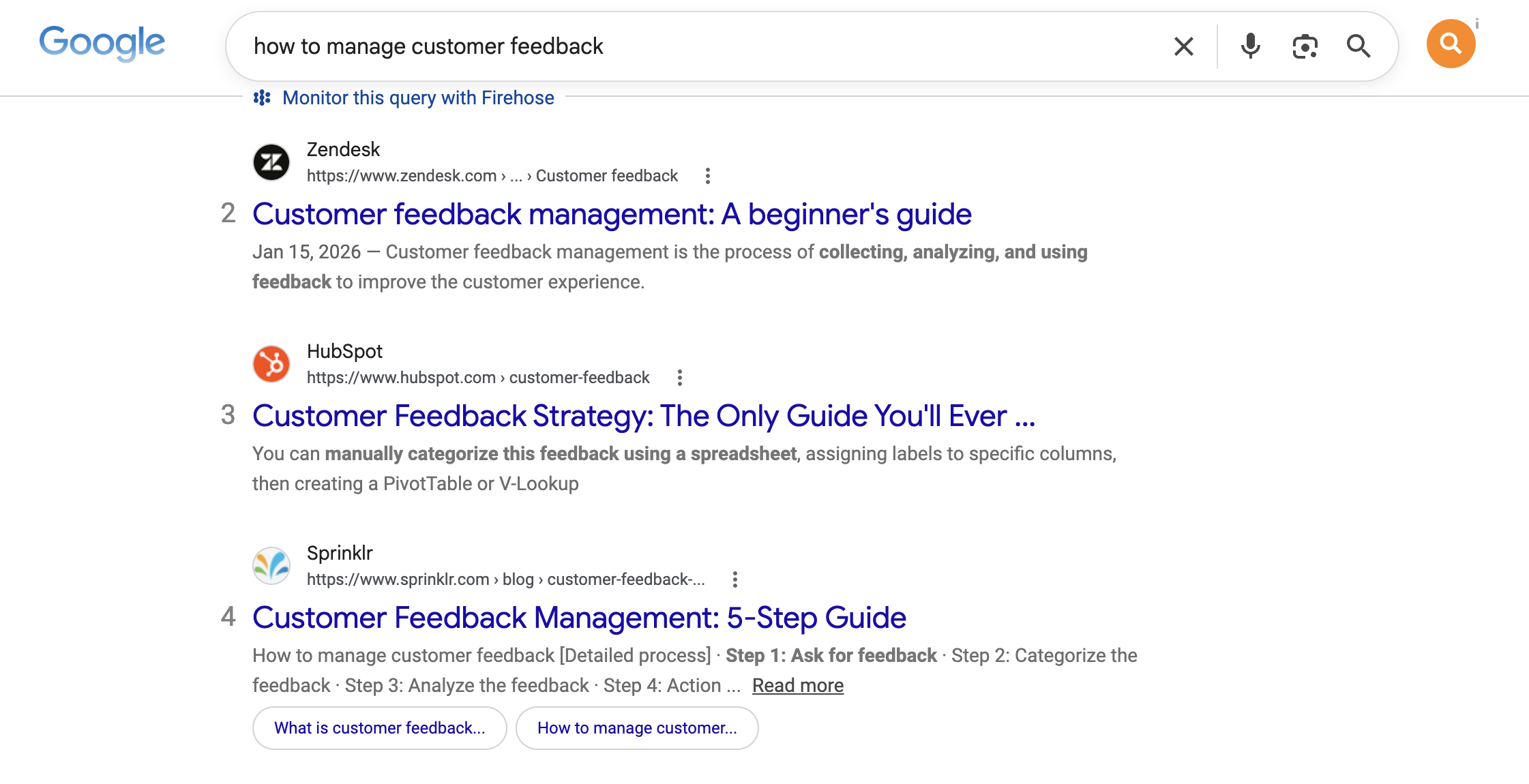
For example, someone searching for “how to manage customer feedback” is actively looking for ways to improve their customer feedback process. Zendesk, HubSpot, and Sprinklr are all ranking for that keyword, and they can put their products in front of these potential buyers while showing them how to solve the problem.
Type 3: Software Category keywords
These are the most important keywords to target for your SEO/GEO strategy.
They look like this:
- “[Industry] + [Use case] software”
- “[Use case] software for [Industry]”
- “[Industry] software for [Use case]”
- “[Competitor] alternatives”
The more use cases you have or verticals you serve, the more potential keyword opportunities you’ll have in this category. A good example of a SaaS following this strategy is TinyFish, as you can see below:
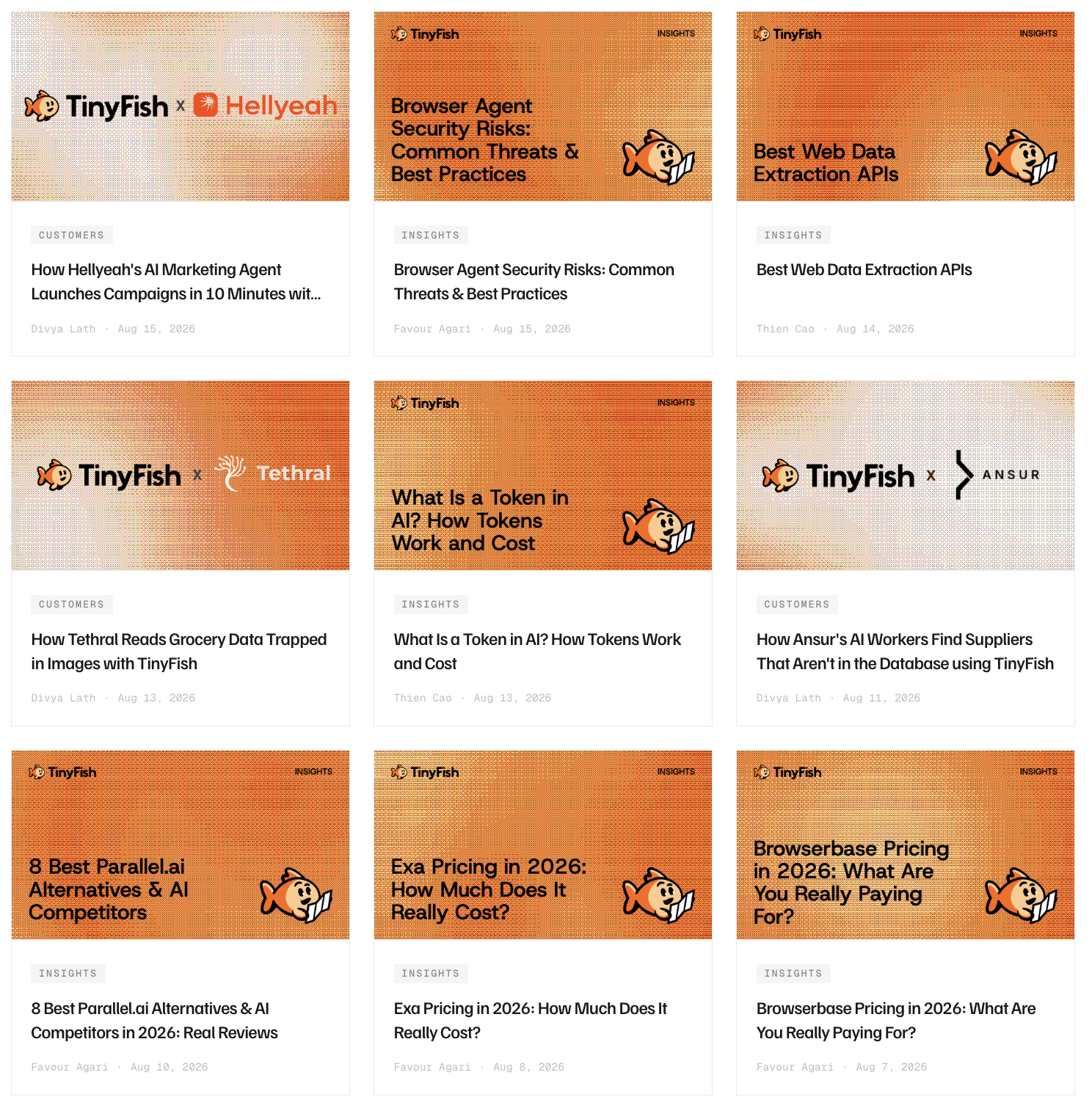
We emphasized the importance of strong product positioning precisely because of this. The better you understand your vertical and where your product fits within it, the more precise and comprehensive your keyword universe becomes.
Interestingly, most Bottom-funnel articles happen to be in the form of listicles. And guess what? LLMs love listicles. They are cited the most when the prompts require product recommendations. We wrote an article explaining the mechanism behind this.
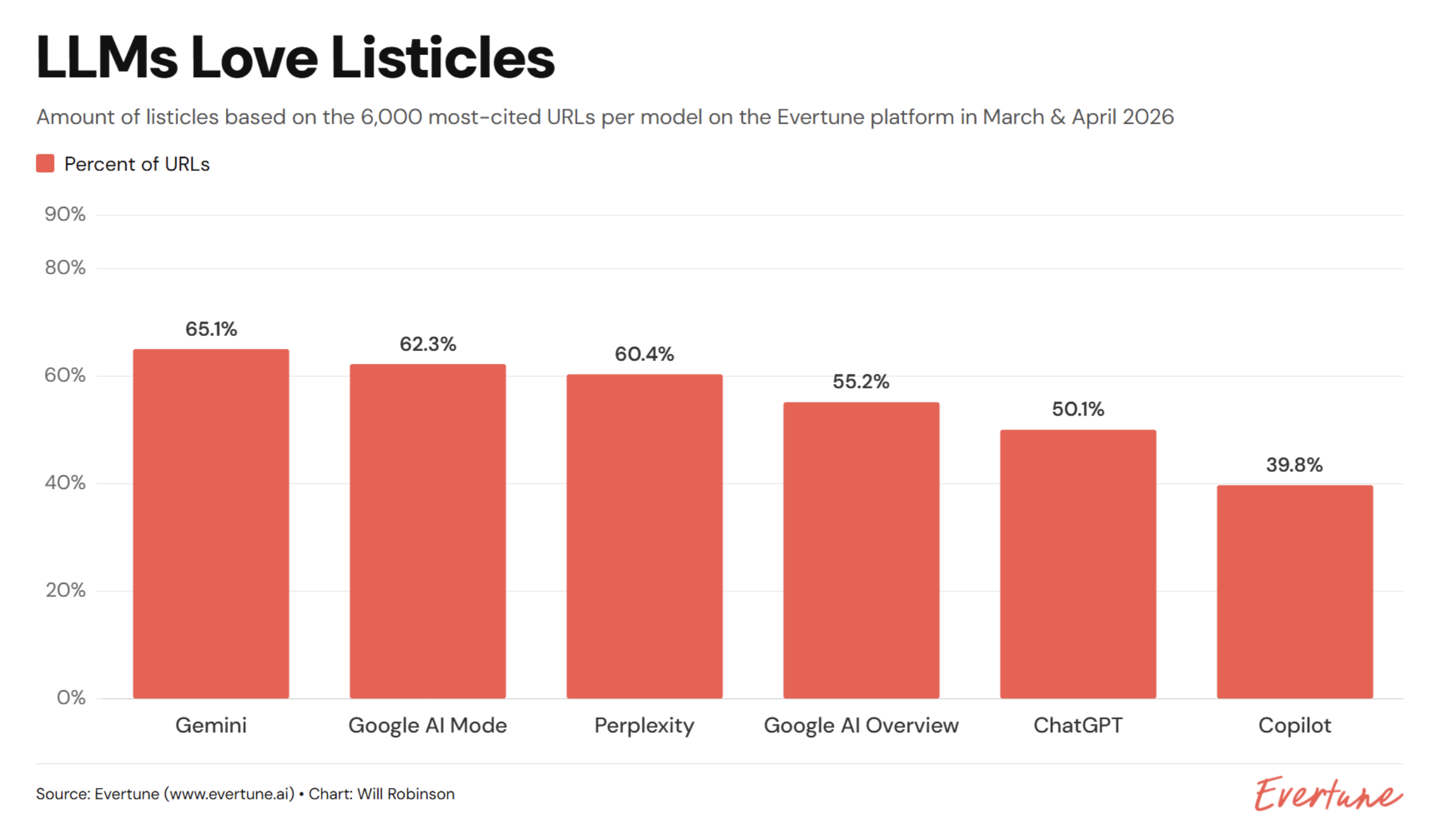
That means:
- Every keyword we target attracts highly relevant, high-intent visitors to the website.
- These keywords are typically best served by listicle-style content, a format that LLMs tend to favor when generating recommendations and comparisons.
One single strategy, but accomplishing the goal of both SEO and GEO.
3. We deliver exceptional UI/UX in every single article
The Bottom-funnel keyword strategy we introduced above is nothing new. Zapier has been implementing it for years, and their articles are ranking #1 for highly competitive keywords, such as “best AI productivity tools”.
What makes them stand out is:
- They have strong brand awareness backing it up (yes, brand awareness helps SEO a lot)
- They deliver exceptional UI/UX in every article
- Their reviews are authentic and genuine. People can feel that every review comes from lived experience of the writer.
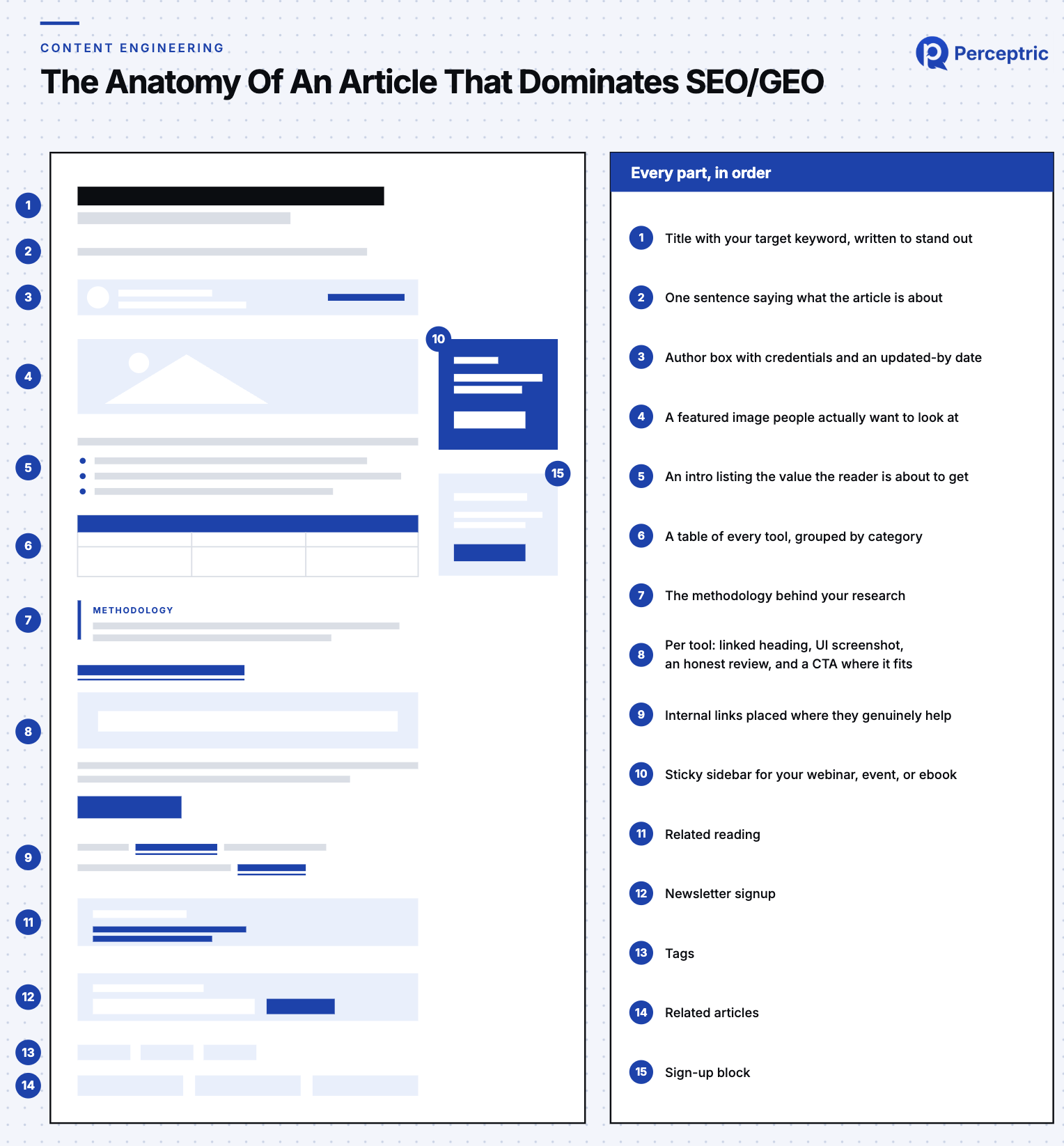
We applied the same principles to the articles we produced. Every article is structured to deliver the best reading experience to the visitor. Here’s an example of how a good article looks like:
4. We have solid conversion tracking in place
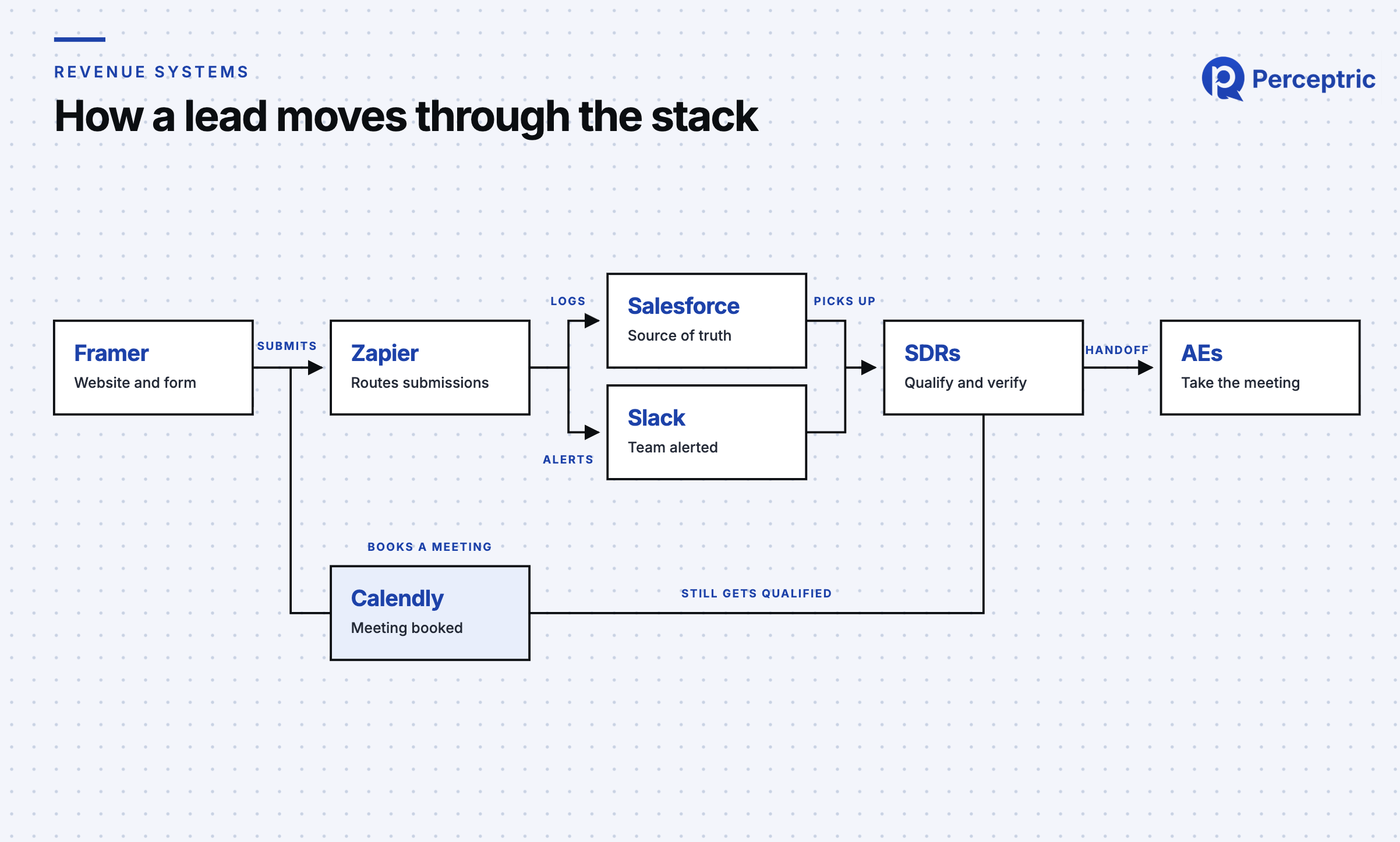
To accurately measure the results driven by our SEO/GEO efforts, we need a solid conversion tracking setup. The tech stack we setup for the client is fairly simple:
- Framer is where the website is hosted and the form is built
- Calendly to let qualified prospects book meetings directly
- Salesforce as our CRM and source of truth for lead tracking
- Zapier to automatically send form submissions to Salesforce
- Zapier + Slack to instantly notify the team when a new lead comes in
- The SDRs qualify and verify incoming leads before handing them off
- The AEs come in to take qualified meetings and move opportunities through the sales process
Our Process To Achieve Said Results
1. Product Research
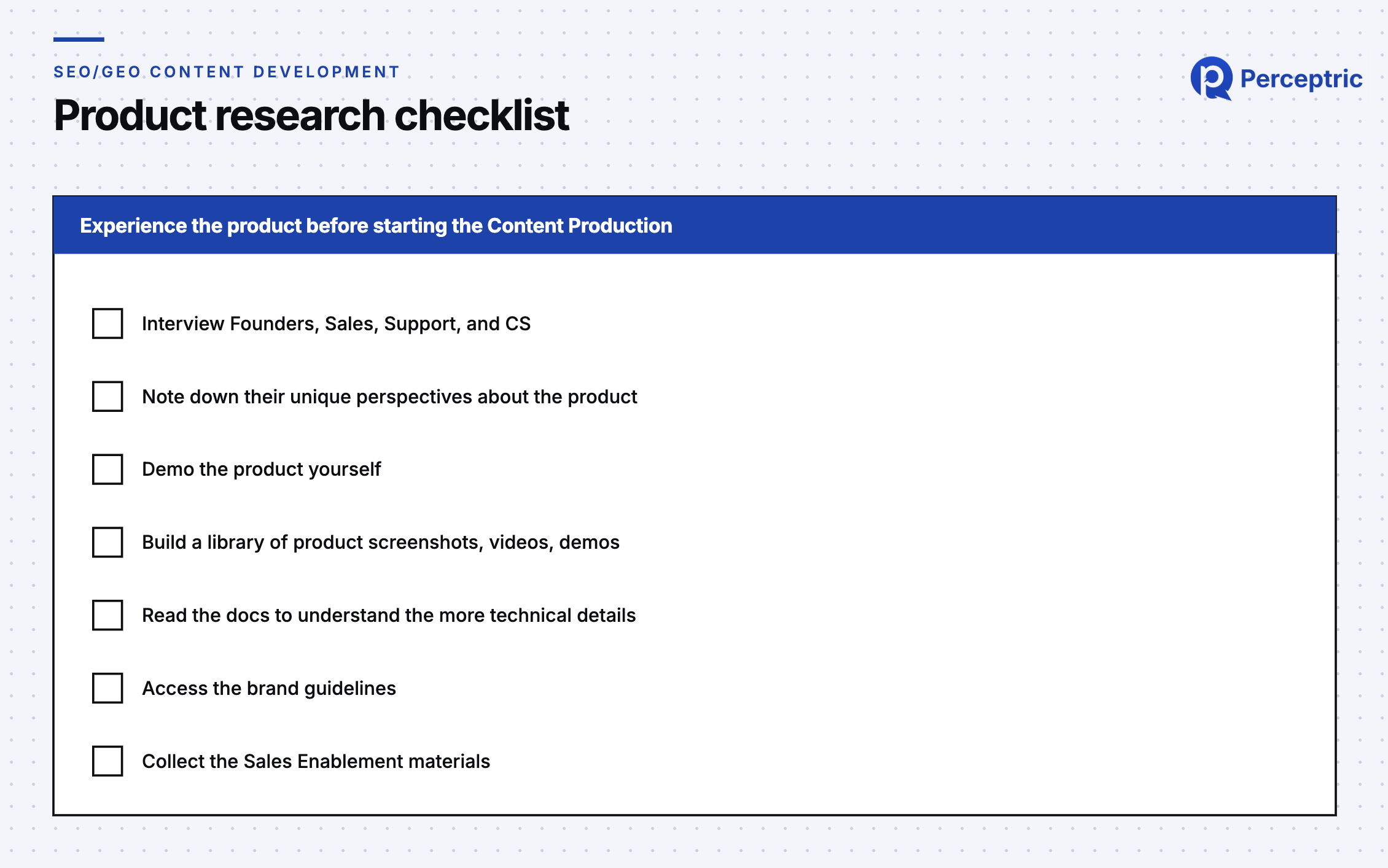
We schedule interviews with several people across the company who know the product inside and out and basically pick their brains. The goal is to get a diverse set of perspectives on where the product actually stands.
We talked with:
- Founders (the product is literally their child, they know it deeply)
- Product (of course)
- Sales (they know what the customers are looking for)
- Support (they know the complaints and what’s hidden in the closet)
- Marketing (they know where the product stands in the market)
We send each of them the questionnaire that we’ll use so they know what to expect in the call. We ask them:
- Who is this product for?
- What problems does it solve?
- Why do customers choose it over alternatives?
- What makes it different from competitors?
- What are its strongest use cases?
- What are customers most excited about?
- What do customers complain about most?
- What alternatives do customers consider before buying?
- Which use cases are the strongest fit?
- What do you wish prospects understood about the product before they book a meeting?
Our AI meeting assistants capture their answers. After we’ve interviewed everyone, we dig through the transcripts and filter out the gems worth writing about.
We don’t stop there. We take the time to actually use the product and explore its features. Just 30-min of free-form exploration gives us plenty of information about the product.
2. Content Strategy
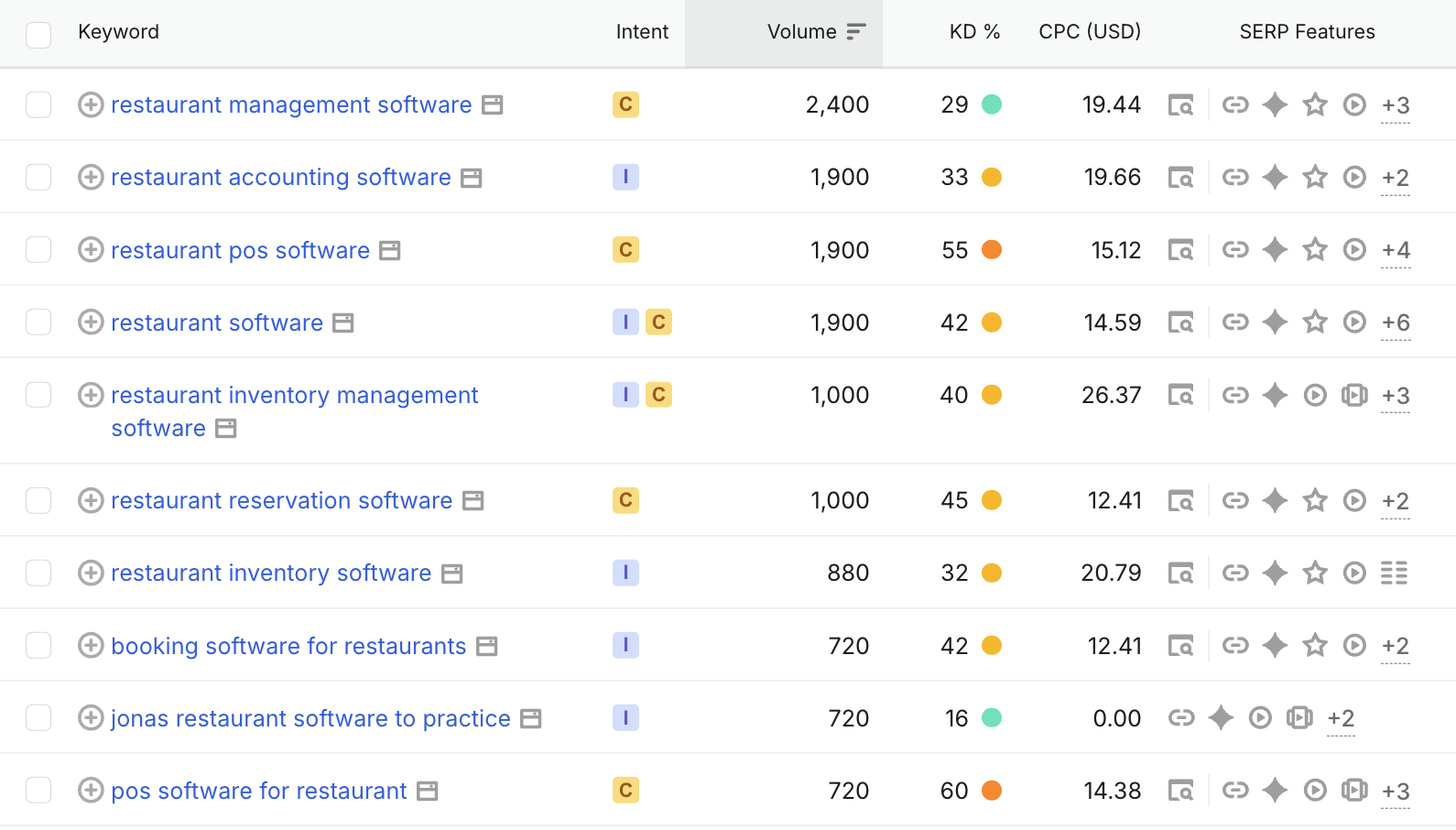
Once we’ve understood the product, we start shortlisting the keywords that align with its positioning. SEMRush is our tool of choice, and the process goes like this:
- Start with Broad Match research. We enter the seed keywords identified during Product Research and use Broad Match to explore the wider keyword universe around them. For example, if our client is a software company targeting the F&B industry, we might start with “restaurant software” as our initial seed keyword. From there, we gradually niche down by use case, restaurant type, or business function to uncover more specific search opportunities.
- Expand the keyword universe. For each seed and relevant keyword, we explore related terms, variations, questions, and long-tail queries. This helps us uncover search patterns we may not have thought of initially. The deeper our understanding of the product and its vertical, the more precise we can be in expanding this universe.
- Run competitor research. We also analyze the keyword profiles of competitors in the niche. They have already invested heavily in SEO/GEO and are likely ranking for valuable keywords that we can compete for. We identify the keywords they rank for, then filter for opportunities that overlap with our positioning and are realistic for us to compete on.
- Filter for relevance and intent. Finally, we balance search demand with product alignment. Some keywords may look highly relevant to the product but have little to no search volume. Others may have significant search volume but attract users who have no reason to buy the product. We prioritize the keywords that sit at the intersection of meaningful search demand, strong product fit, and high commercial intent.
The result is a keyword universe built around the product’s positioning, use cases, and the problems its ideal customers are actively trying to solve. After that, we turn it into an Editorial Calendar, with clear timelines that the team can work on.
3. Content Development & Publication
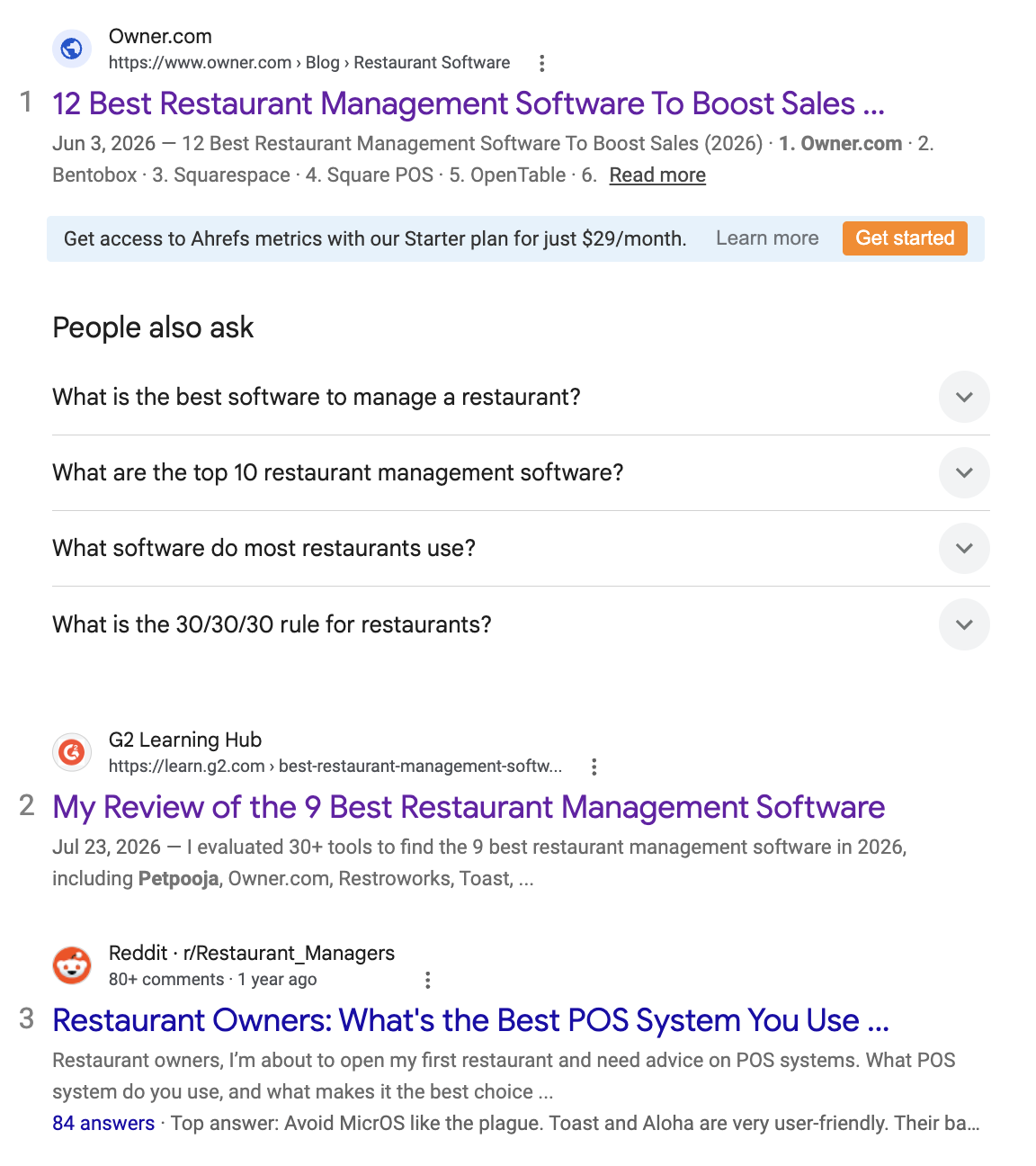
Each article is a project on its own. For example, if we’re writing an article targeting “best restaurant management software,” we start by analyzing the current search results to understand what Google considers relevant for the query:
- Which pages are ranking
- What content formats they use
- Which products and competitors appear repeatedly
- What topics and subtopics they cover
- What search intent the SERP shows
The goal is to understand what Google already rewards. At the core, Google works in similar ways to a social media algorithm: whatever page receives more positive user engagement is ranked at higher positions. The highest ranking page is not necessarily the “best-written” page, but rather, the most positively engaged page.
Results
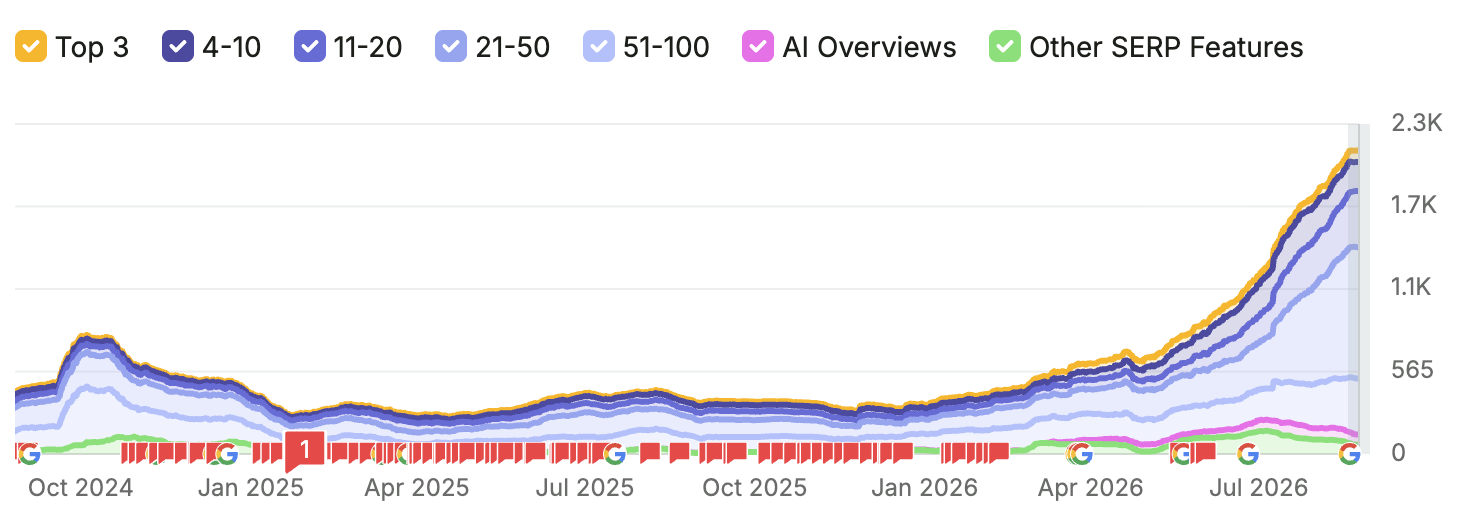
With that process, we consistently produced high-quality for our clients, and achieved an unprecedented growth in terms of keyword rankings. In 6 months, we grew from ~300 keywords to 2000 keywords ranked, the majority of which are bottom-funnel keywords, which drive high-intent to the website.
Of course, the pipeline generated is also satisfactory. While we can’t disclose the specifics due to NDA, we can share that we’ve generated ~$500K in pipeline in the 6-month period, many of which have become Closed Won and brought consistent ARR to the client.
Takeaways
The work we’ve done with this client just goes to show the importance of building marketing strategies around buyer intent.
It’s also crucial to put SEO/GEO in an ecosystem of demand generation activities. The strategy we used above focused on meeting buyers when they are searching for a solution, which is why they’re Googling keywords like “best [X] software”. That puts them into the Medium-intent bucket: they have Demand for a Solution.
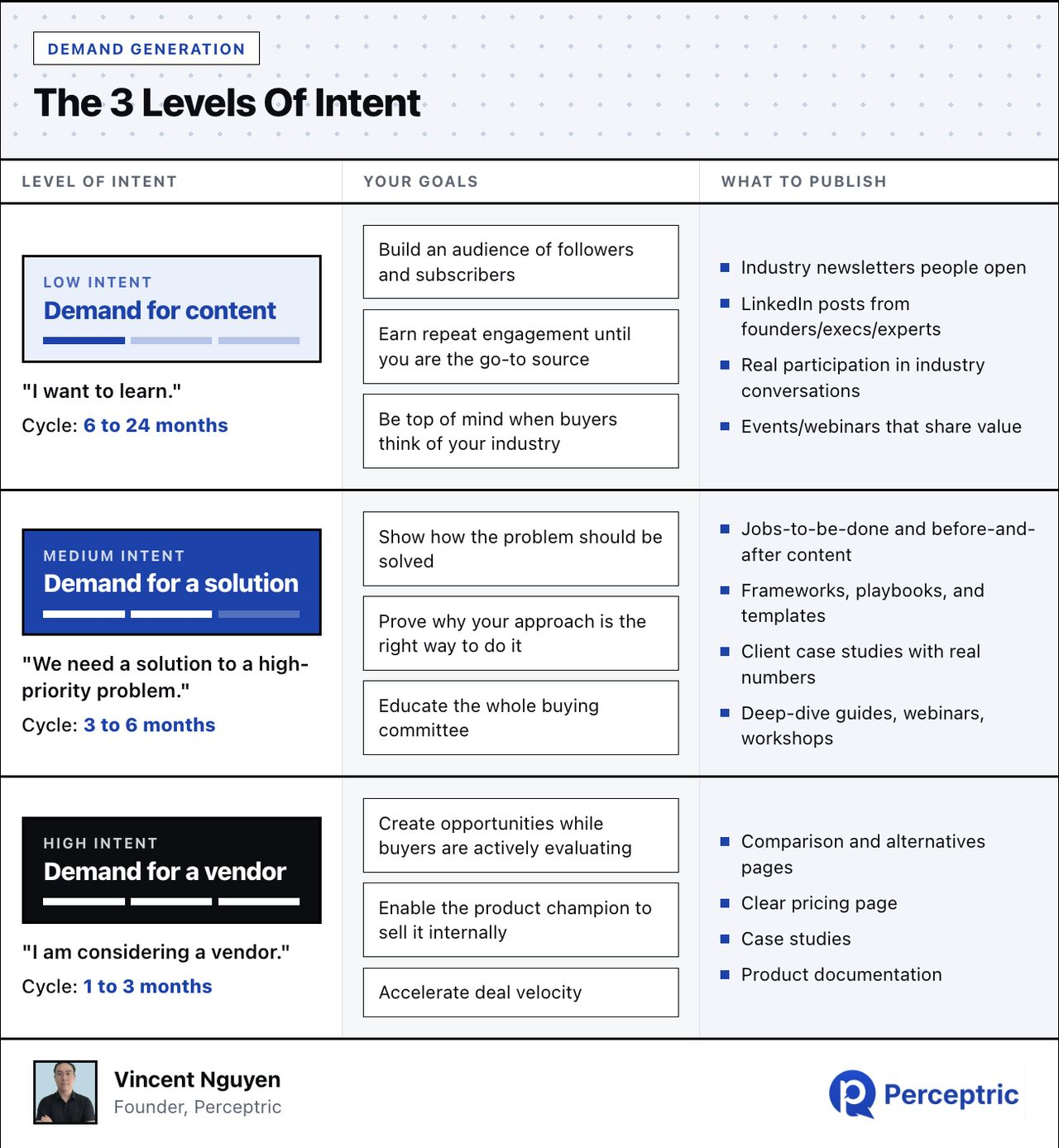
It’s important that you not rely on SEO/GEO as the sole channel for demand generation. You need to supplement your SEO/GEO activities with low-intent content (newsletters, LinkedIn posts) and high-intent content (case studies, pricing page) to meet your buyer across all stages of their buying journey.
If you’re in B2B, your buyer needs at least 300 touchpoints to close the deal. With the educational powers of LinkedIn content and commercial powers of case studies, you maximize your conversion potential.