In Belkins' 2026 survey of 90 B2B marketing leaders, 7 out of 10 rated content marketing and SEO as top performers. Paid ads came next at 51%, then email at 46%.
That means the channels that work best for most B2B teams are the ones that take patience. But every team still needs some leads this quarter, so the right mix usually blends slow channels with fast ones.
That's why I'm sharing the seven lead generation strategies I'd look at first, based on what I've learned over the past 10+ years growing B2B SaaS brands. Each one comes with a short playbook you can start this month.
What is a lead generation strategy?
A lead generation strategy is a repeatable way to get people who fit your target market to raise their hand, such as by booking a demo, starting a trial or replying to an email.
You won't need all seven below. Most teams do best with two or three run well. If you want the full system around them, from ICP to handoff, read our guide on how to generate B2B leads.
1. Do SEO and GEO
People have called SEO dead for years, and it keeps bringing in leads. The difference now is that buyers search in two places: Google and AI tools like ChatGPT and Perplexity. GEO (generative engine optimization) is the work of getting your brand named in those AI answers.
I treat them as two sides of the same coin. The pages that rank for buying searches are usually the same pages AI tools cite.
Here's my SEO and GEO playbook:
- Start at the bottom of the funnel: Target the searches people make right before they buy, like "[competitor] alternatives", "[category] software for [industry]" or "[your brand] pricing". They have small volume and bring the most demos.
- Write product-led content: Answer the search, then show how your product solves it with real screenshots and steps. A buyer should finish the page knowing what using your tool looks like.
- Earn mentions on other sites: Get your brand into industry publications, partner pages and "best tools" lists, since AI answers lean on what other sites say about you.
- Fill in your profiles: Complete your G2, Capterra and LinkedIn pages with pricing, use cases and screenshots, so AI tools find the same facts everywhere.
We used this playbook in our SEO and GEO program that brought about $500K in pipeline for a B2B SaaS client in 6 months. Over the same period, the client went from about 300 to 2,000 ranked keywords, most of them bottom-funnel.
2. Start founder-led LinkedIn content
Many people still see LinkedIn as the place to announce a new job. Used well, it's one of the best lead channels in B2B, because buyers get to know a real person before they ever visit your site.
Some well-known B2B marketers built their careers on it. Devin Reed led content at Gong during its growth from $20M to $200M ARR, then built a LinkedIn strategy for Clari's CEO that reached 6.1 million views in 12 months. Kait Stephens, CEO of Brij, grew revenue 7x in a year while inbound went from zero to more than 40% of pipeline, with LinkedIn as the main driver.
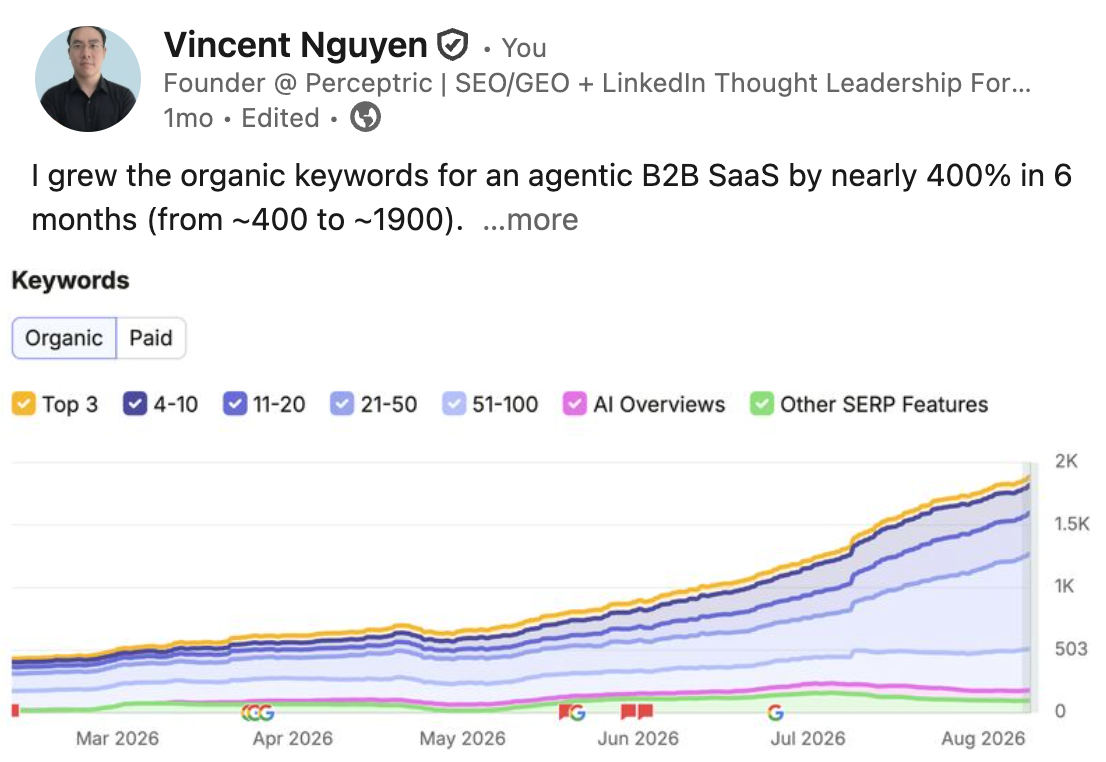
I post on LinkedIn myself. Here's one of my posts, where I shared the keyword growth for an agentic B2B SaaS client:
Here's how to start:
- Pick one topic: Choose the one thing you want to be known for and stick to it. You don't need a big following, you need the right people to care.
- Plan by intent: Make most posts about your industry, add a personal or business post about once a week and keep product posts to once a week at most.
- Start with text: Plain text posts work fine on LinkedIn. Add short videos or carousels once you're comfortable, since they help people put a face to your name.
- Post on a schedule: Anyone can write one post. The hard part is posting every weekday for several months.
- Comment on other people's posts: Spend 5 to 10 minutes a day on thoughtful comments under posts your buyers read.
- Track the right signals: Look past likes. Watch for prospects who mention your posts on sales calls, inbound demo requests and people who message you about something you wrote.
Once the founder's posts start bringing in conversations, it's much easier to get the rest of the leadership team posting too.
3. Run warm outbound campaigns
Outbound still works, but cold emails to a big list get fewer replies every year. The teams I see doing well with it warm the account up first and reach out when there's a real reason to talk.
That's the idea behind account-based marketing (ABM): sales and marketing pick a short list of accounts and work them together.
Here's the playbook:
- Pick the right accounts: Start with companies that are valuable to you and show signs of need, like hiring for a role your product supports or a new leader in the buying team.
- Group similar accounts: Sort them by industry and problem, so you write one strong message per group instead of starting from scratch each time.
- Warm them up: Follow the buyers on LinkedIn, comment on their posts and share something useful before you pitch. A little familiarity makes the first message feel normal.
- Make the reason clear: Tell each account why you're reaching out now, based on what you learned. "Saw you just opened an office in Austin" beats a first name dropped into a template.
- Match the ask to their interest: Offer a resource or an intro to an expert to someone new, and save the demo ask for people who've engaged.
- Review the list weekly: Sales and marketing look at the same accounts every week and agree on who's engaging and what happens next.
Measure the program by meetings, opportunities and pipeline from target accounts. For reply rate benchmarks and a full cold email setup, see our guide to inbound vs outbound lead generation.
4. Launch Google Ads campaigns
Google Ads target people by what they search for, while LinkedIn and Facebook ads target people by who they are. That's why search ads are so good at catching buyers who are already in the market.
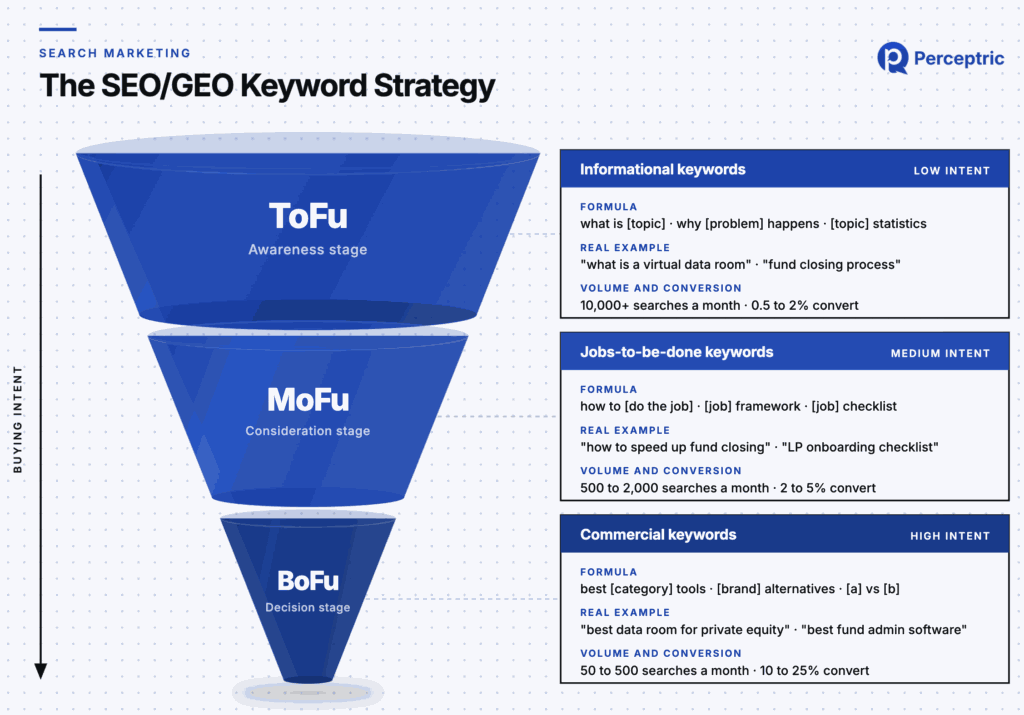
I start every B2B account with a keyword plan sorted by intent, from people learning about a symptom to people comparing vendors by name:
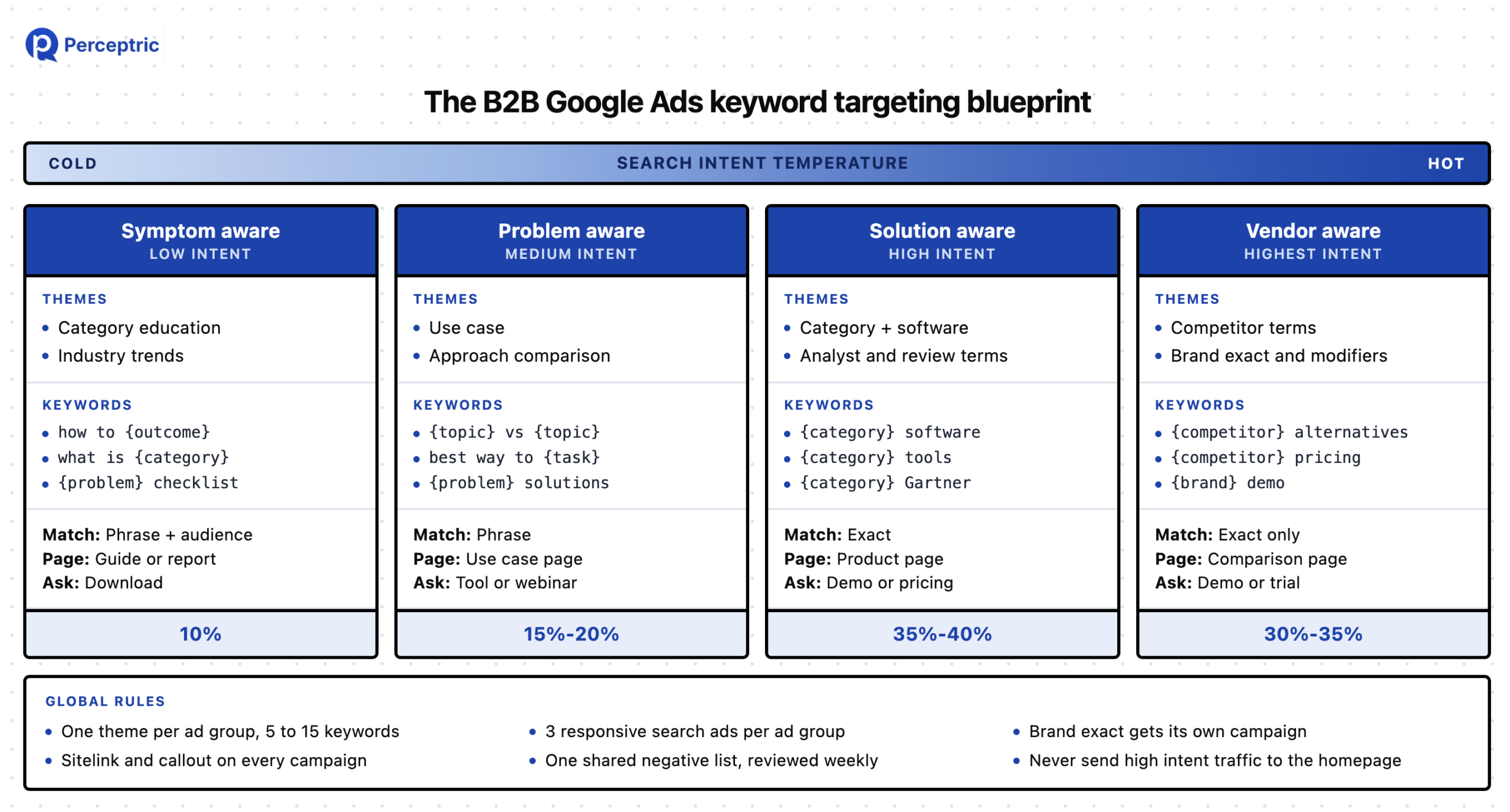
Most of the budget goes to the two hottest columns, searches like "[category] software" and "[competitor] alternatives". Then follow these rules:
- Run three responsive search ads per ad group: One or two ads don't give Google enough to test. Three gives it room to learn which headlines convert.
- Add sitelinks and callouts: They make your ad bigger, give more reasons to click and push competitors further down the page.
- Build a page for each ad group: Sending paid clicks to your homepage is one of the most expensive mistakes I see. Match each ad to a page and an ask that fit the buyer's stage.
- Exclude current customers: Keep your customer list out of brand campaigns. Email handles upsells for much less.
5. Build a referral and partner network
When someone a buyer trusts vouches for you, the buyer starts from yes instead of from zero. That borrowed trust is why referrals often close faster than any other lead.
Here's how to build it on purpose:
- Ask happy customers for intros: The best time is right after a clear win, like a smooth launch or a renewal. Ask for one name at a time.
- Find partners who sell to the same buyer: Agencies, consultants and tools that sit next to yours in the buyer's stack already have the trust you want.
- Give before you ask: Send partners leads that fit them, invite them onto your webinar or feature them in your newsletter.
- Make it easy to refer you: Give partners a two-line description of who you help and a link they can forward.
6. Launch your YouTube channel
YouTube is a search engine of its own, and it matters for AI search too. In Ahrefs' study of 75,000 brands, YouTube mentions had the strongest link to how often a brand showed up in ChatGPT, AI Mode and AI Overviews of any factor it measured.
That's a correlation, so it doesn't prove videos cause AI mentions. But it's a good reason to put your experts on camera.
Here's the YouTube playbook:
- Research demand first: Search YouTube for your topics before you record, and pick two or three with clear business intent that you can compete for.
- Use the search phrase: Put it in the title and say it out loud in the video, so it shows up in the transcript.
- Record in batches: Block a couple of hours once a month to record four videos, with topics and outlines ready so your experts only spend that time on camera.
- Repurpose what you have: Blog posts, webinars and internal training decks are full of video topics.
- Track it from day one: Add UTM links to every video description and ask "Where did you hear about us?" on your booking form.
7. Attend conferences and trade shows
Events put you in a room with people from your industry, often including decision makers with a live need. You also get a natural reason to start a conversation, which cold outreach never gives you.
Here's how to make an event pay off:
- Choose events your ICP attends: Check the attendee list, the companies and the session topics before you buy a booth or a ticket.
- Book meetings before you go: List the people you want to meet, connect on LinkedIn and set up a few meetings in advance.
- Ask more than you pitch: Ask about their priorities and problems, then look for a real way to help.
- Follow up within a few days: Send a useful resource, log every contact and next step in your CRM and keep the conversation going.
Conclusion
You've got seven options, but the rules I use to pick between them are short:
- Pair one slow channel with one fast one
- Put a real person in front of buyers
- Give every channel 90 days before you judge it
- Count meetings and pipeline instead of likes and clicks
It's tempting to copy whatever worked for the last company that went viral. But which of these seven would your own best customers say they actually use?
Work with Perceptric
Perceptric is a B2B SaaS SEO, GEO and LinkedIn thought leadership agency. We build an Organic Content Engine that brings pipeline every quarter. We've worked with B2B software brands like Katalon, Arrowsterr and Omniscient.
Here's what we do:
- Conversion-led SEO: Keyword strategy built around the terms buyers search while they compare vendors.
- AI SEO (GEO): Content built to get you cited in ChatGPT, Claude, Perplexity and AI Overviews for commercial questions.
- Content production: Articles built from interviews with your experts, written by people who learn your product well enough to sound in-house.
- LinkedIn thought leadership: Posts in your voice that build demand before buyers search.
- Paid search: PPC built on the same bottom-funnel keywords and messages as your content.
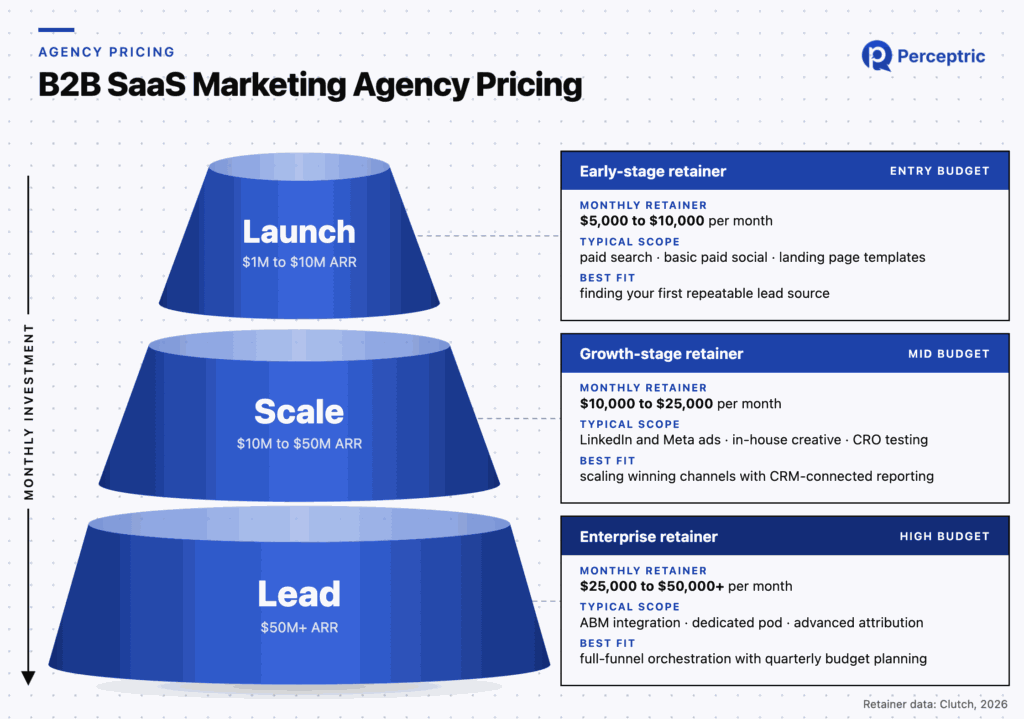
A 30-day AI visibility sprint costs $6,999. Monthly programs start at $10,000 a month for AEO or LinkedIn (Social) on a 6-month term, and both together cost $15,000 a month. See our pricing page for the details.
FAQ
What is the best lead generation channel for B2B companies?
SEO comes out on top in many surveys. In Belkins' 2026 survey of B2B marketing leaders, 7 out of 10 rated content marketing and SEO as top performers. Pair SEO with GEO so you also show up in AI answers.
Does cold email still work for B2B lead generation?
It still works, but reply rates on cold lists keep falling. Warm outbound works better: engage with buyers on LinkedIn first, then reach out with a clear reason to talk.
What are the best practices for B2B Google Ads?
Run three responsive search ads per ad group, add sitelinks and callouts and send each ad to its own landing page. Also exclude current customers from brand campaigns, since email handles upsells for less.
How can you use YouTube for B2B lead generation?
Research what your audience searches for on YouTube, use the search phrase in the title and say it out loud in the video. Add UTM links to descriptions and ask how people heard about you on your booking form.
Pick the one slow channel and the one fast channel that fit your buyers, and give both 90 days. To build the SEO, GEO and LinkedIn side with us, book a discovery call.