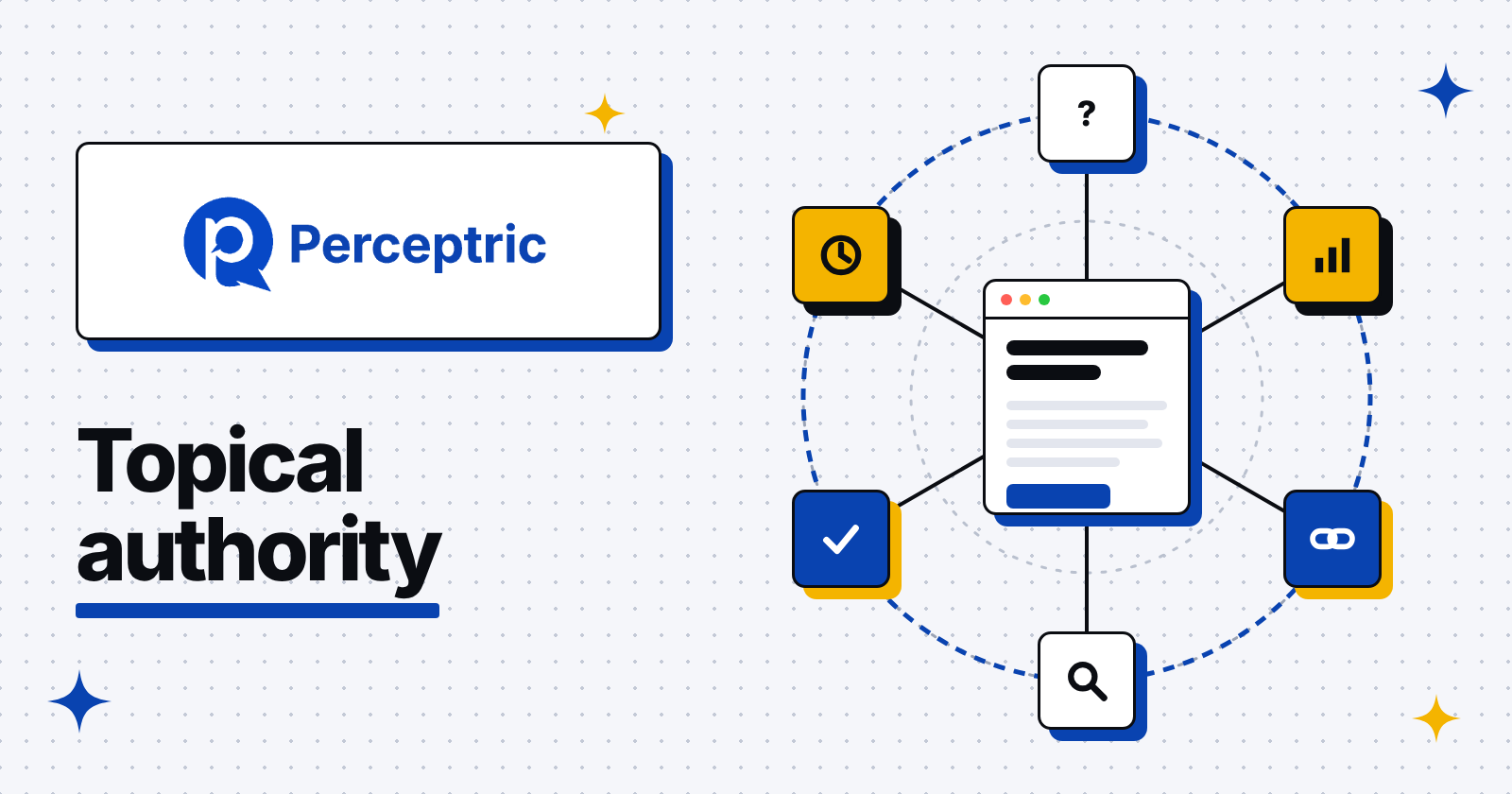
Topical authority is the trust search engines and AI tools place in a site because it covers one subject in depth with real expertise. You build it by mapping what buyers ask about your topic, filling the gaps and linking those pages into clusters you keep current.
We plan topic maps for B2B and SaaS clients, and this guide follows that process. It starts with what Google says about site focus, then gives a six-step method with a coverage tracker you can copy.
What is topical authority?
Topical authority describes how strongly a site is tied to one subject for searchers, search engines and AI tools. A site earns it when its pages answer most questions in that subject well and other sites mention it for that subject.
SEO teams use the term for a pattern across a whole site. Google runs a system with a close name, topic authority, which picks expert sources for news queries in areas such as health, politics and finance.
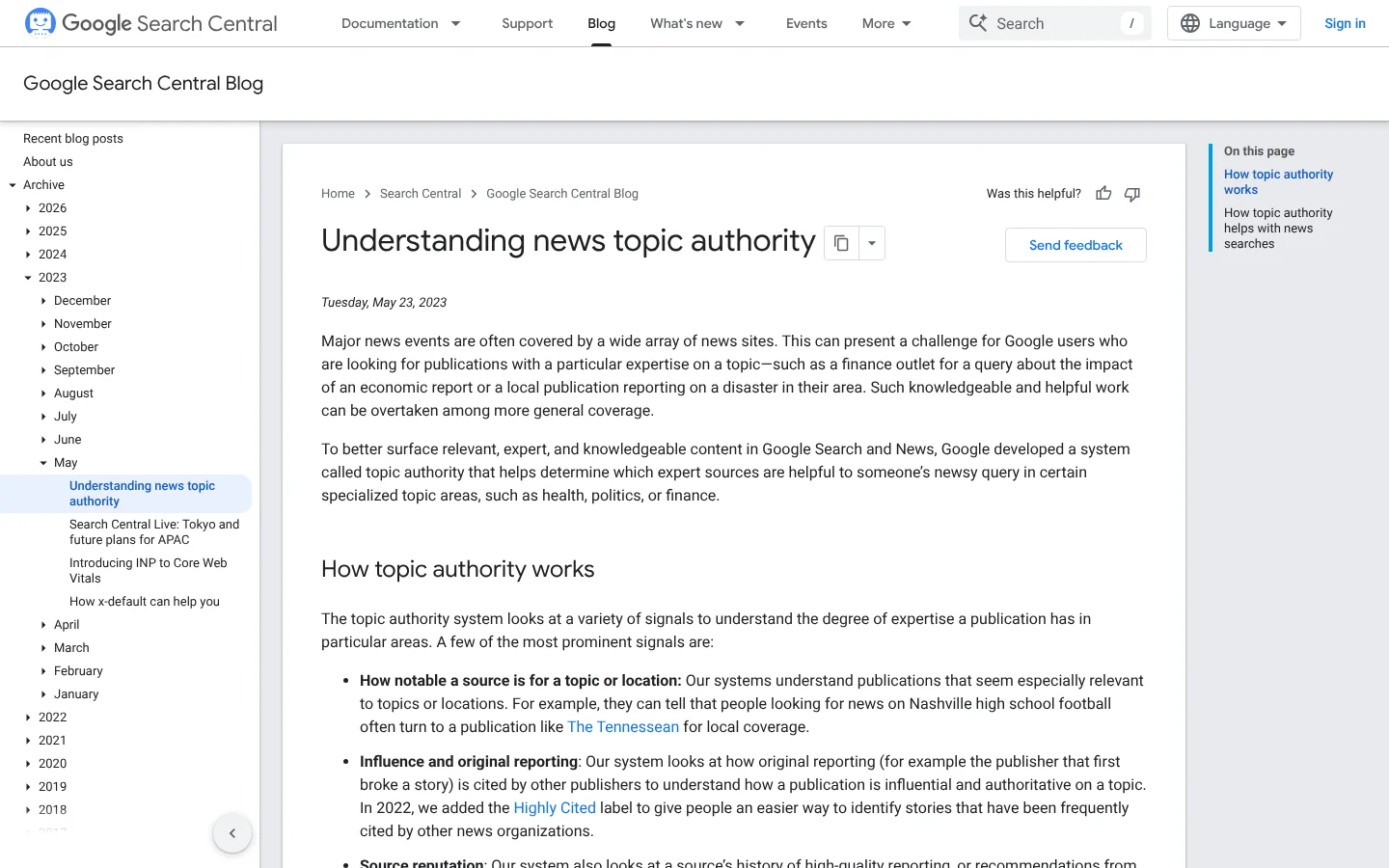
That system looks at "how notable a source is for a topic or location" and how often other publishers cite a site's original reporting. Both signals point the same way for B2B sites: stay on one subject and publish work others want to cite.
Topical authority vs. domain authority
Domain Authority is a 1 to 100 score that Moz calculates from a site's links, and Google does not use it to rank pages. Topical authority describes how deep a site goes on one subject, which a smaller site can build on a narrow topic.
What Google says about expertise and site focus
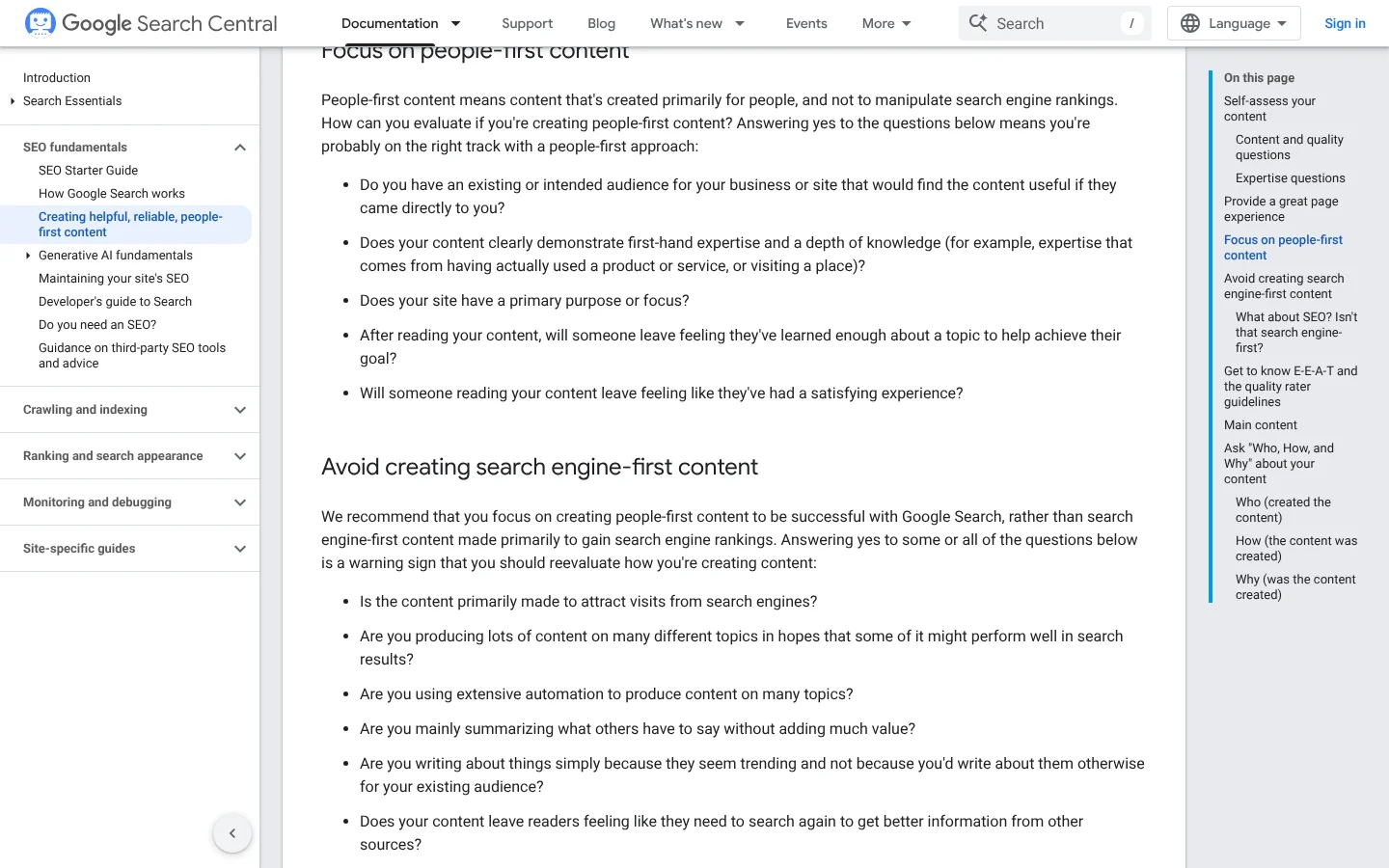
Google names no ranking factor called topical authority. Its guidance on helpful, people-first content still asks about focus and expertise directly, in self-check questions like these:
- Google asks, "Does your site have a primary purpose or focus?" as one test of people-first content.
- It asks whether your content "clearly demonstrate[s] first-hand expertise and a depth of knowledge" on the subject.
- It flags "producing lots of content on many different topics in hopes that some of it might perform well" as a warning sign.
The same page groups experience, expertise, authoritativeness and trust as E-E-A-T, then adds a clear priority: "Of these aspects, trust is most important."
Google ranks each page on its own, and site-wide signals and classifiers also shape how it reads those pages. A focused site gives those site-wide signals one clear subject to read.
A third-party view comes from Google API documents that leaked in 2024. They list an attribute called siteFocusScore, a "number denoting how much a site is focused on one topic," in Mike King’s analysis at iPullRank. Google has not confirmed how it uses that attribute.
What this means for a B2B site:
- Keep the blog on the problems your product solves, and retire topics you cover only for traffic.
- Show the expert behind each page, since Google calls trust the most important part of E-E-A-T.
How to build topical authority in 6 steps
Run the six steps in order the first time, then repeat them each quarter as buyer questions and rankings change. Our B2B SaaS SEO guide shows where this fits in the wider plan.
1. Map the topic from buyer questions
Pick one topic your product owns, such as sales forecasting for a revenue platform, and list the 5 to 8 subtopics a buyer must understand. Under each subtopic, write the exact questions buyers ask.
The best questions come from these places:
- Sales call recordings and notes, where buyers ask about cost and setup in their own words.
- Support tickets and onboarding chats, which show what new customers still need to learn.
- People Also Ask boxes, Reddit threads and review sites, for the wording buyers type into search.
- Keyword tools, which add search volume to each question so you can sort the list.
Our B2B keyword research guide shows how to turn those questions into keywords with volume and intent.
2. Check coverage gaps against the top pages
Search each question and open the top three to five results. Note the subtopics they cover that your site lacks, then mark each question as covered, thin or missing.
A thin page answers the question but leaves out a step, an example or data that the top pages include. Thankfully, gaps tend to sit together, so one new page can fill several missing questions.
3. Build hub and cluster pages
A topic cluster is a group of pages on one topic, where a hub page gives the full overview and cluster pages each answer one question in depth. The hub links to every cluster page, and each cluster page links back to the hub.
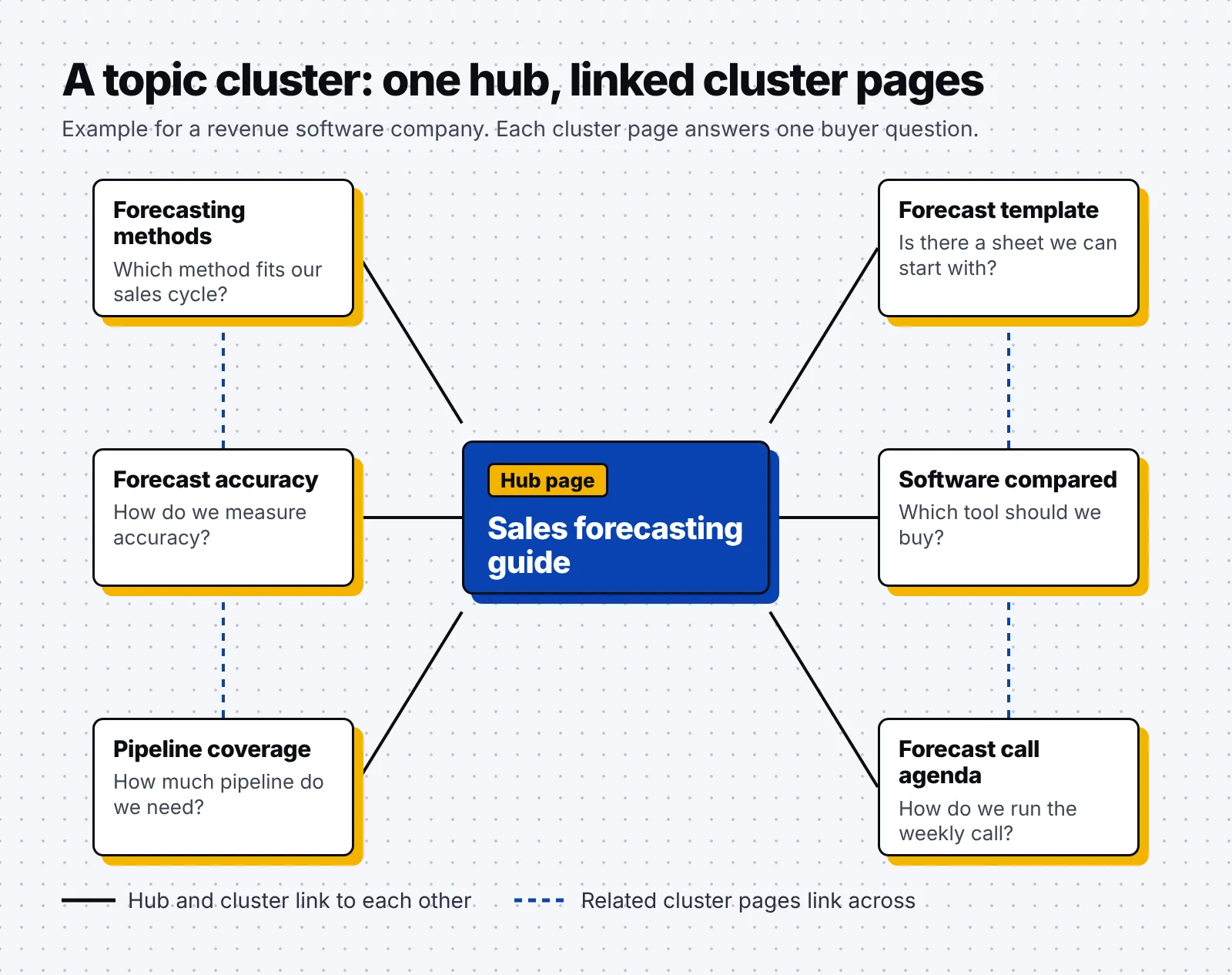
Give each distinct question its own page, and fold near-duplicate questions into the page that already answers them. Our pillar page examples show how 12 B2B and SaaS companies build their hub pages.
4. Link the cluster with clear anchor text
Internal links show readers and Google how the pages fit together. Google's link guidance sets a simple floor: "Every page you care about should have a link from at least one other page on your site."
Name the subtopic in each link, such as "forecast accuracy," so readers know where it goes. Google wants link text that is "descriptive" and "relevant" to the pages on both ends.
- Link the hub to every cluster page, close to the section that covers that question.
- Link each cluster page back to the hub within its first few paragraphs.
- Link related cluster pages to each other where a reader would want the next answer.
- Link from cluster pages to one product, demo or pricing page where the advice meets your product.
Helpfully, most site crawlers list pages with zero internal links pointing at them, so orphan pages in a cluster are quick to find.
5. Show who wrote it and why your brand knows
Google asks, "Is it self-evident to your visitors who authored your content?" and "Do pages carry a byline, where one might be expected?" Add a byline that links to an author page listing the writer's real experience.
Brand signals reach past your own site. Luckily, B2B teams already hold the raw material in customer data and staff experts, which can become original research and guest pieces that name your brand.
6. Refresh the cluster on a fixed cycle
Review every page in the cluster on a schedule, such as quarterly for fast-moving topics and twice a year for stable ones. Update facts, add new questions from sales calls and fix broken links.
Make real changes before you change the date. Google lists this as a warning sign: "Are you changing the date of pages to make them seem fresh when the content has not substantially changed?"
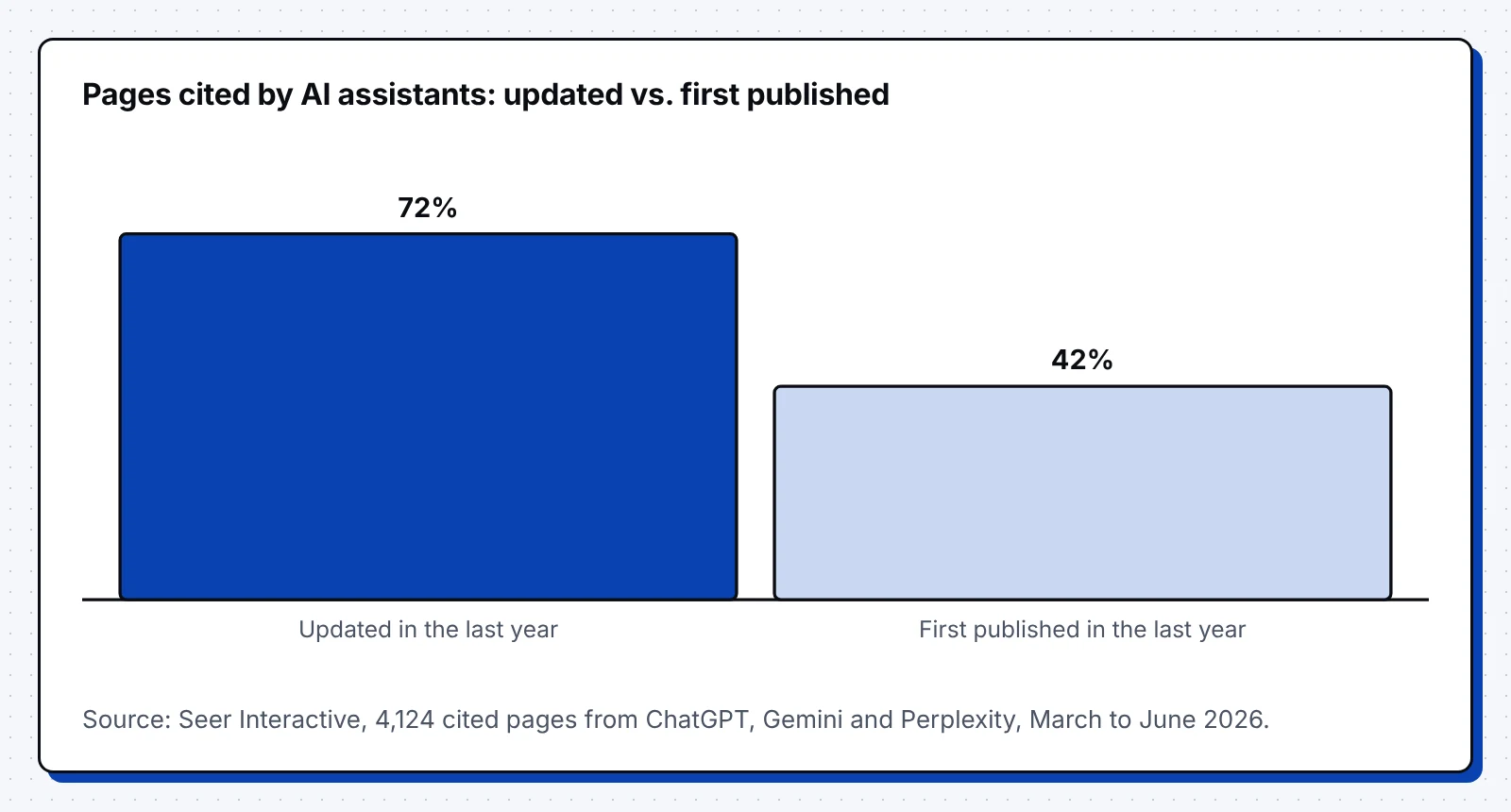
Updated pages also travel further in AI answers. Of 4,124 pages cited by ChatGPT, Gemini and Perplexity, 72% had been updated in the last year, while 42% were first published in that time, in Seer Interactive’s 2026 study.
Our guide to evergreen content covers how to choose which pages to refresh first and what to change.
How topical authority carries into AI answers
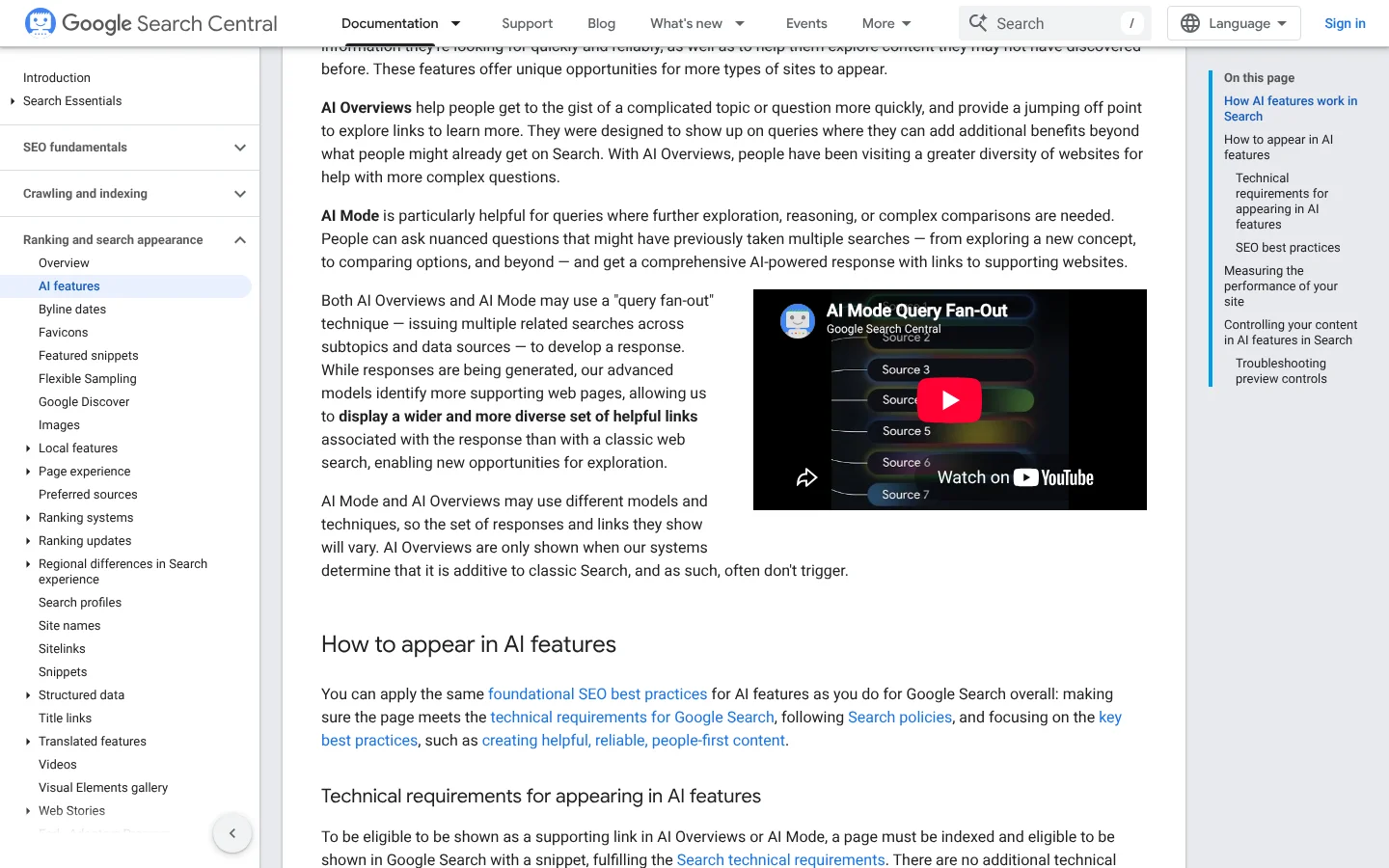
For AI Overviews and AI Mode, "the best practices for SEO remain relevant," with no extra requirements, in Google’s guide to AI features. A page must be indexed and eligible for a snippet to appear as a supporting link.
The tie to topical authority is query fan-out. Both features may run "multiple related searches across subtopics and data sources" to build an answer, so a site that covers the subtopics gets more chances to be picked.
The studies below come from third-party SEO tools, and they show correlation only. In a Surfer study of 10,000 keywords and 33,000 fan-out queries, pages ranking for the main query and its fan-outs were 161% more likely to be cited.
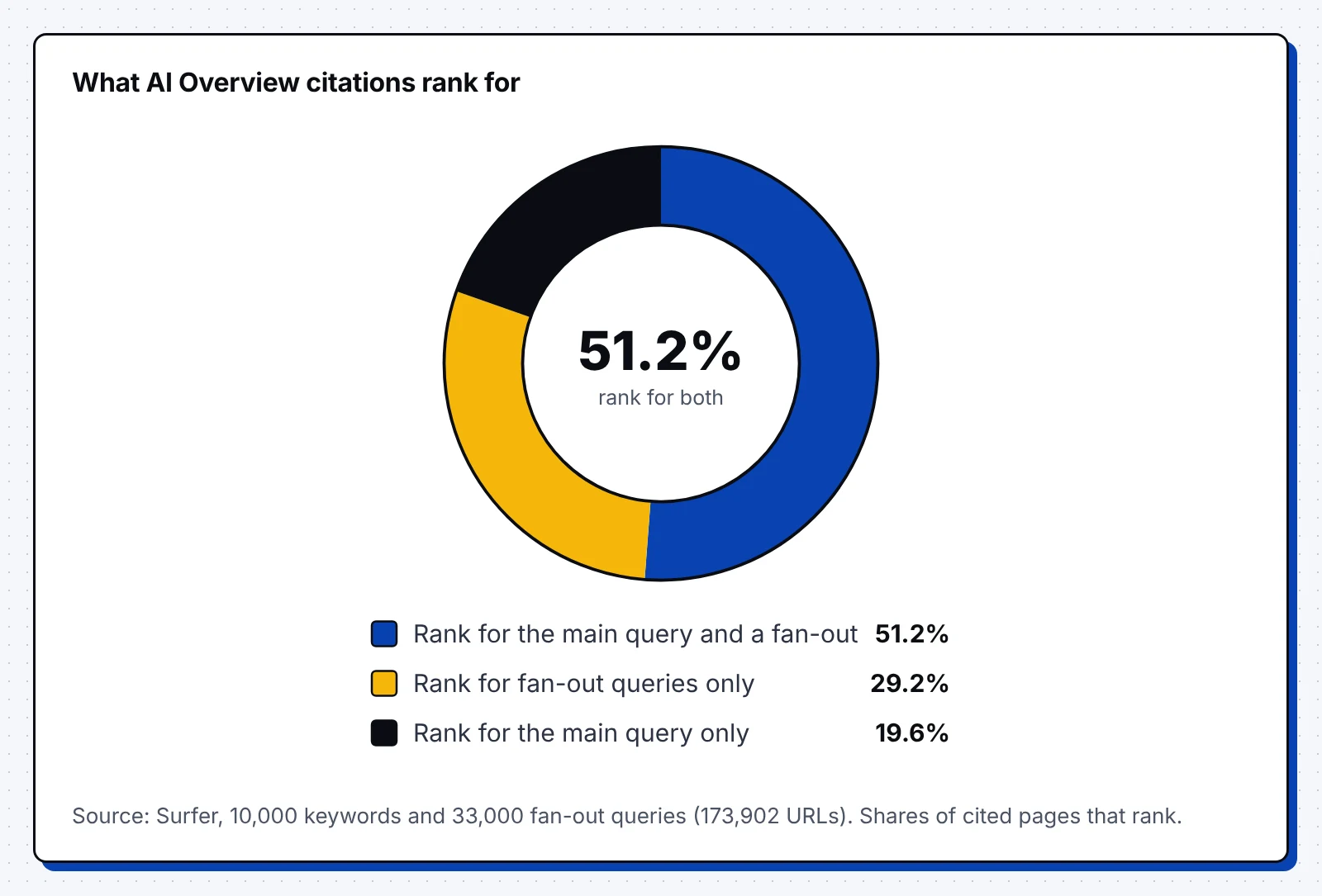
The same study found a Spearman correlation of 0.77 between the number of fan-out queries a page ranked for and its chance of being cited. Pages that answer more of the related questions get cited more often, which is topical authority at work.
In an Ahrefs study of 863,000 keyword results, 37.9% of URLs cited in AI Overviews ranked in the top 10 and 31.2% in positions 11 to 100.
Brand signals carry into AI answers as well. Across 75,000 brands, branded web mentions showed a 0.664 correlation with AI Overview visibility, against 0.218 for backlinks, in Ahrefs data.
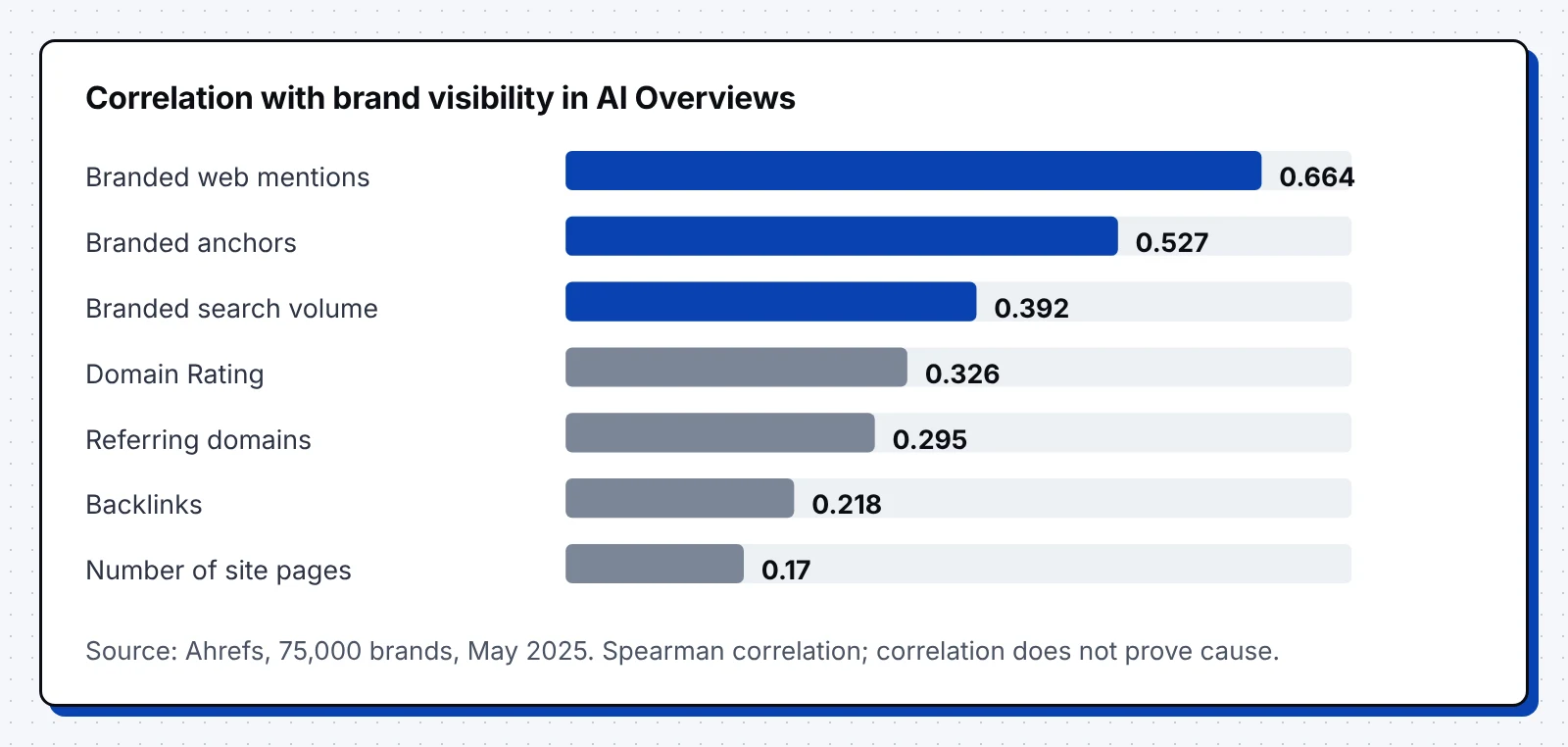
The number of pages on a site scored only 0.17 in that data, so depth on your topic and mentions on other sites matter more than volume.
Buyers also check what AI tells them: 94% of tech buyers who used AI fact-check its answers at least some of the time, in TrustRadius research with 1,862 buyers. Clear, current pages on your site give them a source to check against.
What to do for AI search:
- Cover the subtopics an AI tool would search for, since each one is another chance to be cited.
- Earn mentions of your brand next to your topic on review sites, podcasts and partner blogs.
Our guide to GEO for B2B SaaS covers the rest of the work for AI search.
Topical authority coverage tracker
Copy this table into a spreadsheet and add one row per buyer question. The sample rows use the sales forecasting cluster from the diagram above. Fortunately, a shared spreadsheet that sales and content can both edit is all the tooling you need.
| Buyer question | Page | Role | Status | Links in | Next review |
|---|---|---|---|---|---|
| What is sales forecasting? | /sales-forecasting/ | Hub | Covered | 6 | Feb 2027 |
| How do we measure forecast accuracy? | /forecast-accuracy/ | Cluster | Thin | 2 | Dec 2026 |
| How much pipeline do we need? | None yet | Cluster | Missing | 0 | Write by Jan 2027 |
| Is there a forecast template we can start with? | /forecast-template/ | Cluster | Covered | 3 | Mar 2027 |
| Which forecasting tool should we buy? | /forecasting-software/ | Cluster | Covered | 4 | Jan 2027 |
How to fill in each column:
- Status is covered, thin or missing, based on your check against the top pages in step 2.
- Links in counts the internal links pointing at the page, which any site crawler can export.
- Next review sets the refresh date, so every page in the cluster gets checked each cycle.
FAQ
What is topical authority?
Topical authority is the trust search engines and AI tools give a site because it covers one subject in depth with real expertise. A site builds it by answering most buyer questions on that subject and linking those pages into clusters.
Is topical authority a Google ranking factor?
Google names no ranking factor called topical authority. It does ask whether a site has "a primary purpose or focus," and it uses site-wide signals next to page-level ones.
What is the difference between topical authority and topic clusters?
Topical authority is the result, the trust a site earns on a subject. Topic clusters are one way to build it, with a hub page linked to cluster pages that each answer one question.
How many pages do you need for topical authority?
No fixed number exists, because it depends on how many distinct questions buyers ask about your topic. Map those questions first, then give each one its own page or a section of a related page.
Does topical authority help in AI search?
The evidence points that way, since Google's AI features run related searches across subtopics before they answer. In Surfer's study, pages ranking for a query and its fan-out queries were 161% more likely to be cited in AI Overviews.
Start this week by listing 20 questions from your last sales calls and checking which ones your site answers well. To build the full topic map with us, book a discovery call with our team.