In 2026, most B2B teams pair a tool that finds the right buyers with a tool that turns their interest into booked meetings. Our top picks are Claritia for inbound capture and booking, Apollo.io for data plus outreach, and ZoomInfo for enterprise data.
We compared 12 tools for contact data, visitor identification, outreach and inbound booking, and we checked every price on the vendor's own pricing page in November 2026. Each entry covers what the tool does, what it costs and which team it fits, with a comparison table at the end.
How we picked these tools
We run lead generation programs for B2B and SaaS clients, so we judged each tool by what it adds to pipeline. If you haven't set a pipeline goal yet, start with our B2B lead generation guide. Every tool here had to meet these criteria:
- It helps you find, identify, reach or book meetings with B2B buyers.
- It connects to the CRMs most B2B teams use, such as HubSpot and Salesforce.
- Prices are public, or the vendor clearly offers pricing on request.
- A small team can start using it without a long setup project.
- We could open its product and pricing pages ourselves in November 2026.
The 12 tools fall into five groups, and many teams use one tool from two or three of them:
- Contact and company data from Apollo.io, ZoomInfo, Cognism, Lusha and LinkedIn Sales Navigator.
- Enrichment and custom data workflows in Clay.
- Website visitor identification with Leadfeeder and RB2B.
- Inbound capture, routing and booking with Claritia, HubSpot Marketing Hub and Chili Piper.
- Cold email sending at volume through Instantly.
What to look for in B2B lead generation software
Start with the job you need done, since each tool is strongest at one stage of the funnel. These are the points worth checking on any demo or trial:
- Data coverage and accuracy in your target regions, with verified emails and phone numbers.
- Visitor identification that names the company, and in some tools the person.
- A native CRM sync, so new leads and enriched fields land on the right record.
- Routing and scheduling that book the right rep while the buyer is still on your site.
- Compliance settings for GDPR and CAN-SPAM if you sell into Europe or send cold email.
- Pricing by seats, credits or contacts that you can forecast at your real volume.
Your inbound tools matter as much as your outbound list, because buyers now do much of their research before they contact you. In G2’s 2026 survey of 1,076 software buyers, 51% said they start research in an AI chatbot more often than in Google.
1. Claritia
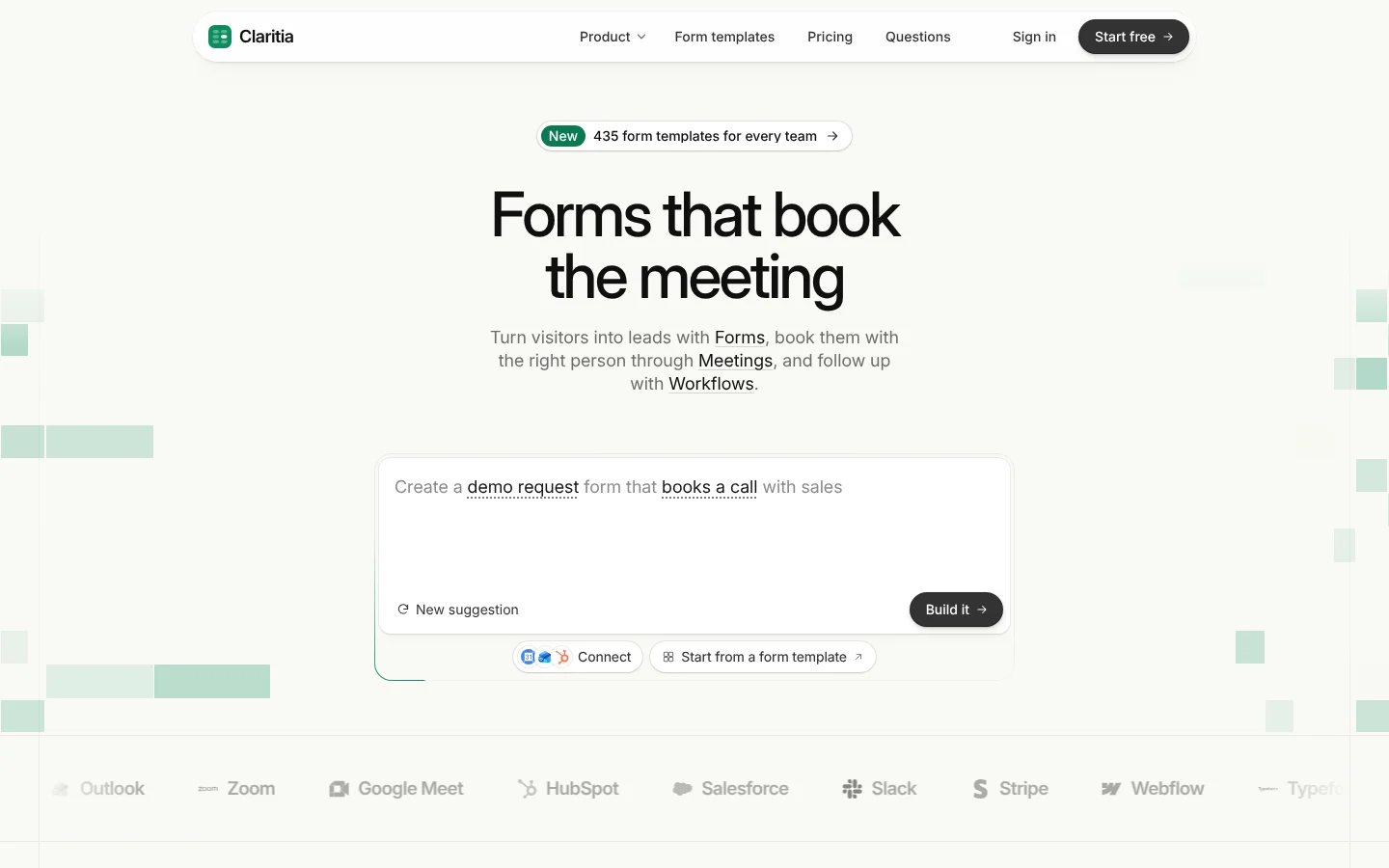
Claritia is a software that catches leads on your website, routes each one to the right rep and books the meeting before the buyer leaves. It puts forms, enrichment, routing, scheduling, AI email and a CRM in one place for small B2B teams.
Claritia is made by our sister team and sits in the same suite as Arrowsterr, our AI search tool. You can build a form by chatting with AI or keep your current HubSpot, Webflow, Marketo, Framer, Typeform or HTML forms, and setup takes about 15 minutes.
Key features:
- Forms that open the right rep's calendar as soon as a buyer submits.
- Company identification for the businesses visiting your site.
- Routing by owner, territory or round robin, with caps, time off and speed-to-lead nudges for slow replies.
- Scheduling on Google or Outlook, with round robin, group events, paid meetings through Stripe and no-show tracking.
- Enrichment that checks your own records first and outside vendors second.
- Nurture emails written from your own content and sent from your domain once you approve them.
Pricing: Claritia has a free plan for one host, 500 contacts and 500 emails a month. Paid plans cost $79 a month for Starter, $299 for Growth and $799 for Scale. Thankfully, only people who take meetings count as hosts, so everyone who builds forms or reads reports is free.
Best for: Small B2B teams that want forms, routing, scheduling and a CRM in one tool.
2. Apollo.io
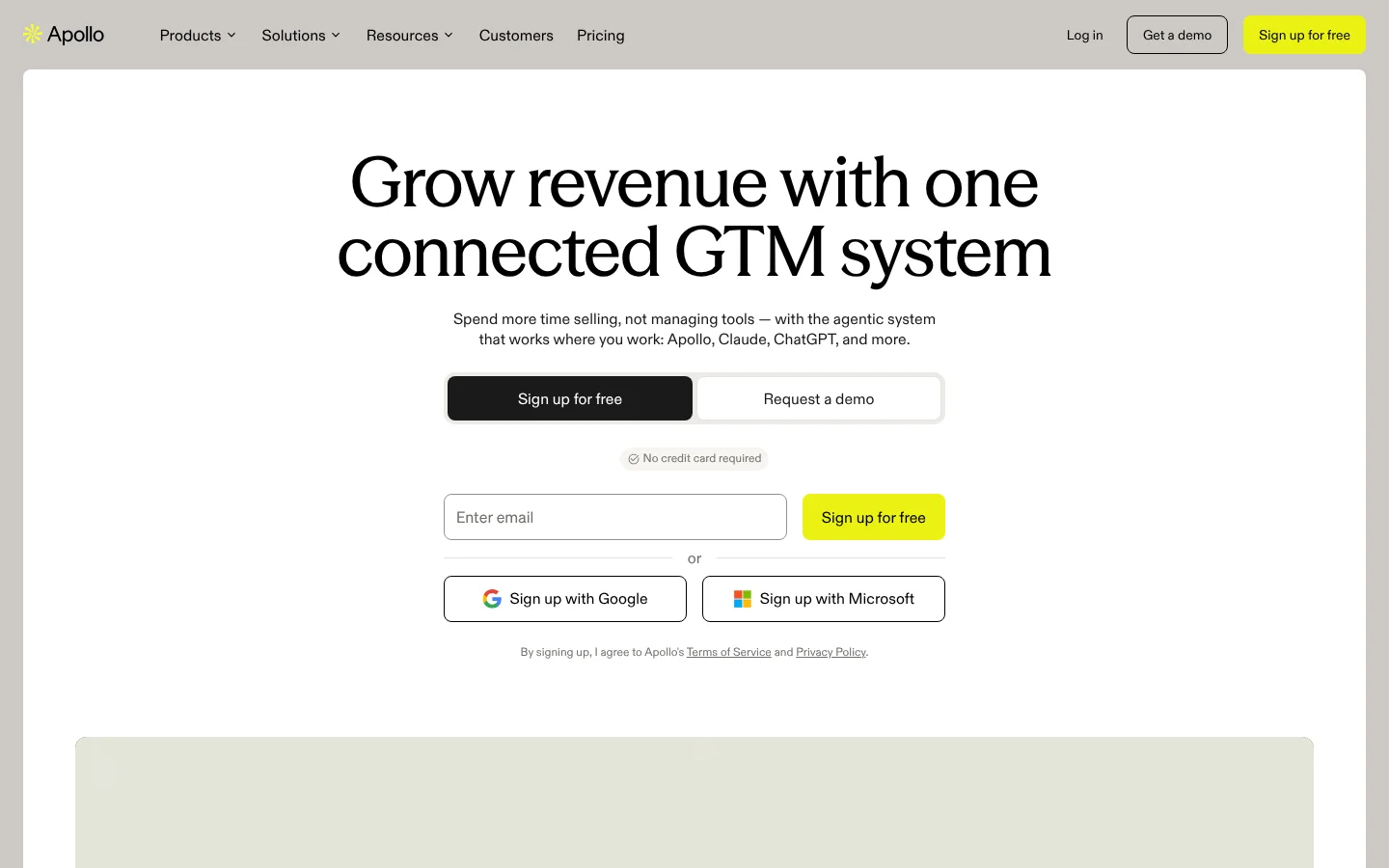
Apollo.io is a software that combines a B2B contact database with email sequences, a dialer and AI agents for outbound prospecting. Its data covers more than 240 million contacts and 30 million accounts, and over 600,000 companies use it.
Key features:
- Contact and account search with advanced filters, buying intent topics and job change signals.
- Unlimited email sequences on paid plans, with deliverability tools and email warmup.
- Waterfall enrichment for CSV files, CRM records and API calls.
- Website visitor identification for up to 100 companies a month on paid plans.
- Meeting scheduling and call recording with AI insights.
Pricing: The Free plan costs $0 and includes 900 credits per seat per year. Basic costs $49 per seat per month billed annually, and Professional costs $79 on the same terms.
Best for: Startups and small sales teams that want data and outreach in one tool.
3. ZoomInfo
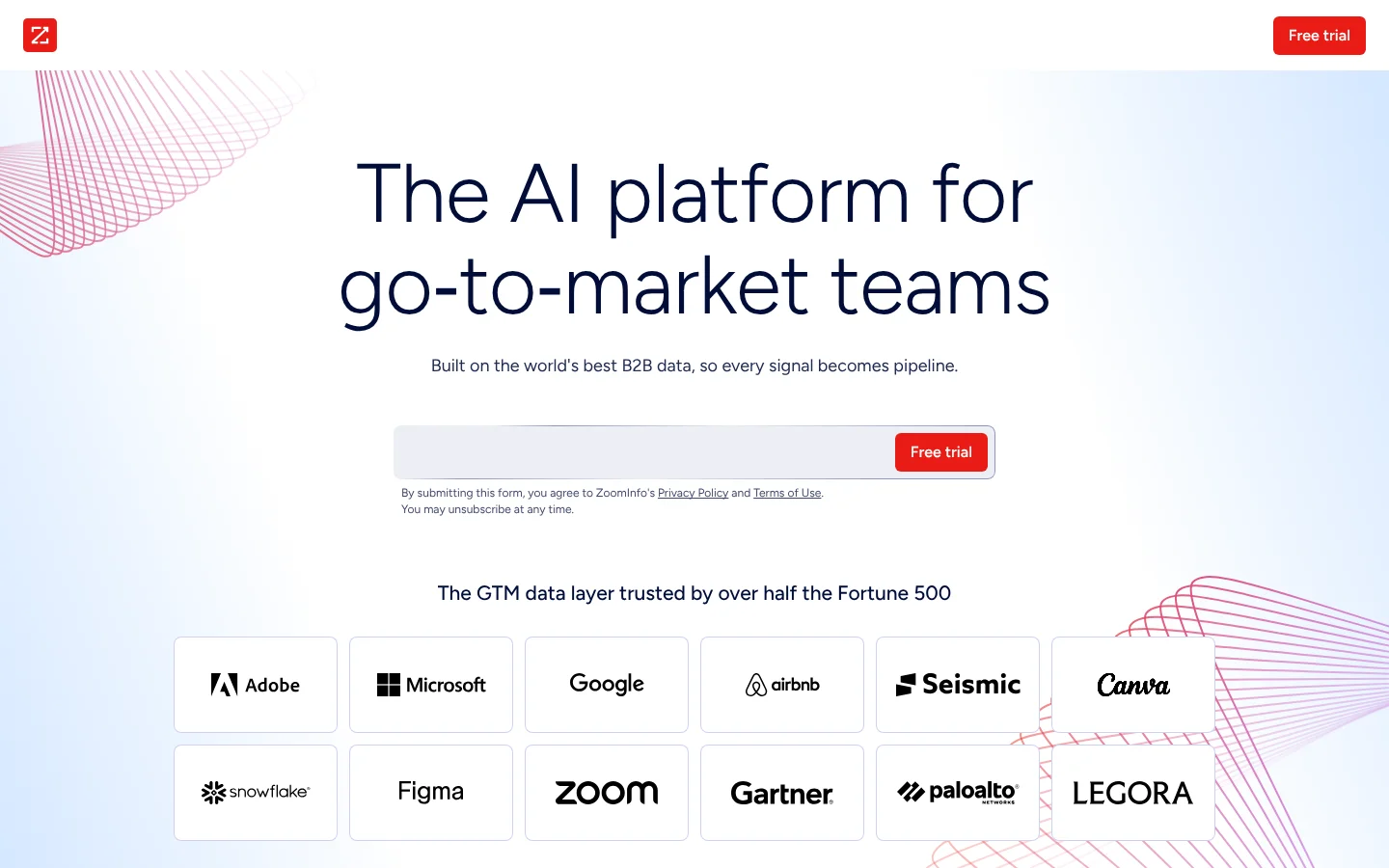
ZoomInfo is a software that gives sales and marketing teams B2B contact and company data, intent signals and AI tools for account research. More than half of the Fortune 500 use it, and its plans cover sales, marketing and recruiting teams.
Key features:
- Firmographic, technographic and intent data to find high-fit segments.
- Org charts and decision-maker contacts for each target account.
- Lead routing by account fit, territory and buying stage.
- Enrichment that keeps records clean across your CRM and other tools.
- AI scoring that ranks the accounts most likely to convert.
Pricing: Pricing is on request and depends on features, licenses and credit use. Luckily, the three sales plans come with a free trial, so you can test the data first.
Best for: Mid-market and enterprise teams that need deep data across many regions and teams.
4. Cognism
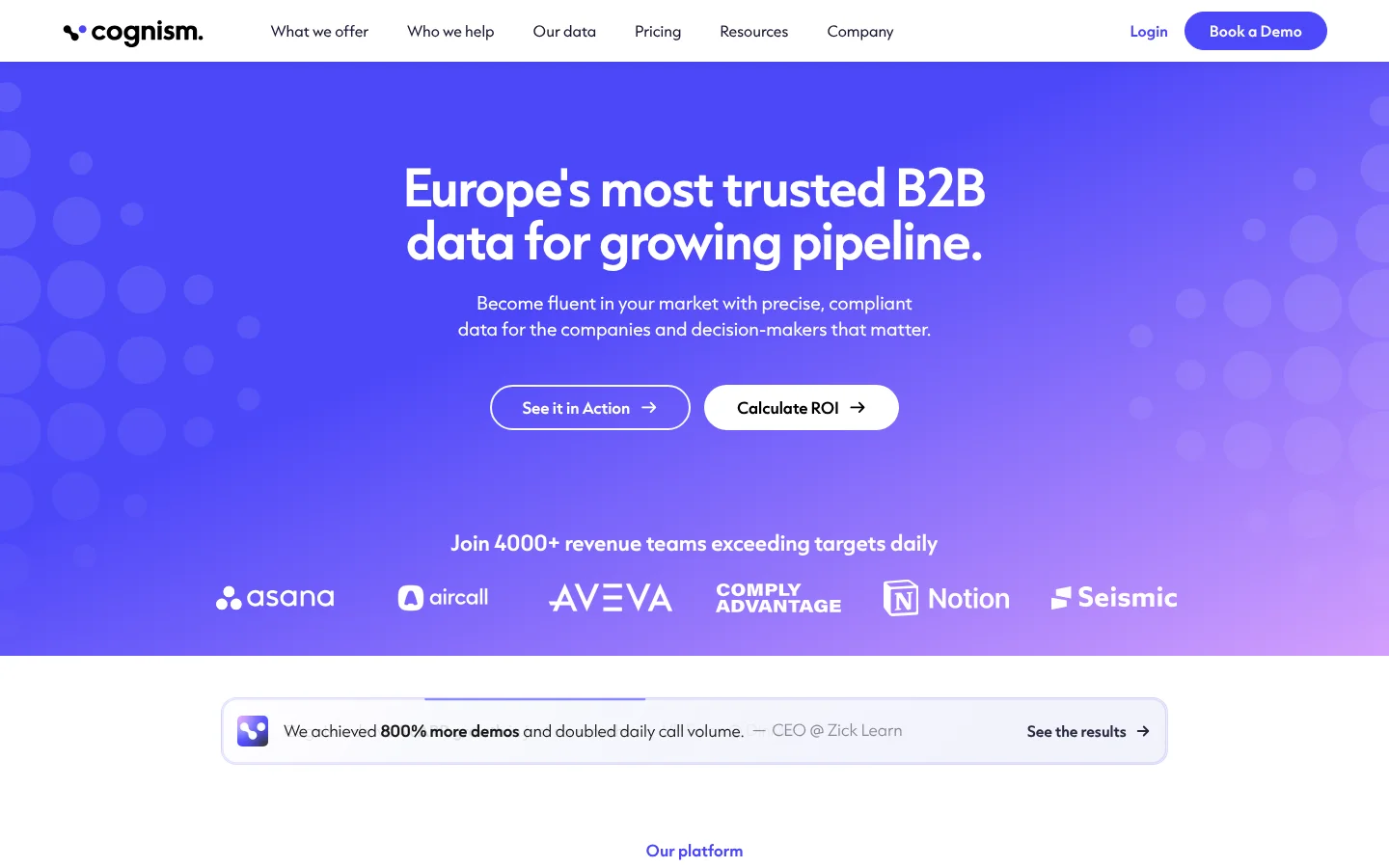
Cognism is a software that provides compliant B2B contact data, with a focus on phone-verified mobile numbers and data on European companies. More than 4,000 revenue teams use it for prospecting and CRM enrichment.
Key features:
- Phone-verified contact data for decision-makers.
- Signals for intent, hiring, job changes and funding news.
- CRM enrichment as a standalone product or an add-on.
- MCP and API access, plus exports to Salesforce, HubSpot and Pipedrive.
- Intent data for account prioritization on the Pro plan.
Pricing: Pricing for the Standard and Pro plans is on request, and each plan includes five seats. Fortunately, you can ask for a free data sample before you buy.
Best for: Teams that sell into Europe and rely on cold calls to reach buyers.
5. Clay
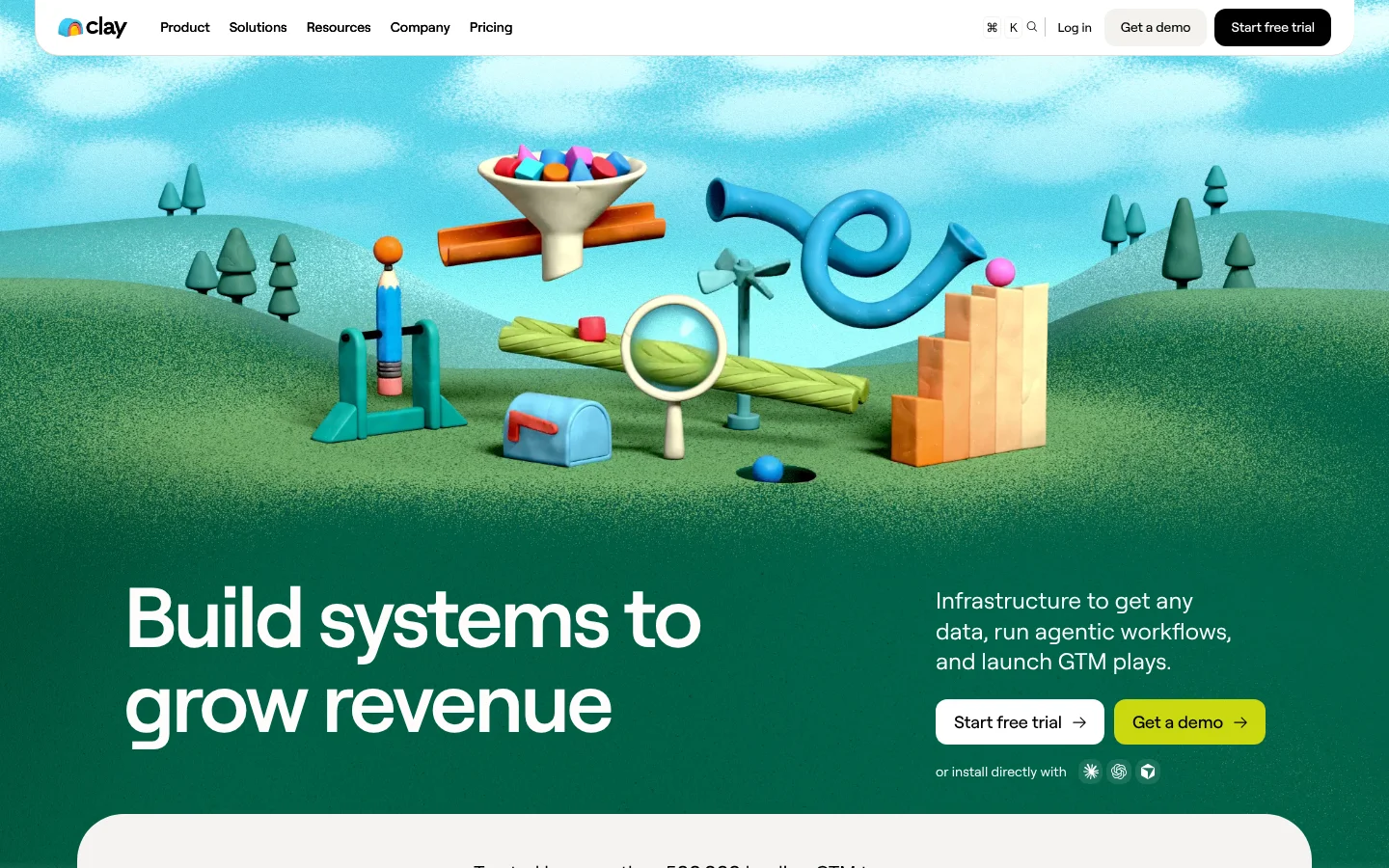
Clay is a software that pulls data from more than 150 providers into one table and runs AI workflows to enrich, score and act on leads. Over 500,000 GTM teams use it to build their own prospecting and inbound workflows.
Key features:
- Waterfall enrichment across many data providers, so more fields get filled on each record.
- Claygent, an AI agent that researches the web for custom data points.
- Signals for job changes, promotions, new hires and company news.
- CRM and data warehouse sync on the Growth plan.
- Its own email sequencer, or a sync with the sequencing tool you already use.
Pricing: The Free plan includes 500 actions and 100 data credits a month. Launch costs $185 a month, or $167 a month billed annually, with 15,000 actions a month.
Best for: RevOps and growth teams that want to build custom enrichment and scoring workflows.
6. LinkedIn Sales Navigator
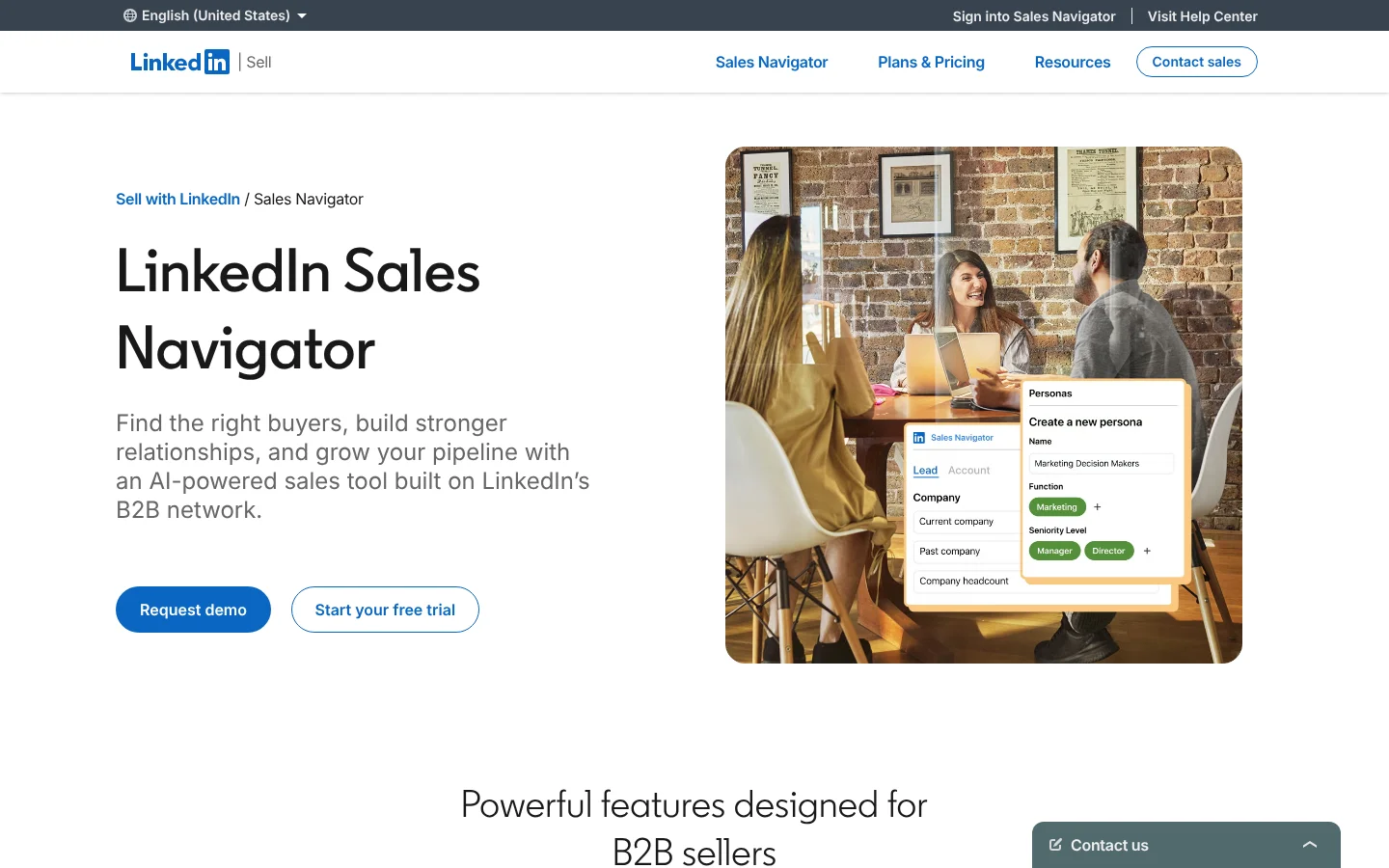
LinkedIn Sales Navigator is a software that helps sellers find and follow buyers across more than 1 billion LinkedIn members. It adds advanced search, lead alerts and AI account insights on top of a normal LinkedIn account.
Key features:
- Over 50 search filters, such as function, seniority and years at the company.
- Lead and account alerts when saved buyers change jobs or roles.
- Account IQ and Lead IQ, which summarize accounts and leads with AI.
- Buyer intent signals that show when accounts engage with your company.
- CRM sync with Salesforce, HubSpot and Microsoft Dynamics on higher plans.
Pricing: Core starts at $119.99 per month or $1,079.88 per year for each license. Advanced starts at $159.99 per month, and you can start with a free trial.
Best for: Account executives and founders who sell through LinkedIn relationships.
7. HubSpot Marketing Hub
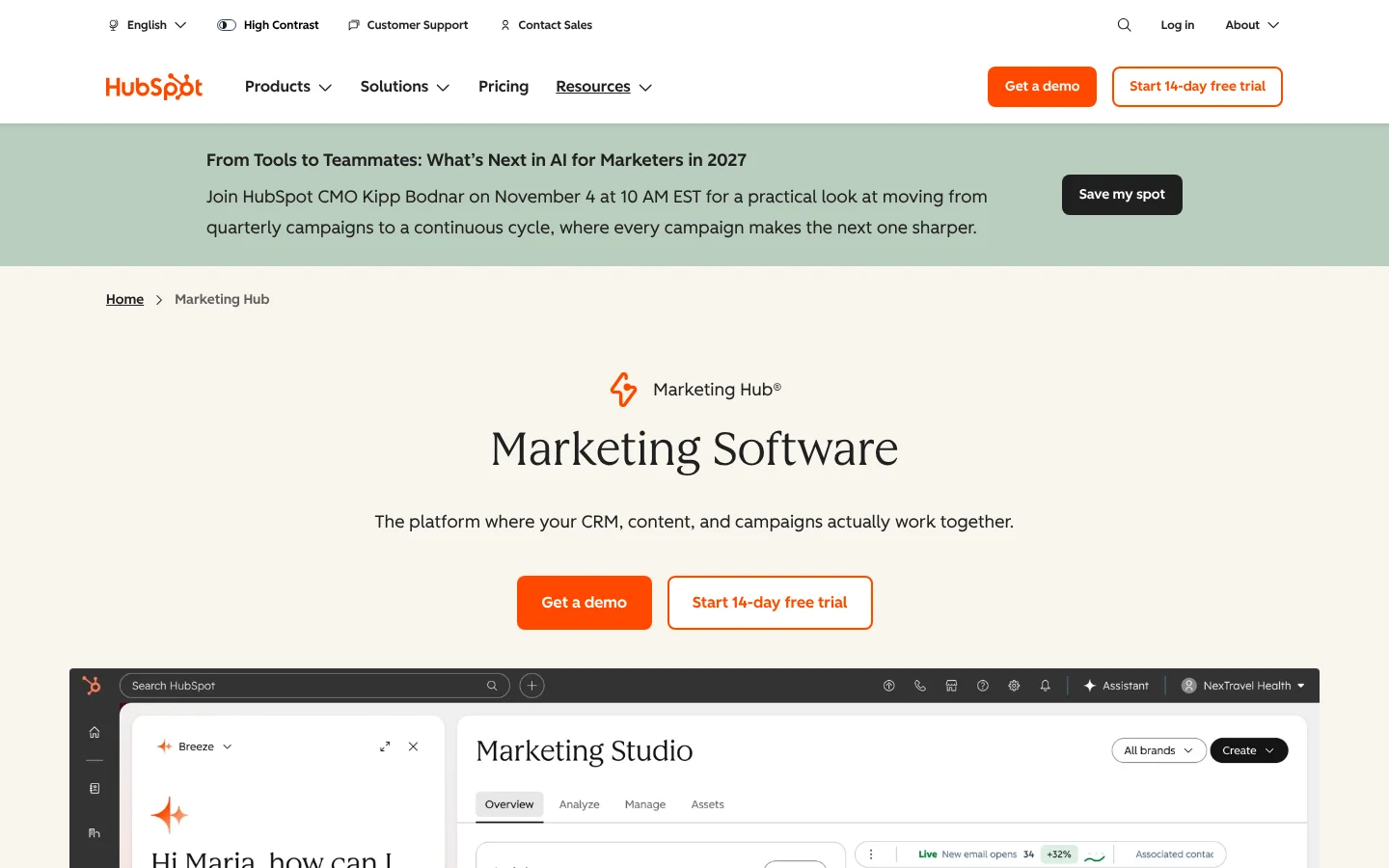
HubSpot Marketing Hub is a software that captures, nurtures and scores leads with forms, landing pages, email and automation built on the HubSpot CRM. It suits teams that want marketing and sales data in one shared system.
Key features:
- Free forms and a landing page builder that save each lead to the CRM.
- Email marketing and simple marketing automation from the Starter plan.
- Form shortening that hides fields for returning visitors whose details are already in the CRM.
- Lead scoring, plus multi-touch attribution on the Enterprise plan.
- AI agents that write content, prospect and personalize nurture emails.
Pricing: The free tools cost $0 for up to two users, and Starter lists at $20 per seat per month. Professional starts at $800 a month with three seats, plus a one-time $3,000 onboarding fee.
Best for: Inbound marketing teams that already use the HubSpot CRM or plan to adopt it.
8. Lusha
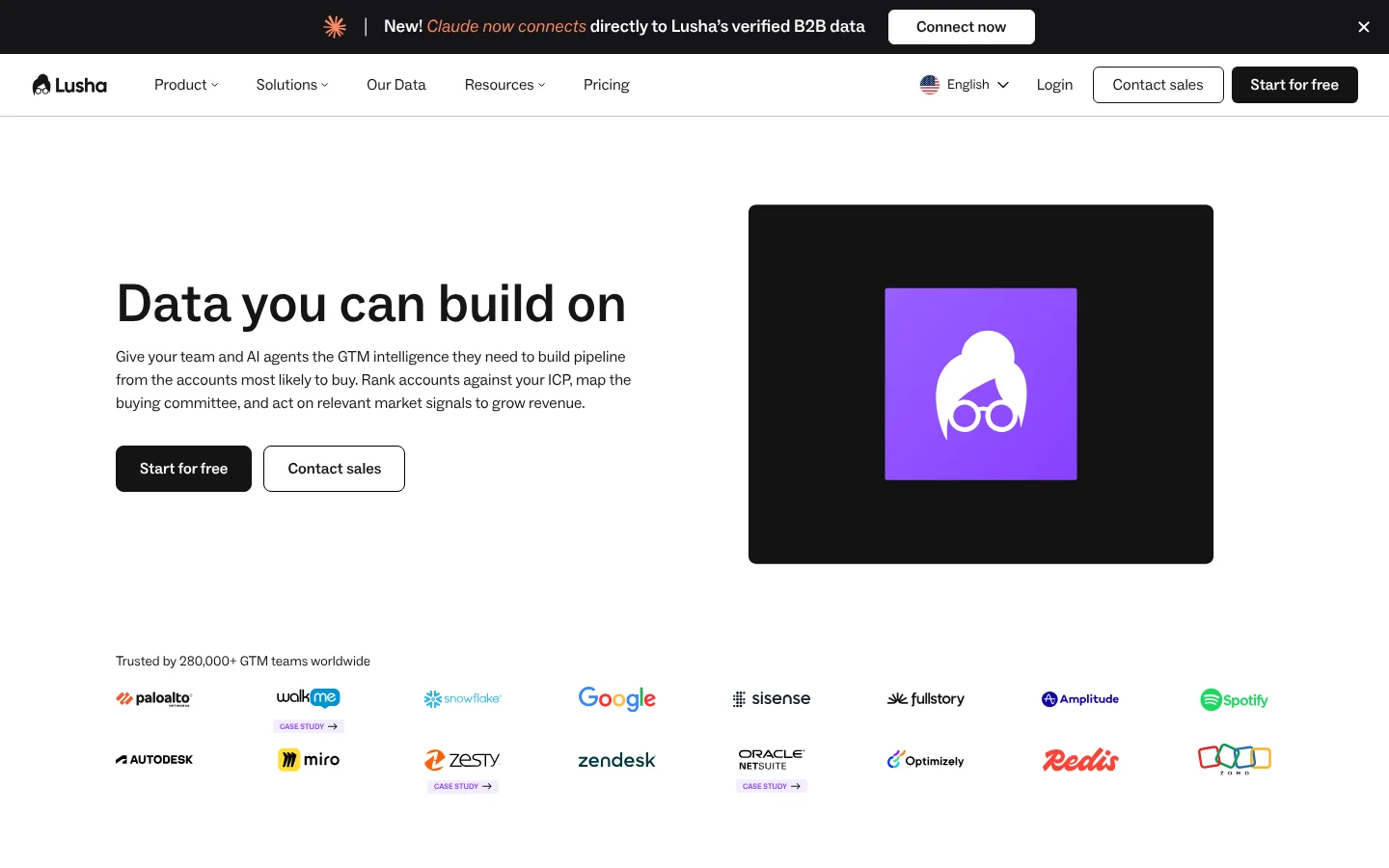
Lusha is a software that gives sales teams verified emails, phone numbers and company data, with AI scoring that ranks accounts against your ICP. Its search covers 515 million contacts and 29 million companies, with 30 types of buying signals.
Key features:
- Verified emails and phone numbers, each with a confidence score and a last updated date.
- A browser extension and CRM enrichment for Salesforce and HubSpot.
- Predictive scoring that uses your CRM history to spot likely buyers.
- Buying committee maps and lookalikes of your best customers.
- An API, plus an MCP server for Claude and ChatGPT.
Pricing: The Free plan costs $0 with 40 credits a month. Starter costs $37.45 a month billed yearly and includes 4,800 credits a year.
Best for: Small sales teams that need contact details quickly without a large contract.
9. Chili Piper
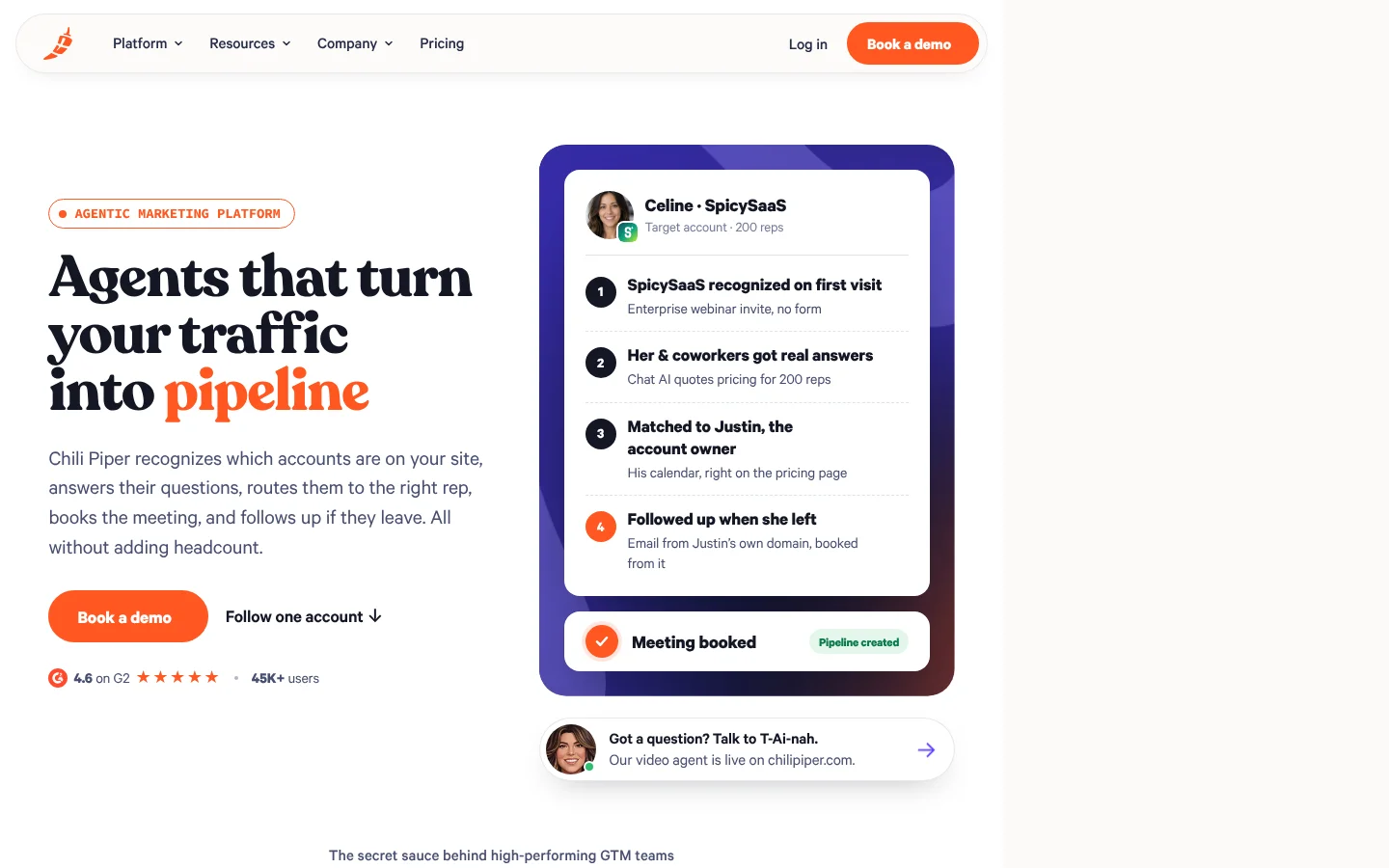
Chili Piper is a software that turns inbound website traffic into booked meetings with instant scheduling, routing and AI agents. When a buyer submits a form, it qualifies them, matches them to the right rep and shows that rep's calendar on the page.
Key features:
- Form-to-meeting scheduling that books the right rep while the buyer is still on the page.
- Lead, contact and account routing to the owners in your CRM.
- Chat AI that answers questions and books visitors, on the Scale plan.
- Account identification that greets returning visitors and target accounts.
- ChiliCal scheduling links with every seat.
Pricing: Growth starts at $1,250 a month with 15 seats included, and Scale starts at $3,500 a month with 30 seats, with no free plan.
Best for: Mid-market and enterprise teams with high inbound demo volume and many reps.
10. Leadfeeder (formerly Dealfront)
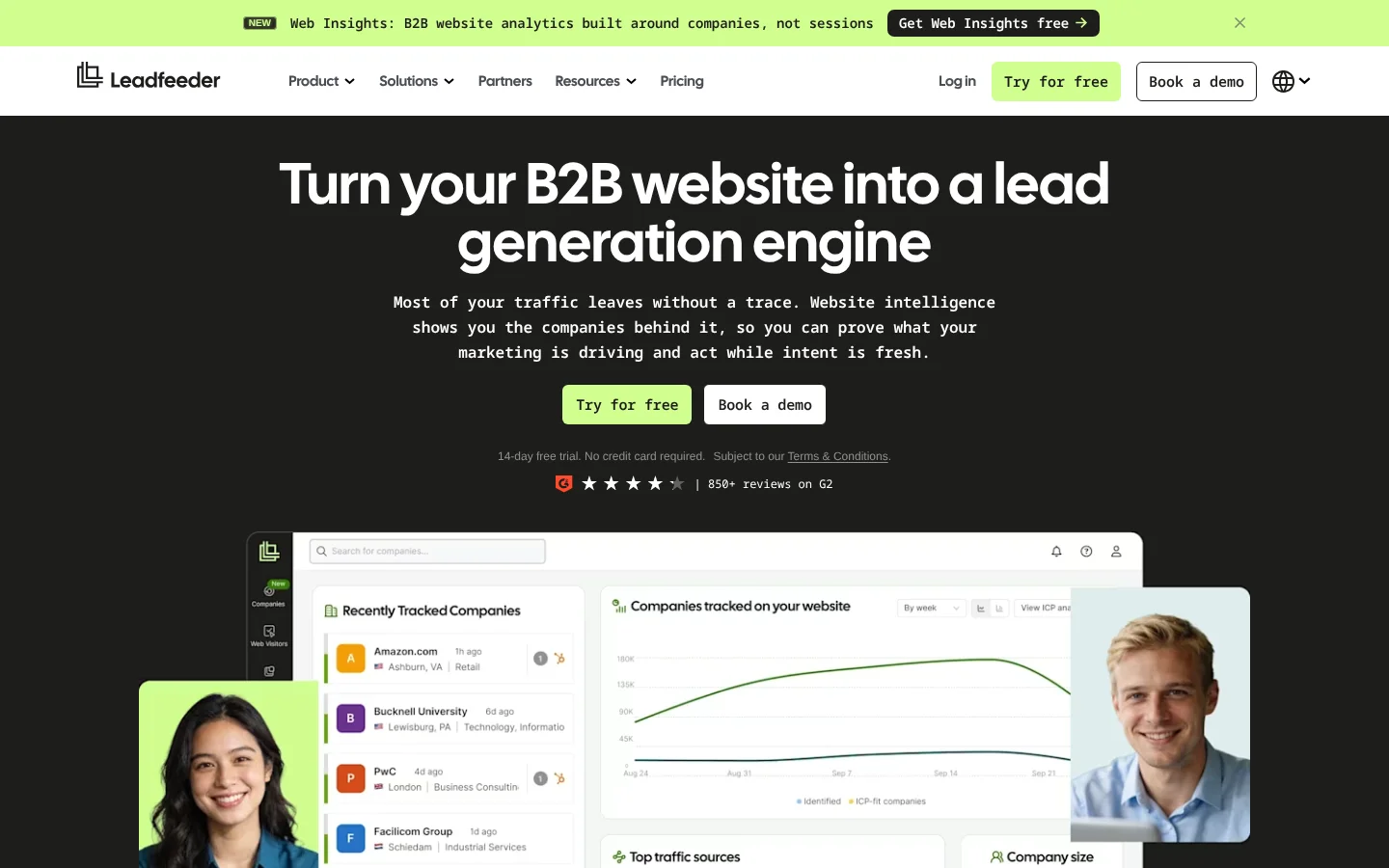
Leadfeeder is a software that identifies the companies visiting your website and shows how well each one fits your ICP. Dealfront now operates under the Leadfeeder name, and more than 15,000 companies use it.
Key features:
- Company identification for anonymous visits, with the pages each company read.
- Web Insights reports that show which channels, campaigns and pages bring ICP-fit companies.
- A database of 60 million companies and 400 million verified contacts.
- CRM sync, real-time alerts and B2B display ad campaigns.
- Unlimited users and tracked domains on every plan.
Pricing: Lite costs $0 and shows the last 100 companies a month. Discover starts at $79 a month billed annually, and happily, every paid plan has a 14-day free trial.
Best for: Marketing teams that want to see which companies their campaigns bring to the site.
11. RB2B
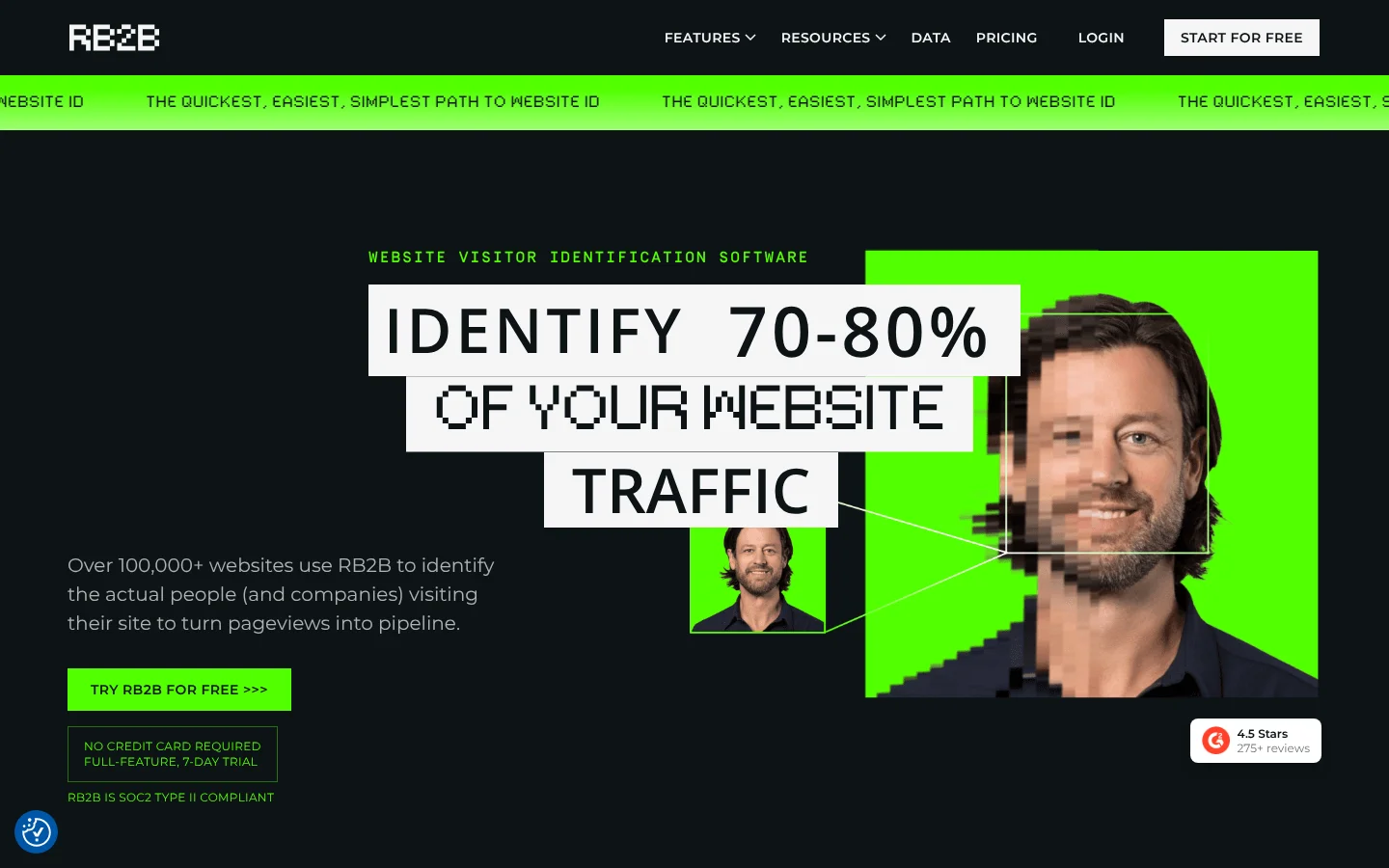
RB2B is a software that identifies the people and companies visiting your website and sends them to Slack, Teams or your CRM. More than 100,000 websites use it, and setup starts with a pixel in your site header.
Key features:
- Person-level identification for US visitors, with LinkedIn profiles and business emails on Pro plans.
- Company-level identification for visitors from any country.
- Hot Leads filters by company size, revenue, seniority, department and location.
- Hot Pages tagging for high-intent pages such as pricing.
- Over 50 integrations, including Salesforce, HubSpot, Clay, Zapier and Instantly.
Pricing: The Free plan costs $0 with company-level identification and 150 resolutions a month. Starter costs $79 a month, and Pro starts at $149 a month with business emails and all integrations.
Best for: US-focused startups that want named website visitors in Slack within minutes.
12. Instantly
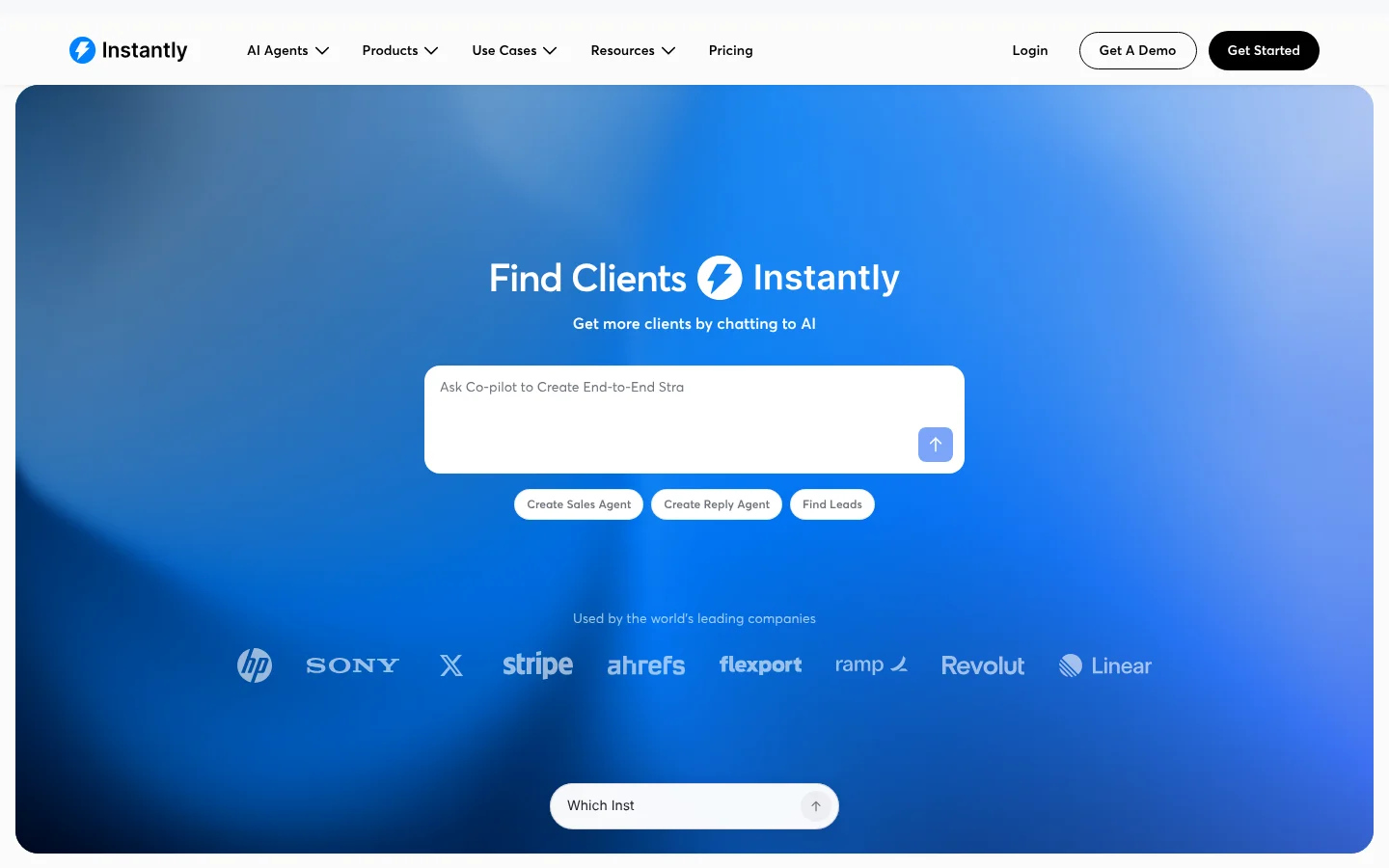
Instantly is a software that sends cold email campaigns at scale, with unlimited sending accounts, email warmup and AI reply agents. It also includes a lead finder, so you can build lists and send campaigns from one place.
Key features:
- Unlimited email accounts and warmup on every plan.
- Campaign sequences with A/Z testing and advanced scheduling.
- Unibox, one inbox for replies from all your sending accounts.
- AI workflows that route and tag leads when they visit your site, reply or book.
- Reports on opportunities, pipeline and revenue for each campaign.
Pricing: Growth costs $47 a month with 5,000 emails and 1,000 uploaded contacts. Hypergrowth costs $107 a month with 125,000 emails and 25,000 uploaded contacts.
Best for: Agencies and outbound teams that send a high volume of cold email.
B2B lead generation software comparison
Conveniently, most of these tools let you start free or on a trial, so you can test them against your own ICP before you sign a contract.
| Tool | Best for | Free plan | Starting price |
|---|---|---|---|
| Claritia | Small B2B teams that want inbound in one tool | Yes | $79 a month |
| Apollo.io | Startups that want data and outreach together | Yes | $49 per seat a month, billed annually |
| ZoomInfo | Enterprise data across many regions | No (free trial) | On request |
| Cognism | Selling into Europe by phone | No (free data sample) | On request |
| Clay | Custom enrichment workflows | Yes | $185 a month ($167 billed annually) |
| LinkedIn Sales Navigator | Relationship selling on LinkedIn | No (free trial) | $119.99 a month |
| HubSpot Marketing Hub | Inbound marketing on the HubSpot CRM | Yes | $20 per seat a month |
| Lusha | Quick contact lookups | Yes | $37.45 a month, billed yearly |
| Chili Piper | High inbound demo volume | No | $1,250 a month |
| Leadfeeder | Company-level visitor tracking | Yes | $79 a month, billed annually |
| RB2B | Person-level US visitor identification | Yes | $79 a month |
| Instantly | High-volume cold email | No | $47 a month |
Prices are the lowest paid plan on each vendor's pricing page in November 2026, before taxes and add-ons.
How to choose the right tool for your team
Pick tools by the biggest gap in your pipeline, and start with one or two before you add more. These steps keep the choice simple:
- Map where leads drop today, from first visit to booked meeting, using your CRM reports.
- If too few buyers find you, work on demand first, since lead generation and demand generation do different jobs.
- If buyers visit but rarely convert, start with an inbound tool such as Claritia, HubSpot or Chili Piper.
- If you sell outbound, pair a data tool such as Apollo.io, Lusha or Cognism with a sender such as Instantly.
- Run a two-week trial on your own ICP and count verified contacts, booked meetings and pipeline.
- Check the total cost at your real volume, including seats, credits, onboarding fees and overages.
Helpfully, our guide to inbound vs outbound lead generation compares the two motions if you're still choosing. If you'd rather hand the work to a team, see our list of the best B2B lead generation agencies.
FAQ
What is B2B lead generation software?
B2B lead generation software helps a business find companies that may buy from it and turn their interest into sales meetings. It covers contact databases, website visitor identification, enrichment, outreach and meeting booking.
What is the best free B2B lead generation software?
Apollo.io, HubSpot Marketing Hub, Claritia, Clay, Lusha, Leadfeeder and RB2B all have free plans. Apollo.io's free plan includes 900 credits per seat per year, and Claritia's covers one host and 500 contacts. Pick the free plan that fits the stage where you lose the most leads.
How much does B2B lead generation software cost?
Prices on this list run from free plans to custom enterprise contracts. Paid plans start at $37.45 a month for Lusha Starter billed yearly and reach $1,250 a month for Chili Piper Growth, while ZoomInfo and Cognism share prices on request.
Do I need more than one lead generation tool?
Many teams pair a data tool with an outreach tool, then add an inbound tool that books meetings from the website. All-in-one tools such as Apollo.io or Claritia cover more stages, so a small team can often start with one.
How do I know if a lead generation tool works?
Track the pipeline each tool creates, along with the cost per booked meeting and the share of leads that become opportunities. Lead counts can rise while pipeline stays flat, so judge every tool by meetings and revenue.
A good first step is to find the stage where you lose the most leads and trial the one tool that fixes it. If buyers struggle to find you in Google or AI answers, start with a free AI visibility audit to see where you show up now.