A B2B content marketing funnel maps what you publish to the three stages a buyer passes through: top, middle and bottom. Each stage answers a different buyer question, so each one needs its own content formats, goal and metric.
We plan content funnels for B2B and SaaS teams at Perceptric, and this guide follows our process. You'll get each stage with its metrics, research on how buyers really move, five build steps, four real examples and a checklist.
What is a B2B content marketing funnel?
A B2B content marketing funnel is a plan that matches each piece of content to the stage a buyer is in, from first noticing a problem to signing a contract.
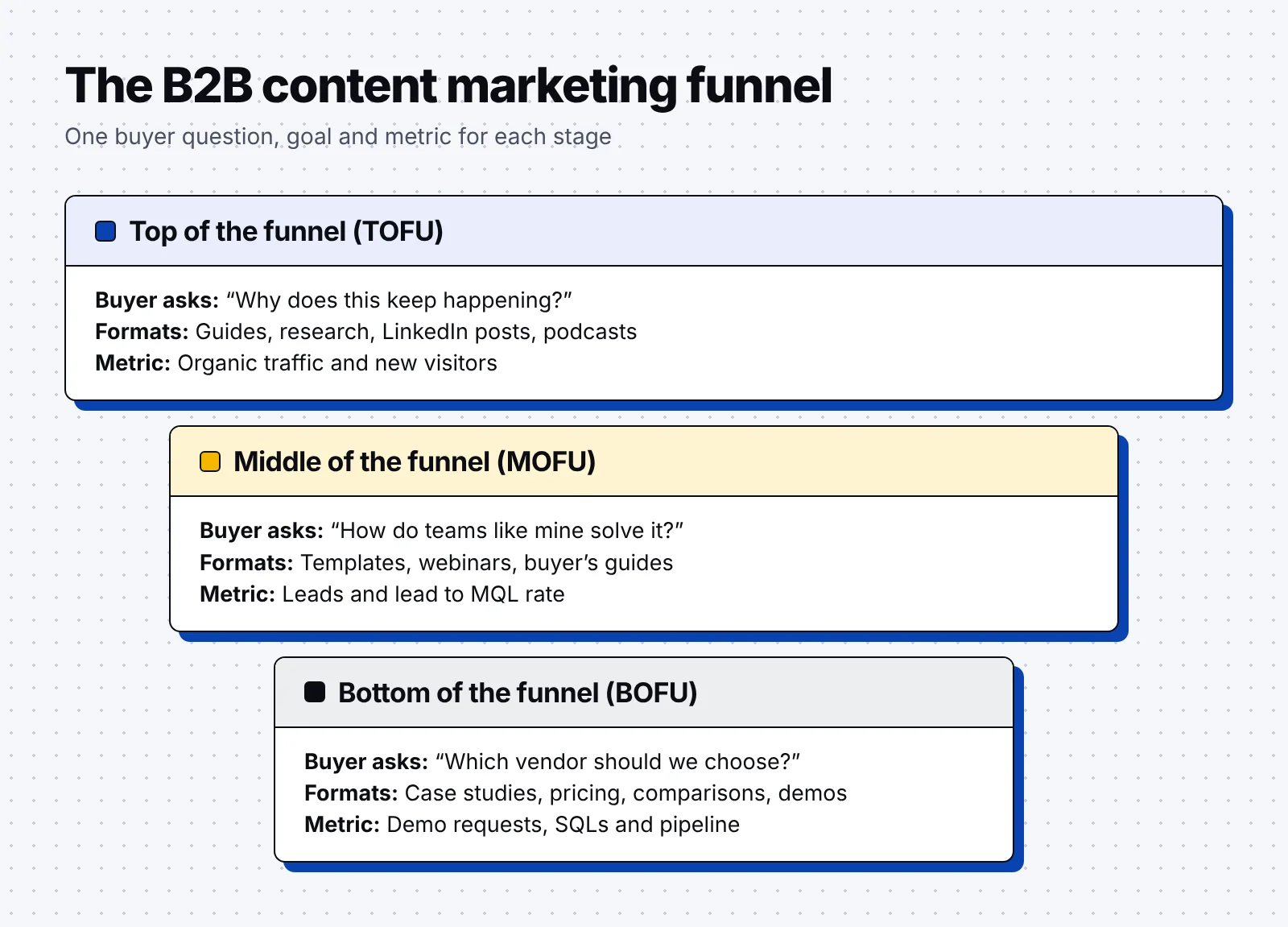
Most teams split the funnel into three stages, named after their place in it:
- Top of the funnel (TOFU) content helps people understand a problem and find your brand.
- Middle of the funnel (MOFU) content helps buyers compare the ways to solve that problem.
- Bottom of the funnel (BOFU) content helps a buying group pick a vendor and get approval.
Real buyers often jump between stages out of order, so use the funnel as a planning tool that keeps every stage covered. Our B2B content marketing guide covers the wider strategy, and our guide to the B2B demand generation funnel adds paid and outbound channels.
The three stages of the B2B content funnel
Each stage has one buyer question, a set of formats that answer it, a goal and a metric that shows whether the content works. The table below puts the three stages side by side:
| Stage | Buyer question | Formats | Goal | Main metric |
|---|---|---|---|---|
| Top (TOFU) | Why does this problem keep happening? | Search guides, research reports, LinkedIn posts, podcasts | Reach the right people | Organic traffic, new visitors, AI answer mentions |
| Middle (MOFU) | How do teams like mine solve it? | Templates, webinars, buyer's guides, use case pages | Earn a lead or a return visit | Leads, lead to MQL rate |
| Bottom (BOFU) | Which vendor should we choose? | Case studies, pricing, comparison pages, demos | Start a sales conversation | Demo requests, SQLs, pipeline |
Top of the funnel (TOFU)
Top of the funnel content answers "Why does this keep happening, and what are my options?" for people who feel a problem but haven't started looking for a vendor yet. These formats work well at this stage:
- Search guides that answer the "what is" and "how to" questions your buyers type into Google.
- Original research and benchmark reports that other sites and AI answers can cite.
- LinkedIn posts and newsletters written by your founders and subject experts.
- Podcasts and short videos that each explain one idea your buyers care about.
The goal at the top is reach among people who fit your ideal customer profile. Track organic traffic to these pages, new visitors, branded search and how often AI answers mention your brand for your main topics.
Middle of the funnel (MOFU)
Middle of the funnel content answers "How do teams like mine solve this, and what should we look for?" Buyers at this stage understand the problem and are comparing approaches, often with a few colleagues. These formats work well here:
- Templates, checklists and free tools that help a buyer finish one real task.
- Webinars and email courses that teach a method in more depth than a blog post.
- Buyer's guides and comparison articles that cover a whole product category.
- Use case pages that show one workflow for one team or industry.
The goal in the middle is a named lead, or a return visit from a known account. Track leads and your lead to MQL rate, then check how many qualified leads book a meeting. Across more than one million B2B SaaS form submissions, the median share of qualified leads that booked a meeting was 62%.
Bottom of the funnel (BOFU)
Bottom of the funnel content answers "Which vendor should we choose, and how do we prove it to everyone else?" Buyers here have a short list and need proof they can share. These formats work well at the bottom:
- Case studies with results from customers who look like the buyer.
- Pricing pages with clear plans, limits and what each plan includes.
- Comparison and alternatives pages that treat other vendors fairly.
- ROI calculators, product tours and security pages for the wider buying group.
The goal at the bottom is a sales conversation, so track demo requests, sales qualified leads and pipeline from these pages. Our guide to BOFU content covers each of these formats in more detail.
How real B2B buyers move through the funnel
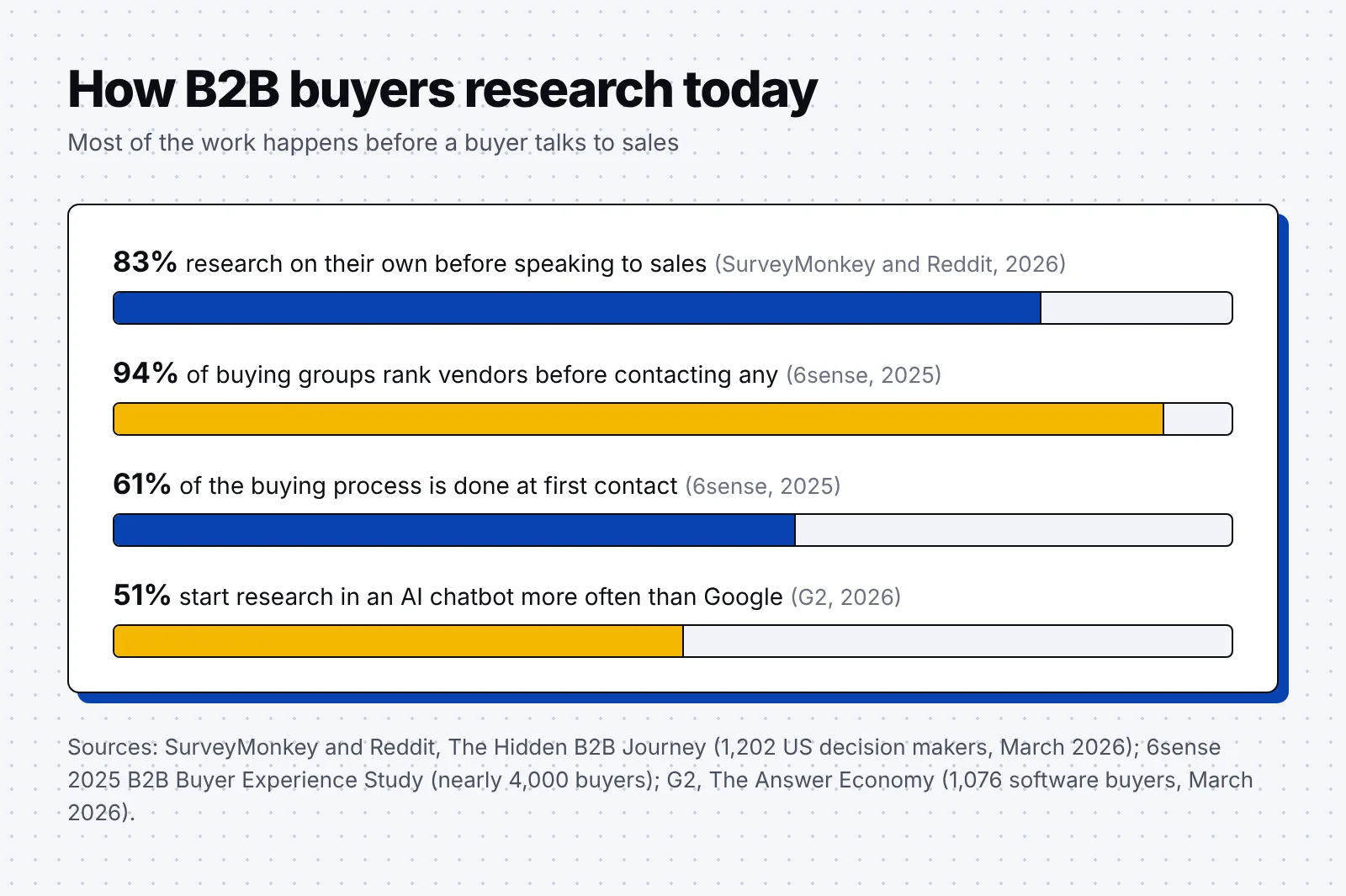
Real B2B buyers skip stages, research on their own and decide in large groups, so few of them follow the funnel in order. These findings from recent buyer research show the pattern:
- In the 6sense 2025 Buyer Experience Study of nearly 4,000 buyers, groups filled four of the five spots on their shortlist on day one.
- The same study found that 94% of buyers ranked their shortlist before contacting any vendor, and first contact came 61% of the way through the process.
- In a SurveyMonkey and Reddit study of 1,202 US decision makers, 83% research on their own before speaking to sales.
- That study also found search engines were the most used research channel at 57%, while 55% struggle to know which sources to trust.
- In G2's March 2026 survey of 1,076 software buyers, 51% start research in an AI chatbot more often than in Google.
- Forrester's State of Business Buying 2026 found a typical purchase involves 13 internal stakeholders and nine external influencers.
Fortunately, this makes planning simpler, because you can build each stage as a set of answers that stand alone and then link them together.
How to build your content funnel in 5 steps
The five steps below take you from a list of buyer questions to a content funnel you can measure every month:
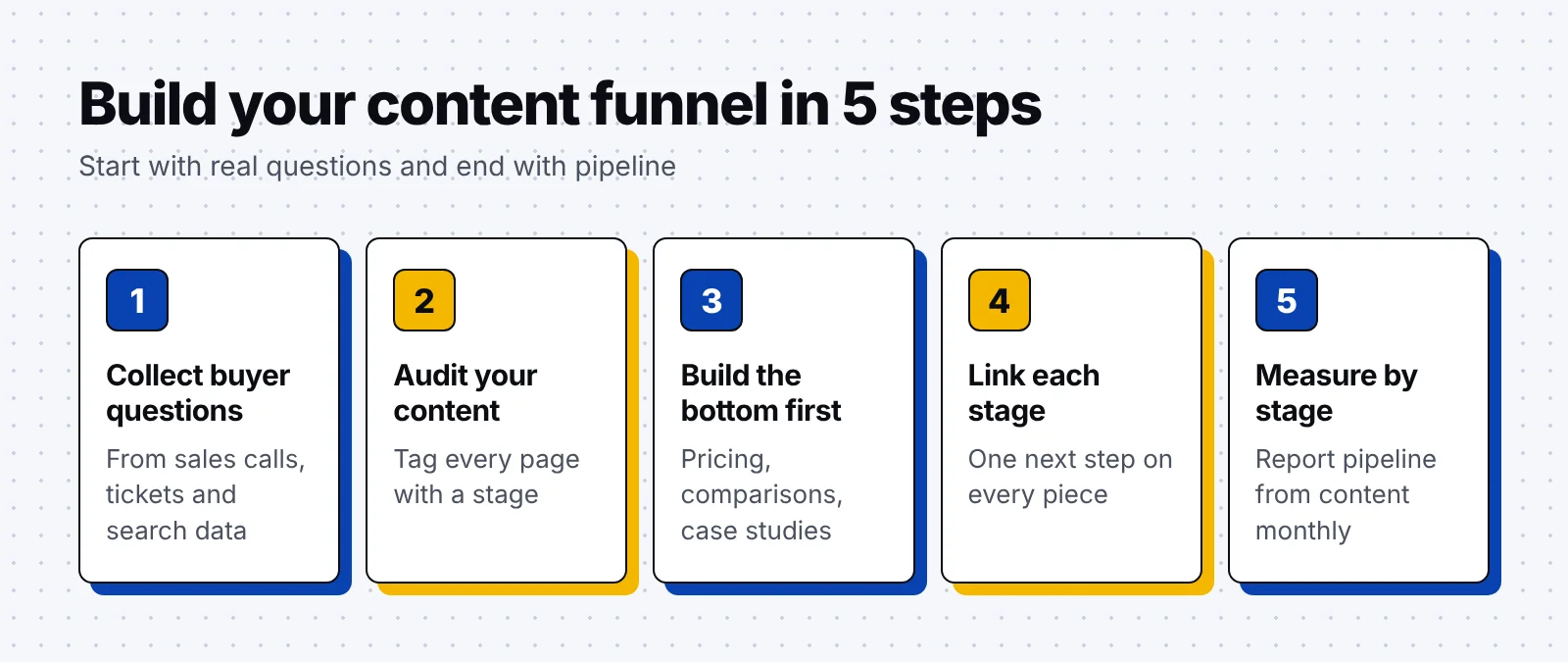
1. Collect real buyer questions for each stage
Start with the questions buyers ask, taken from sales call recordings, support tickets, win and loss notes and your search data. Sort each question into a stage, using the buyer questions in the table above as a guide.
Ask your sales team which questions come up on every first call and which ones slow deals down. Happily, the answers often point to the bottom of the funnel pages your site is missing.
2. Audit your current content by stage
List every page on your site, tag it with one stage, then add its traffic, leads and pipeline from the last 12 months. Then give each page one of these actions:
- Keep pages that bring in traffic or leads for the right audience.
- Update pages with good topics but old facts, screenshots or offers.
- Merge pages that answer the same question for the same reader.
- Remove pages that fit no stage and bring in no qualified visitors.
Most gaps show up as soon as the tags are in place. A common pattern is plenty of top of the funnel posts and very few pages that help a buyer make the final choice.
3. Build the bottom of the funnel first
Start with the pages buyers use to decide, since they turn the interest you already have into pipeline faster than new traffic does. Thankfully, these pages need less traffic to pay off, because every visitor is close to a choice. Build these first:
- A pricing page, or a page that explains how your pricing works.
- One comparison page for each competitor that sales meets most often.
- Case studies from your best-fit customers, tagged by industry and company size.
- A demo or trial page with a short form and a clear next step.
4. Link every stage to the next one
Give every piece of content one clear next step that fits the reader's stage. A top of the funnel guide can link to a template, the template can link to a case study and the case study can link to a demo.
Use internal links, short email sequences and retargeting ads to move readers along at their own pace. Our playbook on content marketing for lead generation covers offers, forms and gating in more detail.
5. Measure each stage and report on pipeline
Give each stage its own metric, then tie the stages together in one monthly report that your sales team also reads. The chart below combines rates from Unbounce, RevenueHero and HockeyStack, so treat each one as a rough guide:
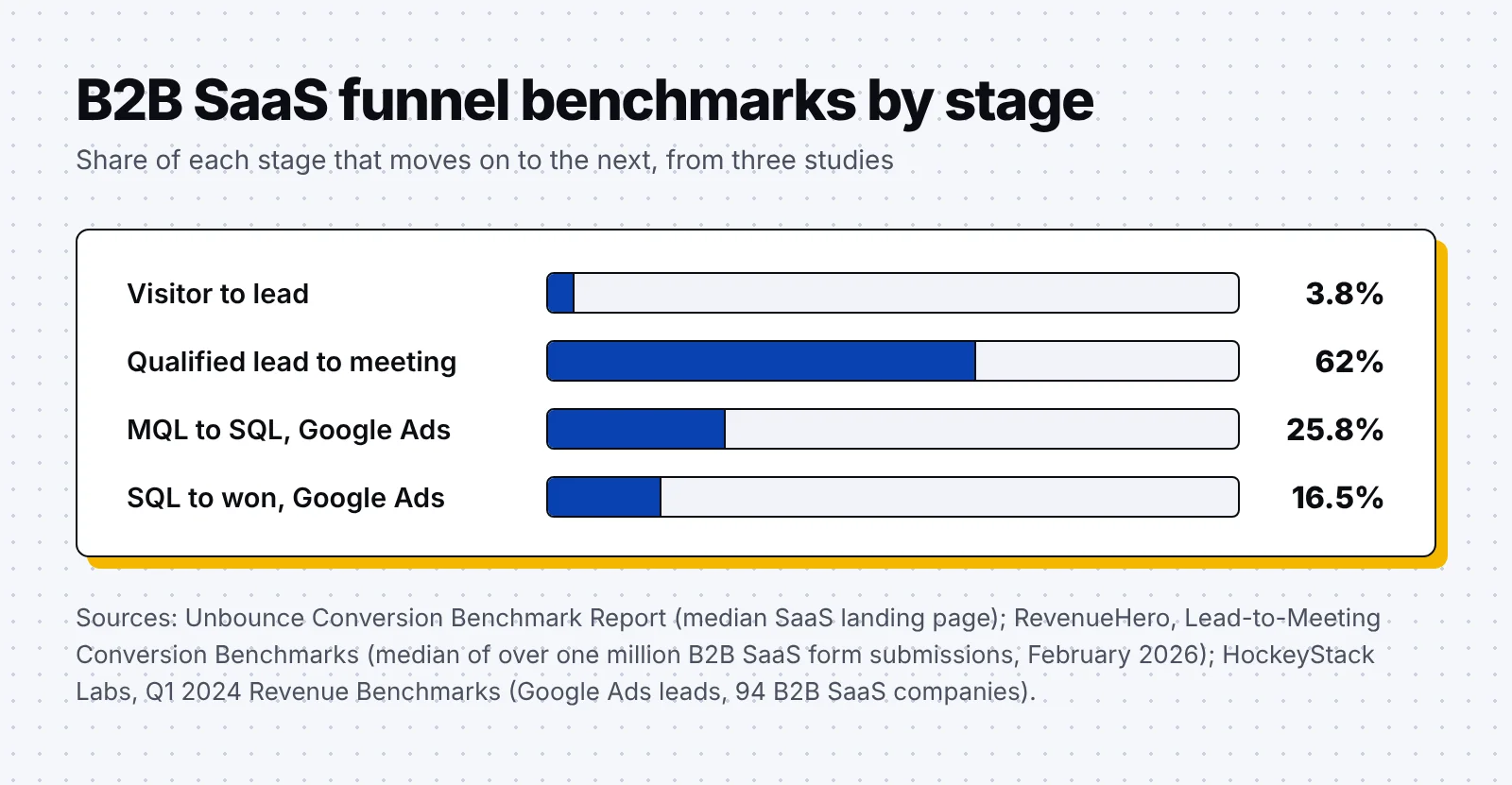
Luckily, you only need your CRM and analytics to compare your own rates with these numbers. Find the stage with the biggest drop, then fix that stage before you publish more content anywhere else.
B2B content funnel examples from real companies
These four B2B companies each run one part of the funnel well, from the first blog post to the pricing page, and we opened every page in November 2026.
1. Zapier blog (top of the funnel)
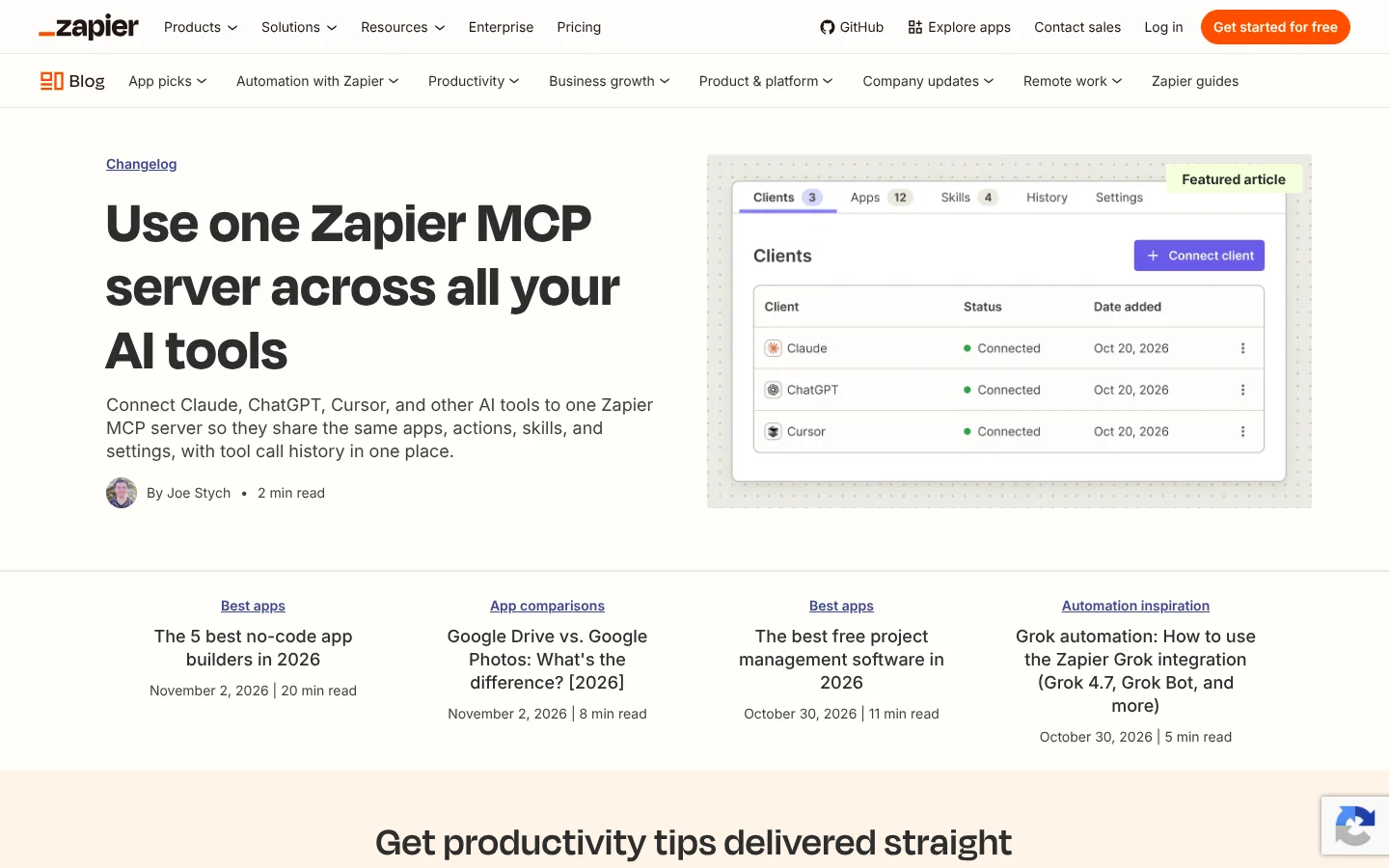
Zapier is an automation software company that connects the apps a team uses so work moves between them without manual steps. Its blog publishes app picks, app comparisons and productivity guides for people who may automate that work later.
Recent posts include "The best free project management software in 2026" and "The 5 best no-code app builders in 2026". A newsletter form between the posts sends tips one to three times a week.
Why it works:
- Each post answers a question that future Zapier users already search for.
- The newsletter form turns a one-time reader into a contact Zapier can reach again.
What you can borrow:
- Write roundups and how-to guides about the tools your buyers already use.
- Add one simple newsletter form to every top of the funnel post.
2. Asana templates (middle of the funnel)
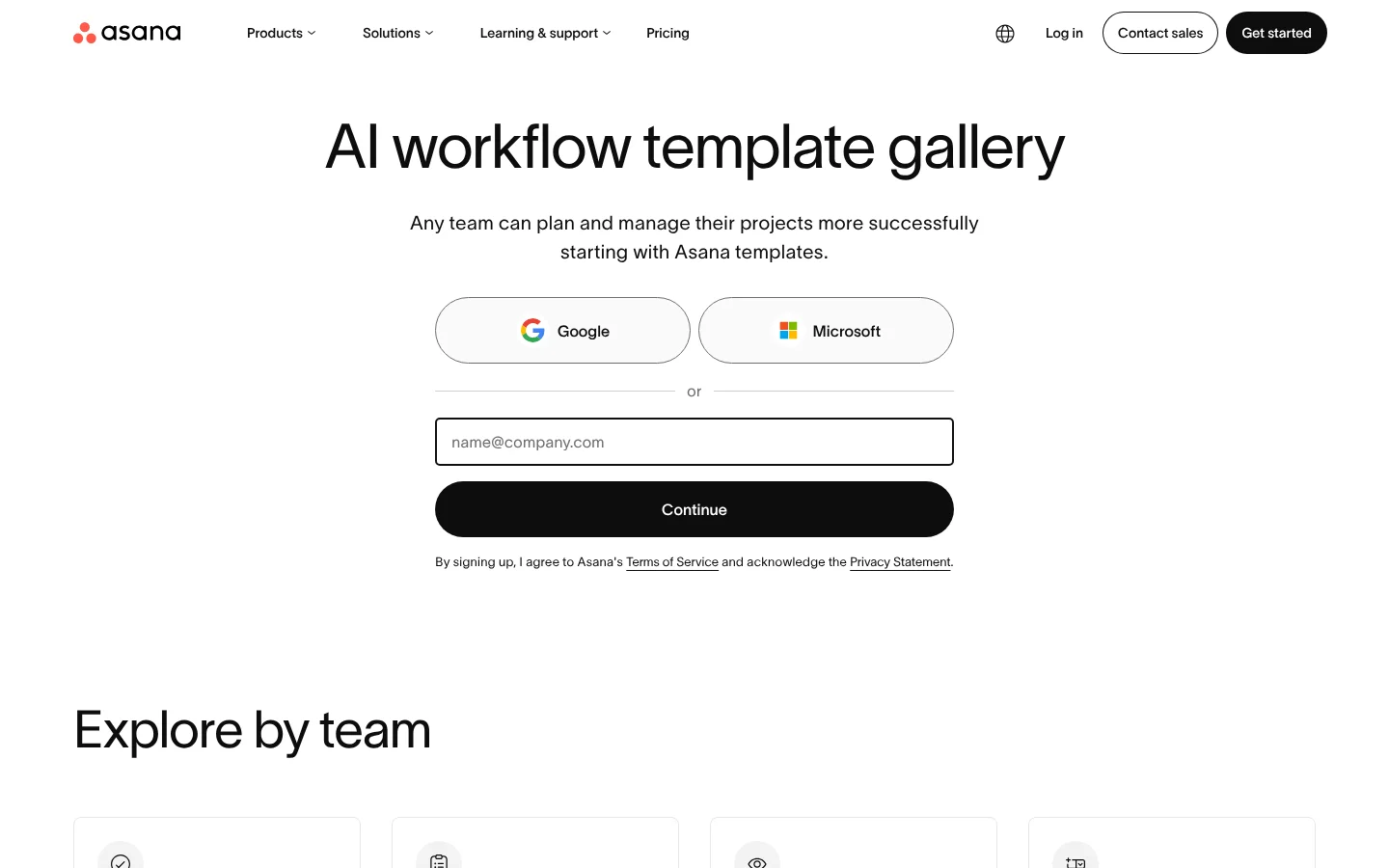
Asana is a work management software company that helps teams plan projects and track their work in one place. Its template gallery sorts ready-made workflows by team, with sections for marketing, IT, HR, and sales and customer experience.
Each template, such as campaign management or product launch, has a "Use template" button. A sign-up form with Google and Microsoft options sits at the top of the gallery.
Why it works:
- A template lets a buyer try the product's way of working on a real task.
- Sorting by team helps each member of a buying group find a workflow for their role.
What you can borrow:
- Turn the most common workflow in your product into a free template or checklist.
- Group your middle of the funnel offers by role, so each stakeholder finds one.
3. Gong customer stories (bottom of the funnel)
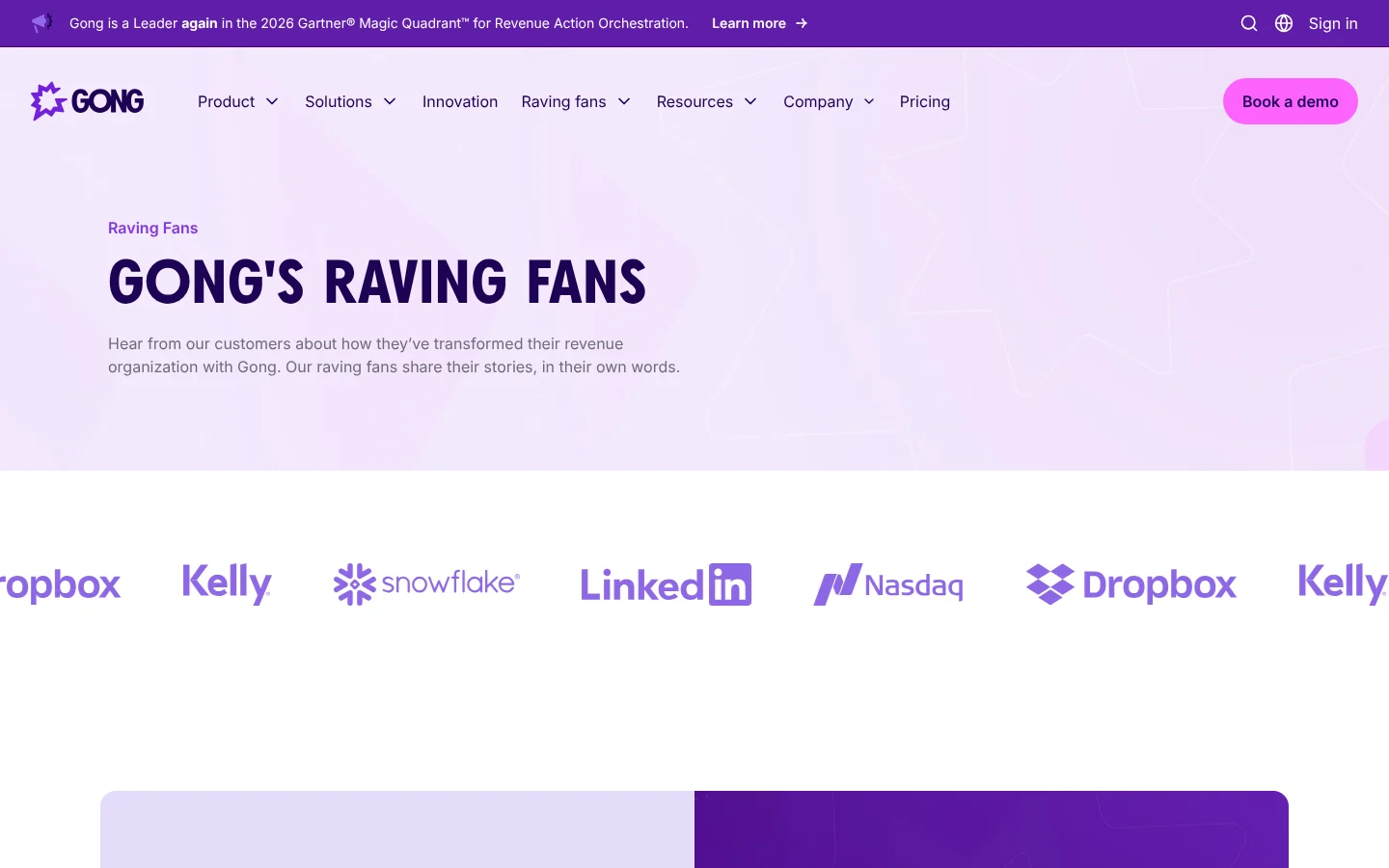
Gong is a revenue AI software company that records and analyzes sales calls to help teams forecast and coach. Its customer stories page lists case studies you can filter by use case, industry, company size and region.
Helpfully, story titles lead with a result, such as "How GHX reduced rep ramp time by 85% with Gong". A demo request form with a single email field sits at the bottom of the page.
Why it works:
- Filters help a buyer find proof from a company that looks like their own.
- A number in each title gives a champion something to share with the buying group.
What you can borrow:
- Tag every case study by industry, company size and use case.
- Put the main customer result in the title of each case study.
4. Calendly pricing page (bottom of the funnel)
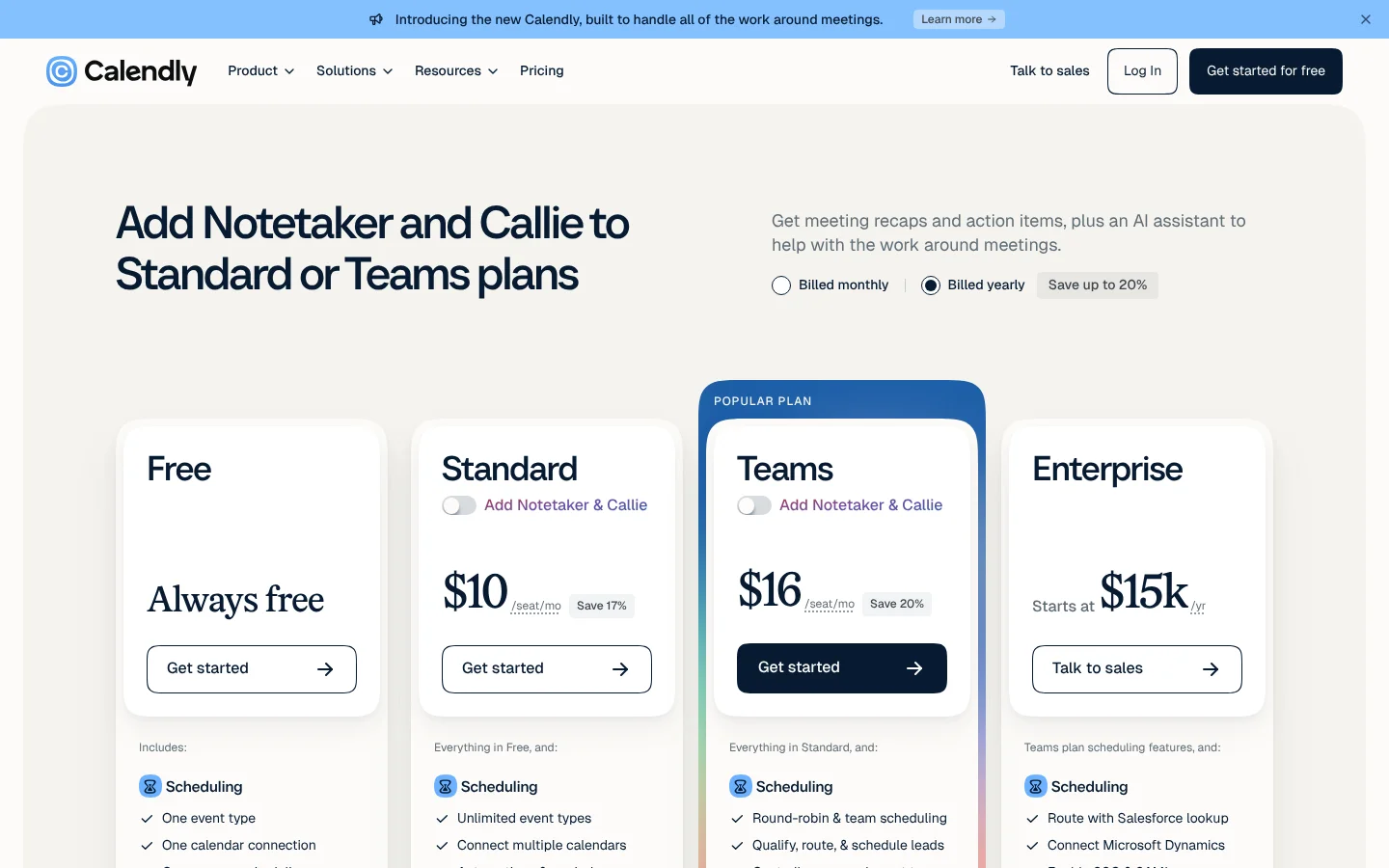
Calendly is a scheduling software company that lets people book meetings through a shared link. Calendly offers four plans on its pricing page, from a free plan up to Enterprise, which starts at $15,000 a year for 50 seats.
With yearly billing, Standard costs $10 per seat a month and Teams costs $16 per seat a month. A full feature comparison table sits below the plans.
Why it works:
- Buyers who skip straight to pricing get an answer without booking a sales call.
- The feature table helps finance and IT check limits and security options on their own.
What you can borrow:
- Publish your prices or price ranges, or explain how your pricing works.
- Add a feature table that answers the questions procurement teams usually ask.
B2B content funnel checklist
Run through this checklist when you plan a new quarter of content, and again whenever you review results. The card below holds the six checks that matter most:
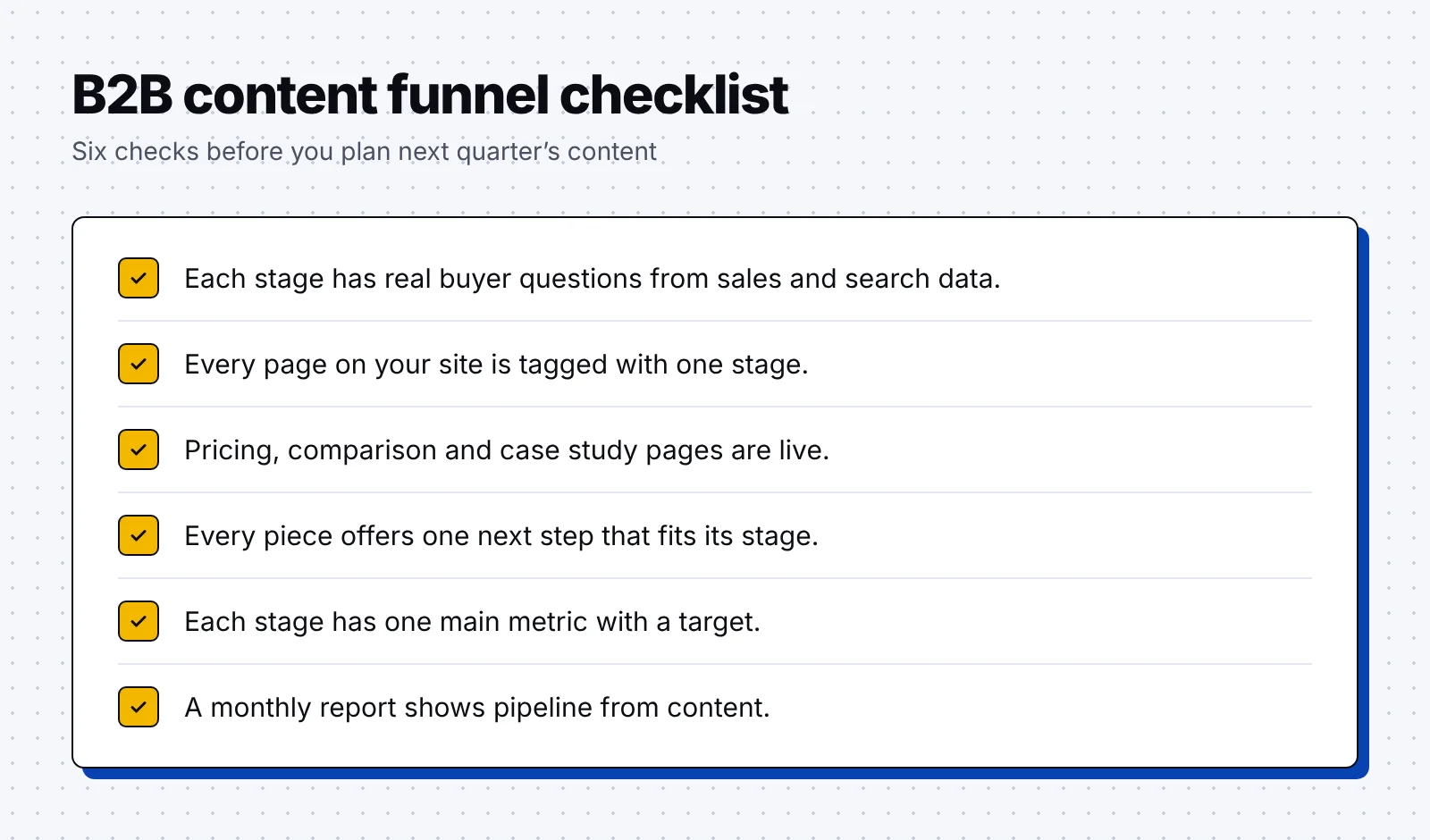
The full list below is grouped by the steps in this guide, so you can hand each group to the person who owns it.
Plan
- Each stage has a list of real buyer questions from sales calls and search data.
- Every page on your site is tagged with one stage and one next step.
- Your bottom of the funnel covers pricing, main competitors and customer proof.
Connect
- Each top of the funnel post links to one relevant middle of the funnel offer.
- Middle of the funnel offers are grouped by role in the buying group.
Measure
- Each stage has one main metric and a target for the quarter.
- Your monthly report shows pipeline from content and goes to sales as well.
- You check how AI answers describe your brand for your main topics.
FAQ
What is a B2B content marketing funnel?
A B2B content marketing funnel is a plan that matches each piece of content to a buyer's stage: top, middle or bottom. Top of the funnel content builds awareness, middle of the funnel content earns leads, and bottom of the funnel content helps buyers choose a vendor.
What do TOFU, MOFU and BOFU mean?
TOFU, MOFU and BOFU stand for top, middle and bottom of the funnel. TOFU content explains a problem, MOFU content compares ways to solve it, and BOFU content helps a buying group pick a vendor and get approval.
Which content works best at the bottom of the funnel?
Case studies, pricing pages, comparison pages and product demos work best at the bottom of the funnel. They answer the questions a buying group asks just before it signs, so they bring in demo requests and pipeline.
How do you measure a B2B content funnel?
Give each stage its own metric: traffic and reach at the top, leads in the middle, and SQLs and pipeline at the bottom. Then report pipeline from content every month, so you can see which stage needs work.
Do B2B buyers still follow the funnel?
B2B buyers rarely follow the funnel in order, since most research on their own and many land on bottom of the funnel pages first. In the 6sense 2025 study, 94% of buyers ranked their shortlist before contacting any vendor, so every stage needs content that works on its own.
A good first step is to tag your 50 most visited pages by stage and count how many sit at the bottom of the funnel. If you'd like an outside view of how buyers find you, start with a free AI visibility audit.