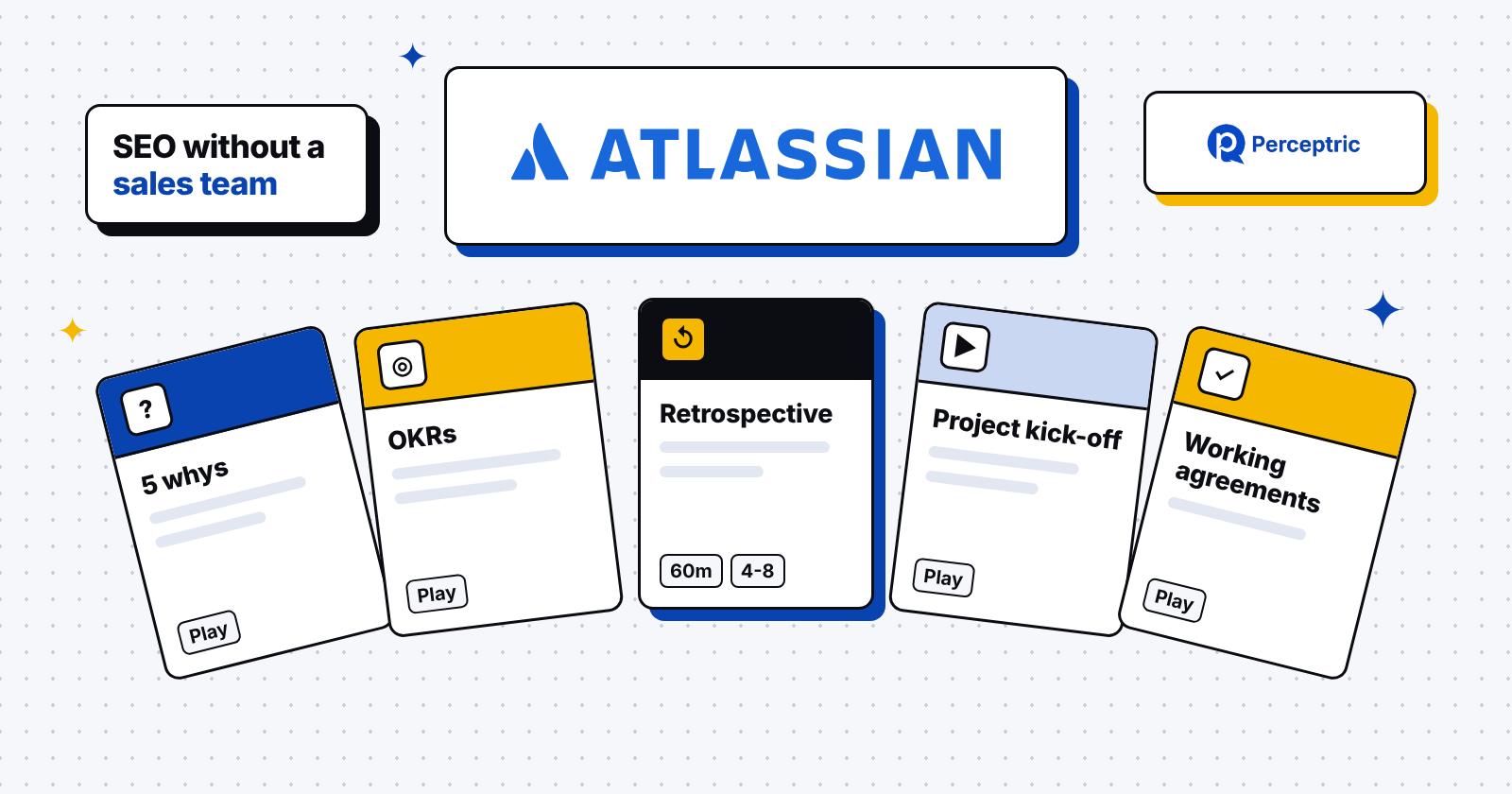
Atlassian ranks for the work its software runs, such as Scrum, sprint retrospectives and root cause analysis. Each of those pages teaches the method for free, then offers a free Jira or Confluence account as the next step.
That plan goes back to 2003, when the founders decided buyers should find and buy software on their own.
How Atlassian grew: a credit card, a bug tracker and a bet on self-service
Atlassian is a software company that makes Jira, Confluence and Trello for teams. Mike Cannon-Brookes and Scott Farquhar founded it in Sydney in 2002 with a $10,000 credit card.
They sold support services first, then built the Jira issue tracker and sold it online. In 2003, American Airlines bought Jira from the website without a single sales call (Atlassian).
The founders took a lesson from that order: software should be bought instead of sold. The 2015 F-1 says Atlassian sold online "without traditional sales infrastructure," and it shared these numbers:
- Revenue reached $319.5 million in the year to June 2015, up from $148.5 million two years earlier.
- More than 98% of transactions happened on Atlassian's own website.
- More than 51,000 customers paid for its products, and over 5 million people used them every month.
The filing credits word of mouth, "low-touch demand generation" and "targeted web-based content" for that growth, and the web content grew into Atlassian's SEO engine.
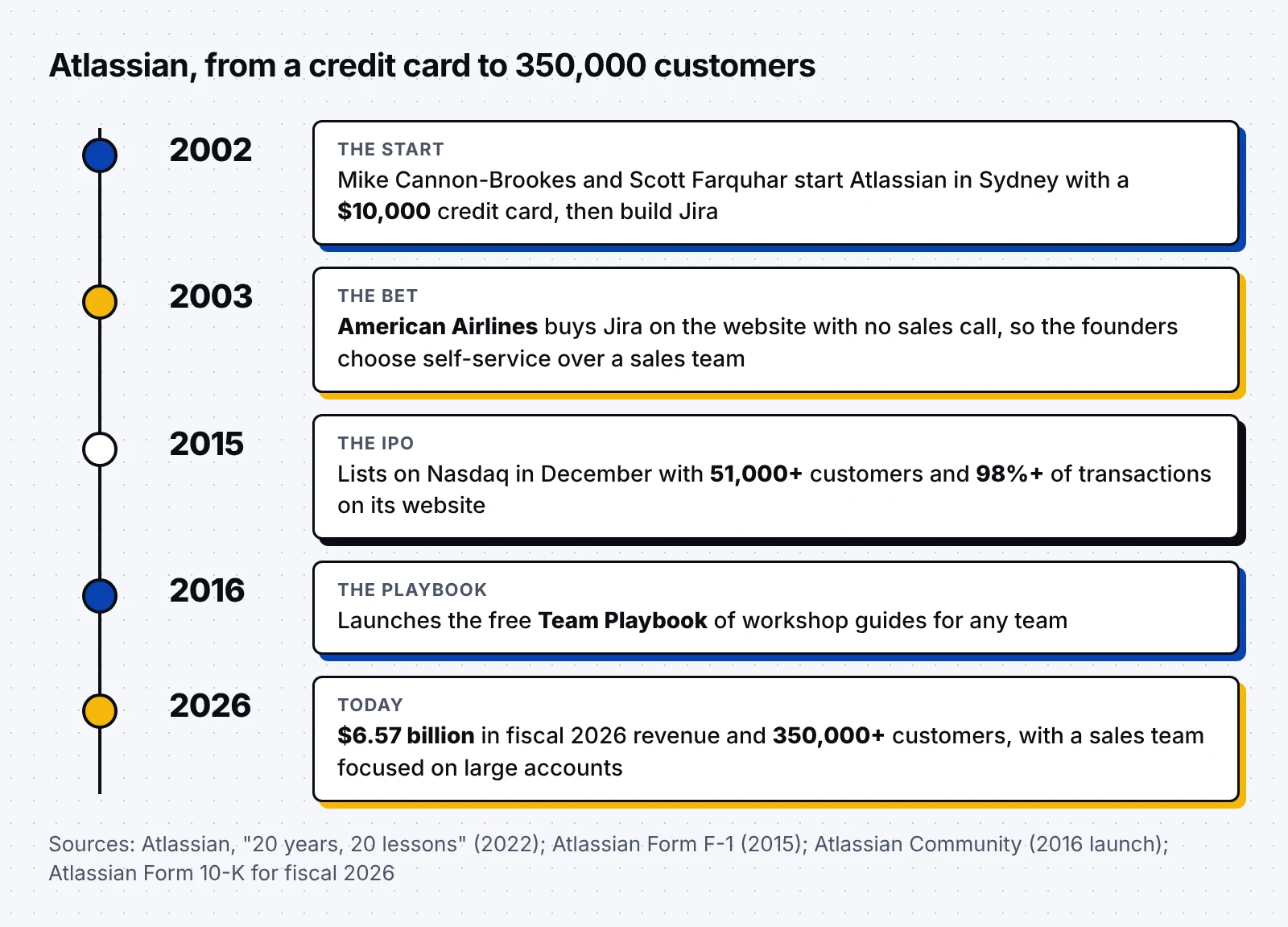
The bet still pays off, with $6.57 billion in revenue in fiscal 2026 and more than 350,000 customers (Form 10-K). Atlassian has salespeople today, and they grow large enterprise accounts while self-service brings in new customers.
By fiscal 2026, research and development took half of revenue:
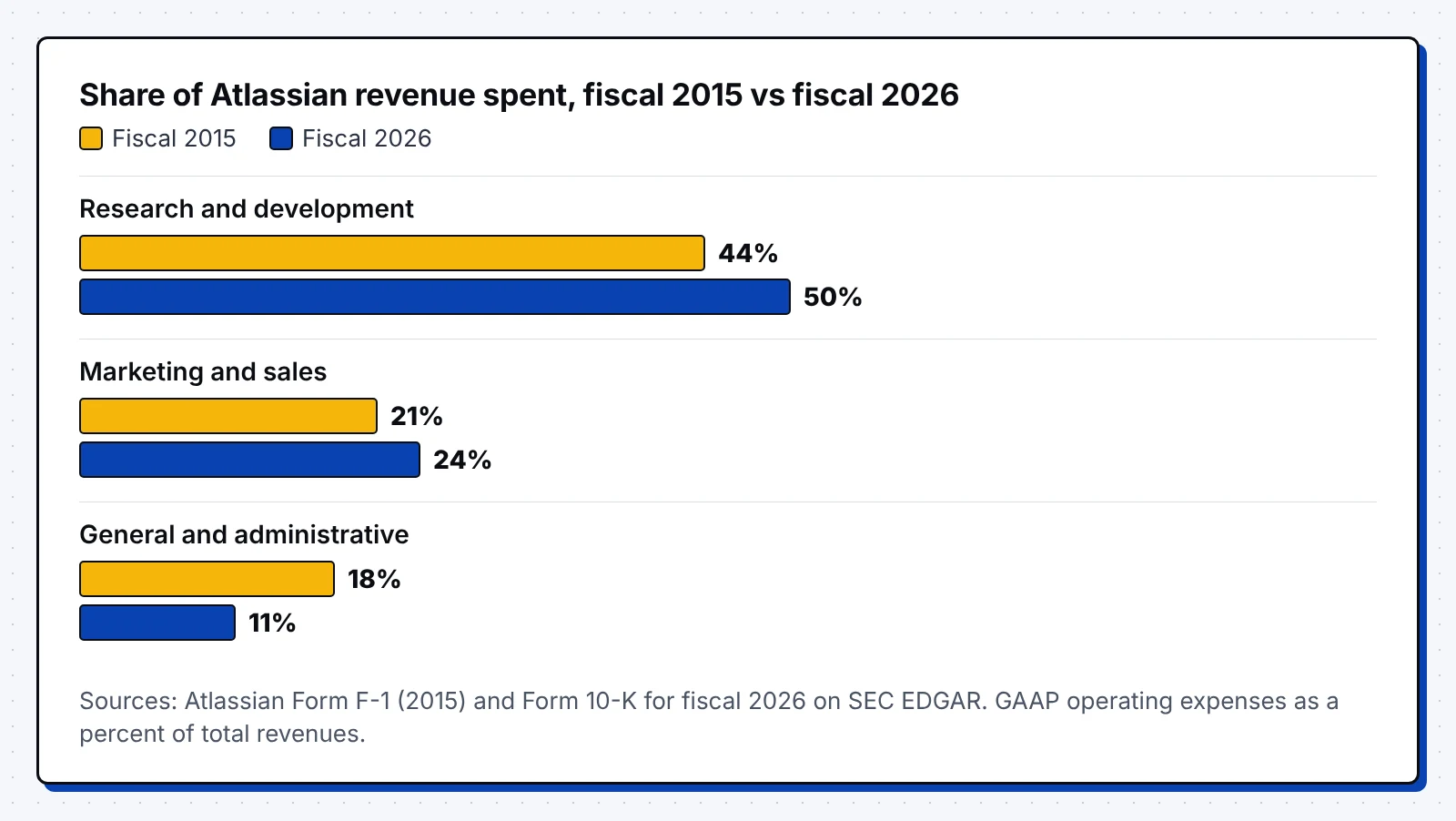
This history explains Atlassian's SEO, because a company that sells without reps needs its website to do the work of a sales team.
Atlassian's keyword strategy: rank for the work, then offer the tool
The brand draws steady search demand, though much of it comes from investors and job seekers. Searches for "atlassian" reach 90,500 a month, with 40,500 for "atlassian stock" and 14,800 for "atlassian careers" (Arrowsterr keyword data, November 2026).
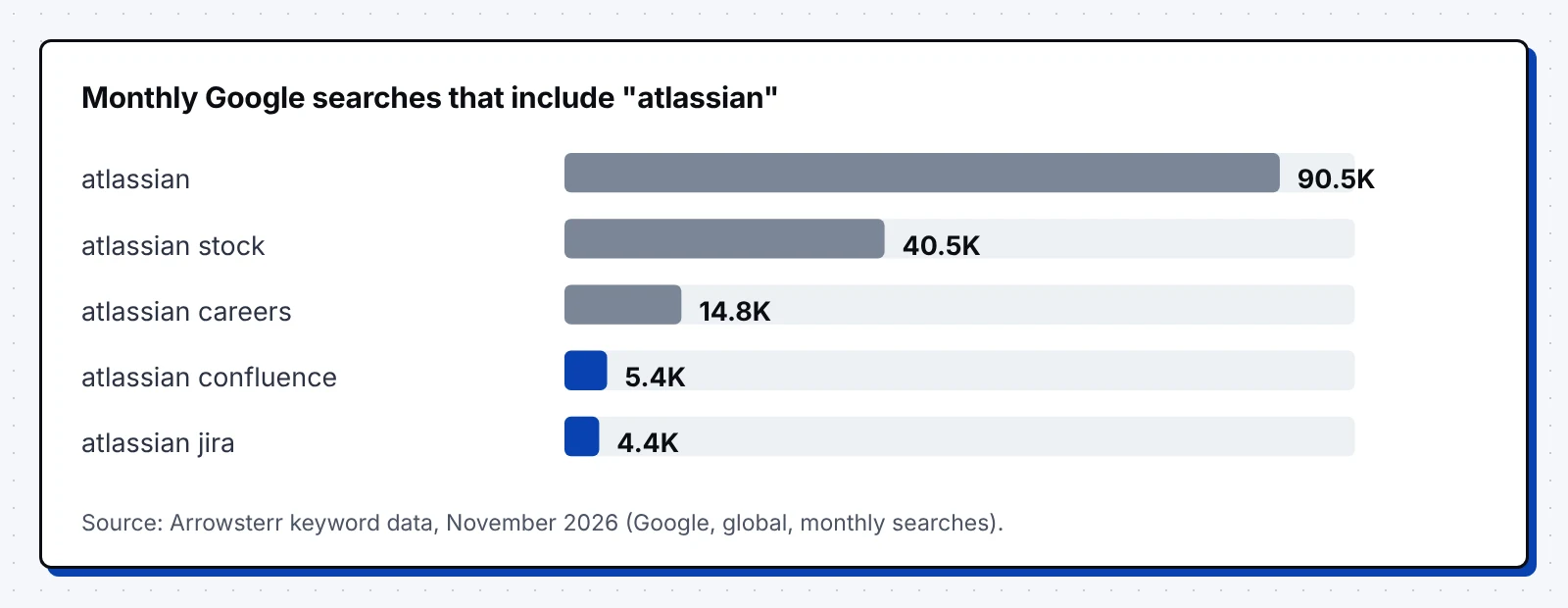
Few people pair the company name with a product name. Searches for "atlassian confluence" reach 5,400 a month and "atlassian jira" 4,400, which suggests buyers search the product names on their own.
Earlier on, buyers search for the work in front of them, such as a meeting or a document. Atlassian built a page type for each kind of search:
- Method searches, such as "what is scrum," lead to guides in the Agile Coach and its sister hubs on Git and DevOps.
- Meeting searches, such as "sprint retrospective," lead to Team Playbook plays.
- Document searches, such as "5 whys template," lead to template pages that open in Confluence or Jira.
- Switching searches, such as "Jira vs Asana," lead to comparison pages.
- Product questions from current users lead to answers from other users in the Atlassian Community.
Each page type fits what the searcher wants to do at that moment. A reader asking "what is scrum" wants to learn, so the guide teaches first and keeps the product to one box.
A reader searching "5 whys template" wants a file to use today, so the template opens inside a free account with one click.
The strategy compounds because the page types link to each other on every topic. Guides link to templates and plays, templates link back to plays, and each path ends at the same free sign-up.
The guides also teach habits Jira is built around, such as sprint planning and standups, so Jira feels familiar to their readers.
Play 1: the Agile Coach teaches the method Jira runs on
Jira runs on agile methods like Scrum and Kanban, and the Agile Coach at atlassian.com/agile teaches them for free.
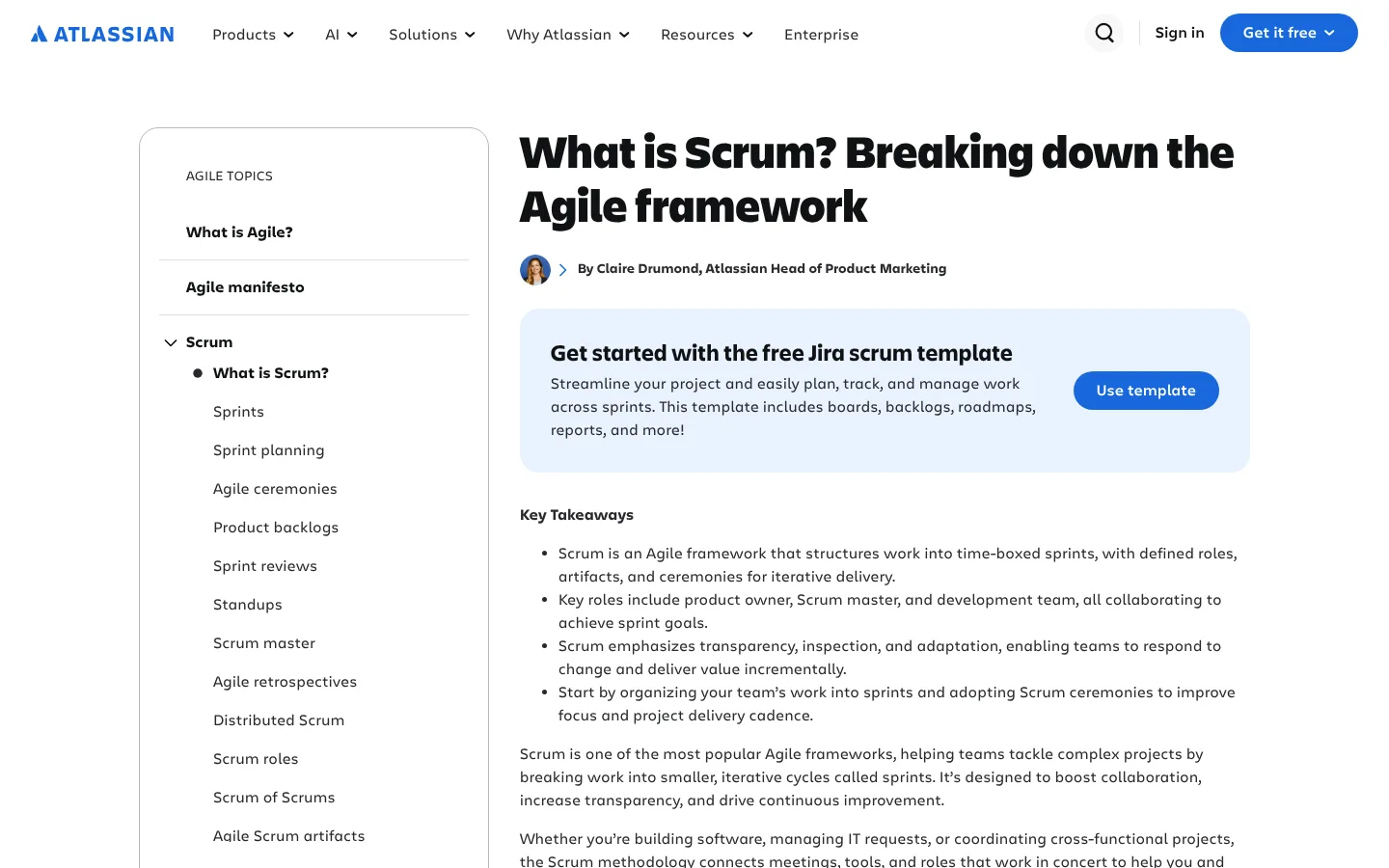
The Scrum guide carries the title "What is Scrum? Guide to the Agile Framework" and a byline from Claire Drumond, Atlassian Head of Product Marketing.
The page has these parts:
- A sidebar lists every agile topic, from sprint planning and standups to Scrum of Scrums.
- A blue box at the top offers the free Jira scrum template.
- A Key Takeaways list answers the main question in four short bullets.
The sidebar ties the guides into one topic hub, so each page passes links and relevance to the others. The byline adds trust, and the takeaways give Google a short answer it can show.
What a B2B team can use:
- Write guides to the method your product supports before writing about the product.
- Put one matching template or free trial at the top of each guide.
Play 2: the Team Playbook turns workshops into search pages
Atlassian launched the Team Playbook in 2016 as a free library of workshops, called plays, for problems such as a messy project kick-off.
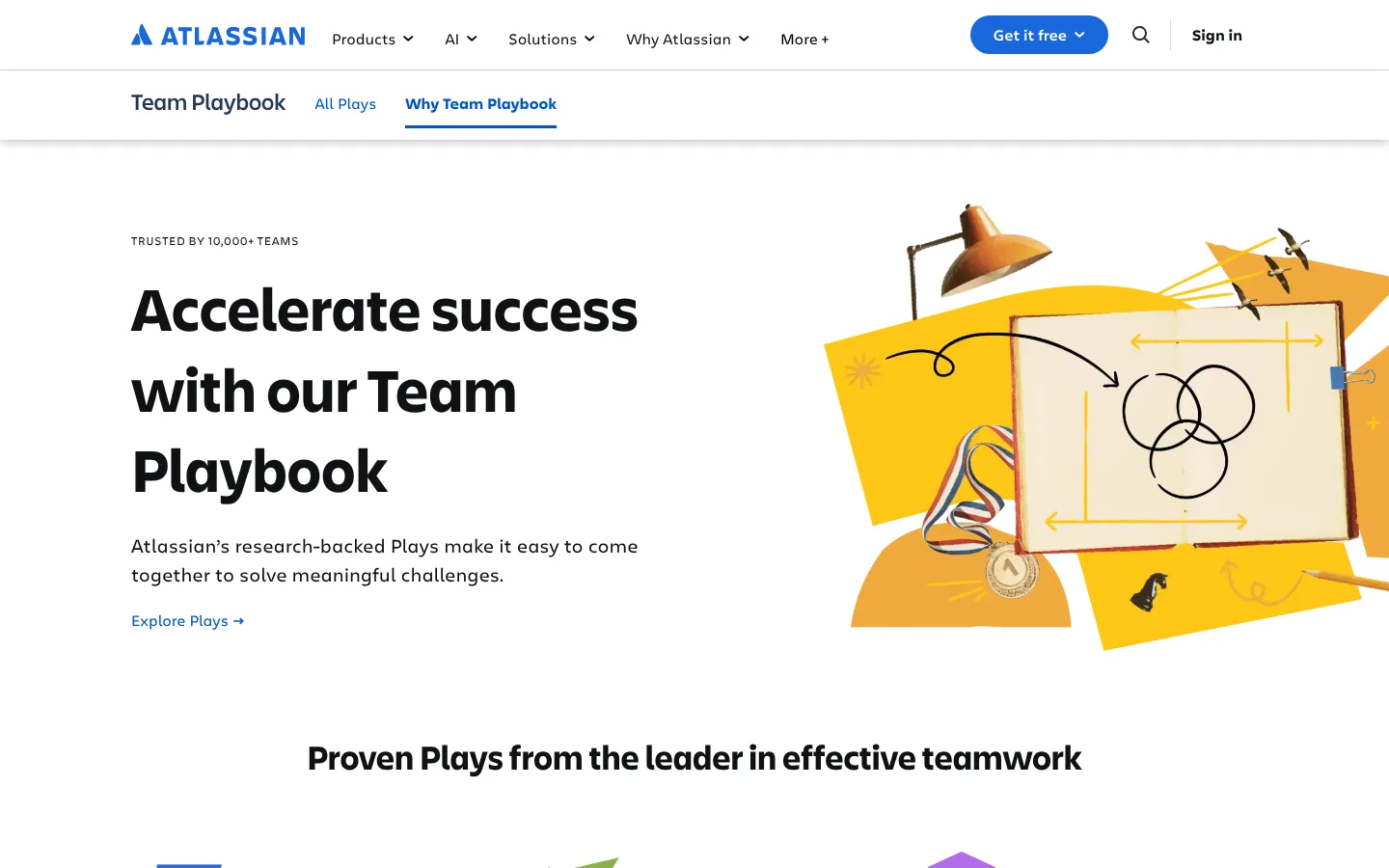
More than 10,000 teams use the plays, and the Playbook home page quotes leaders from HubSpot and VML.
The retrospective play targets a meeting that every Scrum team holds at the end of each sprint. Its title, "Sprint Retrospective: How to Hold an Effective Meeting," matches the search.
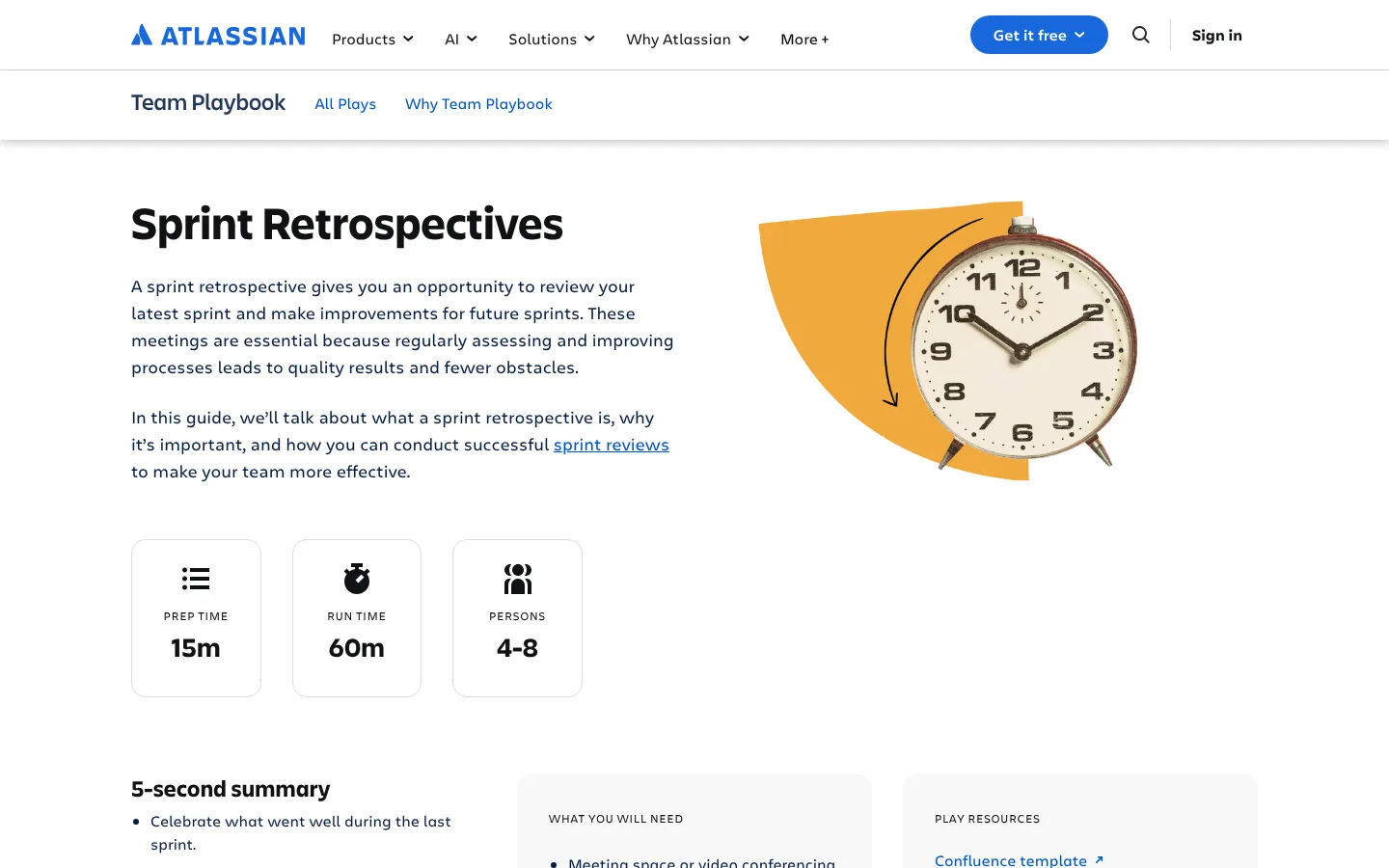
The play covers the whole meeting:
- A summary card lists 15 minutes of prep, 60 minutes to run and 4 to 8 people.
- Step-by-step instructions walk the person leading the session through each part.
- A language switcher links to the same play in 11 more languages.
The product appears once, as a Try Jira Scrum Boards button, which keeps the focus on the meeting and makes the play easy to share.
What a B2B team can use:
- Publish your best internal workshop with its time, people and steps.
- Keep the product to one button, matched to the task on the page.
Play 3: templates put the product one click away
Template pages reach people who are ready to act on what they learned. The Confluence templates library serves broad searches like "Confluence templates," while each template page targets its own phrase.
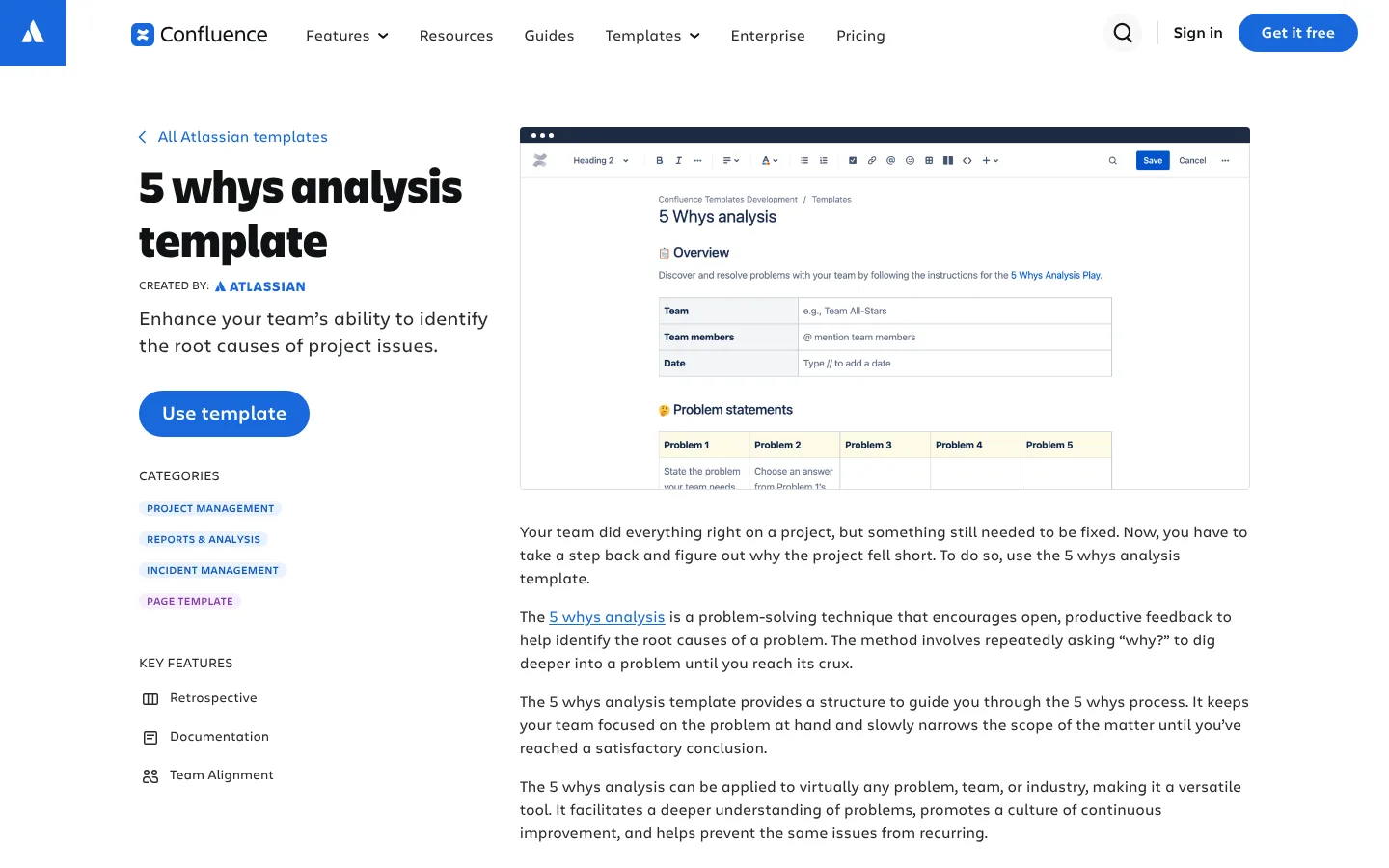
The 5 whys analysis template explains the method, previews the page and lists the steps. It also links to the 5 whys play, where a team can learn to run the workshop.
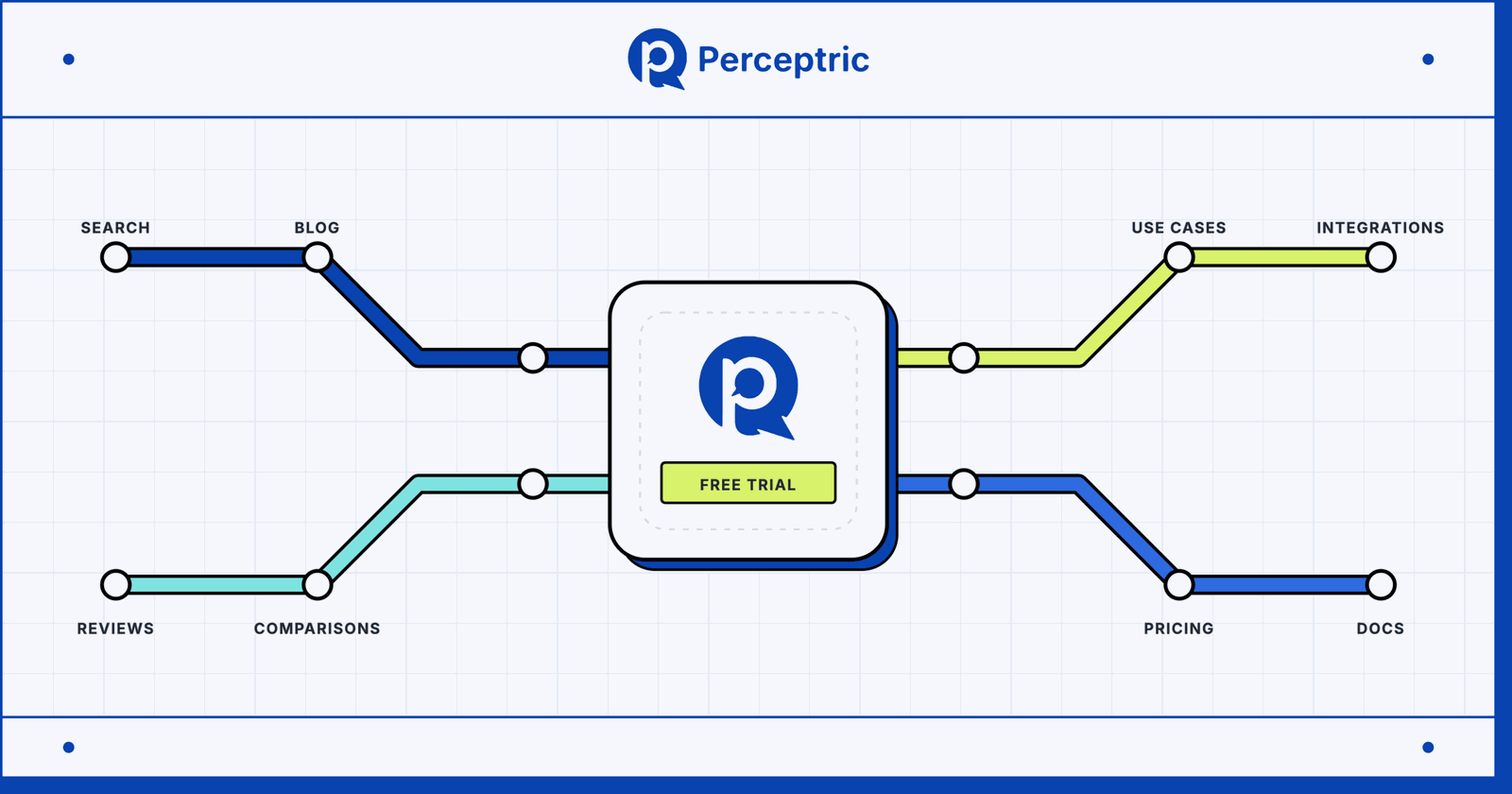
The pages link in a loop that ends at a free account:
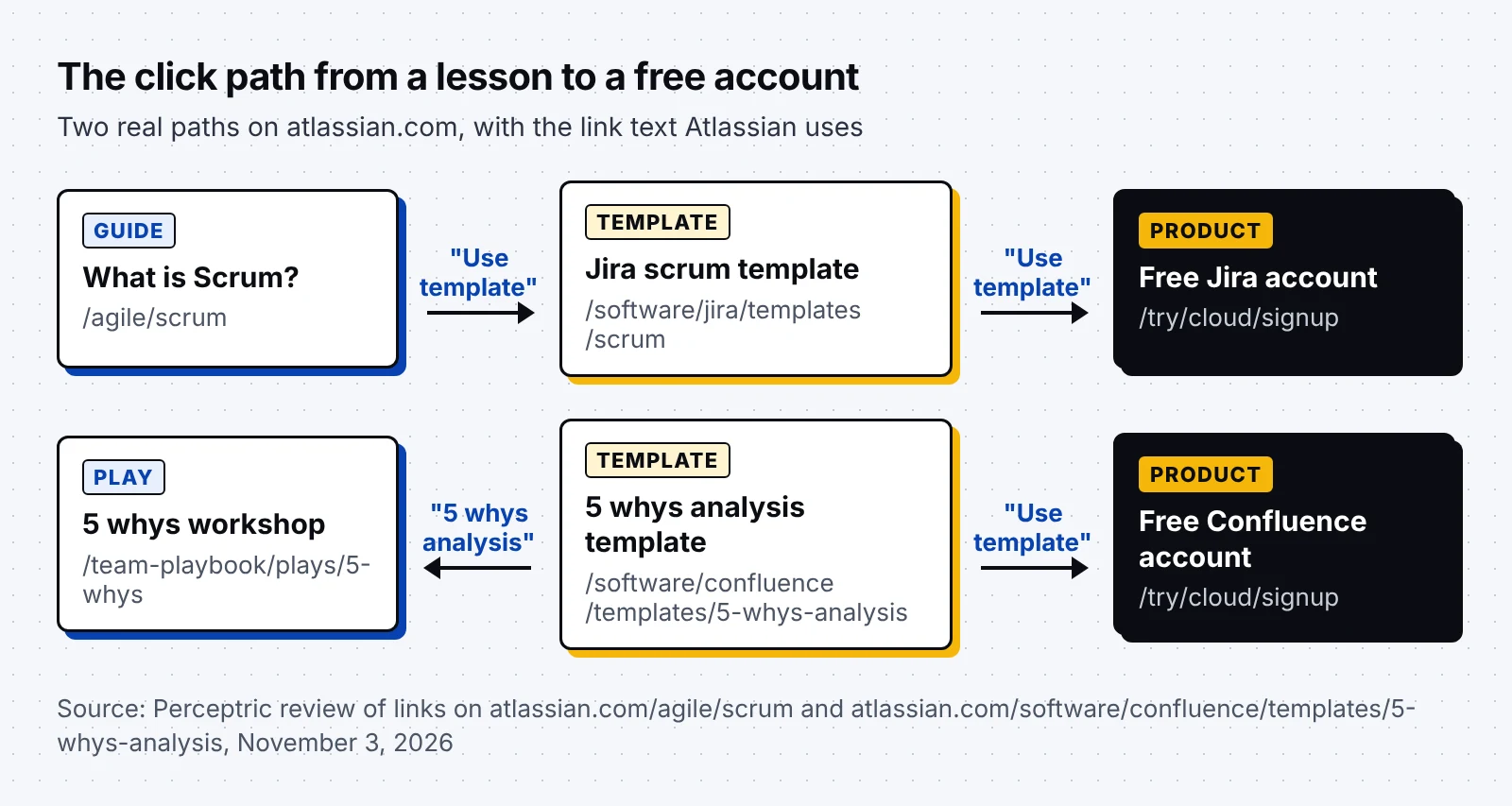
A template search shows clear intent, and the product is how the file gets delivered. Links between each template, guide and play help all of them rank.
What a B2B team can use:
- Build a template page for each document your buyers create every week.
- Link each template to the guide that teaches its method, and link the guide back.
Play 4: comparison pages meet buyers who are ready to switch
Comparison pages serve the last step of the search, when a buyer already uses a rival tool. Atlassian publishes them for Jira, Confluence and Jira Service Management, against tools such as Asana, Notion and ServiceNow. Our guide to BOFU content shows how to plan and write these pages.
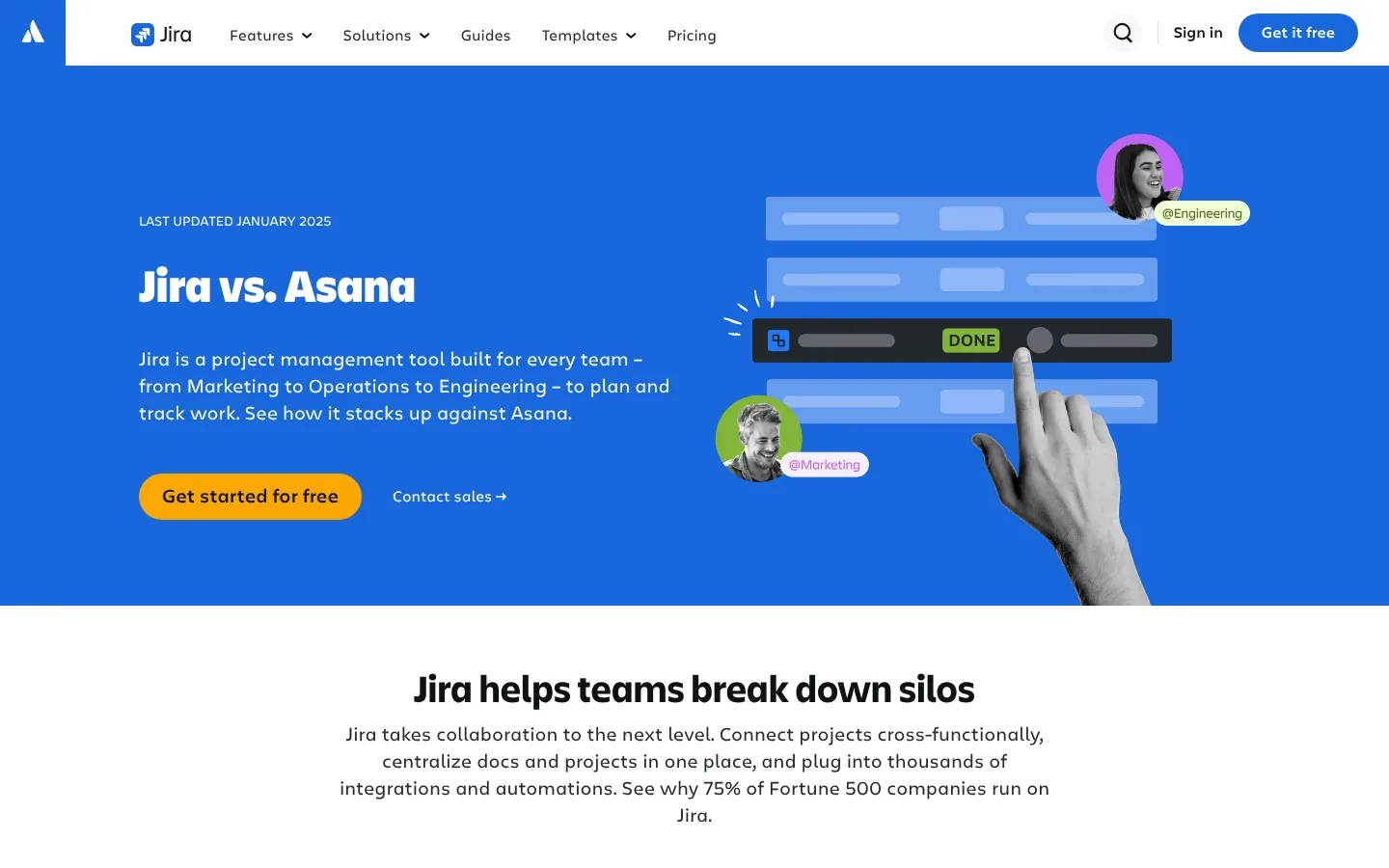
The Jira vs Asana page opens with a "Last updated January 2025" label and a Get started for free button. A "Migrate from Asana in minutes" section follows, for teams that worry about moving their work.
Its meta description ends with "See why 75% of Fortune 500 companies choose Jira," and a "Trusted by over 100K companies" section repeats the proof.
What a B2B team can use:
- Write a comparison page for each tool your buyers mention in demos.
- Show a last updated date so buyers can trust the comparison is current.
Play 5: the blog and the Community answer everything in between
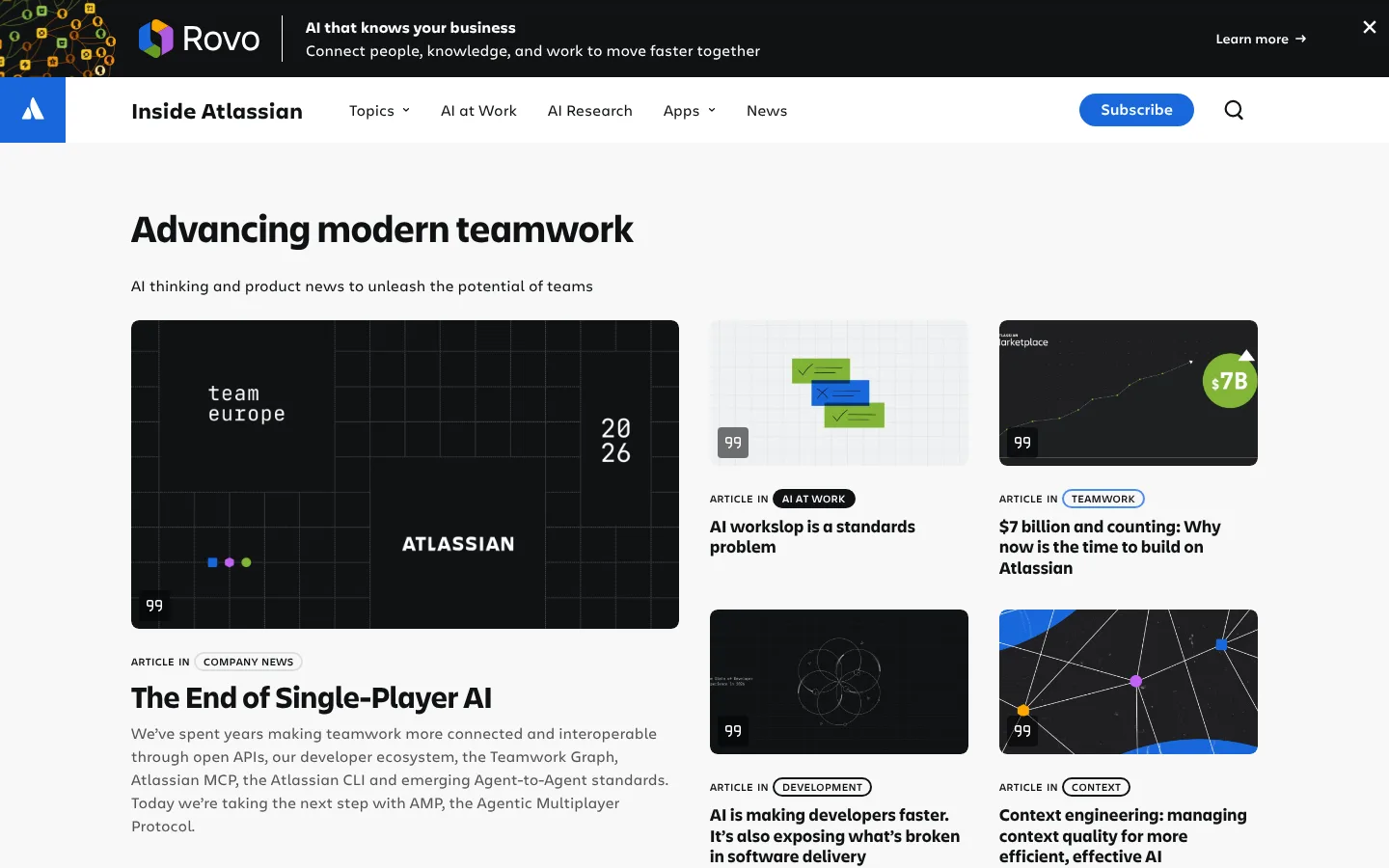
The blog is Atlassian's oldest SEO asset, with posts going back to 2002. Today it runs as Inside Atlassian, with sections for topics such as Leadership and for each product.
The Atlassian Community is a public forum where users answer product questions in their own words. In November 2026, its home page showed 3,816,399 members, 3,341 events and 196 groups.
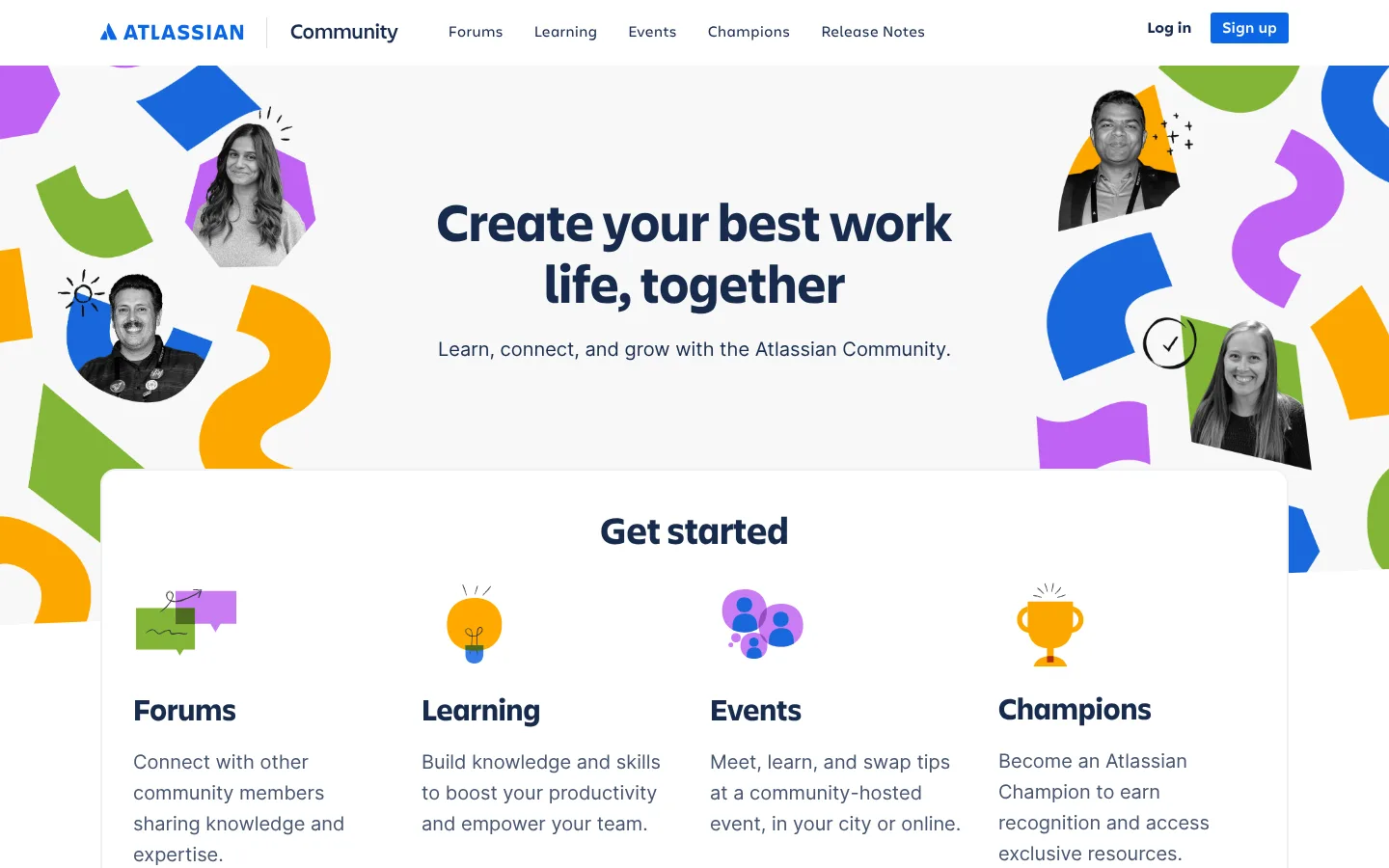
The founders' 2008 lesson was to invest in your user community, which started with user groups in 2006. For SEO, users answer specific product questions that no content team could write one by one.
What a B2B team can use:
- Publish on a steady schedule, since a deep archive takes years to build.
- Give users a public forum, so their answers to product questions show up in search.
What AI search changes for a site like Atlassian's
AI summaries show up most often on the questions that guides answer. In a Pew Research Center study of 900 US adults, 60% of searches with question words such as "what" or "why" produced an AI summary.
When a summary appeared, visits included a click on a regular result 8% of the time, against 15% without one. Only 8% of one or two word searches drew a summary at all.
For Atlassian, that puts the most pressure on guides like "What is Scrum?" A summary can explain a method, but a team still needs the site for a working template or a free account.
Our post on why brands aren't showing up in AI Overviews covers how to earn a place in those answers.
What B2B teams can use from Atlassian's SEO
Atlassian's lesson for B2B is to teach the method your product supports, then make the product the next step on every page. We would apply it in this order with a small team:
- Name the method your product supports, such as Scrum for Jira or root cause analysis for incidents.
- Build a guide hub for that method, with one page for each question your buyers ask.
- Add a template or free tool to every guide, linked to a free trial or demo.
- Publish comparison pages for the tools your buyers use today.
- Track sign-ups and pipeline from each page type, then grow the type that brings in buyers.
Our pillar page examples and content strategy examples show how other B2B brands do it. For the full plan, read our B2B SEO guide or our B2B SaaS SEO guide.
FAQ
How does Atlassian do SEO?
Atlassian publishes free guides, workshop plays and templates for the work its products support, such as Scrum and sprint retrospectives. Each page answers your search first, then offers you a free Jira or Confluence account as the next step.
Does Atlassian have a sales team?
Yes, Atlassian has a sales team today, and it focuses on growing large enterprise accounts. New customers still come in through self-service, where you can try and buy the products online without talking to sales.
What searches does Atlassian build pages for?
Atlassian builds pages for the searches you make before you pick a tool, such as Scrum guides, retrospective meetings and a 5 whys template. It also builds comparison pages such as Jira vs Asana for buyers who are ready to switch.
What is the Atlassian Team Playbook?
The Atlassian Team Playbook is a free library of workshops, called plays, that help your team fix common problems such as unclear roles or weak retrospectives. Atlassian launched it in 2016, and more than 10,000 teams use the plays.
Can you use Atlassian's SEO strategy with a small B2B team?
Yes, if you start with one topic. Name the method your product supports, build a guide hub for it, add templates that open in a free trial, then add comparison pages for the tools your buyers use today.
Start by listing the methods and documents your buyers search for before they pick a tool. If your pages on those topics don't lead to your product, a free AI visibility audit shows where buyers find you.