The usual answer to "why isn't your brand in AI Overviews?" is that Google doesn't see your page as a strong source for the searches behind the answer. A technical block or a ranking gap causes most cases, and both can be fixed.
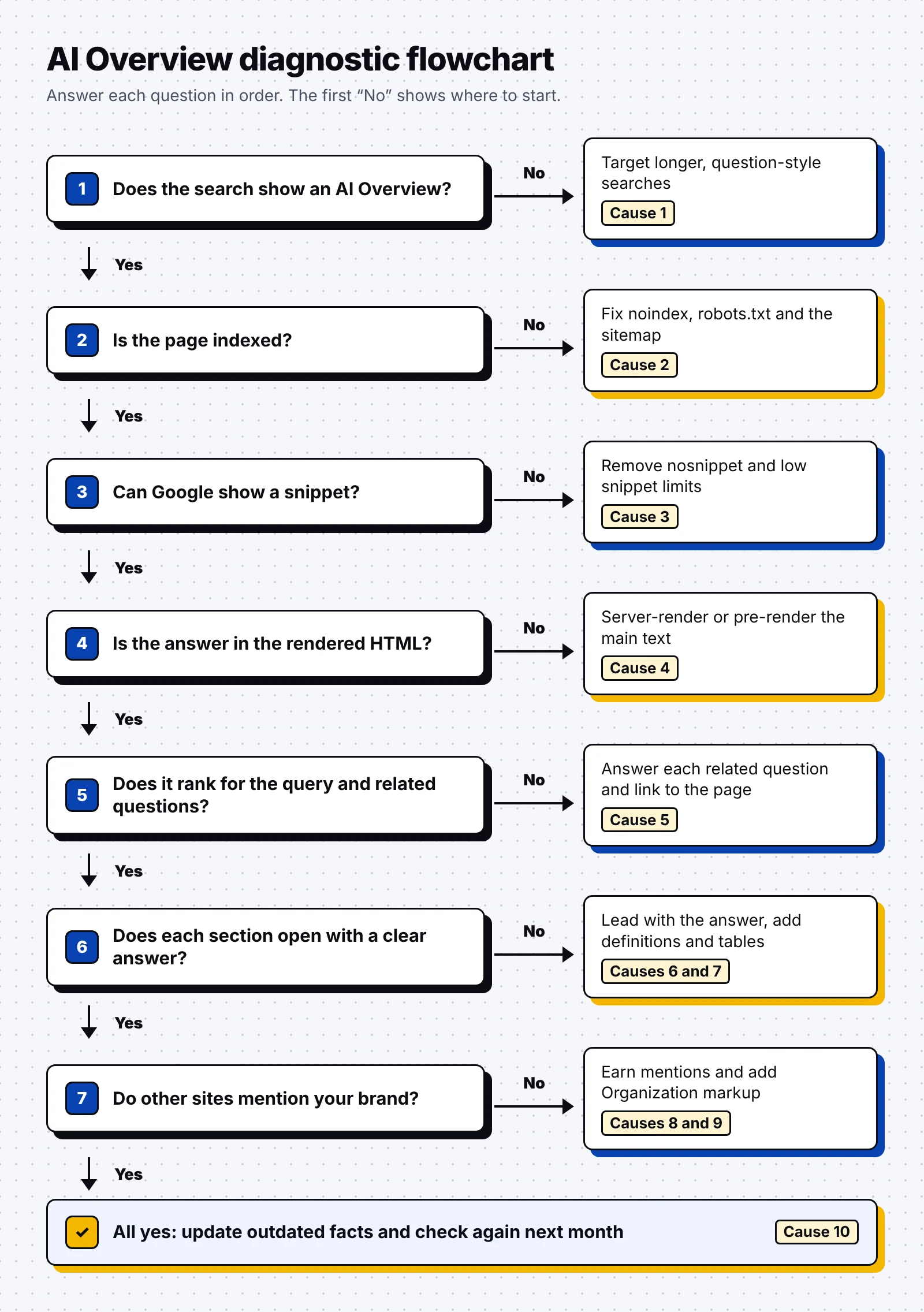
Each of the 10 causes below comes with a check you can run in Search Console or a browser, plus the fix. The flowchart puts them in the order that saves the most time.
What Google needs before it can cite you
A page must be indexed and eligible to show in Google Search with a snippet, and Google lists no other technical requirements for AI features and your website. You don't need special schema, AI text files or new markup.
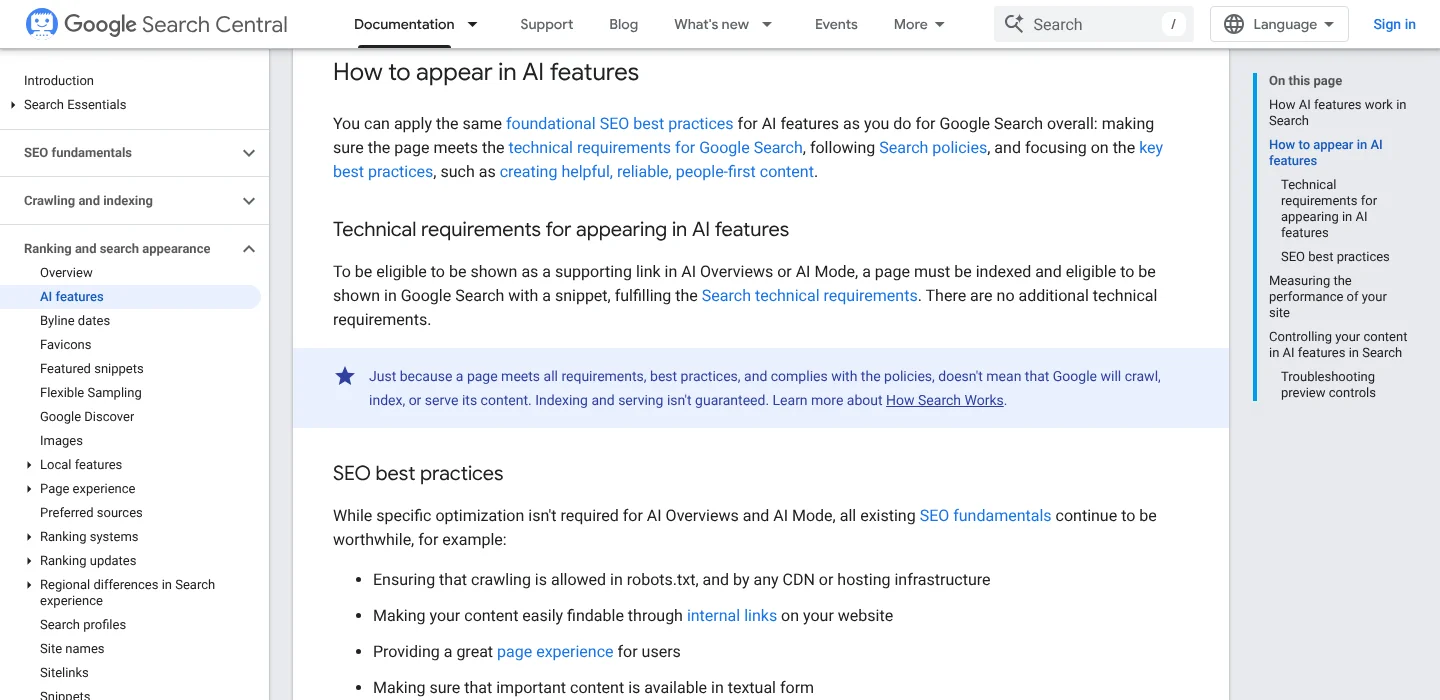
In practice, Google AI Overviews SEO is regular SEO applied to a wider set of searches. Google builds each answer with query fan-out, "issuing multiple related searches across subtopics and data sources." A page can earn a citation by ranking for one of those related searches, even when it misses the main query.
A diagnostic flowchart for AI Overviews
Work through the questions in order, since a "no" early on makes later fixes pointless. The first four checks take minutes in Search Console, so run them before you rewrite any content.
Why isn't your brand in AI Overviews? 10 causes and fixes
1. The search doesn't show an AI Overview
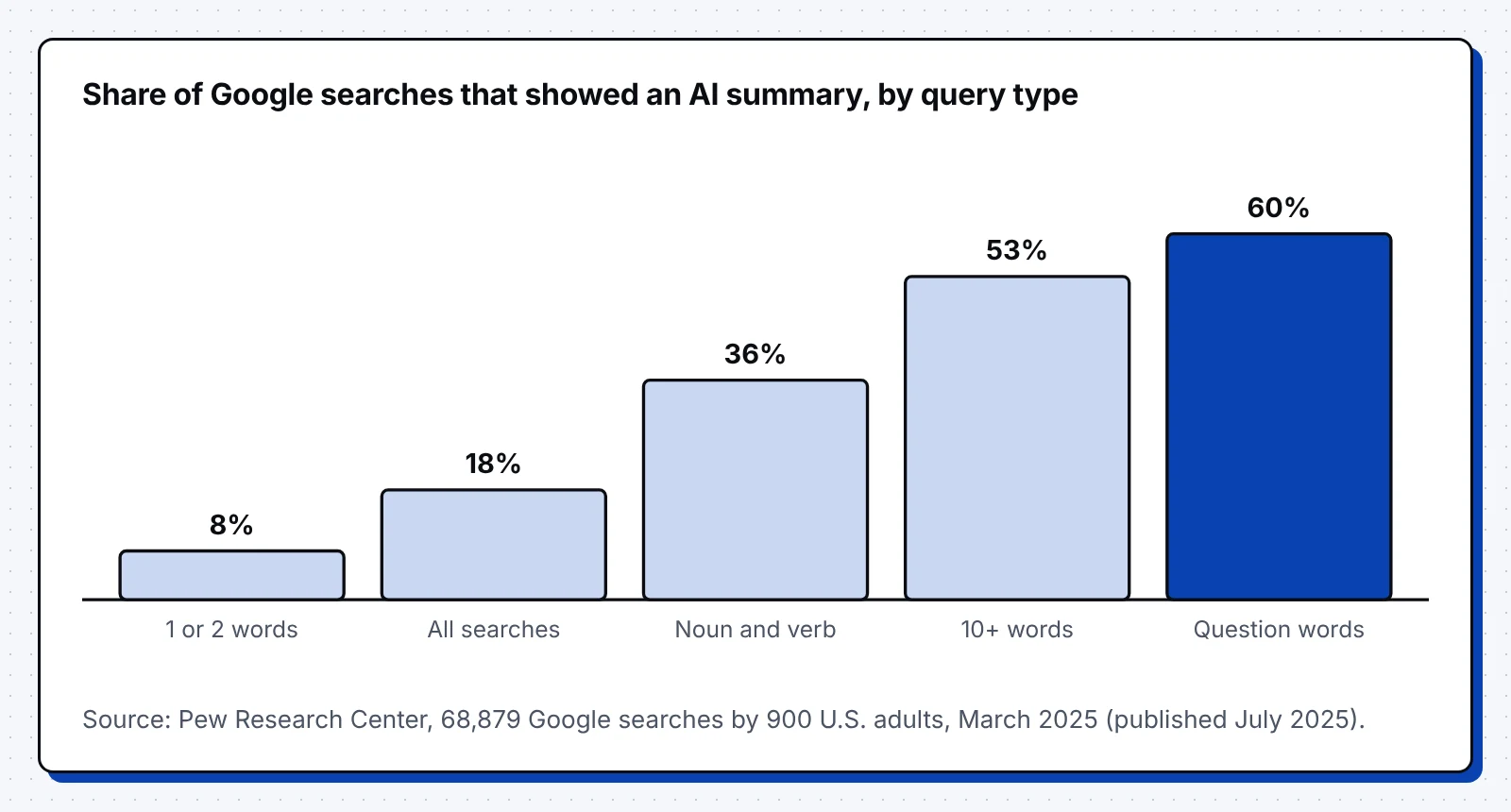
Many searches never trigger an AI Overview, and short searches trigger one least often. In a Pew Research Center study of 68,879 Google searches from March 2025, 18% produced an AI summary, and only 8% of one or two word searches did.
Longer questions trigger them far more often. AI summaries appeared on 53% of searches with 10 or more words and on 60% of searches that began with "who," "what," "when" or "why."
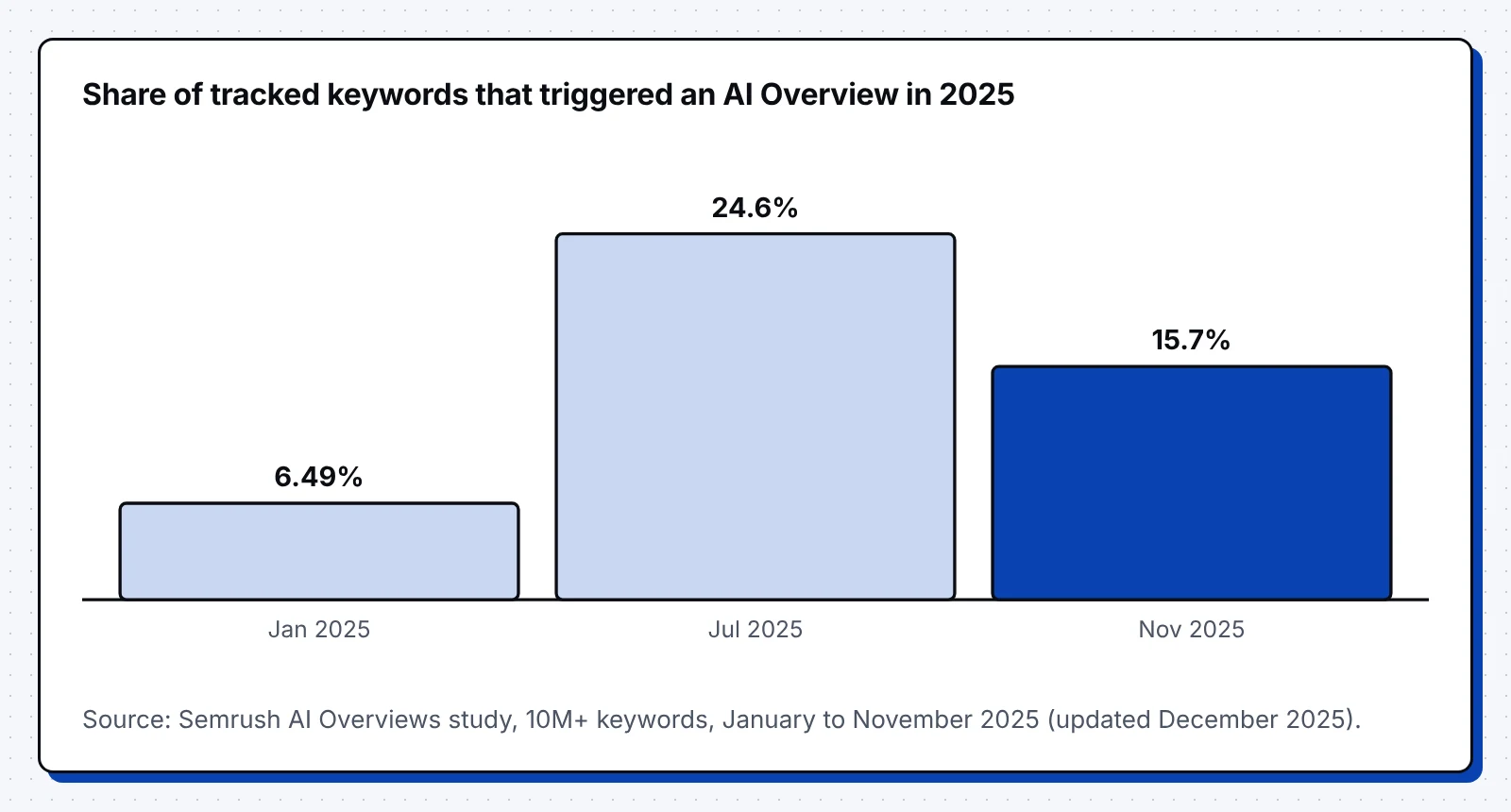
The share of searches with an AI Overview also changes from month to month. Semrush tracked AI Overviews on 6.49% of keywords in January 2025, 24.61% in July and 15.69% in November.
To check, search each target query in a private window, then try a few longer question versions. Our AI SEO statistics collect more data on where AI Overviews appear.
- Focus on target queries that show an AI Overview today, and drop short head terms that never do.
- Write sections that answer the full question the way buyers phrase it in search.
2. The page isn't indexed
Google can't cite a page that isn't in its index. New pages, orphan pages and pages with a stray noindex tag often fall into this gap.
Luckily, this check takes about a minute and needs nothing beyond Google Search Console. Paste the URL into the URL Inspection tool and read the index status it reports.
- Remove noindex tags and robots.txt blocks from every page you want cited.
- Add the page to your sitemap and link to it from a related page that already ranks.
3. Snippet controls block the page
The nosnippet rule keeps a page out of AI Overviews, since it "will also prevent the content from being used as a direct input for AI Overviews and AI Mode." A max-snippet value caps how much text Google can use, and max-snippet:0 works the same as nosnippet.
To check, look for robots meta tags in the page source and X-Robots-Tag rules in the HTTP headers. Then search the HTML for data-nosnippet around the sections that hold your key answers. Fortunately, removing a stray nosnippet tag is usually a one-line change in your page template.
- Remove nosnippet and low max-snippet values unless a legal or licensing reason requires them.
- Keep data-nosnippet only on text you truly want out of search results.
4. Google can't see the text after rendering
Google renders JavaScript in a separate step, and pages can wait in a render queue first. If the content isn't visible in the rendered HTML, Google won't be able to index it.
To check, run a live test in URL Inspection and search the rendered HTML for your main answer. Our breakdown of how Twilio Segment does technical SEO shows how a large JavaScript site handles this.
- Server-render or pre-render pages whose main text loads with JavaScript.
- Keep key answers in HTML text instead of images, tabs that load late or interactive widgets.
5. The page doesn't rank for the query or related questions
Ranking still matters, though the link is looser than it was. Ahrefs found 76.10% of AI Overview citations ranked in the top 10 in July 2025.
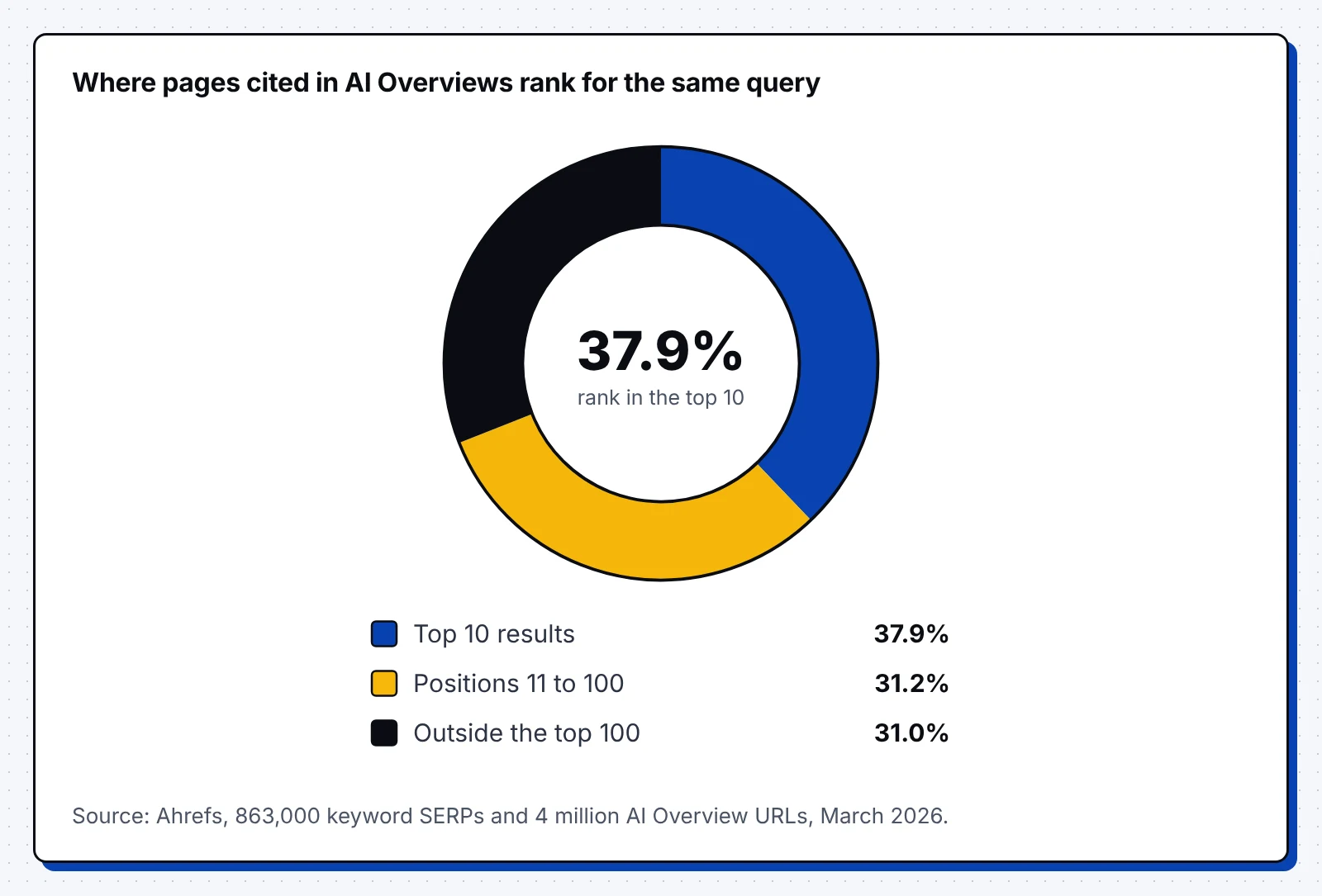
By March 2026, that share fell to 37.9% across 863,000 search results, with 31.0% of cited pages outside the top 100 for the query. Ahrefs links the drop to fan-out searches, where pages that rank for related questions get cited.
Other data shows that rankings still overlap with most of the pages AI Overviews cite. BrightEdge found 54.5% of AI Overview citations overlapped with organic rankings by September 2025, and 71.0% in B2B tech.
To check, list the related questions behind your target query, then look up your position for each in Search Console. Our guide to GEO for B2B SaaS goes deeper on content for AI search.
- Answer each related question in its own section of the page you want cited.
- Add internal links from your strongest pages to that page, using the topic as anchor text.
6. The answer is buried
An answer under several paragraphs of background is harder to pull into a summary. Google's own helpful content questions ask whether the main heading gives "a descriptive, helpful summary of the content."
To check, read only the first sentence under each heading on the page. If those sentences don't answer the headings, rewrite them.
- Turn vague headings into the questions buyers search, such as "How long does a SOC 2 audit take?"
- Open each section with a direct answer of one or two sentences, then add the detail.
7. No clear definitions or comparisons
AI Overviews now show up on more comparison searches. Semrush found AI Overviews grew an average of 71% on commercial search results between November 2025 and April 2026.
Pages written in brand language often skip the plain definition that a summary needs. To check, search "what is" plus your category and "vs" plus a competitor, then note which pages get cited.
- Add a one-sentence definition of your category and product near the top of key pages.
- Publish fair comparison pages with a table of features and prices.
8. Few brand mentions on other sites
Off-site mentions track closely with AI Overview visibility. Across 75,000 brands, Ahrefs found branded web mentions had a 0.664 correlation with AI Overview mentions, against 0.218 for backlinks.
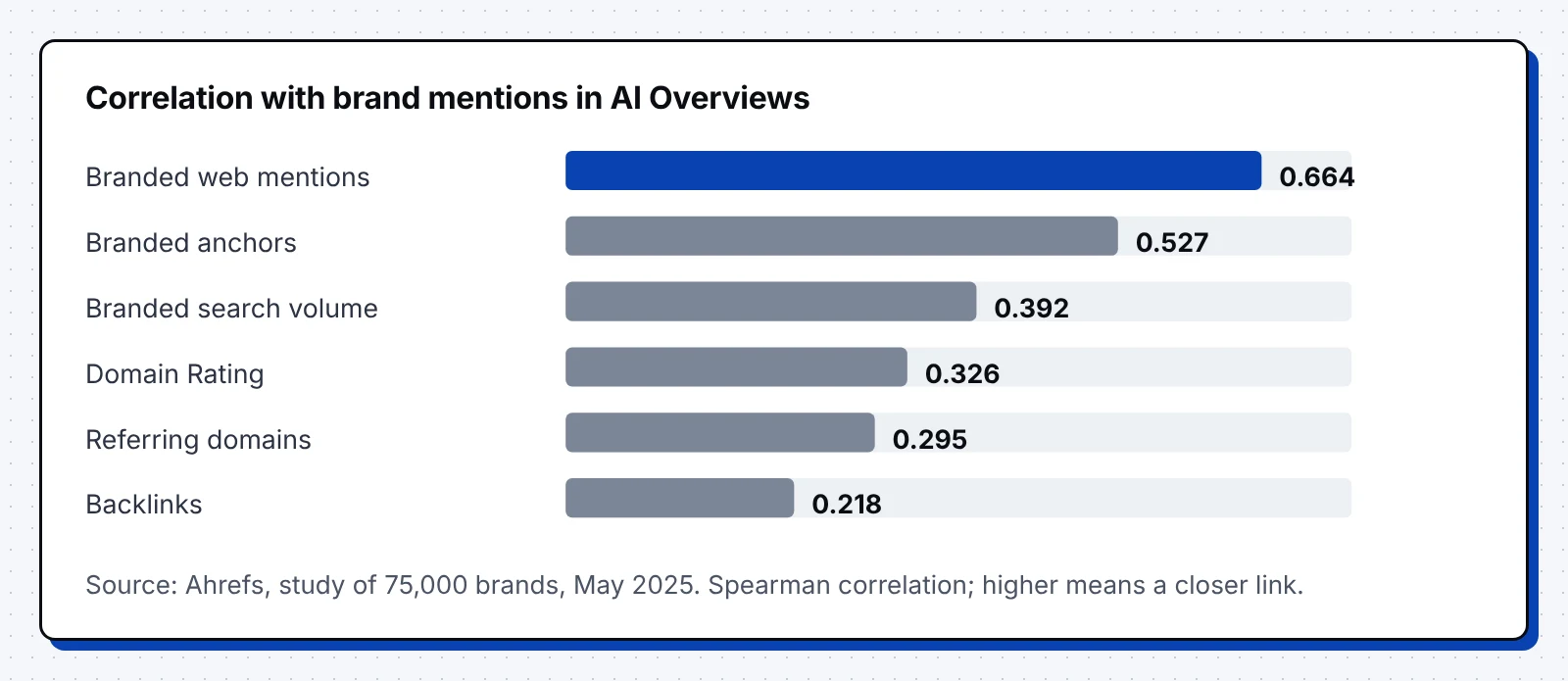
Brands in the top quarter for web mentions averaged 169 AI Overview mentions, over 10 times the next quarter's 14. Correlation doesn't prove cause, yet the gap is hard to ignore.
To check, search your category's "best" and "vs" queries and note which review sites, lists and forums get cited. Our free guide on how to get recommended by ChatGPT and AI Overviews covers how to get named on those pages.
- Get listed on the review sites and roundups that AI Overviews already cite for your category.
- Publish original data that other writers want to quote and link to.
9. Weak entity signals
Google needs to know which company your brand name refers to, especially when the name is common. Organization structured data helps Google understand your company's details and tell it apart from others. Happily, it only needs to sit on your home page or one page about your company.
To check, search your brand name alone and look for accurate details about your company. Then check your home page source for Organization markup.
- Add Organization markup to your home page with your logo and sameAs links to official profiles.
- Use the same company name and description on your site, LinkedIn and review profiles.
10. Outdated facts on the page
Thankfully, AI Overviews show little bias toward new pages. In an Ahrefs study of 17 million citations, AI Overviews cited content 16 days older on average than the organic results.
Old prices, features or stats still make a page a weaker source than a current one. Google's helpful content guide also flags pages that change their date "when the content has not substantially changed."
- Review your most important pages each quarter and update facts, screenshots and numbers.
- Change the visible date only when the content changes in a real way.
FAQ
Why isn't your brand in AI Overviews when your page ranks?
Google often cites pages that rank for related questions, so a ranking page can still miss the citation. Check that each section opens with a direct answer and that other sites mention your brand.
Do you need schema markup to appear in AI Overviews?
No. Google says a page only needs to be indexed and eligible for a snippet, with no special markup or AI text files.
How do you appear in AI Overviews?
Get the page indexed with snippets allowed, rank it for the main query and its related questions, and answer each heading in its first sentence. Mentions of your brand on other sites help too.
Does nosnippet remove a page from AI Overviews?
Yes. Google says nosnippet prevents content from being used as a direct input for AI Overviews and AI Mode, and max-snippet limits how much text it can use.
Do AI Overviews prefer new content?
Only a little, if at all. Ahrefs found AI Overviews cite pages 16 days older on average than organic results, so accurate facts matter more than a recent date.
A good first step is to run your 10 most important queries through the flowchart this week and fix the first "no" for each. Once pages appear, our guides to AI search attribution and zero-click searches cover what comes next, or start with a free AI visibility audit.