Investopedia's robots.txt file blocks 75 named bots from the whole site, including Claude-User, the AI agent we used for this research. OpenAI's three crawlers are kept out of just one folder of image thumbnails.
A site built on answering money questions now picks which machines may read its answers, and B2B sites face that choice too.
Here is how Investopedia grew from a 1999 start-up into a People Inc. brand, with lessons your team can use.
1999: two founders bet on money words
Investopedia explains money and investing words in plain language, and Cory Wagner and Cory Janssen launched it in Edmonton, Canada, in June 1999.
Its core is an online dictionary of financial terms, with one plain answer per money word. In April 2007, Forbes Media bought Investopedia and kept its three leaders.
By August 2010 the site held nearly 30,000 pieces of content, added about 7,000 a year and drew about 2.2 million unique US visitors a month. Forbes sold it to ValueClick for about $42 million in cash.
Three years later, ValueClick sold its websites to IAC, owner of Dictionary.com and About.com, and the aggregate price was $80 million.
What to take from this:
- Pick one page type that answers one question, then repeat it until it covers your whole field.
- Keep each answer readable in a minute, and link to a deeper page for readers who want more.
The dictionary as an SEO content strategy
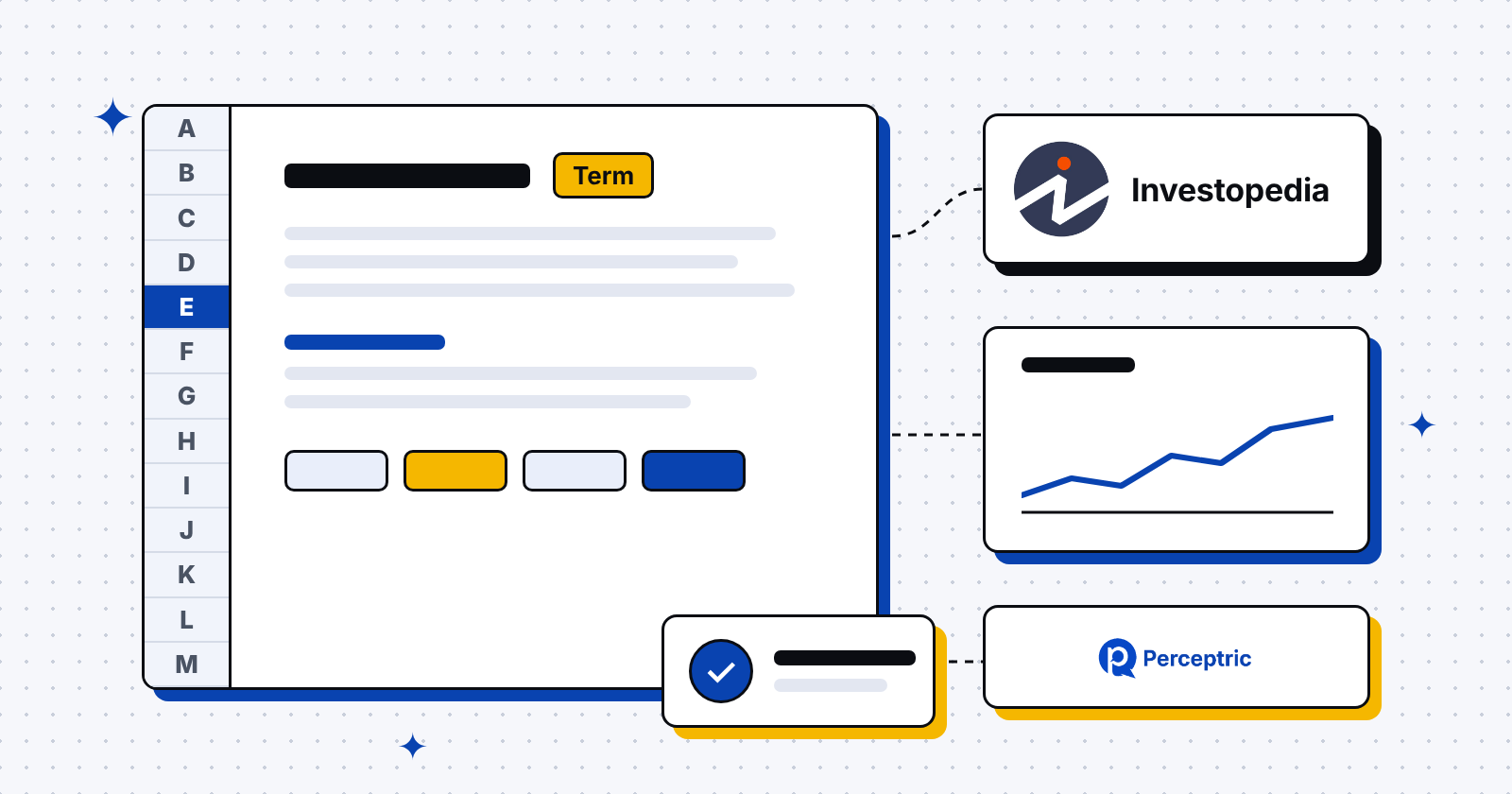
Investopedia began with a glossary for readers who see a strange word in an earnings report and want one clear answer.
Caleb Silver, then the site's top editor, described the model in a 2020 interview: "We are driven by search, and search is driven by intent." He added that 32,000 articles on the site answered people's questions.
A dictionary keeps paying off as an SEO content strategy for four reasons:
- Each term is its own search, so thousands of entries can meet thousands of different questions.
- Definitions change slowly, so a page written once can earn visits for years with light updates.
- Terms point to each other, which gives every new entry internal links from its first day.
- A reader who lands on one definition often needs the next, so one visit becomes several pages.
Robots.txt asks agents like ours to stay out, so we used published numbers instead of counting the /terms/ URLs.
In 2025 the editorial policy listed more than 30,000 free articles, and the site reached more than 44 million readers a month.
What your team can use:
- Write one page per term your buyers search, opening with a plain definition in two sentences.
- Link every term page to related terms and to one deeper guide, like these pillar page examples.
Tools and courses that turned readers into regulars
To bring readers back, Investopedia built a free stock market simulator for trading virtual money across more than 6,000 NYSE and Nasdaq stocks.
Millions of people have used it, and calculators for mortgages and car loans let readers apply a definition to their own numbers.
In September 2017 the company launched Investopedia Academy, a paid online school with courses in Excel for finance, day trading and reading stock charts.
The launch release counted more than 30 million monthly visitors and 150% greater interest in finance courses than in other financial products.
Together, these pieces form a ladder any marketing team can follow:
- A free term page brings in a reader who searched one word.
- A longer article explains how that idea works in real life.
- A free tool lets the reader practice with their own numbers.
- A paid course sells the skill to readers who want to go further.
How to apply it:
- Add one free tool, such as an ROI calculator, that lets buyers try the idea your glossary explains.
- Offer a paid or gated next step only after the free answer has done its job.
Trust first: E-E-A-T in a money niche
Google holds money pages to a higher bar, looking for experience, expertise, authoritativeness and trustworthiness, and "trust is most important."
These signals weigh more on topics that affect people's "financial stability," and Google also checks for bylines where readers expect them.
In January 2016 Investopedia hired Caleb Silver, a former head of business news at CNN, to lead its content.
By then content output had tripled, with nine editors and more than 100 contributors. Page views were up 21% year over year in the third quarter of 2015.
Its editorial policy promises "strict editorial independence for all of our content" and says, "We don't make recommendations for you to buy, sell, or hold securities or investments." In 2020, Silver summed up the team's role: "We're educators, right?"
Media Bias/Fact Check rates its factual reporting as high, with no failed fact checks as of August 2025, and its About Us page repeats the no-recommendations promise.
A B2B team can send these trust signals without a newsroom, and our guide to financial content writing covers the bylines, reviews and sourcing involved.
Lessons to apply:
- Put a named expert with a short bio on every glossary page.
- Publish an editorial policy on who writes, who reviews and how you fix mistakes, and link it from every article.
How Investopedia changed hands
IAC renamed About.com as Dotdash in May 2017 and split the old portal into focused brands. CEO Neil Vogel explained, "It turned out we were just doing the wrong thing better."
In 2018 Investopedia merged into Dotdash, and a New York State notice showed 36 of its 96 employees would be let go. Vogel said, "Dotdash has created a clear market leader in the finance space."

Dotdash then bought Meredith's magazines for about $2.7 billion, a deal finalized on December 1, 2021 that put Investopedia beside People and Better Homes & Gardens.
In May 2024 it signed a licensing deal with OpenAI that lets ChatGPT show content and links credited to its publications. In July 2025 the publisher renamed itself People Inc., after its best-known magazine.
People Inc. publishes more than 40 brands, reaches more than 175 million consumers a month and counts Investopedia among its "most significant" sites. Its parent IAC became People Incorporated on June 4, 2026, and now trades as PPLI.
The lesson here:
- Treat your glossary as a lasting asset that survives rebrands and new owners.
- Keep term URLs stable through any redesign, since each page carries years of links and rankings.
What Investopedia SEO looks like with AI Overviews
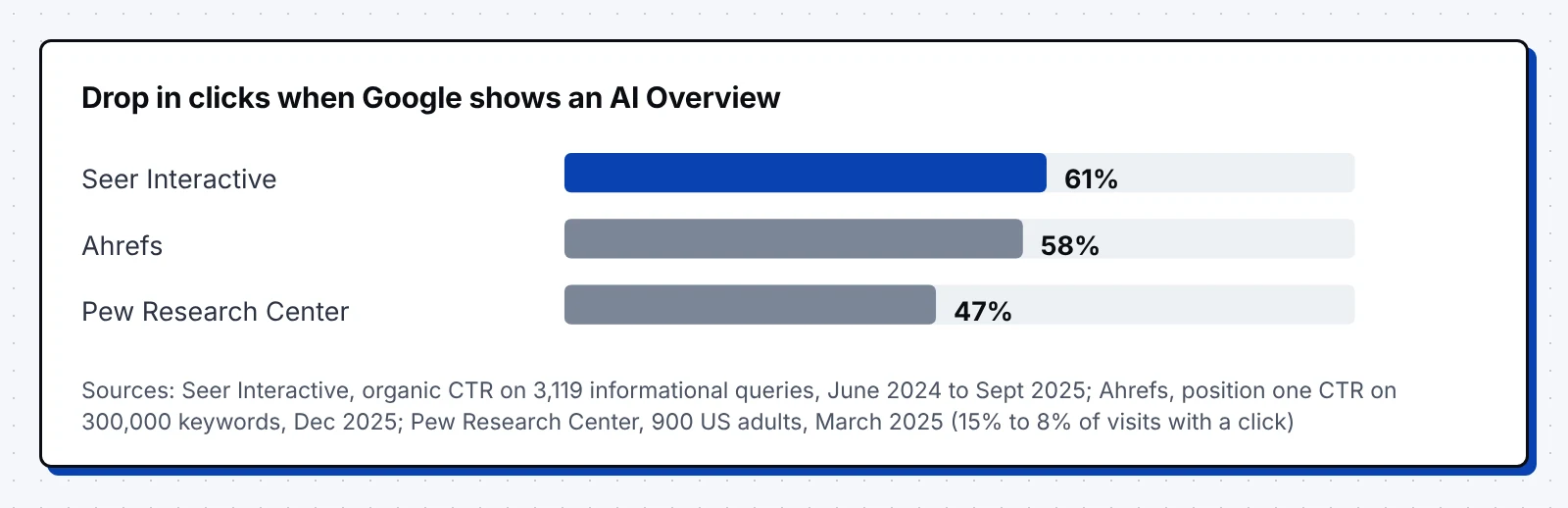
In a Pew Research Center study of 900 US adults, 60% of searches that began with "what" or "why" produced an AI summary.
Users clicked a regular result on 8% of visits with an AI summary and 15% without one. Only 1% of those visits clicked a summary link, and 26% ended the session.
Ahrefs found a 58% lower click rate for the top result when an AI Overview appears, across 300,000 keywords in December 2025.
Seer Interactive tracked 3,119 informational queries and saw organic click rates with an AI Overview fall from 1.76% to 0.61% between June 2024 and September 2025.
Google Search drove 54% of People Inc.'s traffic in late 2023 and 24% in the third quarter of 2025.
By the second quarter of 2026 the share was about 21%, with Google search traffic down 40% year over year. The quarterly filing tied a 22% drop in core sessions to "the growing prominence of Google AI Overviews."

Googlebot can still crawl everything because, as Vogel said, "If we were to turn off AI, we would turn off search." The robots.txt header bars AI training or retrieval on People Inc. content without written permission.
People Inc. blocks other AI crawlers through Cloudflare, which Vogel says "brought almost everyone to the table." It joined Microsoft's publisher content marketplace in November 2025 and signed a Meta content partnership that quarter.
Seer also found that brands cited inside an AI Overview earned 35% higher organic click rates. That is why we treat GEO for B2B SaaS as part of every glossary plan.
What to apply:
- Write each definition so an AI answer can quote it in two sentences, naming your brand and expert.
- Track citations in AI answers next to clicks, since a term page can win the mention and lose the visit.
- Choose on purpose which AI crawlers you allow, and review that choice with your team every quarter.
How B2B teams can own their category's vocabulary
B2B buyers search the words of their category before vendors, so we counted URLs by folder in the XML sitemaps of three B2B companies with glossaries.
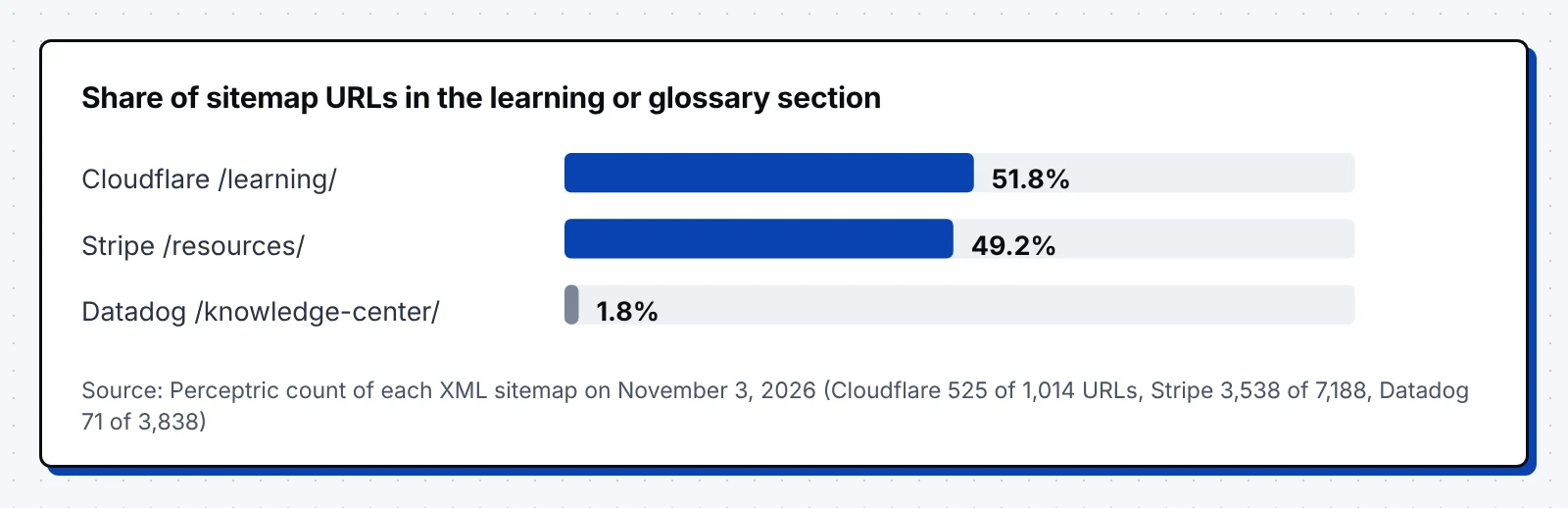
Cloudflare, a network security company, lists 1,014 URLs in its main sitemap, with 525 in /learning/ and 253 built around "what is" questions.
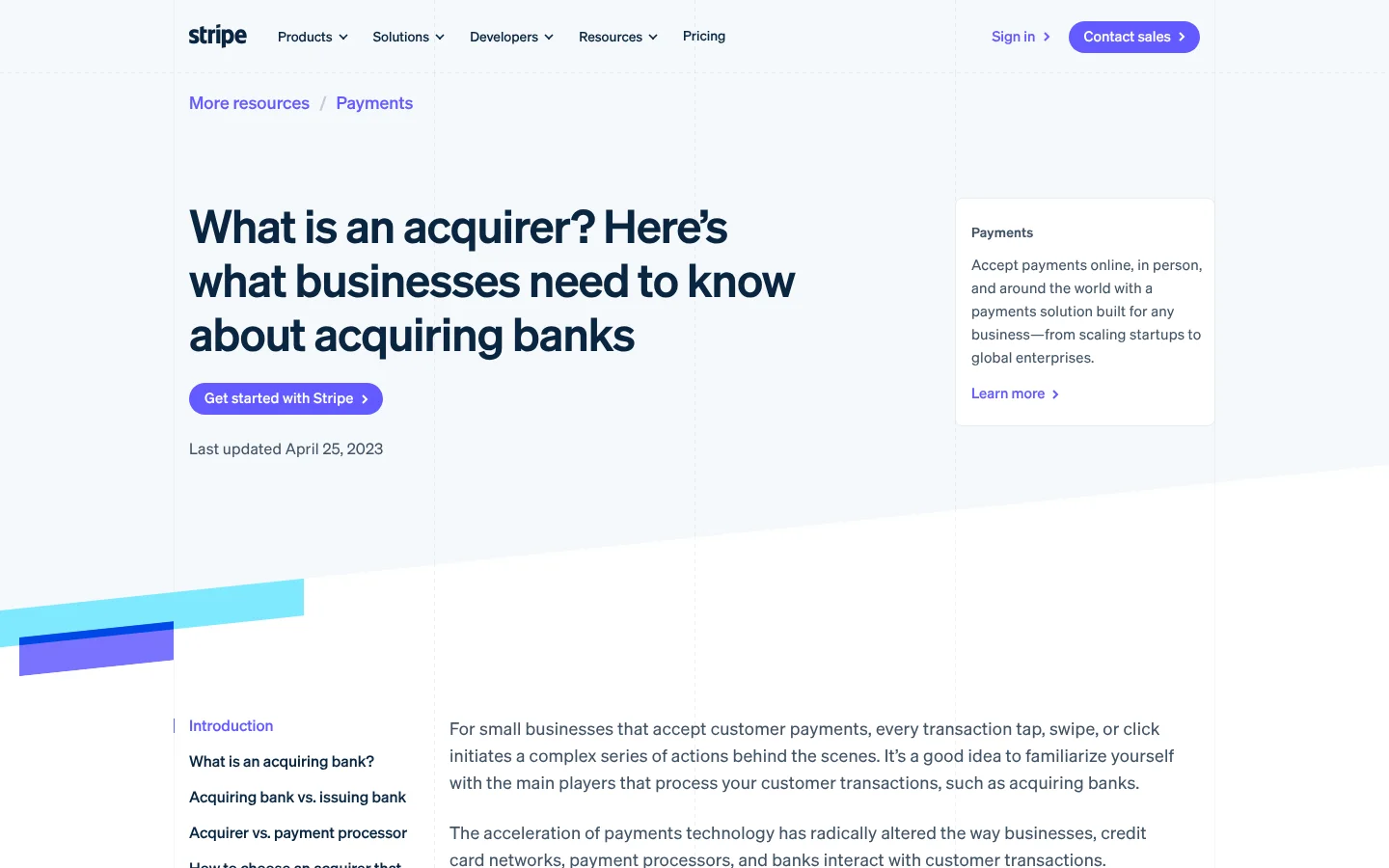
Stripe, a payments software company, has 7,188 sitemap URLs, with 3,538 under /resources/ and 312 slugs starting with "what."
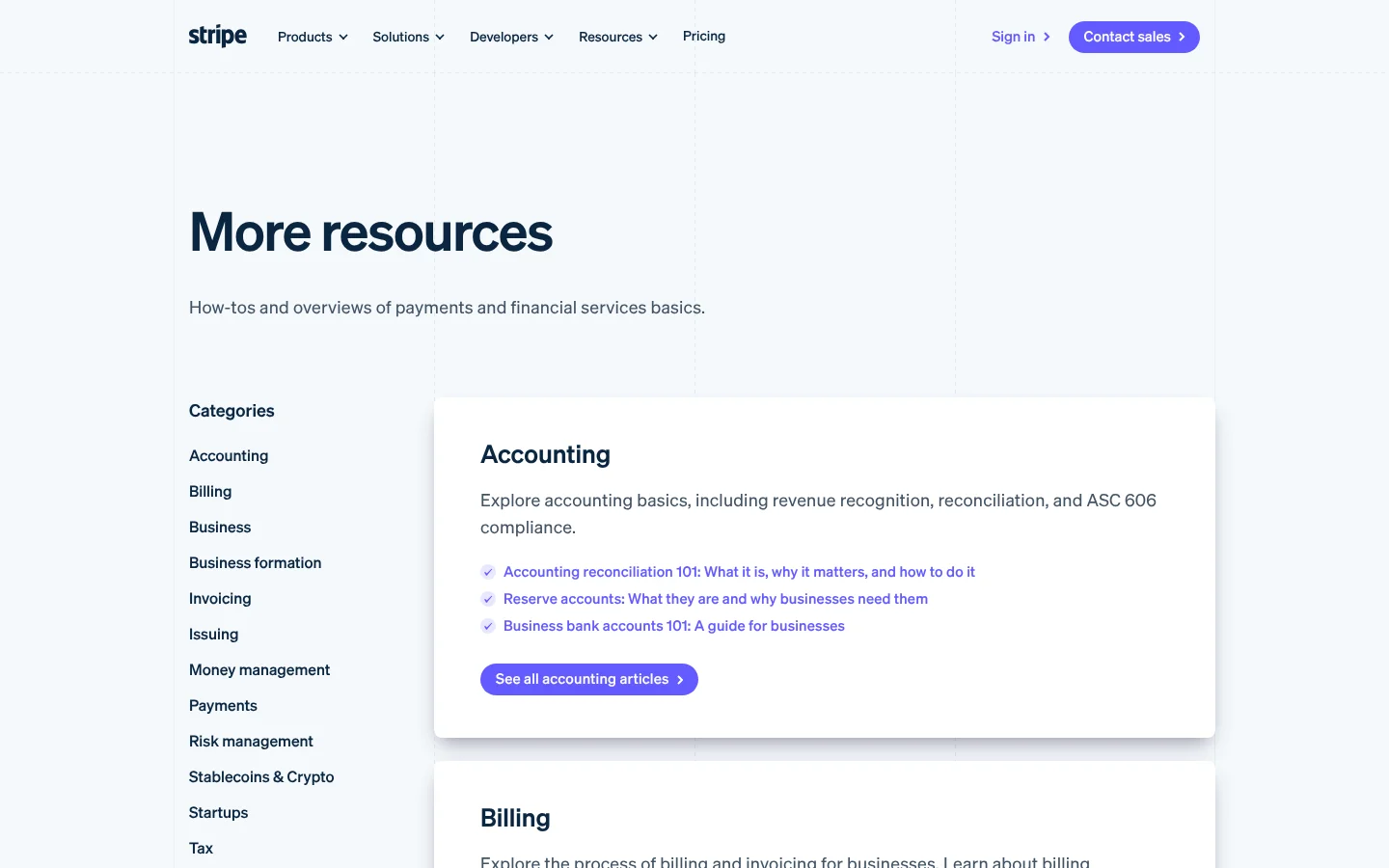
The Stripe resources hub sorts articles into categories from Accounting to Tax, each with top articles and a link to the rest.
The acquirer page puts a "Get started with Stripe" button under the headline, and question headings like "Acquiring bank vs. issuing bank" match a buyer's next searches.
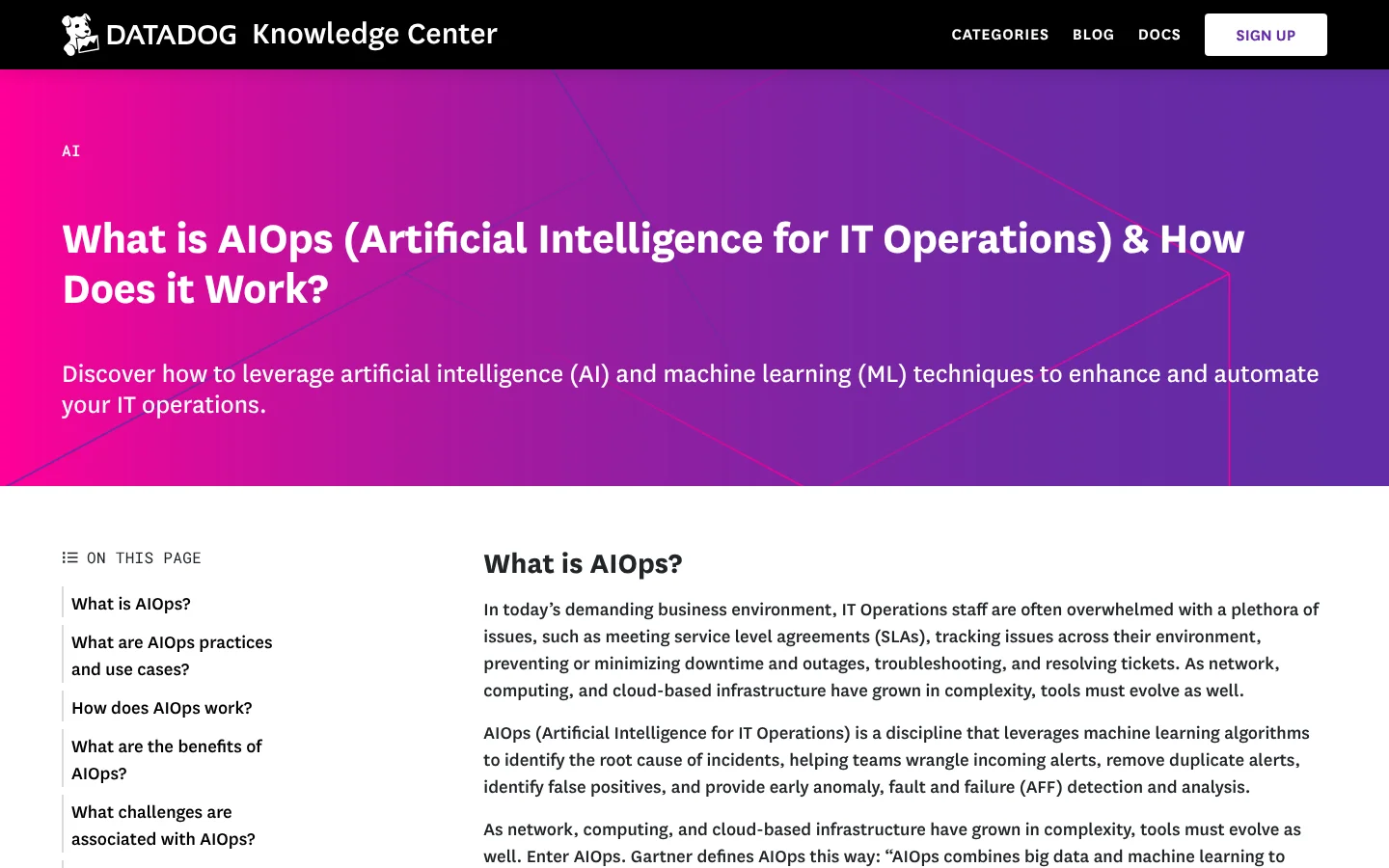
Datadog, a cloud monitoring software company, keeps a smaller knowledge center, with 71 of 3,838 sitemap URLs.
Its AIOps page opens with "What is AIOps?" and answers questions on use cases, benefits, challenges and buying criteria. It carries TechArticle schema and a free trial offer.
Here is how we would start a B2B glossary without 30,000 pages:
- List the 100 to 300 terms your buyers use, drawing on sales calls and B2B keyword research.
- Give each term its own page, with a two-sentence definition first and your product's role near the end.
- Name the writer and an expert reviewer on every page, with links to their real bios.
- Link related terms to each other and to one pillar guide for each topic.
- Add one free tool or template where the topic calls for numbers.
- Check each quarter which terms earn clicks and which earn citations in AI answers.
What to take from this:
- Own the words of your category before a rival or an AI answer defines them for your buyers.
- Show your experts on every page, since Google weighs trust most on topics like money and security.
FAQ
How did Investopedia grow its SEO traffic?
Investopedia grew by building a financial dictionary with one page per money term, then adding articles, free tools and courses around it. Its top editor said in 2020 that the site is "driven by search, and search is driven by intent."
Who owns Investopedia today?
People Inc., the publisher once called Dotdash Meredith, owns Investopedia. Its parent company, formerly IAC, completed its name change to People Incorporated in June 2026.
Why does Investopedia block AI crawlers?
Investopedia blocks 75 named bots in its robots.txt file, including Anthropic's and Perplexity's, while Googlebot can still crawl the site. The file states that People Inc. content may not be used for AI training or retrieval without permission, and the company licenses its content to OpenAI and Microsoft instead.
Do AI Overviews hurt glossary pages?
AI Overviews cut clicks on definition searches, and Ahrefs measured a 58% lower click rate for the top result when one appears. Seer Interactive found that brands cited inside an AI Overview earned 35% higher organic click rates, so aim to be the cited source.
Should a B2B company build a glossary?
A glossary helps a B2B company when buyers search the terms of its category before they search for vendors. In our sitemap count, Cloudflare and Stripe each keep about half of their sitemap URLs in learning and resource pages.
Start by listing the 50 terms your buyers ask about most and checking which ones your site answers. To see whether AI answers cite you for them, try a free AI visibility audit.