Buffer ranks because it builds pages for the tasks social media managers search for every week, then ties each page back to its scheduler. Its brand name is also a common word, so the task searches around the product matter more than the name.
That idea runs from Leo Widrich's guest posts in 2011 to the data-backed guides Buffer updates today. All of it comes from a team of 73 teammates across 15 countries.
How Buffer's site grew
Buffer helps creators and small businesses plan, publish and measure social media posts. Joel Gascoigne started it as a Startup Sprint project in November 2010, and the blog followed in January 2011.
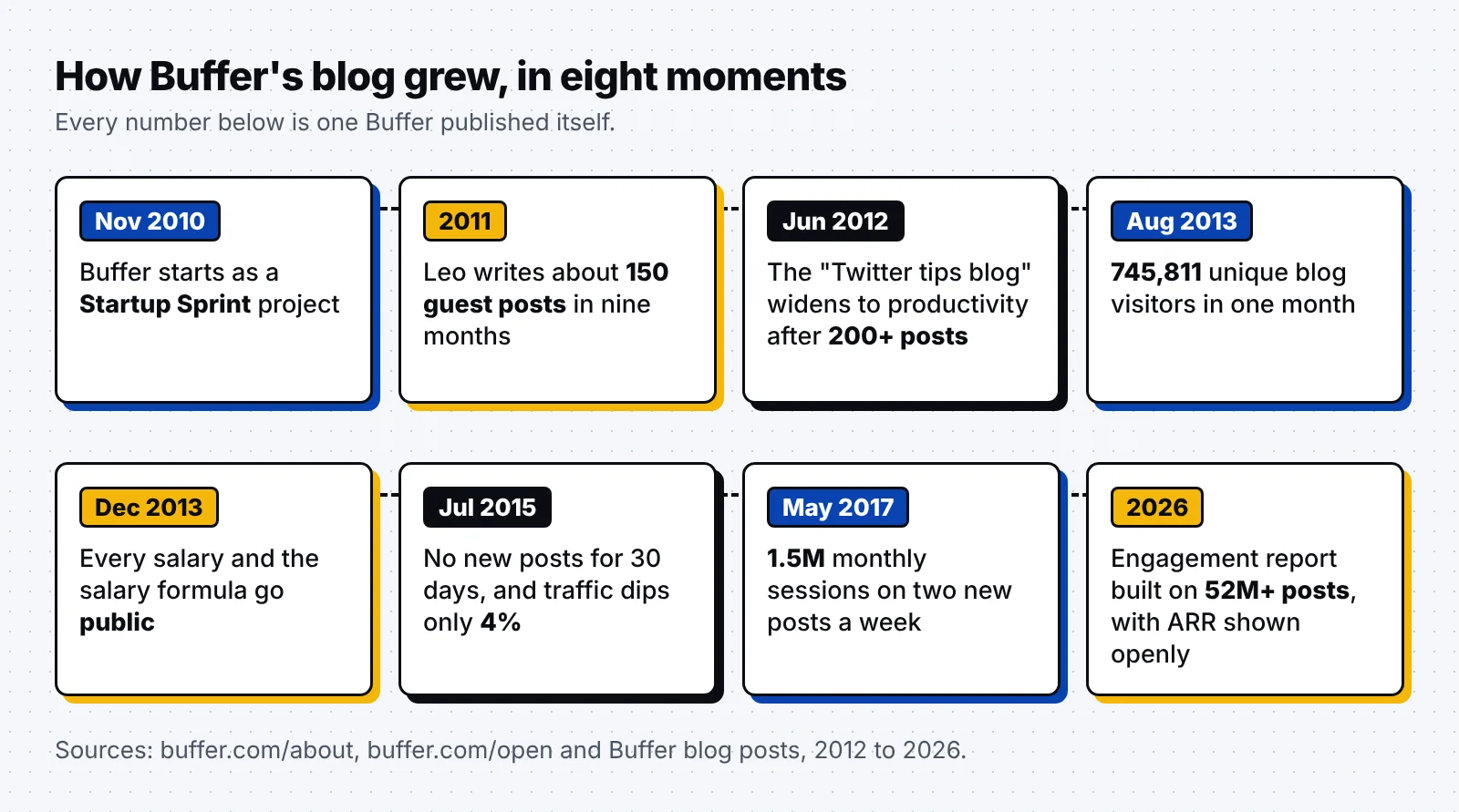
The first readers came from guest posts on other blogs in 2011. By June 2012, the "Twitter tips blog" had passed 200 posts and widened to productivity, life hacks, customer happiness and business.
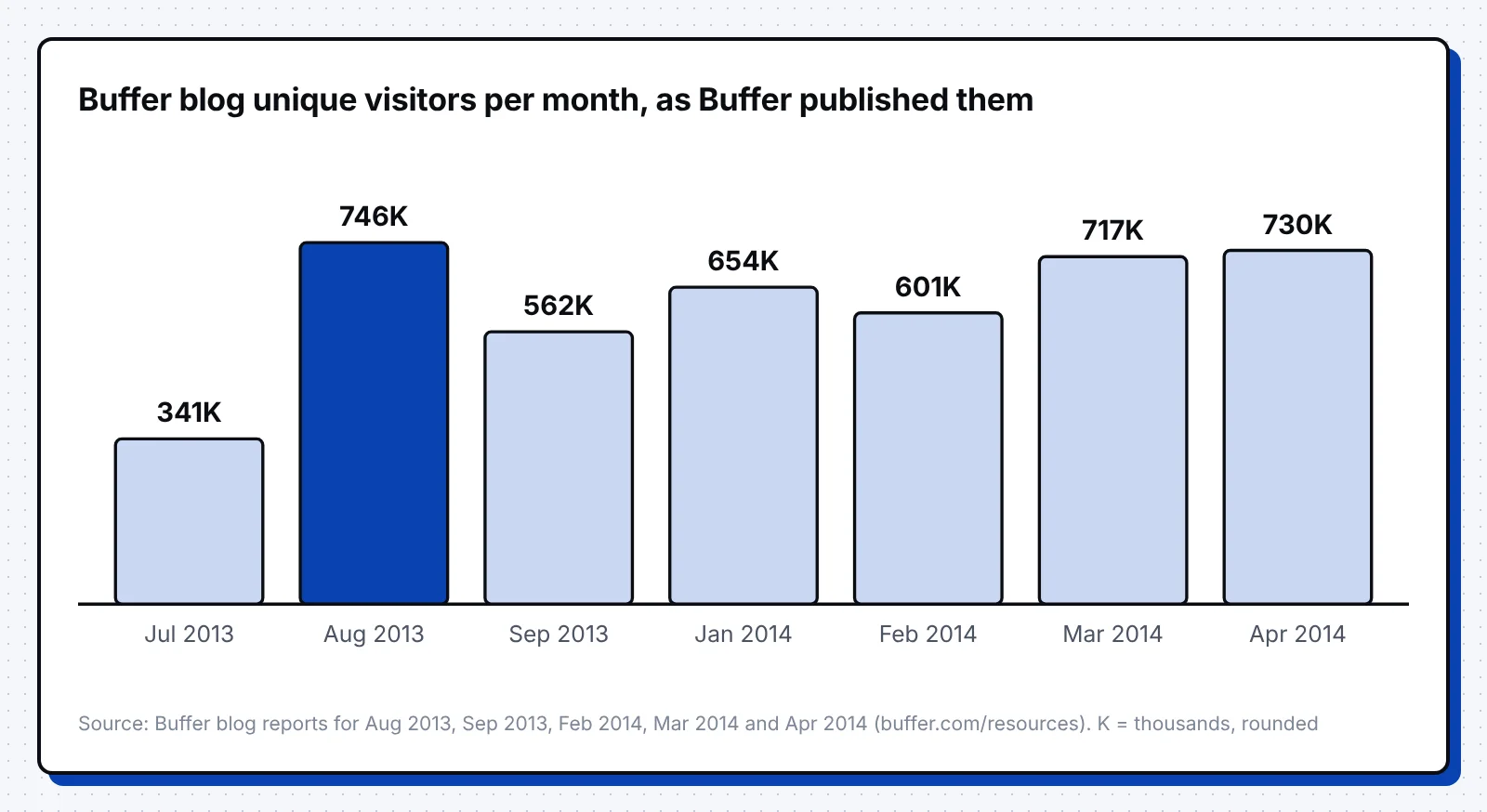
In August 2013, the blog drew 745,811 unique visitors, up 118% from 341,470 in July. One post on science-backed habits for happiness brought in 531,000 of those visitors.
The blog passed one million monthly sessions in March 2015, then stalled near 1.1 to 1.2 million until May 2017. By 2017, it held more than 1,000 posts and drew 1.5 million visits a month.
Buffer's keyword strategy: build for the task searches
The word "buffer" gets 90,500 searches a month, and that total mixes nail buffers, car buffers and the UFC announcer Bruce Buffer. In Arrowsterr keyword data from November 2026, "bruce buffer" alone gets 40,500 searches and "nail buffer" gets 14,800.
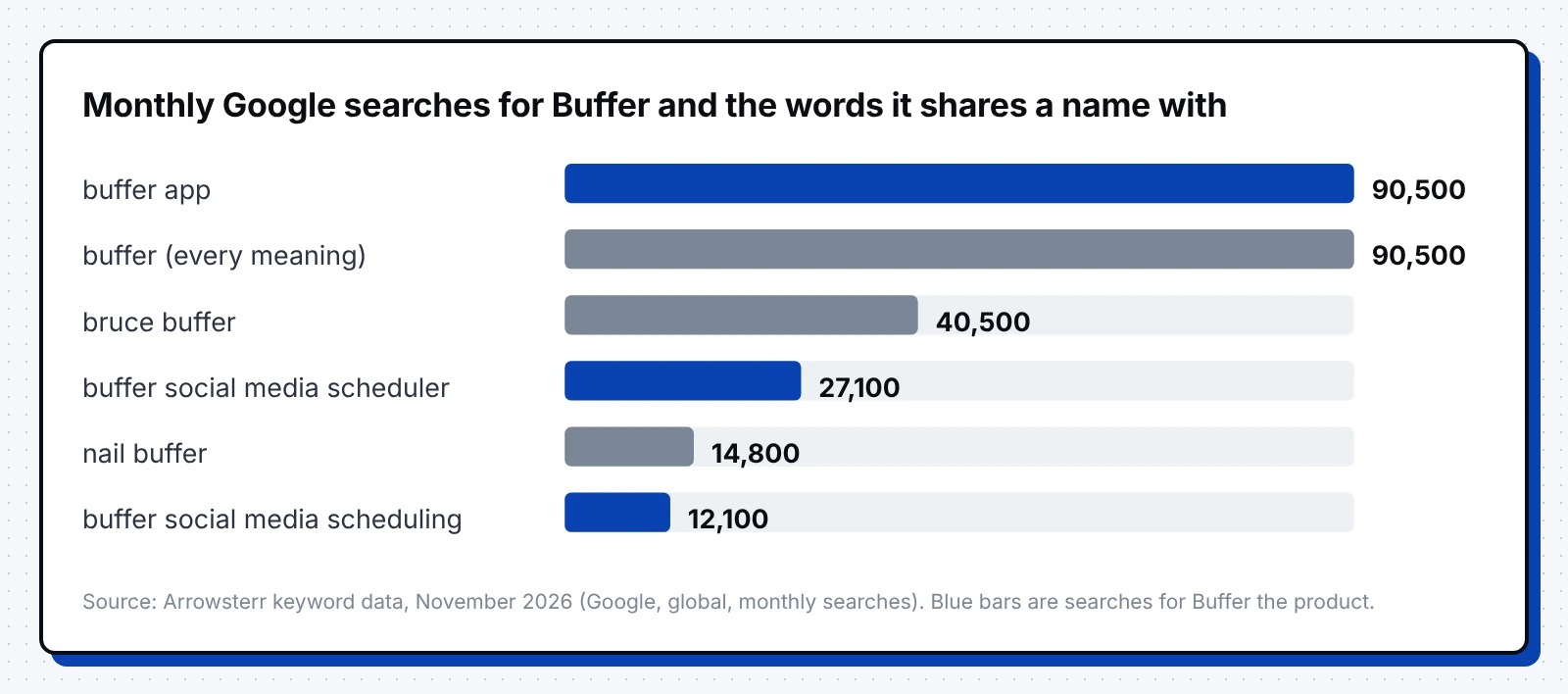
Searches that clearly mean the product are strong, with "buffer app" at 90,500 a month and "buffer social media scheduling" at 12,100. Searches for "buffer social media scheduler" reach 27,100 a month, and that term's trend rose sharply in 2026.
A shared name limits how far brand search can carry a site. Most of Buffer's content targets non-branded task searches, where the searcher has a job to do and the product does that job.
Four keyword patterns carry the strategy, and each pattern gets its own page type:
- "Best time to post on [network]" searches get a data guide, such as the Instagram guide built on 9.6 million posts, updated in September 2026.
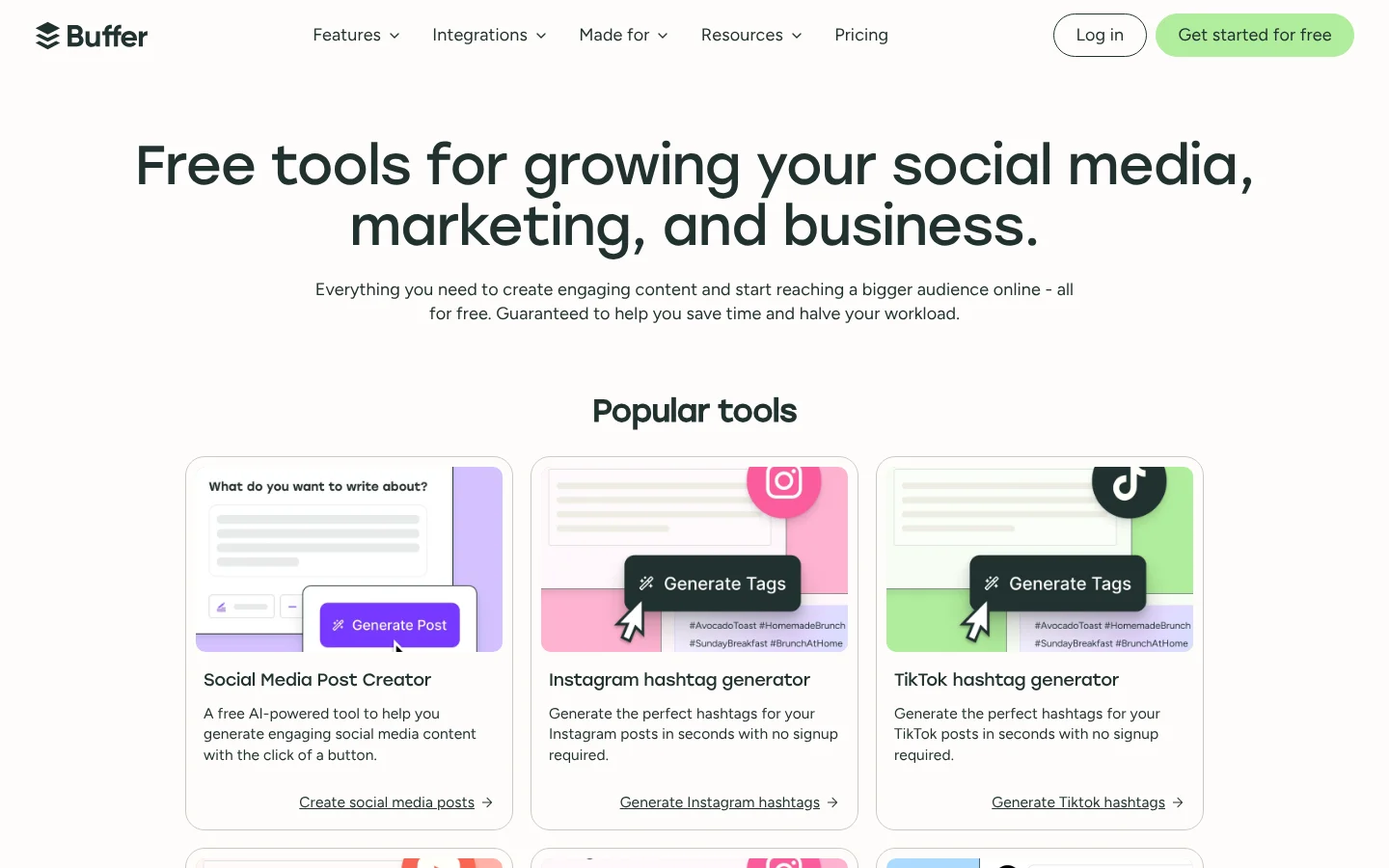
- "[Network] hashtag generator" and similar searches get a free tool you can use without signing up.
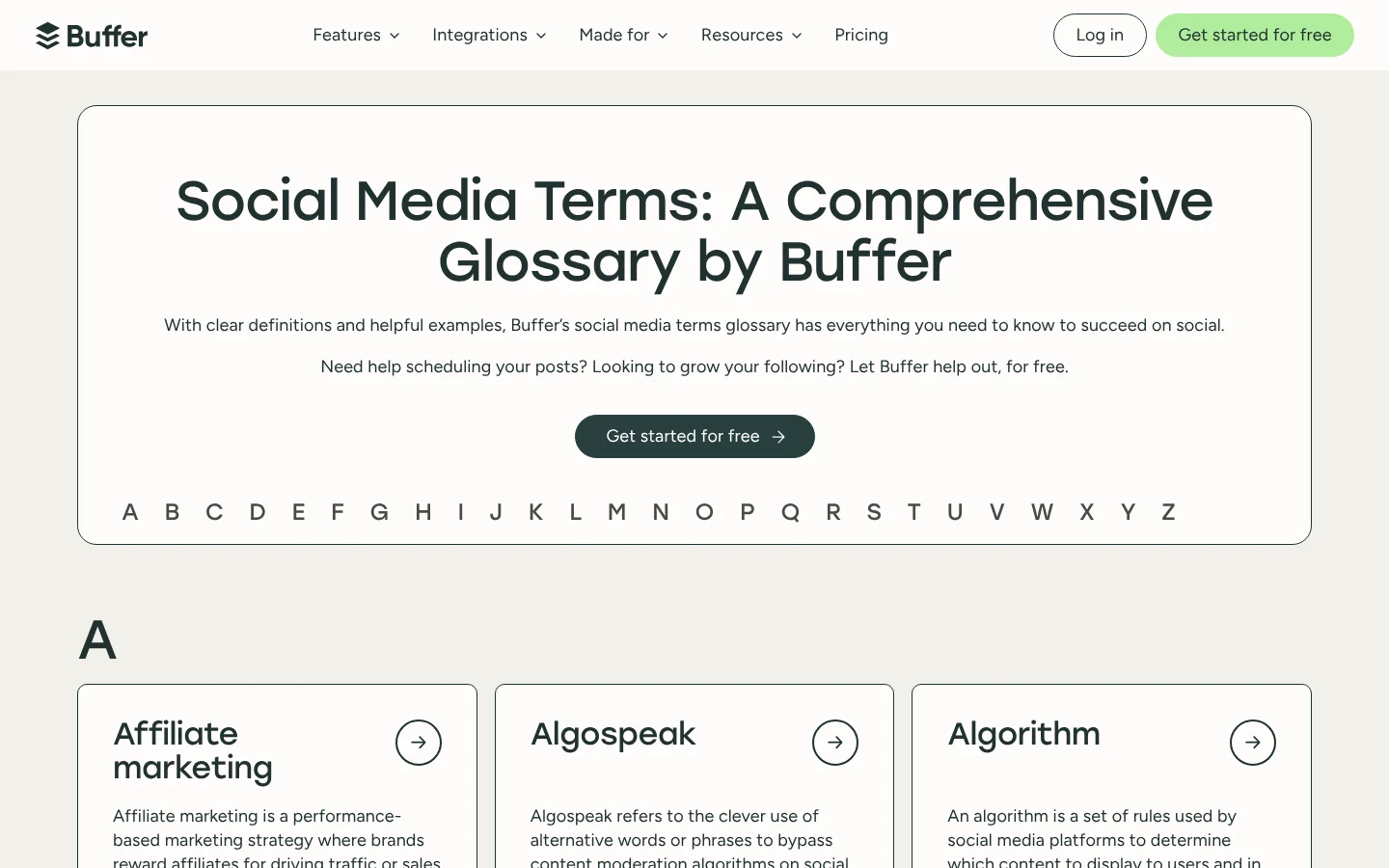
- "What is [term]" searches get a page in the social media glossary, with a plain definition at the top.
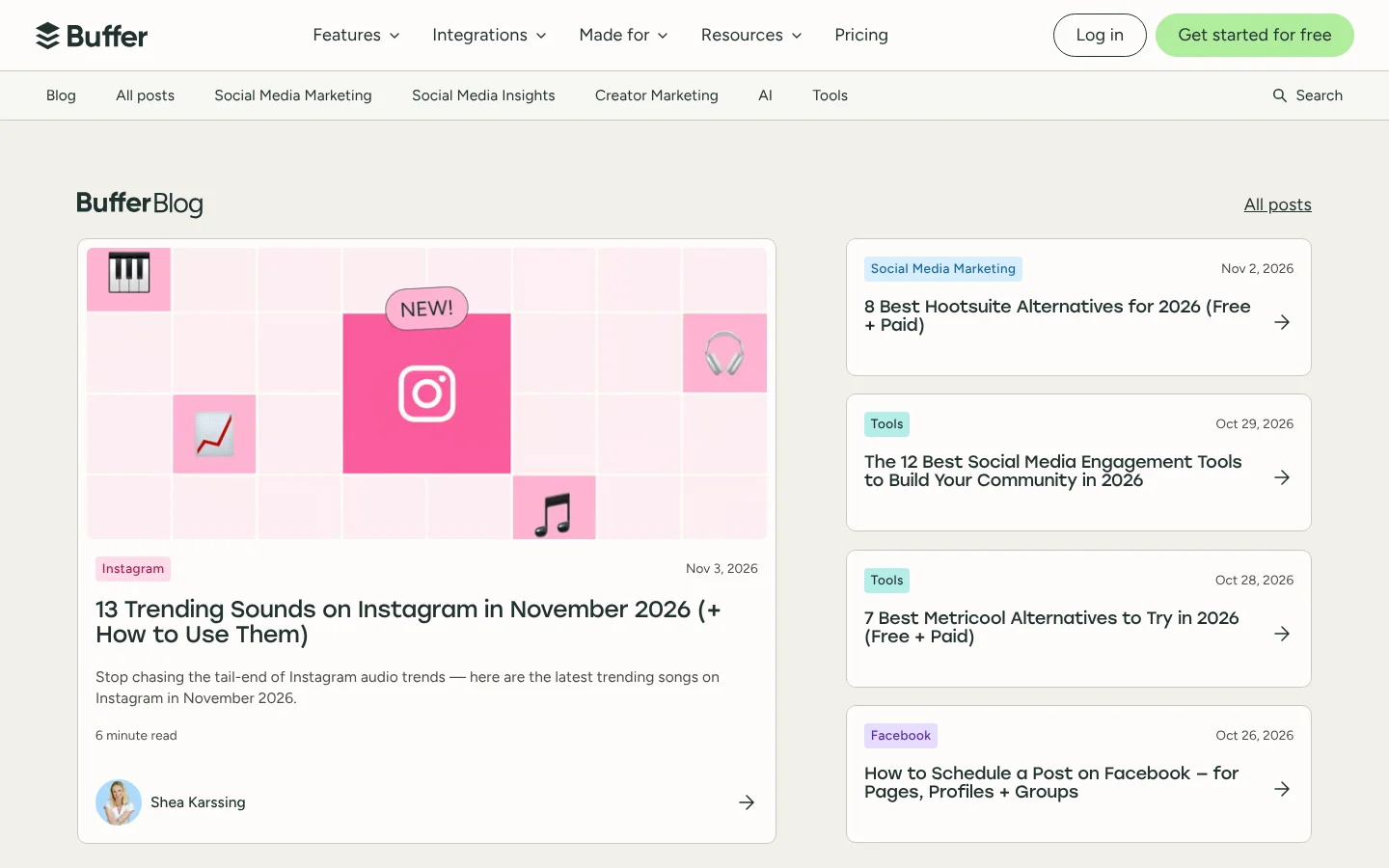
- "[Competitor] alternatives" and "Buffer vs" searches get comparison posts for people who are choosing a tool.
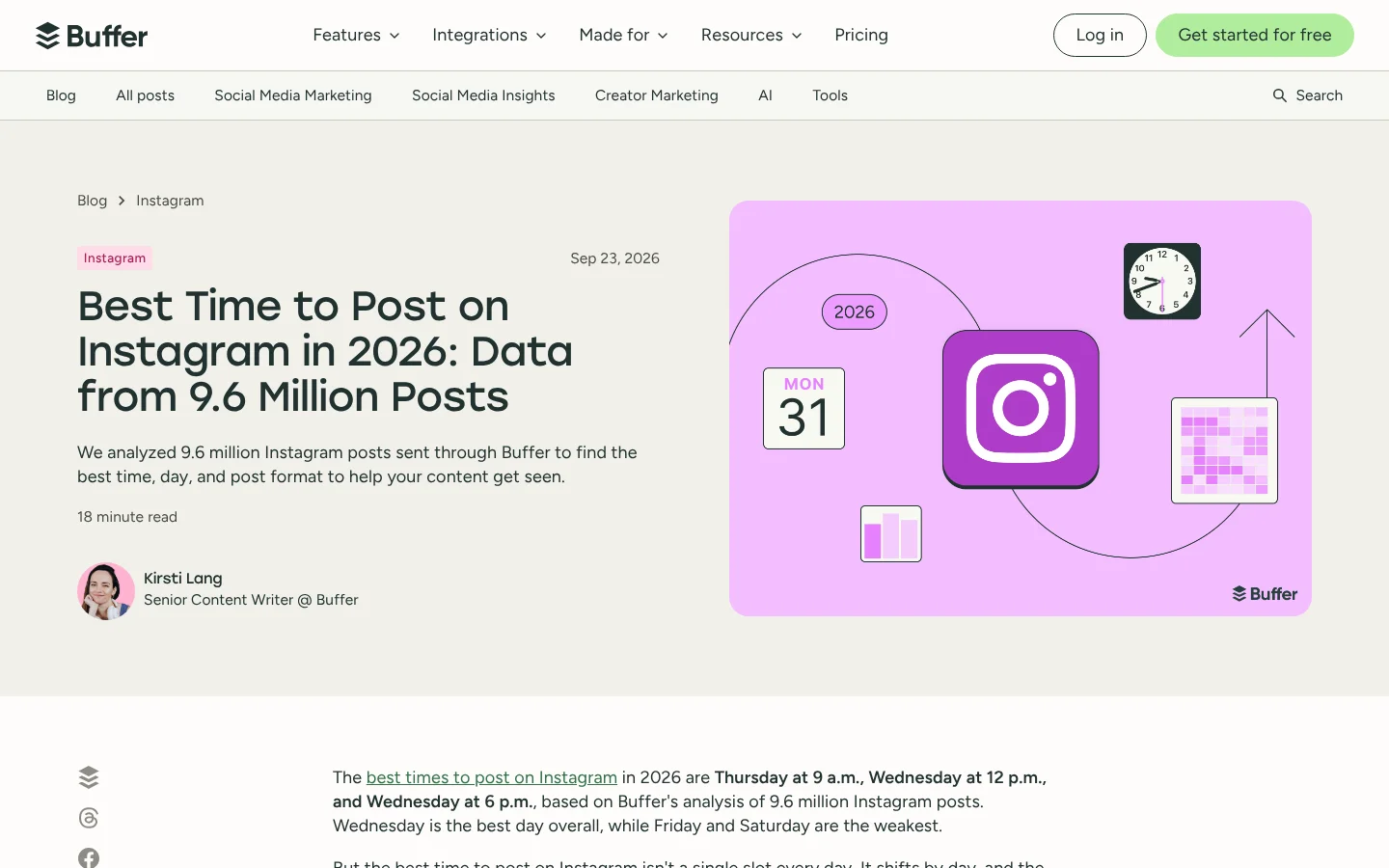
Each page type matches what the searcher wants from that exact search. Someone asking for the best time to post wants a number they can trust. Buffer answers with data from millions of posts on its own platform.
Someone searching for a hashtag generator wants a result in seconds, so the tool sits at the top of the page with no sign-up wall. The Instagram hashtag generator follows with a short guide, links to other free tools and an FAQ.
Someone asking what "algospeak" means wants a short answer, and the glossary gives one before any sales pitch. An A to Z index on the hub page lists every term, so one visit can lead to several.
Comparison searches come from people who already know they want a scheduler. Posts on Hootsuite alternatives and similar topics meet those buyers at the moment they compare tools.
Why the strategy compounds
Every page type points to the same next step, which is scheduling the post. A reader who finds a posting time or a set of hashtags is one click away from the tool that publishes the post.
The pages also feed each other, since tool pages link to the other free tools. Data from Buffer's research flows into the best-time guides each year, which keeps the ranking pages current for readers and search engines.
Trust builds on top of that, because more than a decade of open numbers gives readers a reason to believe Buffer when it publishes data. A trusted name also earns more clicks when it shows up next to a competitor in the results.
The four plays behind Buffer's SEO
1. Guest posts first, then syndication
Co-founder Leo Widrich wrote around 150 guest posts in a nine-month period, about four a week. Each pitch came with a specific thank-you, a short summary, his past bylines and a finished draft.
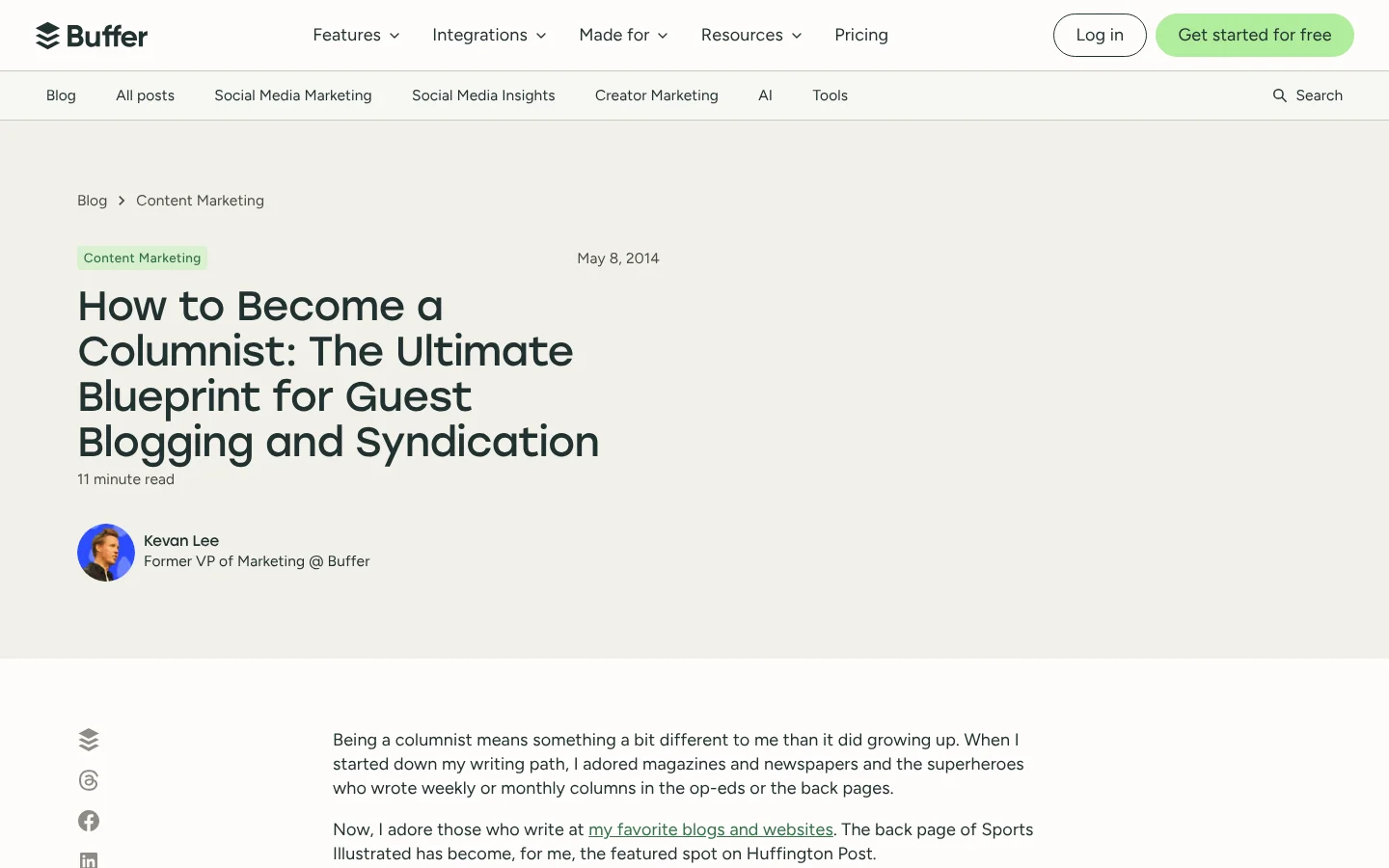
Once guest posts were landing, Buffer asked big sites to republish its best articles. In one month in 2014, republished posts on its top four partner sites brought 949 new conversions.
Each guest post put a link and the Buffer name in front of readers who already trusted the host site. A young domain earned links and brand searches long before its own posts could rank.
For a B2B team, the same play works on the trade sites and newsletters your buyers read. Buffer now runs its own guest post program in small rounds of fewer than 10 contributors. More channels like these are in our guide to B2B content distribution channels.
2. Openness as a brand
Buffer's monthly blog reports showed the misses too, such as a 24% drop to 562,361 uniques in September 2013. By March 2014, the blog was back up to 717,070 uniques and 1,935 conversions in one month.
In December 2013, Buffer published its salary formula and every individual salary. The next month, it received 3,864 job applications, and by 2024 it had shared salaries publicly for 10 of its 13 years.
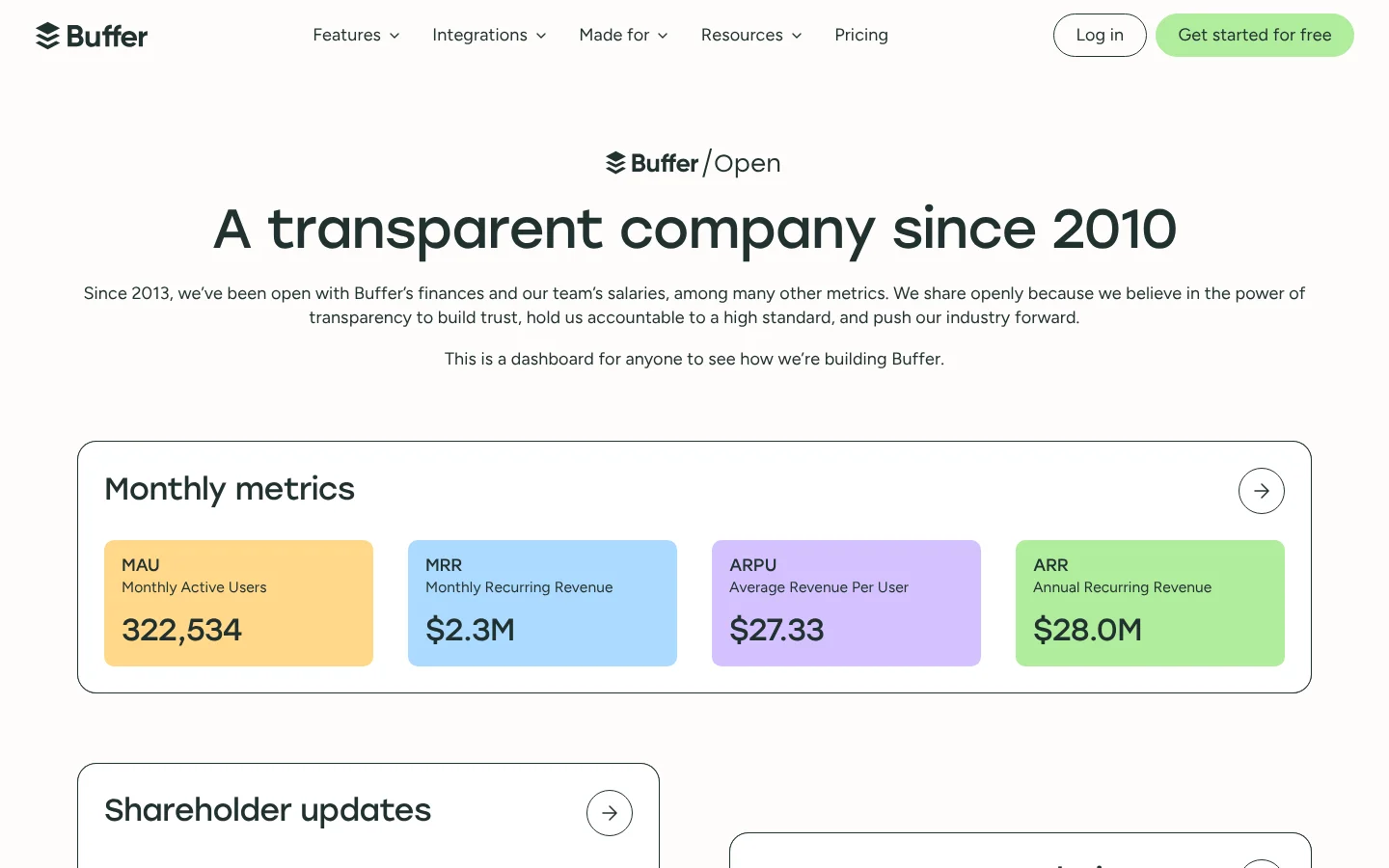
The Open page now lists 322,534 monthly active users and 85,477 customers. In November 2026, it showed $2.3M in monthly recurring revenue, $28.0M in annual recurring revenue and $27.33 in average revenue per user.
Numbers no other company can publish earn links and press coverage on their own. They also build a brand that people search for by name, which is the core of thought leadership content marketing.
A B2B team can start with one number buyers care about, such as response time or uptime. Publish it on a schedule and keep publishing it when it dips.
3. Original data inside the pages that rank
Buffer's State of Social 2018 report surveyed more than 1,700 marketers, and the 2019 edition reached more than 1,800. The State of Remote Work survey ran from 2018 to 2023, and the 2023 report covered 3,000 remote workers.
The 2026 engagement report analyzes more than 52 million posts from over 200,000 accounts, posted between January 2024 and December 2025. The full report post explains its data sources and why it uses medians.
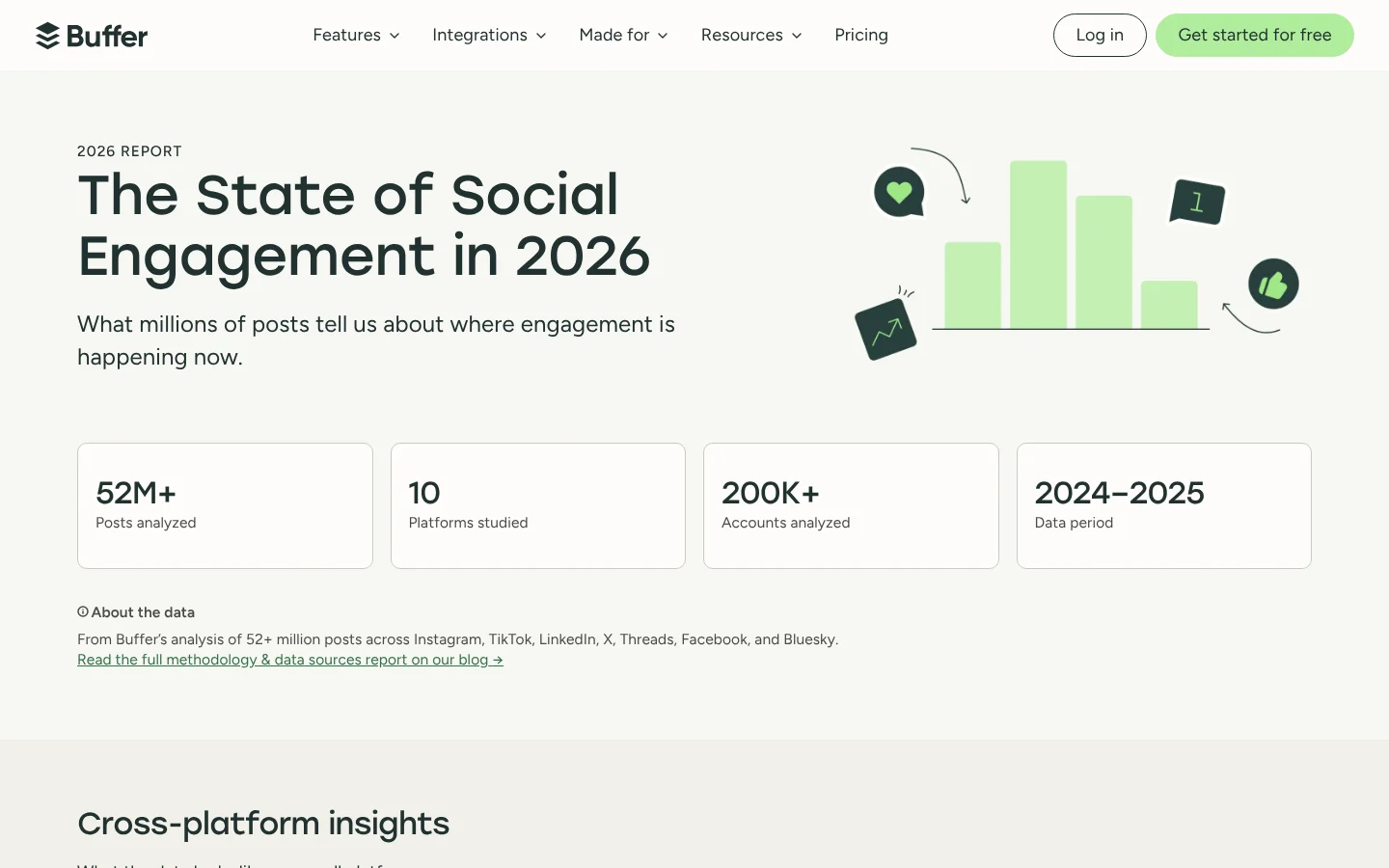
The data answers popular questions with numbers only Buffer has, so other writers cite it and link to it. Putting the same data inside the best-time guides gives the ranking pages a reason to be updated every year.
Your product creates data too, so pick one question buyers ask often and answer it with a yearly study. Explain the method in plain words, so writers and AI answers can quote the numbers with confidence.
4. Update the archive as much as you publish
In July 2015, Buffer stopped publishing new posts for 30 days as a test. It published 10 articles that month, none fully new, and traffic dipped only 4%.
The winners were email drip campaigns built from blog posts and updates to older posts with new facts. A 2015 post explained why the team kept doubling down on its best channels before betting on new ones.
Later, Buffer tried four or five posts a week, saw its standards drop and settled on two new posts a week plus podcast notes. Keyword research became a top focus for the team during that change.
An updated page keeps the links and history it already earned, so a refresh often does more than a new post. Our guide to evergreen content shows how a B2B team can run its own month of updates.
What AI search changes for a site like Buffer's
Glossary and "what is" pages face the most pressure from AI summaries in search. In a Pew Research Center study of 900 US adults, 60% of searches that began with "what" or "why" produced an AI summary.
Clicks fall when a summary appears, and Pew found people clicked a regular result 8% of the time with one, against 15% without. In keyword data from Ahrefs, AI Overviews cut the top-ranking page's click rate by 58% in December 2025.
Buffer's tools and research pages hold up better against AI summaries in search. A free tool does a job an AI answer can't do, and original data gives AI answers a number to cite with Buffer's name attached.
What B2B teams can use from Buffer's SEO
Buffer sells to creators and small businesses, and its playbook fits B2B because B2B buyers research a lot before they talk to sales:
- Map the tasks your buyers search for each week, then give each keyword pattern its own page type.
- Turn a task buyers do by hand into a free tool with no sign-up wall.
- Publish one yearly data study and reuse its numbers in the pages you want to rank.
- Share one real number buyers care about, and keep sharing it when it dips.
- Spend one month a year updating your best posts before you write new ones.
None of this needs a large team, as Buffer's 73 people show. For more, see our content strategy examples from B2B brands and our guide to B2B SaaS SEO.
FAQ
How does Buffer get search traffic when its name is a common word?
Buffer builds pages for the tasks social media managers search for, such as posting times, hashtag tools, social media terms and tool comparisons. The word "buffer" gets 90,500 searches a month that also cover nail buffers and Bruce Buffer. If your brand name is also a common word, you can follow the same path.
Which Buffer page types should you copy first?
Start with a yearly data study and one free tool, since both earn links and hold up in AI search. Add glossary pages later, because AI summaries now answer many "what is" questions on their own.
Do guest posts still help you grow the way they helped Buffer?
Leo Widrich wrote around 150 guest posts in nine months, about four a week. Republished posts on four partner sites later brought 949 new conversions in one month of 2014. You can run the same play on the trade sites and newsletters your buyers already read.
Should you share your company's numbers the way Buffer does?
Buffer's Open page lists revenue, users, customers and salaries, including $28.0M in annual recurring revenue in November 2026. You can start smaller with one number your buyers care about, such as uptime or response time.
Will AI search hurt you if you follow Buffer's strategy?
It hits definition pages hardest, since Pew found AI summaries on 60% of searches that start with "what" or "why." Free tools and original data hold up better, because an AI answer can't run your tool and needs a source for its numbers.
Start by listing the tasks your buyers search for each week and the page type that fits each one. For help turning product data into content that ranks and gets cited, get a free AI visibility audit.