The best B2B content distribution channels are the places your buyers already read, watch and ask questions, from Google and AI chatbots to LinkedIn, newsletters and podcasts. Most B2B teams see the best return by running two or three channels well, then adding paid reach to the pieces that already work.
We plan content distribution for B2B and SaaS teams every week, and this list follows how we pick channels for clients. For each of the 12 channels, you'll see what works, the effort and cost, a real B2B example and who it suits best.
Owned, earned and paid channels
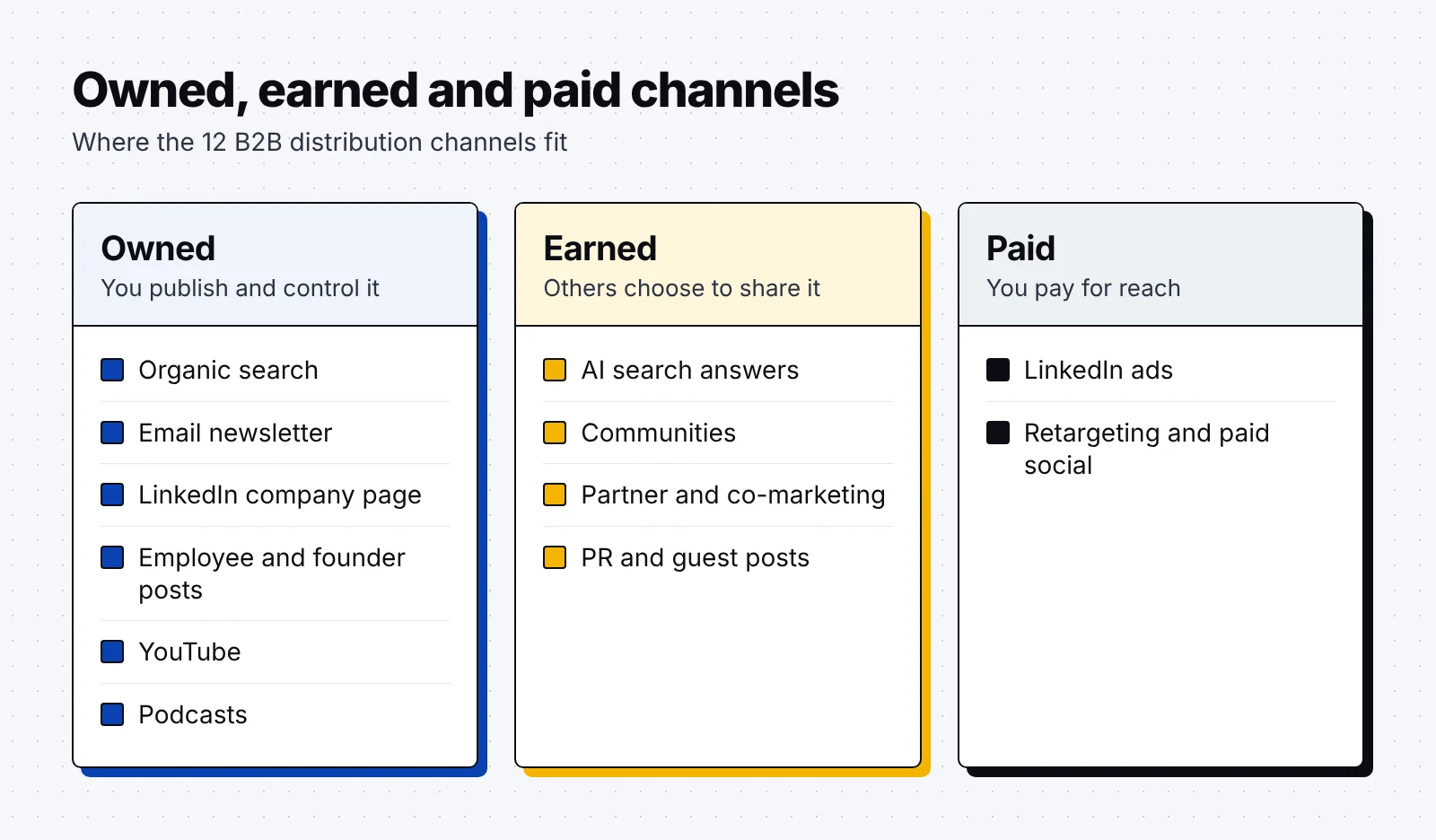
Every distribution channel falls into one of three groups, and a healthy plan uses all of them. Owned channels are the ones you publish on and control, so they keep working after you stop paying.
- Owned channels include your website, newsletter, company page and the posts your people write.
- Earned channels are places where others choose to share your work, such as AI answers, communities and the press.
- Paid channels put your content in front of a chosen audience for as long as your budget runs.
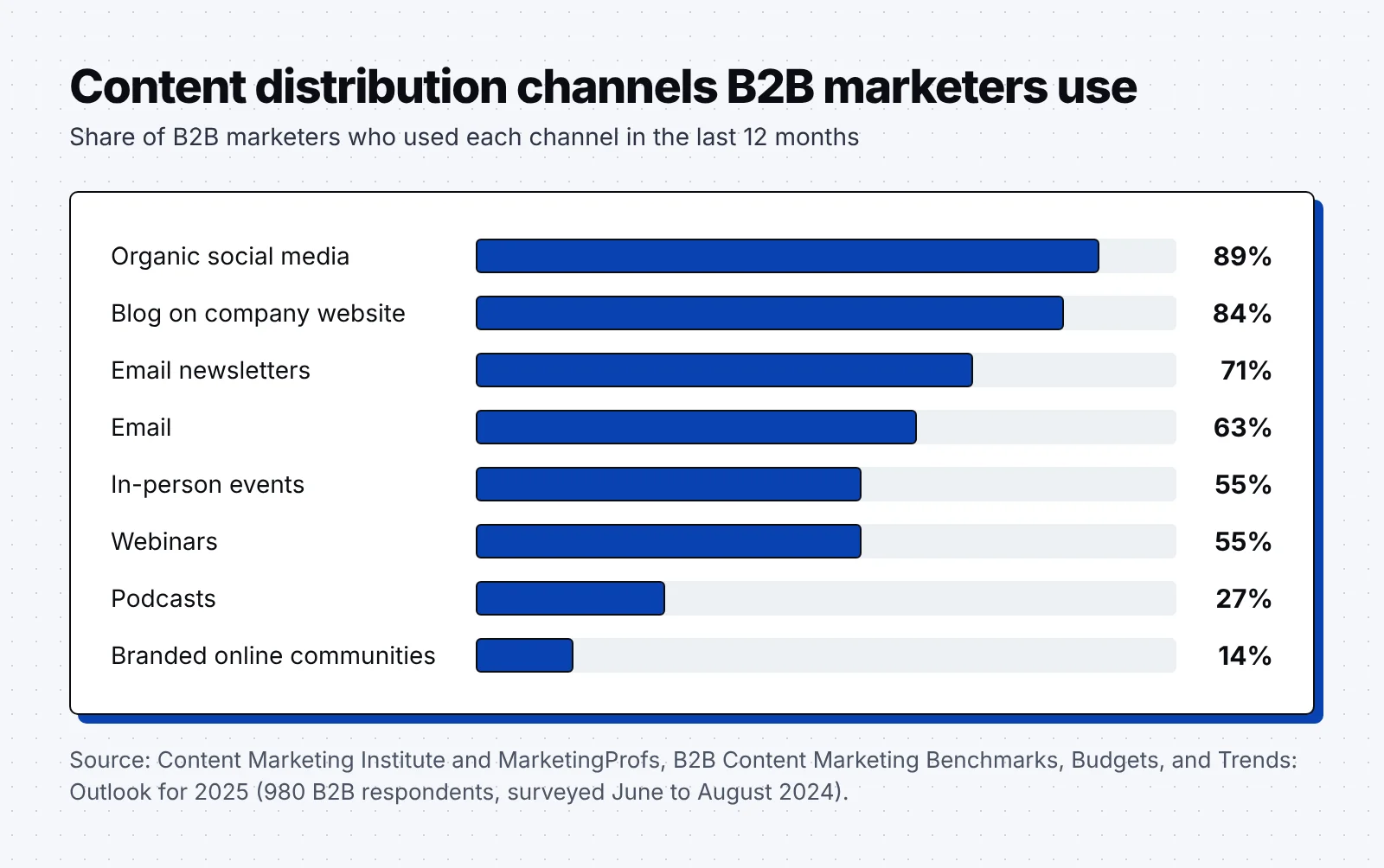
Most B2B teams already mix all three. In the Content Marketing Institute's research for 2025, 89% of B2B marketers used organic social media and 84% used a company blog. The same share, 84%, used at least one paid channel.
If you're still shaping what to publish before you plan where it goes, start with our guide to B2B content marketing.
1. Organic search
Organic search brings buyers to your content at the moment they look for an answer. Fortunately, a page that ranks keeps bringing visitors for years, so it's one of the cheapest channels to keep running once it starts.
What works:
- Pages that answer the exact questions buyers type, such as comparisons, pricing and how-to guides.
- Templates that turn one useful page format into hundreds of pages, one for each use case or integration.
- Updating your best pages every few months so they stay accurate and keep their rankings.
Effort and cost are mostly writing time, plus an SEO tool and some technical fixes. Expect months before rankings turn into steady traffic, so start early and judge the channel by quarter.

Zapier is an automation software company that connects more than 9,000 apps so teams can move data between them without code. It publishes a page for each app and for app pairs, such as Gmail and Slack, which matches searches people make when they want two tools to work together.
Best for: companies whose buyers search for the problem they solve, and teams that can publish steadily for at least a year. Our guide on how to increase traffic to a B2B website covers the first steps.
2. AI search (GEO)
AI search is now where many buyers start, so your content needs to be the source that ChatGPT, Perplexity and Google's AI answers quote. In G2's 2026 buyer survey, 51% of B2B software buyers started research with an AI chatbot more often than with Google.
The same survey found that 69% of buyers chose a different vendor than they first planned because a chatbot recommended it. Generative engine optimization (GEO) is the work of earning those mentions.
What works:
- Clear answers near the top of each page, with original data that other sites can't copy.
- Pages served as plain HTML, since many AI crawlers don't run JavaScript.
- Mentions of your brand on review sites, forums and communities that AI tools read.
The effort overlaps with SEO, so most of the cost is content and a tool that tracks how often AI answers name you. Check that tracking every month, since AI answers change often.
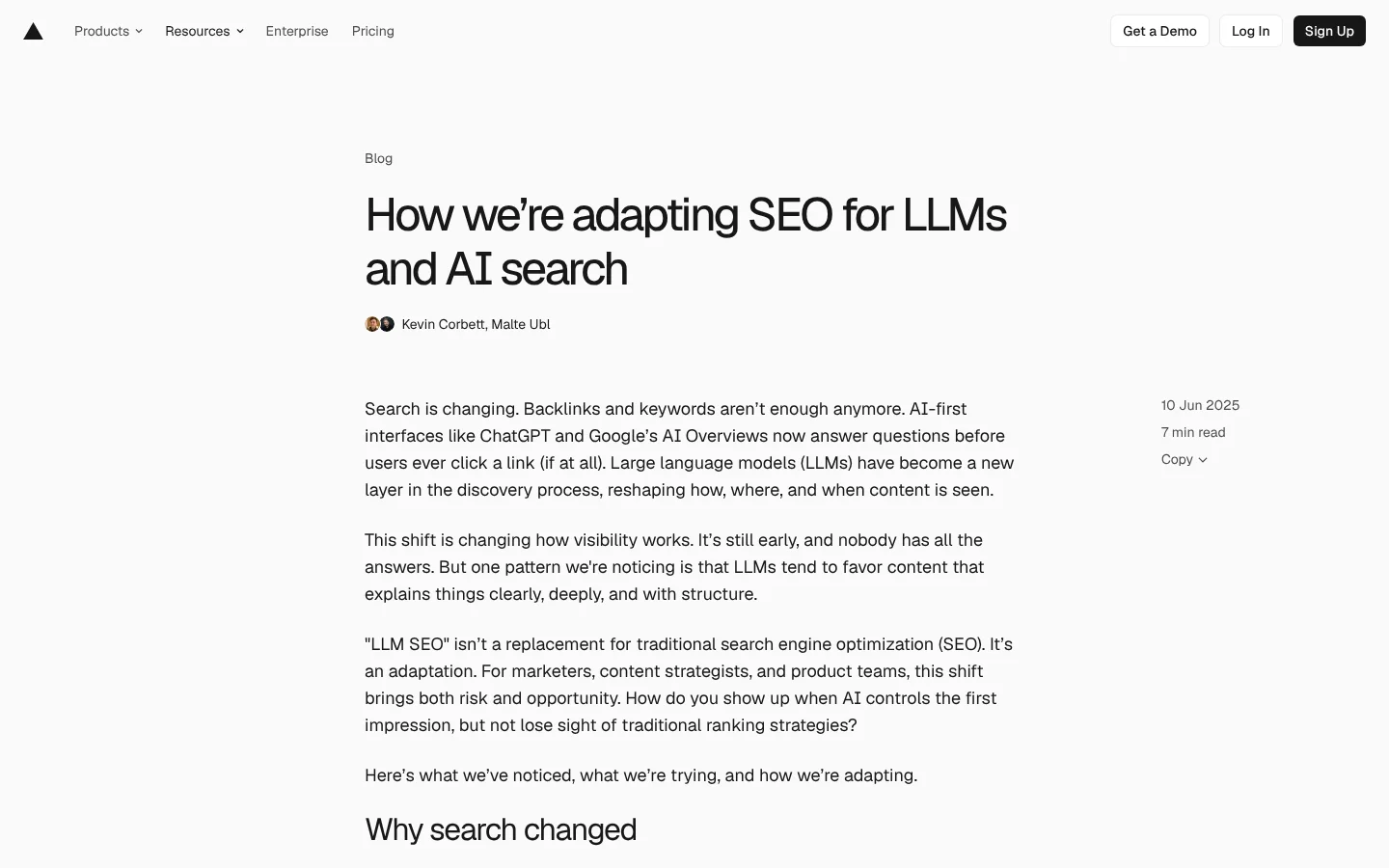
Vercel is a cloud platform company that hosts and deploys websites and web apps for developers. In June 2025, ChatGPT referred around 10% of new Vercel signups, up from 1% six months earlier. Its team writes in-depth material on new topics, structures pages for machines and reviews content after 30, 90 and 180 days.
Best for: B2B software companies whose buyers compare tools before they talk to sales. Our guide to GEO for B2B SaaS shows the full process.
3. Email newsletter
A newsletter is the one channel where you reach readers directly, with no algorithm deciding who sees your work. In CMI's research for 2026, 54% of B2B marketers named email newsletters among the most effective channels for thought leadership.
What works:
- A fixed day and format, so readers know what they'll get each time.
- One clear idea per issue, with links back to your newest content.
- A signup box on every blog post and on your best-read pages.
Effort is a few hours per issue, and the cost is an email tool priced by list size. Honestly, growth is slow at first, since each subscriber comes from content that already brings you visitors.
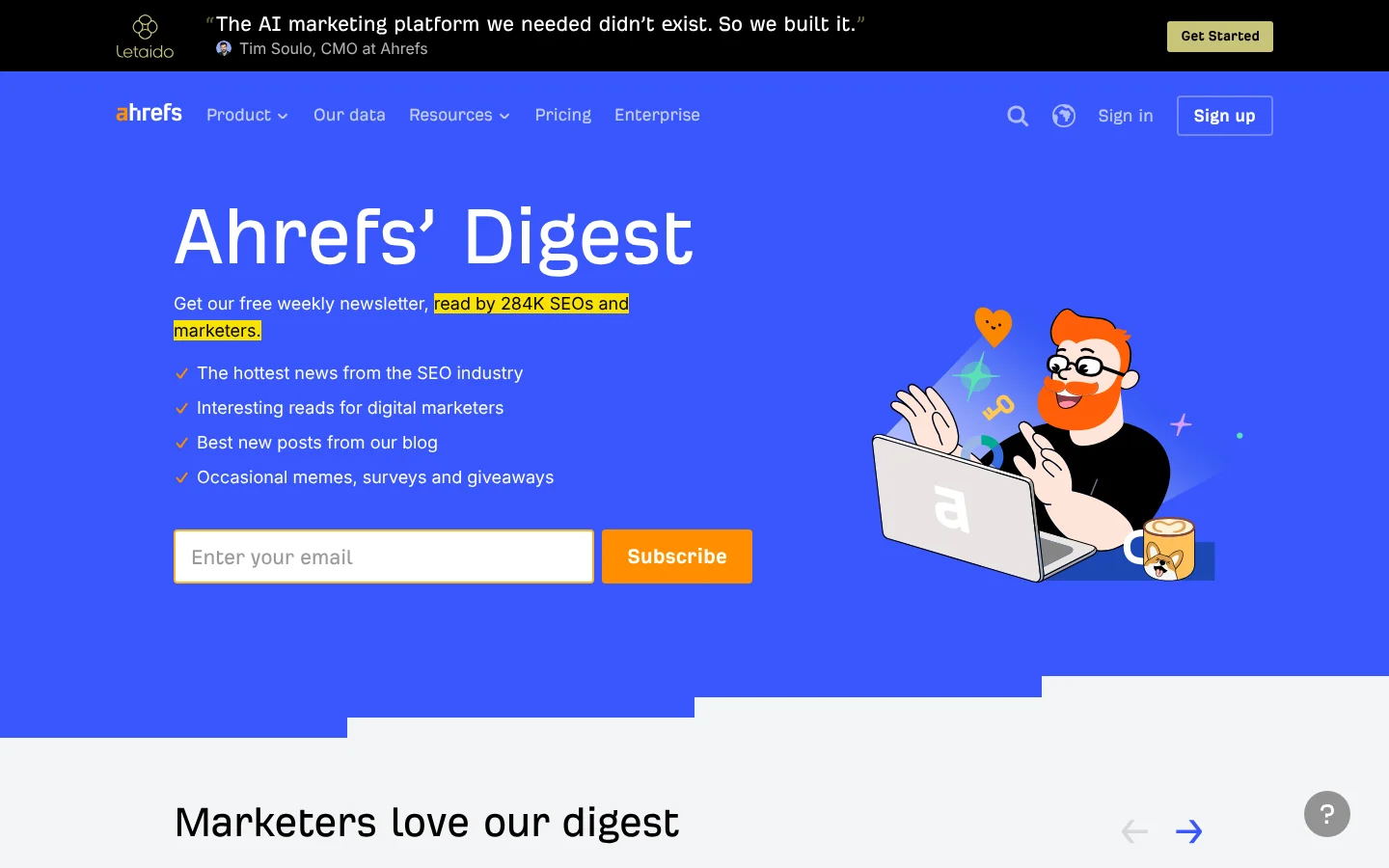
Ahrefs is an SEO software company that sells tools for keyword research, backlink analysis and site audits. Its free weekly newsletter, Ahrefs' Digest, reaches 284,000 SEOs and marketers with industry news, curated reads and the newest posts from its blog.
Best for: any B2B company that publishes at least twice a month and wants an audience it owns.
4. LinkedIn company page
Your LinkedIn company page is the home base for your brand on the network B2B buyers use most. In CMI's research for 2025, 85% of B2B marketers used LinkedIn for organic social, far more than any other platform.
Treat the page as a library of your best work that your team's personal posts can point back to.
What works:
- Native documents and carousels that share one finding from a report or blog post.
- Short videos with captions, since many people scroll with the sound off.
- Customer stories and research summaries, posted on a steady schedule.
The page is free, and the effort is a few posts a week that reuse content you already made.
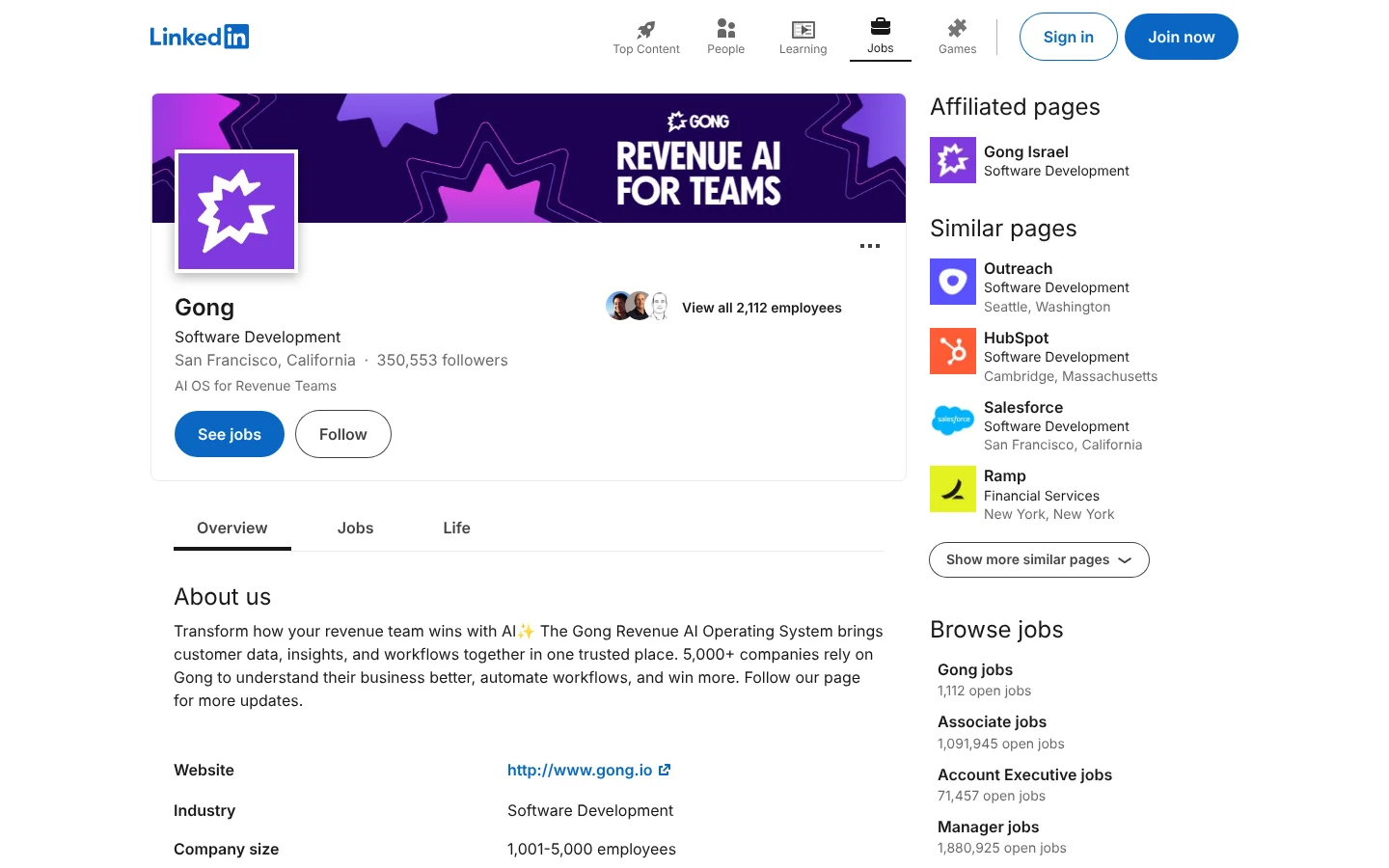
Gong is a revenue AI software company that records and analyzes sales calls, emails and deals for revenue teams. Its LinkedIn page has more than 350,000 followers and mixes Gong Labs research, customer stories and short videos.
Best for: every B2B company, as a base that supports your employee posts and LinkedIn ads.
5. LinkedIn employee and founder posts
Posts from your founder and experts carry your ideas through people that buyers already follow and trust. In CMI's research for 2026, 76% of B2B marketers named LinkedIn among the most effective channels for thought leadership.
What works:
- A posting rhythm the person can keep, such as three to five posts a week.
- Stories and numbers from their own work, which no one else can write.
- A ghostwriter or editor who interviews them and turns the call into drafts.
The main cost is the expert's time, plus a writer if you use one. Expect several months of steady posting before the audience grows.
Unify is a sales software company that builds outbound agents to help reps find and contact the right accounts. Founder Austin Hughes posted five times a week for six months in 2024, and his audience grew from about 3,000 to 16,000 followers.
Unify drove more than $15 million in inbound pipeline that year, and Hughes credits a lot of it to his LinkedIn content. Every two weeks, a content agency interviewed him and turned each call into about five draft posts for him to edit.
Best for: companies with a founder or expert who has strong views and real stories. Our guide to thought leadership content marketing shows how to plan it.
6. YouTube
YouTube is both a video network and a search engine, so a useful tutorial can bring in viewers for years. Only 22% of B2B marketers used it for organic social in CMI's research for 2025, which leaves room in most niches.
What works:
- How-to videos that answer one search, with the answer in the first minute.
- Series and playlists that keep viewers watching the next video.
- Clips cut from webinars and talks you already recorded.
Understandably, video takes more effort than writing, with scripting, filming and editing for each upload. A simple setup with a good microphone and screen recording is enough to start.
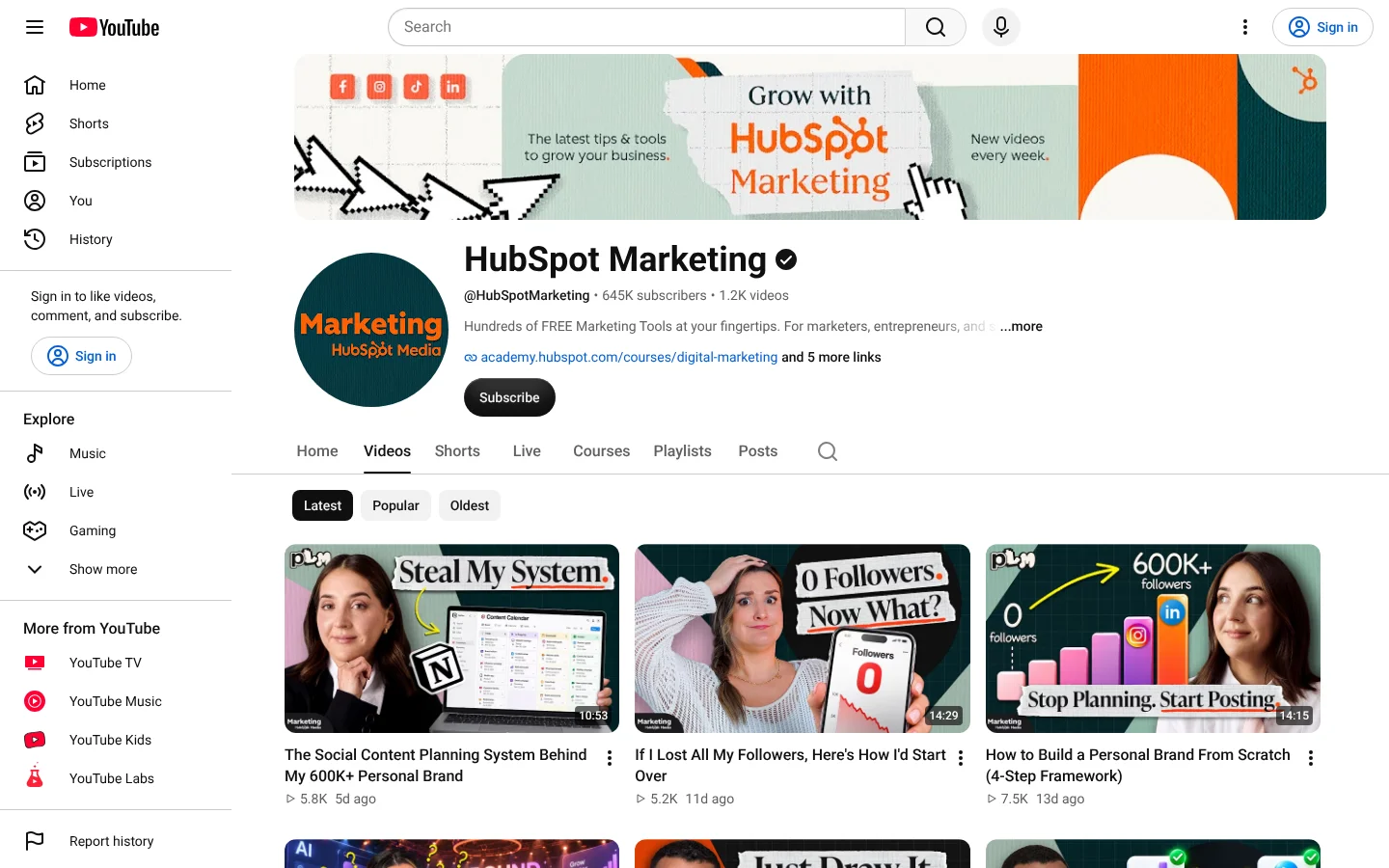
HubSpot is a CRM software company that sells tools for marketing, sales and customer service teams. Its HubSpot Marketing channel has about 645,000 subscribers and more than 1,200 videos for marketers on topics such as social media and personal branding.
Best for: products that are easier to show than describe, and buyers who learn by watching.
7. Podcasts
A podcast gives you long, focused time with buyers, and every guest brings their own audience. Podcasts are also less crowded, since 27% of B2B marketers used them in CMI's research for 2025.
What works:
- Guests your buyers want to hear from, such as customers and leaders in your field.
- A weekly or every other week schedule that you can keep for a year.
- Recording on video, then cutting clips for LinkedIn and YouTube.
Effort is high, with booking, recording, editing and promotion for each episode. Thankfully, one recording can feed a month of social posts and a newsletter issue.
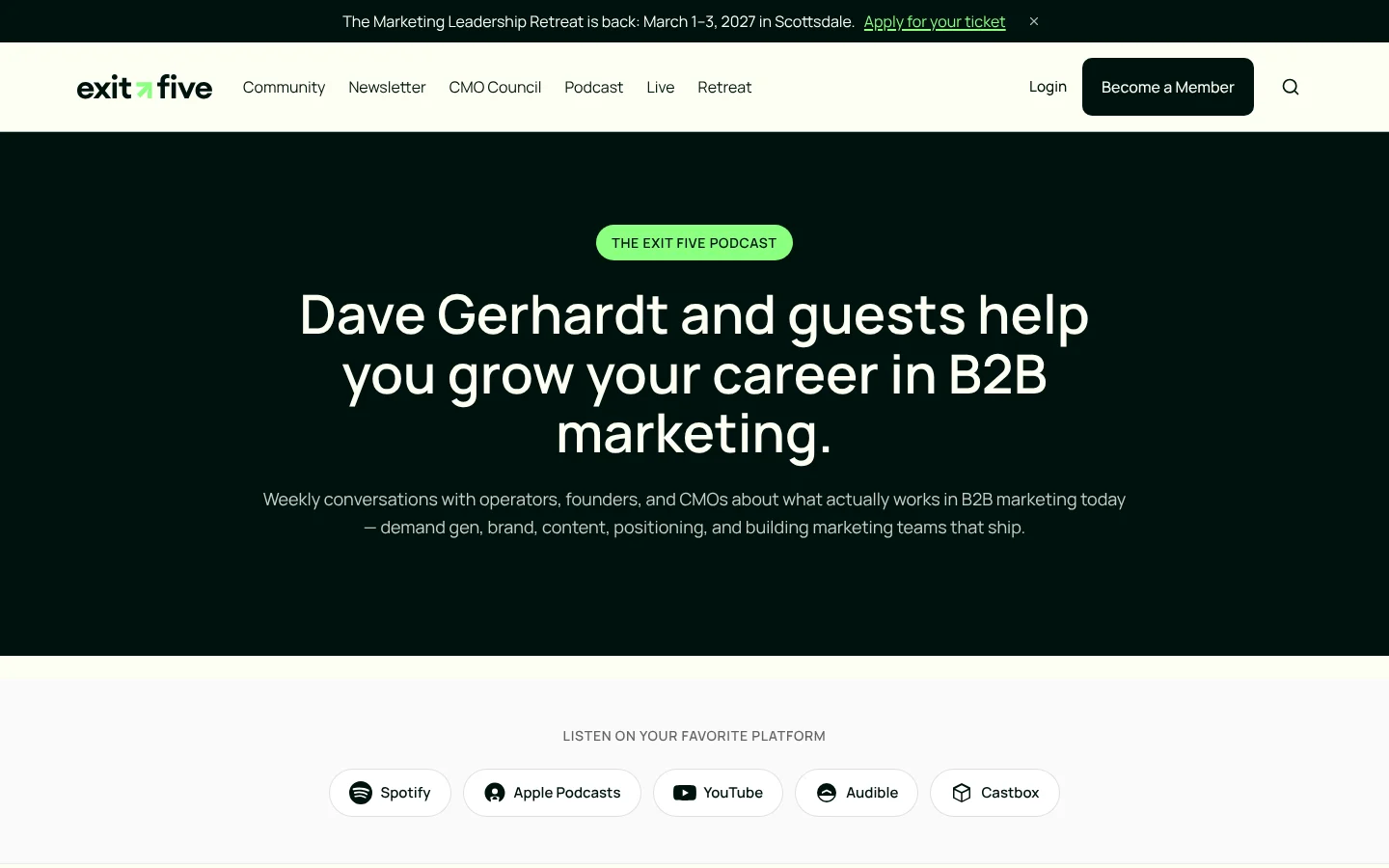
Exit Five is a B2B marketing community company that runs a member community, events and media for marketers. Dave Gerhardt hosts The Exit Five Podcast, which has passed 400 episodes of weekly talks with operators, founders and CMOs.
Each episode also gives the team material for its weekly newsletter, which reaches more than 40,000 marketers.
Best for: teams that sell to a clear audience and can commit to a long run of episodes.
8. Communities (Slack groups, Reddit)
Communities put your experts where buyers ask each other for advice, which builds trust over time. Surprisingly, only 14% of B2B marketers ran branded online communities in CMI's research for 2025, and 15% used Reddit.
What works:
- Answering questions in Slack groups and subreddits with real help and no sales pitch.
- Following each group's rules on links and self-promotion.
- Building your own community once you have a product people use every day.
Joining communities costs only time, while running your own takes at least one community manager.
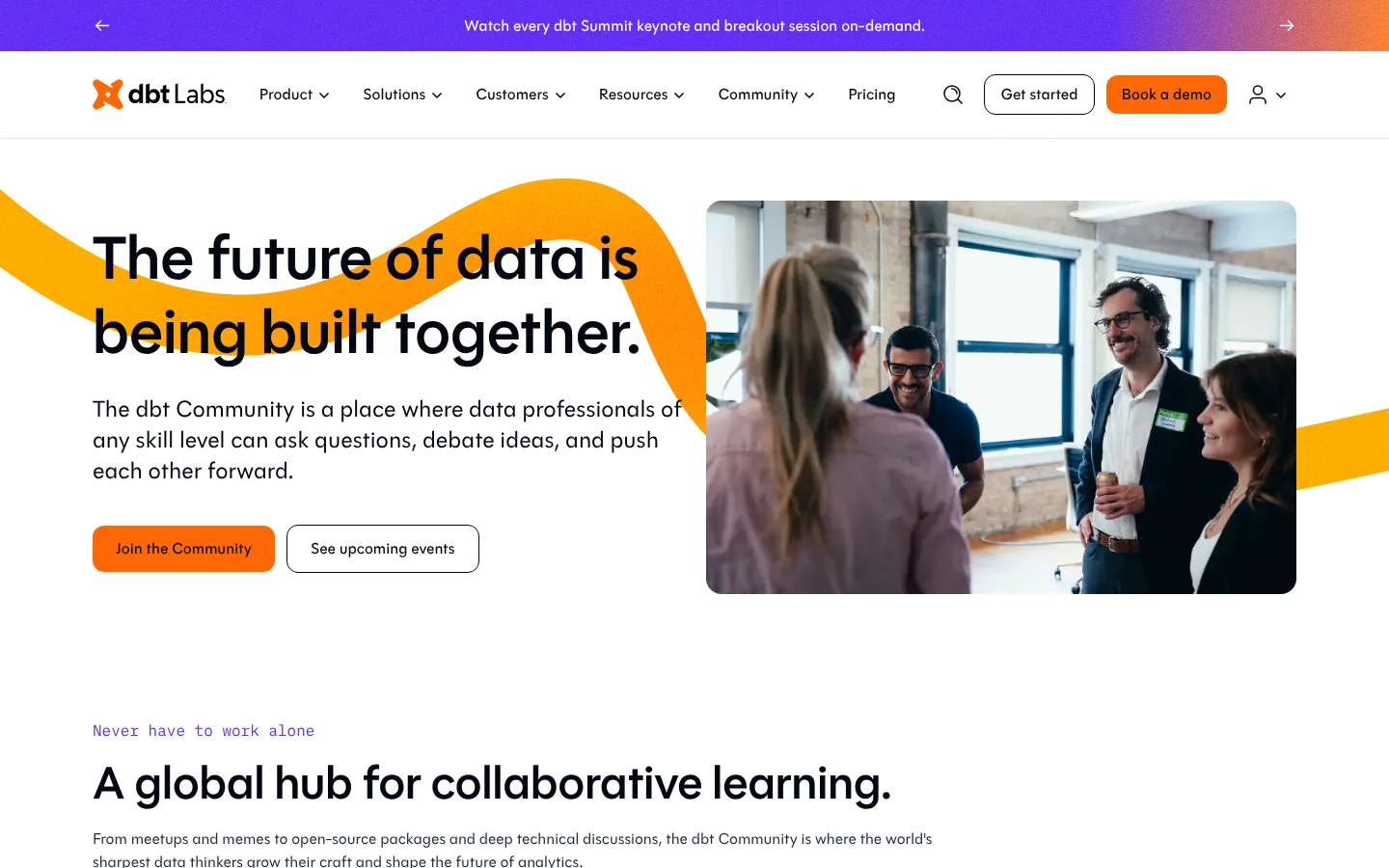
dbt Labs is a data software company that makes dbt, a tool data teams use to transform data in their warehouses. The dbt Community has more than 100,000 active members who send over 5,000 Slack messages a day.
Best for: technical products with users who like to learn from peers.
9. Partner and co-marketing
Partner marketing puts your content in front of an audience that another trusted brand already built. A joint report, webinar or guide gives both partners new readers for the same work.
What works:
- Partners who sell to your buyers with a product that doesn't compete with yours.
- One clear asset with both brands on it, such as research or a webinar.
- A shared plan for who sends which email and posts on which day.
The effort sits in planning and approvals, and the cost is often shared. Sponsoring a research partner's report costs more, but it puts your name on data your buyers read.
Storyblok is a content management software company that sells a headless CMS with a visual editor. It sponsored CMI and MarketingProfs' B2B research for 2026, a survey of more than 1,000 B2B marketers.
Storyblok also worked with FT Longitude, part of the Financial Times, on a content debt report based on 550 senior executives at billion-dollar companies.
Best for: companies with close tech or agency partners, and teams with a budget for sponsored research.
10. PR and guest posts
PR and guest posts get your experts and data into publications your buyers already trust. Each mention also gives AI tools and search engines another source that names your brand.
What works:
- Original data that reporters can cite, updated on a regular schedule.
- Guest articles for trade sites and partner blogs that teach one useful idea.
- Quick, expert replies to reporters who ask for sources on your topic.
Guest posts cost writing time, while a PR agency or a data team adds a monthly fee. Results come in bursts, so track mentions and links over a full quarter.
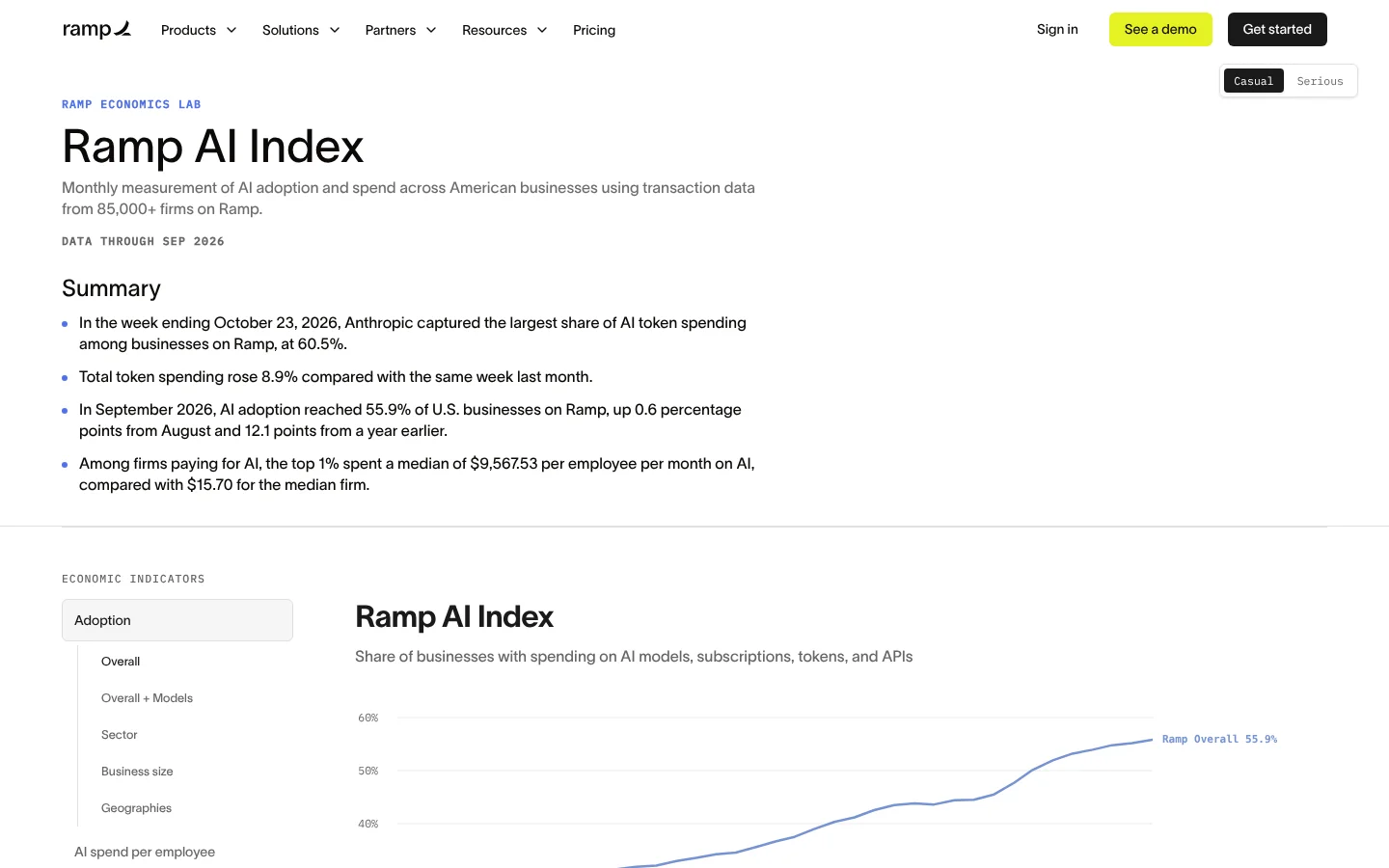
Ramp is a finance software company that sells corporate cards, expense management and bill payments. Its Ramp AI Index measures AI adoption each month using spending data from more than 85,000 businesses.
Interestingly, the Federal Reserve's FRED database now lists the index as a monthly series, so reporters can chart it next to government data.
Best for: companies that hold unique data, and experts who can write for trade media.
11. LinkedIn ads
LinkedIn ads let you show content to buyers by job title, company and industry, which makes them one of the most precise paid channels in B2B. LinkedIn's minimum daily budget is $10, and it suggests $25 a day for new advertisers.
What works:
- Thought Leader Ads, which promote a post from an employee's own profile.
- Promoting posts that already did well organically, so you pay to spread a proven idea.
- Lead Gen Forms that fill in a member's details for a guide or report.
Start with a small test for one audience and one offer, then move budget to the posts that earn the most engagement.
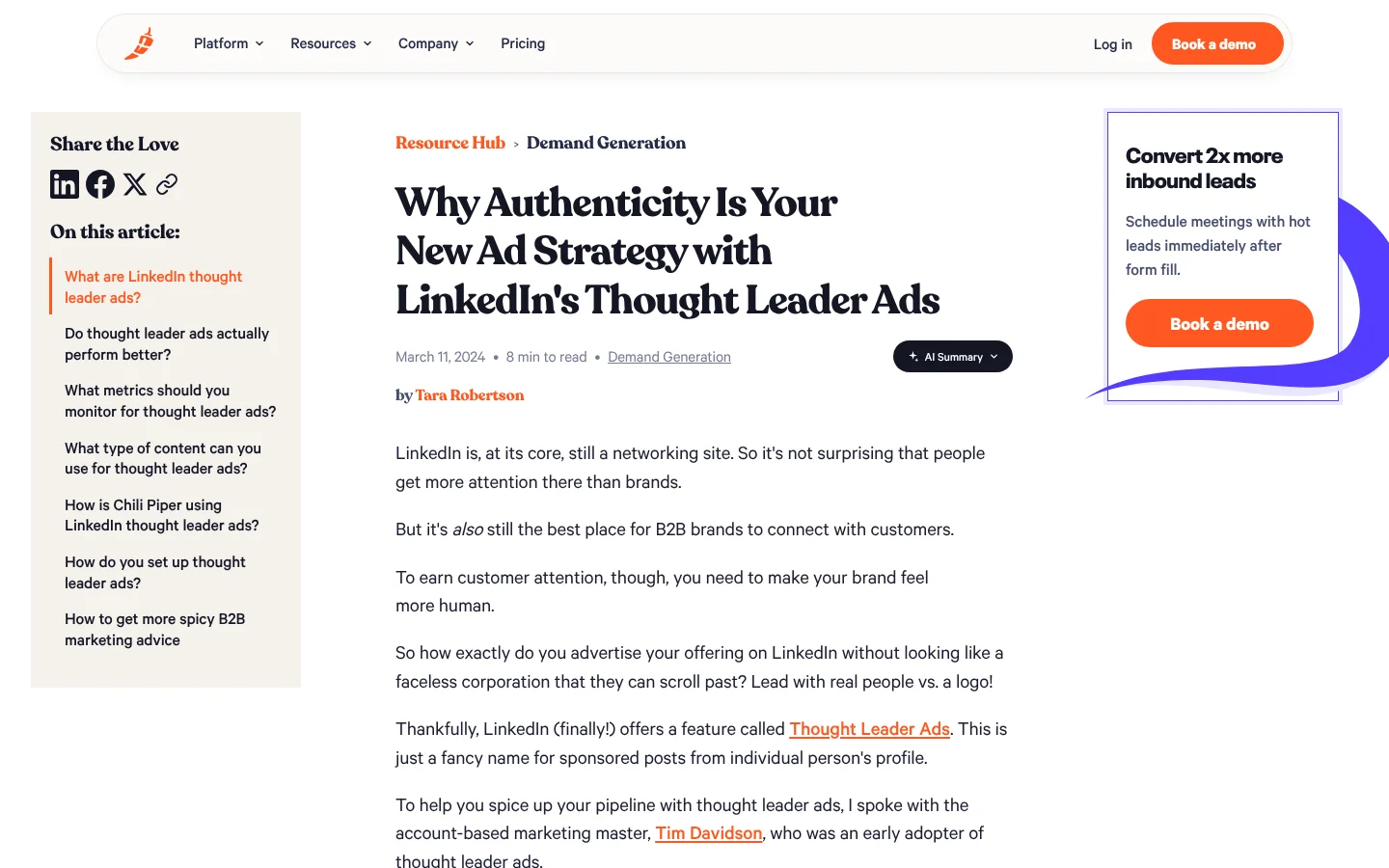
Chili Piper is a marketing software company that routes website visitors to the right sales rep and books meetings. It promoted employee posts with Thought Leader Ads aimed at marketing leaders at target accounts.
A post by co-founder Alina Vandenberghe aimed at VPs of marketing and CMOs earned a 2.21% engagement rate at a $105 CPM. A post by Tara Robertson that promoted a benchmark report earned 3.26% at a $42.27 CPM.
Best for: companies with a clear list of target accounts and a steady monthly budget for testing.
12. Retargeting and paid social
Retargeting shows your next piece of content to people who already read, watched or visited, so each ad builds on interest you've earned. On LinkedIn, a website audience needs at least 300 matched members before a campaign can run.
In CMI's research for 2025, 73% of B2B marketers used social media ads. Among paid channel users, 49% said social ads produced some of their best results.
What works:
- Sequences that move from a helpful article to a case study to a demo offer.
- Audiences built from video viewers, page visitors and people who opened a lead form.
- Leaving out current customers and open deals, so you don't pay to reach them.
Retargeting budgets can stay small, since the audience is small and already knows you. You'll need the LinkedIn Insight Tag or Meta Pixel on your site first.
Sage is a business software company that sells accounting and payroll tools to businesses. When a new French law changed how employers withheld income tax, Sage France ran sequenced LinkedIn content for HR and payroll teams at firms of 200 employees or fewer.
It retargeted engaged prospects with a compliance guide and LinkedIn Lead Gen Forms. Luckily for the team, leads came in at four times the target, at less than a fifth of Sage's previous cost per lead.
Best for: teams with steady website traffic or video views who want to turn readers into leads.
B2B content distribution channels compared
This table compares the 12 channels by effort, cost and time to results, based on our client work. Use it to shortlist channels, then test them with your own numbers.
| Channel | Effort | Cost | Time to results |
|---|---|---|---|
| Organic search | High | Low to medium | Months |
| AI search (GEO) | Medium | Low to medium | Weeks to months |
| Email newsletter | Medium | Low | Months |
| LinkedIn company page | Low | Free | Months |
| Employee and founder posts | Medium | Low | Months |
| YouTube | High | Medium | Months |
| Podcasts | High | Medium | Months |
| Communities | Medium | Low | Weeks to months |
| Partner and co-marketing | Medium | Low to high | Weeks |
| PR and guest posts | Medium | Low to high | Weeks to months |
| LinkedIn ads | Low | High | Days |
| Retargeting and paid social | Low | Medium | Days to weeks |
How to pick your channels
Pick the two or three channels where your buyers already spend time, and give each one six months before you judge it. Adding a fourth channel too early spreads your team thin and makes every channel weaker.
Answer these questions before you choose:
- Where do your last ten customers say they first heard about you?
- Do your buyers search for the problem, or do they need to learn it exists first?
- Which of your people can write, speak or record on a steady schedule?
- How much budget can you give paid reach each month after content costs?
Happily, most teams can start with one owned channel, one earned channel and one paid channel. A common B2B mix is organic search and AI search, founder posts on LinkedIn and a small retargeting budget.
A simple monthly distribution plan
A monthly plan turns each new piece of content into a month of posts, emails and ads. Here is the rhythm we use as a starting point for clients:
- In week one, publish one in-depth article or report and optimize it for search and AI answers.
- In week one, send it in your newsletter and share it on your company page.
- In week two, have your founder or an expert write two LinkedIn posts with one idea from it each.
- In week two, share the most useful part in one community thread where it answers a real question.
- In week three, turn the main points into a short video or podcast clip for YouTube and LinkedIn.
- In week three, pitch the data or a guest article to one trade publication or partner.
- In week four, promote the best-performing post with a small LinkedIn ad budget.
- In week four, retarget people who read or watched with a case study or demo offer.
At the end of each month, check which channel brought the most engaged visitors, signups and pipeline, then move more time to it.
FAQ
What are B2B content distribution channels?
B2B content distribution channels are the places where you share content so business buyers can find it, such as search, email, LinkedIn, podcasts and communities. They fall into three groups: owned, earned and paid.
Which content distribution channel works best for B2B?
LinkedIn leads for B2B thought leadership, since 76% of B2B marketers named it among the most effective channels in CMI's research for 2026. The best channel for you still depends on where your buyers research, so test two or three and compare the pipeline each one brings.
How many distribution channels should a B2B company use?
Start with two or three channels and run them well for at least six months. Add a new channel only when the first ones run on a steady schedule.
What is the difference between owned, earned and paid channels?
Owned channels are the ones you control, such as your website and newsletter. Earned channels are places where others share your work, such as AI answers and press coverage, while paid channels reach people for as long as you pay.
Is AI search a content distribution channel?
Yes, AI search is now a major channel, since 51% of B2B software buyers in G2's 2026 survey started research with an AI chatbot more often than with Google. You reach it with clear, well-sourced pages and mentions of your brand on sites that AI tools read.
A good next step is to ask your last ten customers where they first heard about you, then pick your two strongest channels from their answers. To see how often AI answers name your brand today, start with a free AI visibility audit.