

If you run marketing at a B2B company and a blog is on your list, you want proof that it can bring in real business. I’ve built blogs for B2B brands since 2019, and personally, the best way I know to plan one is to study companies that already do it well.
So in this guide, I’m sharing 15 business blog examples from real companies, mostly B2B and SaaS, plus a few famous consumer brands. For each one, I’ll show you what the blog covers, why it works and what you can borrow for your own.
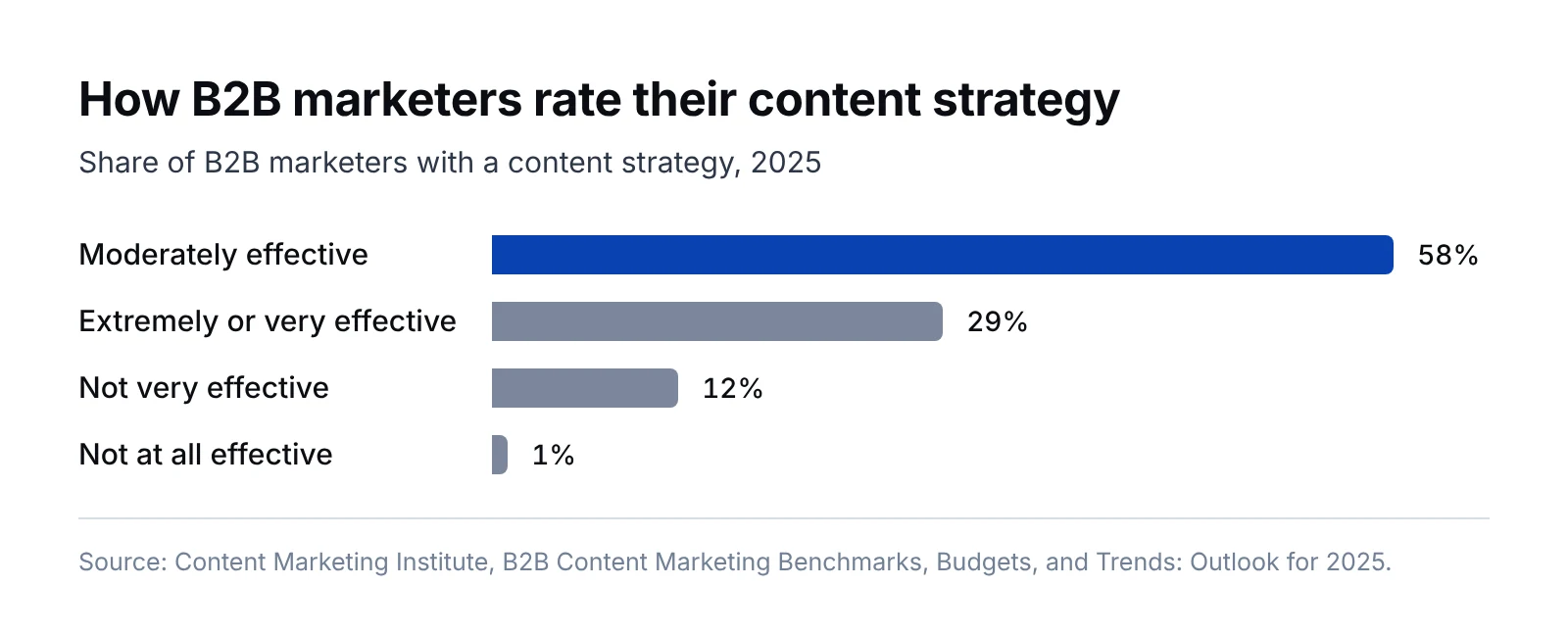
Most B2B teams still see room to improve their own content. In the Content Marketing Institute’s 2025 B2B research, 58% of B2B marketers with a content strategy rated it moderately effective, and only 29% called it extremely or very effective.
What is a business blog?
A business blog is a section of a company’s website where it publishes articles that help its future customers. The goal is to earn attention from the right people and move some of them toward a sale, so a good one ties every topic back to a problem the company’s product or service solves.
When it works, a business blog can do a lot for you:
- It brings in search traffic from people looking for answers your product gives them.
- It grows an email list you own, so you can reach readers without paying for ads.
- It builds trust with buyers long before they talk to anyone on your team.
How I picked these business blog examples
I study a lot of company blogs in my work at Perceptric, a B2B SEO and content agency. For this list, I skipped blogs that only share company news.
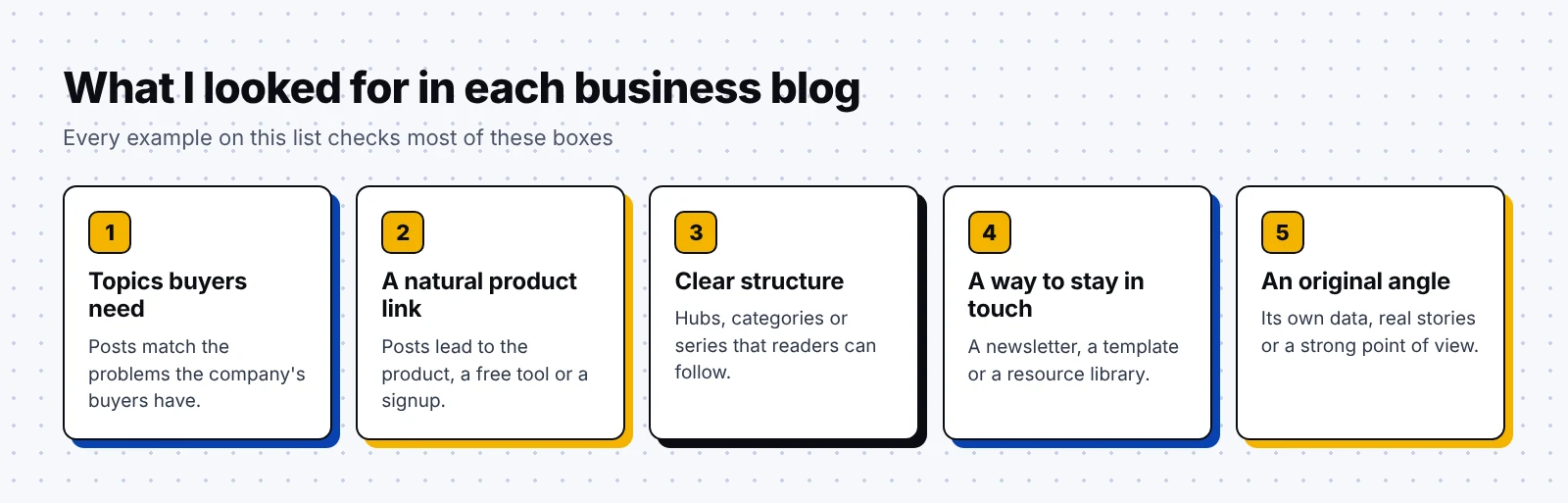
Each example had to check most of these boxes:
- The topics match the problems the company’s buyers have.
- The posts link naturally to the product, a free tool or a signup.
- The blog has a clear structure, such as hubs or categories.
- Readers get a way to stay in touch, like a newsletter or a resource library.
- The company brings an original angle, such as its own data or a strong point of view.
Business blog examples from B2B SaaS companies
I’ll start with B2B SaaS, since this is where company blogging has been pushed the furthest. These five companies sell software to marketing and sales teams, and their blogs pull in the exact people who buy those tools.
1. HubSpot Blog
HubSpot is a CRM software company that sells tools for marketing, sales and customer service teams. Its blog publishes practical guides, templates and research for people in those roles.
The blog is split by team, so a sales manager and a content marketer each land in a section built for them. It also promotes HubSpot’s annual State of Marketing report, which HubSpot says draws on more than 1,500 marketers.
Why it works:
- Each section speaks to one type of buyer, which keeps topics focused and makes the product mention feel natural.
- Free templates sit inside the posts, and many ask for an email address before the download.
- Original research like the State of Marketing report gives other writers a reason to cite HubSpot and link to it.
What you can borrow:
- Split your blog by the job titles you sell to, even if you start with only two sections.
- Turn your most useful post into a downloadable template and offer it inside the article.
2. Ahrefs Blog
Ahrefs is an SEO software company that sells tools for keyword research and backlink analysis. Its blog teaches SEO and content marketing, and many tutorials show how to do the task inside Ahrefs.
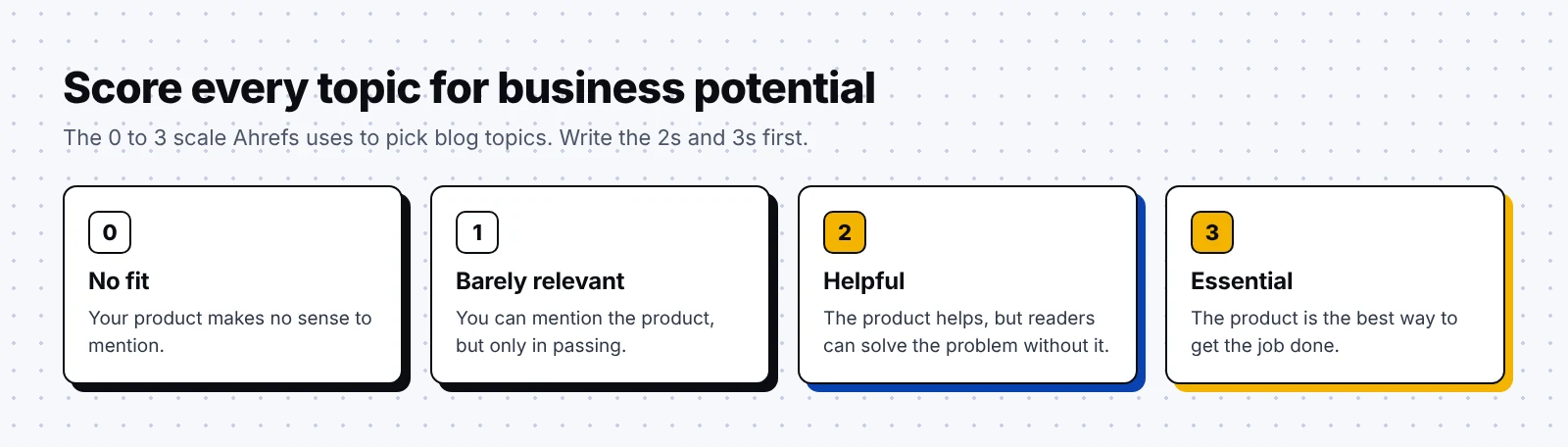
The team picks topics with a filter it calls business potential. In its guide to product-led content, Ahrefs explains that it scores keywords by how much its product helps solve the problem and only prioritizes topics that score at least a 2.
Why it works:
- The product shows up as the natural way to finish the task, so each post teaches and sells at the same time.
- In an interview with Omniscient Digital, Ahrefs marketing lead Tim Soulo described the mix as 90% posts driven by keywords and 10% new ideas.
What you can borrow:
- Score every topic idea from 0 to 3 for business potential before anyone starts writing.
- Show your product with real screenshots inside the steps, the way you’d show a colleague.
3. Zapier Blog
Zapier is an automation software company that connects business apps so teams can move data between them without code. Its blog covers productivity, app reviews and automation ideas.
Interestingly, one of its biggest formats is the “best apps” roundup, where writers compare tools in a category. In a case study by Ahrefs, the authors counted 171 of these posts on Zapier’s blog and estimated they brought in about 1.1 million organic visits a month at the time.
Why it works:
- Software roundups attract people who are choosing tools, which is the moment they also need a way to connect them.
- Zapier’s contributor guidelines ask for automation inspiration pieces, where people describe the workflows they use most.
What you can borrow:
- Write fair, tested roundups of the tools your buyers already use alongside your product.
- Link each roundup to a page that shows how your product works with those tools.
4. Gong Blog and Gong Labs
Gong is a revenue AI company that analyzes sales conversations and deals to help teams win more business. The Gong blog covers product news, selling tips, revenue AI trends and advice from revenue leaders.
Its standout section is Gong Labs, where Gong’s data research team publishes findings from the sales conversations it analyzes with Gong AI.
Why it works:
- The research comes from data only Gong has, which gives other blogs and LinkedIn posts a reason to quote it.
- Gong also collects its findings into a guide of B2B sales strategies behind a signup form, which turns research readers into leads.
What you can borrow:
- Look at the data your product already collects and ask which patterns your buyers would love to see.
- Publish one finding per post with a clear chart, then gather the best ones into a yearly report.
5. Close Blog
Close is a CRM software company built for sales teams. Its blog covers sales tips, cold email templates, pipeline tactics and coaching guides.
Many posts come from CEO Steli Efti, and a business advice section speaks to founders who are still doing the selling themselves.
Why it works:
- Posts are written by people who sell every day, so the advice reads like a peer talking.
- Templates and scripts let readers copy something useful right away, and the CRM becomes the place to run them.
What you can borrow:
- Put your founder’s or a senior expert’s name on your most opinionated posts.
- Add templates readers can copy and paste to your tutorial posts.
Business blog examples from product and support software
The next four blogs come from companies that sell to product, support and engineering teams. I like how much they lean on deep expertise and a clear point of view.
6. Intercom Blog
Intercom is a customer service software company that builds AI tools for support teams. The Intercom Blog publishes articles and podcasts on customer service, AI and automation, and product.
You’ll find interviews with support leaders next to Intercom’s own views. Years ago, Intercom also gathered its best product management posts into a free book, Intercom on Product Management, which it later released as an audiobook too.
Why it works:
- Interviews with real support leaders give readers peer advice and give guests a reason to share the post.
- Packaging old posts into a book turned the blog archive into a new lead magnet without starting from scratch.
What you can borrow:
- Group your ten best posts on one theme into an ebook and offer it on related articles.
- Interview a customer or industry expert every month and publish the conversation as a post.
7. Help Scout Blog
Help Scout is a customer support software company that makes tools for support teams, including a knowledge base. Its blog covers customer service skills and the craft of writing to customers.
The company’s contributor page says most of its posts run 2,000 to 3,000 words and that it isn’t looking for listicles written mainly for SEO. A Help Scout job listing for a brand designer also described creating custom art for blog posts.
Why it works:
- Long, researched posts give support leaders something worth saving and sharing with their team.
- Custom illustrations make every post look like Help Scout, which helps the brand stick.
What you can borrow:
- Write fewer, deeper posts on the problems your buyers face every week.
- Give your blog one consistent visual style, even if it starts as a simple illustration template.
8. PostHog Blog
PostHog is a product analytics company that gives engineers tools like session replay and feature flags in one platform. Its blog has one hub for founders and another for product engineers, plus posts on company news and comparisons.
The best posts also go out through Product for Engineers, a free newsletter on Substack. Surprisingly, PostHog even writes its content rules in a public handbook, which says the team has no arbitrary volume goals and doesn’t trade content for links.
Why it works:
- The blog writes for engineers who build products, which is exactly who signs up for PostHog.
- Posts like “50 things we’ve learned about building successful products” share real lessons from running the company.
What you can borrow:
- Write down your own content rules and share them with every writer you work with.
- Repackage your best posts into a newsletter so you don’t have to write every issue from scratch.
9. Atlassian Work Life
Atlassian is a software company that makes teamwork tools such as Jira and Confluence. Its Work Life blog covers workplace trends and advice on leadership, teamwork, productivity and company culture.
Some articles draw on Atlassian’s Teamwork Lab, led by Dr. Molly Sands, which designs practices for teams based on evidence.
Why it works:
- Teamwork topics apply to every department, which widens the audience past software developers.
- Research from the Teamwork Lab gives posts a source that readers can trust.
What you can borrow:
- Cover the wider work problems around your product as well as your product category.
- Back your advice with research from your own team or customers.
Business blogs that lead with the brand
These two use their blog to show who they are as much as what they sell.
10. Buffer
Buffer is a social media management company that helps small businesses and creators schedule posts and track results. Its blog covers social media marketing, plus posts about how Buffer runs as a remote company.
Buffer says on its transparency page that it has shared its finances, team salaries and other company metrics openly since 2013. Happily for Buffer, the openness drew a crowd, and cofounder Leo Widrich later wrote that more than 100,000 people read the post on its salary formula and that Buffer received over 4,000 job applications.
Why it works:
- Posts about Buffer’s own salaries and remote work give the blog stories no competitor can copy.
- Practical social media guides match the product, so readers who learn from Buffer have a reason to try it.
What you can borrow:
- Share one thing about how your company works that others in your field keep private.
- Pair those story posts with practical guides tied to your product.
11. Wistia
Wistia is a video marketing software company that helps businesses host and measure their videos. Its blog lives in a learning center, and a Wistia job listing describes it as a carefully curated collection of researched, opinionated articles.
Wistia also publishes an annual State of Video Report, and its press release says the 2025 edition drew on more than 14 million videos.
Why it works:
- The yearly report gives journalists and bloggers fresh numbers to cite, which keeps links coming in.
- Original shows, such as the free Show Business video series, prove the product’s value while they teach.
What you can borrow:
- Use your own product inside your content, the way Wistia uses video to teach video.
- Plan one research report a year and build a month of posts from its findings.
Business blog examples from famous consumer brands
Brands that sell to small businesses and shoppers have plenty to teach B2B teams. Honestly, some of the smartest blog structures I’ve seen come from retail and commerce.
12. Shopify
Shopify is a commerce platform company that helps people start and run online and retail stores. Its blog targets people who run or want to start an online business, from people selling for the first time to growing brands.
Around the blog, Shopify’s resources menu lists separate merchant, retail and enterprise blogs, plus guides, courses and free tools. One of those tools, the business name generator, gives readers a list of name ideas in seconds.
Why it works:
- Free tools solve one small job quickly, which gives readers a reason to come back and a path to sign up.
- Merchant stories, like one about the founder of Weston Table, show real businesses growing on Shopify, which makes the product feel within reach.
What you can borrow:
- Build one simple free tool that answers a question your blog readers ask often.
- Add a short customer story to your tutorial posts.
13. Canva
Canva is a design software company that lets anyone design graphics and presentations online. Its Learn blog covers design and marketing topics for business owners, such as branding and social media marketing for small businesses.
Next to the blog, Canva Design School has free courses you can take at your own pace, and some come with certificates.
Why it works:
- Small business marketing topics reach owners who need graphics but don’t have a designer.
- Posts and courses lead straight into Canva templates, so readers can act on the advice right away.
What you can borrow:
- End each tutorial with a template the reader can open in your product.
- Turn a popular blog series into a short free course.
14. REI Expert Advice
REI is an outdoor retail cooperative that sells gear and clothing for activities like hiking and cycling. Its Expert Advice section is organized by activity, from day hiking to mountaineering.
Fortunately for shoppers, each activity hub splits into buying advice, such as how to choose snowshoes, and gear guides with staff picks.
Why it works:
- Sorting guides by activity matches how shoppers think, so they find the right guide fast.
- Staff picks put real people behind each recommendation, which builds trust.
What you can borrow:
- Organize your blog by the jobs your buyers do, with a hub page for each one.
- Write a “how to choose” guide for every main product category you sell.
15. Patagonia Stories
Patagonia is an outdoor clothing company known for its environmental activism. It launched its blog, The Cleanest Line, in 2007 to talk about its products, the sports its customers love and the environmental issues it cares about.
Today those stories live in the Stories section of Patagonia’s site. By 2016, the editors said the blog had published more than 1,700 stories, and story pages now point readers to Patagonia Action Works, the company’s grassroots activism resource.
Why it works:
- Stories about athletes and environmental causes match the values of Patagonia’s customers.
- Links to Patagonia Action Works give readers something to do after they finish a story.
What you can borrow:
- Write about the bigger reason your company exists, and let your products appear inside those stories.
- Give readers a next step that fits the story, even when that step isn’t a purchase.
Business blog examples compared
Here are all 15 blogs side by side, so you can spot the lead path and idea that fit your business.
| Company | Blog focus | How readers stay in touch | Idea to borrow |
|---|---|---|---|
| HubSpot | Marketing and sales guides | Templates and a newsletter | Sections by job title |
| Ahrefs | SEO tutorials | Free course, product in every tutorial | Business potential scores |
| Zapier | App roundups and workflows | Integration pages | Roundups of tools buyers use |
| Gong | Sales research and tips | Research guide, yearly report | Findings from product data |
| Close | Sales and founder advice | Templates and scripts | Expert bylines |
| Intercom | Customer service and AI | Books, podcasts | Old posts turned into an ebook |
| Help Scout | Support skills | Long reads worth sharing | One visual style |
| PostHog | Founders and engineers | Substack newsletter | Written content rules |
| Atlassian | Teamwork and work culture | Templates in Confluence | Topics wider than the product |
| Buffer | Social media and open company | Open company updates | Share what others keep private |
| Wistia | Video marketing | Yearly report, original shows | Use the product to teach |
| Shopify | Starting and growing a store | Free tools, courses | One small free tool |
| Canva | Design and small business marketing | Templates, Design School | Posts that end in a template |
| REI | Gear buying advice by activity | Staff picks | Hubs by buyer activity |
| Patagonia | Environment and outdoor stories | Activism resources | Lead with the mission |
What great business blogs have in common
Once I lined these blogs up next to each other, a few patterns stood out. Thankfully, none of them need a huge team to copy.
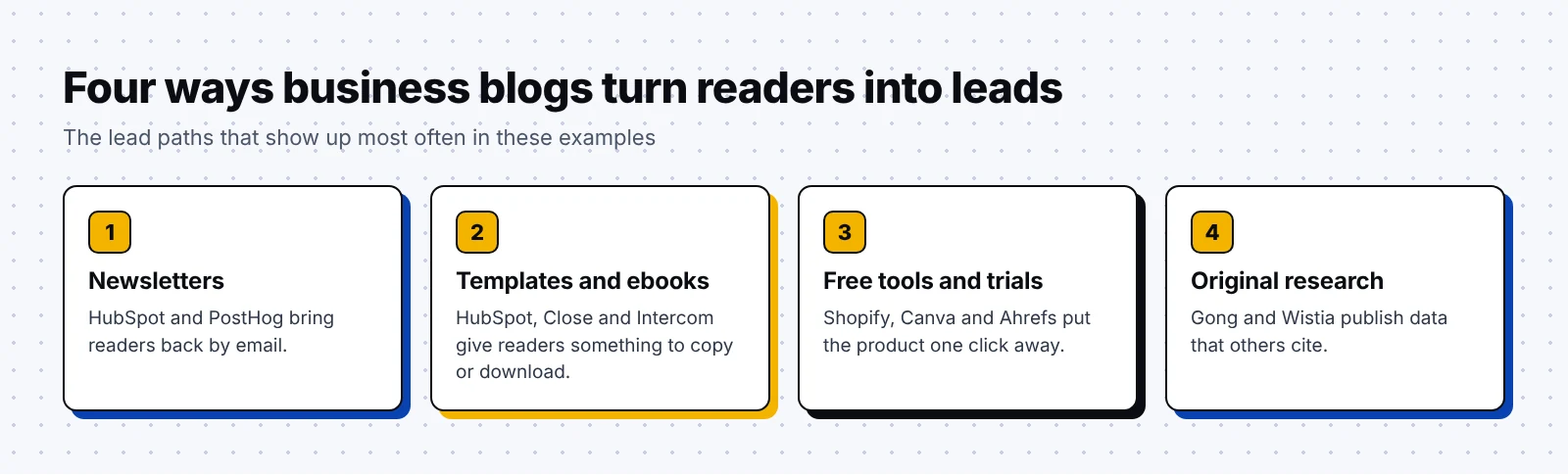
- Each blog writes for one main buyer and stays close to that buyer’s problems.
- The product appears as the natural answer, the way Ahrefs scores topics by business potential.
- Most have something only they can offer, such as Gong’s call data or Buffer’s open salaries.
- The blog is organized into hubs or series, so readers and search engines can follow it.
- There’s always a way to stay in touch, whether that’s a newsletter or a free tool.
- Real people with real expertise put their names on the posts.
In my experience, that last habit helps with AI search too, since a clear post from a named expert is easy for ChatGPT or Perplexity to quote. To see how often AI tools mention your brand today, try our AI visibility audit.
How to start a business blog: a checklist
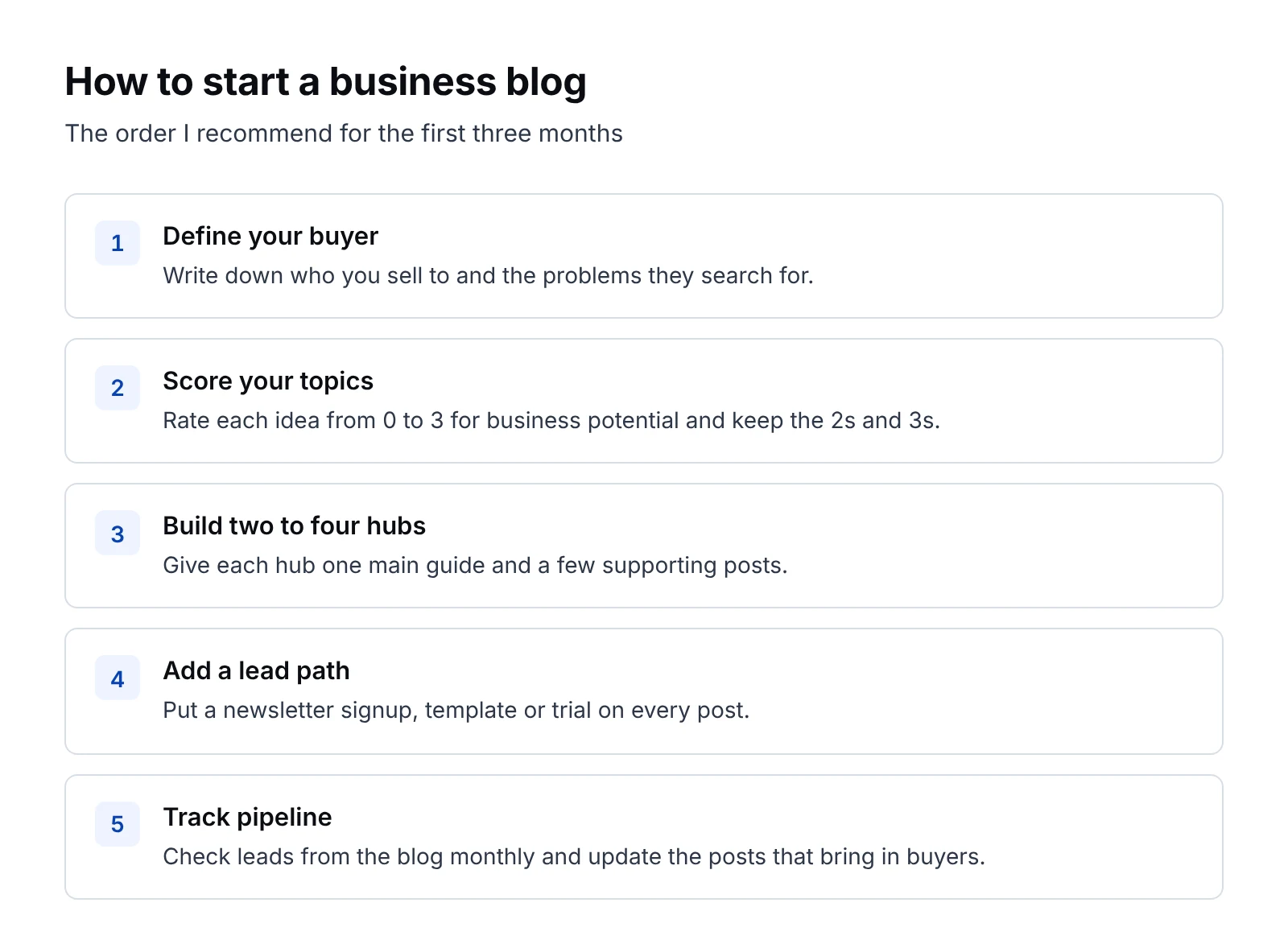
If you’re starting from zero, here’s the order I recommend. It keeps the first three months focused on posts that can bring in leads.
- Write down your main buyer and the problems they search for.
- List 30 to 50 topic ideas from sales calls and support tickets, then check them with B2B keyword research.
- Score each idea from 0 to 3 for business potential and keep the 2s and 3s.
- Group the keepers into two to four hubs, each with one main guide and a few supporting posts.
- Pick one thing only you can offer, such as customer data or expert interviews.
- Write your first eight to ten posts with real product examples inside the steps.
- Add one lead path to every post, like a newsletter signup or a template, and share each post with your sales team.
- Track leads and pipeline from the blog every month, then update the posts that bring in buyers.
A few dos and don’ts will save you time along the way:
| Do | Don’t |
|---|---|
| Publish on a steady schedule you can keep for a year | Start with a burst of posts and then go quiet |
| Show your product inside the steps | Save every product mention for the last paragraph |
| Measure leads and pipeline from each post | Judge the blog on traffic alone |
Luckily, you can do most of these steps in a simple spreadsheet. For a deeper plan, my guide to B2B blog strategy walks through each step, and these B2B content marketing examples show what works beyond the blog.
And if you’d like help building a blog like the ones above, my team at Perceptric does this for B2B and SaaS companies as a B2B SaaS content marketing agency. You can reach out here and tell us what you’re working on.

FAQ
What is an example of a business blog?
HubSpot’s blog is one of the most famous examples. It publishes guides for marketing and sales teams, puts free templates and reports inside posts and leads readers toward HubSpot’s software. Ahrefs, Zapier and Shopify also run strong business blogs.
What should a business blog post include?
Give a clear answer near the top, then practical steps with real examples from your product or customers. Add a named expert as the author and one next step, such as a newsletter signup or a free trial.
How often should a business blog publish?
There’s no fixed number, and PostHog’s content handbook says its team has no arbitrary volume goals. Pick a pace you can keep for a year, such as one strong post a week, and protect the quality.
Do business blogs still work with AI search?
Yes, in my experience, because ChatGPT and Perplexity cite web pages in their answers, so clear posts from named experts can earn AI mentions as well as Google rankings.
Want to keep learning? Read our guides on B2B blog strategy, B2B SaaS content marketing, thought leadership content marketing and B2B keyword research.