In TrustRadius's 2026 survey of 1,862 technology buyers, 83% shortlisted three or fewer products before they picked one.
That means most B2B deals are won or lost before your sales team hears the buyer's name. If you're not on that short list, a great demo never gets the chance to help you.
That's why I'm sharing how I plan B2B marketing, based on what I've learned over the past 10+ years growing B2B SaaS brands. You'll get a plan in six steps, a pipeline calculator, five real examples and a checklist you can copy.
What is B2B marketing?
B2B marketing is the work a company does to win and keep business customers, from the first search a buyer makes to the renewal.
B2B stands for business to business, so the buyer is a team spending its company's money. Each person on that team wants proof that the purchase is safe. Forrester found that a typical B2B buying decision now includes 13 internal stakeholders and nine external influencers.
B2B marketing vs B2C marketing
B2C marketing sells to one person who often decides alone. B2B marketing sells to a buying group, so the same message has to work for the person who uses the tool, the person who pays for it and the person who checks the contract.
Think of a music app versus a project management tool for a 300-person company. Here's how the two compare:
| B2C example: a music app | B2B example: a project management tool | |
|---|---|---|
| Who buys | One listener | A team lead, a finance lead, IT and procurement |
| How long it takes | A few minutes | Weeks or months |
| What convinces them | A free trial and a friend's playlist | A security review, an ROI case and references |
| What a mistake costs | A monthly fee | A year of budget and someone's reputation |
Why B2B marketing matters in 2026
Buyers now do most of their research before they talk to anyone. In a 2026 SurveyMonkey and Reddit study of 1,202 US decision makers, 83% said they research on their own before they speak to sales.
More of that research starts in AI assistants. G2 found that 51% of software buyers now start their research in an AI chatbot more often than in Google, up from 29% in its 2025 report.
So your marketing has to reach buyers early, in search, AI answers, review sites and peer conversations. Much of that work starts with pages you already own. Put a clear answer to the main question in the first two sentences of each important page, so ChatGPT or Perplexity has something to quote. If you want those answers tracked, that's what our GEO agency team does.
How to build a B2B marketing plan in 6 steps
Here's my process. Work through the steps in order, since each one feeds the next, from the accounts you choose to the pipeline you report.
1. Define your ideal customer profile and buying group
Your ideal customer profile (ICP) names the companies that get the most value from your product and close the fastest. Every choice after this one depends on it, so don't rush it.
Pull your last 20 won deals and your last 10 lost deals. Here's what I'd write down for the best accounts:
- Company basics: Their industry, size, region and growth stage. "Series B fintech companies in the US with 100 to 500 people" is an ICP. "Mid-market companies" isn't.
- Tools they use: The software they already run and need you to work with, such as Salesforce, Snowflake or Jira.
- Trigger events: What started their search, such as new funding, a new leader, a failed audit or a contract up for renewal. Triggers tell you when to show up.
- Poor fit signs: The signs that an account won't close or won't stay, so sales can skip it early.
Then map the buying group role by role. This table is a starting point you can edit:
| Role | Main question | Content that answers it |
|---|---|---|
| End user | Will this make my work easier? | Product tour, templates |
| Budget owner | Will this pay back, and when? | ROI model, case study |
| IT or security | Is it safe to connect? | Security page, docs |
| Procurement | Are the price and terms fair? | Pricing page, contract FAQ |
2. Write positioning a buyer can repeat
Positioning says who you're for and why you're a safer choice than what they use today. My test is simple: could a buyer repeat it to a colleague in one breath?
Fill in this template, then read it to five customers and listen for the words they use back:
For [ICP] who [trigger or problem], [product] is the [category] that [main outcome]. Unlike [main alternative], we [proof point you can show].
Let's say you sell close management software to SaaS finance teams. A filled-in version could read: "For SaaS finance teams that need ten days to close the books, [your product] is the close management software that cuts it to five. Unlike spreadsheets, we match bank and ledger data automatically and log every change."
Here's how to check your draft:
- The competitor test: Swap in a competitor's name. If the sentence is still true, it's too generic.
- The proof test: You can show the proof point on a call or a page, such as a before and after close calendar.
- The category test: Buyers already search for the category name. "Close management software" passes. A category you made up last week doesn't.
3. Work back from revenue to a pipeline target
Pipeline math turns a revenue goal into the number of opportunities, sales qualified leads (SQLs) and leads marketing has to help create. It only takes five numbers, and four of them are already in your CRM.
Here's a worked example with round numbers you can swap for your own:
| Step | Math | Result |
|---|---|---|
| New revenue target | Set by leadership | $1,200,000 |
| Deals to win | $1,200,000 ÷ $30,000 average deal | 40 |
| Opportunities | 40 ÷ 25% win rate | 160 |
| SQLs | 160 ÷ 40% SQL to opportunity rate | 400 |
| Leads | 400 ÷ 10% lead to SQL rate | 4,000 |
Now try it with your own figures. The calculator starts with the numbers above, so replace each one with your averages from the last four quarters.
Each step is rounded up to a whole number.
Small changes late in the funnel move the result a lot. In the example, raising the win rate from 25% to 30% cuts the leads you need from 4,000 to 3,350. That's why I'd fix a weak demo before I'd buy more traffic.
4. Choose channels that create and capture demand
Every B2B channel does one of two jobs. It either creates demand among buyers who aren't shopping yet or captures demand from buyers who are searching right now.
Most of your market sits in the first group. LinkedIn's B2B Institute estimates that 95% of your potential buyers aren't ready to buy today. Here's where the common channels fit:
| Channel | Main job | Best fit |
|---|---|---|
| SEO and AI search | Capture | Searches like "best expense management software" |
| Paid search | Capture | Searches like "[competitor] pricing" or "[category] demo" |
| Review sites and communities | Capture | Categories where peers compare tools on G2 or Reddit |
| Content and thought leadership | Create | Complex problems and long sales cycles |
| LinkedIn ads | Create | A narrow ICP you can target by job title |
| Events and webinars | Create | Large deals with many decision makers |
Peers matter for both jobs. In the same SurveyMonkey and Reddit study, recommendations from peers were the source US decision makers trusted most:
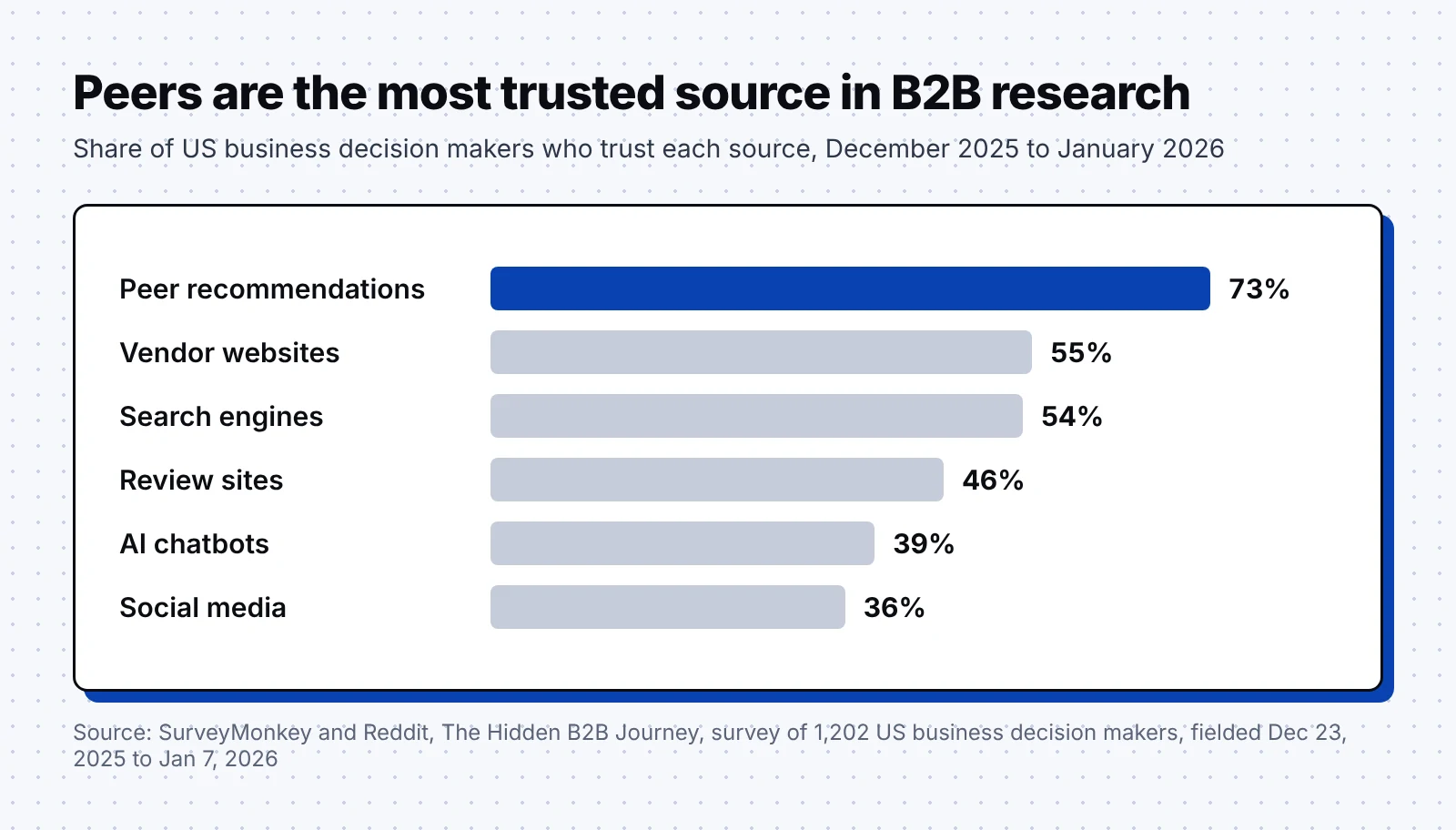
My advice is to pick three or four channels you can run well for two quarters, and make sure at least one puts customers in front of prospects, such as reviews or customer stories. I'd rather see a team do four channels properly than seven halfway.
5. Build content for each stage of the buying process
Content is how buyers learn about you when you're not in the room. Each stage needs a different kind of page, and AI assistants read those pages too. In a 2026 Semrush survey of 519 US B2B professionals, 72% used AI for early research and 45% still used it for the final decision.
Map one or two formats to each stage, starting with the stage where your deals stall most often:
| Stage | What the buyer asks | Content that answers it |
|---|---|---|
| Problem aware | Why is this happening to us? | Guides, research, benchmarks |
| Solution aware | What are our options? | Comparisons, category pages, webinars |
| Vendor choice | Which option is safest for us? | Case studies, security docs, pricing |
| Decision | Can we justify the spend? | ROI model, references, trial plan |
AI can speed up the drafting, but it won't make the content good on its own. CMI's 2026 research found that 9 in 10 B2B marketers use AI to create content, yet fewer than 4 in 10 say it improved performance. Keep your own data and your experts' views at the center.
Our guides to B2B content marketing and bottom of funnel content cover each stage in more detail.
6. Measure pipeline and review the plan every month
Measure marketing by the pipeline and revenue it helps create, and treat traffic and leads as early signs. Agree on the definitions with sales before the quarter starts, and save them in your CRM.
Here are the metrics I'd review, and how often:
| Metric | What it tells you | Review |
|---|---|---|
| Qualified pipeline created | Whether marketing is creating real pipeline | Monthly |
| SQL to opportunity rate | Whether marketing and sales agree on fit | Monthly |
| How buyers say they found you | Which channels buyers remember | Monthly |
| Win rate | Whether your positioning and proof hold up | Quarterly |
| CAC payback | How fast new customers repay what you spent | Quarterly |
Add one open question to every demo form: "How did you hear about us?" It catches what click tracking misses, like a colleague's tip or a ChatGPT answer. Our guide to the B2B demand generation funnel has benchmarks for each stage.
B2B marketing examples from real companies
Each of these five companies shows one part of a B2B marketing plan done well, and each one gives you something to copy.
1. Linear: the Linear Method
Linear makes tools for planning and building software. Its Linear Method is a public set of practices for building software, such as "Scope projects down" and "Write issues not user stories."
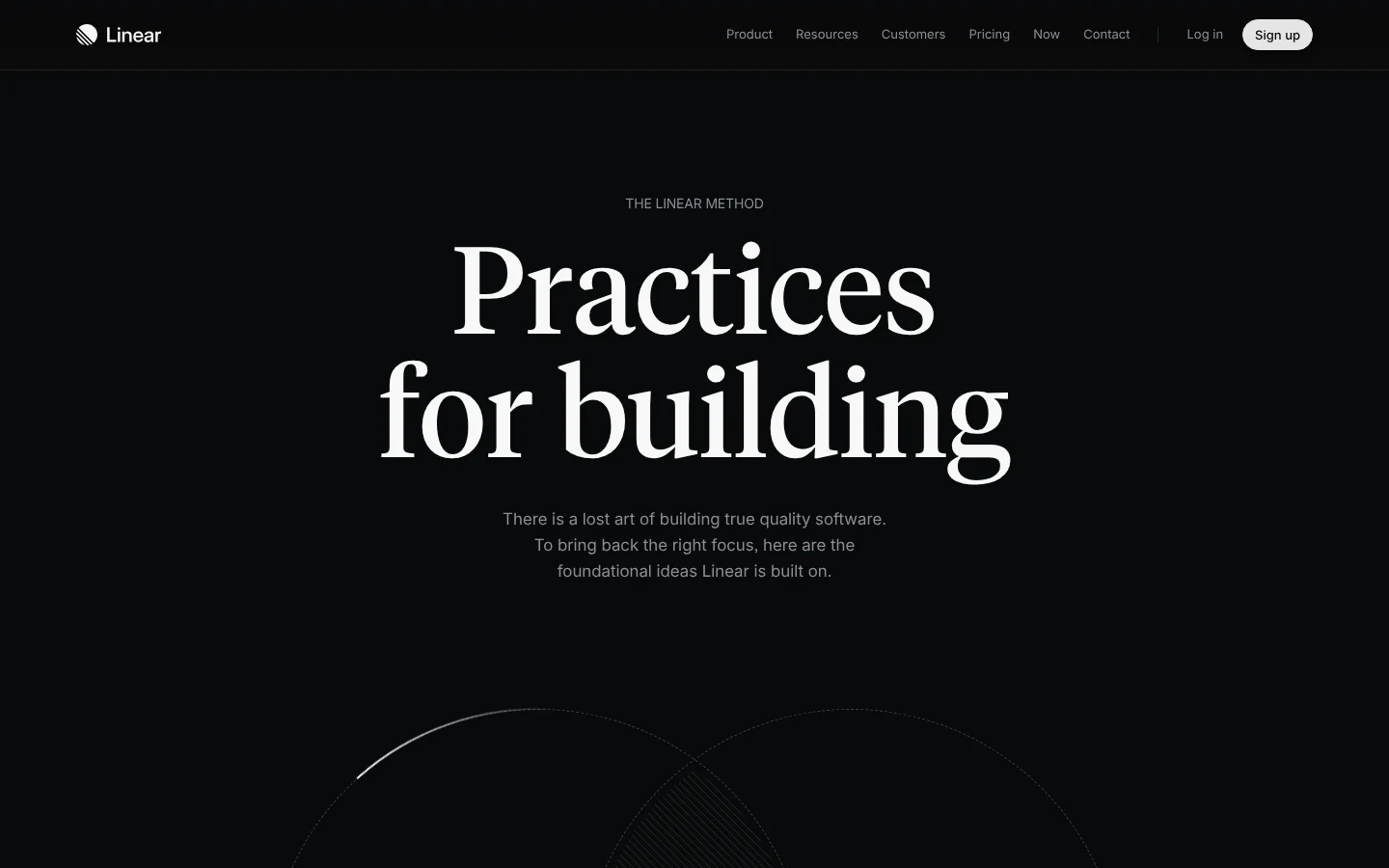
- Why it works: A product leader can use each practice before ever trying the tool. Readers who agree with the practices have a clear reason to try the product built around them.
- What to borrow: Write down the beliefs behind your product, publish them as practical advice and link each one to the feature that puts it into practice.
2. Atlassian: Team Playbook
Atlassian makes teamwork tools such as Jira and Confluence. Its Team Playbook is a free library of workshops, called Plays, for jobs like setting OKRs, kicking off a project and running a retrospective.
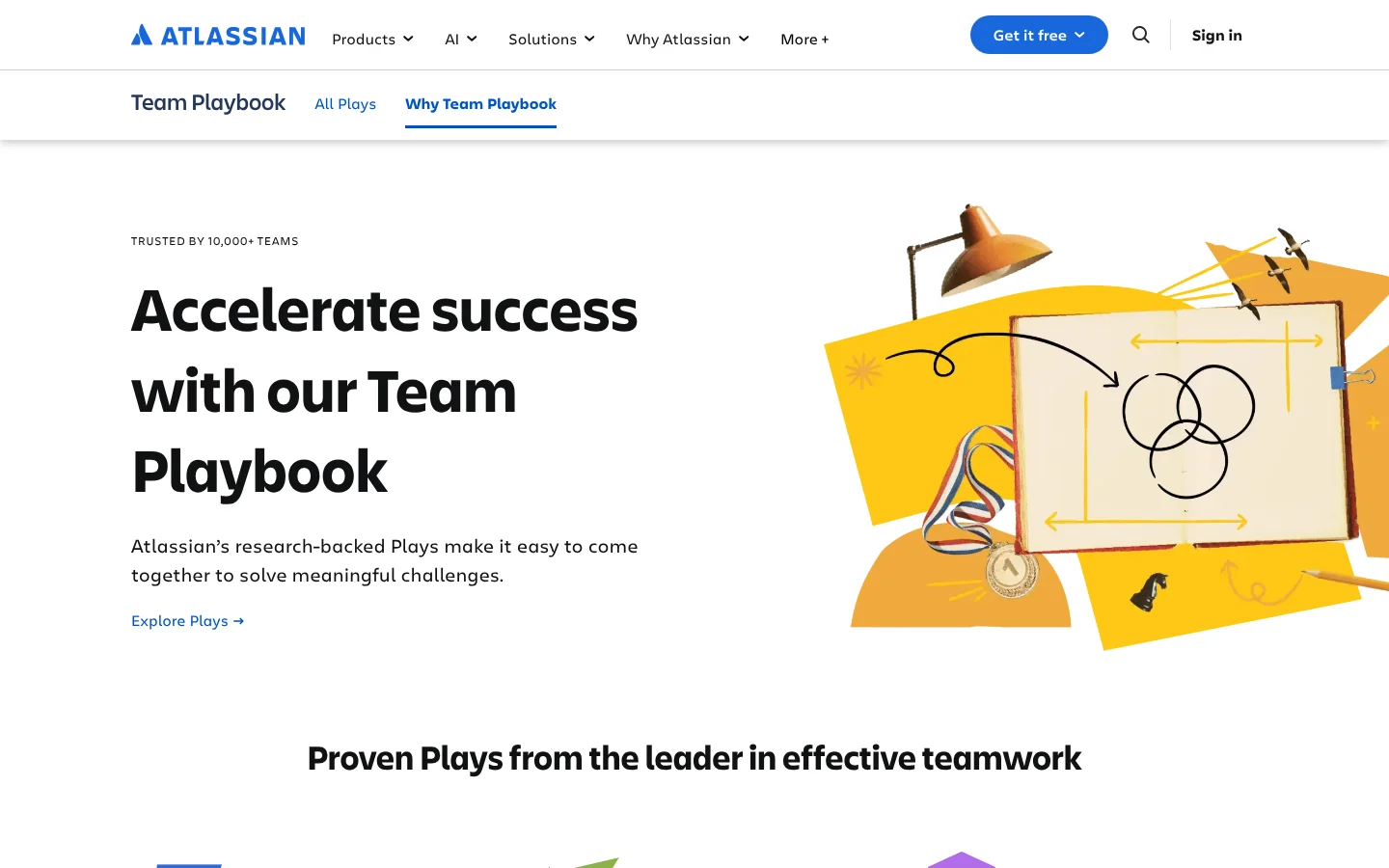
- Why it works: The Plays solve problems Jira and Confluence buyers face every week, and a short quiz points each visitor to the right one.
- What to borrow: Turn your best customer workshop into a free play with clear steps.
3. Ramp: the Ramp AI Index
Ramp sells corporate cards and finance software. The Ramp AI Index is a monthly measure of AI adoption and spend across American businesses, built from transaction data on 85,000+ firms that use Ramp.
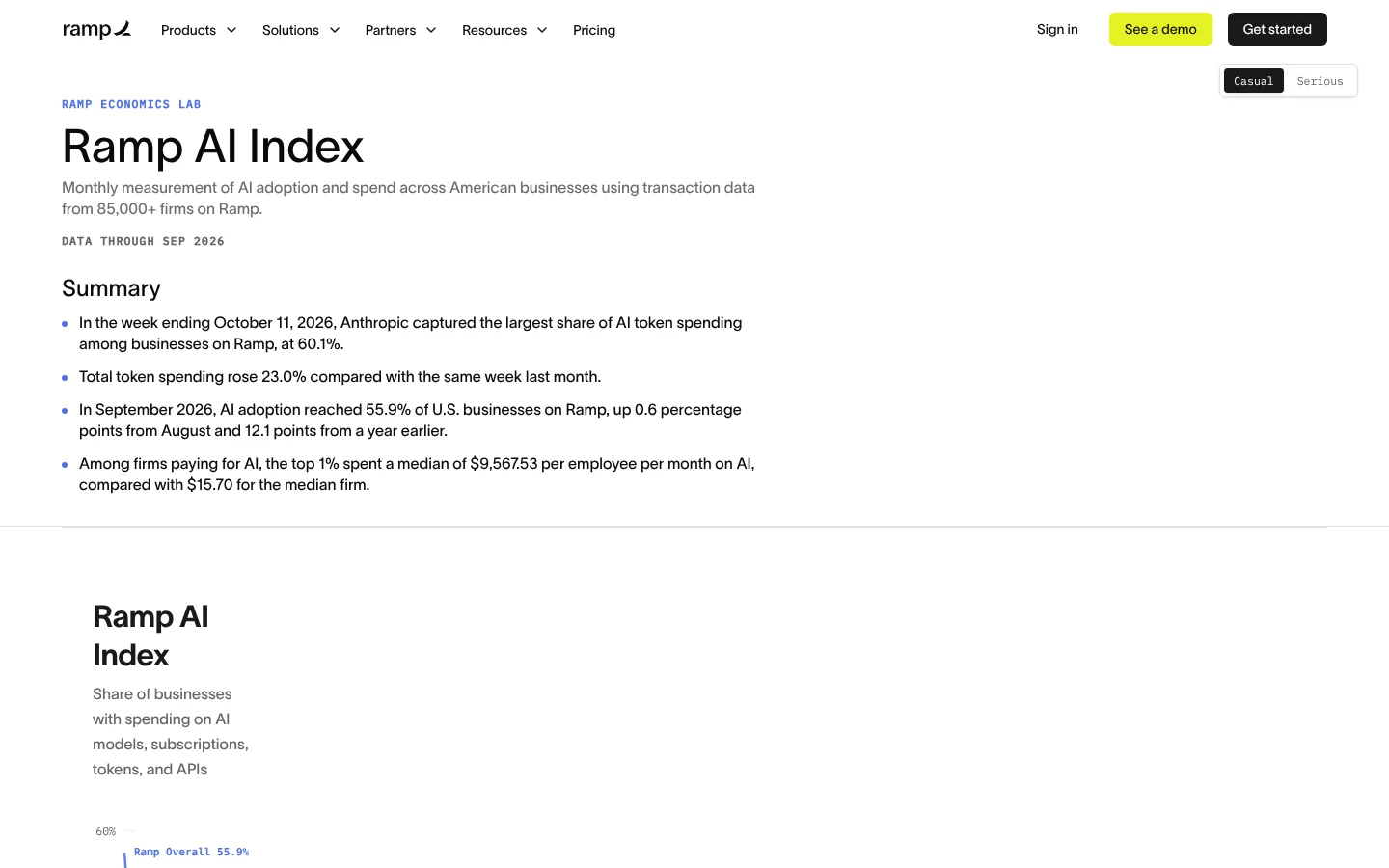
- Why it works: No one else can publish the same numbers, and a monthly update gives journalists and AI assistants a fresh reason to cite it.
- What to borrow: Find one trend in your product data your buyers would want to follow, and publish it on a set schedule with a short note on how you measure it.
4. HubSpot: UNBOUND
HubSpot sells CRM software for marketing, sales and service teams. UNBOUND is its yearly conference in Boston, which ran as INBOUND for fifteen years. UNBOUND 2027 is set for September 8 to 10, 2027, with 200+ sessions.
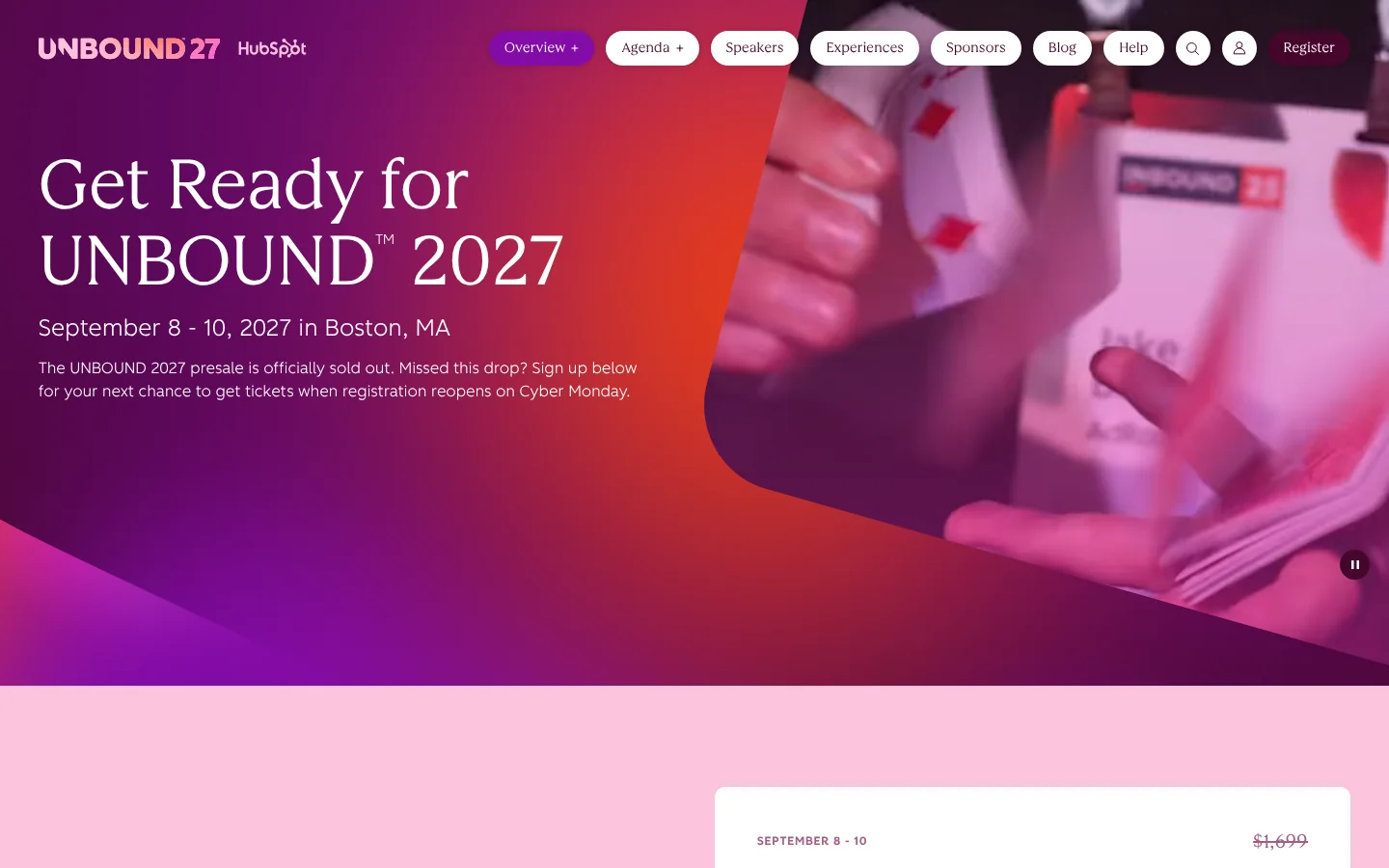
- Why it works: The event puts HubSpot's buyers and their peers in one room, and peers are the source decision makers trust most.
- What to borrow: Host a small yearly event for customers, invite a few prospects to join them and turn the best sessions into content for the rest of the year.
5. Datadog: customer stories
Datadog sells monitoring and security tools for cloud applications. Its customers page has stories from companies such as Porsche Informatik, Forbes, Toyota Motor North America and Autodesk, many with both a written story and a video.
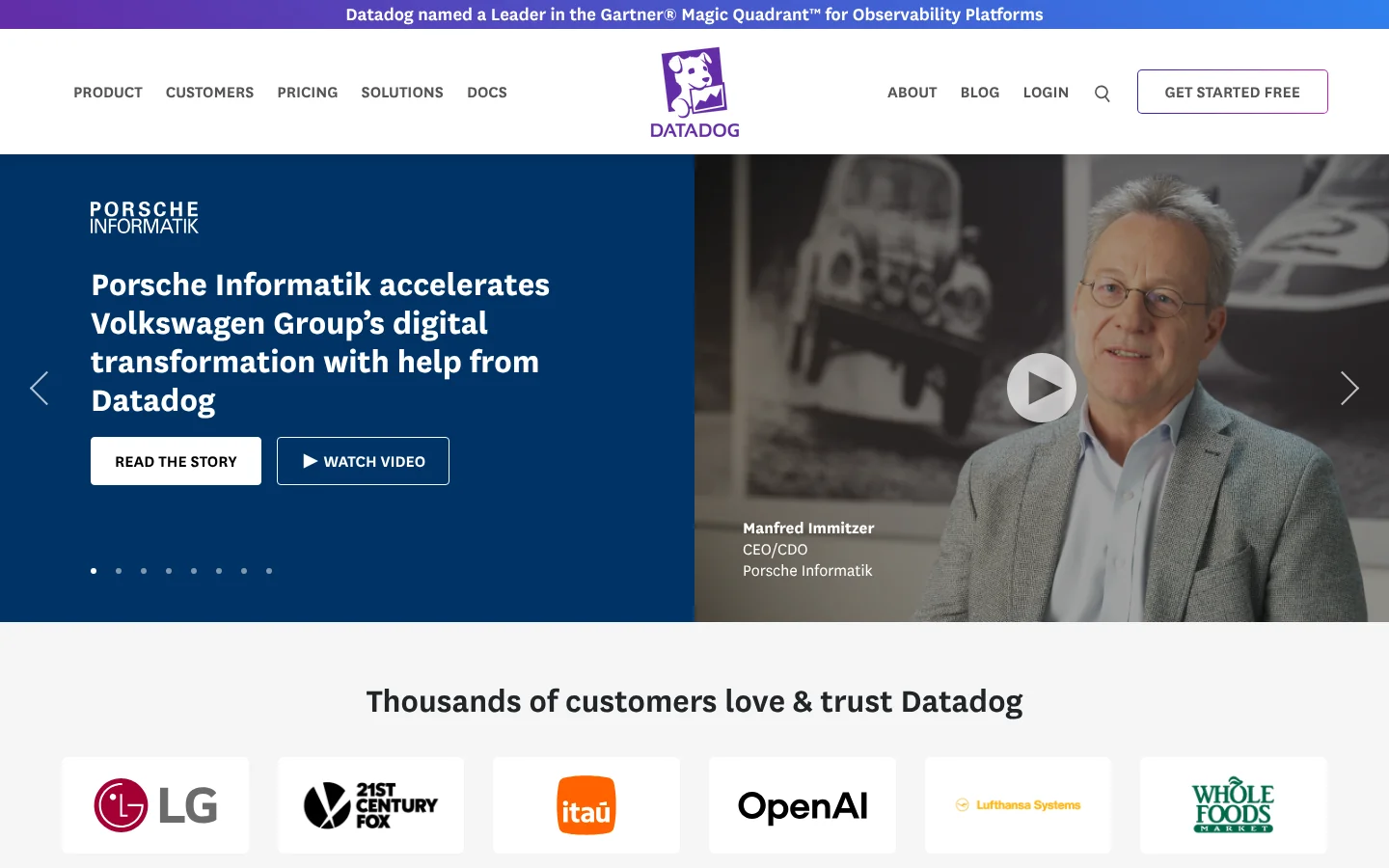
- Why it works: A named leader at a known brand, such as Porsche Informatik's CEO and CDO Manfred Immitzer, gives each person in the buying group proof they can forward.
- What to borrow: Pair each written case study with a short customer video, and tag stories by industry so sales can send the right one.
B2B marketing checklist
Run through this list before each quarter starts.
Strategy
- Your ICP lists trigger events and poor fit signs, along with industry and size.
- Each role in the buying group has a page that answers its main question.
- Your positioning stops being true when you swap in a competitor's name.
- Your pipeline target is written as opportunities, SQLs and leads per month.
Channels and content
- Each channel has one main job, either creating demand or capturing it.
- At least one channel puts customers in front of prospects.
- Your main pages answer the main question in their first two sentences.
- Every page links to a clear next step.
Measurement
- MQL and SQL definitions are agreed with sales and saved in the CRM.
- Your dashboard shows pipeline created, SQL to opportunity rate, win rate and CAC payback.
- Demo forms ask "How did you hear about us?"
- Marketing and sales review the plan together every month.
Conclusion
B2B marketing has more moving parts than ever, but my principles haven't changed much:
- Know exactly which companies and roles you're selling to
- Work back from the revenue target
- Run a few channels well
- Judge every channel by the pipeline it brings
It's tempting to try every new channel the moment it shows up. But if your buyers pick from a short list of three, wouldn't you rather make sure you're on it first?
FAQ
What is B2B marketing?
B2B marketing is the work a company does to win and keep business customers, from the first search a buyer makes to the renewal. It covers target accounts, positioning, channels, content and measurement, and its goal is qualified pipeline and revenue.
What is the difference between B2B and B2C marketing?
B2C marketing sells to one person who often decides alone. B2B marketing sells to a buying group, which Forrester found can include 13 internal stakeholders and nine external influencers, so it needs proof for several roles at once.
What are the main B2B marketing channels?
The main channels are SEO and AI search, paid search, review sites, content, LinkedIn ads, events and webinars. Some capture buyers who are searching now and others create demand for later. Most teams do best running three or four of them well.
How is AI changing B2B marketing?
Buyers now use AI assistants throughout their research. G2 found that 51% of software buyers start in an AI chatbot more often than in Google. Pages that answer the main question clearly in their first two sentences have a better chance of showing up in those answers.
How do you measure B2B marketing?
Measure it by qualified pipeline created, SQL to opportunity rate, win rate and CAC payback, and treat traffic and leads as early signs. A "How did you hear about us?" question on demo forms shows channels that tracking misses.
What is an ideal customer profile?
An ideal customer profile describes the companies that get the most value from your product and close the fastest. It lists their industry, size, region, tools, the events that start a search and the signs of a poor fit.
Your next step is to turn the SQL target from the calculator into leads by channel, and our B2B lead generation guide shows you how. If you'd like help building the plan, you can book a discovery call with Perceptric.