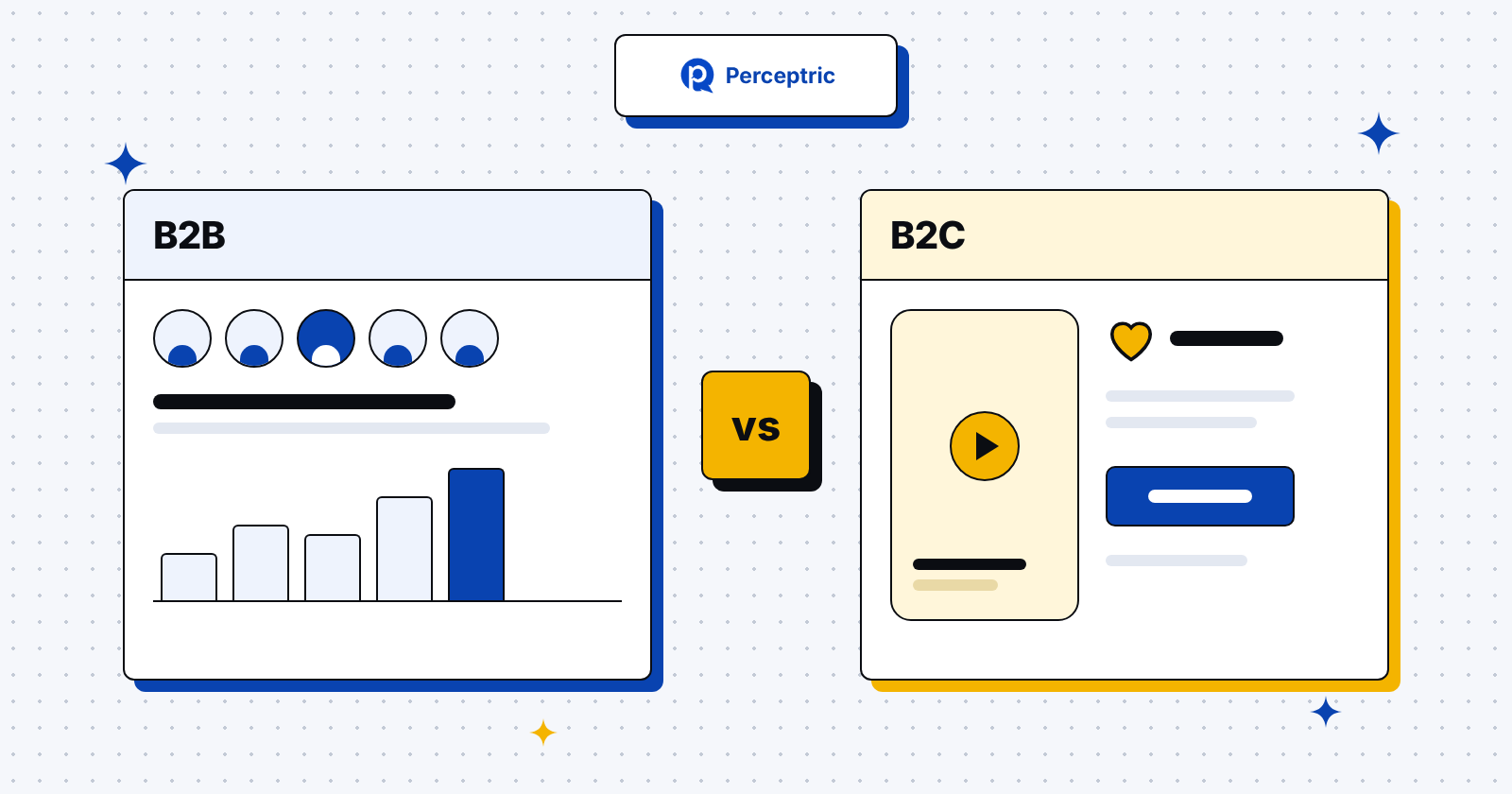
B2B content marketing helps a group of people at a company make a careful purchase that can take months, so it teaches and proves value. B2C content marketing helps one person decide quickly, so it leans on emotion and short formats that fit into a feed.
We write content for B2B and SaaS companies, and we often borrow ideas from consumer brands. This guide compares the two on eight points, with examples from Gong, HubSpot, Duolingo and Red Bull and a checklist you can use.
What are B2B and B2C content marketing?
Both are ways to earn a buyer's attention with useful content before you ask for a sale. The difference lies in who reads it and how they decide.
What is B2B content marketing?
B2B content marketing is the practice of creating articles, research, videos and tools that help businesses find and buy another company's product or service. The readers are people at work, such as a head of sales or an IT manager, who must justify the purchase to colleagues.
Our guide to B2B content marketing covers the full strategy, from picking topics to measuring results.
What is B2C content marketing?
B2C content marketing is the practice of creating content that helps consumers discover and buy a brand's products for their own lives. The reader is usually one person or a household, spending their own money.
Good B2C content often entertains first and sells second, since the buyer can act on a feeling within minutes. Common formats include recipes, how-to videos, social posts and brand stories.
B2B vs B2C content marketing: 8 key differences
The biggest differences come from who buys and how long they take to decide. The table below compares B2B and B2C content marketing on eight points:
| Difference | B2B content marketing | B2C content marketing |
|---|---|---|
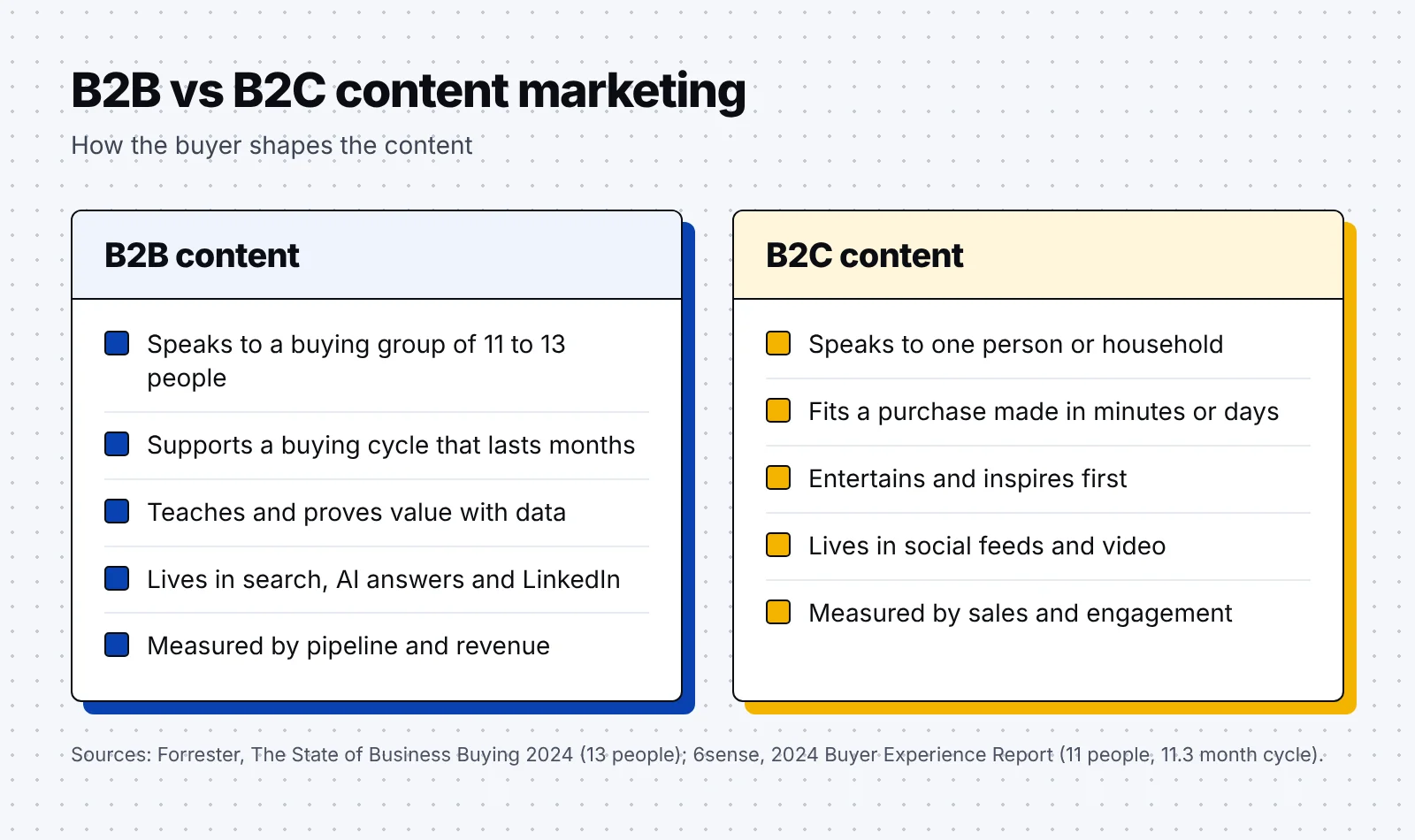
| Buyer | People buying for a company | One person or a household |
| Sales cycle | Months, often close to a year | Minutes to weeks |
| Buying group | 11 to 13 people on average | Usually one person, with advice from family or friends |
| Goal | Pipeline and revenue from accounts that fit | Sales and repeat purchases |
| Formats | Research, guides, case studies, webinars and tools | Short video, social posts, recipes and how-tos |
| Channels | Search, AI answers, LinkedIn and email | TikTok, Instagram, YouTube and email |
| Tone | Expert and precise, with proof | Warm and playful |
| Metrics | Pipeline and deals influenced | Sales, reach, engagement and repeat purchases |
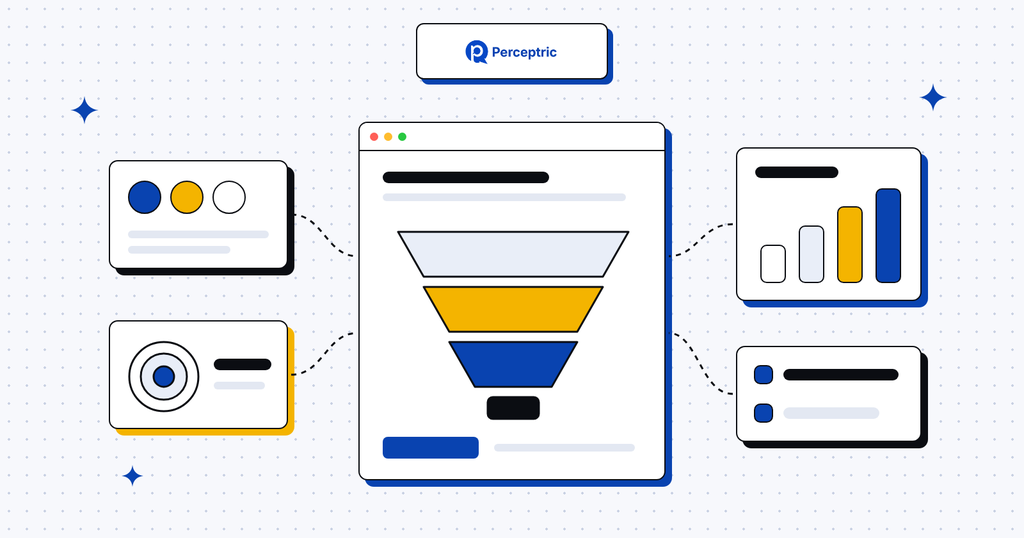
The cards below sum up the same split in one view, so you can share it with your team:
1. Buyer: a company vs a person
A B2B buyer spends company money and answers to a team, so your content must help them build a case. A B2C buyer spends their own money, so content can speak to taste and personal goals.
Write B2B content for a job title and the problem that role owns. Write B2C content for the reader's life outside work, such as their hobbies or home.
2. Sales cycle: months vs minutes
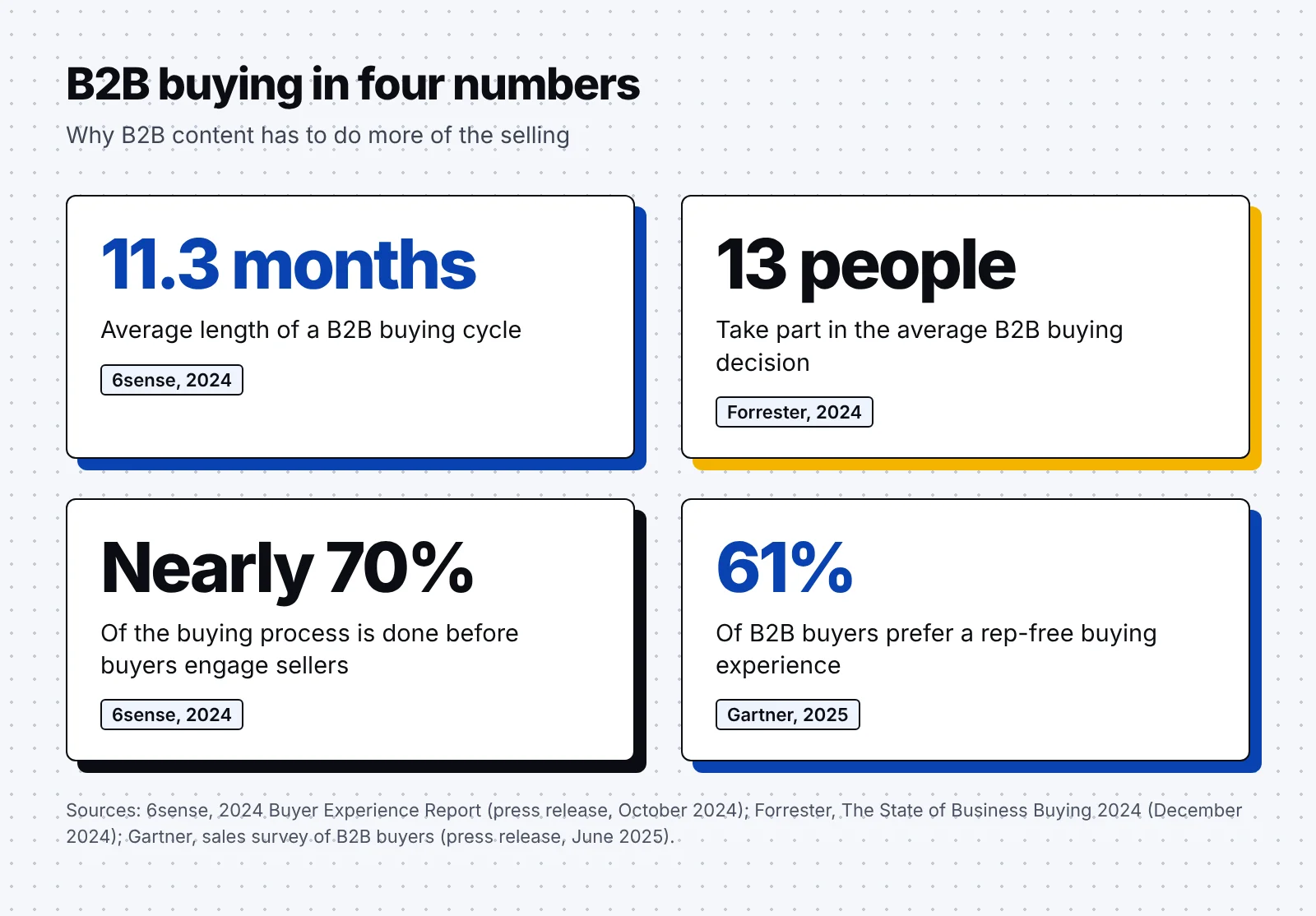
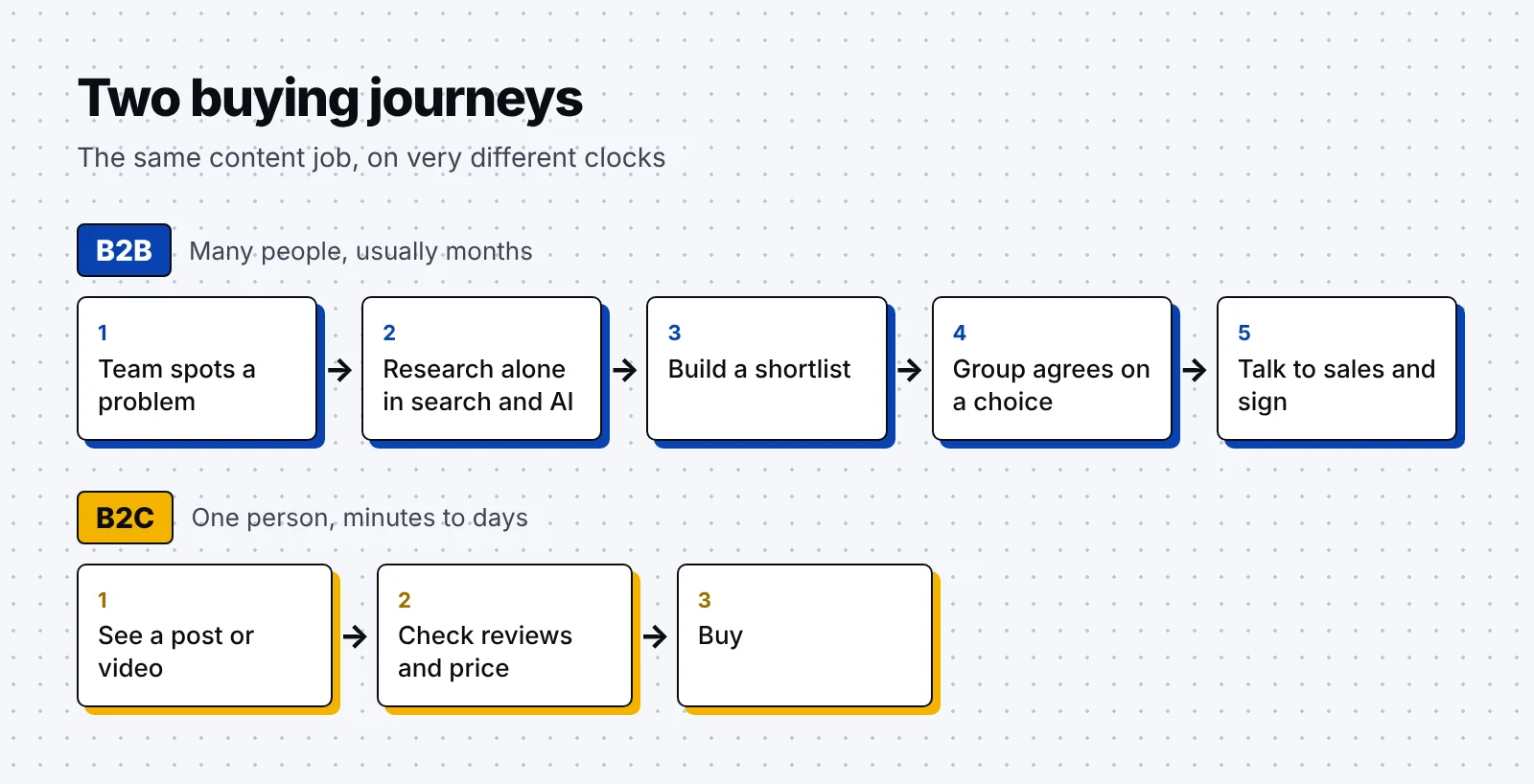
B2B purchases take far longer to close. The average B2B buying cycle lasted 11.3 months in 6sense's 2024 Buyer Experience Report, and buyers were nearly 70% through it before they engaged with sellers.
That long quiet stretch means your content does much of the selling before anyone books a call. A consumer can see a product in a video and buy it the same day, so B2C content works in much shorter moments.
The two journeys look like this side by side:
3. Buying group: many people vs one
A B2B purchase needs many people to agree. Forrester found that 13 people at a company take part in the average buying decision, and 6sense put the average buying group at 11 people.
Each person in that group asks different questions, so plan content for each role:
- The daily user wants to know how the product fits into their work.
- The team lead wants proof that the team will reach its goals faster.
- Finance wants to see the full cost and the expected return.
- IT or security wants to know the product is safe to connect to company systems.
In B2C, one person usually decides, with some advice from family or online reviews.
4. Goal: pipeline vs sales and loyalty
B2B content aims to fill the sales pipeline with accounts that fit, then help sales close them. B2C content aims at repeat purchases and a brand that people talk about with friends.
Because B2B deals are large, one guide read by the right buying group can shape a big contract. Each B2C sale is smaller, so B2C content needs far more reach to pay off.
5. Formats: depth vs speed
B2B teams favor formats that teach and prove, and thought leadership is close to universal. In CMI's research for 2026, 96% of more than 1,000 B2B marketers said their organization creates thought leadership content.
These B2B formats help a buying group build its case:
- Original research and benchmark reports from your own data.
- In-depth guides that answer the questions buyers ask sales.
- Case studies with a named customer and real results.
- Webinars and calculators that let buyers test the fit.
B2C brands lean on short video and how-to content that people enjoy in seconds. Our guide to thought leadership content marketing shows how to build the B2B side well.
6. Channels: search and AI vs social feeds
B2B buyers research on their own, and they turn to AI chatbots more each year. In G2's March 2026 survey of 1,076 software buyers, 51% start their research with an AI chatbot more often than with Google.
Interestingly, many buyers would skip sales altogether if they could. In Gartner's 2025 sales survey, 61% of B2B buyers said they prefer a rep-free buying experience.
That makes search, AI answers, LinkedIn and email the core B2B channels. B2C brands put more of their effort into social video apps such as TikTok and Instagram, where people browse for fun.
7. Tone: expert vs personal
B2B content sounds like an expert colleague, with clear claims and numbers a buyer can forward to their boss. B2C content can be playful or bold, since its job is to make one person feel something.
Happily, personality helps B2B brands too, as long as the proof sits right under it. The Gong and Duolingo examples below show both sides of that balance.
8. Metrics: pipeline vs sales and engagement
B2B teams judge content by its effect on deals, which can take months to show up. B2C teams can often see sales and engagement within days of a post going live.
Track these numbers for B2B content:
- Pipeline and revenue from deals where buyers read your content.
- Sales qualified leads by content piece or topic.
- Demo requests and the answers to "How did you hear about us?" on your form.
- Branded search and mentions of your brand in AI answers.
B2C teams usually track sales, reach, engagement rate and repeat purchases for each campaign.
B2B and B2C content marketing examples from real companies
These four companies show how each side plays to its buyers, with two from B2B and two from B2C. We checked every page in November 2026.
1. Gong Labs (B2B)
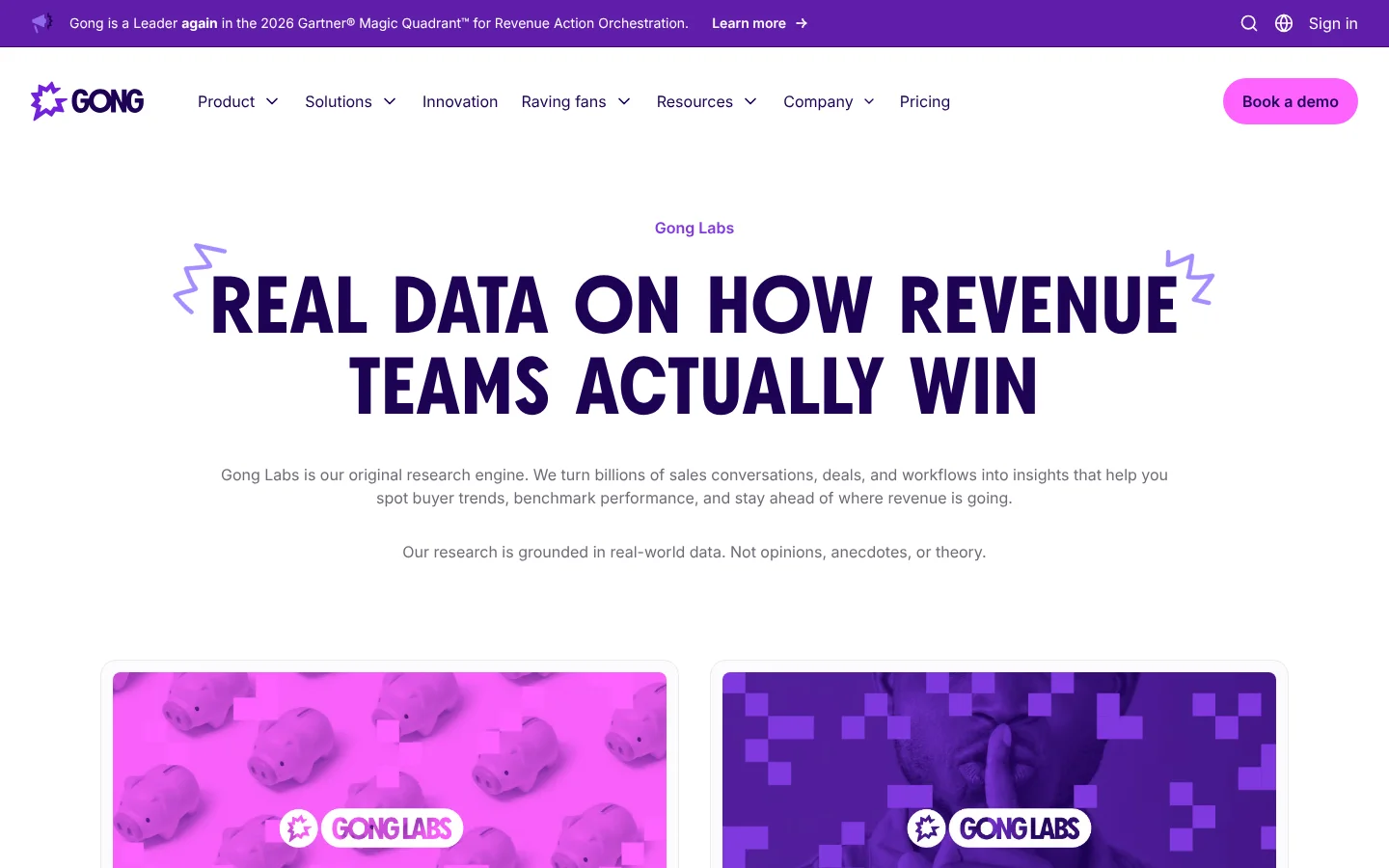
Gong is a revenue AI company that analyzes sales calls and deals to help revenue teams win more business. Gong Labs is its original research hub, built on billions of sales interactions from more than 5,000 companies.
Each study turns that data into a short article with charts that sales leaders can use. One study looked at more than 120 million sales calls to measure how buyer silence affects a call.
Why it works:
- The data comes from Gong's own platform, so no competitor can publish the same findings.
- Sales leaders can pass the charts to their teams, which spreads the brand across the buying group.
What you can borrow:
- Pull one finding each quarter from your product data or customer calls.
- Turn each finding into a short article with one chart and a clear next step.
2. HubSpot Academy (B2B)
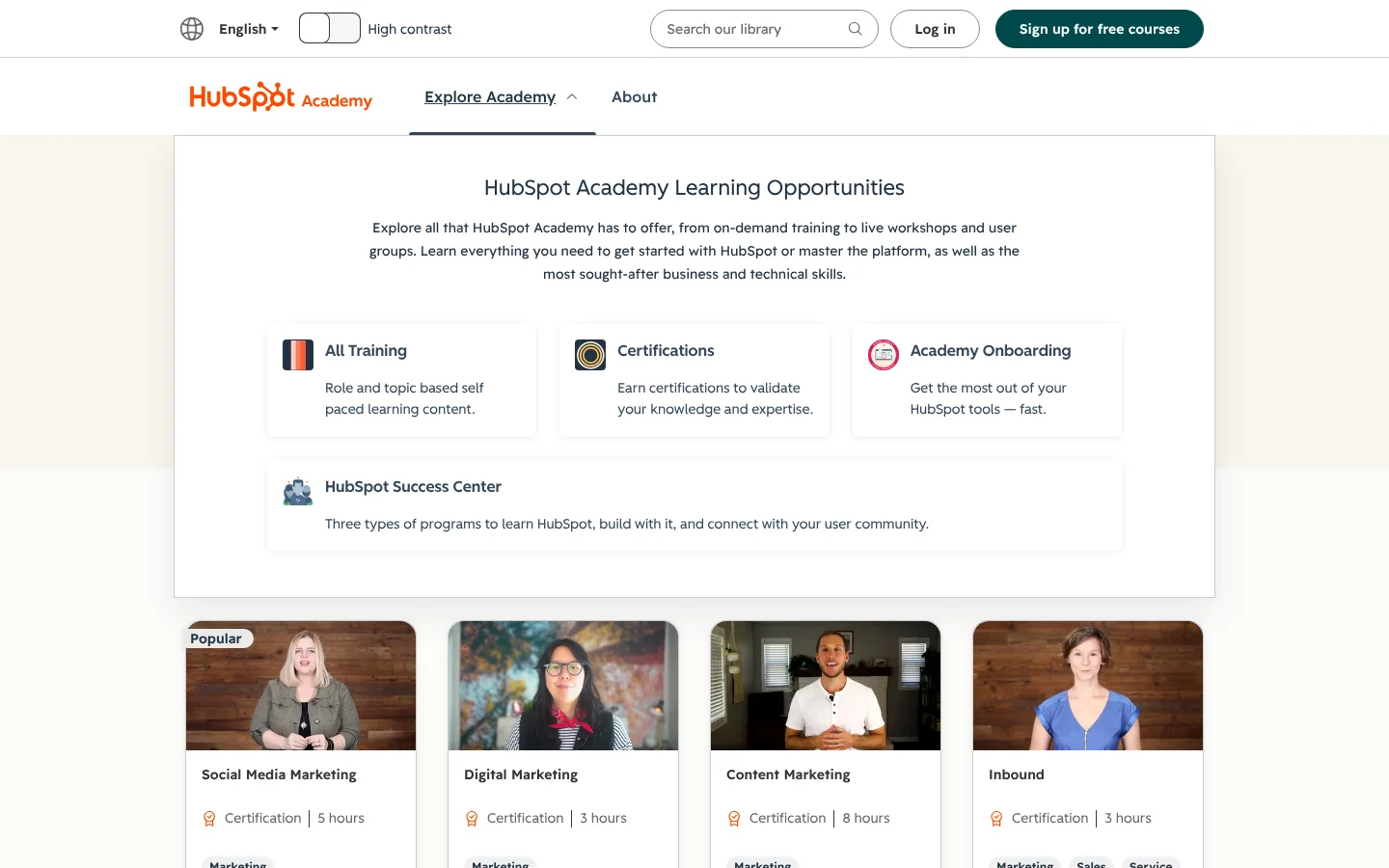
HubSpot is a CRM software company that sells tools for marketing and sales teams. HubSpot Academy offers free online courses and certifications, and more than 200,000 professionals have earned a HubSpot certification.
Courses cover skills such as content marketing and inbound marketing, and the Content Marketing certification takes about 8 hours. Fortunately for HubSpot, many of these skills are ones its software helps people put into practice.
Why it works:
- Free courses reach marketers long before their company picks a CRM.
- A certification gives each learner a clear goal, which makes finishing the course more likely.
What you can borrow:
- Teach the skill your product supports, even to people who aren't ready to buy.
- Package your best guides into a short course with a simple certificate.
3. Duolingo on TikTok (B2C)
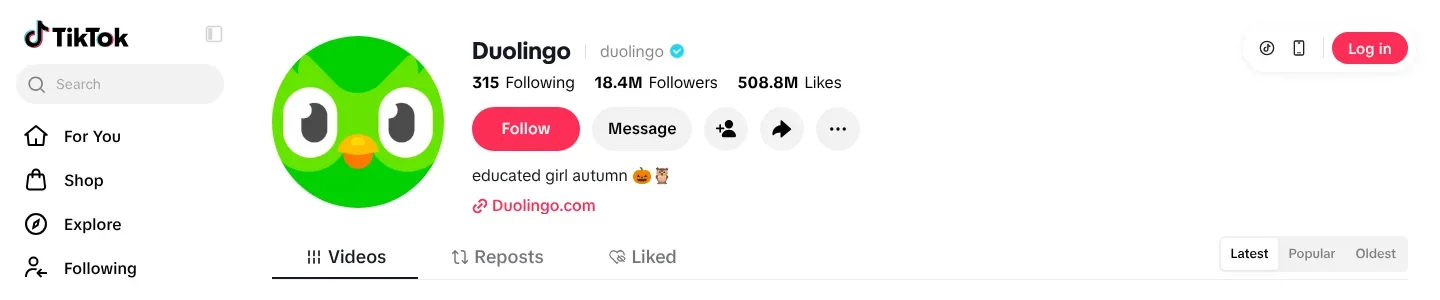
Duolingo is an education technology company that offers a language learning app built on short daily lessons. Its TikTok account has 18.4 million followers and 508.8 million likes, with Duo, the brand's green owl mascot, at the center.
The posts join trends and pop culture moments with jokes about Duo and language learning. This social-first plan made Duolingo one of the most followed brands on TikTok globally, with 150% year-over-year growth in social media impressions by mid-2023.
Why it works:
- Duo acts like a character with a clear personality, so fans follow the owl as much as the app.
- Fan videos about Duolingo on TikTok and YouTube have drawn more impressions than the brand's own posts.
What B2B teams can borrow:
- Give your brand one voice that people can recognize without seeing the logo.
- Post quickly when an industry trend fits your product, then let your team share it.
4. Red Bull (B2C)
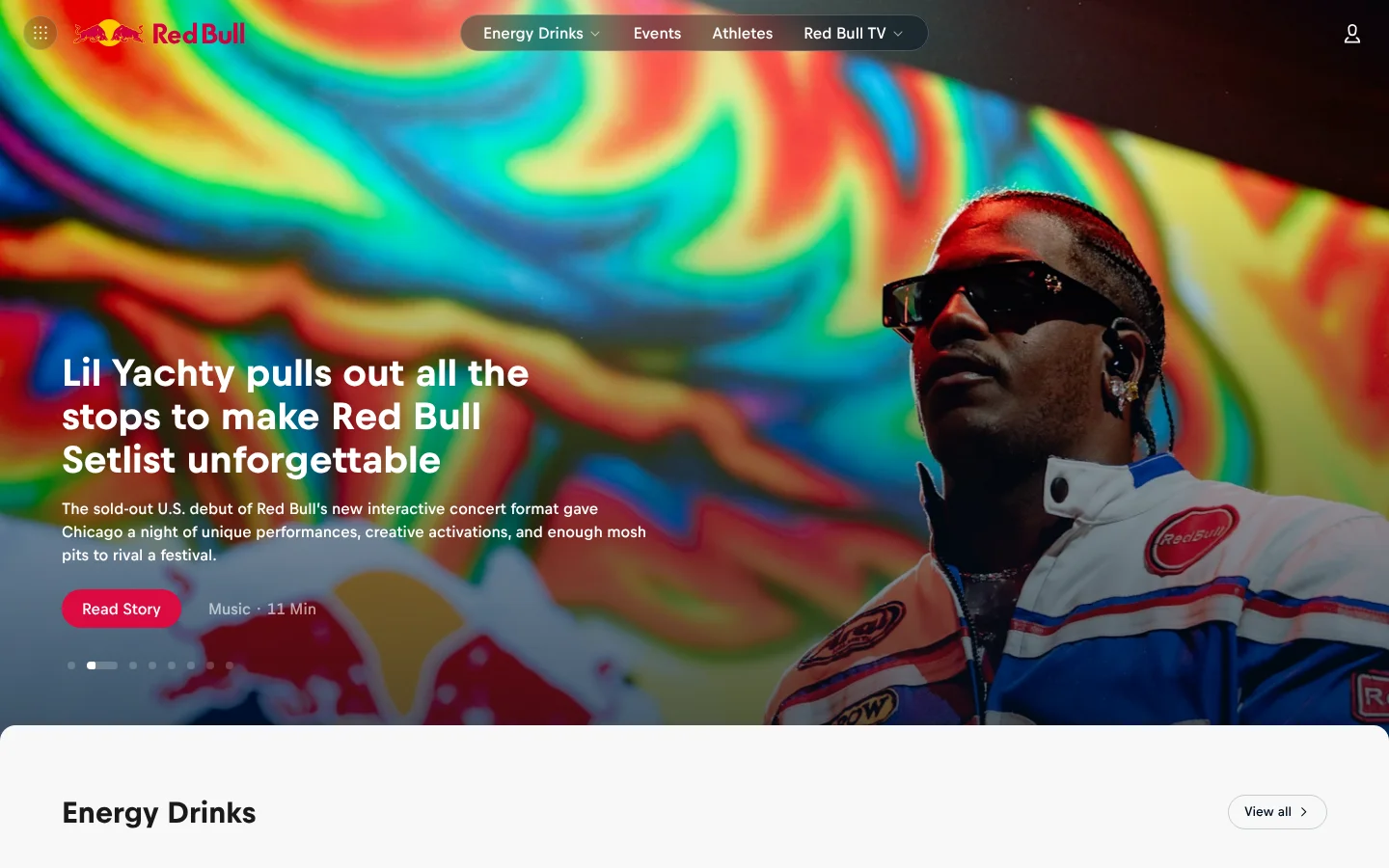
Red Bull is an energy drink company that also runs its own media business, Red Bull Media House, founded in 2007. It produces TV, digital, audio and print content and covers more than 1,250 sports and culture events each year.
The Red Bull homepage opens with an 11-minute music story, and the drinks appear further down. In 2012, the Red Bull Stratos jump drew more than 8 million concurrent livestreams on YouTube, the most concurrent views YouTube had seen.
Why it works:
- Stories about athletes and events match the energy the drink stands for, so the brand needs little product talk.
- Live events give fans a reason to watch at the same moment and share the clips with friends.
What B2B teams can borrow:
- Build content around the world your buyers care about, beyond your own product.
- Turn one flagship event or report each year into many smaller pieces.
What B2B teams can borrow from B2C
B2B content works better when it borrows the parts of B2C that make people want to read. Personally, we use these six ideas with our B2B clients:
- Open with a person or a story, then bring in the data that proves the point.
- Give your brand one voice and keep it the same on every channel.
- Cut each long guide into short videos and posts for LinkedIn and YouTube.
- Answer the reader's question on the first screen of every page.
- Feature real customers and employees, so buyers see the people behind the product.
- Test headlines and thumbnails the way consumer brands test their ads.
Keep the proof that B2B buyers need, such as data and case studies. Our B2B marketing guide shows how content fits with your other channels.
B2B vs B2C content marketing checklist
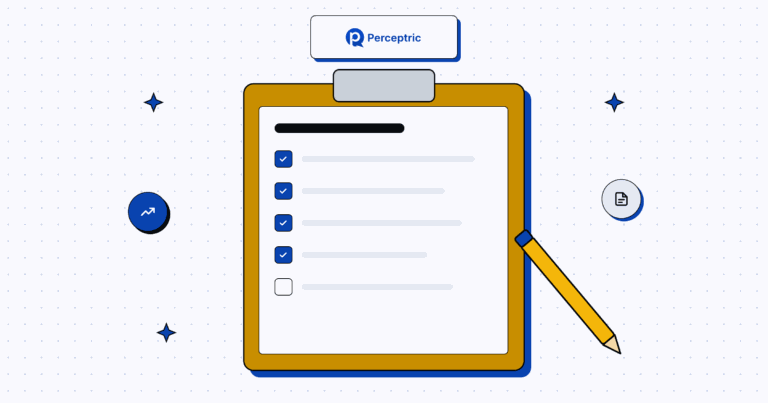
Use this checklist before you plan each quarter of content, whether you sell to businesses or consumers. The card below holds the six checks that matter most:
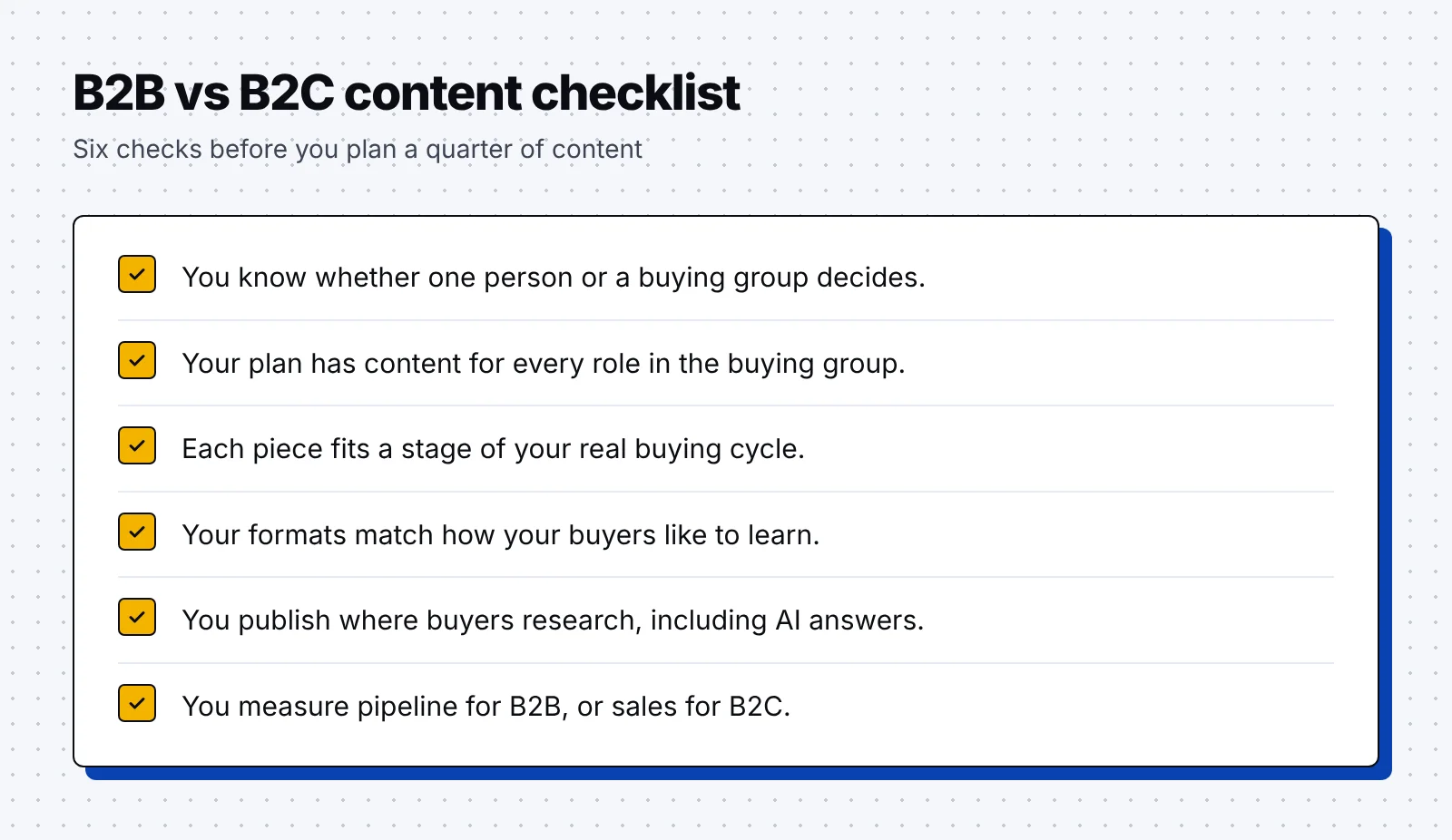
Thankfully, most of these checks take one short meeting with sales or a look at your CRM. The full list adds a few details:
- You know whether one person or a buying group makes the decision.
- Your content plan has at least one piece for every role in the buying group.
- Each piece fits a stage of a buying cycle that matches your real sales data.
- Your formats suit how your buyers like to learn, from reports to short video.
- You publish on the channels where your buyers research, including AI answers.
- Your tone fits the buyer, with proof for B2B and a recognizable voice for both.
- You measure content by pipeline for B2B, or by sales and engagement for B2C.
For a longer list, work through our B2B content marketing strategy checklist.
FAQ
What is the main difference between B2B and B2C content marketing?
B2B content marketing helps a group of people at a company make a careful purchase over months, while B2C content marketing helps one person decide quickly. So B2B content teaches and proves value, and B2C content leans on emotion and short formats.
How long is the B2B buying cycle?
The average B2B buying cycle lasted 11.3 months in 6sense's 2024 Buyer Experience Report. Buyers were nearly 70% through it before they engaged with sellers, so your content does much of the early selling.
How many people are in a B2B buying group?
Forrester found that 13 people take part in the average B2B buying decision, and 6sense put the average buying group at 11 people. Plan content for each role in the group, from the daily user to finance and IT.
Is B2B content marketing harder than B2C?
B2B content marketing is harder to measure, because deals take months and involve many people. B2C content competes for attention with far more posts and videos, so each side has its own challenges.
Can B2B companies use TikTok and Instagram?
Yes, B2B companies can use TikTok and Instagram when their buyers spend time there. Start with the channels where buyers research a purchase, such as search and AI answers, then test short video once those work.
What content works best for B2B?
Content that helps a buying group make its case works best for B2B, such as original research and case studies. Calculators and webinars also help buyers check the fit before they talk to sales.
A good first step is to list the roles in your last five buying groups and check which of them your content speaks to today. To see where those buyers find you now, start with a free AI visibility audit.