In Semrush, the search "B2B SEO agencies" gets only 390 searches a month in the US. Yet advertisers pay $28.76 for every click on it (Semrush, December 2025).
That means the searches that bring B2B revenue are often small, specific and expensive to buy with ads. SEO is still the cheapest way I know to win them, because prospects research on Google long before they talk to you.
That's why I'm sharing the eight SEO best practices I recommend most after 10+ years growing B2B SaaS brands. They're for teams that already have some SEO traction and want more pipeline from it.
What are SEO best practices?
SEO best practices are the habits that help your pages rank in Google and get cited in AI answers. They include picking the right keywords, covering a topic in depth and earning links from other sites.
For a B2B company, the best ones share a goal: they bring buyers who are close to a purchase. Traffic from people who will never buy doesn't pay your bills.
1. Target commercial keywords
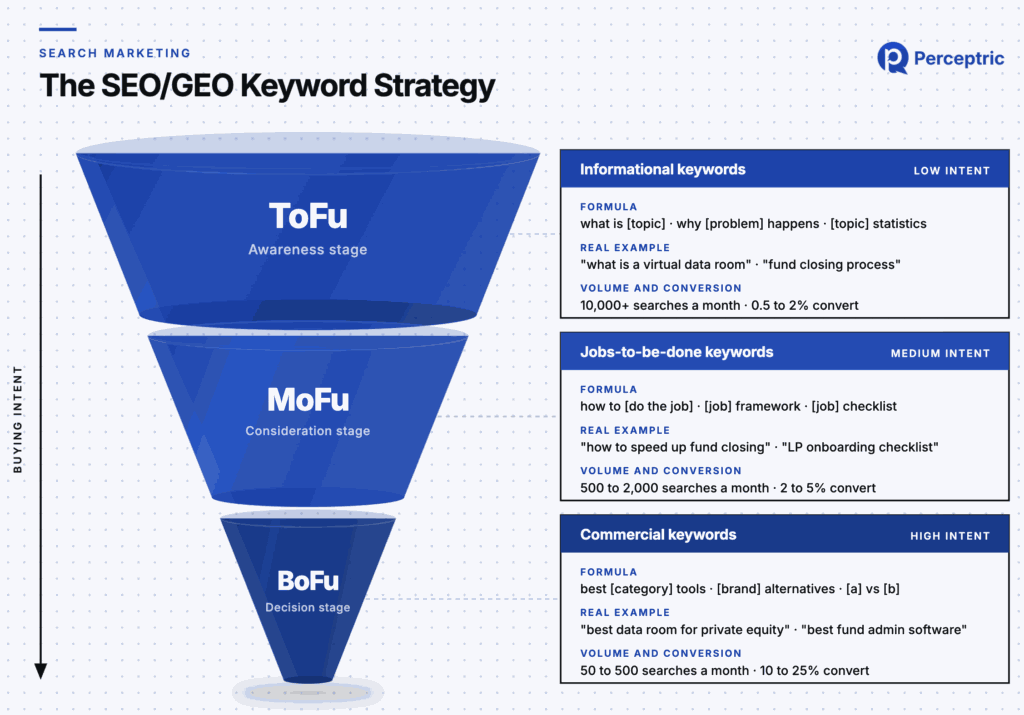
Commercial keywords are the searches people make when they're close to buying. They understand their problem, they've done their research and now they're comparing specific solutions.
Here's what they usually look like:
- Alternatives: "[vendor] alternatives", like "hubspot alternatives".
- Comparisons: "[solution] vs [solution]", like "asana vs monday".
- Best lists: "best [category] for [industry or role]", like "best CRM for startups".
- Pricing and reviews: "[vendor] pricing" or "[vendor] reviews".
- Use cases: "[solution] for [workflow]", like "CRM for real estate teams".
Most of these get little search volume, and that's fine. The ad price is the better signal, because advertisers only pay a lot for clicks that turn into customers.
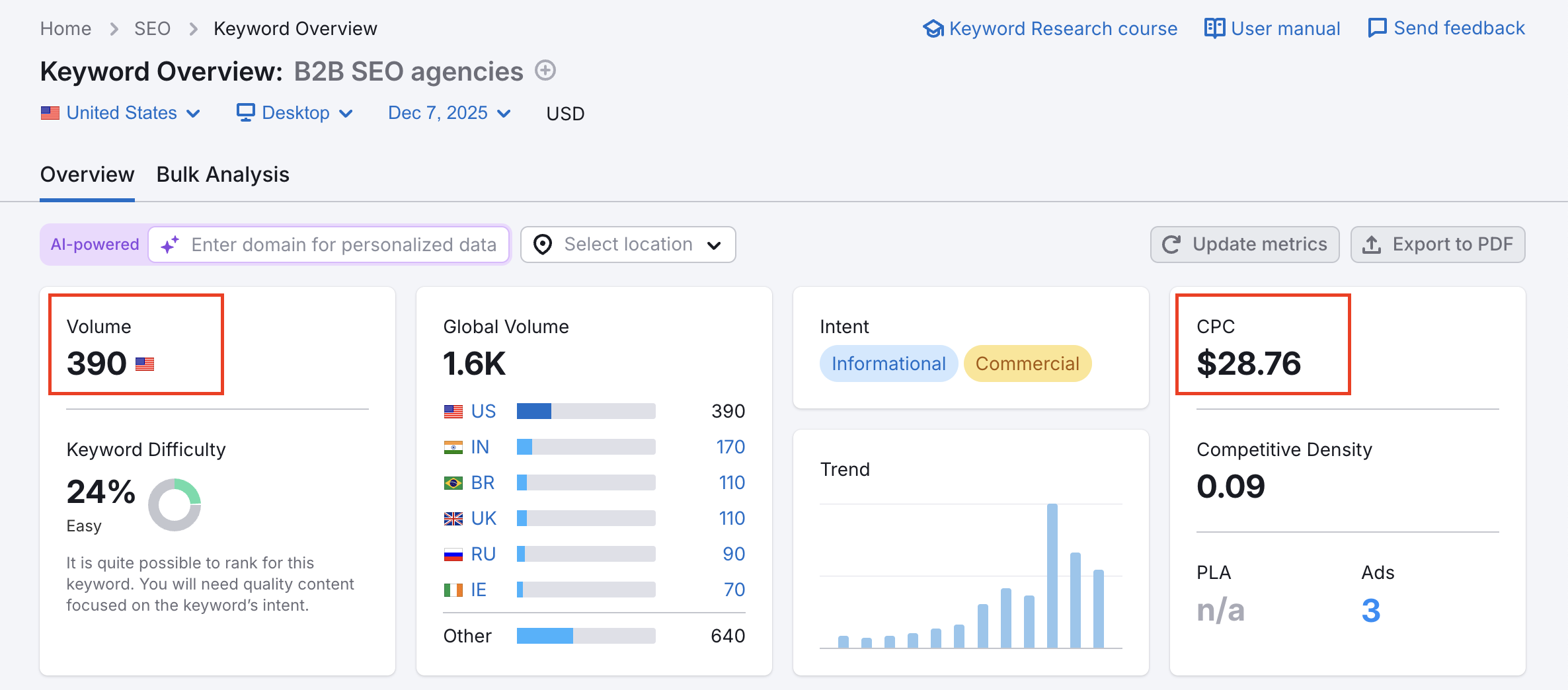
Take "B2B SEO agencies" again. The top Google result gets about 27.6% of clicks on average, according to Backlinko, so ranking first would bring roughly 108 clicks a month. At $28.76 a click, that's about $3,100 in ad spend you no longer pay every month.
Our B2B SaaS SEO guide shows how to build a whole program around these searches.
2. Write listicles
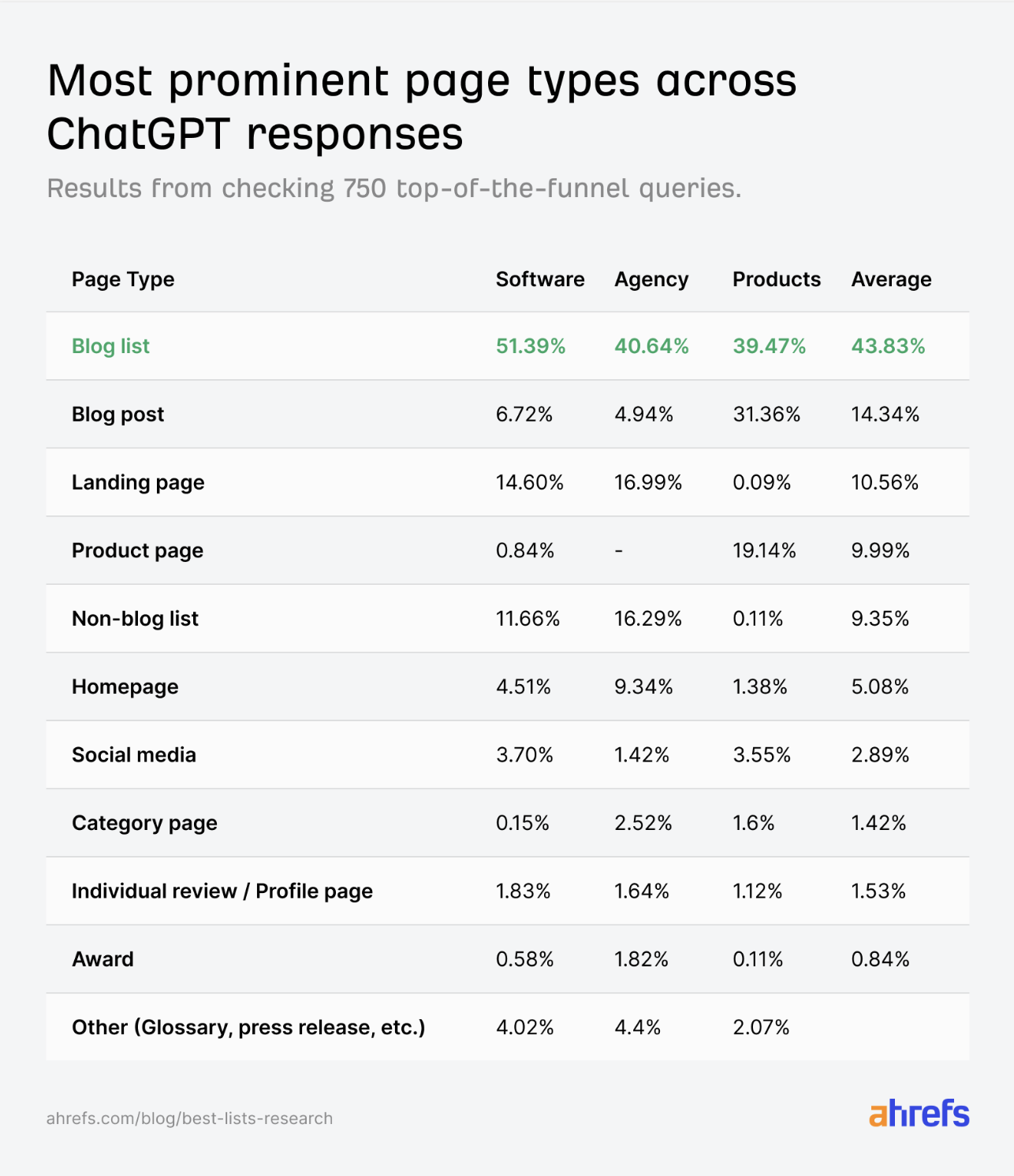
Listicles are the most useful content type in B2B SEO right now, and AI tools agree. Ahrefs looked at 26,283 pages ChatGPT cited across 750 queries in its study of "best" lists, and blog lists were the most common page type, at 43.83% on average.
Here's why they work so well:
- They target buyers: Searches like "best [category] tools" come from people actively comparing options.
- They match how committees buy: Several people research broadly before they agree on a shortlist, and a list gives them that shortlist.
- They earn links: Blogs and newsletters link to good lists when they recommend tools.
- They're easy to refresh: You can add or swap an entry as the market changes without rewriting the post.
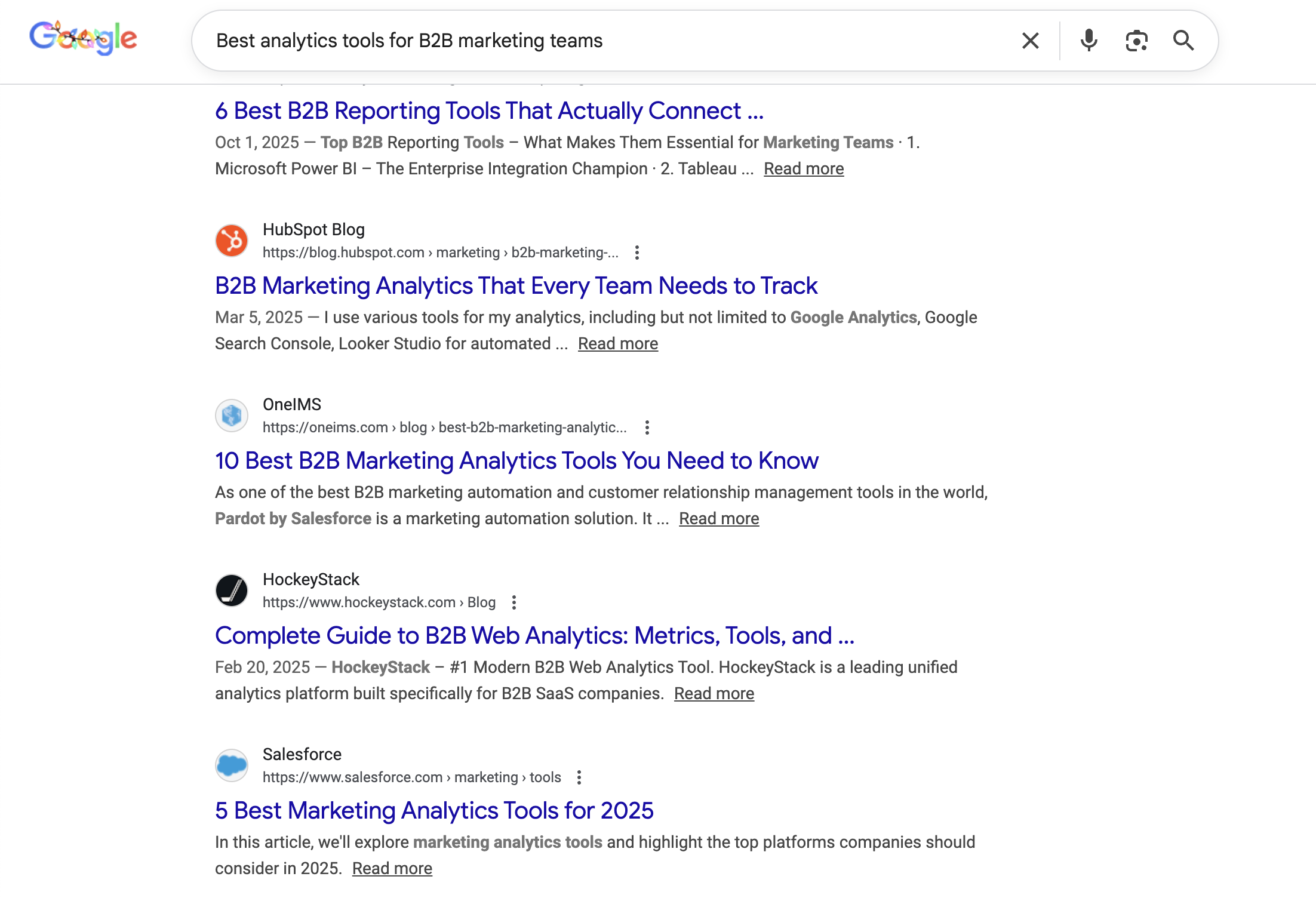
For example, search "best analytics tools for B2B marketing teams" and you'll see lists from HubSpot, OneIMS and Salesforce fill the first page:
Here's how to start:
- Find list searches: Look for searches in your category that use words like best, top, tools, software, alternatives or vs. In Semrush, Ahrefs or Search Console, filter your keyword research for those words.
- Open with your criteria: Say who the list is for and how you picked each entry, such as use case, budget and team size. Then judge every entry by the same criteria.
3. Build topical authority
Google doesn't judge your pages one by one. It looks at your whole site and decides what it's about, so a site with many linked pages on one topic starts to show up for more searches on that topic.
HubSpot is the classic example. It wrote so many strong articles on inbound marketing that it ranked near the top for almost every related search for years.
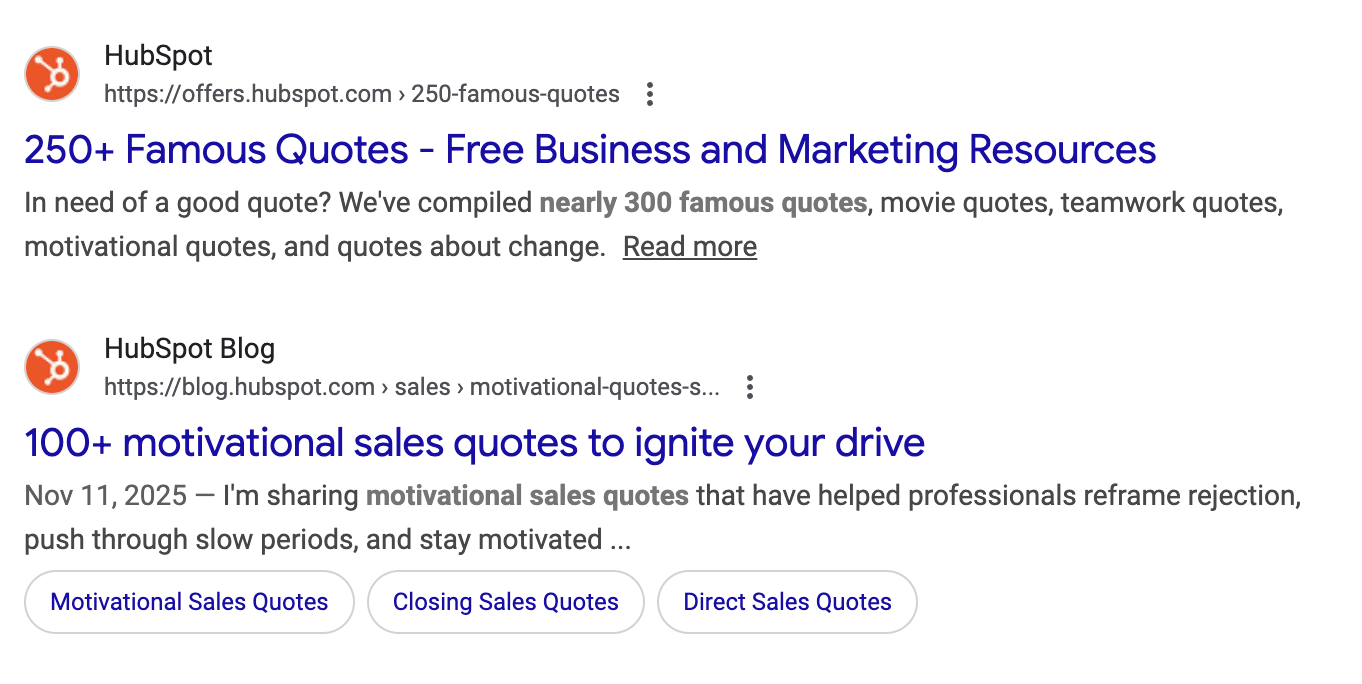
But HubSpot also shows what happens when you spread too wide. Its blog published lots of posts far from its expertise, like famous quotes and motivational sales quotes:
Then Google's late 2024 updates hit. Ahrefs estimates show HubSpot's blog traffic falling from about 8 million monthly visits to around 2 million by early 2025:
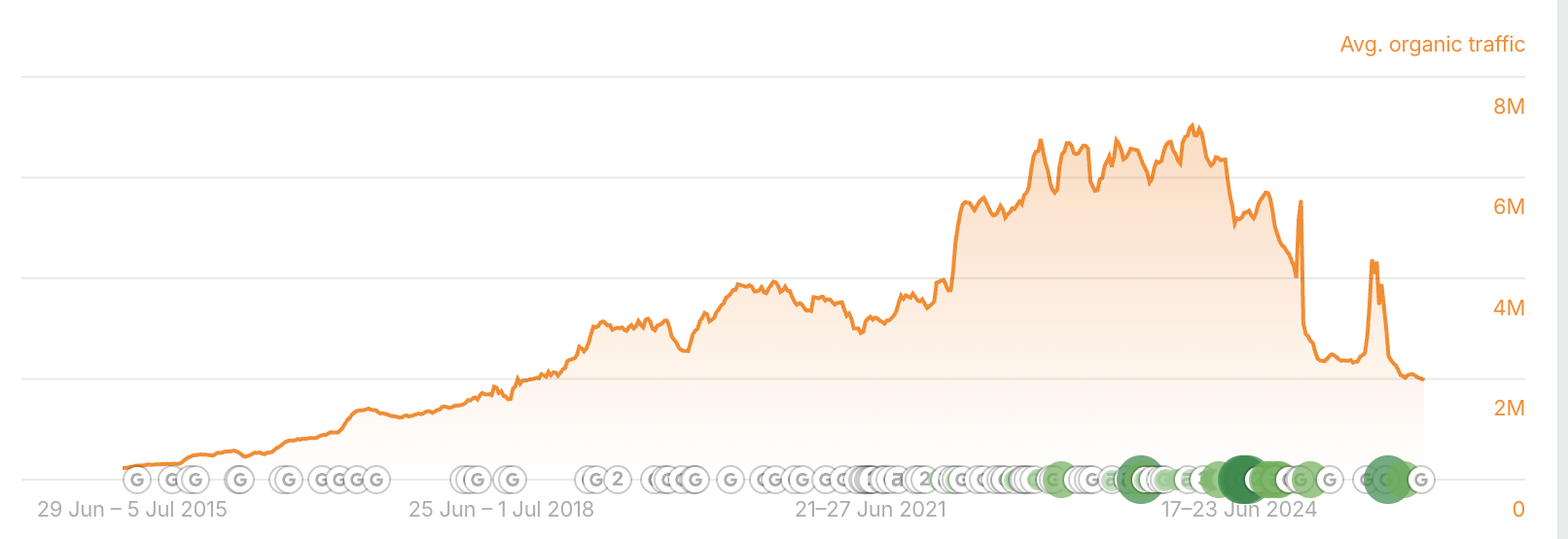
Here's how I build topical authority:
- Pick one core topic: Choose one topic per section of your site and cover it fully before you move on.
- List every subtopic: Write down every question your buyers search within that topic. Each gap in coverage is a gap in authority.
- Build a pillar and a cluster: Create one pillar page that covers the topic at a high level, then short, focused articles for each subtopic. A quick, direct answer beats a long article that makes the reader dig.
- Link it all together: Link each supporting page to the pillar and to related pages, with anchor text that says what the linked page is about.
- Clean up old content: Update pages that drifted off topic, and remove the ones that don't belong in your cluster at all.
Our guide to topical authority goes deeper on planning clusters.
4. Improve your link profile
Links still matter as much as ever. Google's original PageRank system ranked pages by counting the number and quality of links pointing to them, and links remain one of the strongest signals that a site is worth trusting.
I'd let most links come naturally from good content. But for competitive keywords, a little link building helps. Here are three tactics I like:
- Ahrefs Content Explorer: Search a core keyword to find articles in your niche, then filter by traffic and domain rating. To find lists that mention your competitors but not you, search several competitor names together and ask the editors to consider adding you.
- Help a B2B Writer (now MentionMatch): It works like HARO for B2B, connecting writers who need expert quotes with people who can give them. Answer the requests that fit your expertise with short, specific insights, and you'll often earn a mention and a link.
- Content exchange: Offer a target site something useful, such as a free article that fills a gap in its content. Track which sites say yes to which offers, so your next round of outreach goes faster.
If you'd rather hand this work to a team, here's our list of the best B2B SEO agencies.
5. Calculate SEO's CAC
SEO often gets left out of CAC (customer acquisition cost) conversations. Its costs feel scattered across content, tools and time, and the returns arrive months later. But leadership will ask for customer-level numbers sooner or later, so it's better to have them ready.
Paid ads have fixed math. If you pay $1 a click and need 100 clicks for a customer, every customer costs $100, and the next one costs $100 too.
SEO works differently. CAC looks terrible in the first months, then drops as pages keep converting without new spend. Here's a simple example of a program that spends about $8,000 to $10,000 a month:
| Month | Total spend so far | Customers so far | CAC so far |
|---|---|---|---|
| Month 1 | $10,000 | 2 | $5,000 |
| Month 3 | $28,500 | 20 | $1,425 |
| Month 6 | $54,000 | 112 | $482 |
| Month 9 | $78,000 | 297 | $263 |
| Month 12 | $102,000 | 525 | $194 |
Your numbers will differ, but the shape is the same: heavy spend up front, then customers that keep coming while spend stays flat. That's the table I'd show your CFO.
6. Write for readers first
Write for the person reading, and stop worrying about an algorithm.
In my experience, Google cares most about two things: whether your site covers a topic in depth and whether other sites link to it. That's why big, well-linked sites like Forbes can rank with fairly general articles.
So you don't need a long on-page checklist. Get the title tag and URL slug right, then spend all your effort answering the question your title promises. This article's title promises SEO best practices, so that's all I'm giving you, without counting keywords or chasing a word count.
7. Target long-tail keywords
Search "B2B SEO" and you'll find big guides from Backlinko and Semrush, each backed by thousands of links. Outranking them is an uphill battle for most sites.
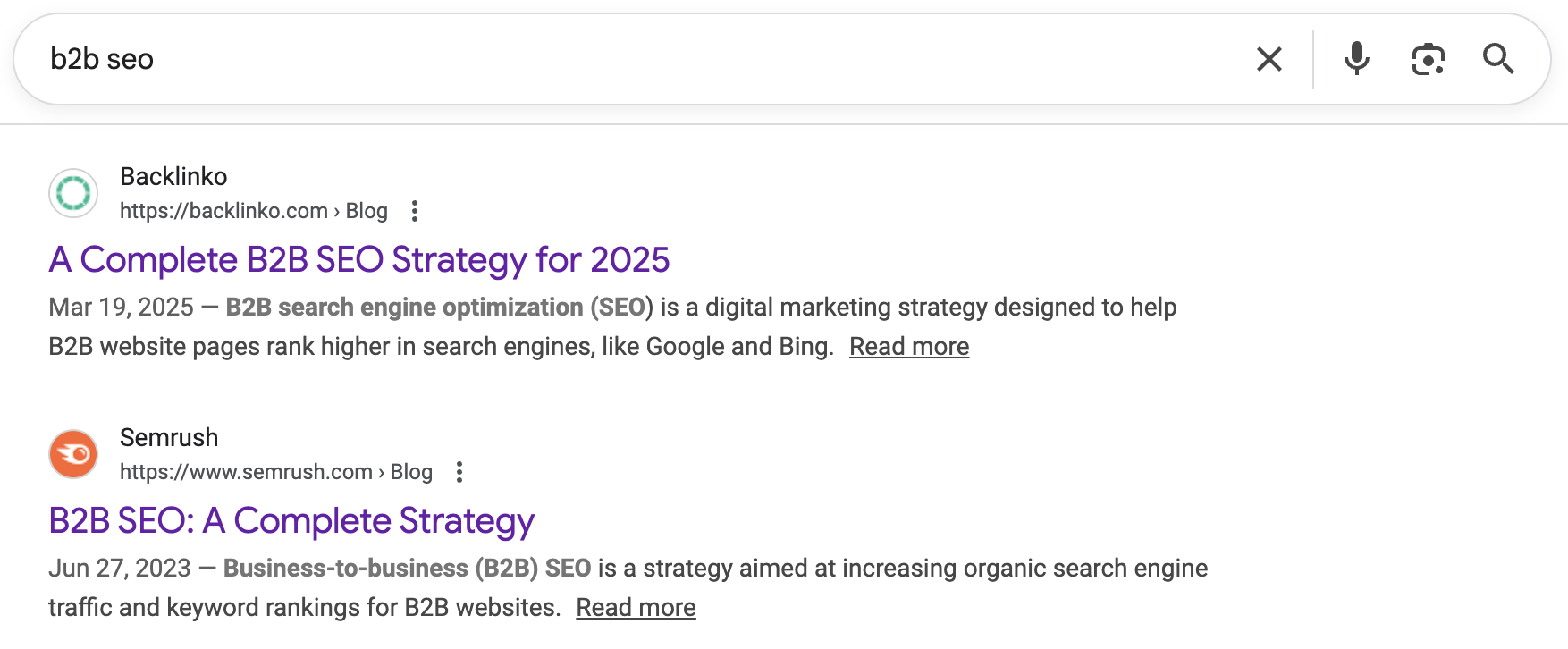
The reason is that "B2B SEO" is too broad. Google can't tell whether you want a definition, a how-to or a list, so it plays it safe with well-known sources.
Long-tail keywords are a better way in. Instead of "B2B SEO", you target something like "how to improve B2B SEO for a SaaS company" or "B2B SEO strategy for small teams". Here's why they work:
- The intent is clear: Google knows exactly what the searcher wants, so a focused page from a smaller site can win.
- There's less competition: Fewer sites target them directly, and you don't need a giant guide to rank.
- They convert better: A specific search usually comes from someone further along in buying.
- They add up: Dozens of small wins grow into real traffic and pipeline.
8. Use Google Search Console for long-tail keyword ideas
Most keyword tools guess what you might rank for. Google Search Console shows what your site already ranks for, with real queries, impressions and clicks straight from Google.
Many of these long-tail queries never show any volume in third-party tools. And when a query shows up in Search Console, you already know Google thinks your page fits it.
Here's my process:
- Start from a page that performs: Open the Performance report and filter by one page that already gets traffic.
- Read the queries: Look for queries with lots of impressions but few clicks, or an average position between 8 and 30.
- Spot the patterns: Flag queries that are more specific than your target keyword, questions the page doesn't answer yet and searches that add a use case, industry or role.
- Answer them: Add a section to the page or write a short new post for each one. A short, direct answer is often enough.
Conclusion
These practices change shape as Google and AI tools change, but my principles stay the same:
- Go after searches close to a purchase before high volume
- Pick specific problems over broad topics
- Own one topic before you move to the next
- Track what SEO costs per customer
None of this is flashy. But if a 390-search keyword can save you $3,000 a month in ads, wouldn't you rather own it than rent it?
FAQ
What are commercial keywords in SEO?
Commercial keywords are searches people make when they're close to buying, such as "[vendor] alternatives", "[solution] vs [solution]" or "[vendor] pricing". They usually get little volume, but high ad prices show they bring customers.
Why are listicles good for B2B SEO?
List searches like "best [category] tools" come from buyers comparing options. Ahrefs found blog lists were the most common page type ChatGPT cited, and lists also earn links and are easy to refresh.
How do you build topical authority for a website?
Pick one core topic, create a pillar page for it and write short articles for each subtopic your buyers search. Link them all together, and only move to a new topic once you've covered the current one.
Is SEO cheaper than paid ads over time?
Usually, yes. Paid ads cost the same for every customer, while SEO costs a lot up front and then keeps bringing customers without matching new spend, so its CAC falls over time.
Want to keep learning? Read our guides on SaaS keyword research, how to find the best B2B SEO agency, SEO for tech and IT companies and SEO for software companies.