According to Dealroom, 88% of SaaS investment goes into B2B companies, while only 12% goes into B2C.
That means more money, more products and more competitors chasing the same buyers. And AI has made software cheaper to build, so the list of tools in your category keeps getting longer.
That's why I'm sharing what I've learned over the past 10+ years growing B2B SaaS brands. You'll get what SaaS marketing is, how B2B and B2C SaaS differ and the nine channels I'd look at first. If you want the full playbook, my SaaS marketing strategy guide goes deeper.
What is SaaS marketing?
SaaS marketing is how you win and keep customers for software that runs in the cloud and is sold by subscription.
When someone buys a laptop, the sale is over. When a company subscribes to Slack, it decides again every month or every year whether to keep paying. So SaaS marketing covers getting new users, getting them to use the product, keeping them and growing their accounts, all at the same time.
The product also does a lot of the selling. Free trials, free plans and self-serve onboarding let a buyer try the software before anyone from sales calls. Your job is to get the right people to that moment and make sure the product keeps the promise that got them there.
Examples of SaaS companies with great marketing
Some of the best known SaaS companies grew on one tactic they did better than anyone else. Here's what each one did and what you can copy:
| Company | What they did | What you can copy |
|---|---|---|
| HubSpot | Built a huge free blog on email marketing, SEO and lead generation before most companies had a content plan. | Answer the questions your buyers search every day. |
| Notion | Made it easy for users to publish templates, so thousands of community templates brought in new users. | Give users something to make and share with your product. |
| Slack | Grew mostly by word of mouth, with onboarding simple enough that a colleague's tip turned into a signup. | Remove every step between a recommendation and a working account. |
| Intercom | Published a blog, podcast and books on building products and talking to customers. | Share how you think, and buyers will trust the product that comes from it. |
| Dropbox | Gave both the referrer and the new user extra storage for each referral. | Reward referrals with more of the product, rather than cash. |
B2B SaaS vs B2C SaaS marketing
The general sentiment is that B2B SaaS is where the real money is, and I agree. In B2B, the value is easy to measure. If your product saves a company $50,000 a year, you can price it just below that and still look like a bargain.
Here's how the two compare:
| B2C SaaS | B2B SaaS | |
|---|---|---|
| Why people buy | Convenience, habit or emotion | A result the company can measure, like hours or money saved |
| Price sensitivity | High. A $10 a month app can feel like too much. | Lower. A $1,000 a month plan is small if it brings in $10,000. |
| Cost to win a customer | A few dollars, so you need millions of users | Much higher, but one contract can pay for it many times over |
| How you win | Broad reach and viral sharing | Reaching the right decision makers with the right message |
9 SaaS marketing strategies I recommend
These are the nine channels we run most often for clients. You don't need all of them. Pick the ones where your buyers already spend time, and do those well.
1. Invest in SEO for buying searches
A lot of people see Google's AI Overviews and ChatGPT and call it the death of SEO. I think SEO matters more than ever. Google still sends far more search traffic than any AI assistant, and it still brings qualified leads to our clients.
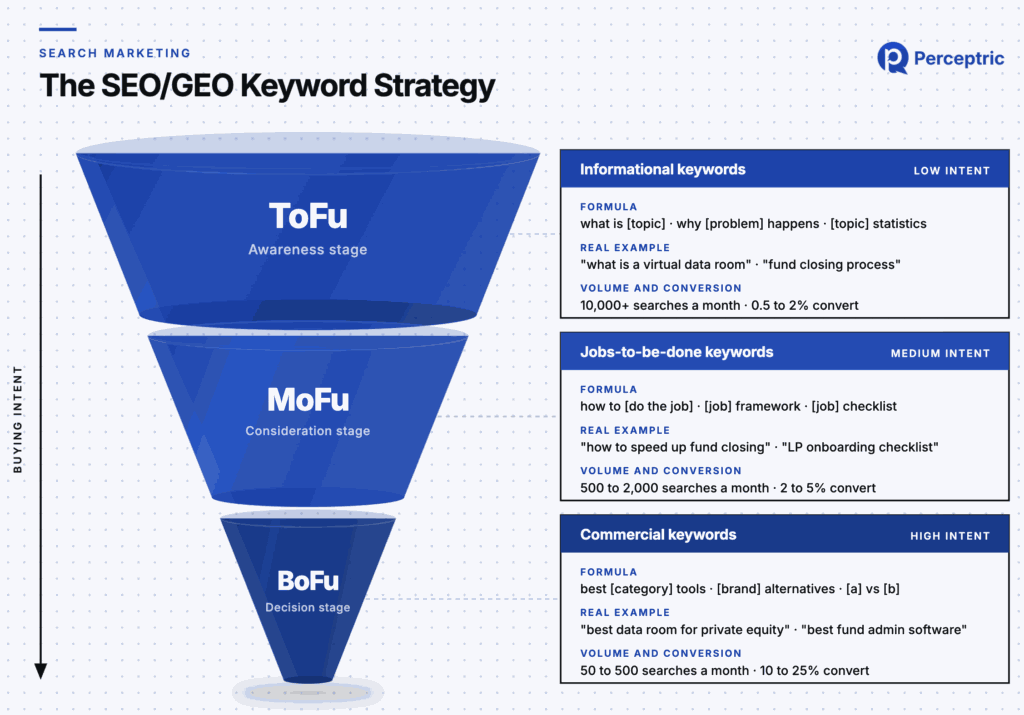
What has changed is the traffic at the top of the funnel. AI Overviews answer simple questions like "what is a CRM" right on the results page, so fewer people click. But the people who search "best CRM for real estate teams" still click, compare and sign up.
Across our clients, the pages with the most traffic often bring the fewest trials, and the pages with the least traffic often bring the most. That's why I'd measure SEO this way:
- Use conversions as the main KPI: Count trials, demos and leads from each page. Traffic was always a weak sign of success, since it doesn't track closely with signups.
- Track rankings for buying searches: Watch searches like "[competitor] alternatives", "[category] pricing" or "best [category] for [industry]". Moving up on those matters more than moving up on a broad definition.
If you'd rather hand it off, here's a list of the best SEO agencies to grow your revenue, and guides on when B2B companies should invest in SEO and SEO for complex buying journeys.
2. Mix search-led and brand-led content
Content is the backbone of every other channel. Your ads, emails and LinkedIn posts all need something to say. So the question is which kind of content to invest in.
I split content into two types. Search-led content is written to rank for something people already type into Google. Brand-led content argues a point of view and gets found because people share it.
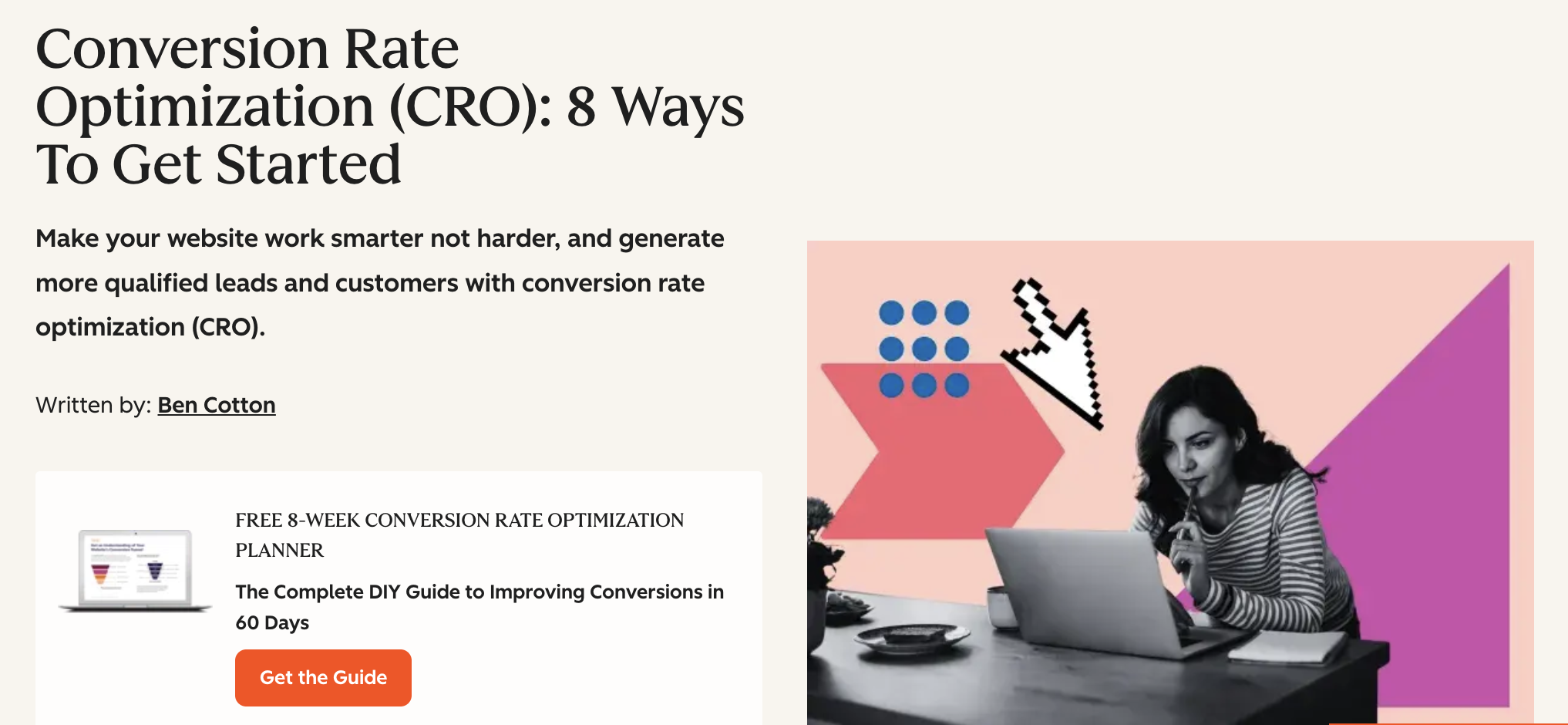
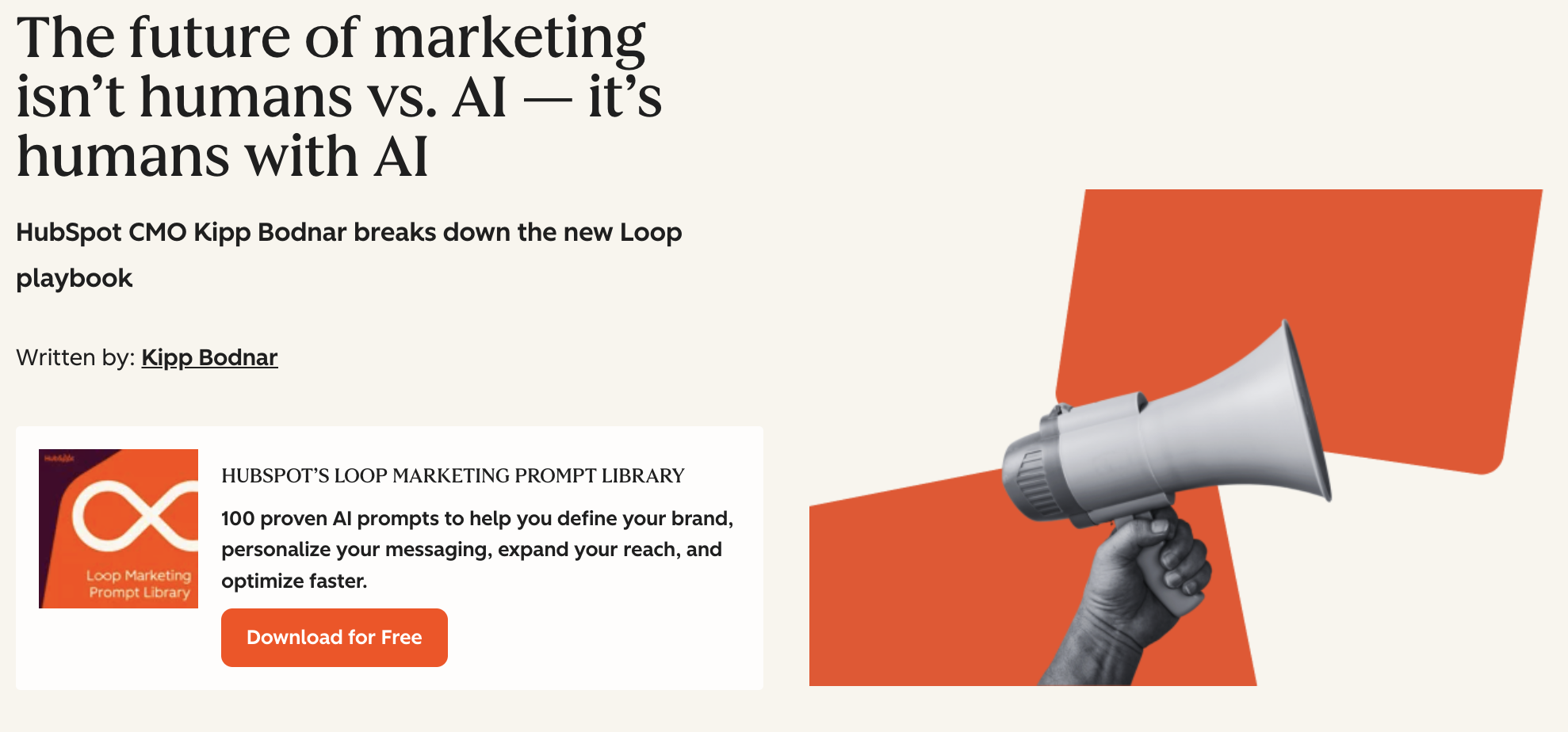
HubSpot does both. The first screenshot below is its guide to conversion rate optimization, which answers the search "conversion rate optimization" with a definition, frameworks and examples. The second is a Loop Marketing piece that argues where marketing is heading with AI. I only found that one because I subscribe to the Loop Marketing newsletter.
Here's how the two types compare:
| Search-led (SEO content) | Brand-led (thought leadership) | |
|---|---|---|
| Goal | Answer a search people already make | Change how readers think about a problem |
| Who finds it | Anyone who types the search | People who see it shared in a newsletter, on LinkedIn or in Slack |
| Originality | Lower. It explains known ideas better than other pages do. | Higher. The argument is yours. |
| Best for | Steady traffic and demand capture | Trust with the readers who do see it |
That's why I combine both. Publish search-led content to bring in new readers, publish brand-led pieces that make them remember you and link from the first to the second. Our guide to thought leadership content marketing covers the brand-led side.
3. Earn links with digital PR
Great content still needs people to see it, and links are one of the strongest ways to get there. Think of a link as a vote. When another site links to your page, it tells Google your page is worth ranking.
So if a competitor's page has 40 links pointing to it, you'll likely need more than 40 to outrank it. Plenty of other things affect rankings, but links still have a very direct effect.
Here's how I'd start earning them:
- Offer a mention first: When you write a piece on a topic, link to a useful resource from another site. Then email the owner, tell them they're included and ask if they'd mention your brand in a related article of theirs.
- Publish data others want to cite: A survey, a benchmark or numbers from your own product give writers a reason to link to you without being asked.
- Keep it relevant: One link from a respected site in your niche beats ten from sites your buyers have never heard of.
4. Optimize for AI answers with AEO
"How do we show up in ChatGPT?" is the question I hear most from SaaS founders right now. The answer is AEO, or answer engine optimization: getting your brand named in AI tools like ChatGPT, Perplexity, Claude and Gemini.
A strong SEO foundation and a known brand help a lot. But AI answers work a little differently, and here's what I'd keep in mind:
- AI tools repeat what the web agrees on: They don't have opinions of their own. If most review sites, articles and forums name the same three tools for a job, those are the three tools the AI names.
- Buying questions trigger a web search: When someone asks "what's the best CRM for a 20-person agency", the AI usually searches the web for current options. If your pages aren't in those results, you won't be in the answer.
- BOFU pages get you into buying answers: Definition pages get cited for things the AI already knows. Comparison, alternatives and pricing pages get cited when someone is ready to buy.
- Your own site comes first: Build clear pages on your own domain first. Then earn mentions on the review sites and publications AI tools read for your category.
Our guide to GEO for B2B SaaS walks through the full process, and here are the best AEO agencies if you'd like help.
5. Test Facebook ads if your buyers are there
Facebook isn't the first channel most people think of for B2B SaaS. But it works well when your buyers actually use it.
We worked with a client whose buyers were restaurant owners. Only some of them were active on LinkedIn, but most had Facebook profiles, and Facebook let us target them by business type. It became a strong channel for both awareness and qualified leads.
Even if your buyers live on LinkedIn, Facebook can be a cheaper place for retargeting. If you've tried it before without results, here's what I'd check:
- Targeting: Facebook's audience settings are easy to get wrong. Broad targeting spends your budget on people who will never buy.
- Creative testing: Facebook learns from volume. Run several versions of each ad, so it has enough data to find the winner.
- Lead forms: Facebook's own lead forms ask for less effort than sending people to your site. Test them against your landing page.
6. Run ABM for enterprise accounts
ABM (account-based marketing) means picking a list of target companies and marketing to the people who'd buy at each one. It suits B2B SaaS companies that sell to mid-market or enterprise buyers with long sales cycles.
When ABM doesn't work, it's usually for one of these reasons:
- Targeting on company data alone: A company that matches your ICP isn't always looking to buy. Intent tools like 6sense, Bombora or Demandbase show which accounts are researching your category right now.
- Generic messages: ABM works because you know exactly who you're reaching. Write ads and emails about that company's problems, the way you would in a sales call.
- The same message for 18 months: What a buyer needs in month one isn't what they need in month twelve. Change the message as each account moves through the process.
If LinkedIn is your main ABM channel, our guide to LinkedIn ABM for SaaS goes further.
7. Use LinkedIn posts and ads together
LinkedIn is a staple for B2B SaaS, and for good reason. You can reach people by job title, industry, seniority and company size, which no other channel does as well.
You've got two main paths, and they work best together:
- Posts from your founders and team: Regular posts from real people keep your brand visible between buying cycles. A prospect who has read your founder's posts for months trusts you before they ever see an ad.
- LinkedIn ads: I'd use them when you sell to mid-market or enterprise companies, several people sign off on each deal and your positioning is already clear.
If LinkedIn hasn't paid off for you, here's what I'd look at first:
- Only targeting ready buyers: Many enterprise buying cycles run a year or longer. If a prospect finds you after they've already shortlisted three competitors, it's hard to get on the list.
- Targeting one person: Several people decide on a B2B deal. Reach the end user and the budget owner, and check your AND and OR settings so the audience isn't too broad or too narrow.
- The wrong content for the stage: A case study won't land with someone still defining the problem, and a basic checklist won't help someone comparing vendors.
Our guide to LinkedIn marketing for B2B SaaS covers both paths in detail.
8. Capture demand with Google Ads
Google Ads reach people based on what they're searching for, rather than who they are. Someone typing "SOC 2 compliance software" is telling you exactly what they need, right now.
Here are the best practices I recommend:
- Three ads per ad group: One or two ads don't give Google enough to learn from. Three responsive search ads per group give it room to find what converts.
- Sitelinks and callouts: These take up more space on the results page, add reasons to click and push competitor ads further down.
- A landing page for each ad: Sending paid clicks to your homepage is one of the most common and costly mistakes I see. Match each ad to a page built for that search.
- Exclude current customers: Add your customer list as an exclusion on brand campaigns. Email is a cheaper way to reach people who already pay you.
9. Start a newsletter
Your buyers check their inbox all day, and email has no algorithm deciding who sees what. Cold email can still work, but I'd put more effort into a newsletter people actually want to read.
Here's what a good B2B newsletter does:
- Saves time: It sums up what matters this week, so readers don't have to dig for it.
- Shows up on a schedule: A weekly or monthly send keeps your brand in front of readers without a hard sell.
- Mentions the product only where it fits: Lead with something useful and bring up the product when it's part of the answer.
For tools, I like beehiiv for its analytics and growth features, Substack for thought leadership and HubSpot if you already use its CRM. MailerLite and Kit are good too.
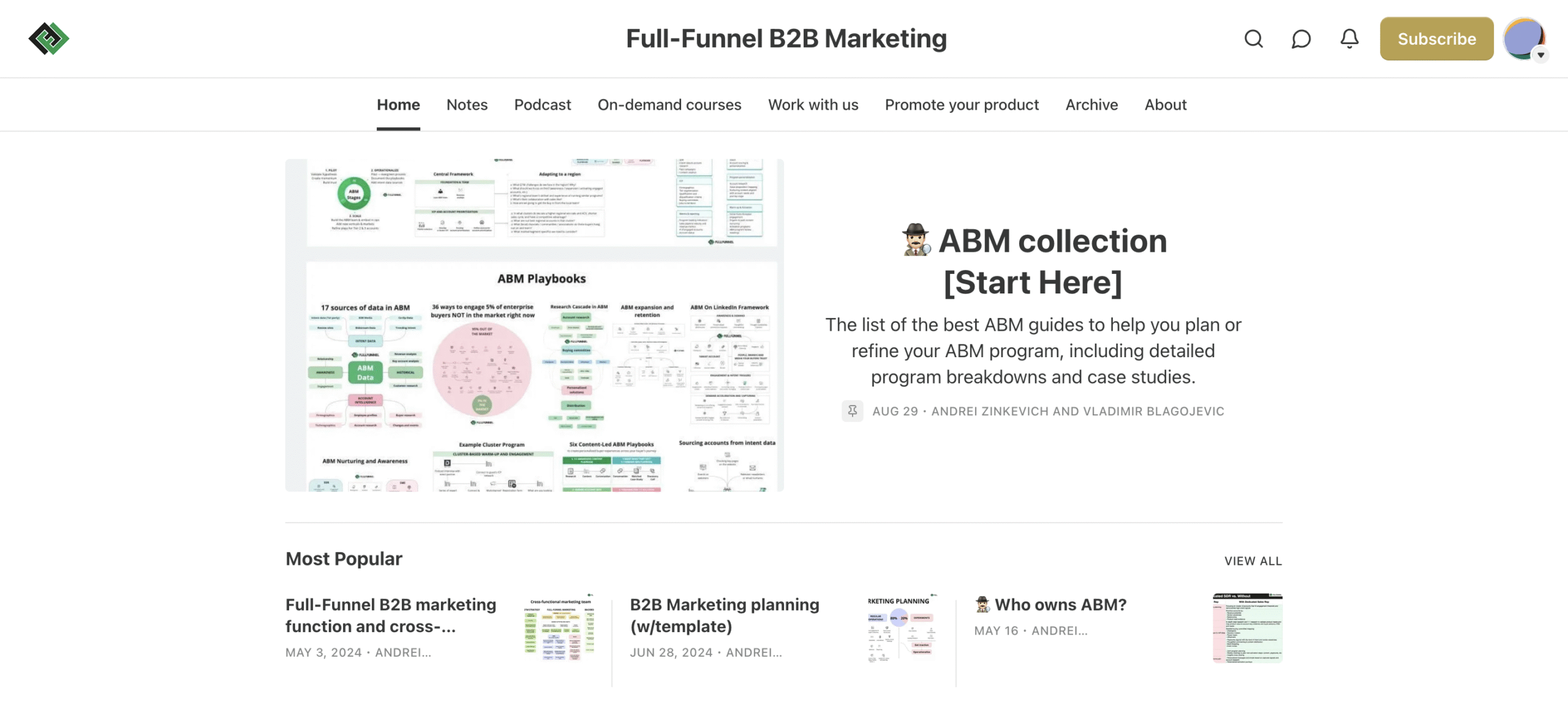
For inspiration, read Full-Funnel B2B Marketing by Andrei Zinkevich and Vladimir Blagojevic on Substack. You can learn a lot about B2B email from how they write it.
Here's how to grow an awesome newsletter:
- Blog sign-ups: Add a sign-up form to your best blog posts, so engaged readers become subscribers and come back.
- Referrals: Use the referral tools in beehiiv or Substack to reward readers who bring in friends.
- LinkedIn: Share highlights on LinkedIn and tag the people or tools you feature, so their followers see it too.
- LinkedIn newsletters: Launch a newsletter on your company or personal LinkedIn page, where LinkedIn sends it to your followers for you.
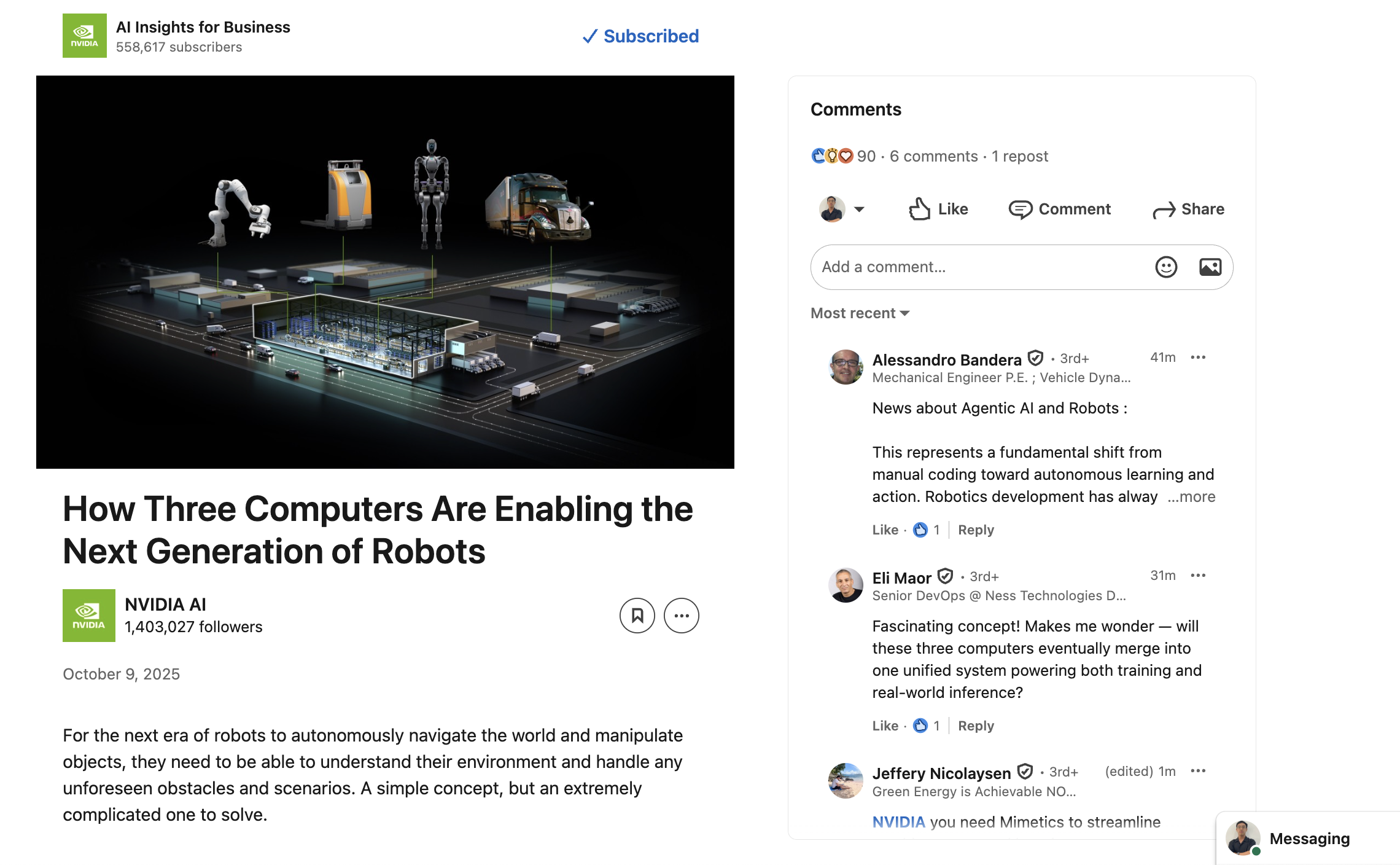
Here's an example of a LinkedIn newsletter: AI Insights for Business from NVIDIA AI, written for engineers and tech leaders.
Conclusion
Channels come and go, but these are the principles I keep coming back to in SaaS marketing:
- Sell what the customer's work looks like after they buy, rather than the feature list
- Build trust slowly with content that's actually useful
- Let the product do part of the selling
- Measure every channel by the trials, demos and pipeline it brings
There will always be a new channel to try. But if a buyer read everything you published this year, would they know why your product is the one to pick?
FAQ
What is the main goal of SaaS marketing?
The goal is to win and keep customers for software sold by subscription. Since each subscription renews, SaaS marketing covers getting new users, getting them active, keeping them and growing their accounts, with the product doing part of the selling through free trials and self-serve onboarding.
How is B2B SaaS marketing different from B2C SaaS marketing?
B2C SaaS wins with broad reach and viral growth across millions of users. B2B SaaS targets the right decision makers at fewer companies, and its buyers are less price sensitive, since a $1,000 monthly plan is small if it returns $10,000.
Is SEO still worth it for SaaS companies with AI search growing?
Yes. AI Overviews take some clicks from simple questions, but Google still sends qualified leads from buying searches. Measure SEO by trials, demos and leads, and track rankings for searches like "[competitor] alternatives" instead of raw traffic.
What is the difference between search-led and brand-led content?
Search-led content answers searches people already make on Google, so it brings steady traffic. Brand-led content argues a point of view and gets found through sharing. Use both, and link from your search-led pages to your brand-led pieces.
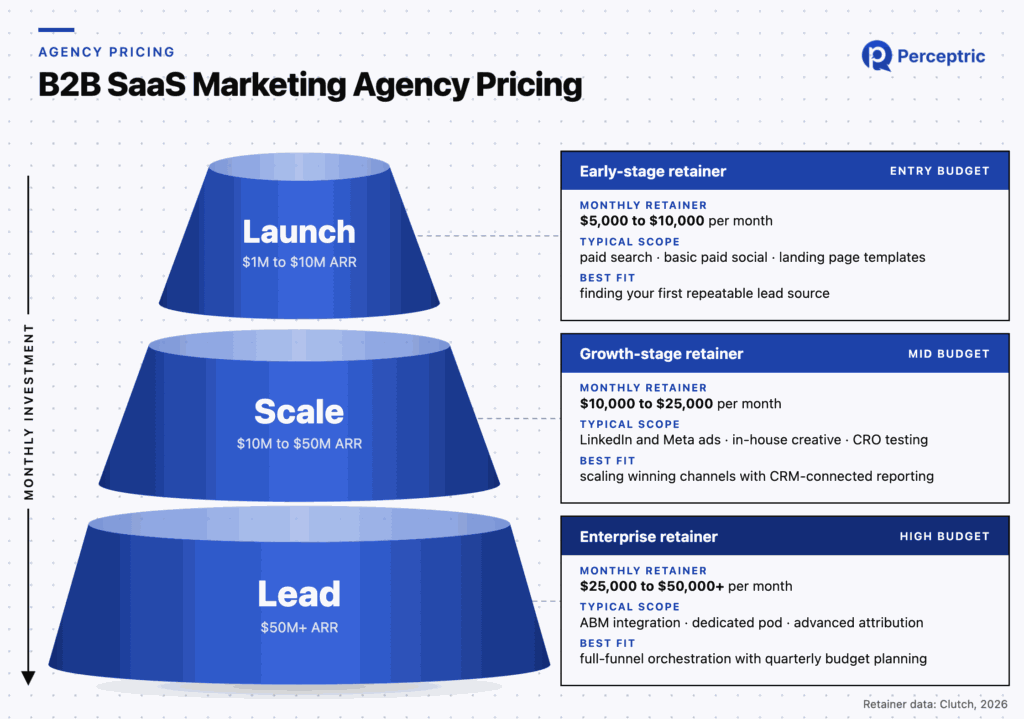
Want to keep learning? Read our guides on marketing-as-a-service agencies, SaaS marketing agency pricing, SaaS demand generation and the B2B demand generation funnel.