According to the 2026 State of Marketing to Engineers report from TREW Marketing and GlobalSpec, 70% of engineers are likely to pick the better-known brand when two solutions are technically similar.
That means a better spec sheet won't always win the deal. If a competitor's name is the one an engineer keeps seeing in search results, forum threads and training videos, that competitor starts ahead. And most of that research happens without you: the same report found that 62% of the buying process happens online before a technical buyer contacts a vendor.
Engineers and software buyers have a lot in common. Both do their homework alone, and both check every claim. So a lot of what I've learned over the past 10+ years growing B2B SaaS brands carries over to manufacturing. Below you'll get seven steps for industrial content marketing, with real examples from automation companies that do it well.
What is industrial content marketing?
Industrial content marketing is publishing guides, case studies, training and research that help engineers, plant managers and buyers at manufacturers choose your product or service.
In this guide I focus on industrial automation: robots, controls, SCADA and MES software, sensors and the system integrators who put them together. Your first reader is usually an engineer, so the bar is high. A line about "improved efficiency" loses them, while a cycle time, a payload rating or a wiring diagram keeps them reading.
Why industrial automation companies need content marketing
An automation project is a big decision for a plant. Engineering, operations, maintenance, safety, finance and procurement all get a say, and the process can take months.
Ads can bring in fast leads, but they stop the day you stop paying. A strong guide or case study keeps bringing in qualified buyers for years, which is why I'd never build an industrial pipeline on ads alone.
AI search raises the stakes. In the same TREW and GlobalSpec research, 75% of engineers had noticed AI summaries in their search results, but only 6% said the summary is usually enough. Most of them read it and then keep clicking, so your pages still need to be there when they do.
My approach: Knowledge and Narrative content
I plan every program with my Knowledge-Narrative content strategy. It splits your content into two jobs:
- Knowledge content: It answers the questions buyers already search for, such as "how to size a palletizing cell" or "cobot vs industrial robot." This is your SEO content, and it brings in new readers every month.
- Narrative content: It shares what your company believes about where manufacturing is going, built from the experience of your founders and engineers. This is your thought leadership, and it's what people remember.
You need both. Knowledge content gets you found, but on its own it can sound like everyone else. Narrative content gives people a reason to pick you once they've found you.
How to build an industrial content marketing program: 7 steps
Here's my process. Work through the steps in order, since each one feeds the next. And start with one channel you can do well, usually your blog and search, before you add video, a newsletter and events.
1. Research the engineers and buyers you sell to
A lot of automation content is written from the product brochure. It lists features and skips the questions engineers actually ask, like how long a changeover takes or whether the system talks to their PLC.
Audience research fixes that. Here's how I'd do it:
- Talk to your sales team: Your reps hear the same objections every week. Ask them for the questions that stall deals and the words buyers use to describe their problem.
- Interview your application engineers: They know which applications work, which ones don't and why. One 30-minute call can give you material for several articles.
- Talk to customers: Ask plant engineers and operations managers what they searched for before they found you, and who else joined the decision.
- Read where engineers talk: Forums like Reddit's r/PLC and vendor communities are full of unfiltered questions about integration, downtime and programming. Copy the exact wording, since that's often how people search.
- Map who reads what: An engineer wants specs and integration details, a plant manager wants uptime and throughput, and finance wants the payback period.
2. Start with bottom-of-funnel keywords
Many industrial companies start their content marketing strategy at the top of the marketing funnel, with posts like "what is industrial automation." The problem is that a student writing a paper searches for that too. You'll get traffic, but very few buyers.
That's why I start at the bottom of the funnel (BOFU). People who search these terms already have a problem and want someone to solve it. Let's say you sell robotic palletizing systems. Here are the three groups of keywords I'd go after:
- Comparison keywords: Searches like "best robotic palletizing systems" or "cobot vs industrial robot." The reader is already choosing between options, so make sure you're one of them.
- Problem keywords: Searches like "how to reduce palletizing errors" or "how to automate a packaging line." Write the most useful answer on the page and show where your product fits.
- Tool keywords: Searches like "automation ROI calculator" or "robot implementation checklist." Build the tool or template, and offer the full version in exchange for an email.
I do my keyword research with SEMRush, Google and Reddit. Once you've covered the BOFU terms, move up the funnel to broader topics. Our guide to BOFU content goes deeper on these pages.
3. Write technical content an engineer would trust
Engineers go to Google hoping to find advice from someone who's done the work. If your article reads like it was written by someone who's never been on a plant floor, they'll close the tab.
AI can help with research and first drafts. Google has said it rewards helpful content no matter how it was made. Engineers are harder to please, and they can tell when nobody checked the details. So every technical page should go past someone who has actually commissioned the system.
Here's my process for writing a technical article:
- Check the search results first: Google the keyword in an incognito window and read the top three results. Note what they cover and what they miss, since that gap is where you win.
- Interview an expert before you draft: Ask an application engineer to walk you through the topic. Their stories and numbers are what make the article worth reading.
- Use real numbers and drawings: Add cycle times, payloads, reach, footprint and cost ranges where you can, plus diagrams of the cell or the workflow. Engineers stay longer on pages that show the details.
- Show the payback: Content that shows the ROI of an upgrade gets forwarded inside operations teams, because someone there has to justify the spend.
- Get the SEO basics right: Keep the title tag under 60 characters, put the keyword in the URL slug and meta description, compress your images and add alt text to every one.
4. Teach engineers how to use your product
Some of the best automation content I know of doesn't feel like marketing at all. It's training. When engineers learn on your platform, yours becomes the product they know best, and that's the brand they'll pick when two options look the same on paper.
Inductive Automation, the company behind the Ignition SCADA platform, does this well. Its Inductive University offers free online courses on Ignition, from short lessons to a full credential program:
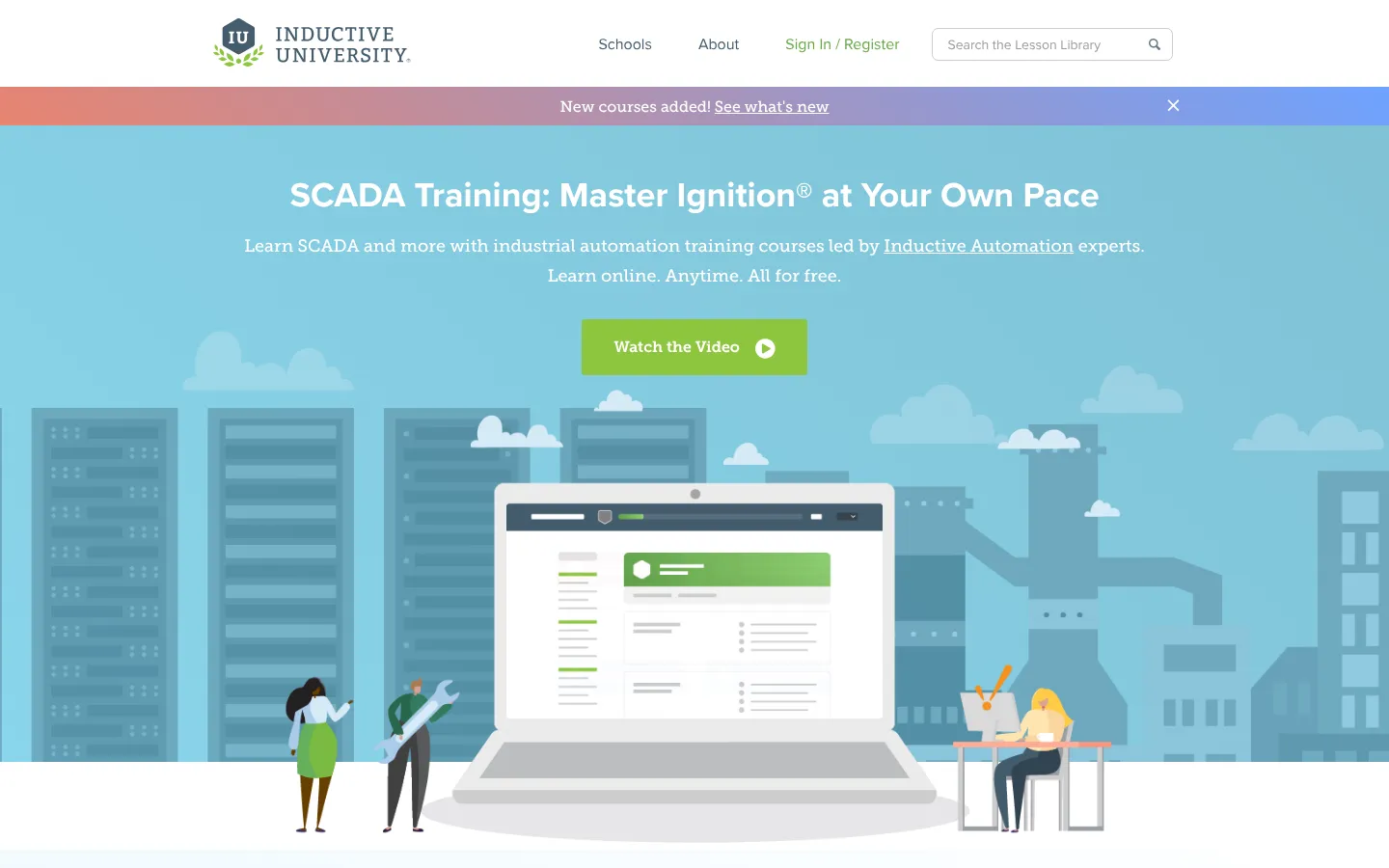
More than 40,000 people have earned an Ignition credential there. That's a lot of engineers and integrators who already know how to build with Ignition before a sales rep ever calls them.
You don't need a full university to start. Here's how I'd build training content:
- Start with your support tickets: The questions customers ask most often after the sale are the first lessons to record.
- Keep videos short: Record one task per video, such as setting up a gripper or connecting to a PLC, so people can find exactly what they need.
- Publish on YouTube too: Engineers like how-to videos and product demos, so post them on YouTube and embed them in your articles.
- Keep the basics open: Don't hide basic training behind a form. Save forms for advanced assets, like a full design guide.
5. Prove results with case studies
Plant managers trust results from plants like their own. A case study that says "improved efficiency" won't get far, while one that names the customer, the application and the measured result gives a buyer something to take to their boss.
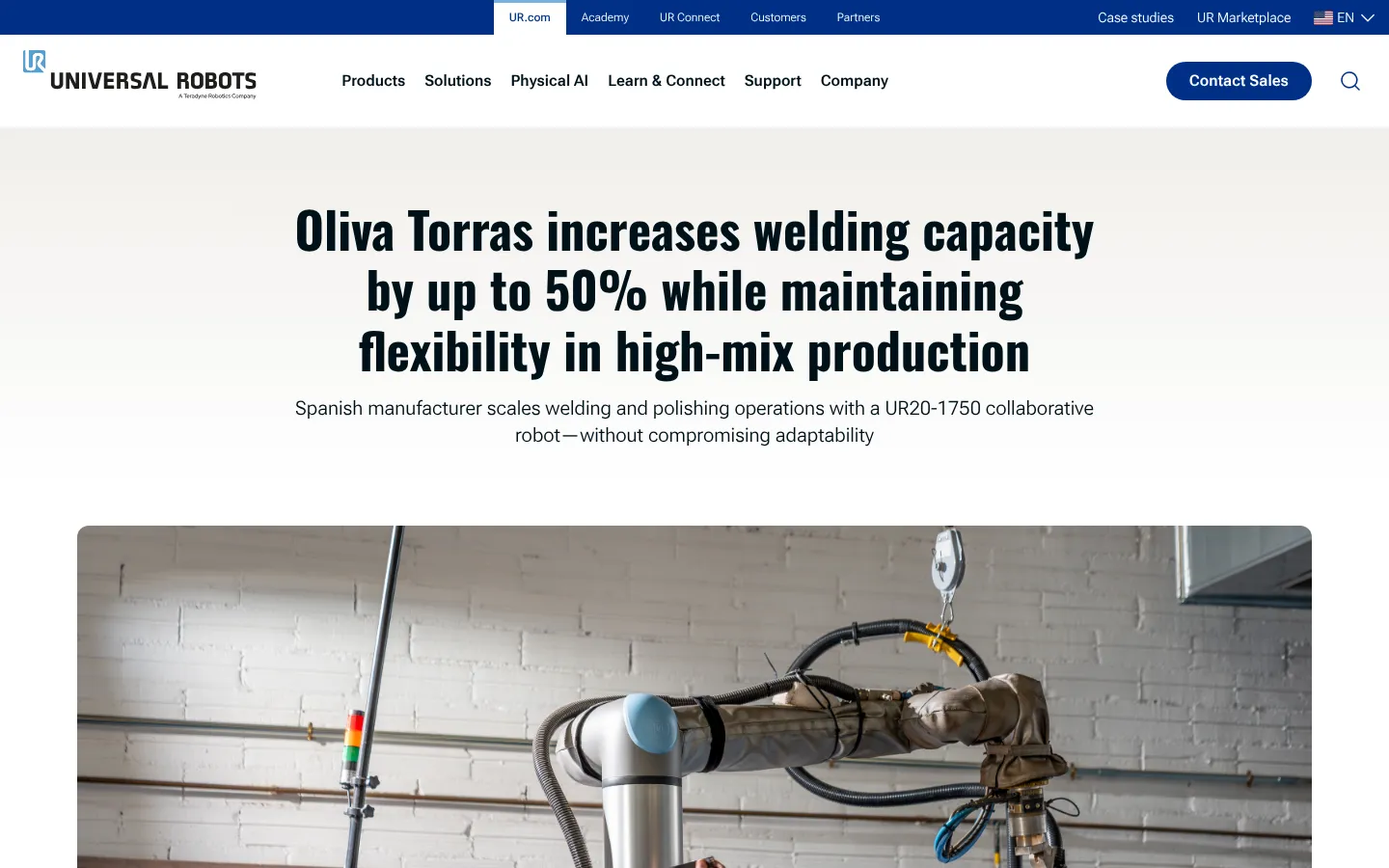
Universal Robots has a strong case study library. You can filter its 232 case stories by application, industry, product and region, so a welding shop finds welding stories in one click. The Oliva Torras story puts its result right in the headline:
Here's how to write case studies engineers believe:
- Lead with the measured result: Put the main number in the headline, then give the baseline, the timeframe and how it was measured.
- Name the customer and the application: A named plant and a clear application, such as welding or palletizing, let buyers judge whether it fits their line.
- Include the technical details: Add the robot or controller model, cycle times, changeover times and what the integration involved. Those are the details an engineer looks for.
- Credit the integrator: If a system integrator built the cell, name and quote them. They'll share the story with their own customers.
- Sort by application: Once you have a few, organize them by application and industry so every reader finds a plant like theirs.
6. Publish original research and thought leadership
Research is the Narrative part of my Knowledge-Narrative content strategy. A report built on your own data gives trade press a reason to cite you, and it gives your sales team something new to talk about.
Rockwell Automation is a good example. Its State of Smart Manufacturing Report is now in its 11th year, and the 2026 edition surveyed more than 1,500 manufacturers in 17 countries. Trade outlets such as Smart Industry covered the 2026 findings.
But thought leadership doesn't need a big survey. Most automation companies have founders and engineers with sharp opinions that never get written down, and a short post is enough to share one. Here's Noah Greenberg, CEO of Stacker, sharing a simple, casual take on LinkedIn:

Here's how I'd create research and thought leadership:
- Tell your founding story: Many automation companies started because engineers were tired of downtime and outdated machines. Interview your founders about the problem they saw and how they set out to fix it.
- Interview your engineers: Integrators and application engineers know the small mechanical, electrical and software details that change how a line performs. You'll be surprised how much content one conversation gives you.
- Publish your own data: Engineers want real numbers on throughput, downtime and payback, and few companies share them. Anonymized data from your installed base makes a report nobody else can copy.
- Repeat it every year: Release the report at the same time each year so reporters and buyers learn to expect it.
Our guide to LinkedIn thought leadership content covers how to turn these interviews into posts.
7. Distribute where engineers already look
After you publish, you can't expect engineers to find everything on their own. Search brings steady traffic over time, but everything else needs a push.
Here are the channels I'd use for industrial automation:
- Your blog: Link your articles to each other, especially from high-traffic SEO pages to your thought leadership pieces, which get little search traffic on their own.
- A newsletter: Email is the one channel you own. Building a list takes time, but platforms like beehiiv, MailerLite, Kit and Substack make it easy to start.
- LinkedIn, from people: Break articles into short posts and share them from your founders' and engineers' personal profiles. People read posts from people far more than posts from a company page.
- Trade press and events: Pitch bylines to trade publications such as Control Engineering and Automation World, and bring your engineers and customers to speak at shows like Automate, PACK EXPO and Hannover Messe.
- Integrators and distributors: Give your partners case studies and guides they can send to their own customers. They already talk to the plants you want to reach.
Then measure what matters: leads from content, deals where content was viewed during the sales cycle and the questions your sales team no longer has to answer from scratch. Our guide to content distribution channels compares the options in more detail.
Conclusion
Industrial automation is a technical market, but my principles stay the same as in any other niche:
- Write for the engineer first
- Start with buyers who are ready to buy
- Teach before you sell
- Show real numbers from real plants
Getting an application engineer on a call for every article takes more work. But if you were the engineer putting your name on a six-figure automation project, wouldn't you want that kind of detail too?
Work with Perceptric on industrial content marketing
Perceptric is a B2B SaaS SEO/GEO and LinkedIn thought leadership agency. We build an Organic Content Engine that brings pipeline every quarter, and we've worked with B2B software brands like Katalon, Arrowsterr and Omniscient.
To be honest, we're built for B2B software. So we fit best if you sell industrial software, such as SCADA, MES or IIoT platforms, or an automation product with a strong software side. Here's how we work:
- Sales and content work together: We start from your sales calls and lost deals, because your sales team should inform your content strategy. Every piece answers a question that holds up revenue.
- BOFU comes first: We go after the comparison, problem and tool keywords your buyers search right before they buy.
- Experts shape every piece: We interview your engineers and founders, so the content has details a generalist writer can't make up.
- Distribution is part of the plan: We turn articles into LinkedIn posts for your leaders, so each piece reaches people beyond search.
FAQ
What is industrial content marketing?
Industrial content marketing is publishing guides, case studies, training and research that help engineers, plant managers and buyers at manufacturers choose a product or service. It speaks to technical readers first, so it relies on real specs, numbers and examples.
Why do industrial automation companies need content marketing?
Engineers do most of their research online before they contact a vendor, and they tend to pick the brand they know when two options are similar. Content puts your name in front of them during that research and keeps working after ad budgets stop.
What type of content works best for industrial automation?
Start with bottom-of-funnel articles for searches like "palletizing robot cost" or "cobot vs industrial robot." Then add case studies with measured results, free training videos and original research.
What's the biggest content mistake industrial companies make?
Many publish broad articles like "what is industrial automation" or polished brand videos before they cover the cost, ROI and integration questions engineers search for. Start with those high-intent technical topics.
How should industrial companies measure content marketing?
Track sales outcomes instead of traffic alone: leads generated by content, deals where content was viewed or sent during the sales cycle and deals attributed to content.
Pick the question that stalls most of your deals and write one great article that answers it this month. To plan the full program with us, book a discovery call with our team.
Want to keep learning? Read our guides on B2B marketing for tech companies, content marketing for SaaS startups, content marketing for professional services and digital marketing for professional services.