Digital PR
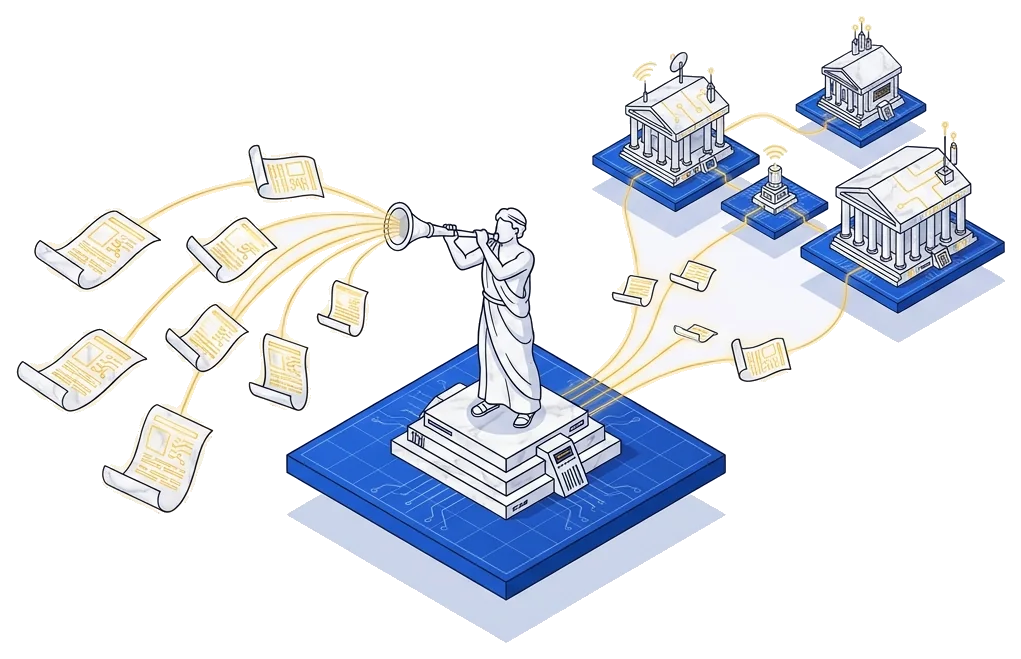
Digital PR is earning coverage, links and brand mentions on news sites, trade publications and blogs by giving journalists stories they want to run. A payroll software company might publish a salary survey of 2,000 finance teams that HR reporters then cite and link to.
What is digital PR?
Digital PR is the work of getting your company covered on news sites, trade publications, podcasts and blogs, with a link or a mention of your brand. You earn it by giving journalists something worth writing about: new data, an expert view, a free tool or a timely reaction to the news.
It mixes two jobs. Like traditional PR, it pitches stories to reporters. Like SEO, it counts what that coverage does online, from backlinks and brand mentions to branded searches and sources in AI answers.
Let's say you sell payroll software. You survey 2,000 finance leads about how long payroll takes each month, then pitch the headline finding to HR and finance reporters. A trade site runs the story, quotes your head of research and links to your report. That's digital PR.
Why digital PR matters for B2B SaaS
Links from real publications still carry weight in Google. But the bigger reason now is AI search. When ChatGPT, Claude or Gemini answer a question about your category, they lean heavily on what other sites say about you.
According to Muck Rack's What Is AI Reading? report (May 2026 edition), about 84% of the links those three tools cited came from earned media, out of more than 25 million links analyzed. Journalism alone made up 27% of the sources. That means a story in the right trade publication can shape AI answers long after the news cycle moves on.
Here's what good coverage gives a SaaS team:
- Links you can't buy: An editor chose to link to you. Those are the links Google and AI tools trust most.
- Mentions in the sources AI reads: Even unlinked coverage counts when AI tools build answers from news and trade sites.
- Proof for sales: "As covered in" a respected trade outlet helps a champion sell you inside a buying committee.
- Reach in a small niche: When I worked in the automation testing niche, the outlets that mattered were small and specific, like Joe Colantonio's Test Guild podcast. A mention there reaches the exact people who buy testing tools.
How to run a digital PR campaign
I think most campaigns are won or lost at the idea stage, long before the pitch. Here's my process, from question to coverage:
- Pick a question reporters askRead what your trade press covered in the last few months. Find a question it keeps circling that your data or your customers can answer.
- Build the assetRun the survey, pull anonymized product data or build a small free tool. Put every finding on one public page with charts journalists can reuse.
- Write the story firstDraft the headline a reporter could run, plus three findings that back it. If the headline isn't news, change the study.
- Build a short listPick 30 to 50 reporters, newsletter writers and podcast hosts who covered this topic recently. Read their last few pieces before you write to them.
- Pitch one person at a timeSend a short email with the main finding, one chart and an offer of an expert comment. Follow up once, a few days later.
- Reuse the data everywhereTurn the findings into LinkedIn posts, sales slides and a webinar. Update the study every year so it keeps earning links.
The study page should also rank on its own. Write it like a real search result, with the year and the sample size in the title, so writers who search for a number find you:
Example: a study page as it could look in Google (hypothetical)
Payroll Report 2026: Data From 2,000 Finance Teams
How long payroll really takes in 2026, by company size and industry. Free charts and the full method, updated each January.
A digital PR example
Buffer's State of Remote Work is a good B2B case to study. The 2023 edition was a joint project with Nomad List and Remote OK, built on a survey of about 3,000 remote workers worldwide. Buffer put the findings on one public page and ran the survey again each year.
Business and HR writers kept citing it, from SUCCESS to small HR blogs. That earned Buffer links and mentions on a topic it's known for, since Buffer is a remote company itself. The lesson I take from it: one recurring study can earn coverage for years, while a one-off launch pitch is forgotten in a week.
How to measure digital PR
Here's what I track after every campaign:
- Referring domains: New sites that linked to you, and how relevant they are. One link from your core trade publication beats ten from general news sites.
- Brand mentions: Linked and unlinked coverage, including newsletters and podcast show notes.
- AI citations: Whether the coverage shows up as a source when you run buyer prompts in ChatGPT, Perplexity and Gemini. Prompt tracking makes this a monthly habit.
- Branded search: Searches for your brand name in Google Search Console in the weeks after coverage.
- Pipeline: Demo requests from people who say they read about you, through a "how did you hear about us?" field.
Common digital PR mistakes
- Paying for wire release links: Google's spam policies list keyword-rich links in widely distributed press releases as link spam. Use wire services for news, with nofollow or sponsored links, and earn links through real stories.
- Mass pitching: The same email to 500 reporters mostly gets ignored. A short list you've read beats a big list you haven't.
- Pitching product news as a story: A new feature matters to your customers. Reporters want something their readers didn't know.
- Gating the study: If writers have to fill in a form to see the data, most will cite someone else.
- Stopping at one campaign: Coverage builds on itself. Reporters who used your data once come back when you have a new edition.
So here's a question for your next planning meeting. What do you know about your market that no reporter has written about yet?
Read more

FAQ
What is the difference between digital PR and traditional PR?
Traditional PR mostly aims for press coverage and reputation. Digital PR aims for the same coverage but also tracks the links, brand mentions and search results it brings, so it's planned and measured alongside SEO.
Is digital PR the same as link building?
Digital PR is one way to build links, through stories that journalists choose to cover. Link building also covers guest posts, partner pages and fixing broken links, which don't involve the press.
Do press release links help SEO?
Not much. Google's spam policies list keyword-rich links in widely distributed press releases as link spam, so paid wire links should be nofollow or sponsored. The value comes from journalists who write their own story and link to you.
How long does a digital PR campaign take?
A data-led campaign usually takes several weeks, because the survey and the pitching both take time. Coverage from a strong study can keep coming in for months as other writers cite it.