A B2B customer acquisition strategy is your plan for winning new business customers at a cost your margins can carry. It names the accounts you want, the channels that reach them, the offer at each stage and what each new customer costs by channel.
We're Perceptric, an SEO, GEO and content agency for B2B and SaaS teams, and this guide follows the process we use with clients. You'll get the CAC math, eight channels side by side, six steps, four real examples and a checklist.
What is a B2B customer acquisition strategy?
A B2B customer acquisition strategy is a written plan for turning target accounts into paying customers at a cost you can afford for each one. A complete plan answers five questions:
- Which companies fit your product best, and who inside them signs off?
- Which channels reach those people where they already do research?
- What offer moves a buyer from one stage to the next?
- How does a lead pass from marketing to sales without delay?
- What does each new customer cost by channel, and how fast does that cost pay back?
Lead generation is one part of an acquisition strategy, and our guide to B2B lead generation covers how to fill the top of the funnel. Acquisition strategy follows each account all the way to a signed contract and its first invoice.
For the wider plan around positioning, brand and retention, see our B2B marketing guide.
Customer acquisition cost (CAC) and payback
Customer acquisition cost (CAC) is what you spend on sales and marketing to win one new customer. CAC payback is the number of months of gross profit from that customer it takes to earn the spend back.
A channel can bring in many customers and still lose money when each one takes years to pay back, so track both numbers.
The formulas, with a worked example
Use these two formulas, with sales and marketing costs that cover salaries, tools, ads and agency fees for the same period:
- CAC equals total sales and marketing spend divided by the new customers you won in that period.
- CAC payback in months equals CAC divided by the monthly revenue per new customer times your gross margin.
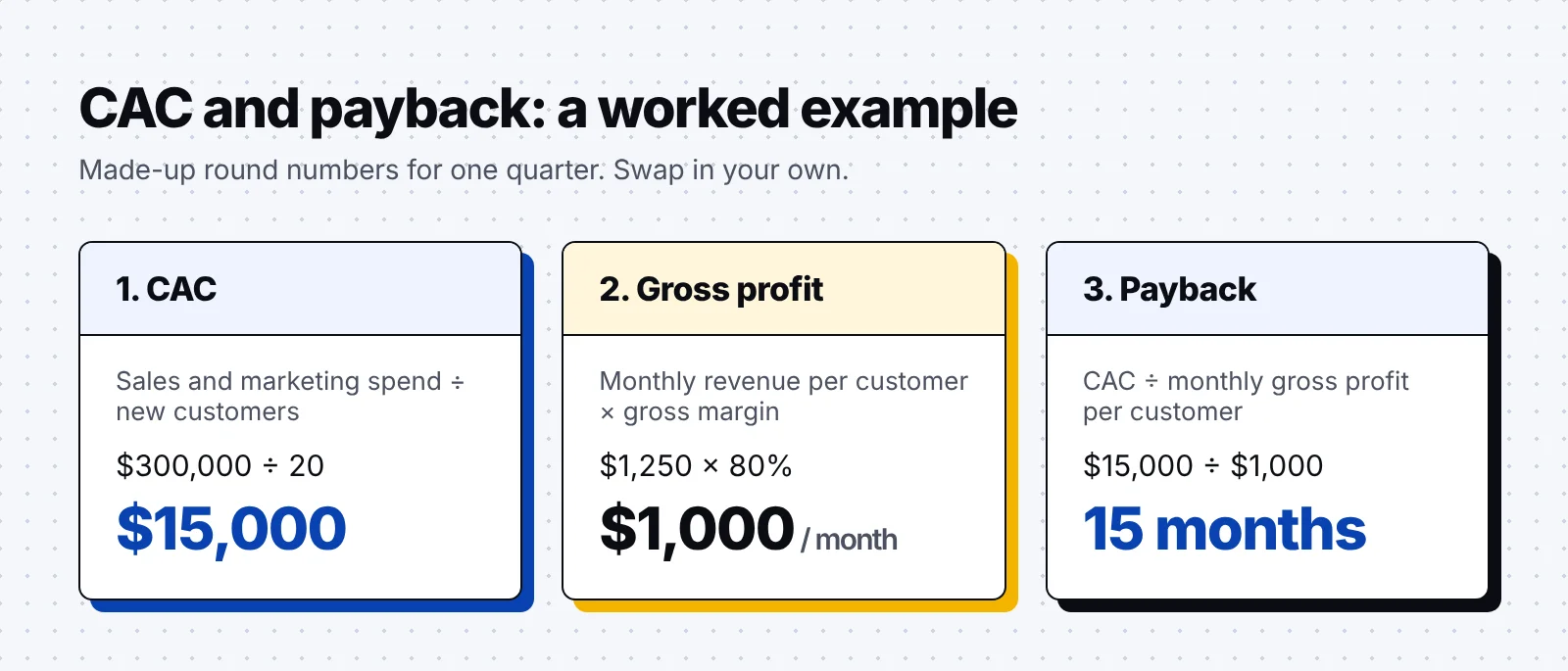
Here's an example with made-up round numbers, so swap in your own. Say you spend $300,000 on sales and marketing in a quarter and win 20 customers, each paying $1,250 a month at an 80% gross margin.
| Step | The math (example inputs) | Result |
|---|---|---|
| CAC | $300,000 ÷ 20 customers | $15,000 |
| Monthly gross profit per customer | $1,250 × 0.80 | $1,000 |
| CAC payback | $15,000 ÷ $1,000 | 15 months |
Thankfully, the math stays this simple for every channel you run, so you can repeat it each quarter. In this example, each new customer earns back its acquisition cost in 15 months, as the card below shows:
CAC and payback benchmarks
Benchmarks give you a range to compare against, though the trend in your own numbers matters more. These are the most recent figures we could confirm:
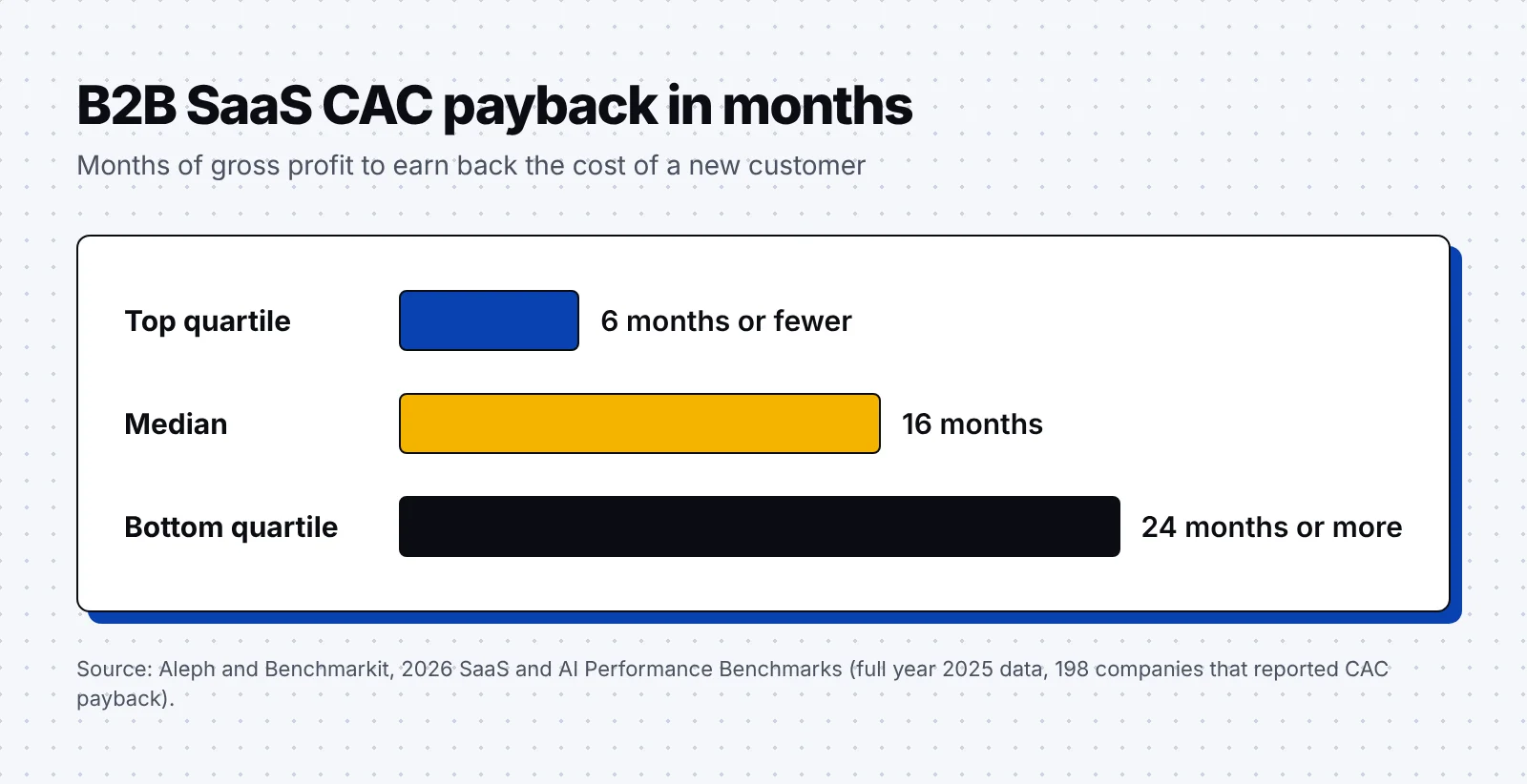
- In the 2026 Aleph and Benchmarkit benchmark, the median B2B SaaS company earned back its CAC in 16 months, based on full year 2025 data.
- In the same benchmark, top quartile companies paid back CAC in 6 months or fewer, while the bottom quartile took 24 months or more.
- In Maxio's 2025 SaaS benchmark review, the new CAC ratio rose from $1.76 in 2023 to $2.00 in 2024. That ratio is sales and marketing spend for each $1 of new ARR.
The new CAC ratio divides sales and marketing spend by new ARR, while the formula above divides it by new customers. Fortunately, both start from the same spend figure, so you can track them side by side each quarter.
B2B customer acquisition channels compared
The right channel mix depends on your deal size, where your buyers research and how fast you need results. This table compares eight common channels:
| Channel | Time to results | Cost type | Best for |
|---|---|---|---|
| SEO and GEO | Months, then it compounds | Fixed: content and expertise | Buyers who search for the problem in Google and AI chatbots |
| Content | Months | Fixed: writers, research and design | Long sales cycles where a buying group needs to learn |
| Paid search | Days | Variable: pay per click | Buyers searching for your category right now |
| LinkedIn ads | Days to weeks | Variable: pay per click or view | Reaching set job titles at named companies |
| Outbound | Weeks | Fixed: sales team and data | High value accounts with a clear buying trigger |
| Partners | Months | Shared revenue or commission | Markets where agencies or resellers already advise your buyers |
| Events | Weeks to months | Fixed: cost per event | Large deals that need trust and time face to face |
| Product-led | Weeks to months | Fixed: product work and free users | Products a user can try alone and get value from fast |
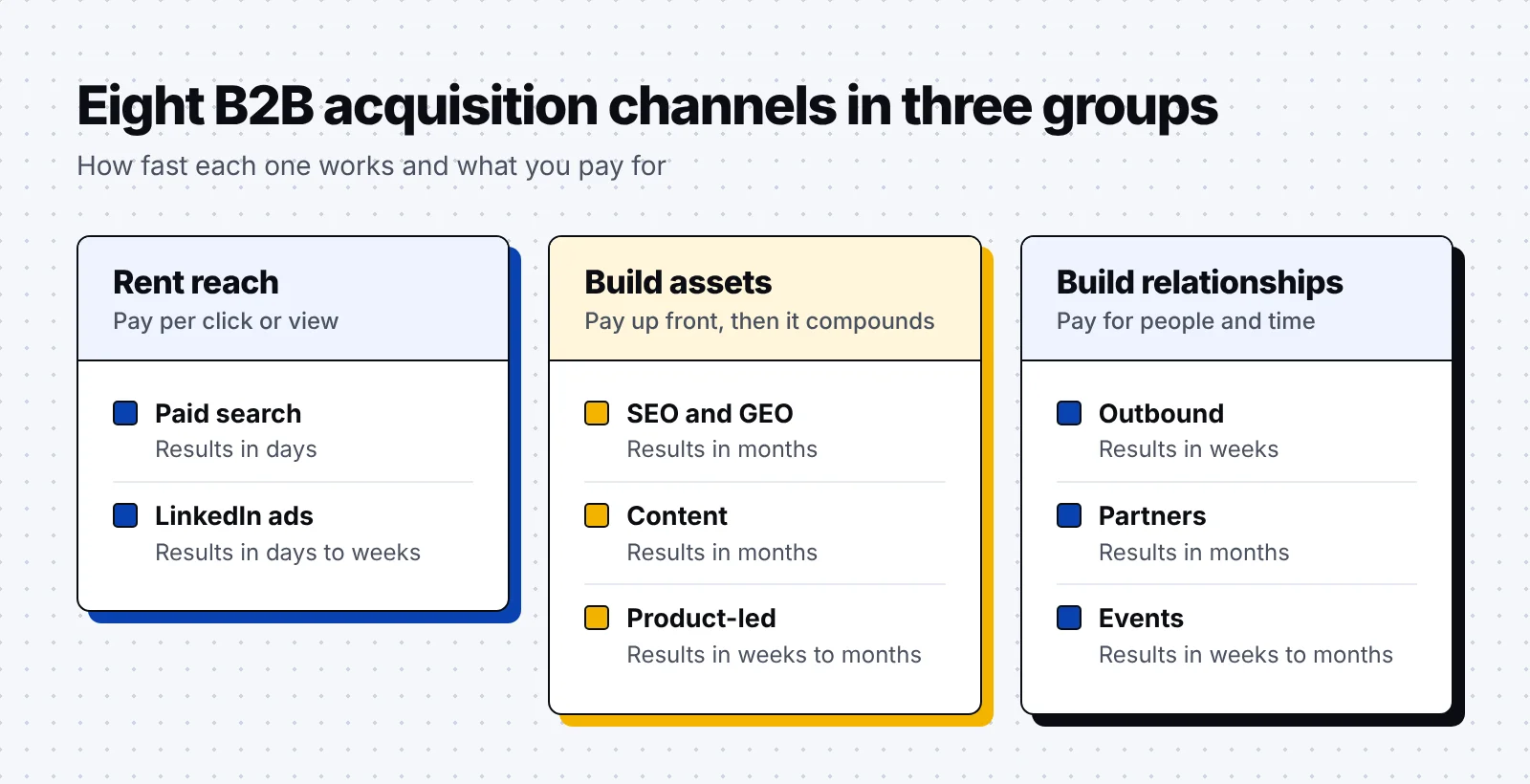
The eight channels fall into three groups by what you pay for. Paid channels rent reach and stop when the budget does, while owned assets and relationships take longer to build and keep working after you invest:
Interestingly, more and more buyers now begin their research in AI chatbots instead of a search engine. In G2's March 2026 survey of 1,076 software buyers, 51% start in a chatbot more often than in Google, up from 29% a year earlier. That makes GEO, the work of getting your brand into AI answers, part of most plans.
Our guide to inbound vs outbound lead generation helps you weigh the two main motions. For software teams, our SaaS demand generation guide shows how to build pipeline that compounds.
How to build your acquisition strategy in 6 steps
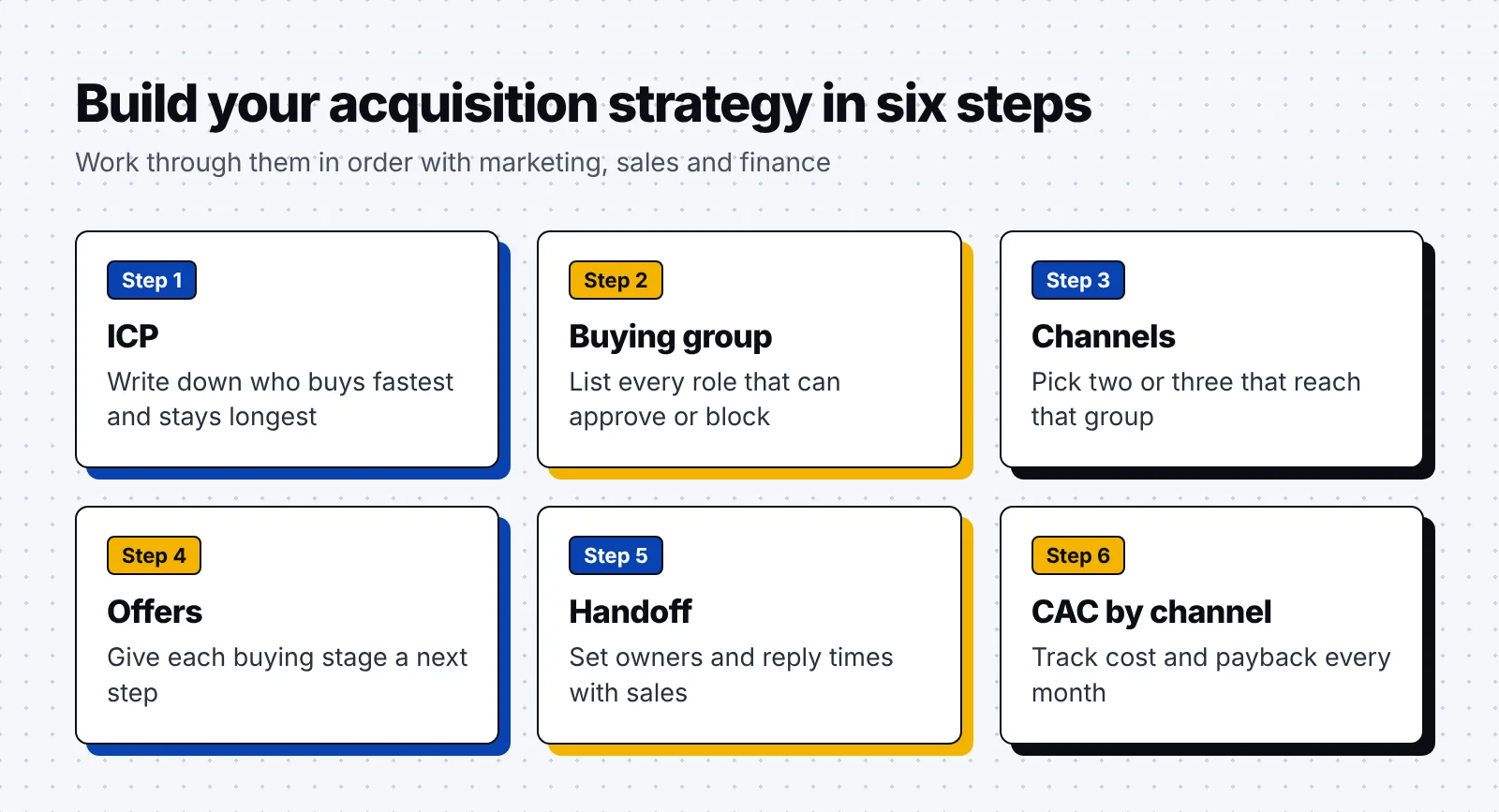
These six steps take you from a target market to a monthly CAC report by channel. Work through them in order with your marketing, sales and finance leads:
1. Define your ideal customer profile
Your ideal customer profile (ICP) describes the companies that buy fastest and stay the longest. Build it from your best current customers, then check it against the deals you lost. A useful ICP covers these points:
- Company facts such as industry, size, region and growth stage.
- The tools they already use, which hint at fit and budget.
- The trigger that makes them look for a fix, such as a new leader or a funding round.
- Disqualifiers that tell sales to walk away early.
Keep the ICP to one page, so sales and marketing both use it when they pick accounts and write copy.
2. Map the buying group
Most B2B deals need sign off from many people, so list every role that can approve or block a purchase. In Forrester's 2026 State of Business Buying, a typical buying decision includes 13 internal stakeholders and nine external influencers.
For each role, write down what they care about and what proof they need to see:
- The daily user wants proof the product fits the way they work.
- The budget owner wants a clear return and a payback period.
- IT and security want answers on data, access and integrations.
- Procurement wants clear terms, and Forrester found procurement teams are decision makers in 53% of business buying cycles.
3. Pick two or three channels
Choose channels by where your buying group does research and by the size of your deals. Start with two or three, give each one a full quarter of budget, then add more once you know their CAC.
We use deal size as the first filter when we plan a mix with clients:
- Small, self-serve deals need low-touch channels such as SEO, content and a free plan.
- Mid-size deals fit a mix of search, LinkedIn ads and targeted outbound.
- Large deals need outbound, events and partners, backed by content for every role in the buying group.
4. Match an offer to each buying stage
Give buyers a next step that fits where they are in the decision. Early on that's a guide or a free tool, and later it's a trial, a demo or a business case:
| Stage | The buyer asks | Offer |
|---|---|---|
| Aware of the problem | Is this worth fixing now? | Research report, guide or free tool |
| Comparing options | Which approach suits a team like ours? | Comparison page, calculator or webinar |
| Choosing a vendor | Will this work for us? | Free trial, demo or case study from their industry |
| Getting approval | Can we justify the spend? | ROI model, security pack and open pricing |
Keep pricing and comparison pages open, since buyers use them to build a short list. Forrester also found that more than 60% of business buyers now use a trial, which makes a trial or sandbox worth testing.
5. Plan the handoff from marketing to sales
Agree on the rules that move a lead from marketing to sales, so no good account waits. Write them into a shared service level agreement (SLA) that covers these points:
- A lead score that combines fit with intent, such as a demo request.
- One owner for every lead, assigned by territory, account or round robin.
- A reply time for each lead type, plus a rule for what happens when it's missed.
- A reason code for every rejected lead, so marketing can fix the source.
Luckily, leads that aren't ready yet still have value, so send them back to marketing for a nurture sequence with content picked for their role.
6. Measure CAC by channel
A blended CAC hides which channels pay for themselves, so split spend and new customers by the channel that sourced each deal. This example uses the same made-up quarter as above:
| Channel (example) | Spend in the quarter | New customers | CAC |
|---|---|---|---|
| SEO and content | $60,000 | 8 | $7,500 |
| Paid search | $90,000 | 6 | $15,000 |
| Outbound | $150,000 | 6 | $25,000 |
| Total | $300,000 | 20 | $15,000 |
The blended CAC is $15,000, yet outbound costs more than three times as much per customer as SEO and content. Review this table monthly and judge each channel on payback, since lead volume alone can mislead.
Helpfully, a "How did you hear about us?" field on your demo form catches sources that tracking misses, such as podcasts, peers and AI chatbots.
B2B customer acquisition examples from real companies
These four B2B companies each lean on a different channel from the table above, and we opened every page in November 2026.
1. Clay
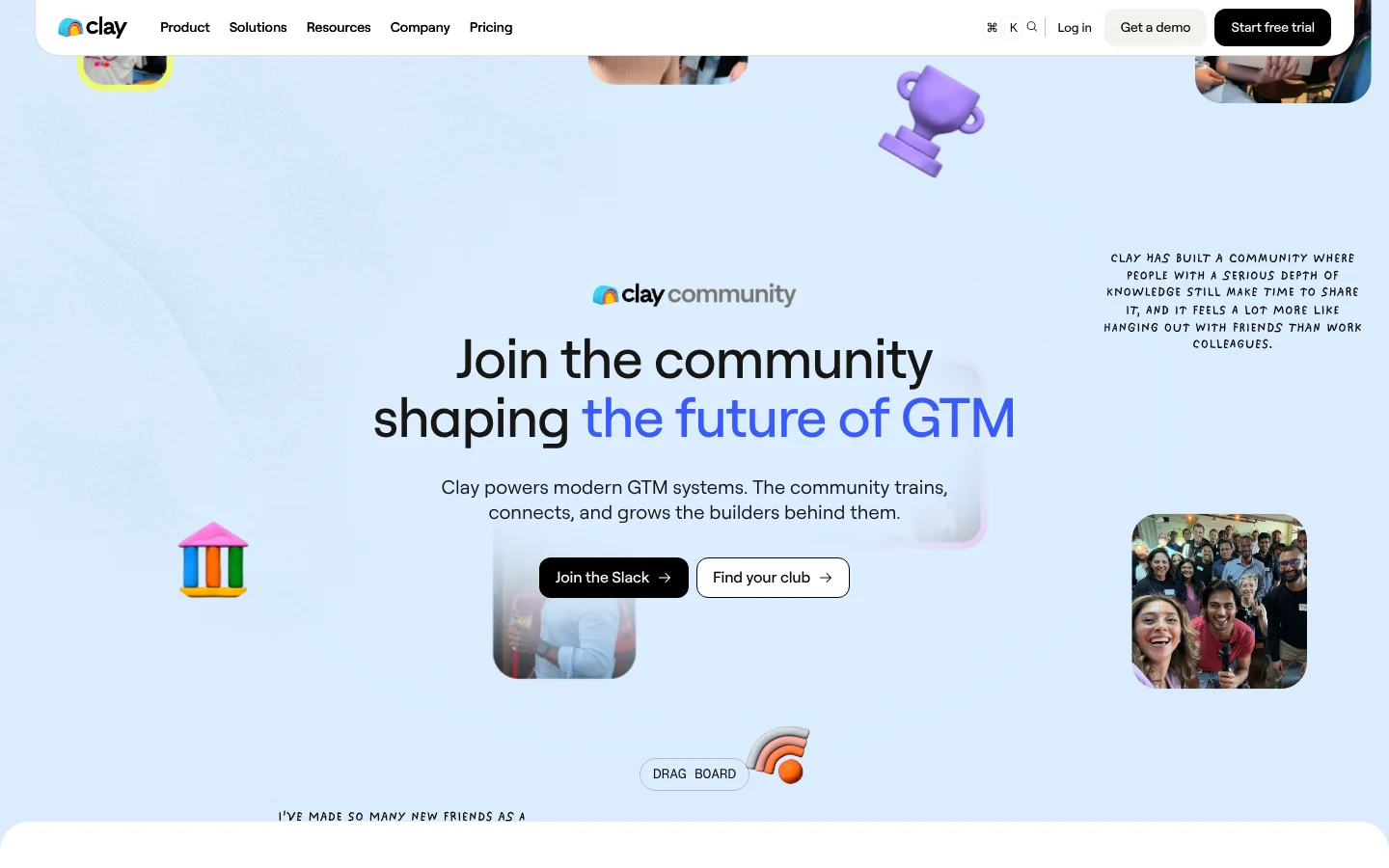
Clay is a go-to-market data software company that helps sales and marketing teams find data, run AI workflows and launch campaigns. Its community runs Clay Clubs in 90+ cities across 50 countries, a Slack group with 35k members and 250+ events a year.
Happily, the Slack group, Clay Clubs, Clay University and livestreams are free. Club hosts get budget, playbooks, promotion and swag from Clay to run their local events.
Why it works:
- Members teach each other, so new users learn the product without a sales call.
- Every meetup puts Clay in front of the people who choose sales and marketing tools.
What you can borrow:
- Turn your best customers' workflows into free lessons and templates.
- Back local meetups run by power users with a small budget and a playbook.
2. Ramp
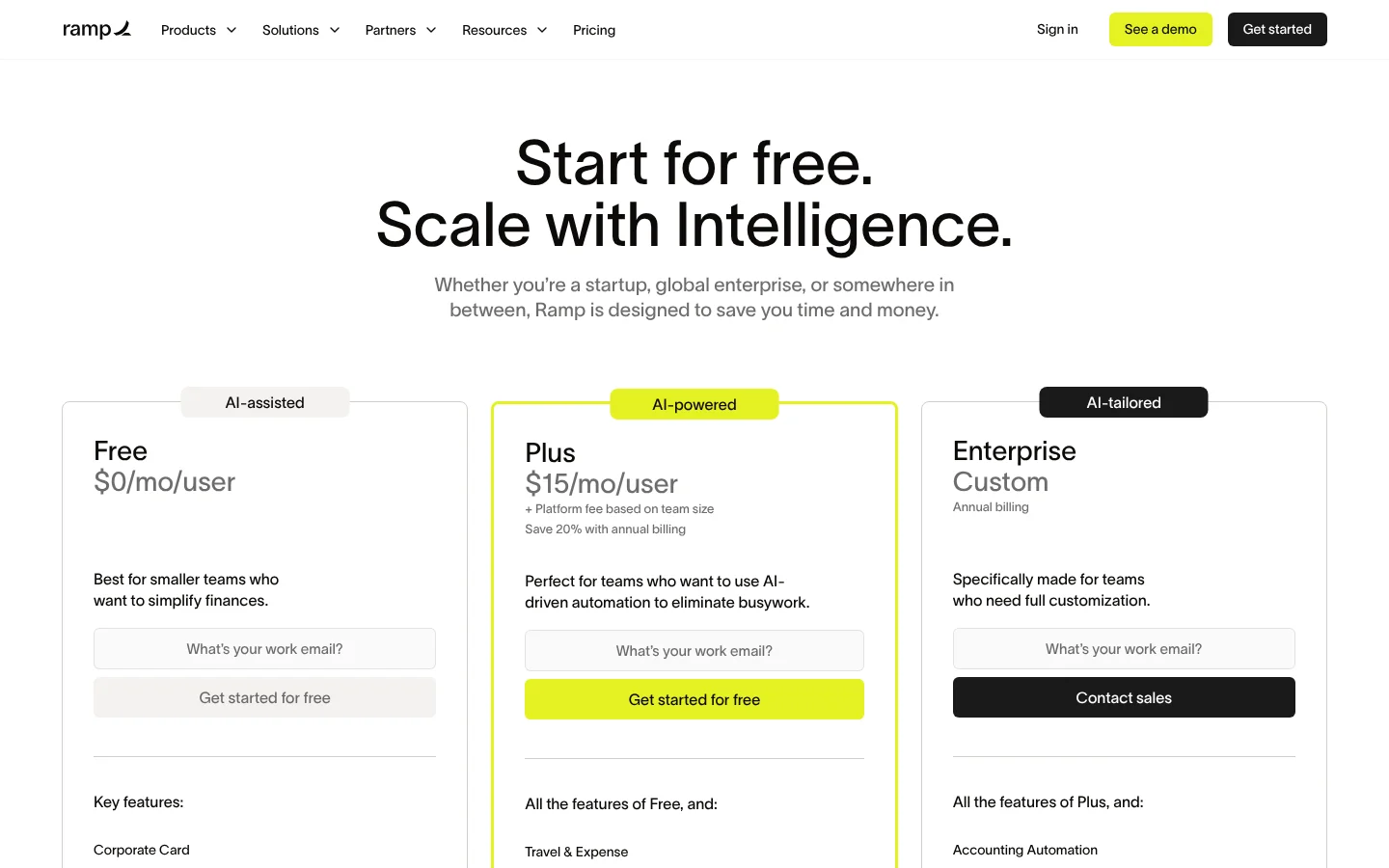
Ramp is a finance software company that offers corporate cards, expense management, bill payments and accounting automation. Its free plan costs $0 per user per month and includes corporate cards, bill pay and QuickBooks Online and Xero integrations.
The Plus plan costs $15 per user per month plus a platform fee. Ramp also offers free tools such as a savings calculator, a mileage reimbursement calculator and an expense policy builder.
Why it works:
- A finance team can sign up and get value before it talks to sales.
- Free tools answer tasks finance teams search for, which brings in buyers early.
What you can borrow:
- Offer a free tier that does a real job, with clear limits that lead to the paid plan.
- Build small free tools around the tasks your buyers already search for.
3. Gong
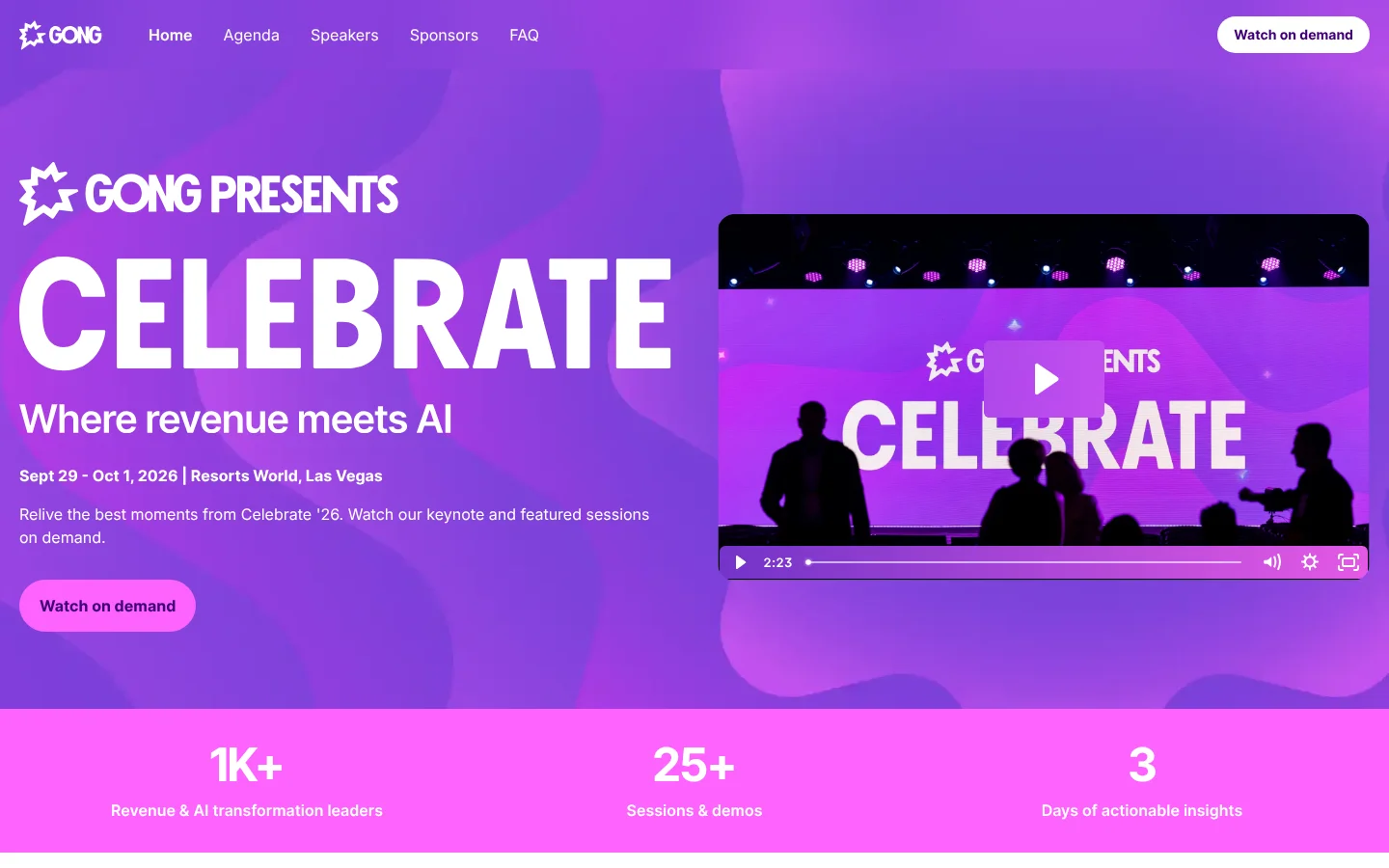
Gong is a revenue AI company that analyzes sales calls and deals to help teams win more business. Its yearly event, Celebrate, ran from September 29 to October 1, 2026 in Las Vegas for 1,000+ revenue and AI leaders.
The 25+ sessions and demos mixed keynotes, product news, workshops and talks where companies shared how they use AI to win. The keynote and featured sessions are now on demand, next to a sign-up for Celebrate 2027.
Why it works:
- Peer sessions show buyers how teams like theirs use the product, which builds trust.
- On-demand recordings keep reaching buyers who couldn't travel to the event.
What you can borrow:
- Start with a small customer event and grow it once people ask for more.
- Record every session and turn the talks into content for the rest of the year.
4. HubSpot
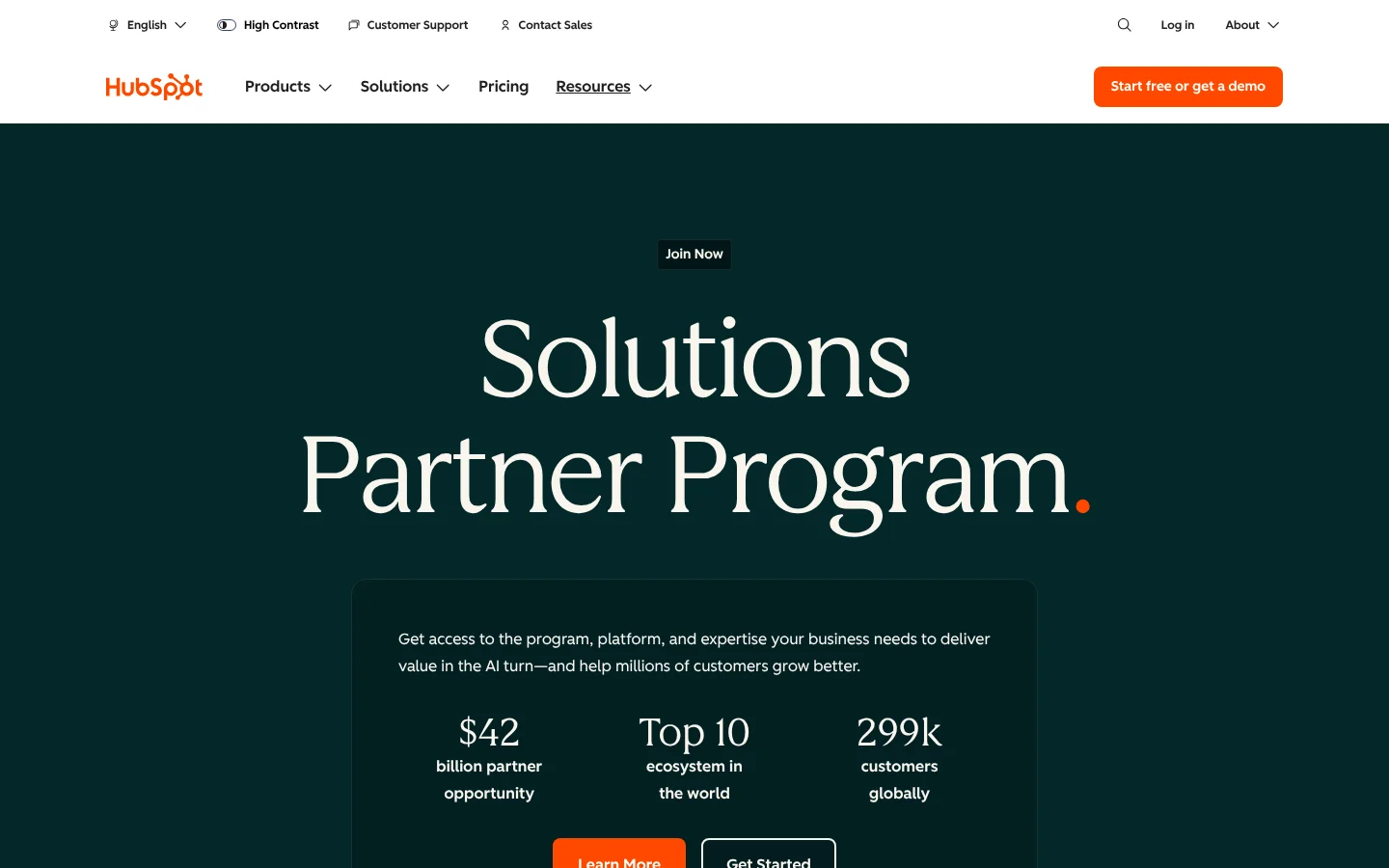
HubSpot is a CRM software company that sells tools for marketing, sales and customer service teams. Its Solutions Partner Program pays agencies and consultancies a 20% commission for 3 years on the deals they bring to HubSpot.
The partner package starts at $400 a month and can waive HubSpot onboarding fees for a partner's clients, worth up to $6,000 per client.
Why it works:
- Agencies already advise HubSpot's buyers, so each partner becomes a sales channel.
- Commission over 3 years rewards partners for bringing in clients who stay.
What you can borrow:
- List the agencies and consultants your buyers already trust, then contact the top ten.
- Pay partners on retained revenue, so they bring in customers who fit.
Common customer acquisition mistakes
Most acquisition plans that stall run into the same few problems, so watch for these:
- Spreading a small budget across many channels, so none gets enough to show results.
- Tracking leads and MQLs while you ignore CAC and payback by channel.
- Writing an ICP once and never checking it against won and lost deals.
- Selling to one contact when a whole buying group has to say yes.
- Hiding pricing and comparison pages that buyers need to build a short list.
- Cutting SEO and content after one quarter, before they've had time to work.
- Leaving AI search out of the plan, even though 51% of software buyers in G2's survey start research there more often than in Google.
B2B customer acquisition checklist
Run through this checklist before you add a new channel, and again each quarter. The card holds the six checks that matter most:
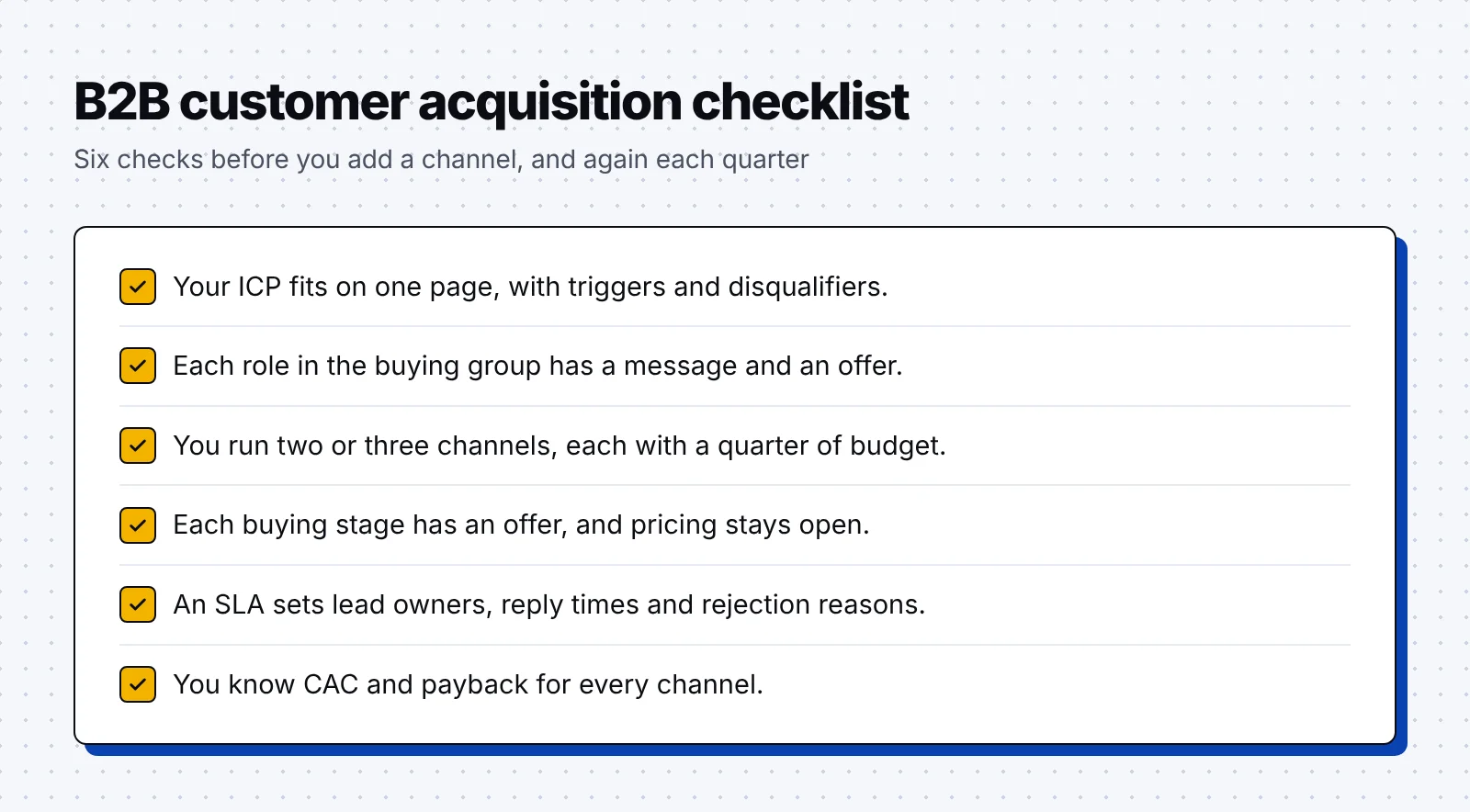
The full list follows the steps in this guide, so you can hand each group to the person who owns it.
Plan
- Your ICP fits on one page and lists triggers and disqualifiers.
- Each role in the buying group has a message, a proof point and an offer.
- You run two or three channels, each with a full quarter of budget.
Convert
- Each buying stage has an offer, and pricing and comparison pages stay open.
- An SLA sets lead owners, reply times and reasons for rejected leads.
- Leads that aren't ready go into a nurture sequence by role.
Measure
- You know CAC and payback for every channel, updated each month.
- Your demo form asks how the buyer heard about you.
- Your brand shows up for your main topics in Google and in AI answers.
FAQ
What is a B2B customer acquisition strategy?
A B2B customer acquisition strategy is a plan for winning new business customers at a cost your margins can carry. It sets your ideal customer, the channels and offers that reach them, the handoff to sales and how you measure CAC by channel.
How do you calculate customer acquisition cost?
Divide your total sales and marketing spend for a period by the number of new customers you won in that period. For example, $300,000 of spend and 20 new customers gives a CAC of $15,000.
What is a good CAC payback period for B2B SaaS?
A good CAC payback period beats the median of 16 months in the 2026 Aleph and Benchmarkit benchmark of full year 2025 data. Top quartile companies in that benchmark paid back CAC in 6 months or fewer.
Which acquisition channel works best for B2B?
The best channel is the one where your buying group already does research, at a CAC your margins can carry. Paid search and LinkedIn ads work fastest, while SEO, GEO and content take months but keep working after you invest.
How many acquisition channels should a B2B company use?
Start with two or three channels and give each one a full quarter of budget. Add a new channel once you know the CAC and payback of the ones you already run.
How is AI changing B2B customer acquisition?
More B2B buyers now start their research in AI chatbots, which makes showing up in AI answers part of acquisition. In G2's March 2026 survey, 51% of B2B software buyers started research in an AI chatbot more often than in Google.
A good first step is to pull last quarter's spend and new customers by channel from your CRM and work out CAC for each one. If SEO and AI search look like your cheapest channels, start with a free AI visibility audit to see where buyers find you now.