Topical authority
Topical authority is how much Google and AI tools trust your site on one subject, based on how fully and how well you cover it. A cybersecurity startup with 40 useful pages on cloud security will usually rank a new cloud security page faster than a general tech blog would.
What is topical authority?
Topical authority is how much search engines and AI tools trust your site on one subject. It comes from how fully you cover that subject, how good each page is and how often other trusted sites on the same subject point to you.
Let's say you sell warehouse management software. Over two years, you publish 50 useful pages on warehouse operations, from slotting and cycle counts to pick paths and returns. A general business blog publishes one article on cycle counting. When you both publish a new page on cycle count accuracy, yours will usually rank sooner, because Google has already seen that your site knows the subject.
You build it with topic clusters, real expertise and links from sites in your field. You can't buy it with one viral post.
Why topical authority matters for B2B SaaS
Google has said outright that it cares about topic-level trust in at least one area. In a May 2023 Search Central post, it described a topic authority system that helps it find expert sources for news searches in fields like health, politics and finance. The Google API documents that leaked in 2024 also list an attribute called siteFocusScore, according to Mike King's analysis at iPullRank, though Google hasn't confirmed how it's used.
For B2B SaaS, the payoff is speed and reach. Once you're trusted on a subject, new pages on that subject climb faster and older pages hold their spots.
Here's why I treat topical authority as the goal behind most SEO plans:
- New pages start ahead: A comparison page published on a trusted site ranks faster than the same page on a site Google knows nothing about.
- AI tools pick specialists: When ChatGPT or Perplexity looks for a source on a narrow question, a site with deep coverage of that topic gives it more good pages to choose from.
- It's hard to copy: A rival can match one article in a week. Matching two years of focused work on one subject takes them two years.
- It points your whole team in one direction: Picking a topic to own makes it easier to say no to random content ideas that don't fit.
How to build topical authority
Topical authority comes from focus and depth, built up over months. Here's my process:
- Pick the subject you can own: Choose the topic closest to the problem your product solves, narrow enough that you could cover it better than anyone in a year. "Warehouse operations" works for warehouse software, while "supply chain" is too wide for a small team.
- Map every question: I research the subtopics with SEMRush, Google and Reddit, then group them into clusters with one page per search intent. The map shows what full coverage looks like.
- Write with real expertise: Bring in your product team, your customers and people who've done the job. Pages that show first-hand experience match what Google's E-E-A-T guidance asks for.
- Link it all together: Connect each cluster with internal links in the body text, so Google and readers can see how the pages fit.
- Earn links and mentions from your field: Get quoted in trade press, share original data and show up in the communities your buyers read. A link from an industry site counts more here than one from a general directory.
- Stay on topic: Every off-topic post dilutes the picture of what your site is about. If an idea doesn't fit a cluster, put it on LinkedIn instead.
Topical authority examples
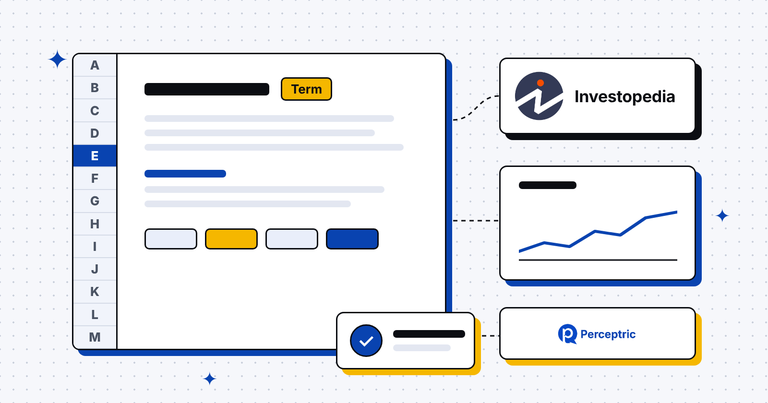
Investopedia is the textbook case. It gives each financial term its own page, and in 2025 it listed more than 30,000 free articles and reached more than 44 million readers a month, according to Information Today. Almost everything on the site is about money and investing. We broke down how it got there in how Investopedia does SEO.
Katalon, a test automation platform, is the clearest example from my own work. Its content stays on software testing, the niche I used to work in. We've worked with B2B software brands like Katalon, Arrowsterr and Omniscient, and Katalon grew ARR 4x, with 80%+ of that growth coming from SEO. ChatGPT, Claude and Perplexity now cite its content. You can read the Katalon case study.
How to measure topical authority
No tool gives you a single topical authority number you can trust. So track signs that Google and AI tools see you as the expert. Here's what I watch:
- Queries per topic: In Google Search Console, filter by the URLs in one cluster and count how many queries they rank for in the top ten. That number should grow every quarter.
- Time to rank for new pages: Note how many weeks each new page takes to reach page one. When a new page on your core topic ranks within weeks, you're building authority.
- Share of the topic: In SEMRush or a similar tool, compare how many keywords in your topic you rank for against your top three competitors.
- AI citations on topic prompts: Run 20 to 30 prompts about your subject in ChatGPT, Perplexity and Google AI Mode every month. Count how often your pages show up as sources.
- Links from your field: Track new referring domains that are about your topic. A handful of links from industry sites says more than dozens from unrelated blogs.
Common topical authority mistakes
- Writing about everything: A blog that jumps from productivity tips to company news to AI trends never gets trusted on any one of them. Pick a subject and stay there.
- Counting pages instead of covering questions: Fifty thin posts that repeat each other don't add up to authority. Each page should answer a question the others don't.
- Skipping real experts: Articles written from other articles all sound the same. Interview the people who know the work first-hand.
- Leaving old pages to rot: Facts and tools change. In a 2026 Seer Interactive study of 4,124 pages cited by ChatGPT, Gemini and Perplexity, 72% had been updated within the last year, so put your core pages on a refresh schedule.
- Ignoring other sites: Your own pages can only say so much. If no industry site, review or forum mentions you on the subject, it's harder for Google and AI tools to trust your claims.
Here's a question worth asking your team this week. If a buyer could only read your site to learn your subject, what would they still have to look up somewhere else?
Read more

FAQ
Is topical authority a Google ranking factor?
Google hasn't published a single topical authority score for most searches. It has described a topic authority system for news, and its guidance rewards expertise, so most SEOs treat deep coverage of one subject as a strong signal.
How long does it take to build topical authority?
Plan for six to twelve months on one topic. You need enough useful pages for Google and AI tools to see a pattern, plus time for those pages to earn links and mentions.
Can a small site have topical authority?
Yes. A small site that covers one narrow subject very well can outrank a huge site that covers it in passing. Depth on one subject matters more than the total number of pages.
What's the difference between topical authority and domain authority?
Domain authority scores, like Ahrefs' Domain Rating, measure the strength of a site's backlinks across every subject. Topical authority is about trust on one subject, so a site with modest link scores can still win on its specialty.