People Also Ask
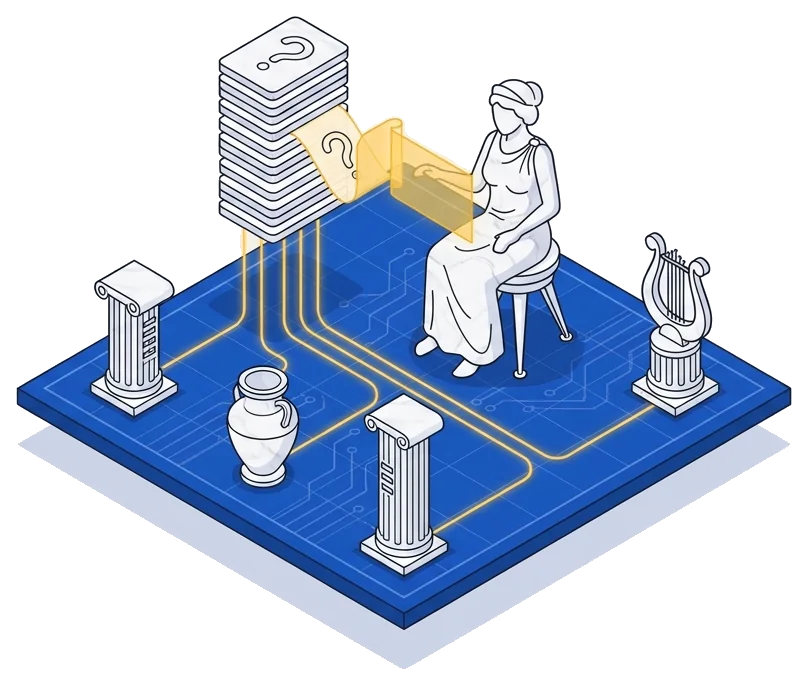
People Also Ask is the Google results box of related questions that open into short answers, each with a link to the page it came from. Search "what is SOC 2" and you'll often see follow-ups like "Who needs SOC 2 compliance?" and "How long does a SOC 2 audit take?"
What is People Also Ask?
People Also Ask, or PAA, is the box of related questions Google shows on many search results pages. Each question opens into a short answer pulled from a web page, with a link to that page. Open one, and Google adds more questions to the list.
Let's say you sell compliance automation software. A CTO searches "what is SOC 2". Under the first results, Google shows questions like "Who needs SOC 2 compliance?", "How long does a SOC 2 audit take?" and "What is the difference between SOC 2 Type 1 and Type 2?" Each answer names its source. If one of them is your page, your brand sits right in her research.
Here's how the box grows as someone uses it, based on Semrush's 2020 study of a million US keywords:
How a People Also Ask box expands
- 1A search shows a box with about four related questions
- 2The person opens one question
- 3A short answer appears with a link to its source page
- 4Google adds new related questions below
- 5Each new question opens the same way
That's why one search can turn into a long trail of questions. And every question on that trail is a real thing your buyers ask.
Why People Also Ask matters for B2B SaaS
PAA is one of the most common things on a Google results page. In Semrush's 2020 study, it showed up on 49.37% of desktop results in a set of a million keywords. For B2B SaaS, it matters for two reasons.
The first is research. PAA shows you the follow-up questions buyers have after the main search, in their own words. For a SaaS team, those questions often point straight to objections sales hears every week, like "Is SOC 2 required by law?" or "How much does a SOC 2 audit cost?"
The second is visibility. A page cited in a PAA answer gets its name and link in front of the searcher, even when they never scroll to the regular results. That's the same logic as a featured snippet, and it matters more as zero-click searches grow.
PAA is also changing. AlsoAsked data that Mark Williams-Cook shared in October 2025 showed AI-generated answers in 38% of PAA boxes on English searches, up from 18% three months earlier, as reported by Search Engine Roundtable. Those answers still lean on pages Google trusts for the topic, so clear answers on strong pages keep their value.
How to use People Also Ask
I use PAA in two ways: to plan content and to shape the answers on pages I already have. Here's my process:
- Collect the questions: Search your main keywords in Google and open a few questions to see the trail. AlsoAsked and Semrush both pull PAA questions at scale. I also check Reddit, because the questions there show the same worries in rougher words.
- Group them by page: Put each question under the page that should answer it. A question about cost belongs on the pricing or cost guide. A question about Type 1 vs Type 2 might deserve its own section.
- Use the question as a heading: Write the question as an H2 or H3, close to how people phrase it. Then answer it in the first two sentences under the heading.
- Keep the answer short and complete: Aim for one clear paragraph that makes sense on its own. Add the depth and examples after it.
- Answer the buying questions too: Questions like "Is [tool] worth it?" or "How much does [category] cost?" are close to a decision. Those are the ones to answer first.
A People Also Ask example
Here's what a good PAA answer could look like for the hypothetical compliance company. The page has a heading that matches the question and a short answer right under it:
Example: the answer under one hypothetical PAA question
How Long Does a SOC 2 Audit Take? Timeline by Type
A SOC 2 Type 1 audit checks your controls at one point in time and can wrap up in weeks once you're ready. A Type 2 audit tests them over an observation period of several months, so plan for the full period plus the auditor's review.
The answer is short, plain and complete, and it names both types so the reader gets the full picture in one glance. The rest of the page can then go deeper with a timeline table and a readiness checklist.
Here's how the same company could map PAA questions to pages:
| PAA question | Page that should answer it |
|---|---|
| Who needs SOC 2 compliance? | The main "What is SOC 2" guide |
| How long does a SOC 2 audit take? | A SOC 2 timeline guide |
| How much does a SOC 2 audit cost? | A SOC 2 cost guide with a price range table |
| Is SOC 2 required by law? | A short section in the main guide |
How to measure People Also Ask
PAA doesn't have its own report in Search Console, so I track it through a few sources:
- PAA tracking in your SEO tool: Semrush and Ahrefs can show which of your keywords trigger a PAA box and whether your page appears in it. Check the list each month.
- Question queries in Search Console: Filter queries that contain "how", "what", "why" or "is". Rising impressions on those often mean your answers are getting picked up.
- Rankings for the page: Pages that win PAA spots usually rank well for the main keyword too. Watch both together.
- AI answers: Run the same questions in ChatGPT, Perplexity and Google AI Mode. Clear answers that Google picks for PAA tend to get quoted elsewhere too.
Common People Also Ask mistakes
- Stuffing every question into one FAQ: A page with 30 loosely related questions helps no one. Answer the ones that fit the page and give big questions their own section or page.
- Burying the answer: If the answer sits three paragraphs below the heading, Google has to dig. Put it first.
- Copying the question without answering it: A heading that repeats the question followed by a sales pitch won't get picked. Give the real answer.
- Ignoring the buying questions: Teams often answer the "what is" questions and skip "how much" and "is it worth it". Those are the ones closest to a deal.
Here's a quick first step. Search your most important keyword and open the first two PAA questions. Does your site answer either one in the first two sentences of a section?
Read more
FAQ
How do you get into People Also Ask?
Answer the question in a short paragraph right under a heading that matches it, on a page that already ranks for related searches. Google pulls PAA answers from pages it trusts on the topic, so ranking on page one for nearby searches helps a lot.
Do People Also Ask boxes bring traffic?
Some. Many people read the answer and keep scrolling, so clicks are smaller than a regular top result. The bigger value is the research: every question is something real searchers want answered.
Are People Also Ask answers written by AI now?
More of them are. AlsoAsked data shared in October 2025 showed AI-generated answers in 38% of People Also Ask boxes on English searches, up from 18% three months earlier.
How many questions does People Also Ask show?
Usually four at first, sometimes three, based on Semrush's 2020 study of a million keywords. Each time you open one, Google adds more related questions below it.