LLM (large language model)
An LLM is the kind of AI model behind ChatGPT, Claude and Gemini, trained on huge amounts of text to understand questions and write answers. On its own it answers from training, so AI search tools add live web search, which is why pages crawlers can read matter.
What is an LLM?
An LLM, or large language model, is an AI model trained on a huge amount of text so it can understand a question and write an answer. It works by predicting the most likely next word, over and over, based on the patterns it learned. The models behind ChatGPT, Claude, Gemini and Meta's Llama are all LLMs.
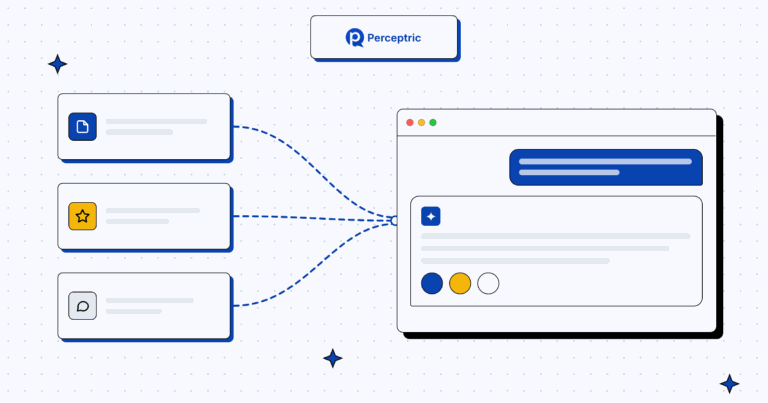
An LLM learns about the world during training, which stops at a cutoff date. After that, it knows nothing new unless the product around it goes and looks. That's why most AI tools now add live web search: the model searches, reads a few pages and writes its answer from them, often with links. This setup is called RAG, short for retrieval augmented generation.
Let's say you sell help desk software and launched an AI phone agent in March. A buyer asks ChatGPT "does [your brand] handle phone support?" If ChatGPT answers from the model's memory alone, it may say no, because its training ended before the launch. If it searches first and finds your updated product page, it says yes and links to you.
Why LLMs matter for B2B SaaS
Your buyers now ask LLMs for advice before they ever reach your site. They ask for shortlists, comparisons and pricing, and they often trust the answer enough to act on it.
LLM answers also change from one run to the next. In SparkToro's research, there was less than a 1 in 100 chance that ChatGPT or Google's AI gave the same list of brands in two answers to the same prompt. That means one check tells you very little, and you have to look at patterns across many runs.
Here's what I think every B2B marketer should understand about how LLMs see their brand:
- Training memory is slow to change: What a model learned about you a year ago can stick around until the next model comes out. Old pricing or a retired product name can keep showing up.
- Live search is where you can act fast: When search is on, the answer is built from pages the tool finds today. A clear, current page can change the answer within weeks.
- Each company runs different crawlers: OpenAI uses GPTBot for training and OAI-SearchBot for ChatGPT search. Anthropic runs ClaudeBot for training plus Claude-SearchBot and Claude-User for search and live fetches.
- Other sites shape the answer: LLMs repeat what many sources agree on. Reviews and forum threads about you carry a lot of weight.
How LLMs find and use your content
You can't edit what a model learned in training. But you can make your pages easy to find and quote when it searches. Here's my process:
- Let the search crawlers in: Check your robots.txt and CDN settings for OAI-SearchBot, Claude-SearchBot and PerplexityBot. Blocking a training crawler like GPTBot is a separate choice and won't remove you from ChatGPT search. The AI crawler entry covers each bot.
- Serve your main content as HTML: Most AI crawlers don't run JavaScript. If your pricing table or feature list only appears after scripts load, the crawler may see an empty page.
- State the facts plainly: Put what your product does, who it's for, what it costs and what it connects to in plain sentences and tables. An LLM quotes clear facts much more easily than marketing slogans.
- Keep names consistent: Use the same product and plan names everywhere you appear, from your docs to your G2 profile. Mixed names make it harder for a model to connect the facts to you.
- Earn mentions on other sites: Get reviews on G2 and Capterra, get onto the "best tools" lists that rank for your category and take part in the Reddit threads where buyers ask for advice.
An LLM example
Here's a hypothetical example. A help desk software company asks the same question in three places, "what does [brand] cost for a 20-agent support team?", and gets three different answers:
| Where the answer came from | What it said | What the team fixes |
|---|---|---|
| A model answering from memory | Last year's per-seat price | Nothing quick, but the next model picks up the new price if it's everywhere |
| An AI tool with search on | The current price, quoted from the pricing page | Nothing, the pricing page is doing its job |
| An AI tool that cited an old review site | A plan the company retired in 2025 | Asks the review site to update the listing |
The pattern tells the team where to spend time. The pricing page works, so they leave it alone and put their effort into the sources that feed old facts to the model. Our guide to GEO for B2B SaaS walks through the full process.
How to measure your brand in LLM answers
You can't see inside a model, but you can measure what it says. Here's what I track:
- Brand mentions across a prompt set: Run 30 to 50 buyer prompts in ChatGPT, Claude, Gemini and Perplexity every month. Prompt tracking shows how often you're named, and since answers vary, look at the share over many runs.
- Citations of your pages: Note which of your URLs appear as sources. Those are the pages LLMs find most useful, and they show you what to write more of.
- Accuracy: Read what each answer says about your pricing and features. Each wrong fact usually traces back to one page or listing you can fix.
- Crawler visits: Check your server logs or CDN dashboard for visits from OAI-SearchBot, Claude-SearchBot and PerplexityBot. No visits to a key page means it can't be quoted.
- AI referral traffic: In GA4, look at sessions from chatgpt.com, claude.ai, perplexity.ai and gemini.google.com, by landing page.
Common LLM mistakes
- Blocking every AI bot by default: Some security settings block all AI crawlers at once. Check which ones you're blocking, because the search crawlers are the ones that put you in answers.
- Testing once and panicking: One answer that leaves you out means little, because the next answer may differ. Track the same prompts over weeks.
- Expecting a fast change from memory: A model's training memory updates only when a new model ships. Fix your pages for live search first, and the memory catches up later.
- Writing for the model instead of the buyer: Pages stuffed with keywords and repeated questions read badly. LLMs quote pages that answer a buyer's question in plain words.
Here's a quick first step. Ask ChatGPT, with search turned off and then on, what your product costs. Do the two answers match your pricing page?
Read more

FAQ
What does LLM stand for?
LLM stands for large language model. It's a type of AI model trained on a huge amount of text so it can read a question and write a reply, and it's the technology behind ChatGPT, Claude, Gemini and Meta's Llama models.
Is ChatGPT an LLM?
ChatGPT is a product built on OpenAI's GPT models, which are LLMs. The product adds things on top of the model, like web search, file uploads and memory, which is why ChatGPT can talk about events after the model's training ended.
How do LLMs decide which brands to recommend?
They draw on what they learned in training and, when search is on, on the pages they find for that question. Brands that show up often and consistently across reviews, lists and their own clear pages are more likely to be named.
Can I stop LLMs from using my website?
You can block the crawlers that collect training data, like OpenAI's GPTBot or Anthropic's ClaudeBot, in your robots.txt. Blocking the search crawlers too would keep your pages out of AI answers, so most B2B SaaS companies leave those open.