Knowledge-Narrative content strategy
Knowledge-Narrative is the content strategy Perceptric uses with clients. The Knowledge part is search content that answers questions buyers already ask, and the Narrative part is thought leadership that shares a point of view.
What is the Knowledge-Narrative content strategy?
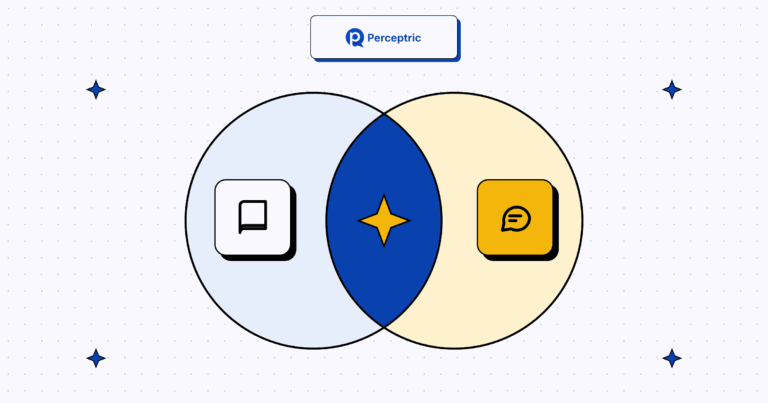
Knowledge-Narrative is the content strategy I use with almost every Perceptric client. It splits your content into two jobs. Each job needs a different style of writing, different channels and different metrics:
- Knowledge: Search content that answers questions buyers already ask. Think guides, how-tos, comparison pages and "best tools" lists, built to rank in Google and get cited in AI answers for years.
- Narrative: Thought leadership that shares a point of view. Think founder posts on LinkedIn, essays, newsletters and opinion pieces that give buyers a new way to look at their problem.
Here's what that looks like for a test automation company, the niche I used to work in. On the Knowledge side, you publish a page that answers "how to choose a test automation tool" or "Selenium alternatives". On the Narrative side, the founder posts their take on where test automation is heading and why their team builds the way it does.
Here's how the two sides compare:
| Aspect | Knowledge | Narrative |
|---|---|---|
| Purpose | Captures demand through search | Creates demand through ideas |
| Focus | Answers what people already search for | Introduces what people should start thinking about |
| Formats | Guides, tutorials, comparison pages | LinkedIn posts, essays, founder letters, newsletters |
| Channels | Google and AI answers | LinkedIn, email, podcasts and communities |
| Goal | Qualified traffic and leads | Trust and a brand buyers remember |
Why it matters for B2B SaaS
Through years of doing content marketing, I've noticed that most content teams pick one side. The SEO-first teams rank well, but their articles read like everyone else's, so buyers forget who wrote them. The opinion-first teams are memorable, but few people find their posts through search, so each piece fades a week after it goes out.
B2B buyers make up their minds early. According to Wynter's State of B2B SaaS Brand Marketing report, 92% of B2B buyers only purchase from the vendors already on their Day-1 shortlist. That means you need both jobs done. Knowledge content gets you found when a buyer searches. Narrative content gets your name into their head before they search at all.
The two sides also feed each other in AI search. Your Knowledge pages are the ones ChatGPT and Perplexity read and cite. Your Narrative work on LinkedIn gets your name mentioned in more places, and we wrote about how LinkedIn thought leadership can win AI brand mentions.
How to run a Knowledge-Narrative strategy
Both sides come from the same raw material: what your team knows and believes. Here's my process:
- Start with interviews: Sit with your founders, product leads, sales and support team, and record the calls. Pull out the questions buyers ask, the objections that come up and the opinions your team holds strongly.
- Build the Knowledge base first: Begin with BOFU pages like comparisons, alternatives and pricing, then move to how-to content for the jobs your product does. I do the keyword research with SEMRush, Google and Reddit.
- Write down what you believe: What does your brand stand for? What frustrates you about your industry? What hill are you willing to die on? Every Narrative piece should back up that stance.
- Distribute the Narrative: Narrative content has no search demand behind it, so distribution is the whole strategy. Post from your founders' LinkedIn profiles, send a newsletter and show up on podcasts and in the communities your buyers use.
- Link the two: Add a short opinion section or a link to a Narrative piece inside your best Knowledge articles. Then link from your Narrative posts back to the guides, so readers who come from LinkedIn find the depth.
A Knowledge-Narrative example
HubSpot is the classic Knowledge example. It built a huge resource center where buyers at any level can teach themselves about marketing, sales and service, and most of those articles are built around searches. HubSpot also publishes opinion pieces with no keyword behind them, like its articles on its Loop marketing idea. So one brand runs both sides.
For the Narrative side on LinkedIn, look at Noah Greenberg from Stacker. He posts his opinions on the state of his industry, and those posts reach people who would never have typed a keyword about it. On the Knowledge side, Zapier is the brand I point to for how-to content around the jobs people get done with its product.
We've worked with B2B software brands like Katalon, Arrowsterr and Omniscient, and this is the approach we almost always start from. For Katalon, a test automation platform, the Knowledge side did the heavy lifting: ARR grew 4x, with 80%+ of that growth coming from SEO.
How to measure it
Each side needs its own scoreboard. If you judge them with the same numbers, the Narrative side will always look like it's failing.
- Knowledge metrics: Track rankings, organic sessions and AI citations for each page. Then follow the demos, opportunities and pipeline each page brings in your CRM.
- Narrative metrics: Track reach and replies from people who match your ICP, follower growth on the founder's profile and newsletter sign-ups. Comments from the right buyers matter more than total likes.
- The link between them: Watch branded search in Google Search Console. When the Narrative side works, more people search for your name, and those searches land on your Knowledge pages.
- What buyers say: Ask "How did you hear about us?" on your demo form. Answers like "I follow your founder on LinkedIn" are Narrative wins that analytics will never show you.
Common mistakes
- Judging Narrative by traffic: A founder post might get 30 clicks and still put your name in front of 200 buyers. Measure it by reach and replies from your ICP.
- Writing Knowledge with no point of view: Search content can still say what you think. A comparison page that tells the reader which tool you'd pick for their situation is more useful than a neutral feature list.
- Faking the founder's voice: Narrative only works when the opinions belong to the person whose name is on the post. Interview them first, and let them approve every post.
- Leaving Narrative on the blog: An opinion piece that only lives on your blog gets very few readers. Take it to LinkedIn, your newsletter and the communities your buyers read.
- Splitting the research: When the SEO team and the LinkedIn team work from different notes, the two sides drift apart. Run one set of interviews and let both sides draw from it.
So, which side is your team stronger at today, and what would it take to start the other one this quarter?
Read more

FAQ
Who came up with the Knowledge-Narrative content strategy?
Knowledge-Narrative is the name Vincent Nguyen, the founder of Perceptric, gives to the content strategy he uses with clients. Plenty of B2B brands combine search content and thought leadership under other names, and the idea underneath is the same.
What's the difference between Knowledge and Narrative content?
Knowledge content answers what buyers already search for, like guides, how-tos and comparison pages, and it's built to rank in Google and get cited in AI answers. Narrative content shares a point of view through founder posts, essays and newsletters, and it needs distribution because few people search for it.
Should you start with Knowledge or Narrative content?
Most post-PMF B2B SaaS teams should start with Knowledge content, beginning with bottom-of-funnel pages like comparisons and pricing. Add Narrative content once those pages are live, or run both from the start if a founder already posts on LinkedIn.
How do you measure a Knowledge-Narrative strategy?
Measure Knowledge content by rankings, AI citations and the demos and pipeline each page brings. Measure Narrative content by reach and replies from your ICP, newsletter sign-ups, branded search and the answers buyers give to "How did you hear about us?"