Editorial calendar
An editorial calendar is the schedule of what you'll publish, when, by whom and where. For a SaaS team, a month might hold four blog posts, one webinar and twelve LinkedIn posts, each tied to a keyword or a campaign, so writers and reviewers work from the same plan.
What is an editorial calendar?
An editorial calendar is the plan for what your team will publish, when it goes live, who writes and reviews it and where it gets shared. Each row is one piece of content, with a topic, a target keyword or campaign, a due date and a status.
Let's say you sell customer support software. Your content lead plans November like this: two comparison pages, one guide on cutting first response time, one customer story and a webinar with a support leader. Each piece gets a writer, a product reviewer, a publish date and three LinkedIn posts to promote it. Everyone can see what's due and what's blocked.
A calendar is the schedule. The detail on each piece lives in a content brief, which tells the writer who it's for, what angle to take and what to include.
Why an editorial calendar matters for B2B SaaS
Content takes longer than most people plan for. Orbit Media's 2026 blogger survey found the average blog post takes 3 hours and 20 minutes to write, before research, reviews and design. In B2B SaaS, a product review or a legal check can add a week.
Without a calendar, that time gets eaten by whatever feels urgent. Posts slip, launches go out with no content behind them and the team ends up writing whatever someone asked for in Slack that morning.
Here's what a calendar fixes:
- It ties content to goals: When every row has a keyword, a funnel stage or a campaign next to it, you can see whether this month's plan really supports pipeline.
- It protects review time: Subject matter experts are busy. Booking their review slot two weeks out is the difference between a reviewed post and a delayed one.
- It keeps distribution in the plan: A post that goes live with no promotion gets very few readers. Putting the LinkedIn posts and newsletter slot in the same row makes content distribution part of the work.
- It shows gaps early: You can see at a glance if you have five top of funnel posts and nothing for buyers comparing tools.
How to build an editorial calendar
Start simple and add columns only when you need them. Here's my process:
- Start from the goals and the keywords: List the topics that matter this quarter from your keyword research and sales call notes. I research keywords with SEMRush, Google and Reddit, then rank topics by how close they sit to a buying decision.
- Set a pace you can keep: Decide how many pieces you can publish well each month with the people you have. A steady four posts a month for a year beats twelve in January and none in March.
- Give each row the same columns: Topic, format, funnel stage, keyword, writer, reviewer, draft due, publish date, status and promotion plan. That's enough for most teams.
- Work backward from the publish date: Set the brief, draft, review and design dates from the day it goes live. A two-week buffer before launches and holidays saves a lot of stress.
- Mix new pieces and refreshes: Leave room each month to update posts that are slipping in rankings. A content refresh often gets results faster than a new post.
- Review it every week: A 15-minute check on what's late and what's next keeps the calendar honest. Once people stop updating it, the dates stop meaning anything.
An editorial calendar example
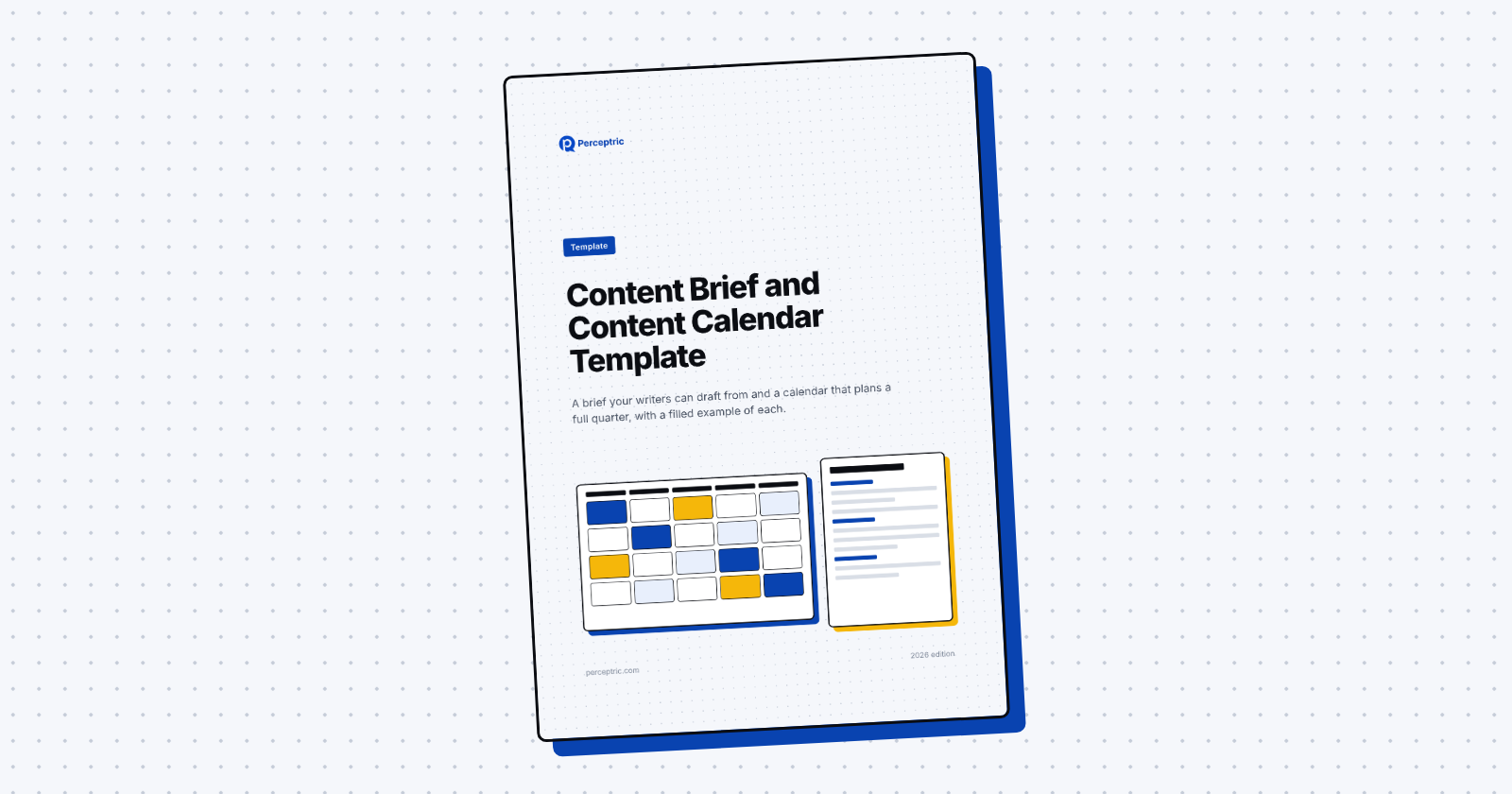
We've published 1,000+ posts at Perceptric, and a calendar is how a team keeps that kind of volume on schedule. Our free content brief and calendar template includes a quarterly calendar with a filled example you can copy.
Here's what one month could look like for the hypothetical customer support software company:
| Week | Piece | Funnel stage | Owner | Promotion |
|---|---|---|---|---|
| Week 1 | "Zendesk alternatives" comparison page | BOFU | Content lead, product review | Sales team shares in deals |
| Week 2 | Guide to cutting first response time | MOFU | Freelance writer, support lead review | Two LinkedIn posts, newsletter |
| Week 3 | Customer story with a 300-agent team | BOFU | Content lead, customer approval | Founder post, case study page |
| Week 4 | Webinar with a support leader | TOFU | Marketing manager | Three LinkedIn posts, email invite |
Each row has one owner, a clear stage and a plan for getting it in front of people. If a row is missing any of those, it's usually the one that slips.
How to measure an editorial calendar
The calendar is a tool, so measure whether it keeps the team on track and whether the content it plans gets results. Here's what I track:
- On-time rate: Count the share of pieces that went live on their planned date. If I see it under 70% for a few months, the plan is too big or reviews take too long.
- Mix by funnel stage: Count published pieces by stage each quarter. If BOFU pages are under a quarter of the total, your plan may not be helping pipeline much.
- Results per piece: Track rankings and organic clicks in Google Search Console and demos per page in GA4 or your CRM. Add the numbers to the calendar row, so planning next quarter starts from what worked.
- Time from brief to live: Measure how many days each piece takes. Long gaps usually point to one stuck step, like expert review or design.
Common editorial calendar mistakes
- Planning too much: An ambitious plan that slips every week trains the team to ignore deadlines. Plan 80% of what you think you can do.
- Leaving out reviews: If the calendar shows only the publish date, expert reviews get squeezed. Give each review its own date and owner.
- Forgetting promotion: A post with no LinkedIn plan or newsletter slot often gets 50 readers. Plan the promotion in the same row as the piece.
- Filling slots with filler: Publishing on Tuesday because it's Tuesday leads to weak posts. If a topic isn't ready, skip the slot or refresh an old post.
- Never looking back: A calendar that only looks forward repeats the same mistakes. Spend 30 minutes each quarter on what performed and plan more of it.
Here's a first step for this week. Open your current plan and check whether every piece for the next month has a reviewer and a promotion plan. How many are missing one?
Read more

FAQ
What's the difference between an editorial calendar and a content calendar?
Most teams use the two names for the same thing. When they're split, the editorial calendar covers long pieces like articles and reports, and the content or social calendar covers the daily posts that promote them.
How far ahead should you plan an editorial calendar?
Plan a quarter in outline and the next four to six weeks in detail. That leaves room to add a timely piece or move a post when a launch date slips.
What tool should you use for an editorial calendar?
A shared spreadsheet works for most teams of one to five people. Bigger teams often move to Notion, Airtable or Asana for status views and reminders, but the columns matter more than the tool.
How many posts should a B2B SaaS team publish a month?
Publish what you can do well and keep up for a year. Four strong posts a month on the right topics will do more than twelve rushed ones.