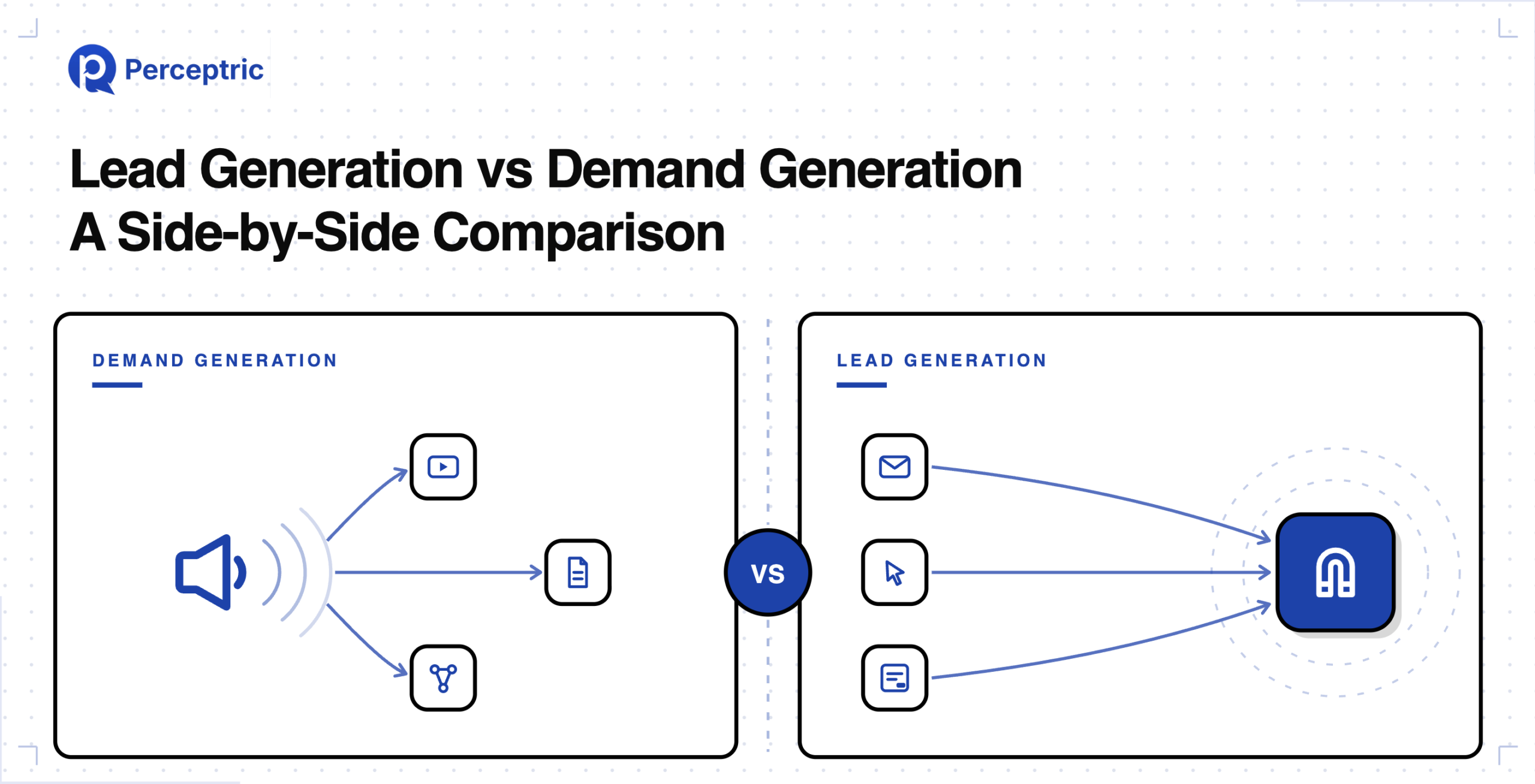

Lead generation and demand generation are two terms that are often used interchangeably, but they differ a lot.
Put simply:
- Demand generation is about creating and increasing demand for your product/service. The goal is to make the right audience aware of the problem and develop enough interest and trust to consider buying from you.
- Lead generation is about converting that existing interest into identifiable sales opportunities. The goal is to get a prospect to take an action that allows your sales team to follow up.
Demand generation creates and captures buying interest. Lead generation converts that interest into identifiable prospects.
What is demand generation?
Demand generation is the process of creating awareness, interest, and buying intent for a product or service among a specific target market.
It is about building the conditions that make people want to buy.
For a B2B SaaS company, for example, demand generation might mean getting a VP of Marketing to:
- Recognize that their current acquisition system has a problem.
- Understand what a better solution looks like.
- Become familiar with your company as a potential solution.
- Develop trust in your expertise.
- Eventually search for your product, engage with your content, or talk to sales.
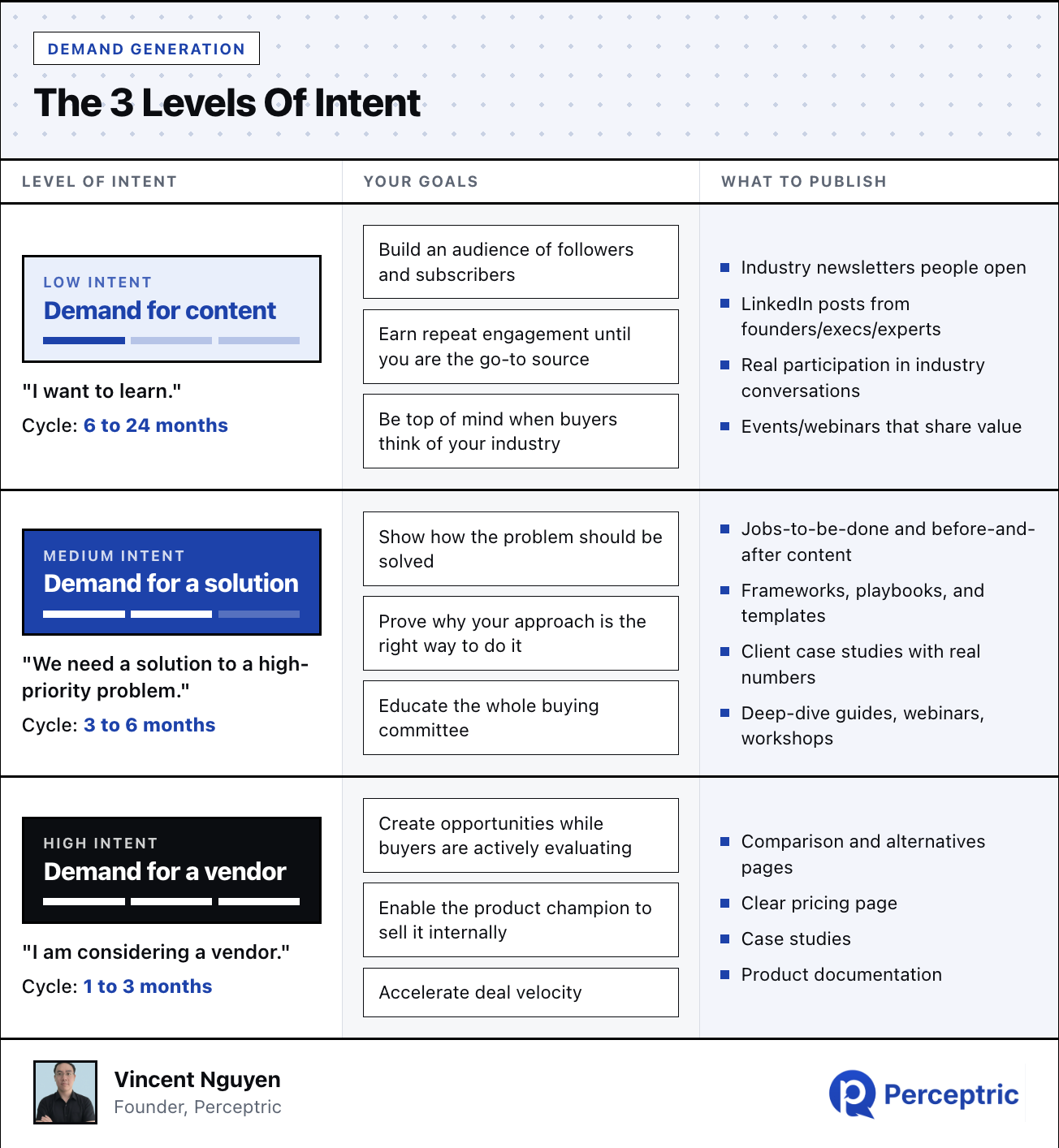
There are 3 levels of intent when it comes to demand generation:
- Low intent (Demand for content): The prospect is interested in learning but isn’t actively looking for a solution yet. The goal is to build awareness, familiarity, and trust over time. At this stage, you should publish educational content such as LinkedIn posts, newsletters, industry insights, and useful how-to guides. The desired outcome is for them to think: “These people really understand my industry.”
- Medium intent (Demand for a solution): The prospect now recognizes their pain point and is looking for ways to solve it. Your content should help them understand what a good solution looks like and why your approach makes sense. You can produce frameworks, playbooks, case studies, before-and-after examples, in-depth guides, etc. to convince them.
- High intent (Demand for a vendor): The prospect is now actively evaluating companies that can solve the problem. This is exactly when they become a “lead”. They want to know who to choose and what it costs, so they’ll be doing demos and evaluating several different vendors. This is where comparison pages, alternatives, pricing, case studies, service pages, and testimonials become really important. The goal is to reduce friction and move the buyer toward contacting you.
What is lead generation?
Lead generation is the process of converting interest and buying intent into identifiable prospects that your sales team can follow up with.
It is about capturing and qualifying people who are interested enough to take a concrete action.
For a B2B SaaS company, for example, lead generation might mean getting a VP of Marketing to:
- Visit your website after searching for a solution.
- Submit a demo or consultation request.
- Provide their contact information through a form, webinar, or lead magnet.
- Show enough intent or fit to be considered a qualified lead.
- Enter your CRM and move into a sales or nurturing process.
The difference between demand generation and lead generation
A thirteen row comparison of demand generation and lead generation, each row labelled with an icon.

Demand generation vs lead generation
Demand generation or lead generation?
For most B2B companies, the answer is both. They serve different purposes and work best as parts of the same acquisition system.
Research from Pavilion and TrustRadius found that 92% of B2B buyers purchase from their Day-1 shortlist, while 63% of shortlists contain only two or three products. That means being considered early can have a significant impact on whether you are considered at all.
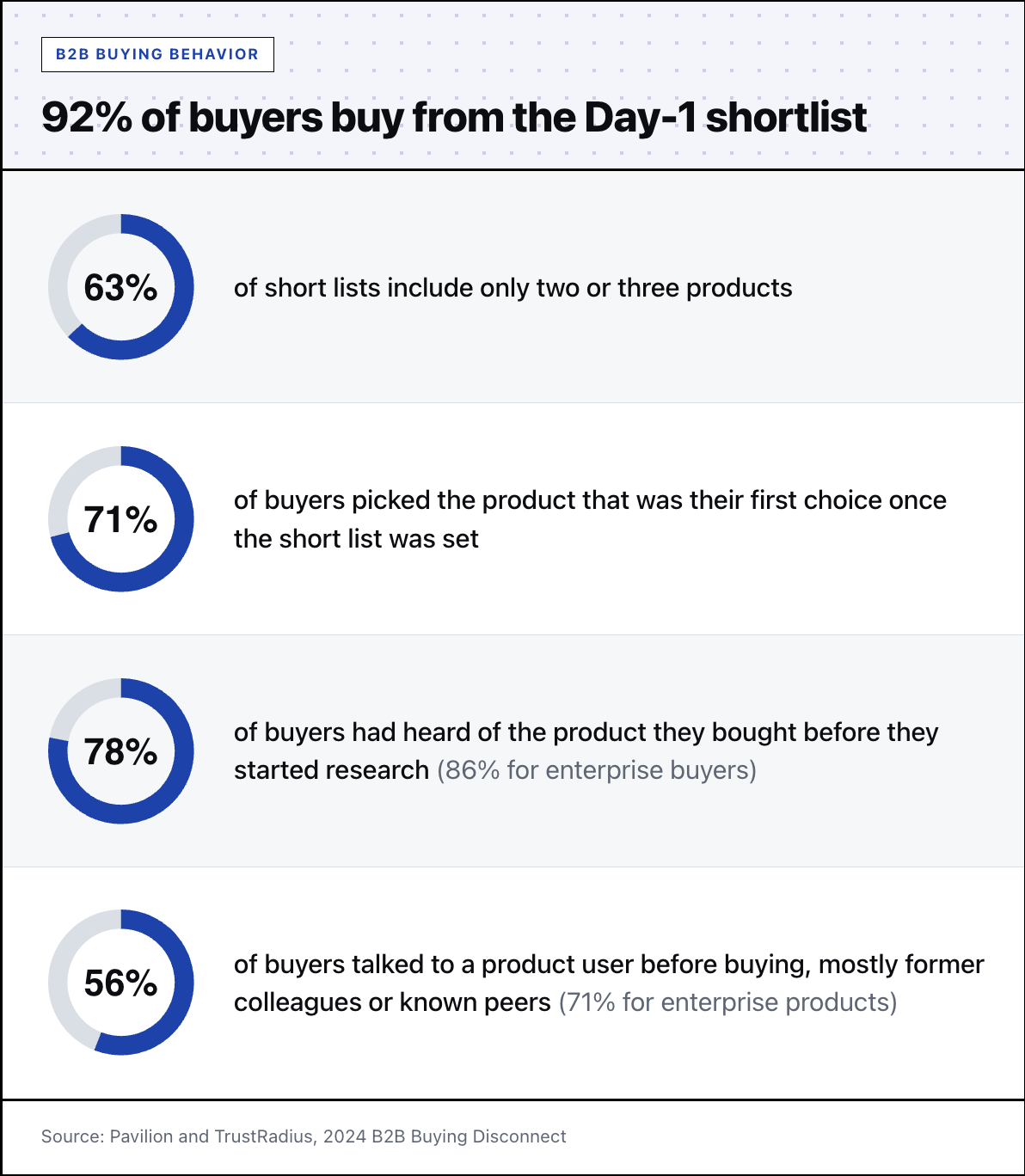
Demand generation helps you get onto that shortlist before the prospect is ready to talk to sales. Once buyers begin evaluating vendors, there is also relatively little room to change their preference.
That is where demand generation and lead generation play different roles:
- The two work together. Demand generation helps you become one of the companies buyers already know and consider; lead generation gives those interested buyers a path into the sales process.
- Demand generation gets you known before the buying process starts. Content, SEO, thought leadership, events, and other channels build awareness and familiarity with your company.
- Demand generation builds preference. By educating the market and demonstrating your expertise, you give buyers a reason to consider your approach before they start comparing vendors.
- Lead generation captures existing intent. Once a prospect is actively looking for a solution, forms, demos, free trials, and other conversion mechanisms turn that interest into an identifiable lead.
Key takeaways: Demand generation vs lead generation
The difference between lead generation and demand generation isn’t just theoretical; it’s strategic.
Winning B2B brands generate leads, but they also create demand, build community, and drive inbound interest that converts faster and more efficiently.
Whether you’re exploring growth marketing vs demand generation, or trying to improve lead demand generation overall, the most innovative marketers blend both.
Because in B2B marketing, whoever builds trust and captures attention wins.
Work With Perceptric To Generate Demand For Your B2B SaaS
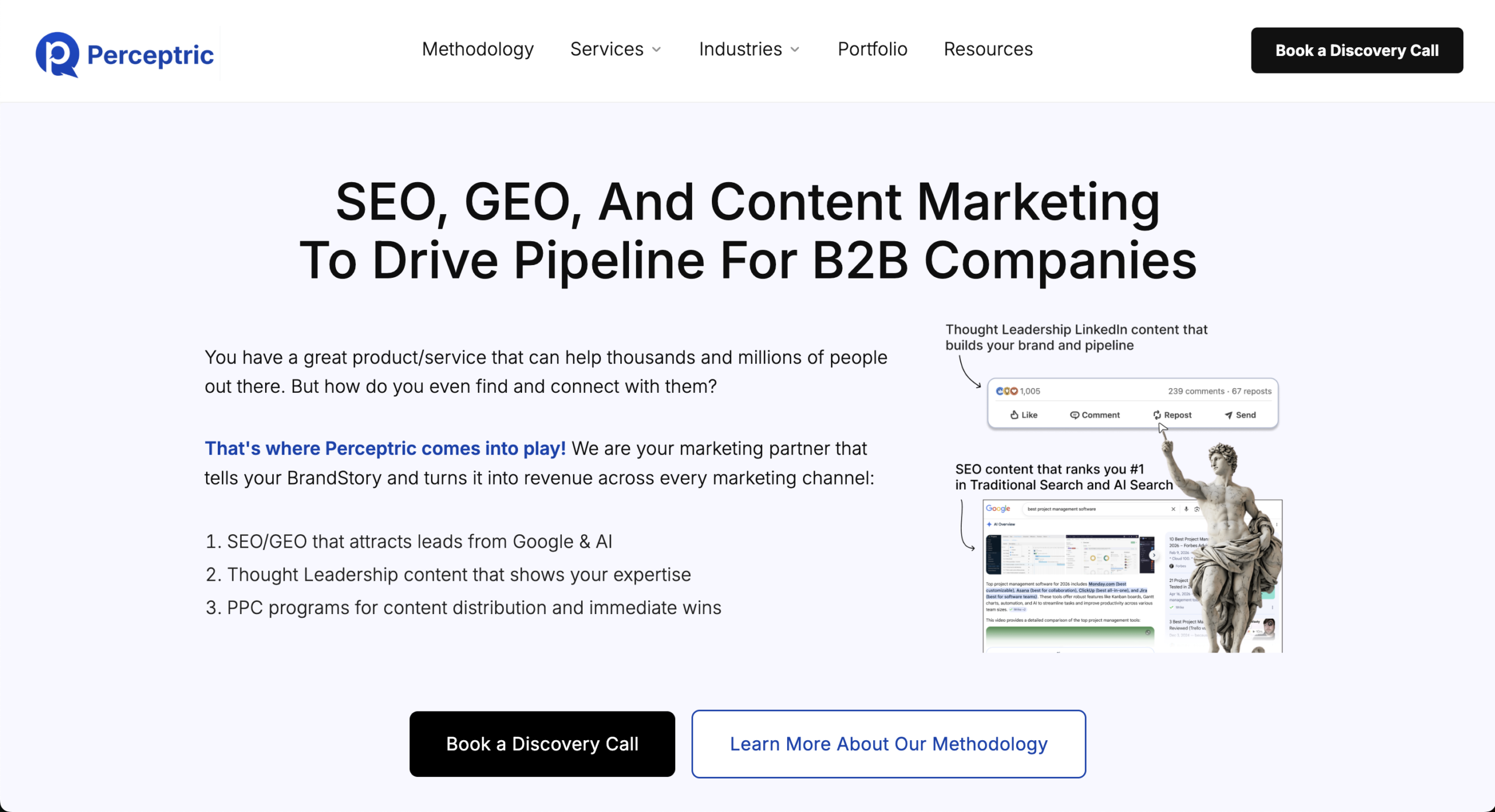
Perceptric is a B2B SaaS marketing agency focused on building demand, earning buyer trust, and turning that demand into pipeline. We combine SEO/GEO, expert-led content, LinkedIn thought leadership, and paid search to help SaaS companies become known and considered before buyers enter an active buying cycle.
Our approach is built around a simple idea: buyers often have a shortlist before they ever speak to sales. We help your company get onto that shortlist by showing up consistently across the channels buyers use to learn, research, and evaluate solutions.
Perceptric’s key capabilities:
- Conversion-led SEO. Build visibility around the problems, solutions, and commercial questions your buyers care about. We prioritize keywords that can influence consideration and create demand rather than simply generate traffic.
- AI SEO (GEO/AEO). Increase your visibility across ChatGPT, Claude, Perplexity, and Google AI Overviews so your brand appears when buyers use AI to research problems, solutions, and vendors.
- Content production. Expert-led content based on SME interviews, customer insights, and original research. The goal isn’t to publish more content; it’s to give buyers useful reasons to understand your market, trust your expertise, and remember your brand.
- Interactive content experiences. Turn educational content into interactive experiences that help buyers explore problems, compare options, and understand your solution while creating stronger brand recall.
- LinkedIn thought leadership. Turn founder and executive expertise into consistent, story-led content that builds familiarity and trust with the people you want to reach — before they’re actively looking for a vendor.
- Paid search. Capture existing demand around high-intent searches while reinforcing the same positioning and messaging used across your SEO and content. This connects demand creation with demand capture rather than treating paid search as a standalone lead-generation channel.