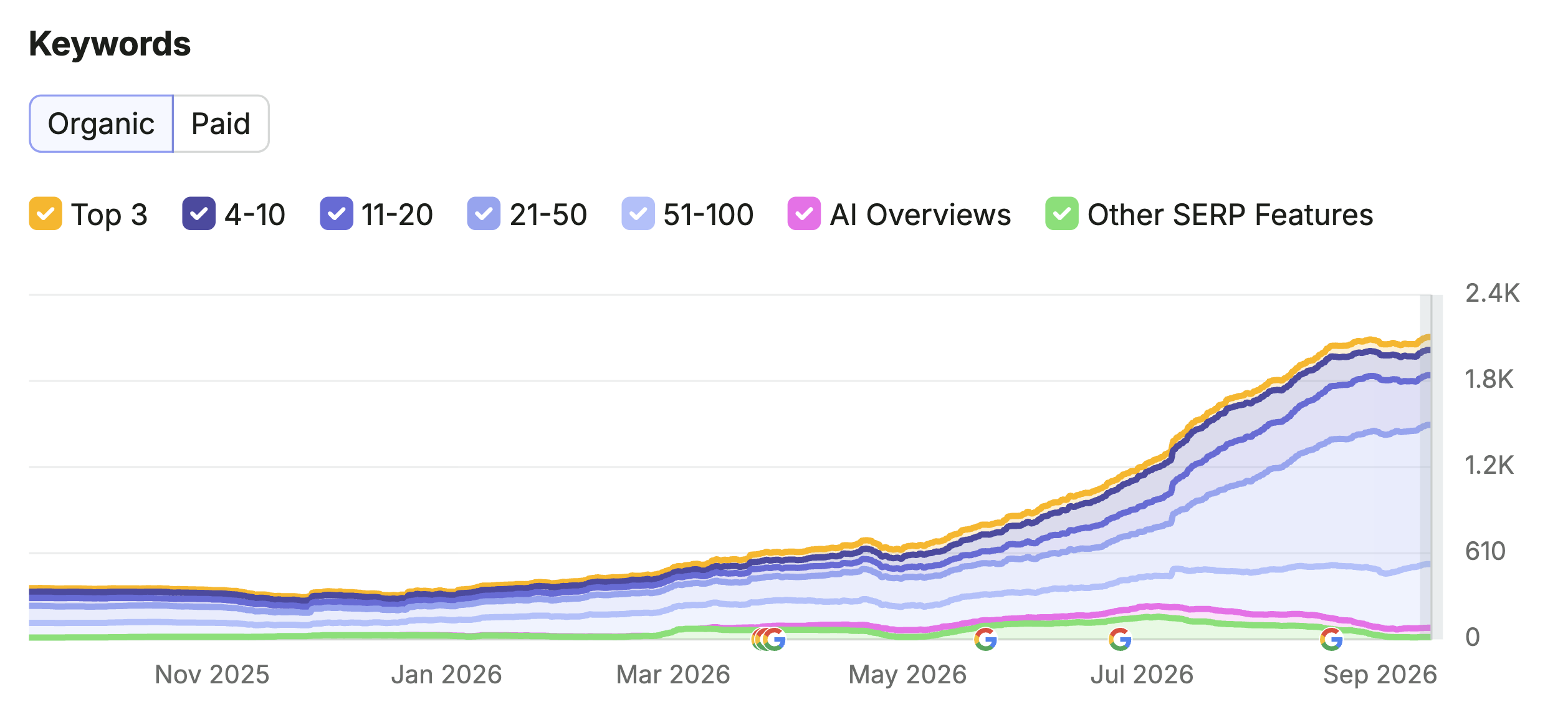
How A Hospitality B2B SaaS Platform Went From No Organic Rankings To 2,000 Keywords
A product-led content program that established an organic channel from a standing start. Inbound opportunities more than doubled in the first quarter after launch.
B2B SaaS
Guest experience and reputation management for multi location brands
The client operates a platform that consolidates guest reviews, feedback, and reputation data for restaurant groups running dozens or hundreds of locations. Operations and marketing teams use it to monitor sentiment across sites and respond at scale.
The product was established and the sales motion was working. The website was contributing nothing to it. Organic search delivered almost no qualified traffic, and every opportunity had to be sourced through outbound or paid channels.
Three constraints on pipeline growth
A product-led content program built around the buyer's job
The objective was an organic channel that produced qualified opportunities rather than traffic volume. Our approach:
Establish the technical foundation
We resolved technical SEO issues, indexation gaps, and internal linking problems before scaling production. New pages only compound when the site underneath can support them.
Map the category by role rather than by topic
We worked with Sales and Customer Success to identify the questions each stakeholder asks during an evaluation, then matched those questions to search terms. The result was a keyword map organized around operations, marketing, and finance rather than a single undifferentiated funnel.
Write product-led content rather than general advice
Every article was built around a task the product performs. Readers learned how to solve the problem, with the product presented as the practical means of doing it. This kept the content useful to the reader and relevant to the sales conversation that followed.
Produce reference assets that earn citations
We developed substantial reference pieces designed to be quoted by third parties, including a comprehensive restaurant metrics resource covering 48 metrics across four operational categories. Content of this depth performs well in traditional search and is cited more frequently by AI assistants.
Support the content with custom interactive components
We built comparison tables, calculators, survey widgets, and timeline components as custom HTML embeds. These increase engagement, give the content a reason to be linked, and make the pages difficult for competitors to replicate.
Connect the channel to reported pipeline
We built a marketing performance dashboard tracking opportunities by stage and quarter, so organic performance could be measured against pipeline rather than traffic alone.
The strategy on one page
Every cluster, keyword, and asset was planned in a single view before production started, so priorities could be agreed once rather than renegotiated each month.
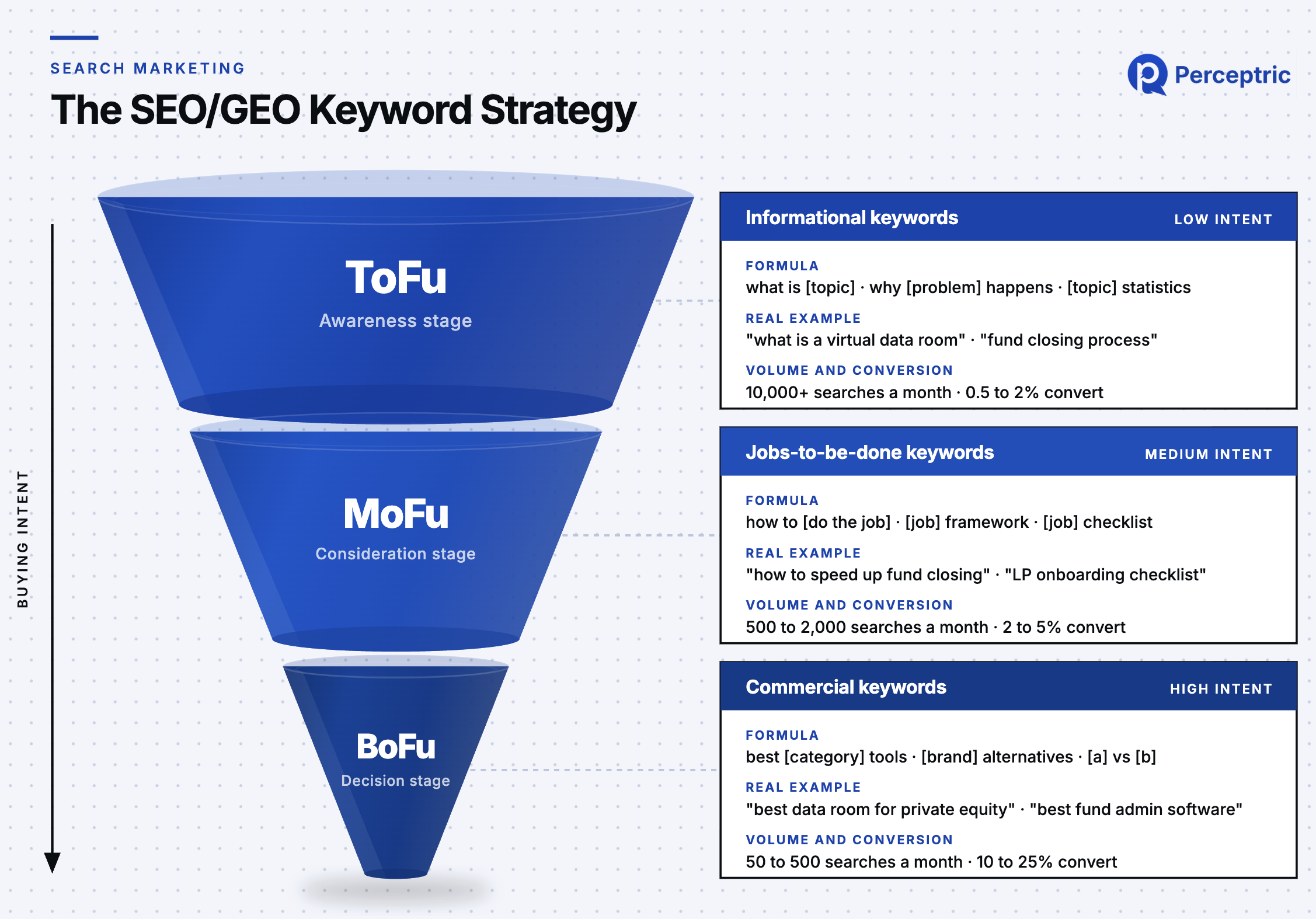
How we made sure each piece ranked
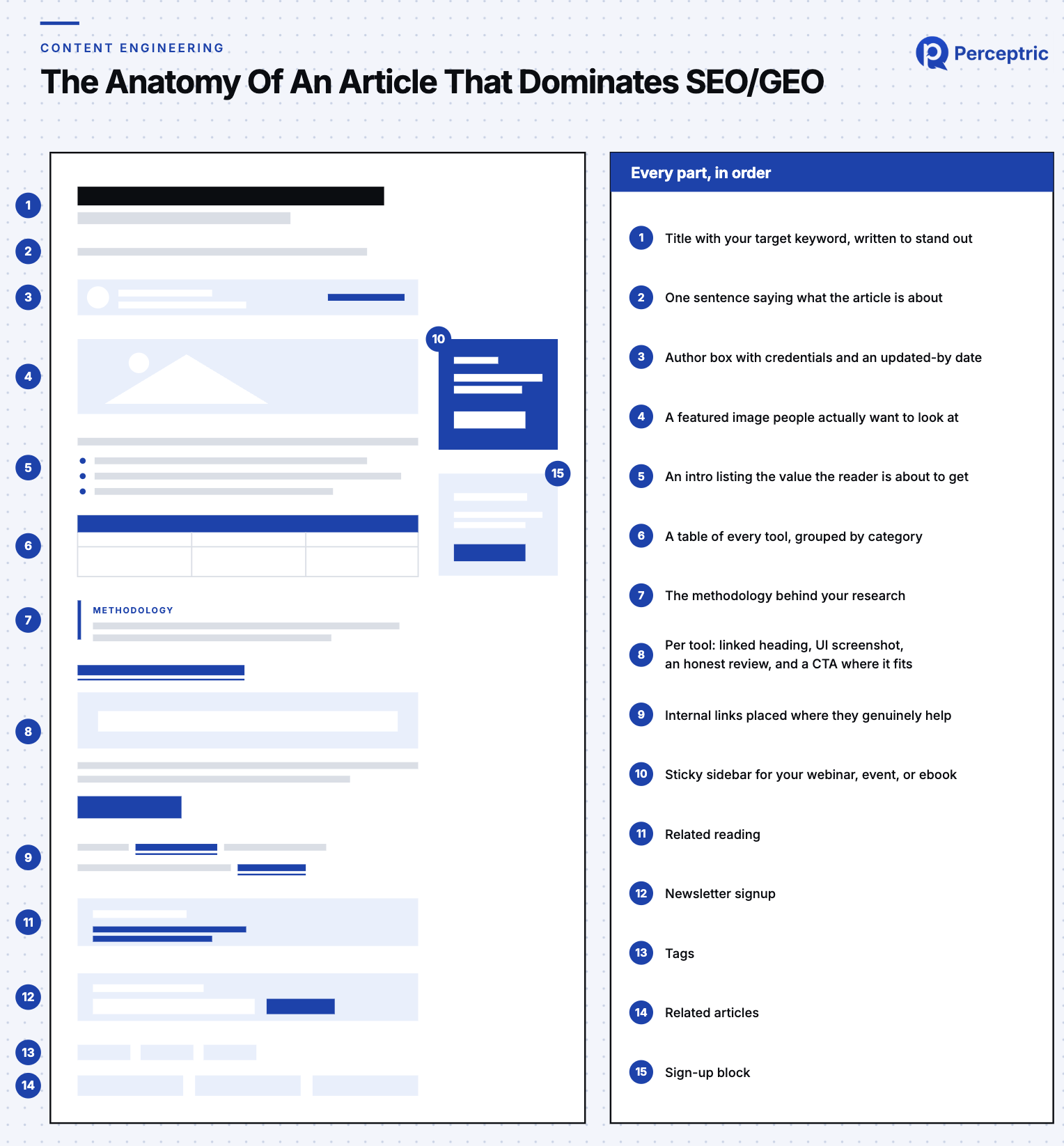
Publishing is the halfway point. Each article was checked against what already ranked for its target query, then revised until it covered the same ground more completely. Nothing went live on the assumption that good writing would be enough.
What we delivered
Technical SEO program
Site audits, indexation fixes, and internal linking structure, with each item prioritized by implementation effort against expected impact.
Keyword map and editorial calendar
A role based keyword map covering five clusters, with a publishing schedule tied to funnel stage and expected return.
Product-led articles and reference assets
Ongoing production across all five clusters, including in depth reference pieces built to be cited by third parties.
Custom HTML components
Comparison tables, survey widgets, calculators, and timeline components built as hardened embeds that hold their formatting inside the CMS.
Google Ads and LinkedIn Ads
Paid campaigns managed alongside organic so both channels targeted the same priority segments.
Marketing performance dashboard
Internal reporting on opportunities by stage and quarter, connecting channel activity to reported pipeline.
An organic channel that produces pipeline