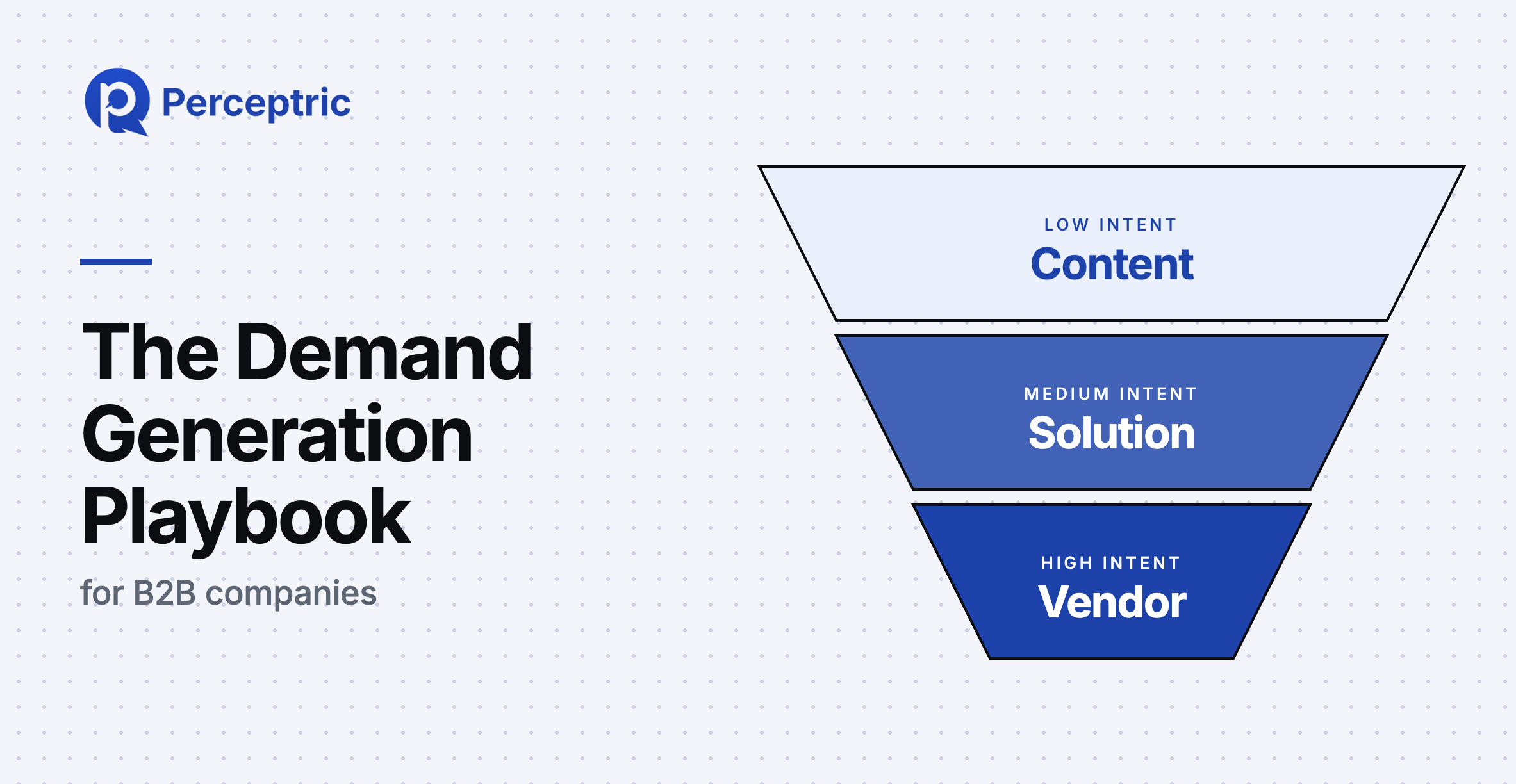

In this guide, I’ll share what it takes to build demand and generate pipeline with a modern search engine marketing strategy:
- What it takes to win a deal in B2B
- B2B tactics that aren’t working (and why)
- The step-by-step framework we used to combine SEO/GEO, Google Ads, and organic LinkedIn content to generate demand for B2B companies
- The three levels of buyer demand
- How to adapt your marketing strategy to buyers who are unaware, problem-aware, or actively evaluating solutions
- How to capture demand from interested buyers and turn into closed won
Let’s dive in.
Biggest complaints of B2B companies with long sales cycles
These are the most common demand generation challenges we hear from B2B companies:
- Paid and organic channels are generating less pipeline, while acquisition costs continue to rise every quarter
- Inbound pipeline is unpredictable, and most inbound leads have limited revenue potential
- Marketing is generating leads that never convert
- Low brand awareness among target accounts means sales struggles to get even a response from outbound outreach
Why is that the case?
What does it take to win a deal in B2B?
According to a study by HockeyStack, deals worth $50K+ involve more than 300 touchpoints from SQL to closed-won.
It’s reasonable to assume there are many more interactions between a prospect’s first impression and the eventual deal.
| Deal size | Impressions to first visit |
Impressions MQL to SQL |
Impressions SQL to won |
Touchpoints to MQL |
Touchpoints MQL to SQL |
Touchpoints SQL to won |
|---|---|---|---|---|---|---|
| Up to $10K | 357 | 734 | 299 | 47 | 55 | 55 |
| $10K to $20K | 553 | 727 | 517 | 59 | 74 | 69 |
| $20K to $50K | 674 | 1,015 | 900 | 69 | 95 | 100 |
| $50K to $100K | 945 | 1,061 | 1,029 | 80 | 114 | 115 |
| Above $100K | 1,893 | 1,519 | 2,081 | 104 | 150 | 163 |
| All deals | 894 | 1,019 | 965 | 71 | 96 | 99 |
And that’s only what we can track. There are countless interactions happening behind the scenes that no analytics platform can capture. For example, you never know which of your content is shared internally, or if word-of-mouth contributed to the final decision to buy from you, unless you explicitly asked.
B2B deals aren’t won because someone clicked a LinkedIn ad and booked a demo. They’re won through a long process of consistent engagement, education, and trust-building before a buyer is ready to have a sales conversation.
The B2B tactics that aren’t working
- Paid ads drive traffic to landing pages: But most of these pages provide little useful product information and simply push visitors to “book a demo.”
- Informational SEO content drives traffic: But much of it attracts readers who are researching a topic rather than actively looking to buy.
- Gated content tries to turn visitors into leads: eBooks, whitepapers, and webinars are used to capture contact information, with the assumption that a download or registration signals buying intent.
- Sales starts chasing people who aren’t ready to buy: Someone downloads a whitepaper to learn something, and suddenly they’re getting cold calls and follow-ups as if they’re actively evaluating vendors.
Why those tactics aren’t working?
1. Buyers already know who they want before they start researching
Unlike B2C buyers who may make decisions on a whim when they see your ads, B2B buyers are much more selective and patient. In fact, according to a Wynter’s research, 92% of B2B buyers only purchase from their day-1 shortlist.
In other words, by the time they reach out for demos or contact your sales team, the vendor selection is essentially complete and the shortlist is set in stone.
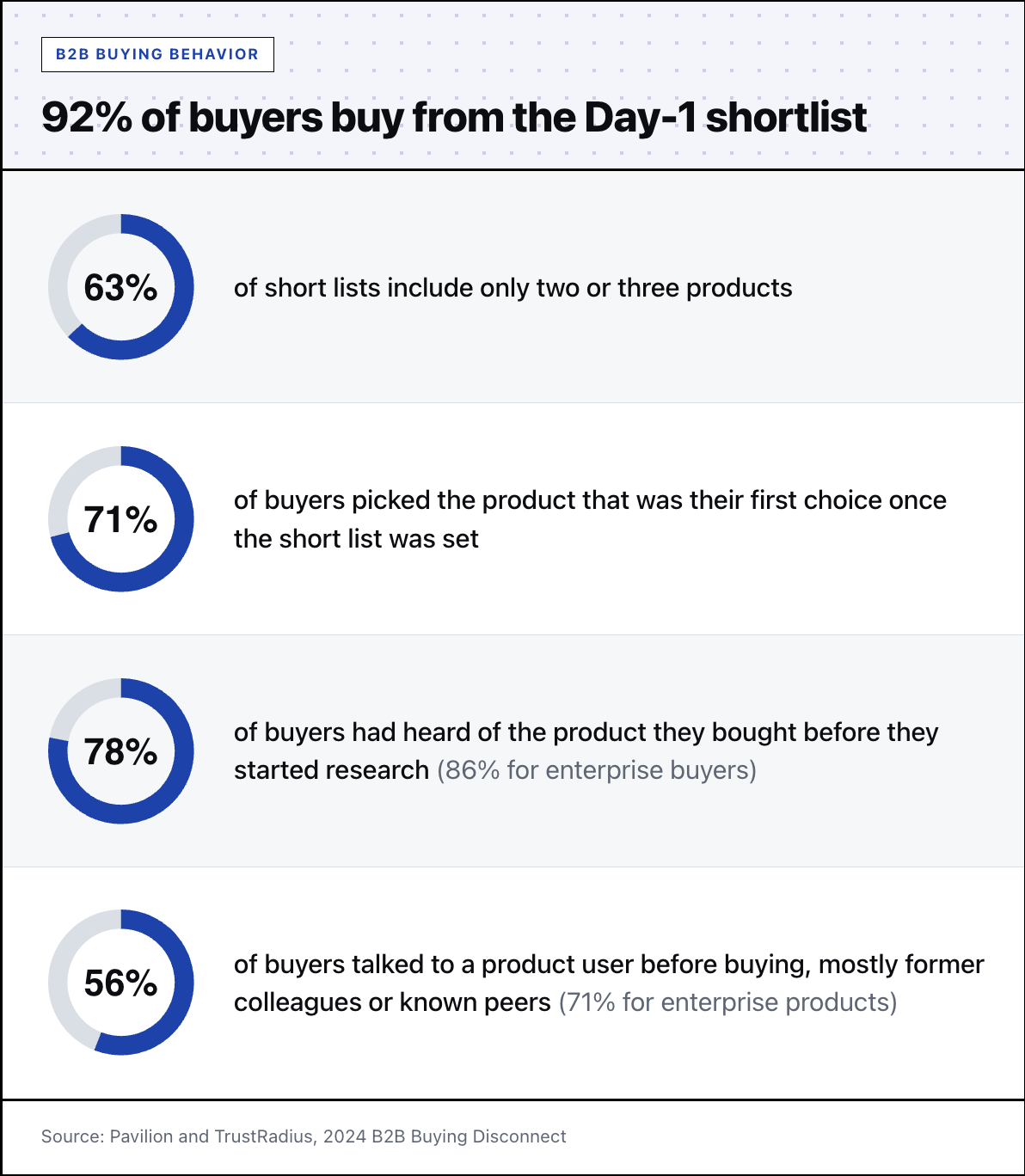
What does that mean? That means if your company isn’t on that shortlist, you’re already at a disadvantage! Buyers aren’t choosing from long lists of 10–15 options. They’re picking two or three, and from there, they typically go with the vendor that was already their first choice. Whether they realize it or not, they always have a preference in mind.
The real game is won way before that, by building awareness and credibility long before buyers even realize they need you. That’s exactly what you want to aim for.
2. Buyers want to do their own research
Buyers don’t want to be sold to or “forced into a funnel”. And they definitely don’t want to sit through a webinar that’s actually a blatant product pitch disguised as an “educational” event.
Buyers would rather discover the product and make decisions on their own accord. The research journey can be long, messy, and unpredictable.
Here’s how a B2B buyer journey may look like:
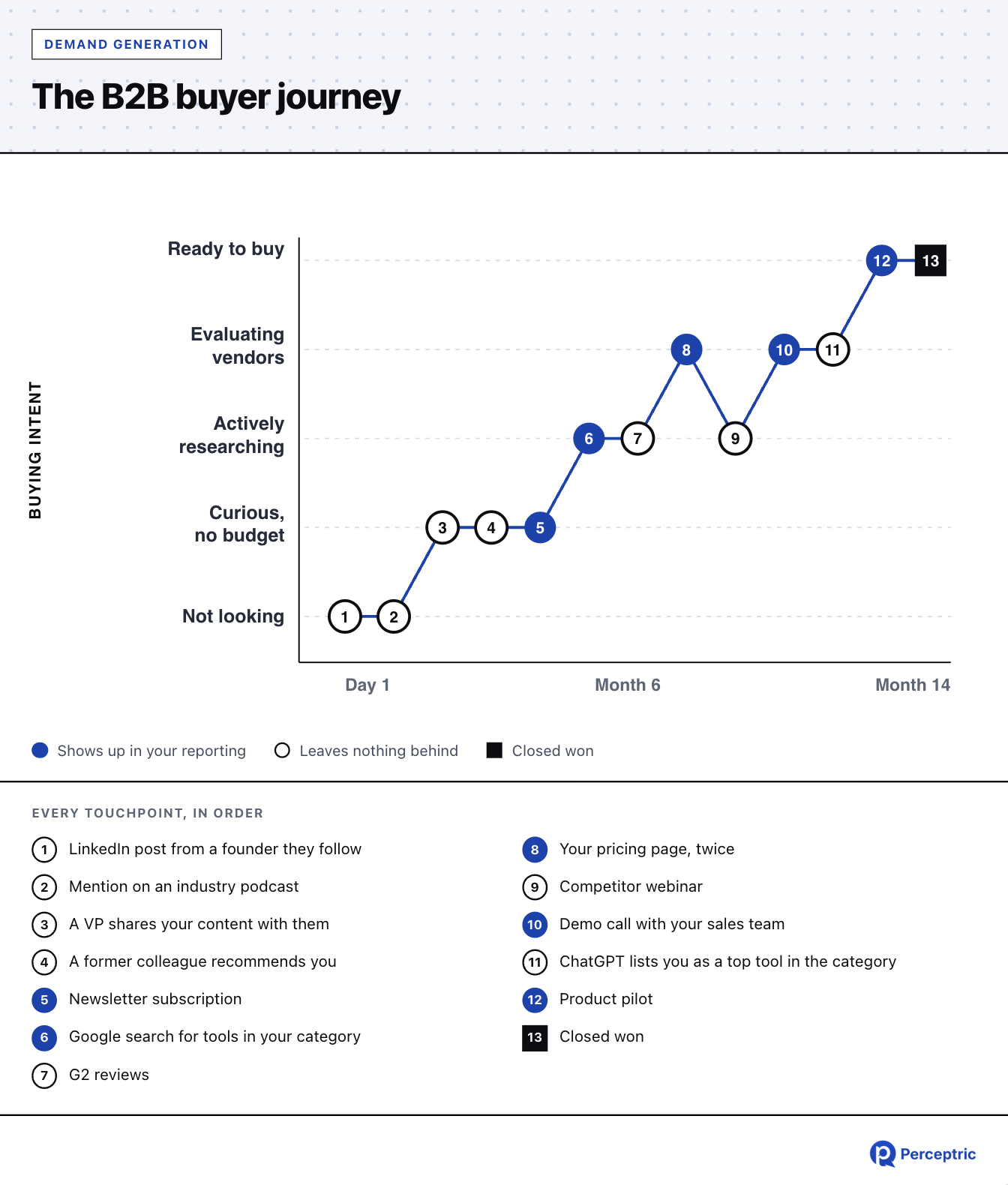
As you can see:
- The real buyer journey is non-linear and so much more than “See ad -> Visit website -> Book a Demo”. There are touchpoints that you can’t measure in your CRM.
- Buyers also tend to trust their peers more than your marketing. Sure, they may check your website and landing pages out, but they also talk to people they trust, such as colleagues, or industry peers who have actually used your product.
The Demand Generation Playbook That’s Working
1. The 3 Levels of Buying Intent
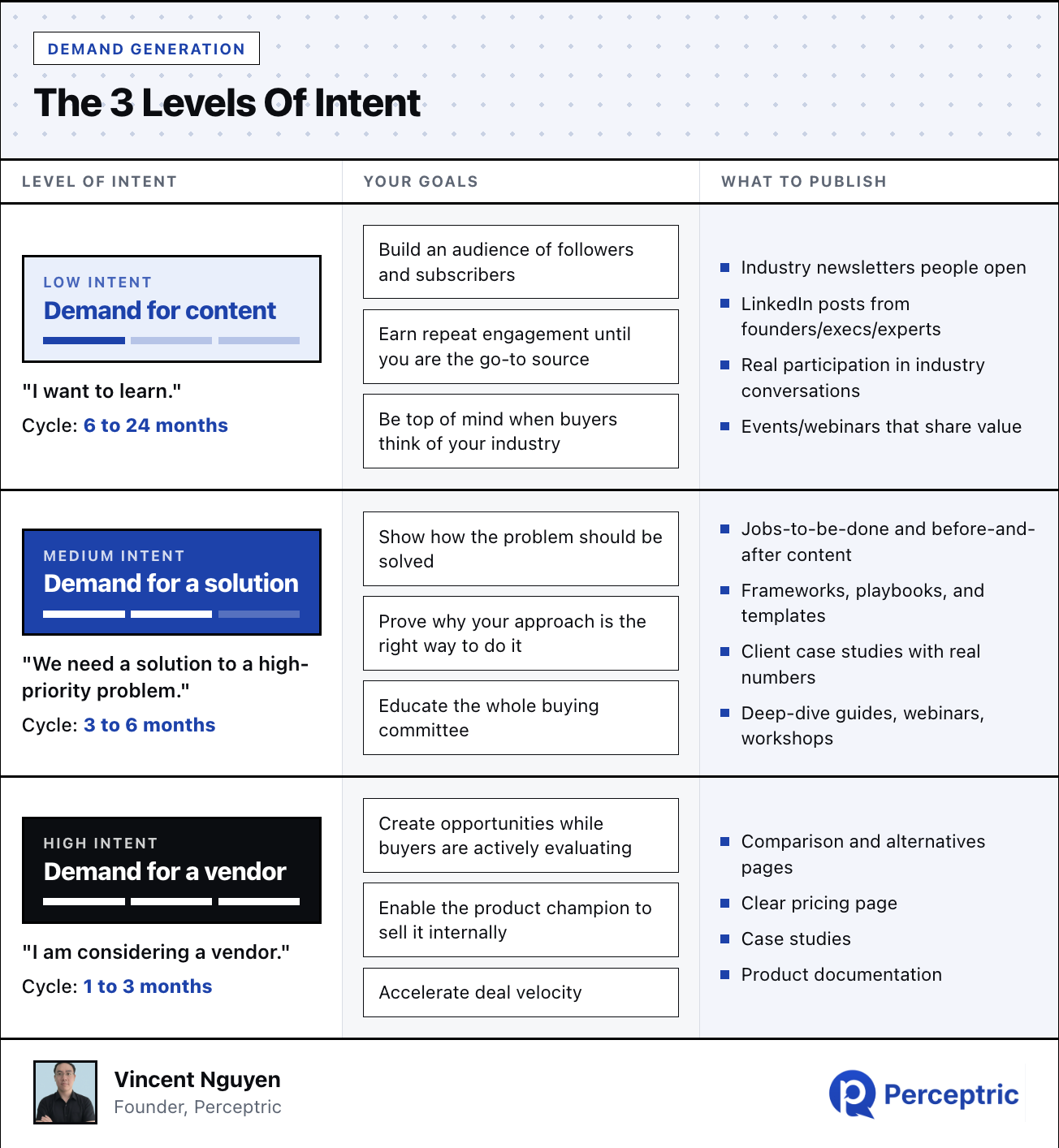
The reality is that 95% of buyers aren’t ready to buy. At any given time, only 5% of the market is ready. The remaining 95% is simply reading content, subscribing to newsletters, checking websites, joining workshops, downloading eBooks, etc. They are merely researching.
However, you need to educate that 95% and build the brand awareness early on, so that when they actually need to find a vendor, your name comes up.
2. Channels of Distribution
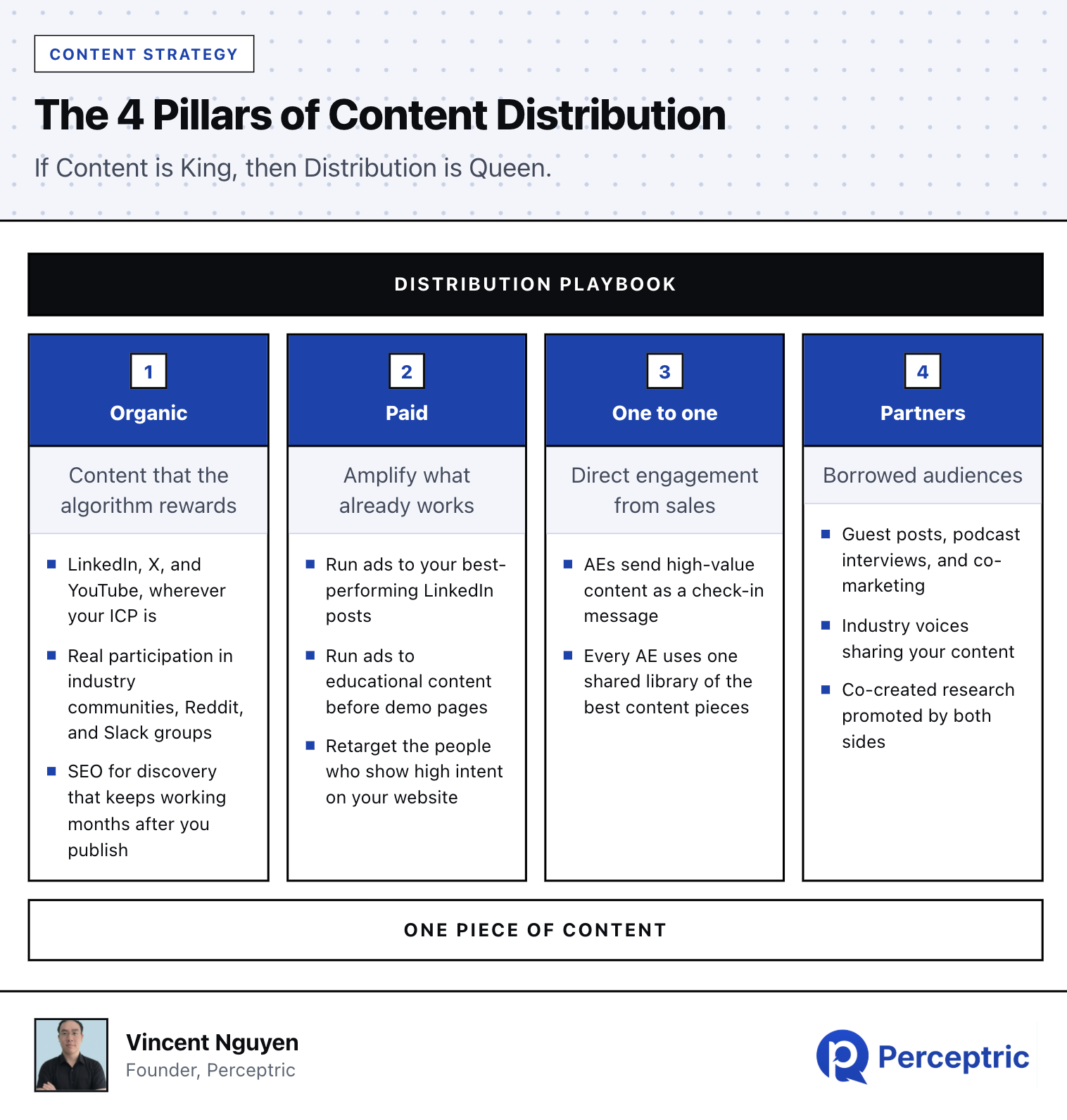
No matter how awesome your content is, if no one sees it, it doesn’t make an impact.
That’s why you need to always think about content distribution from the very beginning. It’s a mistake to think that traffic will magically come once you post a blog on your website.
As shown in the infographic above, there are 4 ways that you can distribute content:
- Organic: mostly leveraging the power of algorithms (Google, LinkedIn, X, etc.) to make your content more discoverable
- Paid: paying ad platforms to drive traffic to your content
- One-to-one: instead of following-up with a generic message like “Just checking in”, your AEs can send content tailored to the needs of that specific opportunity
- Partners: you can get industry influencers to share your content, which builds trust much faster than brand ads
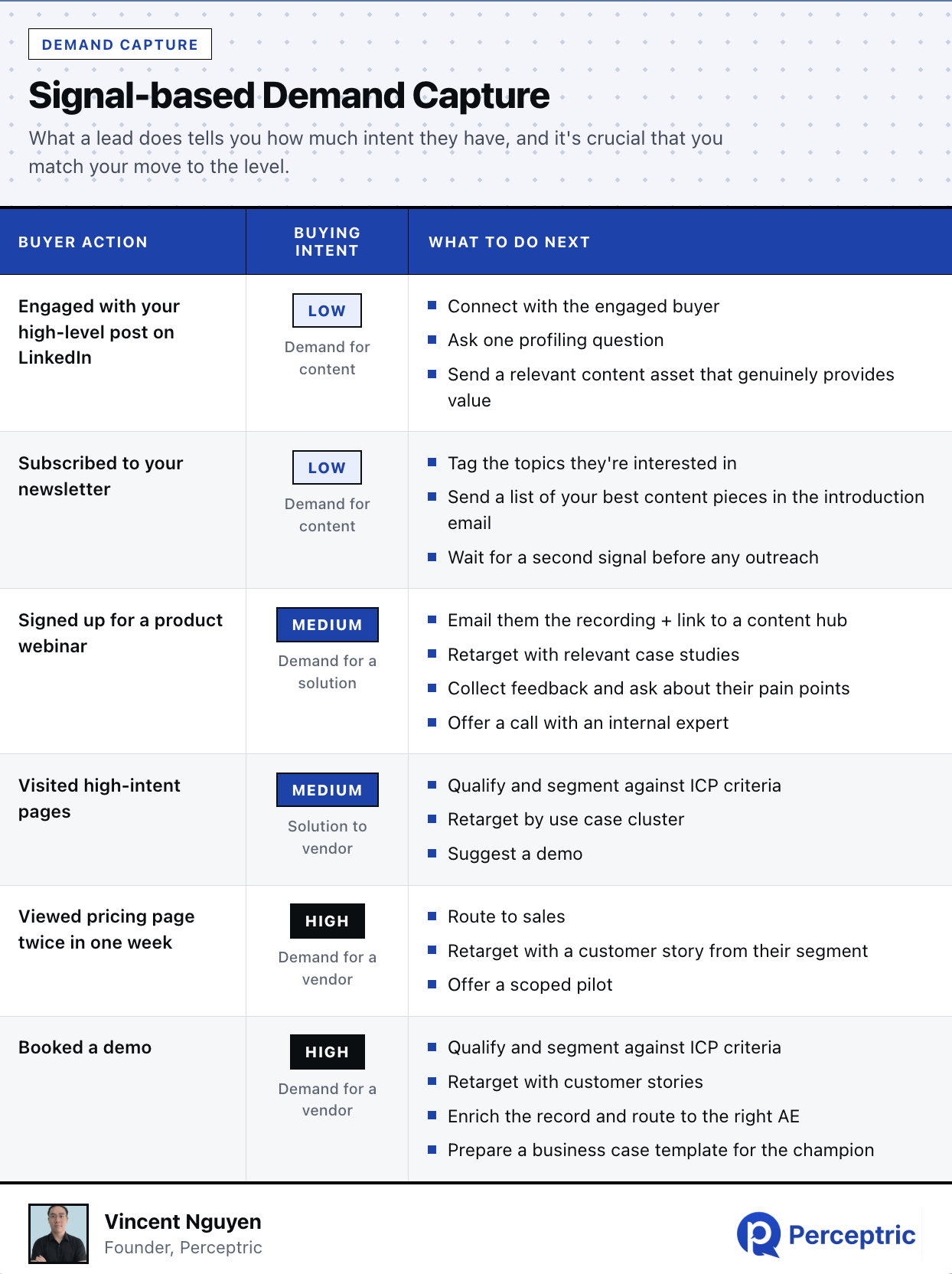
3. Capturing demand
After you’ve built demand, it’s time to “capture” it.
And of course, with different levels of intent, you need to take different actions.
- Low-intent accounts aren’t ready to buy yet. They only want to consume content, so the best course of action is to connect with them, and send them several pieces of content that you believe may be helpful.
- Medium-intent accounts are interested in a solution. They may sign up for a webinar or download an eBook, but that doesn’t mean they’re ready to buy. But it does mean they are actively researching solutions and looking for different approaches. You still need to nurture them with content and move them down the funnel.
- High-intent accounts are more likely to buy. If you see multiple people from the company engaging with your content, it’s a very positive signal, and you need to engage with them and provide them with relevant resources based on what they’ve shown interest in.
Takeaways
Remember: it takes hundreds of touchpoints to close a deal, and the final decisions have been made way before that.
If you’re only trying to capture demand from people who are already buying, you’re late to the show.
The goal is to:
-> Build brand awareness long before the buyer is ready
-> Consistently show up and engage with your ICP through content distribution
-> Identify high-intent accounts and provide them with relevant resources at the right time