How ScoutQA Increased Users By 120% With Perceptric
Discover the SEO and content strategies we used to accelerate ScoutQA's organic growth within just 3 months — going from near-zero content presence to a compounding traffic engine.
The QA co-pilot built for the age of vibe coding
ScoutQA is an agentic testing platform that autonomously explores, tests, and writes test reports for any web application. Vibe coders, solo founders, and side-project builders can find bugs and test their Lovable, Replit, V0, or Base44 app instantly — no QA team required.
Scout acts like a real user inside your product: a curious newcomer, a power user, a mischievous bad actor. It delivers actionable feedback with reproduction steps, screenshots, and suggested fixes so builders can keep shipping fast without compromising quality.
Starting from scratch in a crowded niche
When we began our partnership, ScoutQA had strong product-market fit and founder-led social traction — but their organic search presence was essentially zero. There was no content engine, no SEO foundation, and nothing compounding in the background.
Build the content engine they never had
ScoutQA brought Perceptric on board because of our track record in competitive AI tool niches. With a lean team and a bootstrapped budget, there was no room for wasted effort. Every move had to count.
Technical SEO foundation first
Before writing a single article, we ran a full technical audit and fixed everything — crawlability, site speed, indexing, internal link structure. Weak technical foundations cap your rankings regardless of how good your content is. We cleared the runway first.
Understand the buyer before touching keywords
We ran discovery sessions with the ScoutQA team and combined that with deep community research across developer forums, Product Hunt threads, and indie hacker communities. We needed to understand exactly who was building with Lovable, Replit, and V0 — and what they were searching for when something broke.
The questions we needed answered:
- What specific frustrations push vibe coders to look for testing tools?
- What does the user journey look like from "my app has a bug" to "I need Scout"?
- What does the trial and onboarding flow look like, and where do new users get stuck?
- Which features matter most — speed, accuracy, screenshot reproduction, integrations?
With that, we mapped every keyword to a TOFU-MOFU-BOFU funnel and made a clear call: go BOFU-first.
Why we went BOFU-first — especially for AI tools
Most content agencies default to informational volume. We do the opposite — and for AI tools like ScoutQA, the reasons are even stronger:
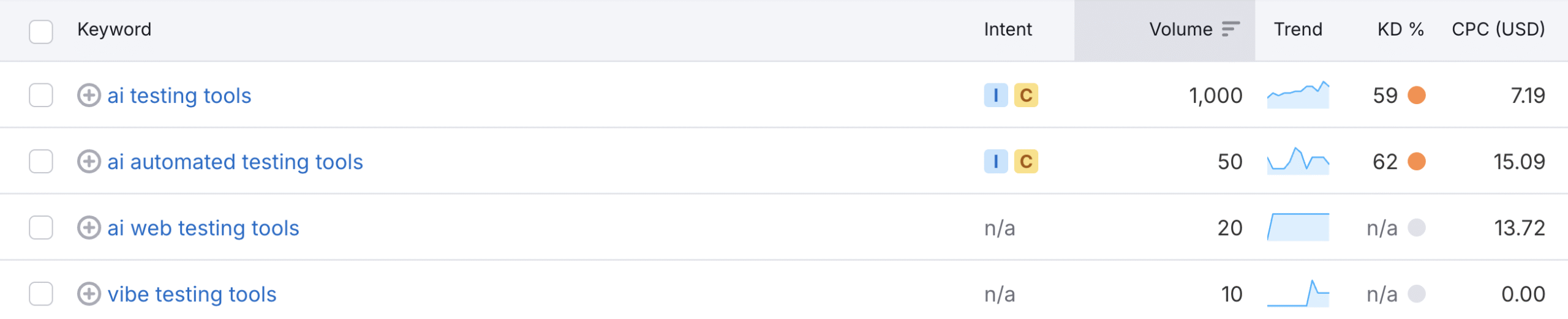
The keyword clusters we went after:
From there, we built a structured Editorial Calendar and a repeatable production process — research, brief, write, review, publish, distribute.
Content that earns trust in the dev community
Developer audiences are allergic to marketing fluff. Every piece we produced was built to the same uncompromising standard:
- Real opinions from indie hackers, vibe coders, and founders who actually use QA tooling
- Product integration that reads like a genuine recommendation — showing exactly how Scout solves a real problem, not a feature dump
- Data and statistics supporting every core claim
- Authentic, direct writing voice that matches how developers actually talk and read
- Distribution across LinkedIn, X, and dev communities to seed initial traction and attract backlinks
The results speak for themselves