
In B2B, buyers rarely move in a linear fashion. They research quietly, compare vendors over vendors, talk to finance, check LinkedIn, check case studies, check G2, and everything in between. To support that behavior at scale, you need an acquisition channel that compounds and shows up across the entire journey. That is where SEO earns its place.
Paid media can create short term spikes, but the moment you pause the campaigns, the leads stop. Meanwhile, SEO stays present and keeps working for you, 24/7.
In this article, I will show you:
- How to approach SEO for long, multi-stakeholder buying cycles
- What actually works when SEO has to support education
- Where most B2B SEO programs break down in complex sales environments
- A curated list of SEO agencies with deep experience in software and B2B decision making
Let’s dive in!
Does SEO work for complex buying journeys?
Yes, SEO works in long buying journeys for clear, practical reasons:
- Buyers decide before they talk to you: In complex purchases, most evaluation happens in private. SEO is how you show up during those early research moments and earn a place on the short list.
- SEO compounds across the entire journey: SEO needs initial investment, and it takes a little bit of time, but the impact lasts really long down the road. Once you rank, visibility continues without ongoing pressure to spend more. For slow, multi stage decisions, that persistent presence delivers one of the highest long term returns available. In fact, SEO has always been known as the highest ROI lowest cost marketing channel.
How to do SEO for complex buying journeys?
Here are the 6 steps I use to grow SEO of many brands with complex buying journeys I’ve worked with:
Let’s dive in!
Step 1. Research what your Audience is talking about
Before you create content for a complex buying journey, take time to understand the people you want to reach. Good user research helps you see how buyers think, what they care about, and how they move through decisions.
Here are simple ways you can conduct user research:
- Talk to your Sales team: They are literally in the trenches dealing with customers on a daily basis. They know what questions and objections buyers are asking, so don’t forget to reach out to them to find that much needed insights.
- Explore social media: See what your audience is engaging with. This helps you understand their interests and the topics that naturally catch their attention.
- Study competitors: Since they’re targeting the same people that you’re trying to target, why not learn a thing or two from them? You can check out their content to understand what resonates with buyers and which gaps you can fill.
- Spend time in communities and forums: This is where you can find unfiltered discussions. People speak honestly about their challenges and needs in their own words on forums. Reddit is one of my favorite place to check out people’s sentiment.
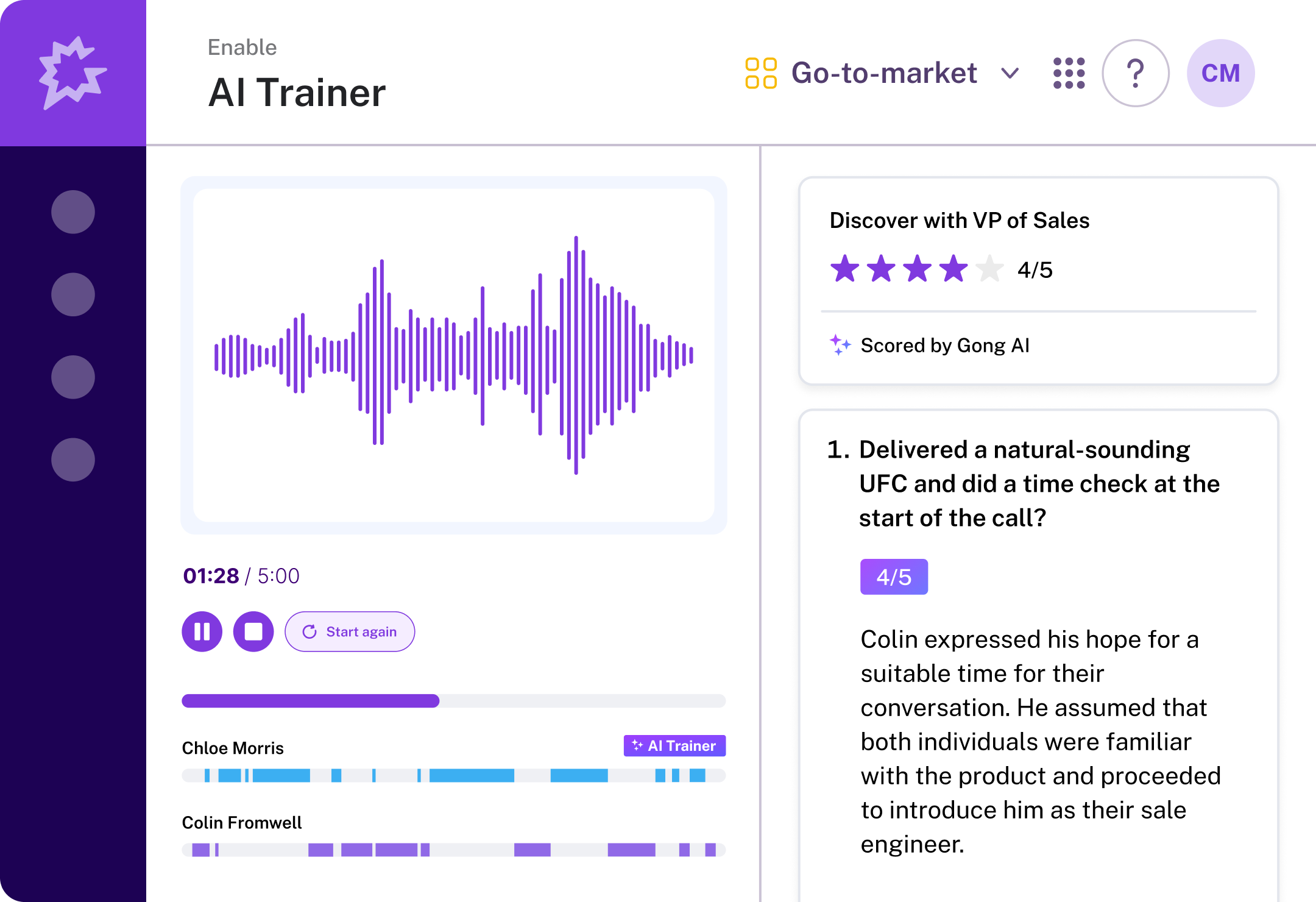
Gong is a particularly effective tool for this purpose. The insights from sales call transcription is really valuable for not only the Sales team but also the Content team to leverage.
Step 2. Decide your Topical Authority
Now that you understand what your audience is looking for, the next step is to define your topical authority.
Topical authority is an SEO concept that reflects how strongly a website is seen as an expert in a specific subject. Search engines like Google and ChatGPT tend to favor sites that consistently publish in depth, focused content around the same topic over a long period of time.
Many SEO practitioners consider topical authority one of the most important ranking factors today. Strong topical authority has also been a major growth driver for companies like HubSpot.
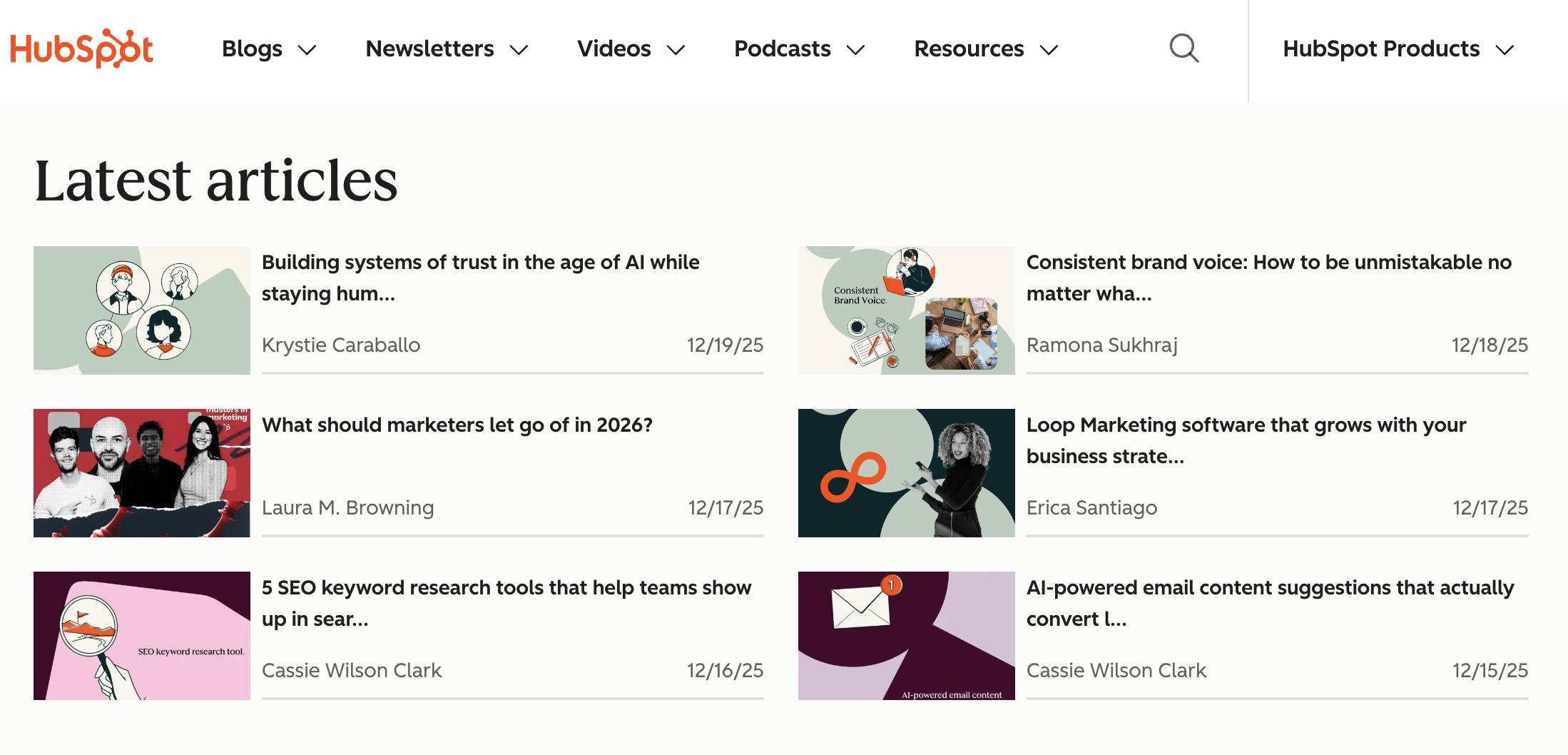
HubSpot follows a similar strategy by breaking the broad topic of inbound marketing and growth into smaller, focused areas, such as:
- CRM
- Marketing automation
- Sales enablement
- Customer service
- Operations and reporting
Instead of trying to cover everything at once, HubSpot goes deep on one area at a time. For each focus area, they publish content that covers the topic extensively. Only after having comprehensively covered one topic do they expand into the next area, still repeating the same approach.
When they consistently publish closely related content around the same themes, HubSpot signals that they have strong topical authority to Google. Since Google aims to return the most helpful answers to readers, a site that can address nearly every question across marketing, sales, and customer experience will naturally earn strong visibility.
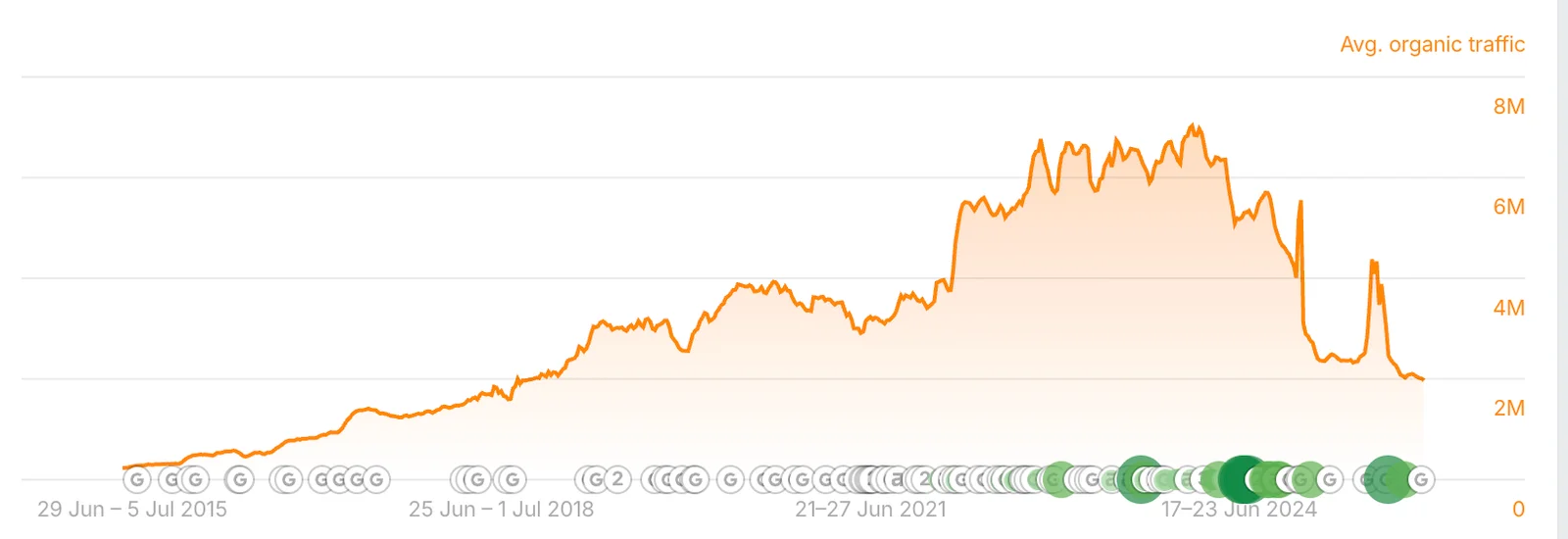
The results speak for themselves. HubSpot attracts millions of organic visits every month, driven largely by years of disciplined investment in buyer-focused education.
So here are the steps you can take to boost topical authority for your website:
- Pick one primary topic per site section and commit to owning it
- Map all subtopics users search within that topic
- Create one core page (pillar) that defines the topic
- Publish supporting pages that go deeper on each subtopic. They don’t have to be long-tail. It’s better for users when you serve them 1 short article that answers their question immediately than an essay that makes them scroll 100 times before they find the answer.
- Internally link from subpages to pillar page and between related subpages.
- Use descriptive, topic-rich anchor text
- Keep content tightly scope. Do not mix unrelated topics on the same URLs since that confuses Google.
- Update older pages. If you have old pages that aren’t related to your ultimate topical cluster, don’t be afraid to delete them
- Only expand to the next cluster when you have exhausted the subtopics in the current one.
Step 3. Research Bottom-of-the-Funnel Keywords
Because building topical authority takes time and real effort, you need to be intentional about where you start, especially in a complex buyer journey.
A strong place to begin is the late stage of the journey, often referred to as BOFU.
BOFU topics reflect moments when buyers are already educated, aligned internally, and actively evaluating options. At this point, they are searching for comparisons, validation, risks, and fit. These searches usually come from people who are closer to a decision, even if that decision still involves multiple stakeholders.
For complex journeys, these topics tend to be more focused and easier to compete for. They attract buyers with clear intent and real context, which makes them some of the most practical opportunities to build early traction while you expand coverage across earlier stages over time.
BOFU keywords typically look like this:
- [vendor] alternatives
- [solution] vs [solution]
- best [category] platforms for [industry/role]
- [vendor] pricing
- [vendor] reviews
- top [industry] providers
- [solution] for [specific workflow or department]
- [solution] ROI
- [service provider] case studies in [industry]
For example, in Perceptric case, one of our BOFU keywords is “Top 7 SEO Agencies For Technology Companies“:

We ranked for this keyword relatively easily, and since people who search for this phrase are in research mode for their SEO agency, they immediately put Perceptric on their list.
Notice how we didn’t choose to rank as just another “SEO agency”, but rather an “SEO agency for Technology companies”. That’s because it’s our zone of genius. It’s what we’re best at, and what we can confidently say to our clients that we will drive them results.
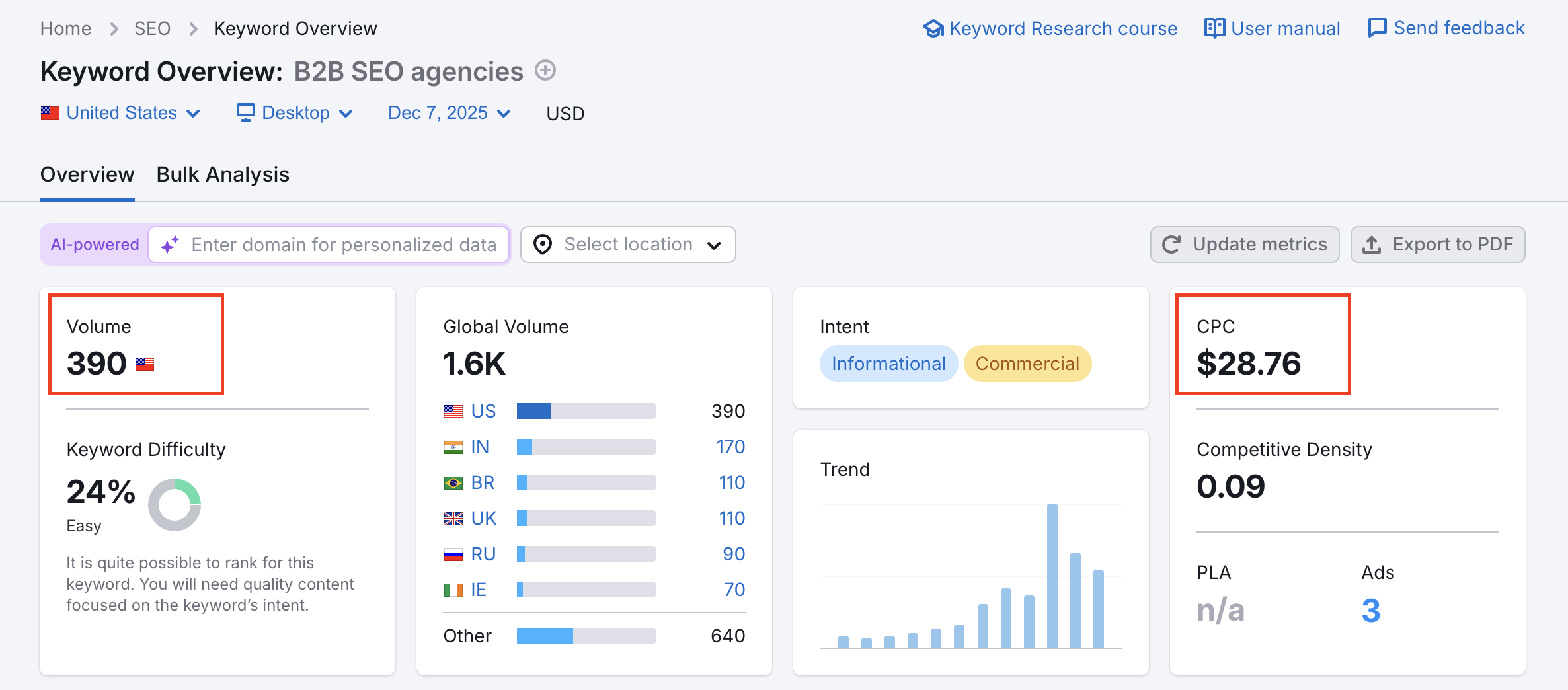
Don’t judge a keyword by its volume. Even if it has low volume, people may still be vying for it in the search ads. For example, this keyword “B2B SEO agencies” only has a volume of 390 in the US, but it has a CPC of $28.76, which is kinda insane. Imagine ranking on the top position for this keyword and bringing in around 200 clicks per month. That’s $5752 in ad spend you saved!
Step 4. Create good content
Here’s a truth: Google isn’t built to rank “high-quality” content. It’s built to rank content that has high utility.
That’s why sometimes content that feels generic and “boring” turns out to get ranked higher than well-written content with tons of images and videos and insights. Google doesn’t know if those images are good for the users. Sometimes users don’t need those images. Sometimes users don’t need those videos. They just want to find a quick answer and go on with their day. They don’t have time to watch a 1-hour video.
That’s why “good” content in the SEO sense is more like “try to give users the answer they need” rather than rambling about things.
So here are the steps I do to know what Google wants from the search results:
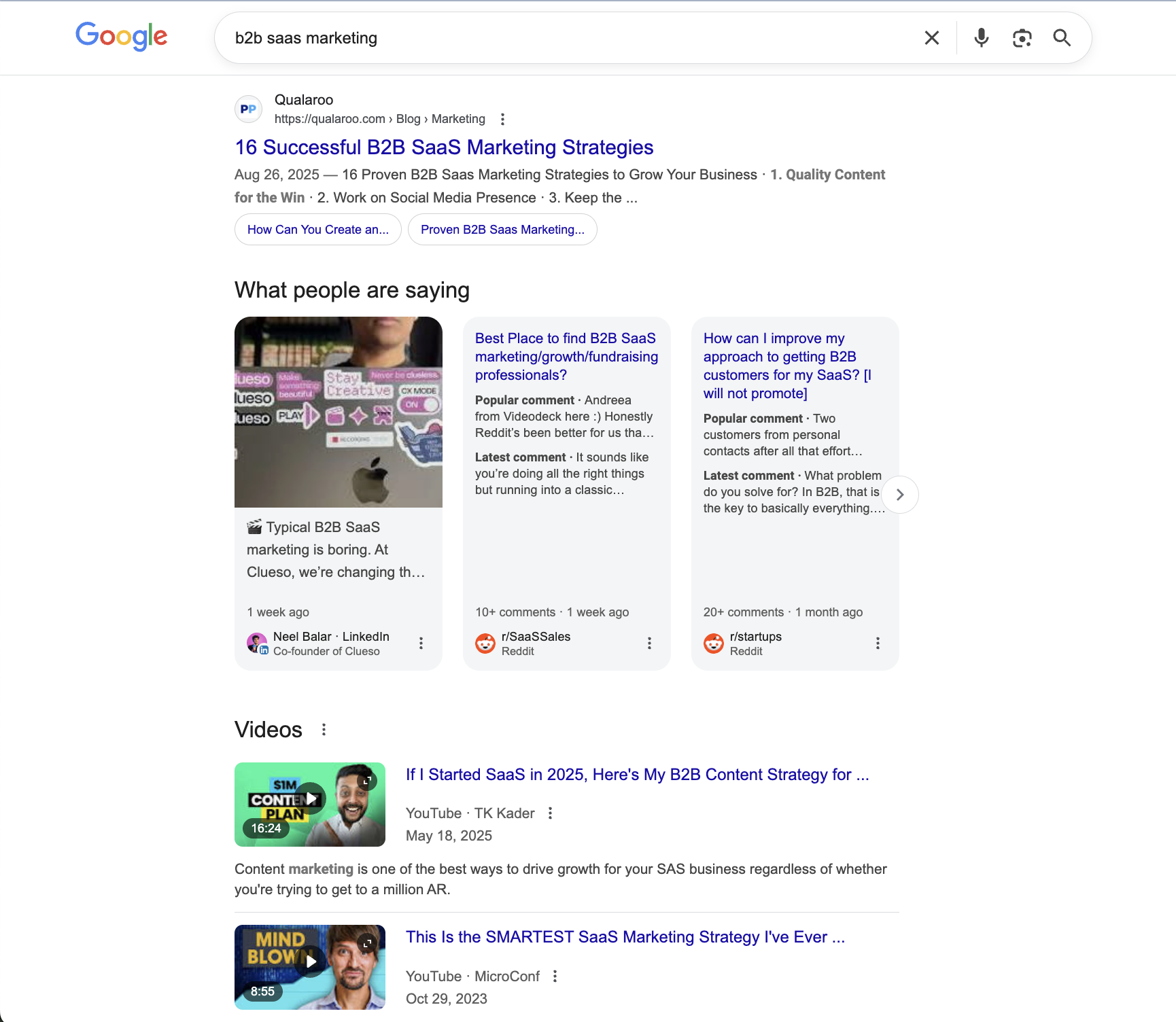
First, I adjust Google to show results for the region I want to target by going to google.com/preferences, choose Other Settings, choose Language and region, then choose the ones I want. After that, I search the keyword to surface the top ranking results to see:
- The formats that Google favors
- The depth of top articles (and where I can beat them)
- Reddit threads (to see what people actually think about the topic)
Once done, I start writing, like a real wordsmith, with all of the SEO content best practices:
- Match my content to what users actually want to find.
- Focus on only one main keyword and include related supporting keywords naturally.
- Write catchy, benefit-driven titles and meta descriptions to boost click-through rate.
- Use proper heading hierarchy (H1, H2, H3) for structure and scannability.
- I always keep my writing clear, concise, and engaging with short paragraphs, bullet points, and of course, tons of visuals. Screenshots are great because they are much easier to produce compared to graphics, and they deliver more practical information compared to visualized images.
- I place keywords naturally in key spots: intro, subheadings, and conclusion. This has always been done for decades, because it absolutely works!
- I then add internal links to related pages and external links to credible sources. I always link to reputable sites in my niche rather than generic informational sites like Wikipedia. Sometimes it helps that you go back to old pages to link back to your new pages too.
- Always write for humans first, then optimize for search engines.
Step 5. Do on-page SEO for your Solution pages
These are the specialized landing pages that position your product as the ideal answer to a specific use case. You can call them Solution pages, Product pages, Service pages, or whatever. Generally they all fall into 4 major categories:
- Industry (e.g., “Solutions for Ecom/Legal/Fintech/B2B/B2C”)
- Role (e.g., “Solutions for Marketing/Sales”)
- Problem (e.g., “Automate for Web/API”)
- Use Case (e.g., “Instantly collect reviews”)
Why are Solution pages important for B2B SEO? From my experience ranking 20+ B2B sites, I realize that Google knows your market positioning by looking at your Solution pages. Like I said earlier, you want all of your pages on your website to have a unified theme to achieve strong topical authority.
The way you structure your product pages tells Google a lot about what pain points you solve, and they’ll decide whether to rank you for the generic terms or the niche terms.
Step 6. Link building
Link building is honestly the most boring and time-consuming part of SEO, but that’s what drives you SEO forward.
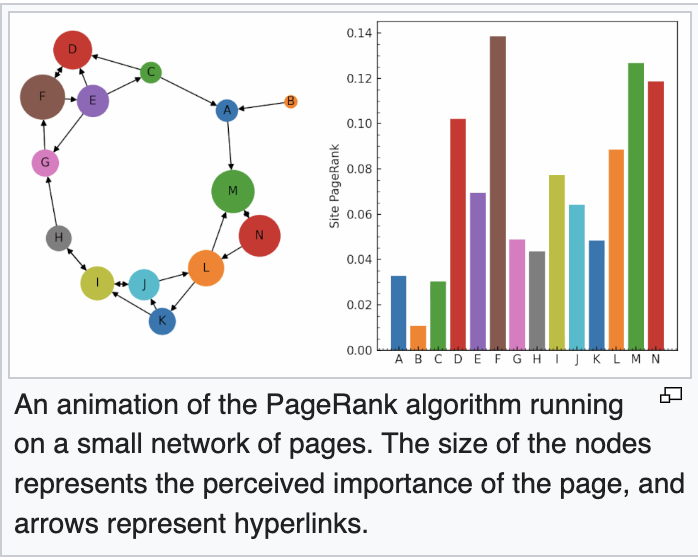
Remember, the core technology behind Google is PageRank, which works “by counting the number and quality of links to a page to determine a rough estimate of how important the website is”. The underlying assumption is that more important websites are likely to receive more links from other websites.
Here’s the graph explaining the mechanism of PageRank. If you want to get all nerdy and technical, check out the Wikipedia page about PageRank.
Google highly recommends that you let links build naturally. However, you can always invest in some link building tactics for the more competitive keywords.
Here are some link building tactics that I find more rewarding:
1. Write a data-rich article that you can share on social media. Journalists and bloggers love citing data sources especially if you visualize it well. This is a tactic promoted by Brian Dean from Backlinko, who has had tons of success with it.
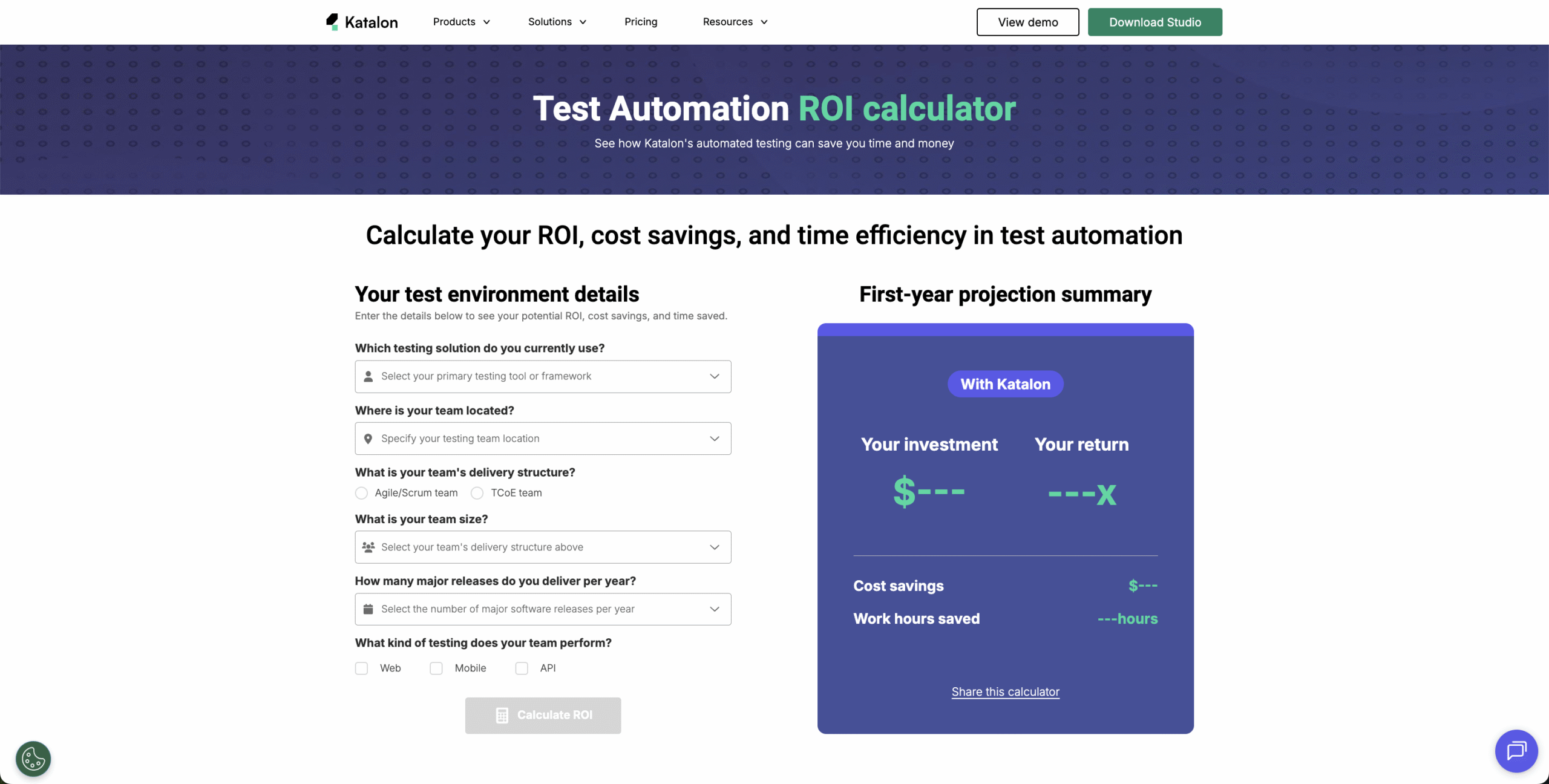
2. You can build simple tools like a “ROI Calculator” or “Automation Cost Estimator” and you can actually attract backlinks from blogs recommending resources, like this ROI Calculator from Katalon:
3. You can also do guest post, but instead of reaching out to “guest post sites”, who probably receive dozens of guest post request emails on a daily basis that they can’t handle, it’s better to reach out directly to founders and entrepreneurs in your niche, offering to contribute an article for them (free of charge).
This group is more than willing to have someone help them grow their visibility, and they are even happier if you can drive real business for them.
Conclusion
At the end of the day, I think the foundational rule of SEO applies for any industries, including ones with complex buying journeys:
- Center the content you publish on your website around one or several core topics. The more tightly connected your articles, the better.
- Your content should be written purely for human readers. Only your meta titles and headings should be optimized for the keyword you want to target. The rest of the article should be written with a lot of the human touch. You want to connect with readers rather than the search engine.
- In many more years to come, PageRank is still the single best ranking system we can possibly have, so it’s crucial that you also invest into link building activities to give your content more “authority” in Google’s eyes.
📊 Want experts to do SEO for your company? Here’s a list of the best B2B SEO agencies