In the industrial automation world, technical trust and performance proof is critical. If you don’t invest in showcasing your expertise, it becomes hard for manufacturers to consider integrating your solutions.
That’s why you need to do content marketing for your industrial automation. Ads bring fast results, but as soon as you stop running ads, leads stop comming in. Meanwhile, strong content compounds in value. A well-designed article or guide can bring in qualified leads consistently for years while building credibility in markets with long, complex buying cycles.
At Perceptric, we’re a content marketing agency that helps industrial automation companies like yours develop clear, technical content. Our work is designed to help you win enterprise buyers and position your solutions as reliable and future-ready.
Based on my experience working for a wide variety of companies in the industry, I will share:
- What’s unique about content marketing for industrial automation
- Our Knowledge-Narrative approach to content marketing
- How to do SEO content for industrial automation
- How to do thought leadership content marketing for industrial automation
Alright, let’s dive in!
Why does industrial automation need content marketing?
Content marketing is the practice of informing and engaging potential customers through valuable digital content. The core idea is simple: teach, be open, build trust, and customers will naturally come to you when they’re ready to make a decision.
Online behavior has shifted, and today’s buyers prefer to research on their own before choosing a product or service. That’s why content marketing plays such a crucial role in digital customer acquisition: it supports people as they learn, compare, and build confidence, which gives them the knowledge they need to make informed decisions.
But do you really need content marketing? The answer is yes, very much so:
- More than any other industries, it’s incredibly important for content in industrial automation to showcase expertise: Manufacturers picking automation solutions want confidence in your technology, so your content should help them understand your system and trust your performance. Strong content also improves your Google rankings.
- Your content should either solve problems or be memorable: Content should help engineers and operators solve automation, integration, or downtime issues, building confidence in your technology. It can also communicate your vision for smart manufacturing in a way that differentiates your brand in a technical space.
- Good content is the only thing that ranks on Google: If you don’t create exceptional content, it’s hard to compete with the big fish. AI-generated content may sound like a good solution to create content at scale, but over a long enough period of time, people notice that you’re using AI, and they’ll lose trust in you. Besides, AI can’t write original content. Only humans can.
My approach to doing content marketing for industrial automation
I use a very simple approach to content marketing for industrial automation (and for virtually any other industry that my clients are in). It is called the Knowledge – Narrative approach.
Put simply, it’s about creating two types of content:
- Knowledge content, which answers questions and solves problems that your potential clients have. This type of content is usually optimized for SEO.
- Narrative content, which is basically just thought leadership content that showcases the philosophy and unique insights/POV that your brand believes in thanks to your experience in the industry. This type of content is meant to establish your brand as the expert.
A combination of both approach gives you the best of both worlds.
- Knowledge content brings in new audiences through SEO. Publication content keeps that audience engaged by showing thought leadership and perspective.
- Knowledge content is algorithm-friendly because it satisfies Google’s need for structure, clarity, and depth. Publication content is audience-friendly because it satisfies the reader’s need for voice and authenticity.
For industrial automation, my Knowledge-style content can be topics like how automation systems improve output and how sensors and controls function, while my Publication content can be thought leadership on smart factories and expert insights on automation adoption.
Most effective content marketing types for industrial automation
Content marketing for industrial automation works best when it’s built on a strong story: a real belief, a real point of view, or a real problem you’re trying to solve.
When that foundation is solid, every content format becomes effective, because they’re all expressing the same core idea in different ways.
With that said, here is my opinion on the types of content that you can use:
| Content Type | Ease of Getting Started | Time to ROI | Best Fit For |
|---|---|---|---|
| Short-form Blog Posts | Easy to write and publish. Great for quick wins and early traction. | Medium. Builds traffic over time, but can rank fast for long-tail keywords. | Brands needing fast educational content and SEO momentum. |
| Long-form Blog Posts | Harder to create. Requires depth, clarity, and expertise. | High long-term ROI. Ranks well, attracts high-intent traffic, builds authority. | Brands wanting strong SEO positioning and deep trust from readers. |
| Ebooks / PDFs | Medium difficulty. Requires structure and design, but highly doable. | High. Great for list-building and lead magnets with ongoing value. | Brands that need leads, gated content, or a strong reasons to subscribe. |
| Whitepapers | Hard. Requires expertise, research, and strong reasoning. | Very high for technical or regulated industries. Converts educated buyers. | B2B, technical markets, and companies selling high-ticket or complex products. |
| Short-form Videos | Easy to create today. Low production requirements. | Fast. Great reach with strong storytelling and consistency. | Brands with personality, compelling visuals, or educational angles. |
| Long-form Videos | Medium to hard. Requires planning, scripting, and editing. | Strong long-term ROI. Great for trust-building, demos, and depth. | Educators, experts, product-led companies, and brands needing explanation. |
| Case Studies | Medium. Requires customer coordination and storytelling. | Immediate to medium. High trust and high conversion impact. | Brands selling services, B2B tools, or anything high-ticket or relationship-based. |
| Infographics | Easy to medium. Requires design but delivers clarity fast. | Medium. Highly shareable and great for top-of-funnel visibility. | Brands with complex data, technical topics, or visual stories. |
| Thought Leadership Articles | Harder. Requires a strong point of view and real expertise. | High. Builds authority, recognition, and trust over time. | Executives, industry leaders, and brands shaping the direction of their category. |
Remember: all content types have potential, but you must be careful to not spread yourself too thin!
If your budget is in the nine figures, it’s a lot easier to run 2 podcasts, a video channel, a blog, and a magazine. But when you’re just starting out, focus on ONE channel that you believe to be able to deliver the best result, and double down when it starts gaining traction.
How to plan for content marketing in industrial automation?
Most industrial automation companies think content marketing is just publishing surface-level articles. However, these often come from general technology summaries instead of true engineering insight.
So before you launch your content marketing campaign for industrial automation, here’s what I recomend:
- Laser-focus into one content marketing channel and do it very well. Spreading yourself across too many channels wastes energy and leads to flat performance. Focusing on one or two allows you to create work that actually moves the needle.
- Start your content marketing strategy by targeting potential customers who are close to buying. Avoid creating content built around beginner-level definitions like “What is [XYZ]?”. Your goal is to bring serious buyers to your site, not people who are still learning the basics. Go after the problems and questions people have when they’re ready to purchase.
- Have a distribution strategy for every piece of content. Many industrial automation companies publish strong technical content and expect manufacturers to discover it. For content to work, you need intentional distribution — through industry networks, LinkedIn, email, or Google.
1. Do audience research
Before you write content, make sure to conduct a good audience research. Audience research is simply the process of gathering and analyzing information about the people you want to reach with your marketing. It’s understanding your target audience’s motivations, pain points, and behaviors.
There are a lot of ways that you can do audience research to inform your content marketing activities:
- Talk to your Sales team — Yes, Sales people are literally in the trenches, so they know A LOT about your customers and what audience you attract. If you don’t talk to Sales to extract insights, you’re probably missing out.
- Social media discovery — Go to the social media channels and check out the posts and creators your audience follows to understand what they care about.
- Competitor analysis — Analyze competitors’ content, SEO, reviews, and digital presence to learn what resonates with your shared audience.
- Communities & forums — Lurk in Subreddits and online groups to hear unfiltered discussions and real pain points that people in your niche has. Reddit is especially useful because it has every communities imaginable on the planet, so you’ll probably find some subreddits talking about your field.
- Surveys & polls — Run short surveys or social polls to gather direct feedback at scale.
- Customer & prospect interviews — Talk directly with customers and ICPs to understand motivations and how they describe their problems.
- Search intent analysis — Study keywords, SERPs, and “People Also Ask” results to map what people are actually trying to solve.
- Website & content analytics — Use analytics and heatmaps to see how users behave on your site and what content truly performs.
2. Do keyword research
Once you have insights, it’s time to start keyword research. This should inform your content creation activities later.
A lot of content marketers in industrial automation start their content strategies by starting off at the “top” of the marketing funnel. In other words, they target people who are only looking for definition of a concept, not people actively looking for a solution. This often means creating broad, brand-awareness pieces on basics like “what is industrial automation” or “how do smart machines improve efficiency.”
Anyone could be doing research on those generic terms. A grandma, a 10-year-old kid, a random college guy. it doesn’t necessarily guarantee they could become your customer.
Instead, you need to create content at the Bottom-of-the-funnel. That’s where the money lies. People searching for those terms usually know they are having a problem and are actively looking for a solution.
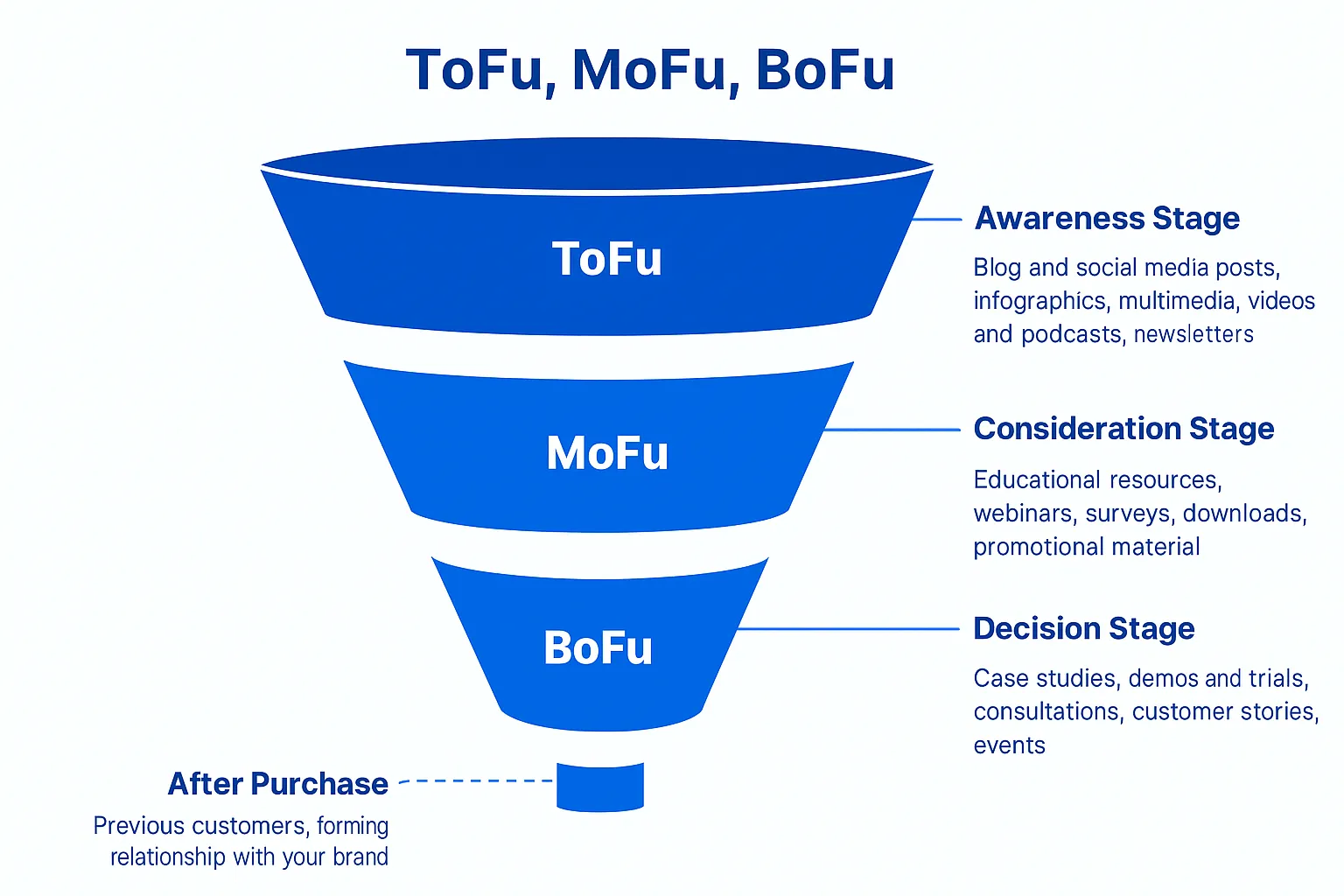
I categorize BOFU keywords into 3 major groups:
- Listicle Keywords – These are roundup-style searches like “Top 10 companies for [niche].” These attract users actively comparing options and help introduce your product/services as one of the contenders.
- Pain Point Keywords – These keywords are the real problems your audience is trying to solve, like “how to fix X” or “why Y happens.” Write a stellar article showing how to solve it, positioning you subtly as the ultimate choice to solve those problems. You can mine those keywords in forums and niche industry communities.
- Lead Magnet Keywords – Target people looking for resources with phrases like “free template for X” or “downloadable guide to Y.” These are great for capturing leads in exchange for helpful content. Build assets that directly match these needs.
Let’s say I am doing content marketing for an industrial automation company called WriteMeContent, who provides robotic palletizing systems, here are the keywords I’m targeting for them:
- Listicle Keywords: best robotic palletizing systems, top automation tools, best industrial robotics solutions
- Pain Point Keywords: how to reduce palletizing errors, why throughput drops, how to automate packaging lines
- Lead Magnet Keywords: automation ROI calculator, palletizing workflow template, robotics implementation checklist
Once you’ve tapped out the pain-point and bottom-of-funnel keywords, you can move upward in the funnel and begin producing MOFU and TOFU content.
How to write SEO content for industrial automation?
SEO content is amazing because it brings in consistent, evergreen traffic (and conversion) as long as you write content that genuinely resonates. Although it’s a relatively long-term game, the compound rewards are totally worth it!
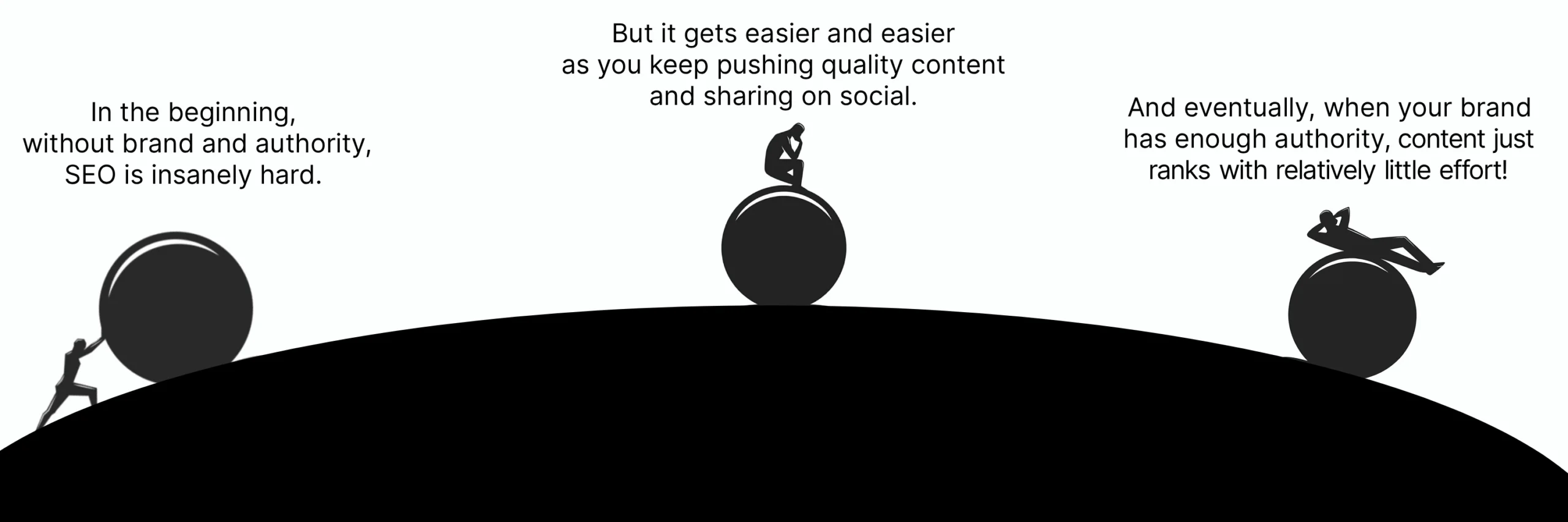
My advice when choosing SEO as one of the content marketing channels for industrial automation is that you should develop the most technically sound, insight-rich article available for your topic.
People go to Google expecting advice from someone who’s actually walked the path before them. That typically comes from real human writers with real-world experience behind their words.
But it could also be an AI-produced article, provided it’s based on accurate information and validated by a human before publishing. Google has already stated it doesn’t really care if the content comes from AI (for now). Authentic experience shows in your writing — and people who know the topic notice it instantly.
And when you actually write good content:
- Readers stay on your page for longer (which boosts SEO)
- Readers share your content to their coworkers and make discussions (which affects final buying decision)
- Readers remember your brand, and will return to consume more content from you (more traffic!)
- Readers are interested enough to check your products and services (which also affects their buying decision)
Here are the steps I would do to write the best piece of content:
- Open an incognito window and Google the keyword to figure out the search intent. In other words, what types of pages are showing up in the top three results? Deep-dive into that page. I usually check the depth of those top articles (and where I can beat them).
- Next, build an outline with clear H1, H2, H3, and H4 headings. The H1 is your main title, the H2s are your primary sections, and everything below that becomes supporting subheadings.
- Use keyword research tools like Ahrefs to research additional keywords to work into your article and guide your on-page SEO.
- Then write your content. If your outline is solid, all you need to do is fill in each section. And make sure your intro pulls people in.
Here are some best practices I apply for writing SEO content:
- Keep your H1 title tag under 60 characters, ideally in the 56–58 range to avoid truncation and keep the headline tight.
- Write a meta description under 155 characters and include your exact target keyword somewhere in the copy for clarity and relevance.
- Set your URL slug to the exact keyword. Most CMSs auto-generate the slug from your full title, which is rarely ideal. Always edit it so the slug is clean, short, and keyword-only. I still can’t believe how often this has to be repeated to content teams.
- Use JPGs for images that don’t need transparency, and keep them under ~100 KB. Compress them or convert PNGs to JPGs using online tools. If they’re still too large, resize them. On Mac you go to Preview → Tools → Adjust Size → set width to ~1280 or ~1080 and let the height scale automatically.
- Add ALT tags to every image. This is essential for accessibility and helps screen readers describe visual elements to users with impaired vision.
- Save your thumbnail image as a JPG and name the file using your exact target keyword. This boosts your chances of appearing in Google Image Search. The same applies to every image you upload: use descriptive filenames, not random strings. File naming plays a bigger role in image search than most people realize.
For industrial automation in particular, here are some of my recommendations:
- When you illustrate automation workflows with diagrams and real throughput numbers, engineers stick around longer.
- Content that shows ROI from automation upgrades gets shared inside ops teams looking for justification.
How to write thought leadership content for industrial automation
Real thought leadership comes from the ideas you share and the way you deliver them, whether you’re writing, presenting, teaching, or speaking. When it’s done well, it separates you from everyone else and gives people confidence that your perspective is something they should pay attention to.
But keep in mind: thought leadership doesn’t need to reinvent the wheel. You don’t have to force a contrarian take to stand out. Sometimes going deep on a narrow topic and surfacing those “hidden gems” is all it takes.
For example, here’s a thought leadership post from Noah Greenberg, CEO at Stacker. He’s just expressing his ideas in a very simple, even casual fashion, and yes, I would say that it is a piece of LinkedIn thought leadership content:

The problem is that in most companies the founders and senior leaders are sitting on a goldmine of sharp opinions, but almost none of it ever gets written down. These ideas stay locked in their head. Without a system to extract that knowledge and turn it into clear, compelling content, the company never actually produces real thought leadership.
Your in-house marketing team, unfortunately, are just executors, not subject matter experts. They can package the ideas, polish the writing, and publish the content. But they’re not the ones shaping the industry. They didn’t found the company. They aren’t defining the strategy. They didn’t build the product.
When creating thought leadership content for industrial automation, you have several options:
- Ideas rooted in your company’s origin story and the problem you set out to solve
- Ideas shaped by your strategic positioning and worldview
- Insights drawn from the actual nuance of what you build or deliver
- Strong opinions informed by years in the industry
- Proprietary data and patterns no one else sees
- Case studies that reveal details only insiders would know
So here’s how I’ll do thought leadership content marketing for industrial automation:
- Find your story: Almost every industrial automation company starts because engineers were tired of bottlenecks, downtime, and outdated machines. They built smarter systems to make factories run the way they should. That’s their disruption story. Interview the founders and tell that story. Lay out the pain points that led them to start their company, and explain the unique solution they developed to solve those problems.
- Find smart people with unique insights: Sometimes it’s just the reality is that most companies don’t have that “groundbreaking” story. However, they usually have smart people in the company. In industrial automation, integrators know small mechanical, electrical, and software differences that completely change how a line performs — details you only learn from deployment experience. Engage with them, and interview them to write an insightful piece of content. You’ll be surprised at how much content can be produced simply by talking to experts in the team.
- Produce proprietary data: In industrial automation, engineers and operators want data on throughput, downtime reduction, and ROI — but few teams actually compile these insights. They end up linking to vendors that share real performance metrics. Sharing your own data builds immediate credibility.
How to distribute your content?
After you produce content, you can’t expect people to find it by themselves. SEO naturally brings in traffic, of course, but you must be proactive about content distribution too.
Here are some of my favorite content distribution channels for industrial automation:
- Your company blog: Always start here. Link your articles together to take visitors from one page to another. For example, in a generic How-to article, try linking it to your thought leadership content. That helps siphoning some traffic from an high-discoverability page (thanks to SEO) to a low-discoverability page (thought leadership).
- Newsletters: A newsletter is the BEST way to distribute content. In the beginning, building an email list can take a lot of time and effort, but over time, it becomes a powerful owned channel for promotional content. Some of the good newsletter platforms I recommend are beehiiv, MailerLite, Kit, and Substack.
- Social media: LinkedIn is usually the best platforms for industrial automation content distribution. Simply break your articles into smaller snippets and share it on social media. However, you need to share it on personal accounts rather than company pages (people don’t really read information from a Company page).
Choosing the content marketing agency for industrial automation
Okay, since I’m writing this article, this is going to be quite a self-promo. But Perceptric is born out of my deep understanding of what’s lacking in the way content marketing is done in many industrial automation. I saw how:
- Pain point 1: Content team is too disconnected from the Sales team to effectively collaborate and create content that really drives Sales.
- Pain point 2: Content team doesn’t focus enough on Bottom-of-the-funnel queries and topics that drive revenue. They chase entry-level keywords that may bring in tons of traffic (but none of them have the pain point that your products/services are solving).
- Pain point 3: Content writers tend to have not enough subject matter knowledge to write content for such a highly technical field.
That’s why I create Perceptric to solve those pain points for content teams in industrial automation. We’re committed to crafting exceptional content that rises above the noise.
Here’s how I do content marketing differently:
- I use the Knowledge – Narrative approach to balance between SEO and thought leadership content
- I focus on creating content for the bottom-of-the-funnel that answers very specific pain points that your customers are having.
- I also help you build thought-leader/opinion content pieces (sourced from experts in your field) that reflects what your brand believes in. Content marketing, at the highest level, becomes brand building itself.
- Finally, I help you distribute those content pieces by repurposing them into formats suitable for social media
If you’re looking for a content marketing partner who genuinely gets what it means to do marketing for industrial automation, I’d love to help!
Industrial automation marketing Frequently Asked Question
1. Why is content marketing important for industrial automation?
Content marketing allows industrial automation companies to explain ROI, throughput gains, and real workflows. Strong technical content pushes engineers toward booking evaluations.
2. What’s the biggest mistake industrial automation make with content?
Many industrial automation companies launch fancy videos before addressing the ROI, cycle-time, and feasibility content engineers search for. Start with high-intent technical insights.
3. How should industrial automation measure content marketing?
Beyond traffic and engagement, {Industry keywords} should track sales-related outcomes rather than vanity metrics like traffic. This includes:
- Number of leads generated
- Deals/conversions attributed to content
- Deals/conversions influenced by articles
4. What type of content works best for industrial automation?
For industrial automation, begin with BOFU topics like “palletizing robot cost” or “automation integrator near me.” Add workflow and ROI content afterward.