
B2B marketing for tech companies require a very different playbook.
It’s much less about flashy campaigns and more about earning trust.
And in a world where B2B buyers can smell BS from a mile away, trust is even harder to build.
What makes it harder is that most B2B buyers don’t work alone. They work in buying committees. You might have a CTO, a head of procurement and two technical stakeholders involved in one deal, each with different objections and levels of technical fluency.
This is why B2B marketing for tech companies is its own category with its own rules. And that’s why I wrote this guide to show you those rules.
Let’s get into the complete guide on B2B marketing for tech companies!
What makes B2B marketing for tech companies different?
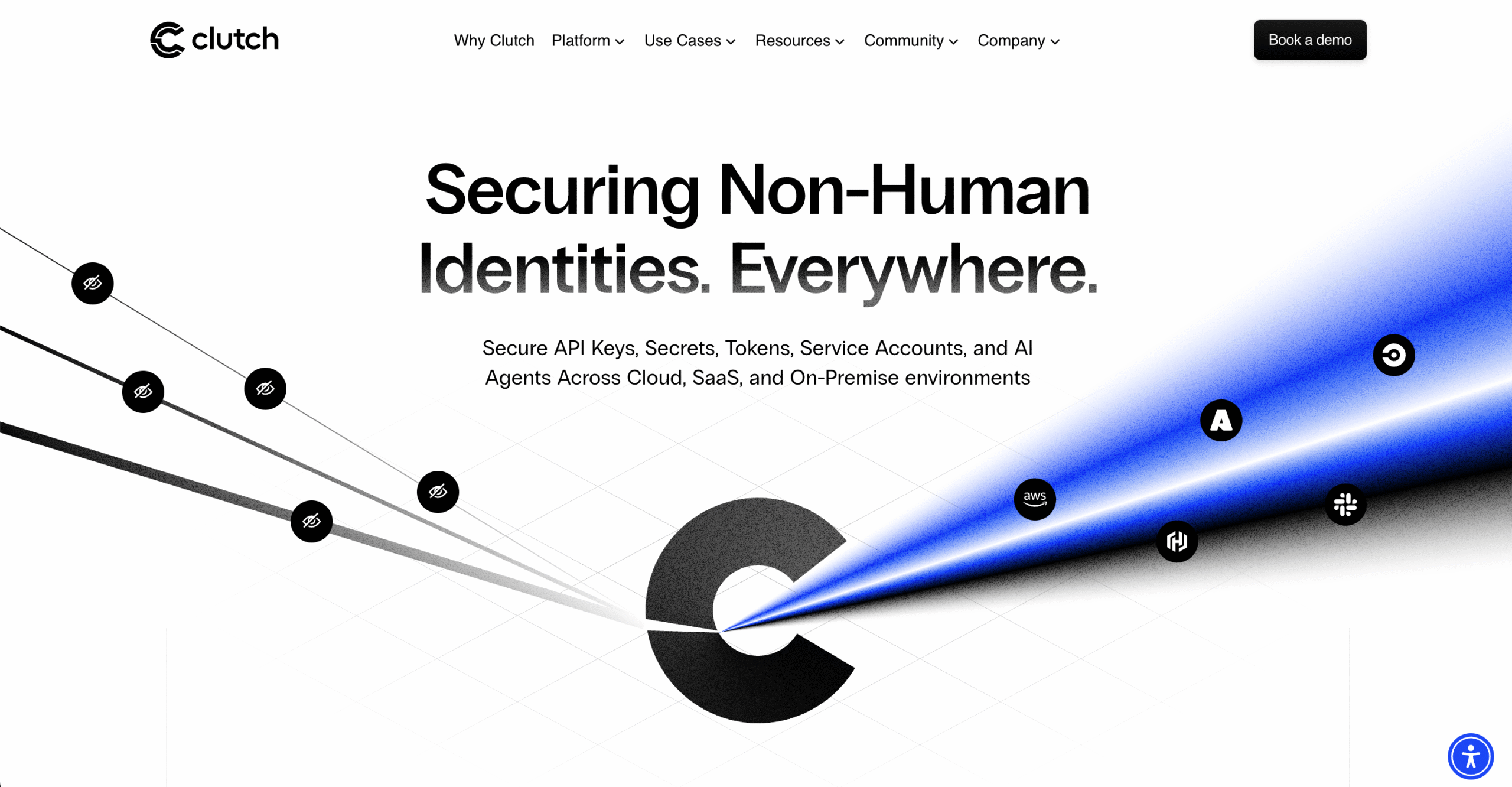
Here is Clutch, the first Universal Non‑Human Identity Security Platform, purpose-built to secure the exponentially growing ecosystem of NHIs.
Doing marketing for such brands require a really high level of technical understanding to get it right.
And here are three reasons why:
- Technical content marketing is built different: Tech content marketing isn’t “difficult” per se, but it is built on a logic system that most traditional marketers aren’t trained for. You’re speaking to developers, security engineers, sysadmins, technical founders. These audiences are educated and highly discerning who love evidence, demos, benchmarks, and proofs of concept rather than gimmicks.
- The Marketer-to-Techie Gap: now here’s the real challenge: most marketers are not engineers, and most engineers aren’t marketers. Which means marketing materials either ends up sounding like corporate fluff that technical buyers ignore or it’s written by technical SMEs who overload it with jargon. The best B2B tech marketers are hybrids who can read the docs then figure out how to translate deeply technical concepts into language that resonates with both sides.
- B2B is slow: B2B sales are slow by nature, and for good reason. Deals take months to close because so many stakeholders are involved, and things can only move when everyone gives the green light.
5 strategies to do B2B marketing for tech companies
1. Content marketing
Buyers in B2B are more serious than those in B2C, and they consume content a lot.
Think about it: no one spends weeks comparing options just to buy a hoodie or a can of soda. B2C content tends to be short-form, punchy, and optimized for entertainment. That’s what works.
It’s different in B2B, where the stakes and price points are higher, decisions are committee-based, and buyers self-educate for months.
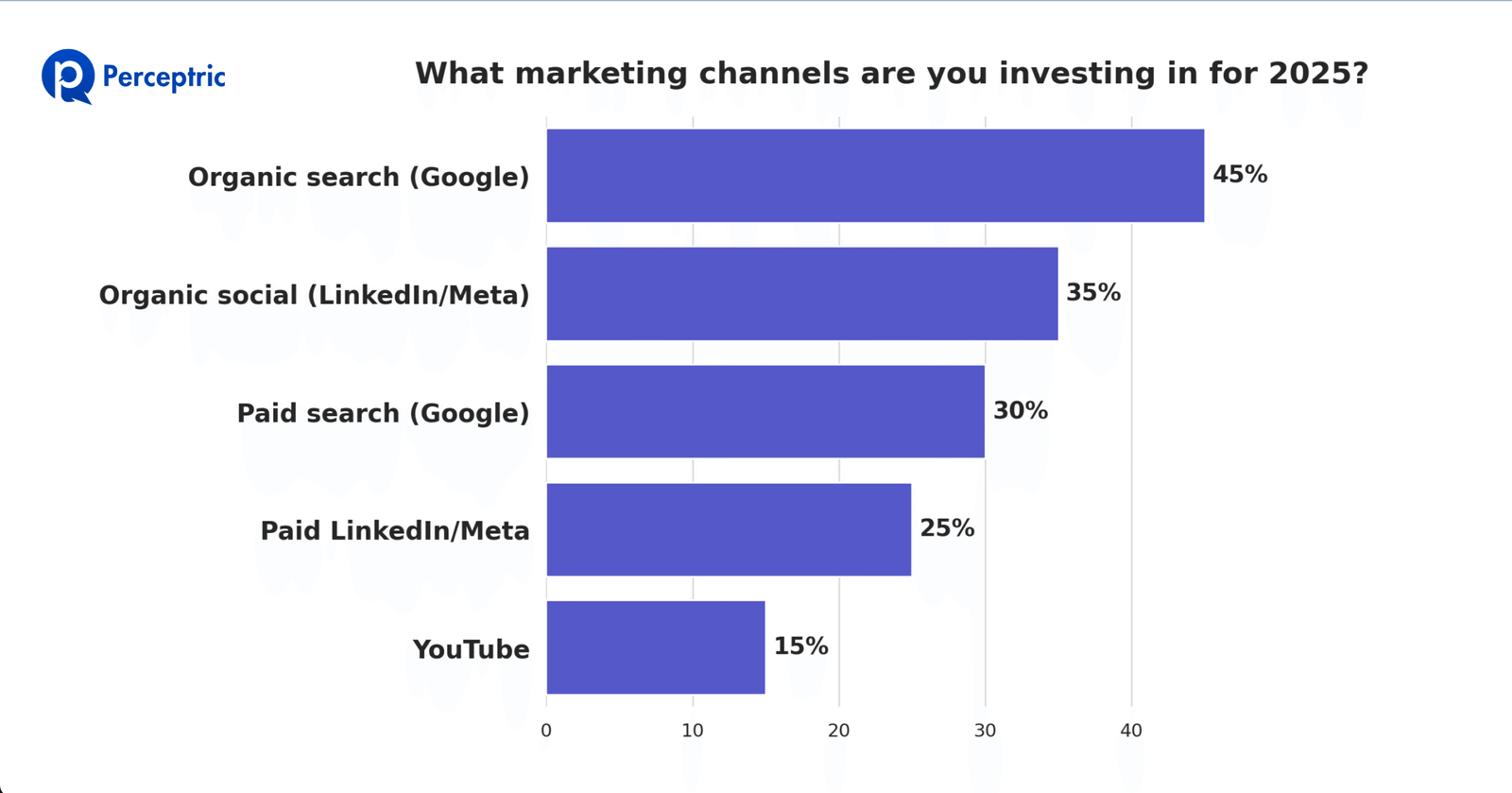
That’s why B2B companies have been doubling down on content creation on both Google & social media for the upcoming years:
The problem is more on how to create content that your audience can’t resist but reading. Basically it’s about creating content that is:
- Bottom-of-the-funnel and driven by pain point: almost every B2B business already has a group of people who are at the purchase stage, looking to solve their problems with a product or service like yours. Your job is to prioritize content creation for people who are more “ready-to-buy”. They are searching for BOFU queries and “how-to” keywords that you can totally capitalize on.
- Fresh: your content should showcases new ideas and insights that give your audience a fresh perspective on their day-to-day work, and that shows that you know what you’re talking about. Such “opinionated” articles are not always searchable on Google, but they are usually more memorable.
- Repurposing built-in: a rule of thumb that I use in our own content strategy as well for my clients: all content lives more than once. It must be continuously repurposed, either by slicing it into smaller snippets that are then shared across social media, or turned into a video, and vice versa. It’s all about multiplying the distribution of your content across the Internet.
📚 Read More: B2B content marketing strategy checklist
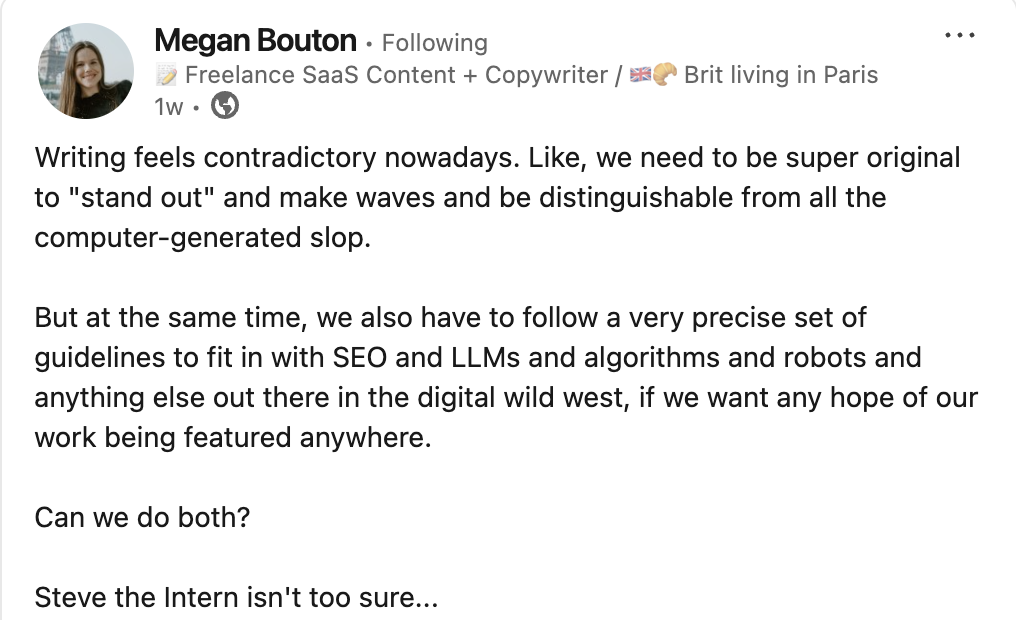
Although, admittedly, B2B content writers nowadays are stuck between the need for originality and conformity. As @Megan Bouton succinctly put it in her post:
My answer to this dilemma is to do both, using the Library vs Publication approach. It’s an effective approach when it comes to devising a B2B blog strategy for your tech brand:
- Library-style content is content that follows SEO best practices. People search on Google, find your (highly ranked) content, and land on your site. With the right keyword strategy, you can generate significant revenue purely through organic traffic. However, this content type often comes at the cost of creative freedom. Writers need to follow keyword guidelines closely.
- Publication-style content prioritizes creative and editorial freedom. It allows brands to explore original angles, take a stance, and publish thought-provoking content that users may not actively search for. This is where brands can show personality and build deeper resonance with their audience. The trade-off? These pieces are less likely to rank on search engines, so they typically require separate distribution channels (like email, social, or partnerships) to gain traction.
However, when the Library-Publication approach is done properly, the result is usually more than wonderful.
2. Social media marketing
Here’s the truth: most company social feeds are boring. Why? Because they talk about themselves too much.
Nobody wakes up wanting to hear about your company. They want to know how their lives or businesses can get better.
Take Surreal: they went viral by going completely unhinged (with a little bit of British humor) on LinkedIn. Every single post gets hundreds and thousands of engagement from people who have been too fed up with the LinkedIn facade and are looking for something more refreshing and genuine.

B2B companies tend to be a little bit too serious, which makes sense since you’re trying to target leaders, but it sure doesn’t harm to mix in some creativity. Since you’re in tech, humor is usually more than welcomed.
If you don’t want to stray to far from brand guidelines on your company page, you can totally use the founder-led and employee-led social media content strategy. These people are known as “social selling leaders”.
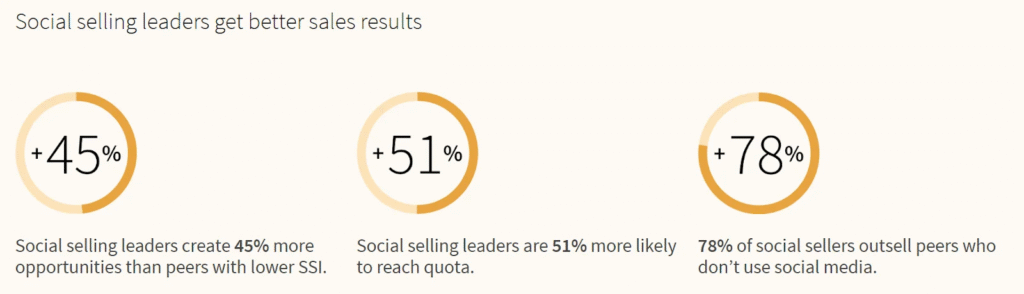
This works especially well on LinkedIn, where the algorithm favors individual creators. Posts from actual people get prioritized in feeds over company updates, and engagement feels more natural. These “social selling leaders” use their personal profiles to:
- Build trust by sharing firsthand experiences and opinions relevant to your industry.
- Educate and provide value instead of just promoting. They can write how-to threads or behind-the-scenes posts or smart takes on trends.
- Engage directly with prospects to spark real conversations that drive organic reach.
- Subtly champion the brand by showing how they solve problems (often involving your product or service in the mix).
A founder with a strong personal brand can reach 10–100x more people than the company page alone, and their content can spark conversations that move prospects down the funnel before they even talk to Sales.
If they’re short on time, they can easily partner with a ghostwriter to bring their ideas to life.
3. Performance marketing
Traditionally, B2B marketers have leaned on performance marketing to drive leads quickly. However, CPC (cost per click) has been rising quite steadily year-over-year, especially since the pandemic. That means brands are spending more and more of money on ads (Google loves that). But does that mean more results?
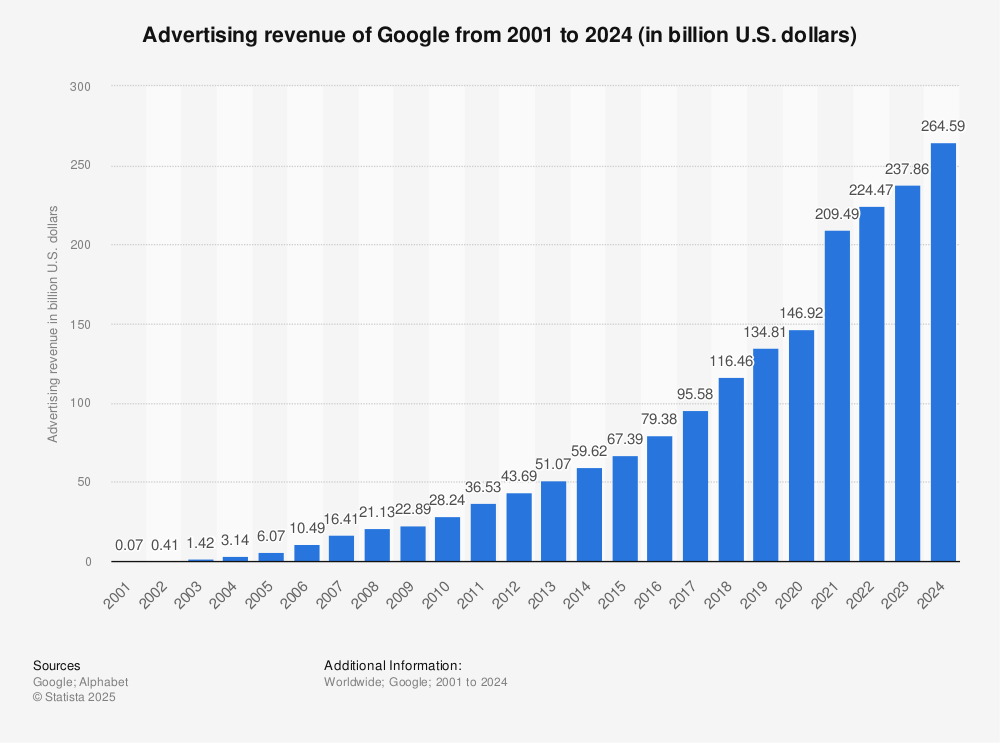
Real question: does PPC work for B2B tech? In my opinion, yes, but there’s a caveat.
Remember: trust is everything in a B2B consumer’s decision-making process. Expecting a fast conversion without earning trust is the equivalent of expecting someone signing a $10 million contract after a first coffee meeting.
In B2B, performance marketing comes after brand authority building. You must recognize that, by the beginning of the journey (i.e., the discovery phase), buying groups have already formed clear preferences and informal shortlists. The ads is only a small touchpoint in a web of interconnected interactions that the prospect has with your brand:
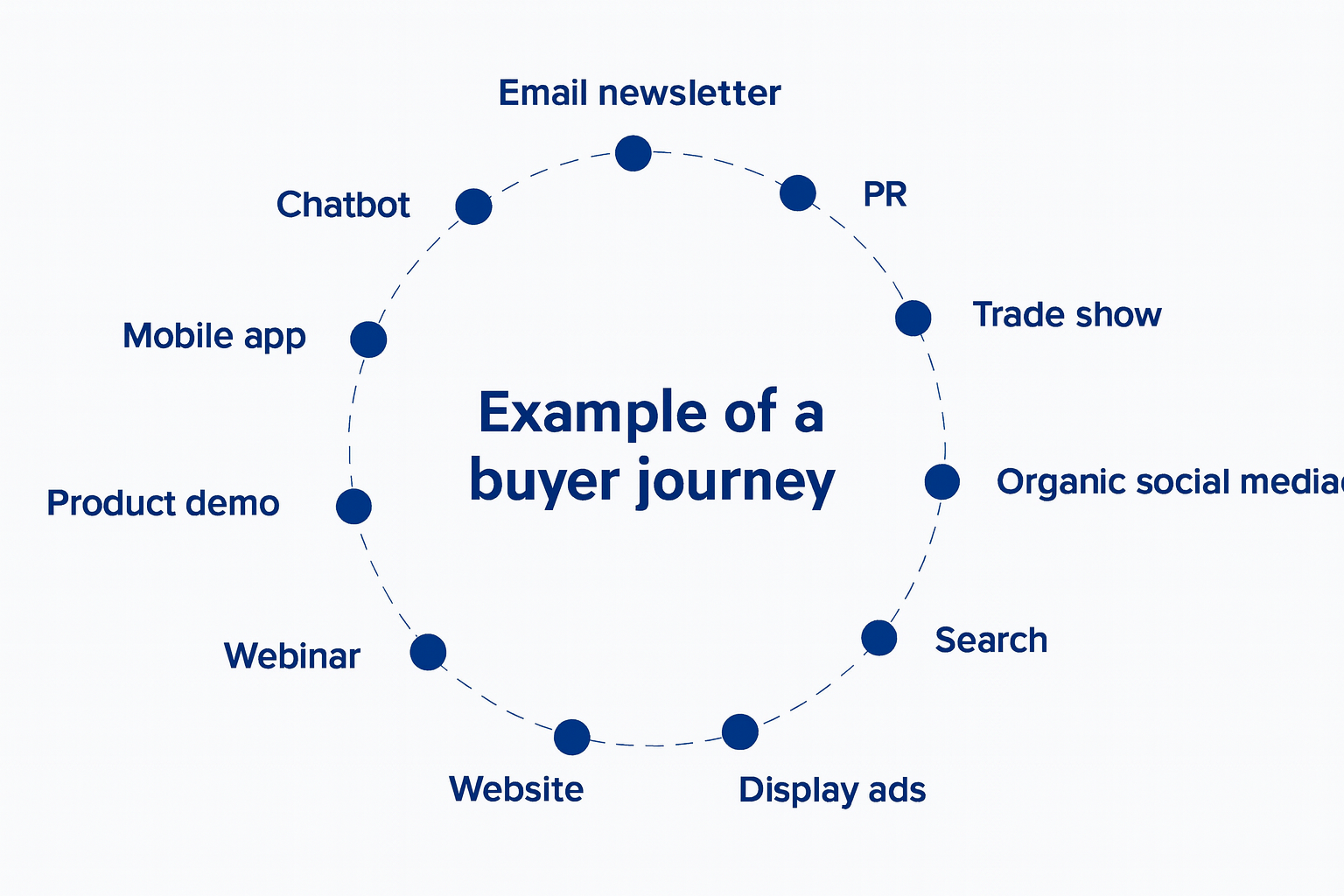
Performance marketing for B2B tech, therefore, has two main goals:
- Demand generation is where you’re putting ideas, problems, or solutions in front of them to plant seeds before they even realize they need you. Here you can promote high-value thought leadership (white papers, webinars, benchmarking reports) rather than “buy now” offers. It builds your audience and fill the top of your funnel.
- Demand capture is where you run ads to target everyone who already has a demand for your services. You can either capture new visitors or use retargeting ads to recapture those who’ve been on your site, downloaded a guide, or attended a webinar (thanks to your Demand Gen efforts).
In the middle of “unknown” and “conversion” is brand building, which is done through exceptional content creation/distribution and thought leadership.
4. Newsletter
Most people are already swamped with work. They don’t have time to manually keep up with every article and every trend. That’s exactly why they subscribe to newsletters: to get a curated, trusted feed of insights that saves them hours each week.
Newsletters are particularly effective for B2B tech, because this industry is really future-driven, and they are very willing to read “hot takes” and contrarian insights.
That’s your opportunity to shine.
Your newsletter becomes the filter they rely on to stay informed without having to do the digging. It positions you (or your brand) as a reliable expert who consistently shows up with the insights that actually help them grow.
For example, NVIDIA has a newsletter called “AI insights for Business” that currently has a readership of 550K subscribers, among which are Engineers and Tech leaders (their target audience):

The goals of a high-performing B2B newsletter are simple:
- Filter the noise: Only share the most relevant, actionable content.
- Establish authority: Be the guide who knows what actually matters.
- Maintain lightweight touchpoints: Stay top-of-mind without spamming.
- Subtly connect your product to the solution: Don’t sell hard, deliver value first.
- Foster a sense of exclusivity: Make readers feel like insiders.
Nail these, and your newsletter becomes a habit just like morning coffee (and yes, people will literally read yours with coffee in hand).
5. Community marketing
If you think about it, a lot of our modern technology has its roots in open-source communities. Tech is the most community-driven industry out there, so community marketing is extra effective.
For B2B marketers, communities represent owned audiences who are typically made up of your ideal buyers. They regularly engage with your brand through valuable content, shared experiences, and collaborative discussions.
When you’re thinking about building your own community, consider the following:
- Find a way to “cut through the Noise”: Ask yourself what is attention grabbing about your company that you want to be known for? Define a clear value proposition and build your community around the expertise, narratives, and topics that naturally align with your product. It must be:
- Relevant to your ideal buyer
- Tied to your solution
- Hard to find elsewhere
- Find a way to provide more to your audience than just your product: To stand out, you need to offer more than a sales pitch. It looks like:
- Deep-dive tutorials on real engineering challenges
- Architecture breakdowns with diagrams
- Side-by-side comparisons with alternatives (including open source)
- Behind-the-scenes or lessons learned
- Security, performance, or compliance insights from your internal teams
- Build your community where they are are – don’t wait for them to come to you: Don’t expect people to “discover” your community on their own. That model doesn’t work anymore, especially in an industry flooded with content. Instead, go where they already hang out, meet them, share your content:
- Stack Overflow, Hacker News, or Reddit communities like r/devops or r/dataengineering
- Twitter/X for thought leadership and niche discussions
- LinkedIn for technical buyer engagement
- Discord or Slack groups in your category (DevOps, Web3, SaaS growth, etc.)
- GitHub, of course, if your audience is open source-minded
A great example of a community is Ministry of Testing. It is one of the most respected and active communities in the software testing / quality engineering domain. It began as a UK-based forum and has grown into a globally recognized platform offering events, education, community forums, resources, and certification.
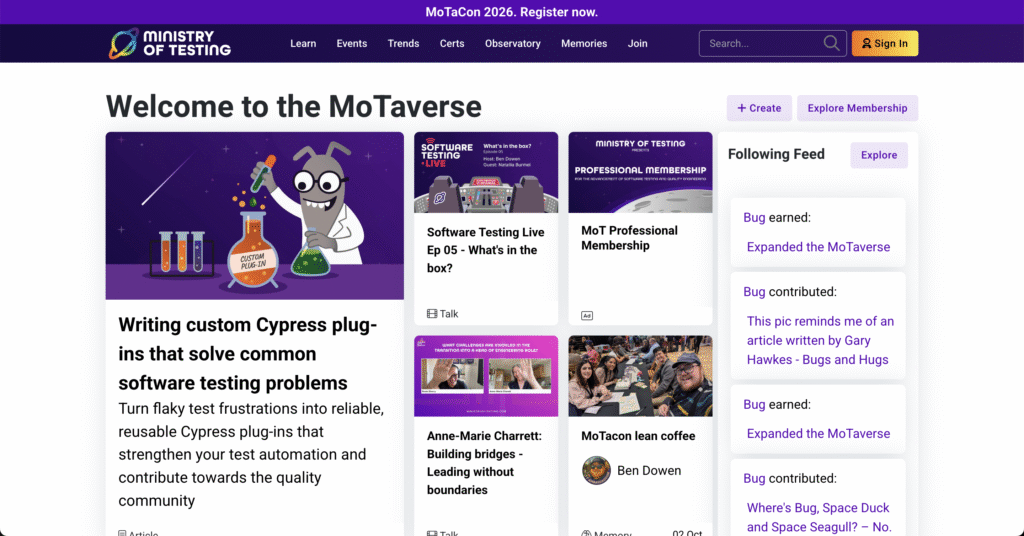
They don’t represent any brands, and that makes them a community in the truest sense: just a place for people to gather and share.
Conclusion
B2B marketing for tech companies is all about earning trust from intelligent, skeptical buyers who don’t make decisions lightly. The strategies that work in B2B tech are the ones that respect how modern tech leaders think:
- Content that solves real problems.
- Social strategies built on human connection and technical credibility.
- Performance marketing that builds up on thought leadership.
- Newsletters that build habits.
- Communities that foster collaboration
Of course, each niche of B2B requires a slightly different approach, but the general principles stay the same. My personal principles when doing B2B marketing, no matter what industry, is:
- Give them value first, and as much as possible
- Be original
- Showcase your expertise