
I’ve been in SEO for a decade, and there’s never been a more exciting time to be in SEO. Yes, AI is shaking things up, a lot, but it’s a huge opportunity for those who know how to really leverage this fascinating piece of tech.
One emerging opportunity is ensuring your brand appears in tools like ChatGPT, Claude, Grok, and whatever new LLM comes next. To make that happen, you first need visibility into your current performance, because you can’t improve what you can’t measure.
In this post, I’ll share my go-to AI rank tracking tools that help you see whether LLMs are recommending your brand, and how to respond if they’re not.
What’s even better is that I’ll share some SEO best practices on how you can use these tools to grow your visibility in LLMs.
Sounds good? Let’s get into it!
What is an AI rank tracking tool?
An AI rank tracking tool is a platform that monitors where your brand or website appears within AI-generated search results and summaries.
Instead of focusing on traditional SERP positions, these tools analyze LLM-driven platforms like ChatGPT, Gemini, Claude, Perplexity, and Google’s AI Overviews to determine how frequently and prominently your brand is mentioned or cited.
It’s like SEO rank tracking, but for the new era of AI search visibility:
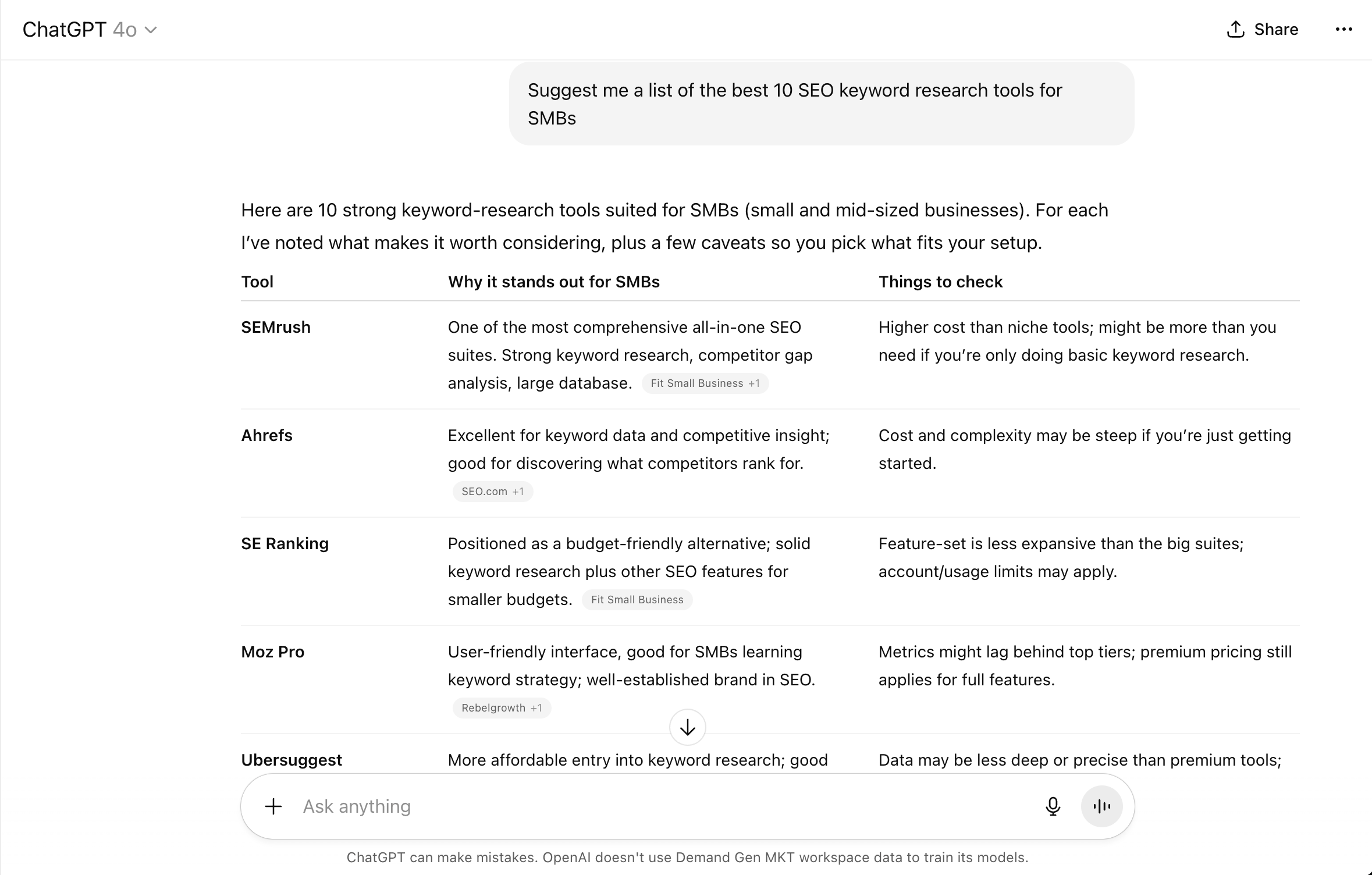
These tools highlight when an AI system recommends your brand or references your content. Many also benchmark your visibility against competitors, tracking which brands dominate specific topics or queries inside AI responses. By surfacing this data, AI rank trackers help you understand and optimize how large language models perceive and present your brand.
How hard it is to measure keyword rankings in AI and LLMs?
Personally I see 3 key challenges when it comes to measuring keyword rankings in AI and LLMs:
1. LLM content is non-indexed by default: Content generated by LLMs (like ChatGPT, Claude, Gemini) doesn’t “live” on the public web unless explicitly published. So, unless you’re feeding outputs into blogs or websites and letting Google crawl them, there’s no true visibility into how those keywords perform.
2. No canonical keyword ↔ output mapping: You can’t easily say: “This keyword led to that LLM response.” The output of an LLM is shaped by a mixture of training data, prompt design, instruction-tuning, and inference temperature, and not strict keyword indexing. Unlike search engines, LLMs don’t use a reverse-index model to find ranked results.
3. Context and recency distort relevance: Even if you fine-tune an LLM for SEO-aware generation, any change in prompt context ends up with different rankings or completely different phrasing for the same semantic idea. That makes consistent tracking of keyword presence or placement unreliable over time.
Need help with AI SEO? Here’s 14 Best AI SEO Agencies With Proven Results
How does an AI rank tracker work?
AI visibility trackers work like search rank trackers, but for large language models.
Instead of checking where you rank on Google for a keyword, they check if your brand shows up in AI answers to specific prompts. You feed them prompts like “what’s the best CRM for freelancers” or “AI tools for automating sales,” and they test those across platforms like ChatGPT, Claude, and Perplexity.
If your brand appears in the response, they log it. If not, you know you’re missing from that conversation.
For now, here’s the process behind an AI rank tracking tool:
1. Prompt input and response collection
You start by giving the tool a list of prompts. These are like your target search queries, things a real person might type into ChatGPT or Claude, like “best CRM for agencies” or “tools like Notion.” The tool sends those prompts to supported AI models using either their APIs or simulated browsers. Some tools also test variations in tone, format, or location.
How do you know what a real person might type into ChatGPT? I usually go to Google Search Console, download all of my search queries, push into Google Sheet, and filter out some of the long-tail keywords using regex:
\b(who|what|where|when|why|how|which|can|do|does|is|are|should|could|would|will|did|may|shall)\b[^?.!]*[?]
You can get queries like:
- “What are the best CRMs for real estate agents?”
- “What CRM tools do realtors use?”
- “Can you recommend a CRM for property sales?”
Do this at scale, and you should have a list of keywords to plug into your AI keyword rank tracking tool.
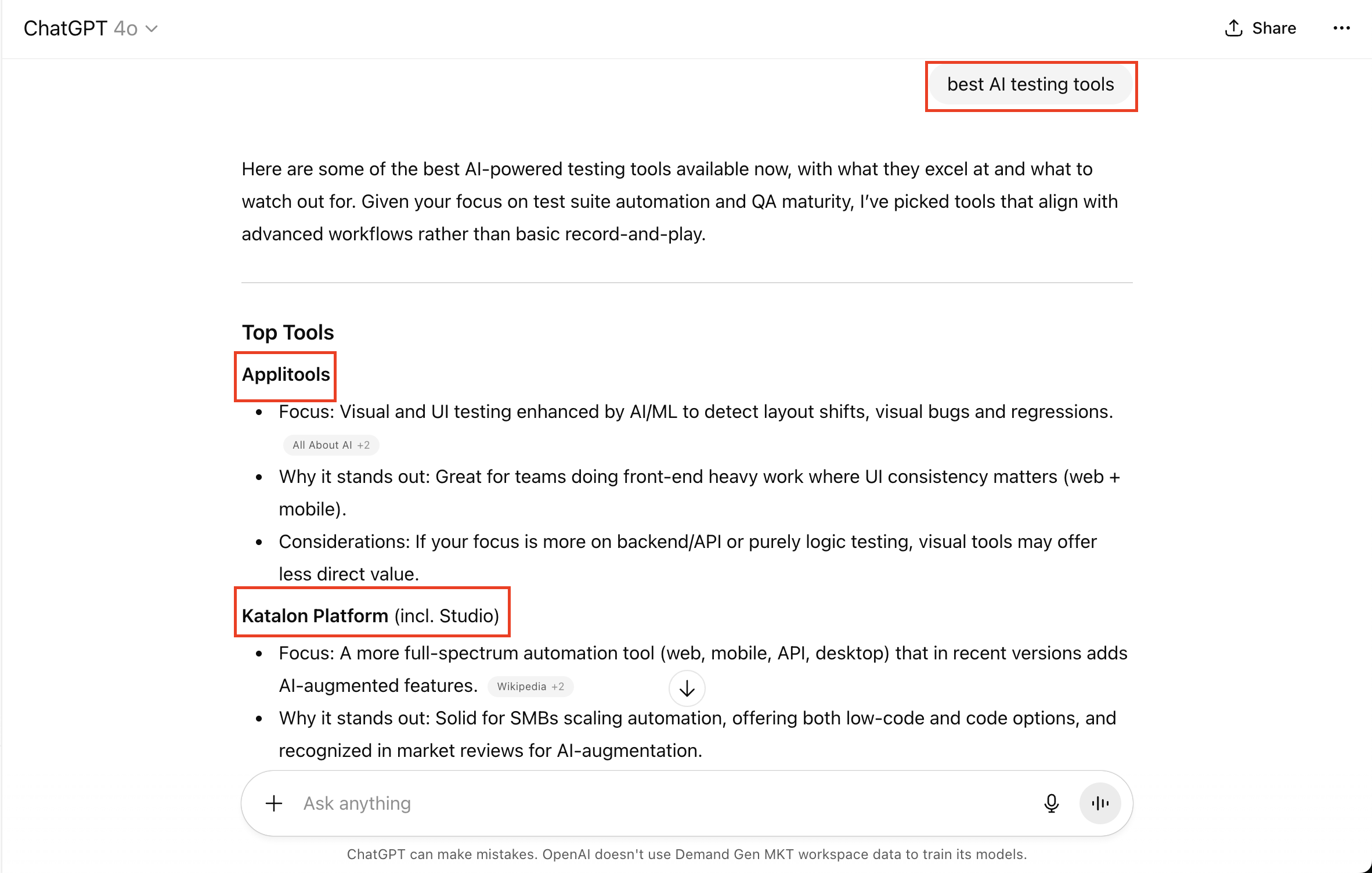
2. Parsing responses and spotting mentions
Once the AI answers come back, the tool scans the full response. It checks for direct mentions of your brand (e.g. “Notion”) or indirect ones (e.g. “a workspace app with AI features”). In some cases, it can also detect if your brand appears in bullet lists the same way Google rank trackers spot featured snippets or answer boxes.
3. Scoring visibility
These tools don’t track rank like a Google tracker. Instead, they score how visible your brand is. For example, is it mentioned early in the answer? Is it grouped with trusted brands? Is the mention positive? That all affects how much weight the tool gives to that response. It’s like measuring how “seen” you are in the answer.
4. Tracking changes over time
Remember, LLMs are non-deterministic. Given the same input, you may not always get the same output. A prompt that shows your brand on the top position a month ago may behave differently after a model version update, so it’s really important that these tools update their prompts frequently.
What AI rank tracking tools are still missing (for now)
Right now, you need to supply the prompts. That’s the biggest flaw. Unlike Google, where you can use Search Console or Ahrefs to find keywords people are using to find you, LLMs don’t give that data. You’re guessing what questions matter, and if you miss an important one, you won’t know.
A few tools try to uncover extra prompts using scraped data or inferred patterns, but they’re still early, and it’s not as deep or reliable as what you get with traditional SEO tools.
What to look for in an AI rank tracker?
After testing and using dozens of these tools, it’s clear that each one comes with trade-offs. Some are genuinely helpful, others feel a little too eager to ride the AI wave. There are definitely some questionable players in the space. So while I think the tools listed below have real value, it’s important that you know how to evaluate them for yourself.
Here’s what I recommend looking for in a serious AI monitoring tool:
- Delivers value upfront: The best tools give you something useful before they ask for payment like a free report or limited trial. A few on this list do that well. Others ask for a credit card right away without showing much. If you’re not sure, book a demo first. Don’t pay for something you haven’t seen in action.
- Suggests prompts, not just tracks them: All of these tools rely on prompts. You need to know what to ask the LLMs in order to measure visibility. But not everyone knows where to start. Some platforms help you generate prompts based on topics you rank for or keywords tied to your brand. These are worth paying attention to since they help fill the discovery gap.
- Credible team: Look into who’s behind the tool. Is it a real team with a real roadmap? Have they raised money from people who aren’t just chasing hype? It’s easy to launch a SaaS app right now. Make sure the people running it care about long-term trust. During discovery calls, I always ask the team about their future roadmap, and if they are willing to be transparent with their upcoming futures, this is a brand that I can trust.
- Strong UX: This is a tool you might open daily. It should be clean, fast, and well designed. Most of the ones I’ve tested are, but there are a few that feel clunky or outdated. If you’re going to invest time into tracking visibility, it shouldn’t feel like a chore.
Further reading: How to Do Really Good SEO For B2B SaaS?
11 best AI rank tracking tools and software in 2026
Here’s my list of the 11 best AI rank tracking tools that you can use:
- SE Ranking
- RankPrompt
- Friction AI
- Keyword.com
- Peec AI
- Profound
- Mentions
- Google Analytics 4
- Nightwatch.io
- Otterly.ai
- AthenaHQ
Let’s dive right in!
1. SE Ranking
SE Ranking is a comprehensive SEO and AI search solution that combines traditional rank tracking, keyword research, and site audits with AI visibility monitoring across Google AI Overviews, AI Mode, Gemini, Perplexity, and ChatGPT. The tool tracks prompt-triggered AI results, brand mentions, and links, and shows where your domain ranks within AI-generated content.
The platform shows:
- The share of prompts that trigger your website link or brand mention in LLM results.
- The share of prompts for which your website link or brand mention is in Top 3 positions.
- The share of prompts that trigger AI answers with source links.
- Day-by-day data on how your website or brand ranks for the tracker prompts.
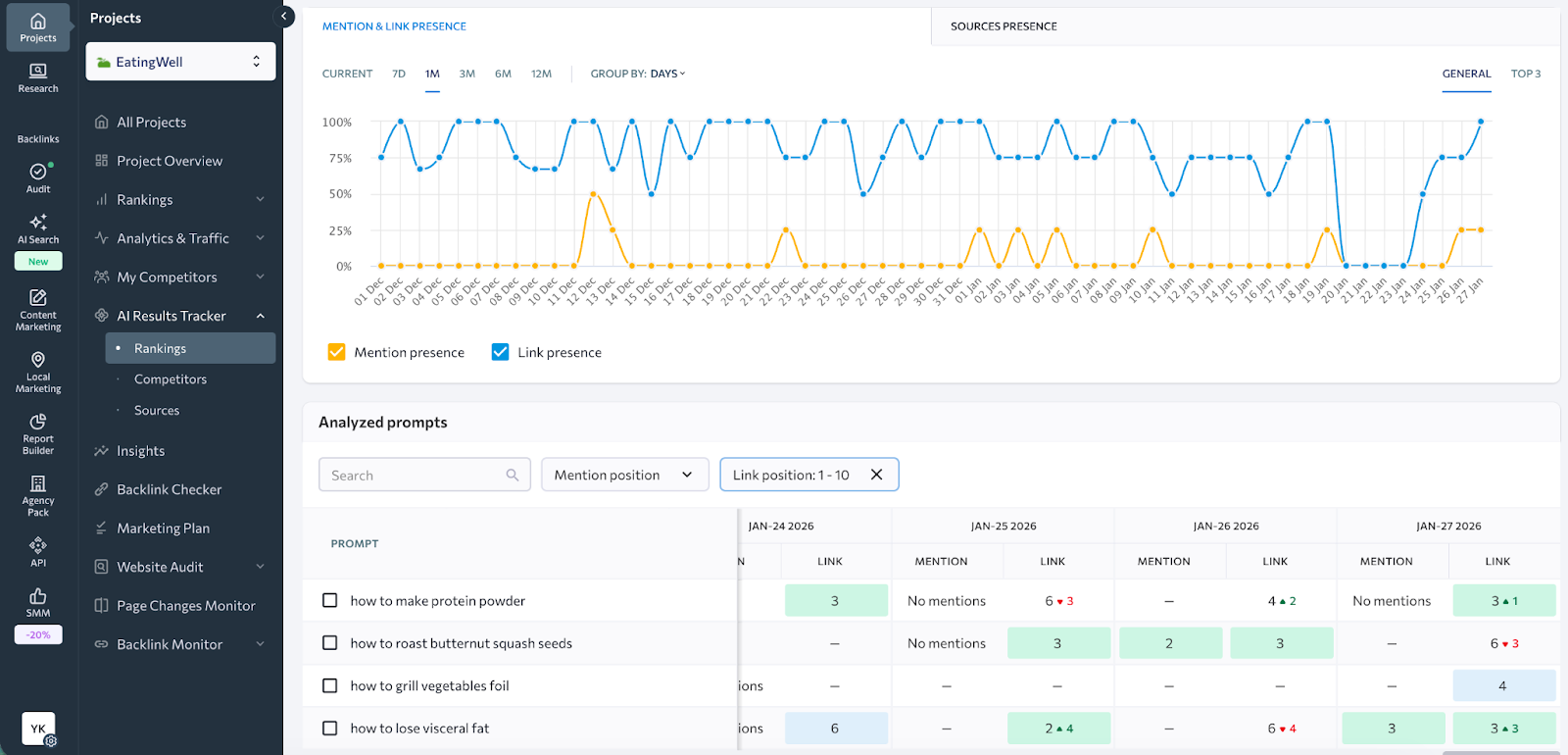
You can also see what competitors appear for the same AI prompts and what other sources LLMs pull from. You can’t assess the sentiment of mentions for now, but users can view stored copies of AI answers to see how their brands are presented.
As for pricing, AI results tracking is available in:
- Pro: $119/month, lets you track 50 AI prompts
- Business: $259/month, lets you monitor 100 AI prompts
The AI Search add-on starts at $89/month and expands AI prompt limits and provides access to deeper AI competitor research and a stand-alone SE Visible platform for strategic insights.
2. RankPrompt
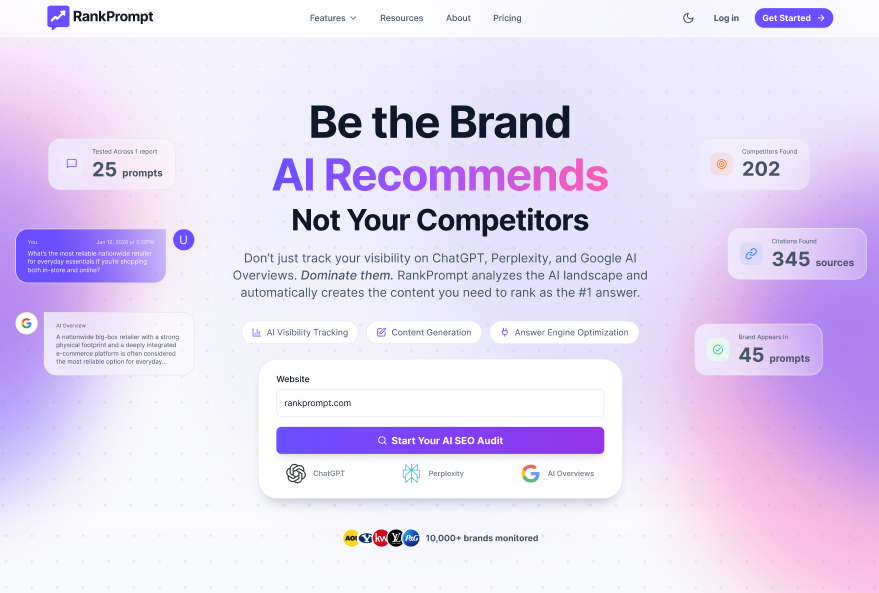
Rank Prompt is an AI visibility and Answer Engine Optimization (AEO) platform designed to help brands understand how they appear inside AI-generated answers across tools like ChatGPT, Gemini, Perplexity, and Google AI Overviews. Instead of relying on traditional keyword rankings, RankPrompt evaluates real, user-style prompts to determine whether a brand is mentioned, how prominently it appears, which competitors are cited, and which sources influence those responses.
The platform combines prompt-level visibility tracking with analytics, citation analysis, technical SEO, and content execution, allowing teams to not only diagnose why they do (or do not) surface in AI answers, but also act on those insights directly. RankPrompt supports one-click multi-location tracking, making it particularly well suited for franchises and businesses with multiple locations that need consistent AI visibility across regions.
Technical Specifications
- AI platform coverage: Tracks brand visibility across ChatGPT, Gemini, Perplexity, and other AI-driven search and assistant experiences.
- Prompt-based reporting: Measures brand mentions, competitive presence, and visibility trends across scheduled and historical prompt runs.
- One-click multi-location tracking: Designed for franchises and multi-location businesses, RankPrompt allows teams to track AI visibility across multiple regions or countries with a single configuration. The same prompt set is automatically applied to each location, enabling fast, side-by-side comparisons of how different branches appear in AI-generated answers.
- Content generation & publishing: Includes a trained content generation agent that converts AI visibility gaps and missed prompts into publish-ready articles. RankPrompt integrates directly with WordPress, allowing teams to draft, edit, and publish content based on real AI prompt data without leaving the platform.
- White-label exports: Generate branded PDF reports combining AI visibility, SEO data, analytics, and citation insights for client-facing use.
- Analytics & SEO integrations: Connects with Google Analytics and Google Search Console, and includes technical SEO audits, content analysis, and on-page diagnostics.
- Citation intelligence: Enriched citation data surfaces the sources influencing AI answers, including metadata and preview details for referenced pages.
- Collaboration & reporting: Supports collaborators, dashboards, quick reports, and scheduled monitoring for ongoing visibility tracking.
RankPrompt also developed a citation automation workflow that enables brands to identify AI-influencing listicles and articles and automatically reach out to authors and publishers to secure brand inclusions to bridge the gap between AI visibility insights and citation acquisition.
Pricing: RankPrompt offers tiered pricing based on usage credits and feature access, with plans starting at approximately $49/month. Higher-tier Pro and Agency plans include additional credits, multi-brand management, collaboration features, and white-label reporting.
Reviews & Market Reception: RankPrompt is listed on G2, where it currently holds a 4.3 out of 5 rating based on early user reviews. Reviewers highlight the platform’s prompt-based tracking approach, clarity into why brands do or do not appear in AI answers, and the ability to connect AI visibility insights directly to content and citation strategy.
3. Friction AI
friction AI is an AI visibility and Answer Engine Optimization (AEO) platform designed to help brands understand how they appear inside AI-generated answers across tools like ChatGPT, Claude, Gemini, Perplexity, and Google AI Overviews. Instead of relying on traditional keyword rankings, friction AI evaluates real, user-style prompts to determine whether a brand is being recommended, how it is perceived, which competitors show up alongside it, and which sources are influencing those responses.
The platform combines AI-powered prompt suggestions, weekly brand health audits with competitor benchmarking, structured A/B experimentation, and detailed keyword and source intelligence across every tracked prompt. This allows teams to not only monitor their AI presence but also test content strategies and measure how changes impact visibility, sentiment, and purchase intent in AI-generated answers
Technical Specifications
- AI platform coverage: Tracks brand visibility across ChatGPT, Claude, Gemini, Perplexity, and Google AI Overviews. The platform runs automated daily prompt analyses across all supported AI models, capturing how each one recommends, references, and positions brands.
- User prompt suggestions: One of friction AI’s more notable features is its AI-powered prompt recommendation engine. Rather than requiring teams to manually brainstorm which prompts to track, the platform suggests relevant prompts based on the brand’s industry, category, and competitive landscape. These cover brand definition queries, category comparisons, purchase-intent questions, and competitor alternative searches. The idea is to make sure brands are monitoring the kinds of prompts that real consumers are actually asking AI assistants, not just the ones a marketing team might think of on their own.
- Brand weekly audit with competitor tracking: friction AI delivers a weekly Brand Audit that scores brands across five dimensions: AI Score, Brand Recognition, Visibility, Sentiment, and Purchase Intent. Each metric can be tracked over configurable time ranges, from 7 days up to 1 year, with change indicators that show directional trends. The audit also includes side-by-side competitor benchmarking for up to 10 competitors at once, comparing recognition rates, sentiment scores, and share-of-voice metrics. A domain citation ranking shows which sources are most frequently cited by AI models when discussing a brand versus its competitors, which is useful for understanding where influence is actually coming from.
- A/B testing capability: friction AI includes what it calls Experiments, a structured A/B testing feature that lets brands test how content and positioning changes impact their AI visibility. Teams can set up controlled experiments, make changes to their content strategy, and then measure the results across visibility percentage, mention frequency, mention quality, and share of voice. Results are tracked over time with before-and-after comparisons, so teams can validate which changes actually move the needle in AI-generated recommendations instead of guessing.
- Keywords and sources for all prompts: Every tracked prompt surfaces detailed keyword and source intelligence. The Keywords panel shows the top search queries AI models use when generating answers about a brand, broken down by count and provider. The Sources panel identifies the top domains cited by AI, ranked by citation frequency, with expandable URL-level detail. Together, these give teams a clear view of which content and which websites are shaping how AI platforms talk about a brand, making it easier to prioritize content optimization and citation outreach.
- Prompt-based reporting: Measures brand mentions, competitive presence, visibility percentage, and share-of-voice trends across scheduled and historical prompt runs. The dashboard separates Brand Visibility Prompts from Commerce Prompts, providing distinct tracking for awareness-level and purchase-intent queries.
- Commerce intelligence: Analyzes buyer-intent commerce queries to show which brands get recommended when customers signal purchase readiness. Commerce prompts track Commerce Score, Visibility, and brands mentioned, making it easier to spot gaps where competitors may be capturing transactional AI recommendations.
- Content analysis: Includes content readiness scoring with category-specific breakdowns that cover indexability, metadata quality, structured data, content clarity, discoverability, AI access, and freshness. The tool flags specific messaging gaps and content optimization opportunities that could help improve AI visibility.
- Collaboration & reporting: Supports dashboards, stakeholder reporting exports, and interactive charts with trend visualization for ongoing visibility monitoring across teams.
Pricing
friction AI offers tiered pricing across three plans, ranging from approximately $99 to $799 per month depending on feature access, prompt volume, and the number of tracked competitors. Plans scale from individual brand monitoring up to multi-brand agency setups with expanded competitor slots and advanced experimentation capabilities.
4. Keyword.com
- Best for: Brands of all sizes
- What I like: It’s a really robust keyword tracking tool for both AI and traditional SERP, at a highly affordable price.
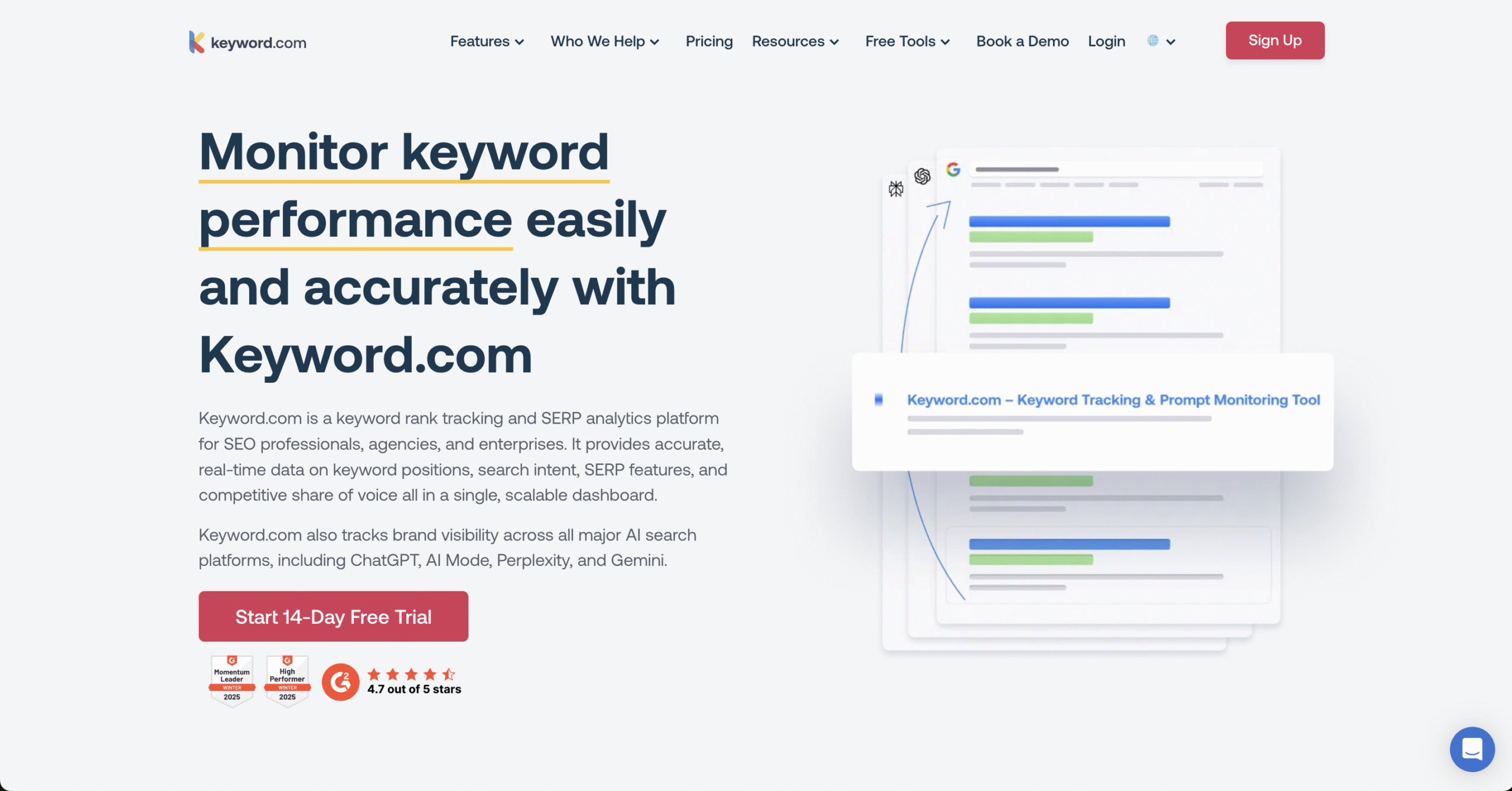
Keyword.com is a keyword tracking and SERP analysis platform that helps SEO teams monitor keyword rankings in LLMs and generate client-ready white-label reports. Its features include daily rank tracking, local and mobile monitoring, share of voice analytics, and integrations with GA4 and Looker Studio.
Keyword.com retrieves all of the keyword data for you, and you can see a really detailed breakdown of the key metrics like:
- Visibility Score: How often and how highly your brand appears in AI search results.
- Position / Rank: Where your brand is mentioned in the AI-generated content (1 = first).
- Sentiment Score: Indicates how positively your brand is described by the AI.
- Mentions: The number of times your brand appears in test results.
- Detection Rate: How often your brand was detected across all test runs.
- Citations: Number of times your brand was linked or referenced with authority.
- Top 3 Visibility: The percentage of times your brand was in the top 3 positions.
Here’s a quick video from Keyword.com to help you get a quick overview of their AI visibility features:
On the traditional SEO side, Keyword.com also allows you to track keyword position of your entire domain or a separate page, with detailed metrics about ranking, growth/decline after a period, AI Overview visibility, SERP feature tracking, Share of Voice tracking, and white-label reporting.
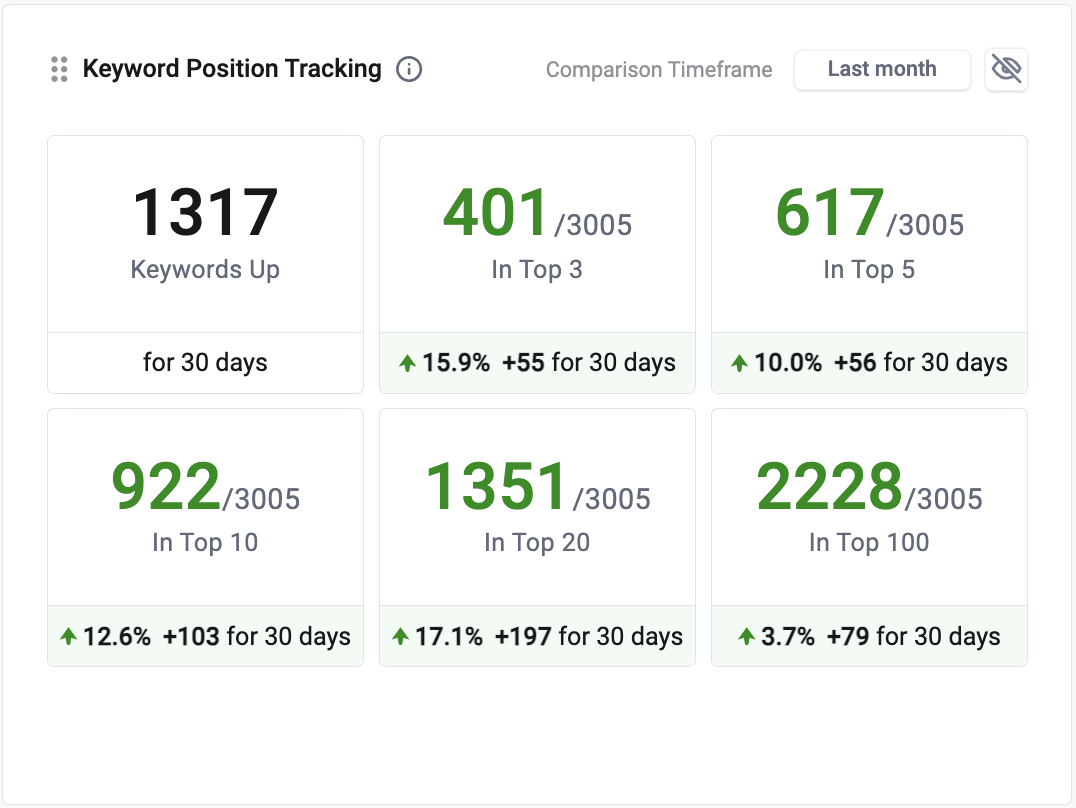
It’s pretty neat that Keyword.com integrates with GA4, Google Search Console, and Google Looker Studio, so you can easily pull data and visualize all your SERP data in one place. They offer a powerful API to pull unlimited data into your internal tools.
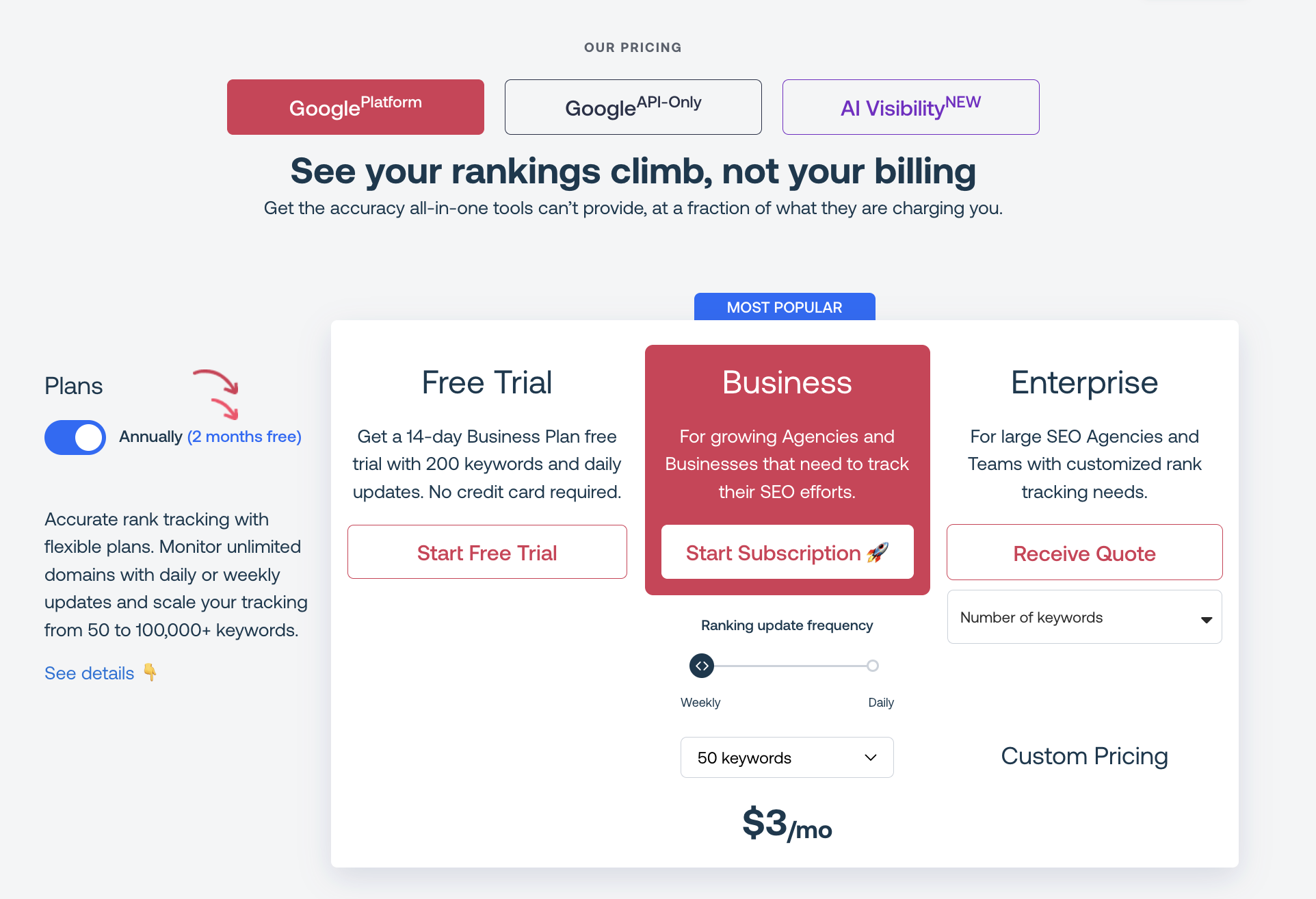
Pricing: Keyword.com is really affordable, starting from $3/month for 50 keywords tracked, while their AI Visibility features are from only $24.5/month
5. Peec AI
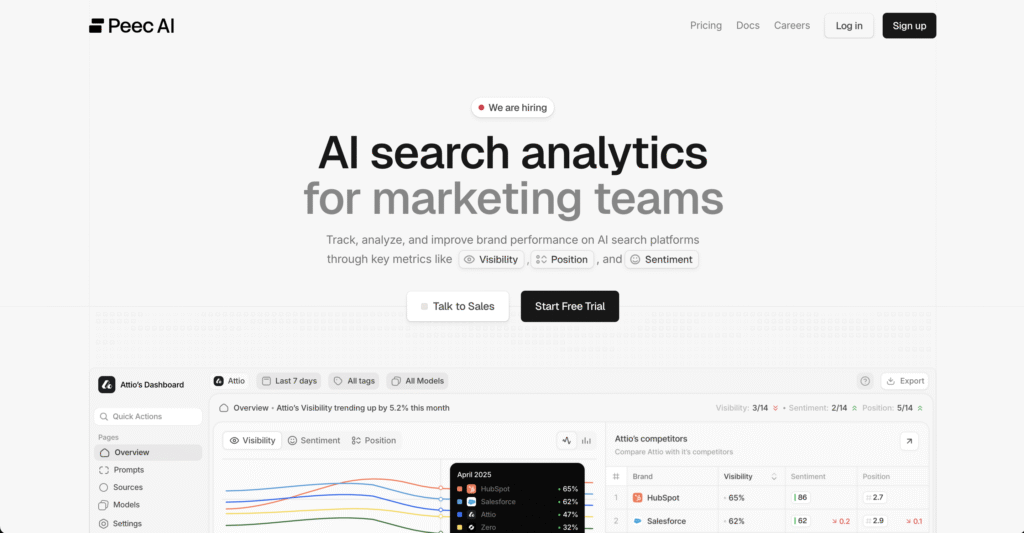
Peec AI is a new visibility tracker designed to help you understand how your brand appears in AI search engines like ChatGPT, Gemini, Claude, Perplexity, and DeepSeek. It’s particularly useful for websites that already see solid SEO traffic from Google, since it provides insight into how that presence translates into AI-driven visibility.
If you’re a newer startup with limited organic reach, Peec AI might not add much immediate value. But if you’re starting to notice traffic from AI sources in Google Analytics or customers mention discovering you through ChatGPT, it’s definitely worth a look.
What makes Peec AI stand out is its accessibility. Many AI monitoring platforms cost hundreds of dollars just to get started and don’t offer a trial. Peec AI, on the other hand, includes a 7-day free trial with full feature access, giving you a genuine sense of its value before committing. Here’s a quick Product Walkthrough of Peec AI:
Here are some of the key features they offer:
You can set up your prompts to track, but Peec AI doesn’t automatically pull prompts for you. Here is a dashboard of Peec AI tracking Lemlist. Here you can see a very detailed reporting comparing Lemlist’s AI visibility with competitors, with information about how they are mentioned and their sources.
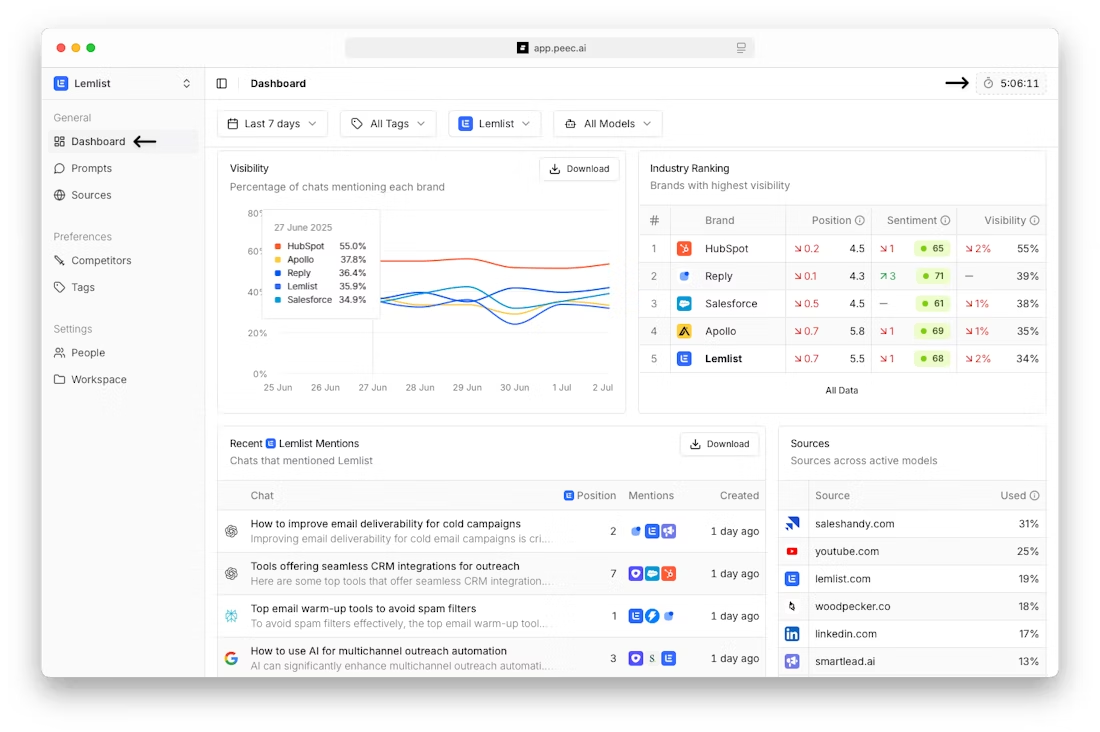
Some key metrics that Peec AI uses are:
- Brand position
- Sentiment
- Brand visibility score
- Source used
- Source types
- Source average citations
- Real-time prompt volume.
Peec AI also automatically refreshes your data once per day, and that means everything you see reflects aggregated results from the most recent prompt run.
In terms of pricing, here are their packages:
- Starter: €85/month, track up to 50 prompts
- Pro: €205/month, track up to 150 prompts
- Advanced: €425/month, track up to 350 prompts
- Enterprise: Custom pricing
You can check out their pricing page here.
6. Profound
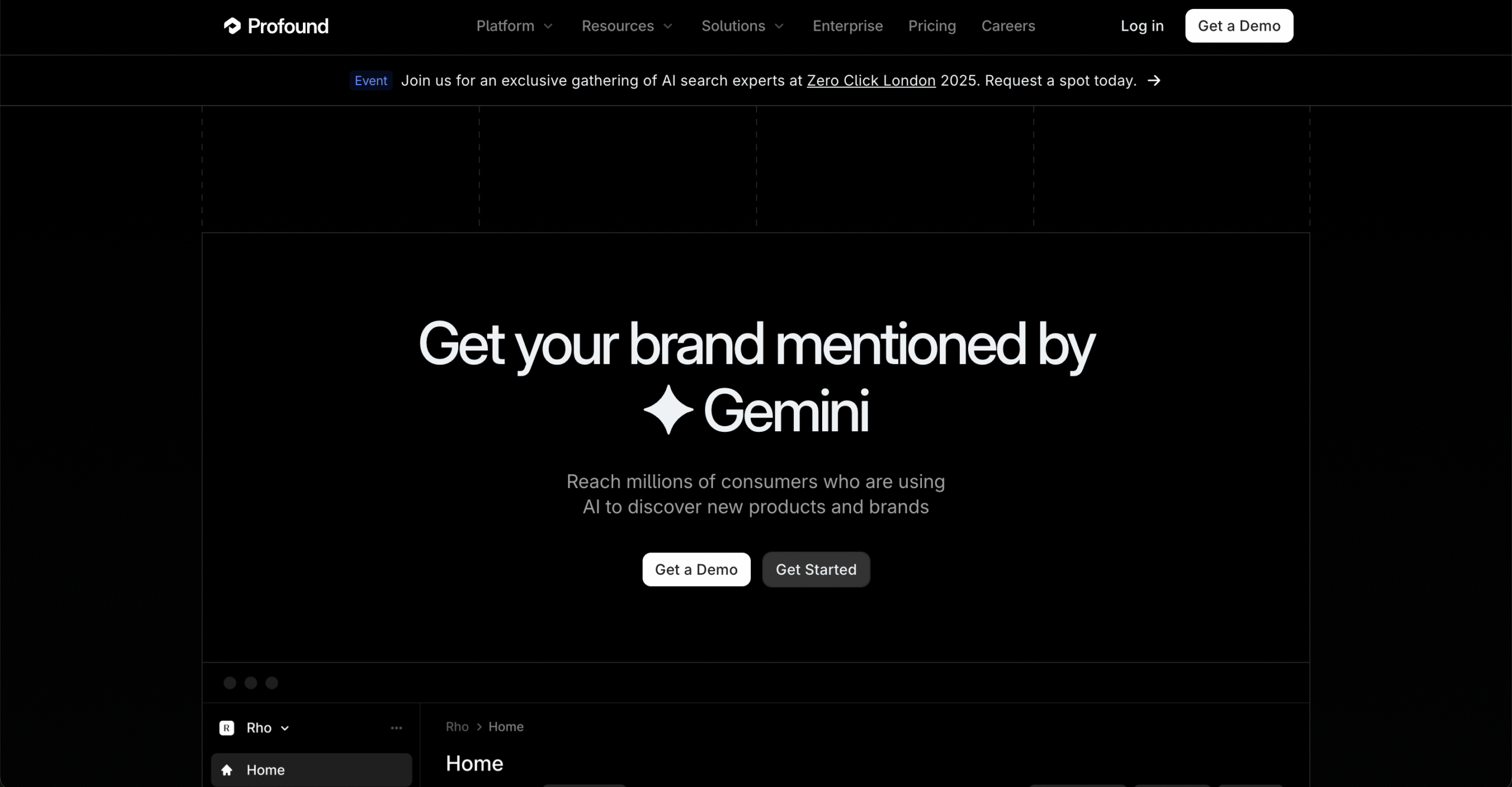
Profound is basically the very first tool that started the AI search visibility world. What Profound does is that it sends millions of prompts a day to the frontends of all 10 major LLMs. It then records, organizes, and displays the results of these prompts in aggregate for their customers.
Similar to Keyword.com or Peec AI, it can generate a dashboard to show how LLMs mention brands, and what pages are being cited the most. What I really like is that Profound positions itself as a tool that supports your AEO (Answer Engine Optimization) strategy, so it brings you features to track the comprehensive search landscape of LLMs.
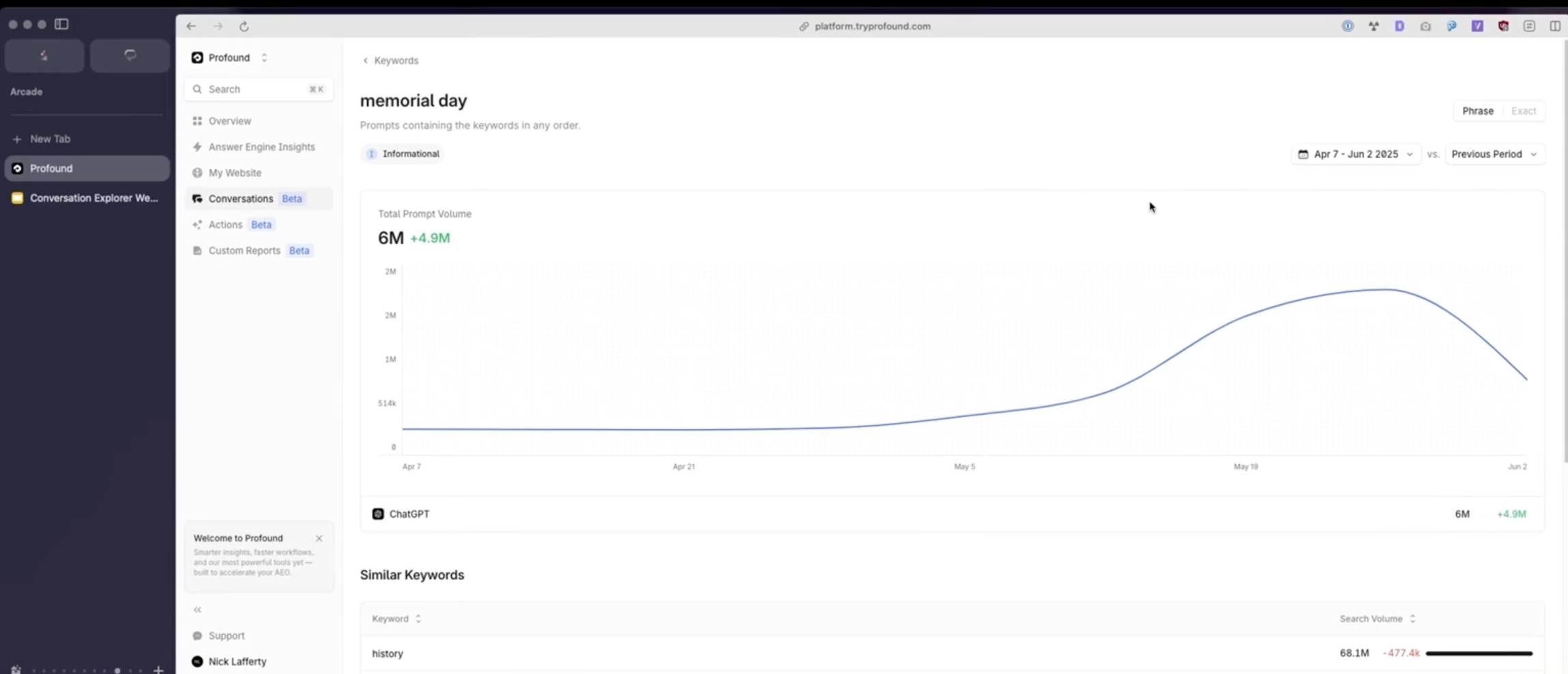
Profound also offers a very rich ecosystem of APIs and integration for teams who want a more developer-focused approach to their SEO strategy.
Here are Profound’s pricing plans:
- Profound Lite: $499/month, gives you access to the main AI search engines
- Enterprise: Custom pricing, gives you access to more niche AI search engines
7. Mentions
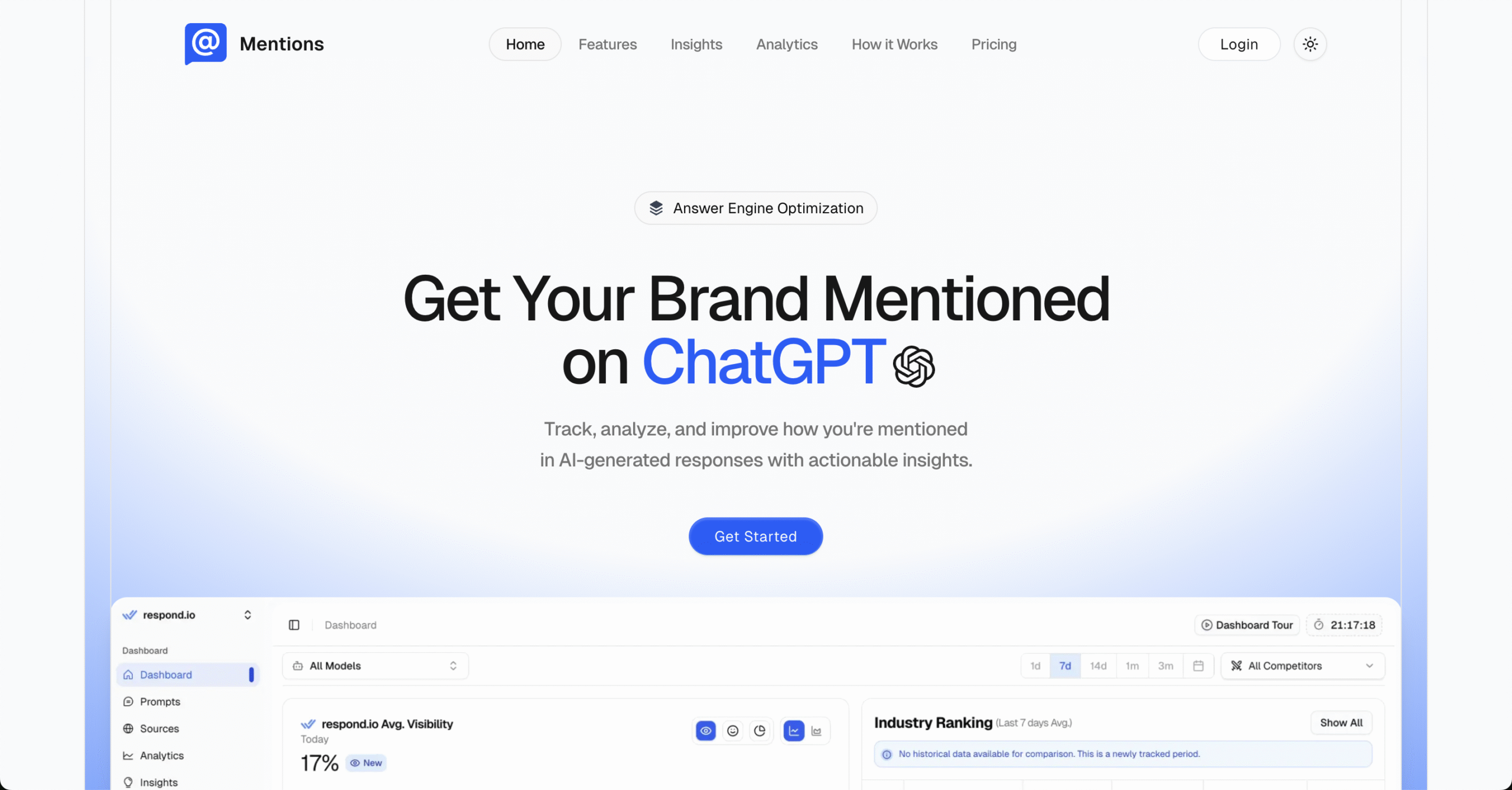
Mentions is an answer engine optimization platform that helps brands monitor and improve their presence in AI search results. Built by Contact Studios, an SEO agency, it’s a smart entry point for businesses that want to experiment with AI visibility tools without making a large upfront investment.
The tool has a lightweight build with a clean, intuitive UI. It offers features on par with platforms like Peec AI but at a lower cost, so it is really ideal for smaller teams. Like most platforms in this space, you’ll need to provide prompts for it to track. It does use AI to suggest prompts as well, though those suggestions can sometimes miss the mark, so you’ll want to curate them thoughtfully.
There’s also a solid demo video on the homepage that gives you a good sense of how it works.
Mentions Pricing Tiers:
- Starter: $49/month for 25 tracked prompts
- Pro: $99/month for 50 tracked prompts
- Business: $199/month for 100 tracked prompts
You can view a detailed breakdown of each plan on their pricing page.
Reviews & Reputation:
There are no public reviews of Mentions yet. Keep in mind this is not to be confused with Mention, a separate social media monitoring tool with a similar name. These are entirely different products.
8. Google Analytics 4
Good ol’ Google Analytics can totally help you track AI visibility, just with a little bit of extra work, of course. GA4 doesn’t directly track specifically how many times you appear in ChatGPT out of the box, but with the right setup and context, you can at least infer referral traffic from AI search engines.
Remember: AI tools like Perplexity.ai, You.com, or even embedded ChatGPT experiences in browsers/apps usually include referral headers when users click a link to your site. You can:
- In GA4, go to Reports > Acquisition > Traffic acquisition
- Add a secondary dimension for Session source / medium or Page referrer
- Filter by sources like:
- perplexity.ai
- you.com
- chat.openai.com (rare, but sometimes appears)
- Any custom app-based or zero-click domain that appears unusual
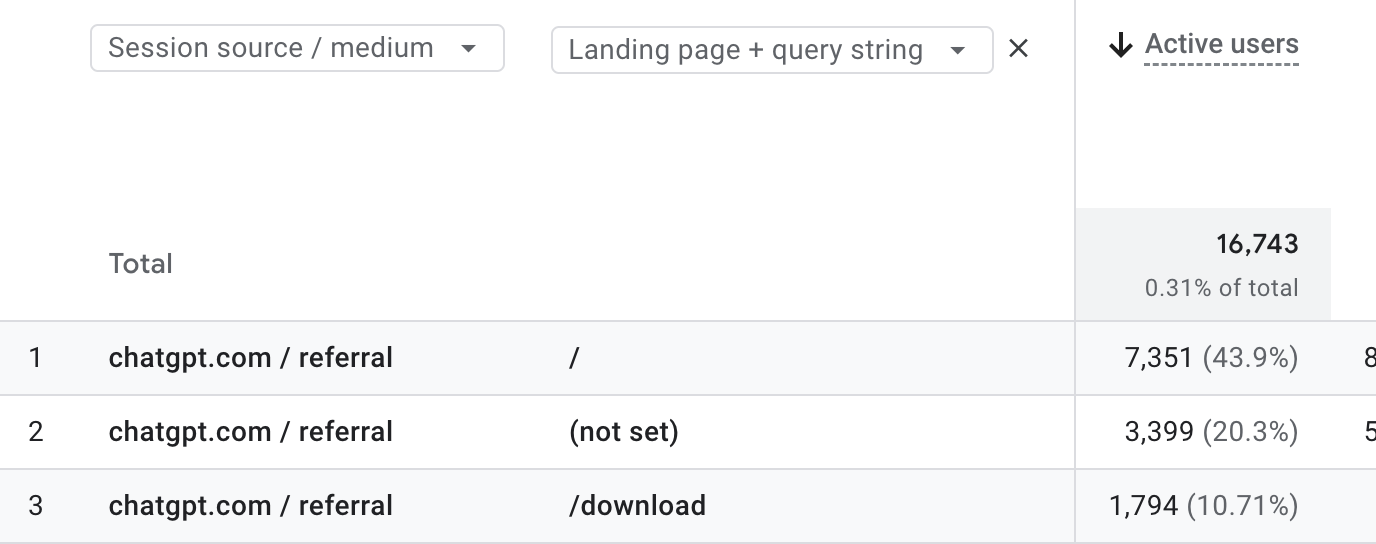
This approach helps you identify which pages are receiving traffic from specific LLMs. From there, you can reverse-engineer the kinds of prompts that are likely triggering those pages. A good way to start is by checking Google Search Console at the page level to see which keywords you’re already ranking for.
9. Nightwatch.io
Nightwatch is a powerful SEO tool that helps you track how your website ranks on Google, both globally, locally, as well as on LLMs. You can use Nightwatch to:
- Track keywords and see how they’re ranking
- Discover what keywords your competitors are using
- Run site audits to spot technical issues
- Visualize performance with charts and graphs
- Create clear, professional reports using templates
- Connect your Google Analytics, Search Console, and Data Studio
In terms of AI rank tracking, Nightwatch helps you automatically gather and analyze AI responses. Their metrics include:
- Entities (brands, companies, products) detected
- Position / order of appearance
- Sentiment
- Cited domains
- Average Position — How early your brand appears (lower = better).
- Visibility — % of prompts where you’re mentioned.
- Entity & Citation Distribution — Which brands or domains dominate answers.
- Trends — How your visibility and sentiment evolve over time.
In terms of pricing, Nightwatch is highly competitive, starting from $32/month for 250 keywords tracked daily, going to $559/month for 10K keywords.
10. Otterly.ai
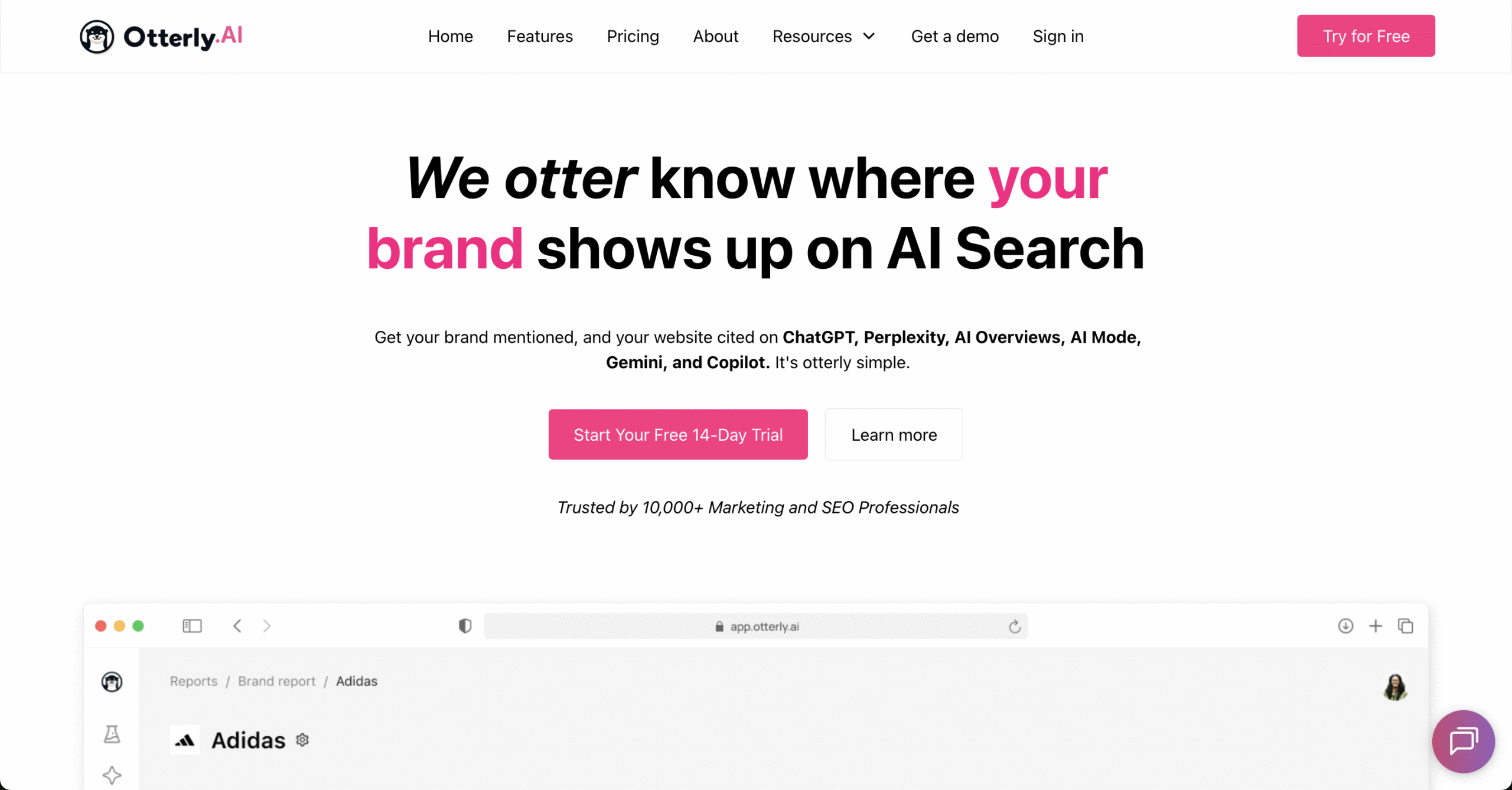
Another Ai rank tracking tool is Otterly.ai, which sends your search prompts to leading AI-powered search experiences to detect whether your brand (or your competitors) is cited in AI-generated answers.
When you login, Otterly.ai UI looks like this, which I think is relatively user-friendly and data-rich:
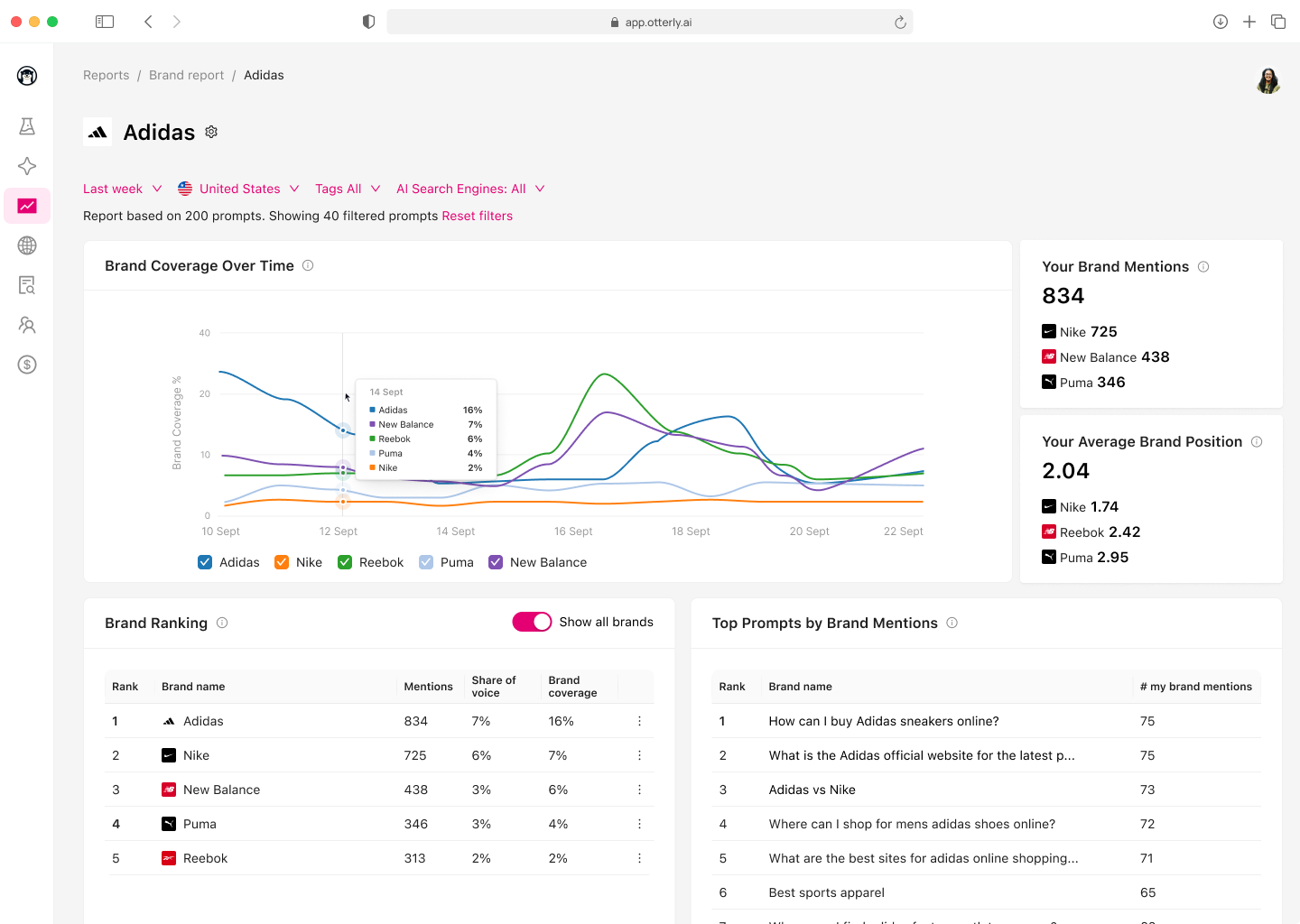
However, Otterly.ai is that they don’t offer any integration with other data platforms, so you can only use their platform’s dashboard.
Pricing: Otterly.AI starts at $29/month for 15 prompts, with Standard ($189) and Premium ($489) plans scaling up to 400 prompts, daily tracking, and optional add-ons for Gemini and Google AI Mode.
11. AthenaHQ
AthenaHQ is an AI-driven GEO (Generative Engine Optimization) tracking platform that helps you monitor not just how your brand appears in AI-powered search results, but also how that visibility translates into real conversions.
AthenaHQ stands out with a beautifully designed, Greek-inspired UI. During onboarding, you’ll be prompted to enter your website and list competitors, which is a unique touch not commonly seen in similar platforms. It even offers competitor suggestions to get you started.
Here are some features I like about AthenaHQ:
- You can see prompt‑level mentions, which competitors are getting AI citations, where your gaps are.
- Backed by recent funding, signalling the company is investment‑supported and growing.
However, the pricing is positioned toward larger/more established brands rather than lean startups. Some of the advanced features (such as enterprise‑grade optimisation actions, full attribution from AI mention → conversion) are still maturing.
- Starter: $295/month, includes 3,500 credits
- Growth: Starts at $595/month, includes 8,000 credits with a GA4 integration
- Enterprise: Custom pricing with unlimited credits and SSO
How to show up in AI search engines and LLMs?
Interestingly, sometimes AI search engines can cite content and websites that are not ranking high on Google. That alone proves that LLMs use an approach different from Google to determine which content should appear in their answer.
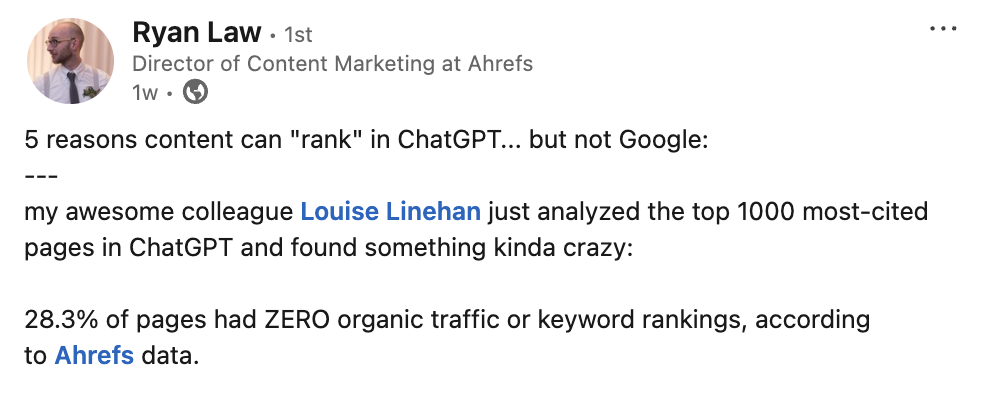
In fact, recently, Ryan Law from Ahrefs analyzed 1000 most-cited pages in ChatGPT and found that 28.3% of them had ZERO organic traffic or keyword rankings. You can read his original post on LinkedIn here.
One of the best hypothesis for this is that LLMs use a technique called query fan-out to gather better information when responding to user prompts.
Put simply, query fan-out means that LLMs takes your original question and generates multiple variations of it. These rephrased prompts are each sent out separately to external sources. The goal is to cover a wider surface area of potentially relevant answers.
Let’s say you ask an LLM: “How can I feel more energized during the day without drinking coffee?” Instead of answering based on just that one sentence, the model fans out the query into several more specific sub-questions, like:
- “Natural ways to boost energy in the morning”
- “How sleep affects daytime energy”
- “Best foods for sustained energy”
- “Benefits of walking or exercise on alertness”
- “Herbal alternatives to caffeine”
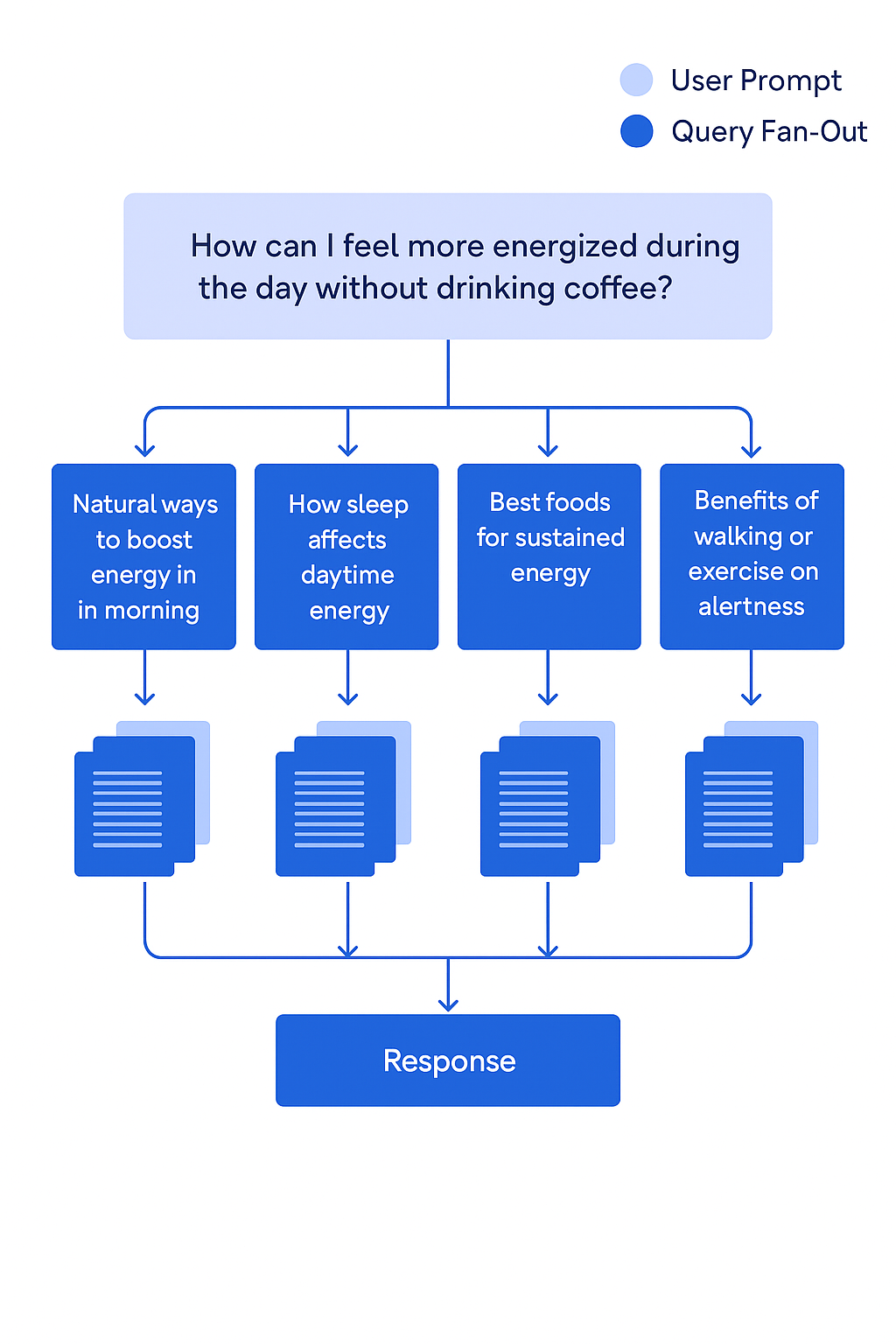
The model then pulls the most useful pieces from each response, maybe an article on sleep hygiene, a study on magnesium, a list of energy-boosting breakfasts, and uses that to generate a richer, more complete answer tailored to your original intent.
So…at the end of the day? I think it’s all about creating stellar content that everyone loves. Just do SEO like it has always been done years ago, and you shall be rewarded accordingly.
These AI rank tracking tools are interesting, but I think you’re better off investing into a keyword tracker tool that also has AI rank tracking features (like Keyword.com or Otterly.ai). Create good content and the AI engines shall find you naturally.