
Lead generation is genuinely an uphill battle, especially in B2B.
According to Wynter’s State of B2B SaaS Brand Marketing report, 92% of B2B buyers only purchase from the vendors already on their Day-1 shortlist.
That means by the time someone books a demo, they’ve already done over 60% of their research and narrowed it down to just a few contenders. Getting on that shortlist is half the battle.
That’s why you need to heavily invest into content marketing to focus on getting customers to convert.
Unlike short-lived ad campaigns, good content compounds over time. A well-structured piece of content can generate qualified leads for years and build authority in a crowded space where buying decisions are long and complex.
Keep reading to see how you can generate good leads just with good content marketing👇
What is content marketing for lead generation?
Content-led lead generation is a focused approach that uses valuable, relevant content to attract and capture leads from a clearly defined audience.
It works because it delivers information your audience actually wants to help them solve problems.
Let’s take a look at this piece of content marketing:
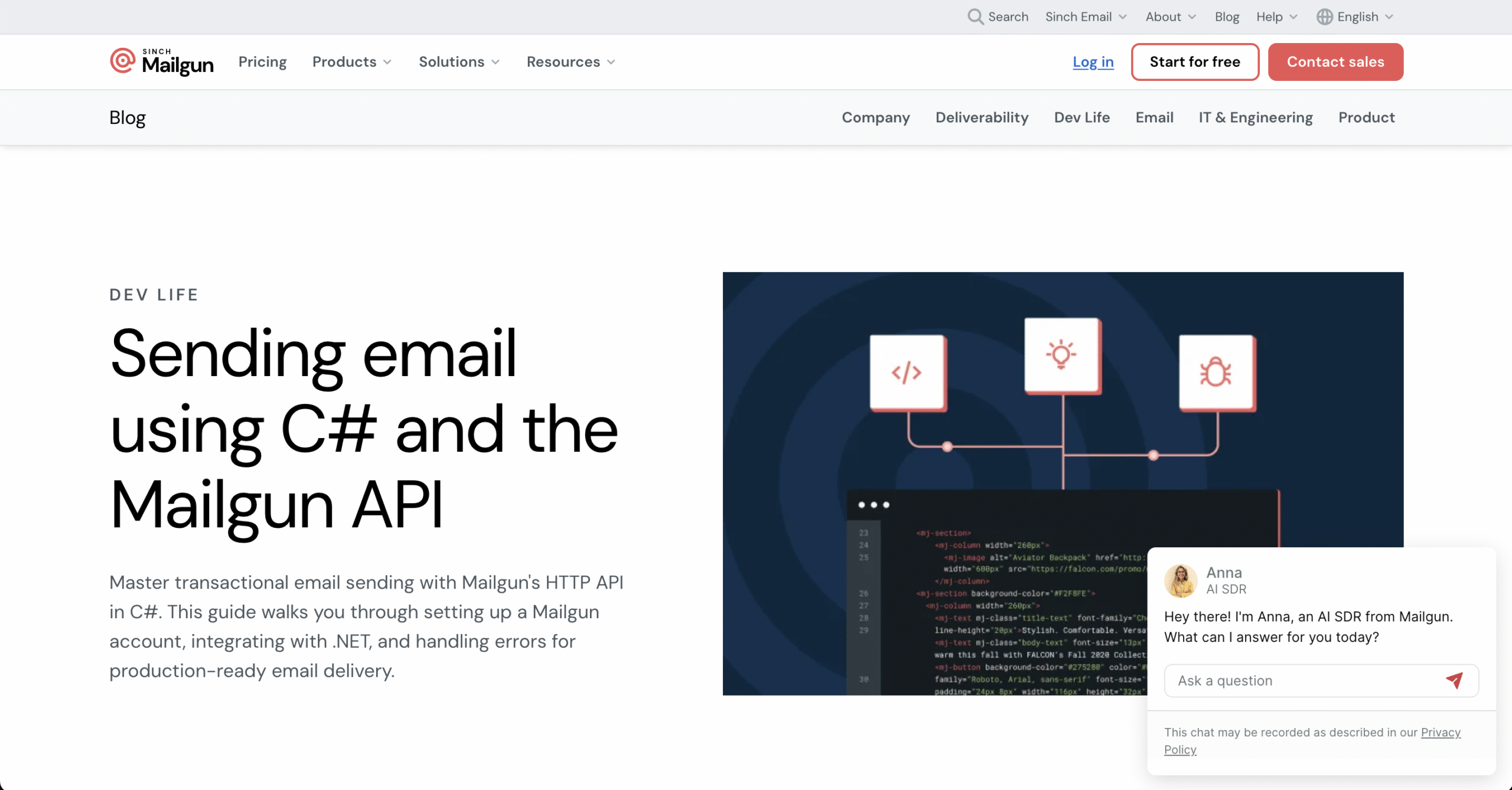
It’s a highly technical piece of content, but it does 3 things exceptionally well:
- It is a detailed guide that solves a very specific problem of Sinch Mailgun’s target audience
- It positions MailGun as the product to solve that problem
- It effectively captures high-intent leads for MailGun
And more than that, this kind of marketing builds trust, earns attention, boosts visibility, and brings in leads who are more likely to convert, all without relying on hard-sell tactics.
B2B marketing used to center on convincing people to buy into a “dream”, but today, the most effective strategies offer real value up front. That is content that educates, guides, and supports your audience through their decision-making process.
So how do you turn content into a growth engine?
And what does it take to consistently produce content that builds credibility and creates real demand?
Let’s break it down 👇
How do you create content that generates leads?
Generating high-quality leads through content marketing starts with a clear understanding of what your audience truly needs, then building a system that attracts, engages, and qualifies them through valuable information.
In short, it’s all about creating content that:
- Genuinely solves the problem for your audience
- Establishes you as the authority
- Create content that establishes you as the authority
- Create content that
- Fun and engaging to read
Before starting your content marketing campaign, here are the key items to consider:
1. Set goals
Let’s face it, in B2B, success attribution can be slightly tricky. That affects goal setting a lot.
You probably knew it: B2B buyers don’t usually buy because they saw an ad or read an article. All of your marketing channels collectively contribute to the final success of the deal. Neither first-touch nor last-touch attribution tells the full picture.
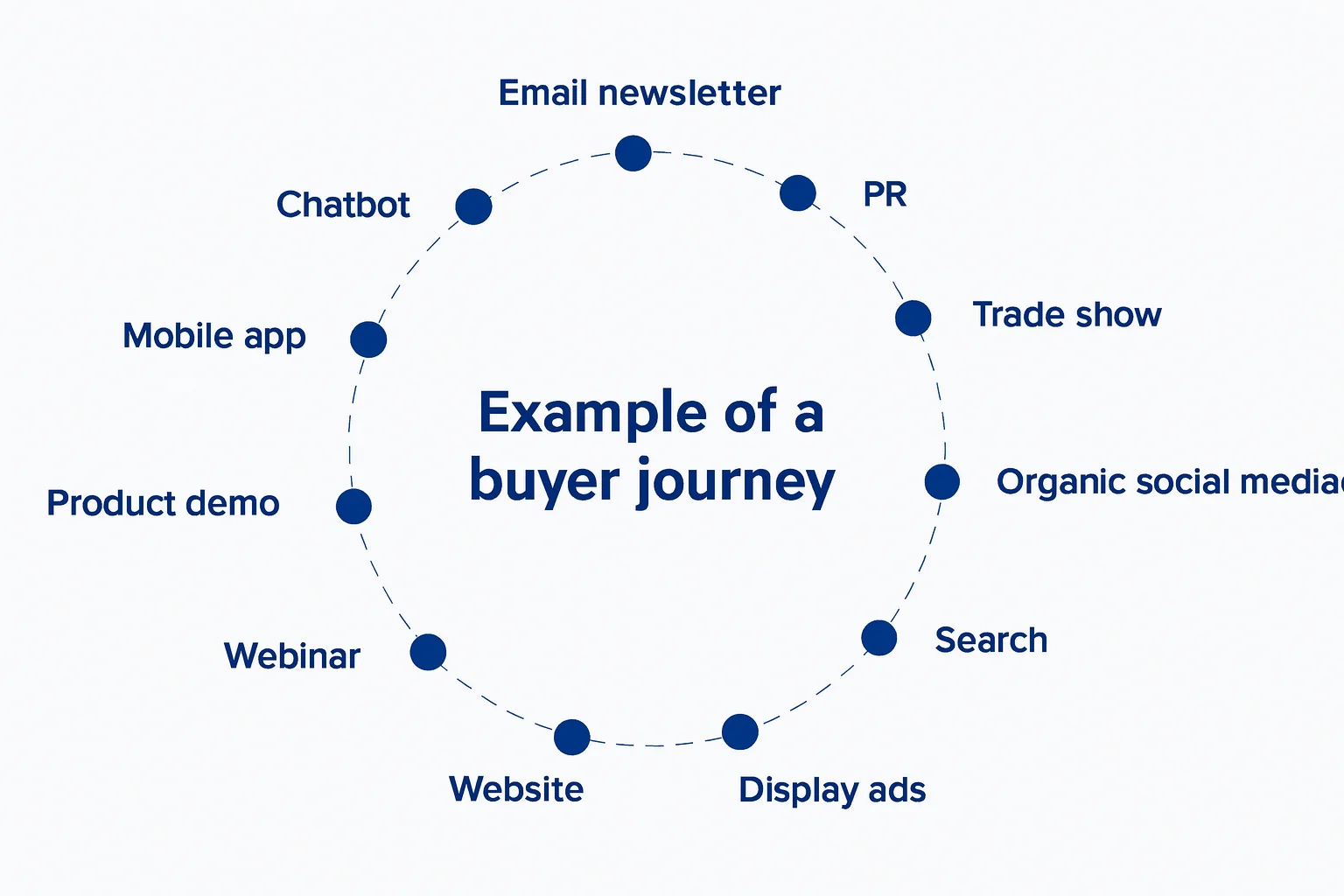
Make sure that your marketing data is properly captured. After that, set goals around measurable behaviors that reflect progression toward purchase. For example:
- Growth in engaged sessions from target accounts
- Increase in high-intent content consumption (e.g. product comparisons, case studies)
- More form-fills on mid-funnel offers (e.g. guides, templates, toolkits)
- Higher conversion rates from organic search
- Uplift in newsletter signups or demo page visits from content viewers
Each of these signals movement. They reflect that your content is generating the right kind of interest, even if the deal won’t close for months.
Especially in ABM or enterprise contexts, zooming out to account-level influence is more useful than tracking isolated user behavior. You can use tools like 6sense or Demandbase to:
- Track which target accounts are engaging with content (and how often)
- Attribute pipeline progression to a series of touchpoints, not just one
- Set goals around account engagement lift, not just form conversions
This lets you say: “We engaged 60% of Tier 1 accounts this quarter with our content”, which tells a far richer story than “we generated X leads.”
2. Conduct audience research
With audience research, you can spot content triggers that tell you what to write, how to position it, and how to make it resonate.
And how do you research what your audience is talking about? Use questions.
Questions reveal what your audience wants to learn but hasn’t found satisfying answers to. Each one is a direct cue for high-intent, high-performing content. Here are the places to mine questions:
- Customer service logs – What do users repeatedly ask support?
- Live chat transcripts – What questions come up pre-purchase?
- Sales call recordings – This is a goldmine. You can use tools like Gong or Chorus to search for phrases like “I’m wondering…” or “What’s the best way to…?”
- Google’s “People Also Ask” boxes – Drop your core topics into search and log every question Google surfaces.
- Reddit and Quora threads – Scan niche subreddits or topic spaces for “dumb questions” your competitors are ignoring. Here’s my approach to using Reddit for content strategy.
- Competitor FAQ sections – If they’re answering it, people are asking it.
But even when you can have the best insight in the world, if you say it the wrong way, it still won’t land. So study how your audience communicates, then mimic their tone, phrasing, and terminology in your content. Here are the channels that you can use to study their voice:
- Community forums and Slack groups – How do they describe wins? What buzzwords do they actually use?
- User interviews – Ask them to describe their job, their goals, their struggles, then transcribe and highlight repeat phrases.
- Social media posts and replies – Especially quote tweets or comment threads, where they’re explaining things to each other.
- Product reviews and testimonials – These are often gold for emotionally rich, specific phrasing.
3. Choose marketing channels
Unless you’re in a very obscure niche, most marketing channels are effective. The execution part plays a much more important role.
Here is my opinion on the five most important marketing channels:
| Channel | Ease of Getting Started | Time to ROI | Best Fit For |
|---|---|---|---|
| Paid Ads (Google/Facebook) | Very easy to launch, but requires budget and experience to optimize. | Short-term, but expensive and often unprofitable for new brands. | Established brands with demand, landing pages, and retargeting lists. |
| Content + SEO | Hard upfront, but you can totally target long-tail keywords to get the initial traction and snowball later. | Long-term. Slow compounding growth with high eventual ROI. In fact, SEO has the HIGHEST ROI among all channels. | Brands willing to invest 6+ months into sustainable growth. |
| Social Media | Easy to post, hard to stand out. Requires creativity and timing. | Unpredictable. Can go viral or fizzle depending on platform and execution. | Creators, niche brands, or companies with unique voices and visuals. |
| Influence Marketing | Medium. Requires outreach, relationships, and value to offer. | Faster than content. High trust and visibility from the start. | New brands looking to borrow trust and grow initial traction. |
| Email Marketing | Hard to grow list. Needs value upfront (lead magnet or content). | High ROI after list growth. Great for nurturing and converting over time. | Brands with steady traffic or content and a clear reason to subscribe. |
4. Create content that engages
In high-stake B2B deals, I find that content with these 3 characteristics can really move the needle:
- Content that shows Real Expertise: Content that features actual experts builds trust really fast. Try to produce videos, podcasts, or blogs where your product leads or execs explain how things work and why they matter. When prospects see the real people behind your product, they start to believe you know what you’re doing.
- Content that Makes It Personal: High-stakes deals aren’t closed with content alone. In-person events, private dinners, and small-group workshops help turn trust into action. When buyers meet your team face-to-face, the relationship becomes real and much harder to walk away from. That’s why Sales and Marketing must work together.
- Content that creates confidence: Content that moves the needle answers hard questions and reduces fear. Use detailed guides, real case studies, and industry-specific insights to prove you understand the risks and challenges your audience faces.
5. Distribute content
Creating content is great, but it’s only the first step in your marketing strategy.
You need to make sure you promote them effectively too, or else no one is going to see it. (unless you invest in SEO, which is the only channel that can organically bring views to your content).
However, not all content gets that privilege. Only a portion of content should be SEO-ized, the rest should be thought leadership content to showcase your brand’s positioning. Thought leadership content tends to get less traction and requires more distribution efforts.
Here are some content distribution tactics:
- Repurpose in new formats: Turn blog posts into videos, reports into graphics, or webinars into short clips to extend content reach.
- Brand your visuals: Add logos and brand colors to images so they can be reused on social and rank in image search.
- Add internal links: Link related content within blog posts, guides, and resources to keep users engaged, as well as keeping SEO link juice flowing.
- Post on social platforms: Share content natively on LinkedIn, Twitter/X, Threads, Instagram, etc.
- Syndicate on other sites: Republish your blog posts or reports on partner sites and publications.
- Share with your email list: Promote new content through newsletters or dedicated email sends.
- Pitch to external newsletters: Submit high-value content to industry newsletters that feature curated links.
- Answer on forums: Share relevant content on Reddit, Quora, or niche forums when helping others.
- Tag your sources: Mention and tag people or brands you reference in your content when posting on social.
- Encourage employee sharing: Make it easy for team members to share content through Slack or internal channels.
- Post in brand communities: Share new content inside your Slack, Discord, or listserv community.
- Write guest posts: Turn key insights or data into guest articles for other blogs or media outlets.
- Run paid ads: Boost top-performing content with LinkedIn, Facebook, or search ads to reach new audiences.
What types of B2B content is best for generating leads?
Now that we’ve covered the fundamentals, let’s look at the diverse content types that work wonders for marketing lead generation.
1. Blog
The tricky part with blog content is that it needs to be really high-quality.
It’s not like you can publish an article and leads magically come to you. Here are three things a good B2B blog needs to nail:
- Use the Knowledge-Narrative approach: I explain the concept in greater depth in this article: Knowledge-Narrative approach to content marketing. Put simply, it’s about balancing your SEO with thought leadership content efforts on the blog. Content must serve both goals: generating leads (thanks to SEO-led content) and telling the story of your brand (thought leadership).
- Sales and Content should work together: You need to treat GTM teams as collaborators rather than content consumers. Ask Sales about common objections, CS about unique use cases, and Demand Gen what they need for campaigns. Then create content that’s easy for them to use, and show them how to use it.
- Prioritize based on constraints: You won’t be able to do everything. Be honest about your team’s capacity and focus on what you can do well. Pick a core format (e.g. blogs, guides, reports) where your team has skill and scale, then stick to a consistent publishing rhythm, even if it’s just one big piece per quarter.
2. Webinars
Again, the effectiveness of webinars for lead generation depends, heavily, on your audience, your product, and your goals.
Webinars are a mid-funnel (MOFU) tool. They’re not built to deliver SQLs overnight, but what they can do is build trust, educate, and signal interest, but only when done well and targeted correctly. Here’s what to consider:
When Webinars Do Work:
- With small but qualified audiences: even 10 live attendees can convert well if the content is strong
- For complex, high-ticket B2B products: these products require a lot of education effort and explanation, so webinars is like a class to educate your buyers about your solutions
- When you treat them as content-first, not sales-first: in these webinars, you need to solve a real problem or provide insight
- With long sales cycles where lead nurturing matters more than immediate conversions
Here’s what you should take into consideration when running a webinar:
- Audience behavior: Would they actually attend a live session? Doctors, for example, may actually prefer reading articles over webinars.
- Topic specificity: Niche = fewer registrants. Is <100 MQLs worth the production effort?
- Format fit: Would this content work better as a guide, PDF, or short video?
- Distribution plan: How will you repurpose it post-event? Blog, clips, social snippets, email drips?
- Follow-up and nurture: Is there a sequenced plan to move registrants through the funnel?
3. Videos
Video is slowly becoming king now. It remains one of the most powerful ways to engage your audience.
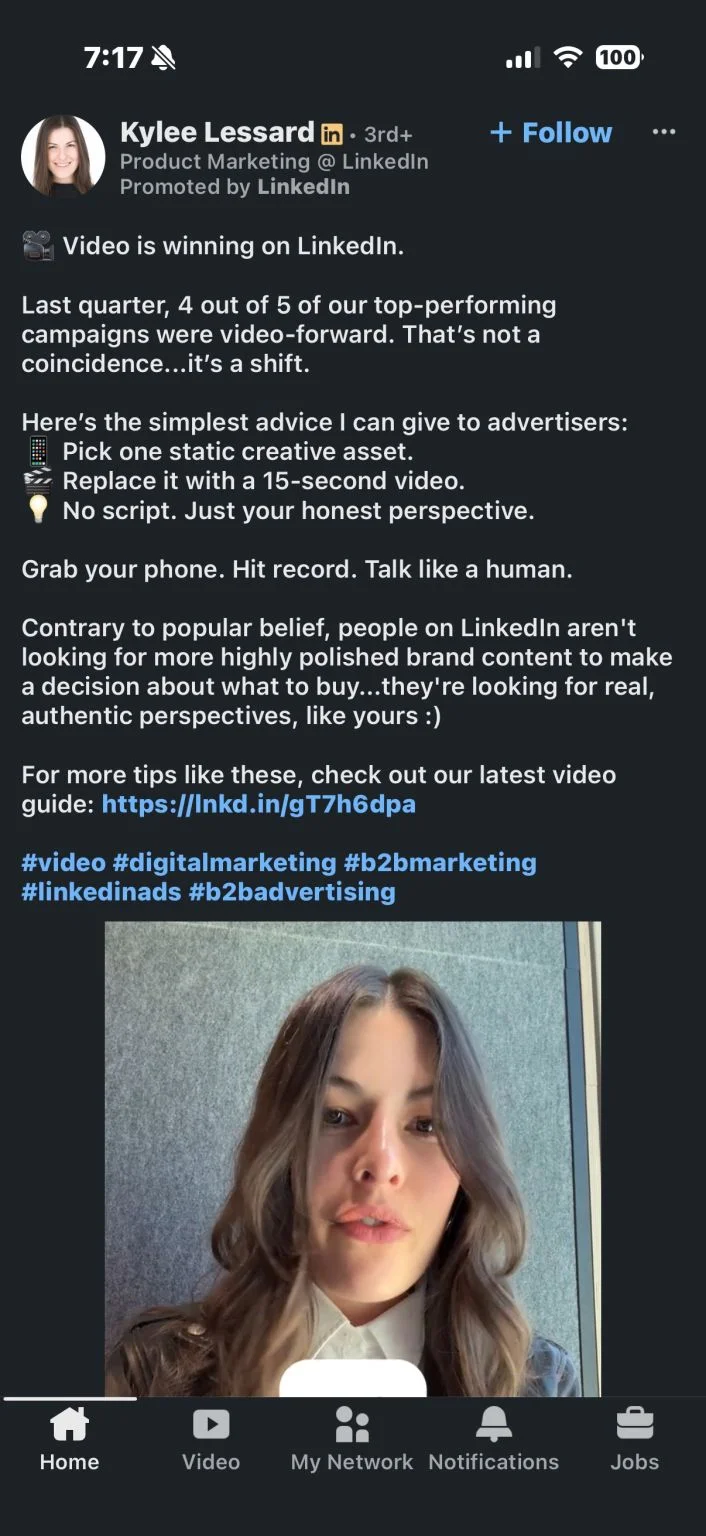
From product demos and explainer videos to customer testimonials, use video to tell compelling stories that directly address pain points. The key is finding the right balance between value and engagement: your content should educate while holding attention.
Keep it short and focused with bite-sized formats: grab attention fast, deliver a single useful insight, and leave the viewer wanting more.
4. Case studies
Present your case studies in a visually appealing and easy-to-digest way. Structure them with a beginning, middle, and end. Think less “study” and more “story”. Think about the key takeaways you want the audience to have and emphasise them in the structure and design of your case study.
5. Checklists
Busy professionals appreciate content that gets to the point, and checklists are perfect for that.
They offer clear, step-by-step guidance your audience can follow to solve a problem or reach a specific goal. Think of a checklist as a roadmap: it saves time, builds confidence, and removes guesswork.
Even better, a well-crafted checklist does some of the heavy lifting for your potential customers. It walks them through tasks they’d otherwise figure out on their own, then gives you a subtle way to introduce your solution along the way.
6. Email campaigns
When you’re targeting B2B decision-makers, one channel continues to deliver reliably: email. Your buyers live in their inboxes. They check them constantly. And unlike social feeds, email is a controlled, distraction-free space, no algorithm, no noise.
The catch? You can’t assume every lead reads every email in your sequence. Many won’t. Some will only click on the one that happens to resonate with them at the right time.
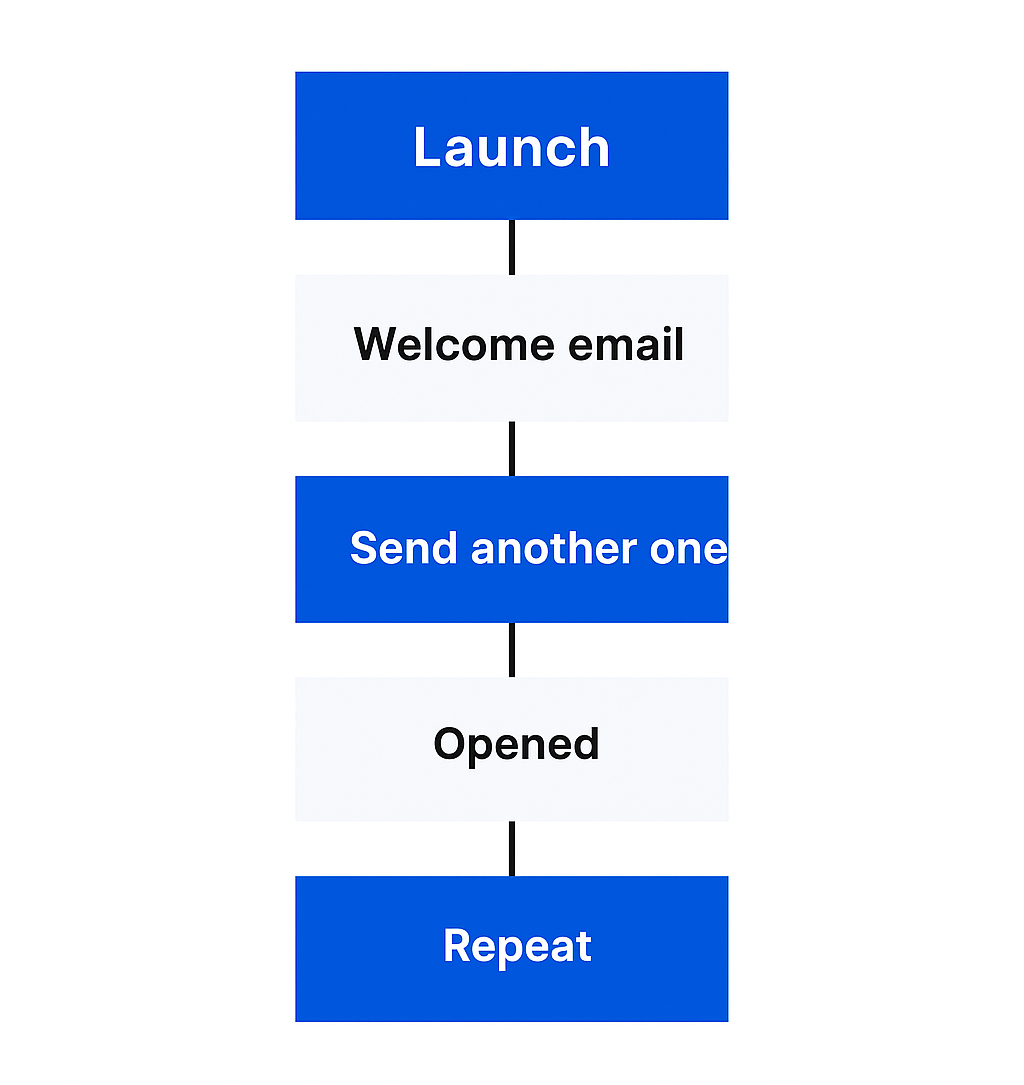
Most people will miss most of the emails in the sequence, or only one email actually piques their interest that day to engage and click.
That’s why every email should be designed as a standalone delivery mechanism for a valuable, always-on resource. Something readers can explore on their own schedule.
Instead of depending on a perfectly sequenced journey, focus on creating content that’s useful in any order. That gives your audience control, and increases the chance that when they’re ready, they’ll engage.
7. Newsletters
Again, landing in people’s inbox is still one of the best ways to earn attention.
But this time, rather than relying solely on cold outreach (which still works, but gets ignored more often), consider a better play: build a newsletter that people actually want to read.
A strong B2B newsletter should do five things well:
- Cut through the noise – Summarize what matters and respect your reader’s time.
- Establish authority – Be the voice that filters the noise and delivers what’s relevant.
- Maintain consistency – Regular sends build familiarity without overwhelming people.
- Mention your product naturally – Weave it in when it makes sense. Lead with value, not a pitch.
- Create insider appeal – Make subscribers feel like they know something others don’t.
When these elements click, your newsletter becomes a habit like their morning coffee.
Recommended tools for sending B2B newsletters:
- beehiiv – Clean interface, strong analytics, built for audience growth.
- MailerLite – Affordable, user-friendly, solid automation features.
- Kit – Ideal for commerce-driven newsletters.
- Flodesk – Elegant templates with a streamlined UX.
- Substack – Great for thought leadership and growing a community.
- HubSpot – Perfect if you’re already using it, thanks to CRM integration.
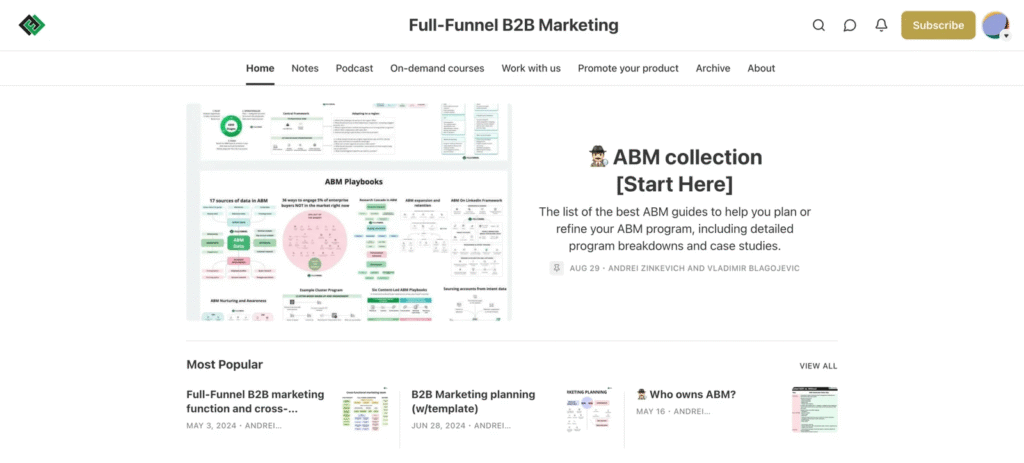
Looking to level up your B2B email strategy? Check out Full-Funnel B2B Marketing by Andrei Zinkevich and Vladimir Blagojevic on Substack. Their insights on email are some of the sharpest out there.
8. Podcasts
With the growing interest in audio content, podcasts have become popular for sharing industry insights and thought leadership.
They offer a natural way to spotlight expert voices, host meaningful conversations, and strengthen your brand’s credibility through content that informs and inspires.

One major advantage? Podcasts reach your audience during off-hours while they’re commuting, walking the dog, or at the gym. That makes them a more focused and receptive audience, engaging with your message without the usual on-screen distractions.
9. Templates
Templates provide instant value. They take something complex, lile a report, an email sequence, a workflow, a spreadsheet, and give the user a ready-made starting point. That’s highly attractive to busy professionals who don’t want to start from scratch.
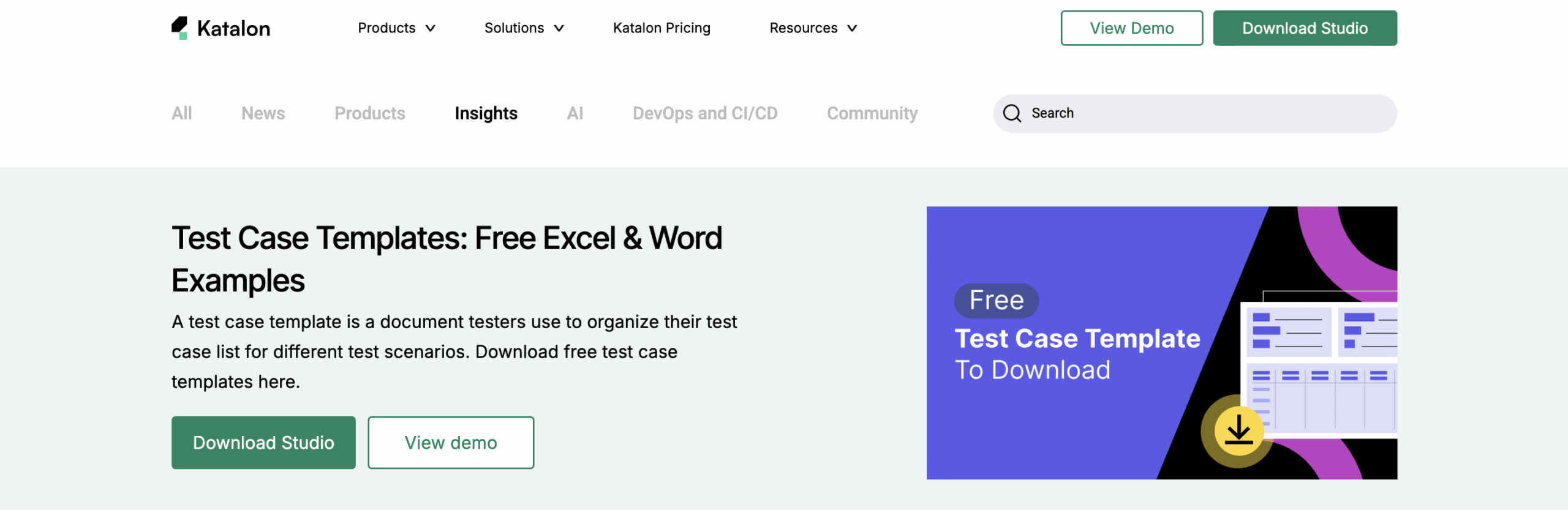
When someone downloads a template, it usually means:
- They’re actively trying to complete a task
- They’re in your target audience
- They’re experiencing a relevant pain point
That’s a qualified lead signal. Ranking for these terms means you’re catching people in a moment of need. And if your content helps them, you immediately position your brand as useful and credible.
10. Paid ads
When people think of lead generation, usually the first thing that comes to their mind is paid ads. But in B2B, paid ads aren’t always the best approach unless you already have an audience.
For small business that doesn’t need a “brand” and has short sales cycle, ads work wonders. But in B2B, ads play two different roles: demand gen and demand capture.
- Demand generation, which is about seeding awareness: bringing attention to pain points and solutions for those pain points long before a buyer begins searching. Here, high-value content like webinars, research reports, thought leadership pieces work far better than direct offers. This stage expands your reach and fills the top of your funnel. Don’t expect direct conversion, any leads generated from this stage must be followed up by really well-thought nurturing campaigns.
- Demand capture, on the other hand, focuses on active intent. It targets those already researching solutions, either through prospecting new visitors or retargeting previous ones who’ve shown interest via site visits, content downloads, or webinar attendance (thanks to your Demand Gen work).
What is the best way to gain leads from content marketing?
The shift in B2B marketing is unmistakable—lead generation is fading into the background while demand generation takes center stage.
As marketers, it’s time to acknowledge that the old playbook of chasing leads through endless forms, deals, and hooks no longer works. Modern audiences crave authenticity and substance. They want content that offers real value, not noise.
Focus on creating content that genuinely helps your ideal audience meet their needs, ambitions, and desires. Build a connection that educates and empowers them so they naturally want to stay within your brand’s orbit.
This evolution signals a new, more meaningful era of content marketing—one where value-driven content fuels demand and fosters lasting relationships, complete with quality leads that form organically.
Now’s the time to leave outdated tactics behind and lean fully into the power of content-led growth.