
After a decade of doing content marketing and running our SEO/content marketing agency Perceptric, I’ve had a lot of mentors.
Those mentors are the B2B companies that do content marketing exceptionally well. Ahrefs, Webflow, Gong Labs, to name a few. I have extracted a lot of golden nuggets from their content strategies to apply to my own process.
In this article, I’ll share with you top 9 examples of successful B2B content marketing that I have applied to Perceptric and my own way of doing content marketing.
I will cover:
- What websites are they
- How they did B2B content marketing
- Why it works
- Key takeaways
Let’s dive right in!
My criteria of selecting good B2B content marketing examples
When browsing around for good content, I usually look at the following:
1. Is that content written by someone with actual expertise?
More often than not, a lot of B2B content is written by freelancers or writers without true expertise in the topic being written. This is acceptable, though, because it’s admittedly not easy to source high-quality writers who has both knowledge and writing skills. They do exist, but the cost of investing into them are pretty high, and unless you have business justification for that decision, it’s better to go with generic writers who have to do their own research. It’s refreshing to come across content actually written by someone who has “been there, done that”.
2. Does that content follow SEO best practices?
One of the most critical components of good B2B content marketing is whether their content strategy includes SEO or not.
Although B2B content written for SEO tends to be somewhat formulaic and tedious compared to content written purely for humans to read, you have to agree that SEO content is what brings traffic to the website. It is the evergreen component of the content strategy.
Without SEO, you have to invest effort into content distribution. The moment you stop distributing, the traffic stops coming in.
3. Does that content have a unique POV?
If you’re merely repeating what everyone else is saying, did you really make a good impression? I don’t think so. It’s necessary to bring some personality to your content. When people realize “this brand is actually something worth noting”, they will come back in the future to read more content from you.
Best B2B content marketing examples you can learn from
Here’s my list of the best B2B content marketing examples across industries that you can apply to your own content marketing activities:
- Ahrefs
- HubSpot
- Gong
- Cognism
- Shopify
- Wise
- MarketerMilk
- Refine Labs
- Zapier
1. Ahrefs
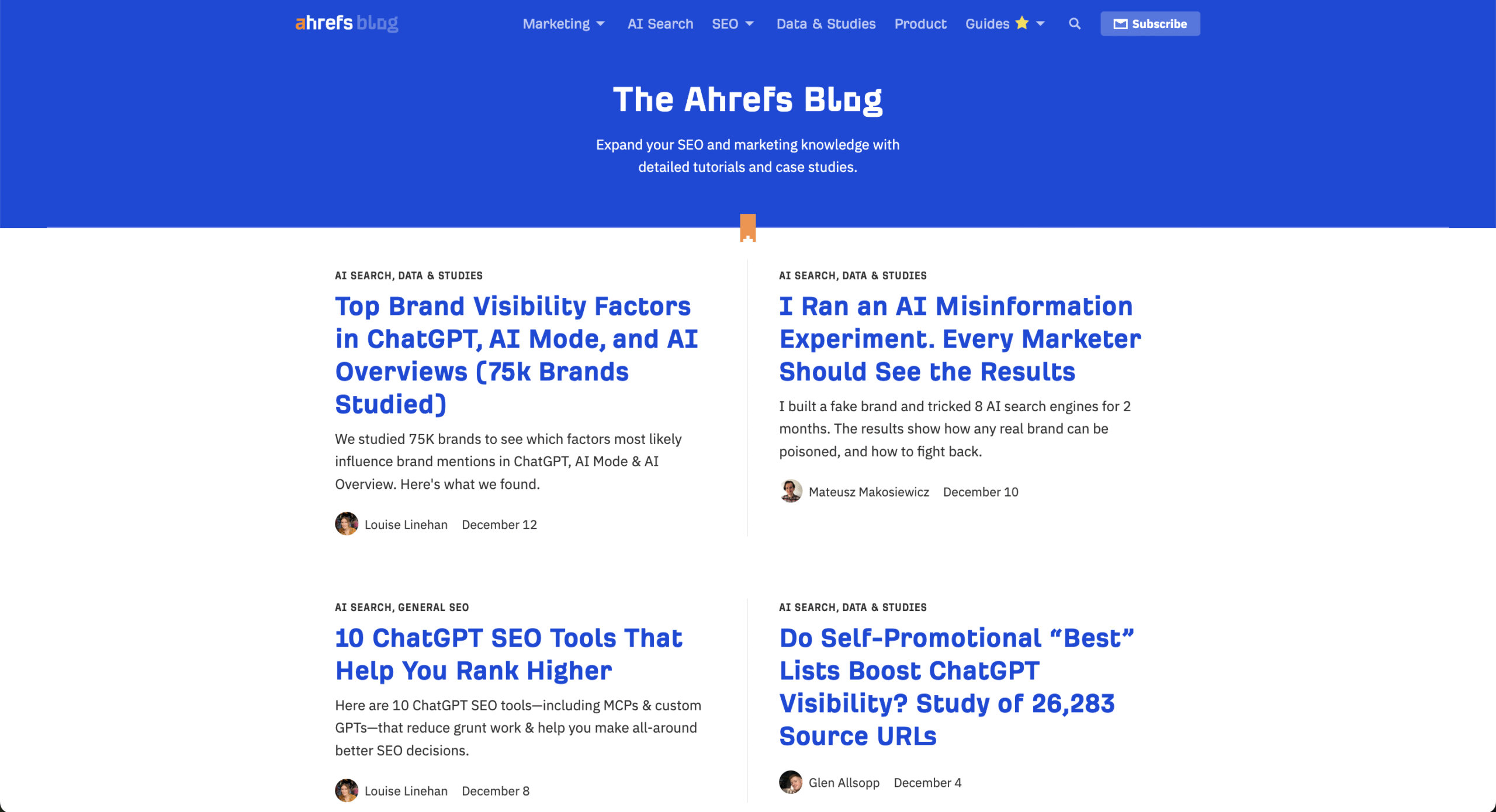
What website it is: SEO software for marketers and content teams
How Ahrefs did B2B content marketing: They publish a lot of product-led educational content, which means their content is structured in a way that guides readers how to complete a certain task/solve a problem with their product. For example, in this article about content writing, they show how you can use Ahrefs to plan content writing topics. At the same time, they publish a lot of original research that basically defines where the industry is heading.

Why it works: Content solves real SEO problems while naturally showcasing the product. Meanwhile, data-driven thought leadership content establishes them as the leader in the category.
Key takeaways for you: If you building content for a B2B SaaS, seamlessly embed your product in your content in a way that positions it as the “solution” to their problems, then let the product sell itself. This is classic PLG motion.
2. HubSpot
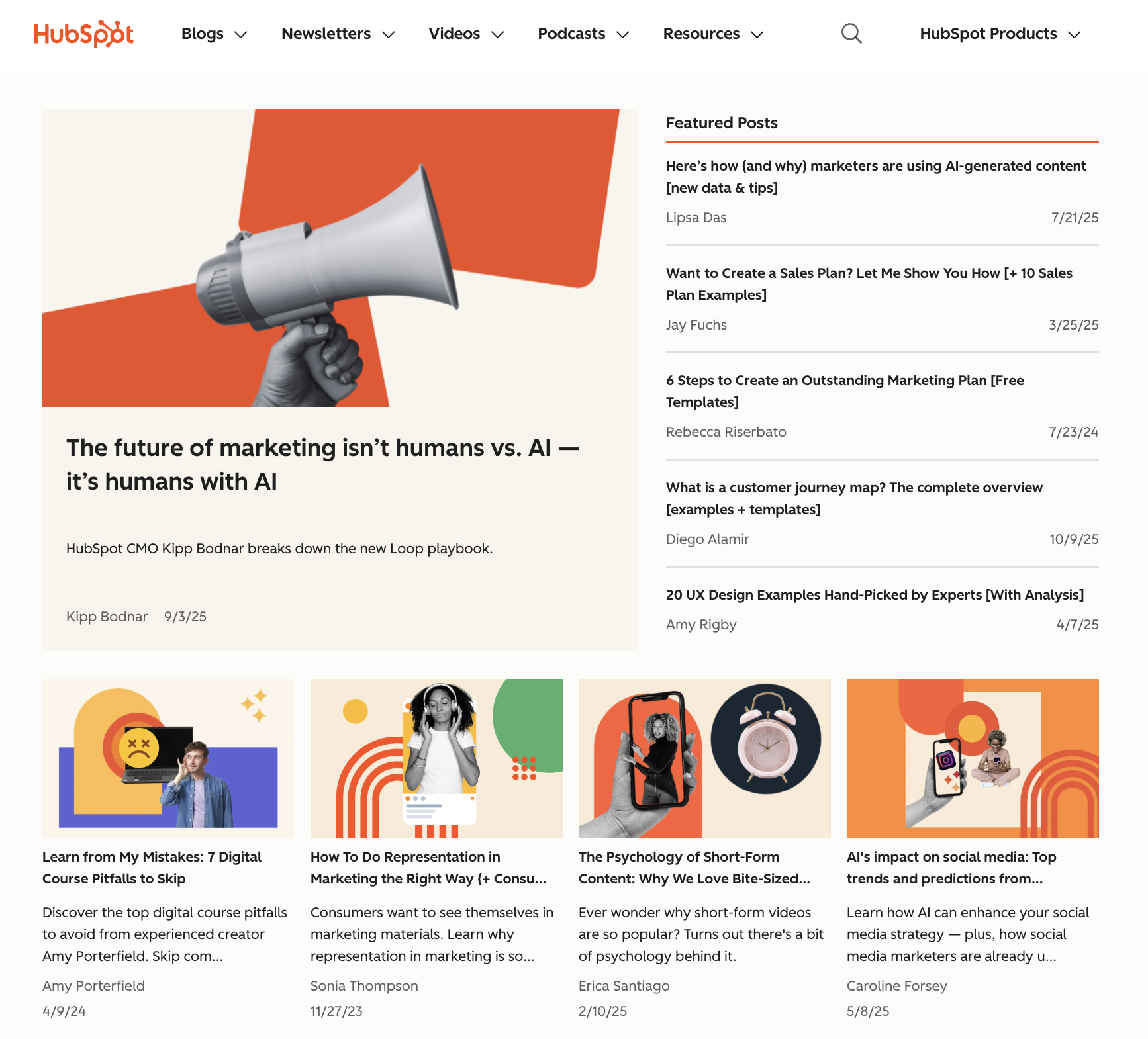
What website it is: All-in-one CRM, marketing, sales, and customer service platform
How HubSpot did B2B content marketing: They built one of the largest educational content engines in B2B. HubSpot publishes beginner-to-advanced guides on marketing, sales, SEO, and RevOps, all intentionally designed to rank for high-intent keywords. They follow product-led SEO best practices, where most content teaches how to do the job, then subtly introduces HubSpot features as the scalable way to execute those ideas. On top of that, they use reports, benchmarks, and industry stats to shape how marketers think about growth.
Why it works: HubSpot’s content addresses real operational marketing problems while positioning HubSpot as the default system to manage them.
Where HubSpot made a mistake: They have written so many authoritative articles covering the topic of inbound marketing that Google will have to rank them in the highest position when it comes to any search queries in that space. However, they made one critical mistake, and that is they over-extended themselves and tried to write content for topics that they aren’t REALLY experts in, such as “emojis” and “quotes”. That led to the “collapse of HubSpot”, bringing their monthly organic traffic from around 5M-8M to 2M (as you can see in the huge drop around mid 2024):
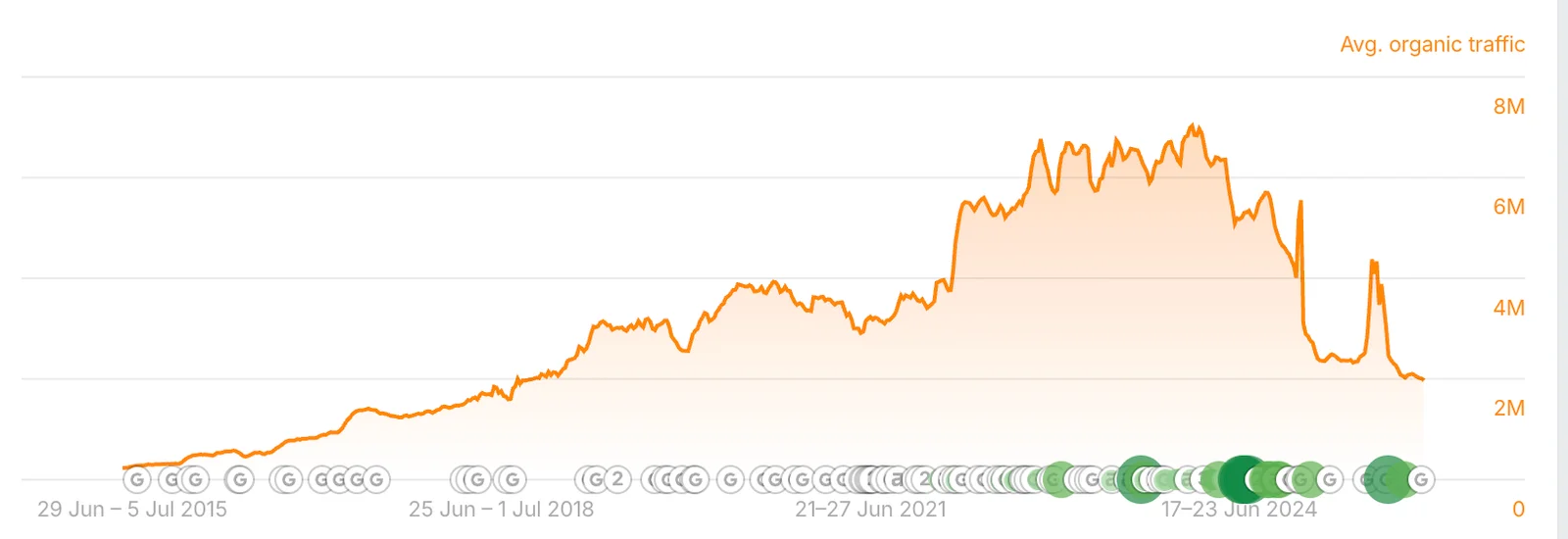
Key takeaways for you: If you’re building content for a B2B SaaS, dominate the fundamentals of your category first, then layer your product in as the natural “grown-up” solution. From a branding perspective, it establishes your product as the leader in that category. From an SEO perspective, it signals to Google that you publish a lot within that topic, which gives you topical authority. Don’t overextend yourself to publishing about topics that you’re not experts in though.
3. Gong
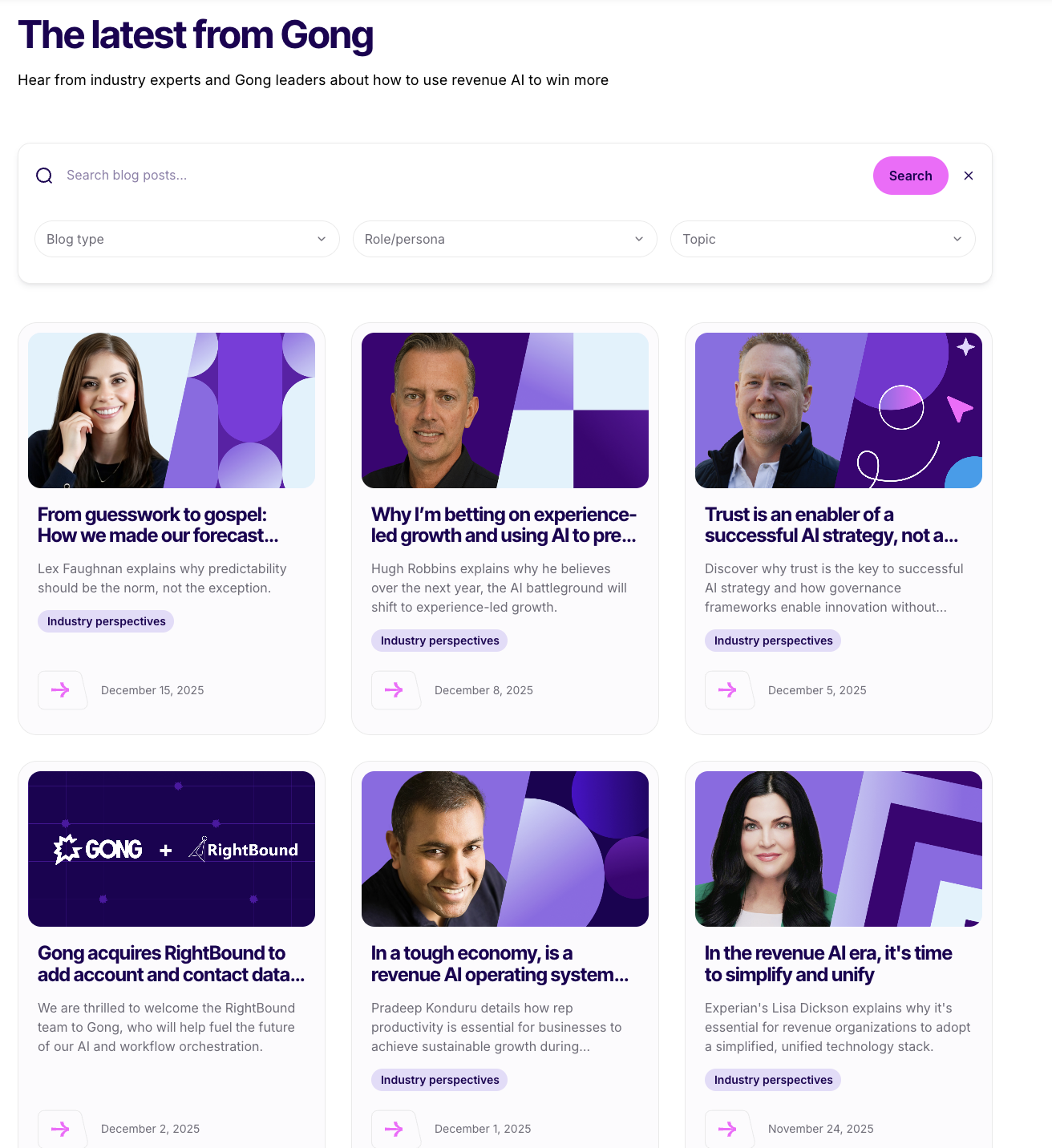
What website it is: Revenue intelligence and conversation analytics software for sales teams
How Gong did B2B content marketing: They publish a lot data-backed insights derived from millions of sales calls and emails. Blog posts, reports, and webinars all focus on what top-performing sales teams do differently, with Gong positioned as the only way to access that level of insight. The product is inseparable from the data. This is another good example of product-led content in B2B.
Why it works: Sales leaders trust data more than advice. Gong uses exclusive datasets to define what “good” looks like, which makes their product the source of truth for modern sales.
Key takeaways for you: If your product captures unique data, turn that data into thought leadership.
4. Cognism
What website it is: B2B sales intelligence and prospecting platform
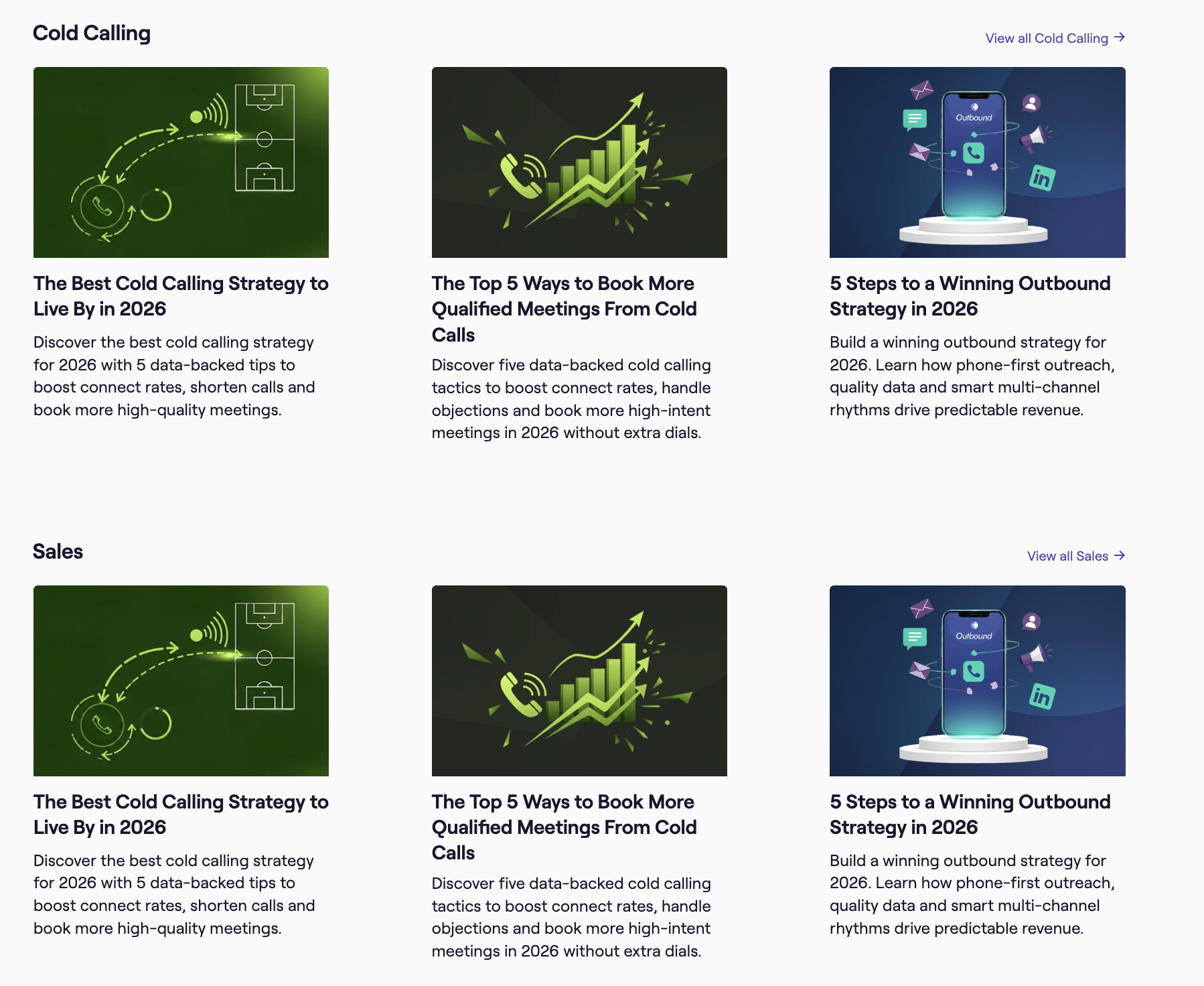
How Cognism did B2B content marketing: Cognism follows the B2B SEO playbook really well by carefully segmenting their content into topic clusters based on their product offerings. If you go to their blog, you should see that they have separate categories for Cold Calling, Sales, Demand Gen, Lead Gen, each of which is comprehensively covered with SEO-led articles. This gives them incredibly strong topical authority in Google’s eyes.
They are also fairly active on LinkedIn. Browsing through Cognism ads on LinkedIn’s Ad Library, it’s easy to see that they are investing into building running LinkedIn lead form ads where the prospect have to fill in their business email to get the playbook. They also have internal VPs and Directors to film short videos and run those as thought leader ads.
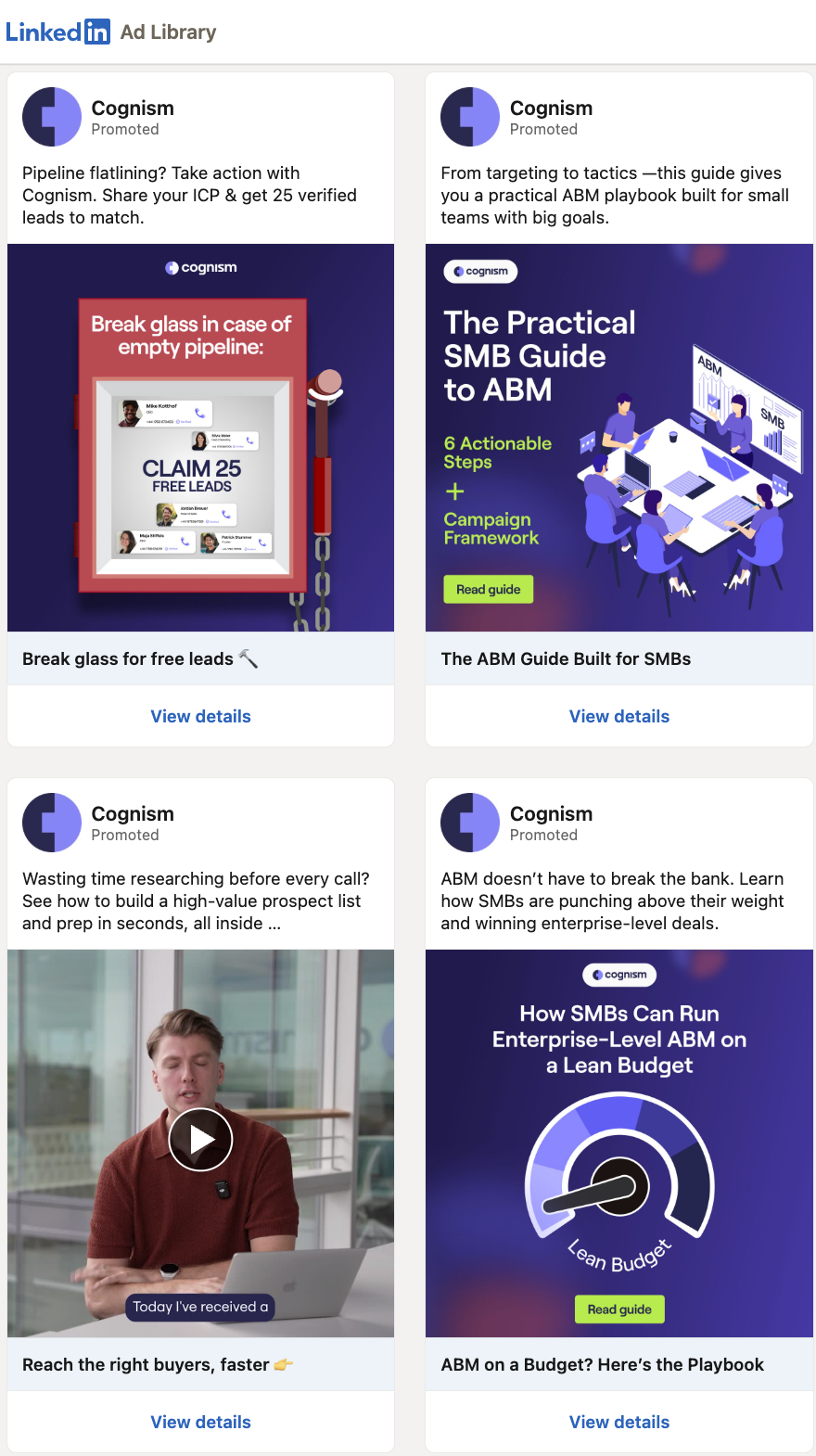
Why it works: Cognism has a huge database of leads already, which is why they chose SEO paired with LinkedIn ads to to further broaden brand awareness.
Key takeaways for you: Invest into SEO-led content and pair that with paid ads to maximize impact.
5. Shopify
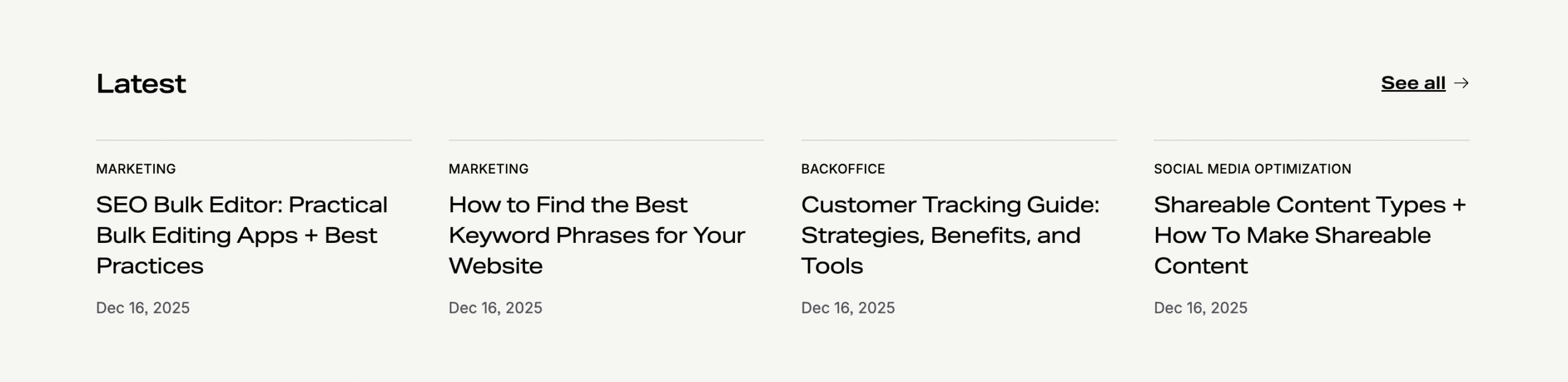
What website it is: E-commerce platform for businesses of all sizes
How Shopify did B2B content marketing: B2B SEO undoubtedly works. Shopify educates entrepreneurs on how to start, run, and scale online businesses. Their content spans SEO blogs, creator stories, trend reports, and playbooks. The product is framed as the infrastructure behind every success story. They sell outcomes rather than features, since people don’t want to know about the technicalities behind the platform anyway. What they want to know is how Shopify helps them achieve their entrepreneurial dreams.
Of course, apart from guides, Shopify knows that being an entrepreneur is a bumpy road, so they create Founder Stories featuring success stories of people who successfully used Shopify to scale their business.
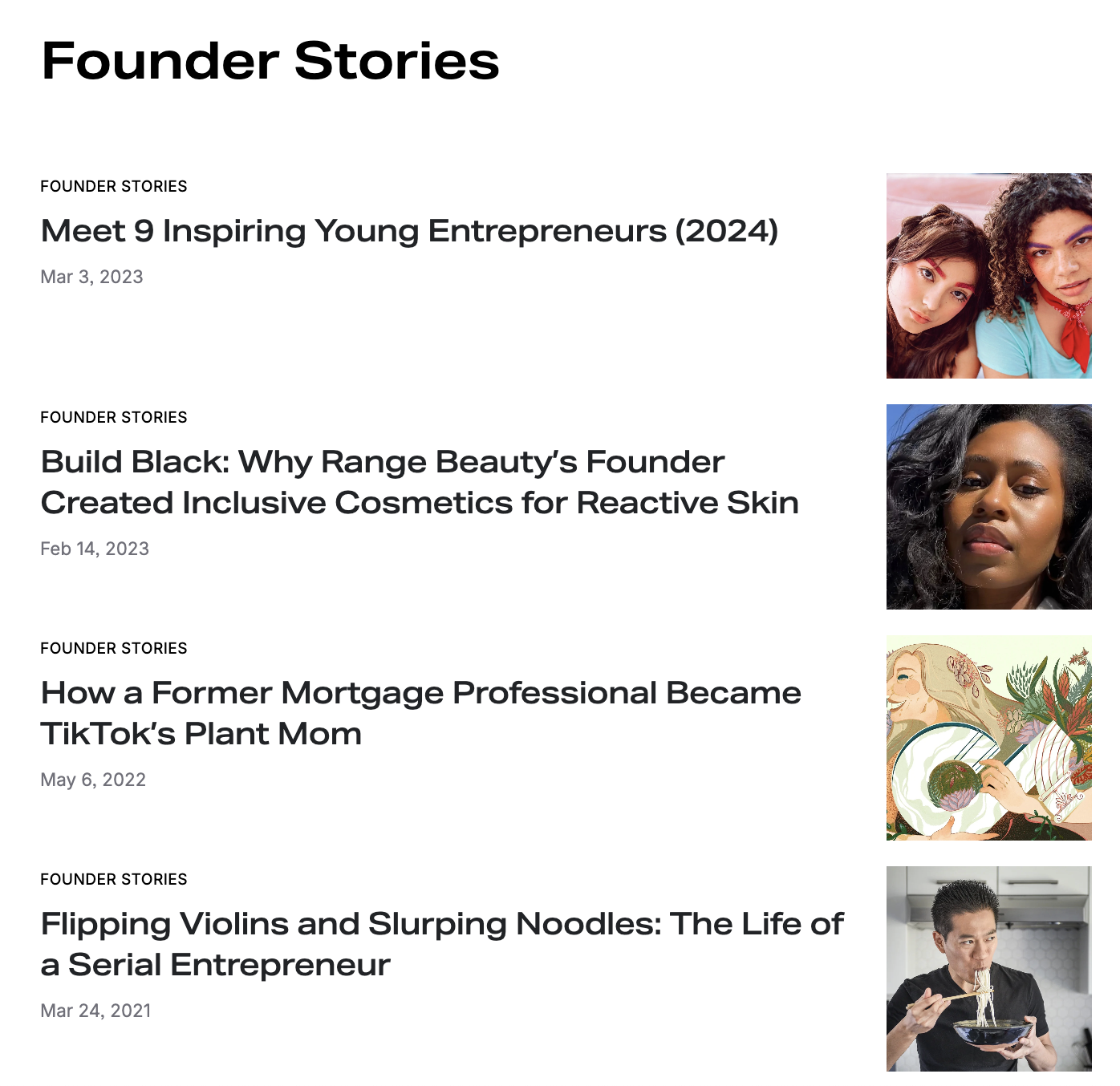
Why it works: Educational content for an audience who really needs guidance, plus inspirational content for trust and some “hope” in the platform.
Key takeaways for you: Sell the future state your customer wants, not the feature list. Let your customers’ success become your content.
6. Wise
What website it is: International money transfer and business banking platform
How Wise did B2B content marketing: Wise separates content by region, because each region they support follows a different regulatory standard, and they need to tailor their educational content accordingly.
They’re really smart to invest into BOFU content, which is content for queries that only people at the final stage of product research/consideration search for. Here are some examples of BOFU content that Wise is producing:

Think of high-intent content like:
- [vendor] alternatives
- [solution] vs [solution]
- best [category] platforms for [industry/role]
- [vendor] pricing
- [vendor] reviews
- top [industry] providers
- [solution] for [specific workflow or department]
- [solution] ROI
- [service provider] case studies in [industry]
Why it works: BOFU content is where people are most likely to be converted into leads. When Wise publish this kind of content, sales teams feels the impact right away.
Key takeaways for you: Focus on the Bottom-of-the-Funnel queries.
7. MarketerMilk
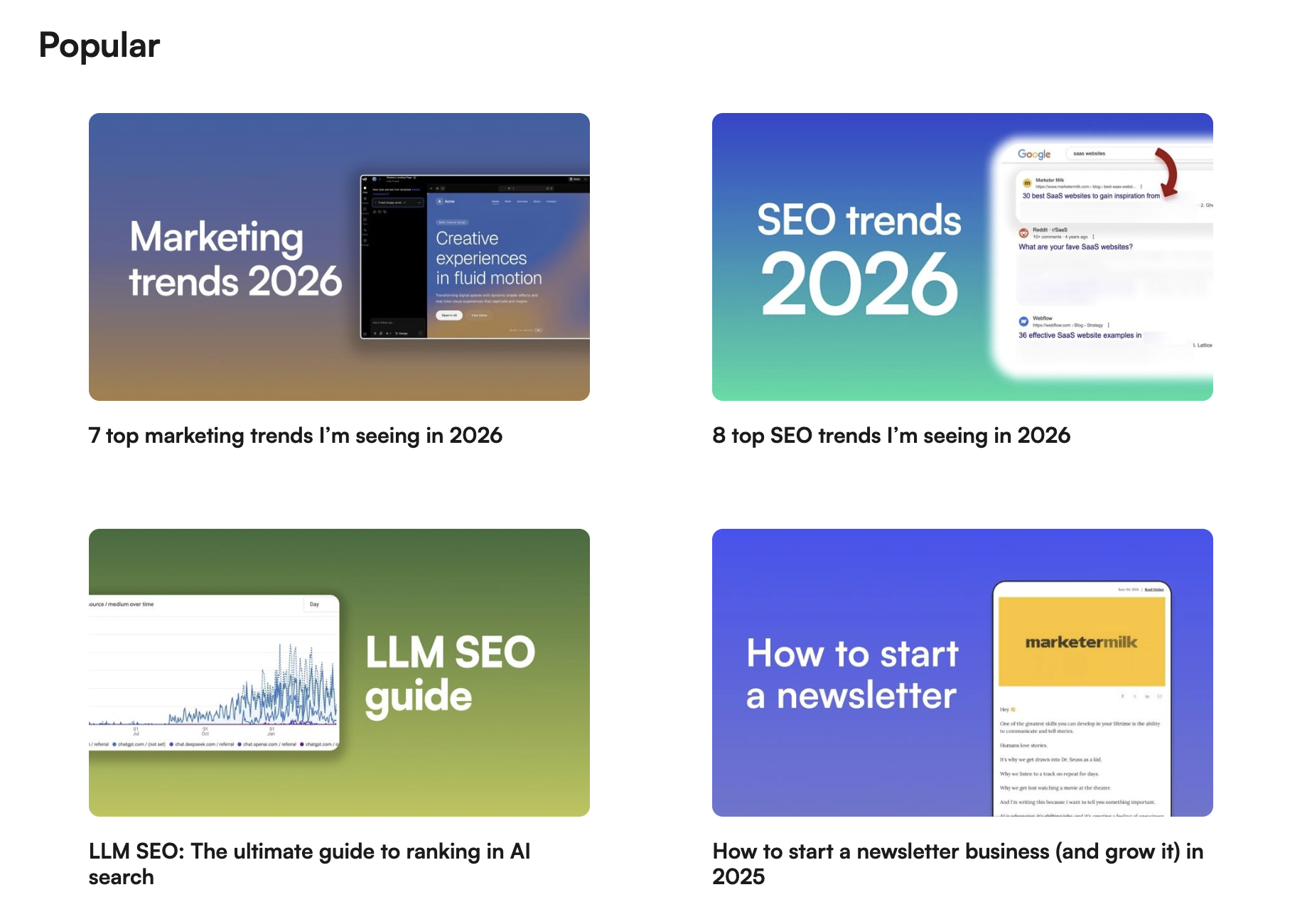
What website it is: Marketing education and growth resources platform
How MarketerMilk did B2B content marketing: MarkterMilk is Omid’s project, an ex-Webflow who managed to grow Webflow’s SEO to 1M traffic. He now publishes a lot of practical, no-fluff guides for SEOs and marketers looking to improve strategy execution. MarkterMilk’s growth is pretty fascinating too, jumping from merely 50K/month to nearly 500K as of Dec 2025. That’s a 1000% growth.
What Marktermilk did was:
- He publishes a lot of content in the first-person perspective featuring his personal insights and thoughts on SEO and content marketing. These topics have been written over and over so many times, but his POV makes the content much more refreshing and engaging. Google notices that and rewards him accordingly.
- He takes a lot of time and effort to do research, which clearly shines through in all of his articles.
- He knows how to choose topics to write about. All articles have been carefully optimized for SEO without losing the human touch.
- He leverages his newsletters to distribute his content beyond the initial Google’s reach.

Why it works: His content respects the reader’s intelligence and time. It feels written by someone who has walked the walk and can talk the talk. Also, his refreshing take on SEO and content marketing is appealing in the age of AI-generated content.
Key takeaways for you: Write for people, not for the search engines. What the search engine needs is the titles and headings to know what your content is about. The rest should be up to the humans to judge.
8. Refine Labs
What website it is: B2B demand generation consultancy
How Refine Labs did B2B content marketing: If you’re in Demand Gen, Refine Labs is almost always recommended as a must-read and must-watch. They challenge traditional demand gen thinking backed by their own experience. For example, they turn insights they found from an enterprise B2B software account into an article called the “Paid Search Playbook”:
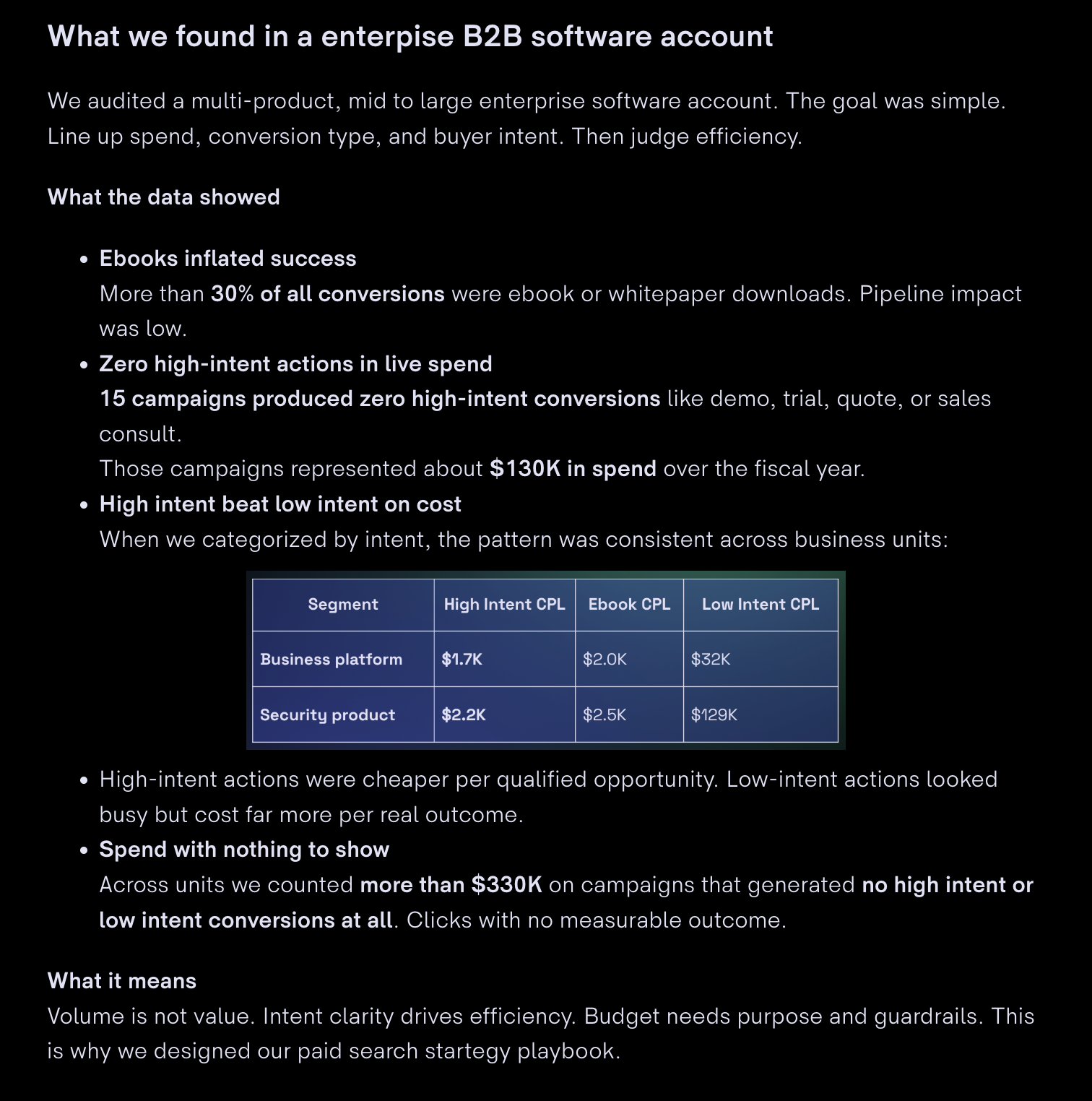
Why it works: Strong opinions backed by experience create memorability and trust in your brand. Most B2B companies aren’t bold enough. Challenge the status quo (where it should be challenged) is how you stand out.
Key takeaways for you: If you can’t win on volume, win on point of view.
9. Zapier
What website it is: No-code automation platform
How Zapier did B2B content marketing: Zapier creates massive volumes of SEO content targeting workflow problems across hundreds of tools. Each article shows how to automate a task naturally requiring Zapier. Content is highly programmatic but still useful.
Why it works: They own problem-based search demand across industries, turning education into activation.
Key takeaways for you: If your product connects tools or workflows, content should mirror how users think about tasks.
Conclusion
Here are some of my takeaways from these examples of B2B content marketing:
- Pattern 1: A lot of these B2B companies teach users how to do the job, not how to use the tool. The product appears naturally as the easiest way to execute the solution. You should create content that walks through real workflows your ICP already wants to complete. Design the steps so the final “unlock” happens with your product.
- Pattern 2: Use proprietary data as Thought Leadership. If you have data from inside the product, leverage that and turn it into articles that shape how the market thinks. Even small datasets are valuable if framed correctly by a good story.
- Pattern 3: Be opinionated. Take a clear stance on what’s broken in your category and consistently reinforce it across content.
- Pattern 4: Focus heavily on bottom-funnel content that supports buying decisions. You can create content for moments when buyers are actively evaluating solutions.