
Based on my experience in healthcare marketing and advising leading digital health companies, I’ve come to recognize a simple but powerful truth about B2B marketing in healthcare:
In B2B, the most effective marketing channel is demonstrating and sharing expertise.
When it comes to high-ticket B2B purchases, trust is the deciding factor. And the most effective way to earn that trust before the sale? Share meaningful expertise. Show your audience you understand their world better than anyone else, and that you can help them navigate it.
If you’re reading this, chances are you’re searching for effective B2B healthtech marketing strategies.
In this article, we’ll be going through a few healthtech marketing tactics and healthtech companies that are doing a great job with their marketing.
Why does healthcare need content marketing?
In B2B, buyers rarely make a buying decision simply because they saw an ad that you run on LinkedIn.
In fact, the State of B2B SaaS brand marketing report from Wynter shared a concerning stat: 92% of B2B buyers only purchase from their day-1 shortlist.
That means by the time they book demos, the decision is essentially made and they’re confirming choices they’ve settled on. They’re validating their choices, no longer exploring.
So what gets you on that day-1 list? It’s the slow, strategic work of:
- Brand visibility
- Expert positioning
- Market education
The goal is to ensure that buyers have seen your name, associate your brand with competence with your insight and proof that you understand the customer’s world better than anyone else. And that’s what only content marketing can accomplish.
Whether “content” to you means a blog post, email, whitepaper, in-depth article, or case studies, it must all have thought leadership and expertise built in.
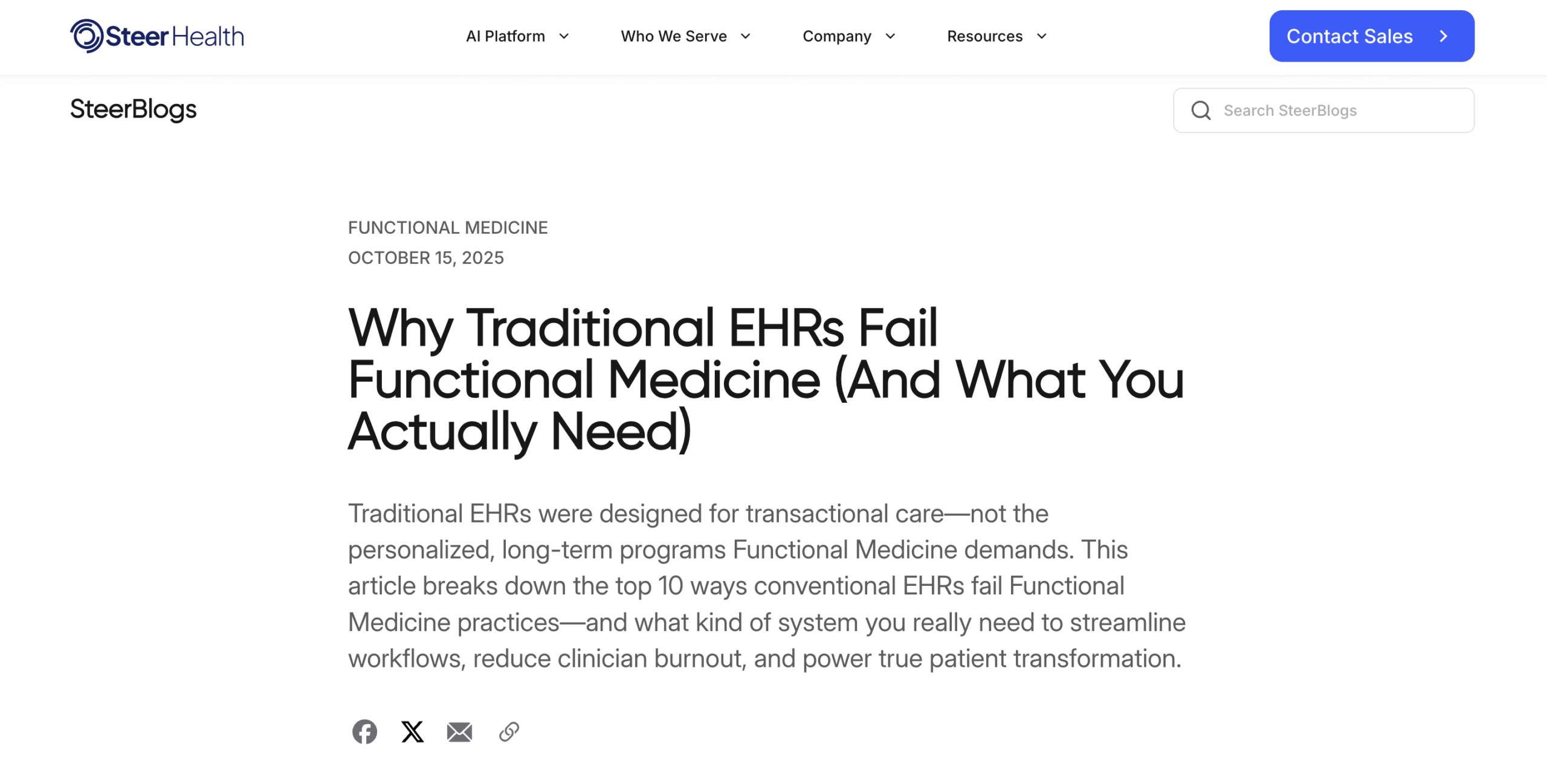
For example, the “Why Traditional EHRs fail Functional Medicine” from SteerHealth is a perfect example of good content marketing for Healthtech. It educates buyers on a pain point that have and how to solve it (while positioning themselves as the ultimate option).
Top B2B healthcare content marketing strategies with examples
1. Written content marketing
Written content marketing is becoming increasingly critical in B2B healthtech sales, and for good reason.
- If you’re targeting provider organizations or digital health startups, there’s often a steep learning curve. Buyers need education around how your technology integrates with EHRs or complies with HIPAA.
- In a consultative sales environment, more healthcare buyers prefer to self-educate before ever talking to sales. They want white papers and case studies that they can review on their own terms. They don’t want to be “sold to”, in a way.
- Content is still one of the most powerful ways to share that expertise and build early trust. We’ve worked with healthtech companies in areas like AI diagnostics and clinical workflow automation, and we’ve seen that targeting highly specific high-intent terms like “FHIR integration for remote monitoring” brings in qualified leads that are already problem-aware and searching for credible solutions.
However, most healthcare companies (and B2B companies in general) are doing content wrong, and there’s a huge opportunity to do much better B2B content.
What they do wrong is:
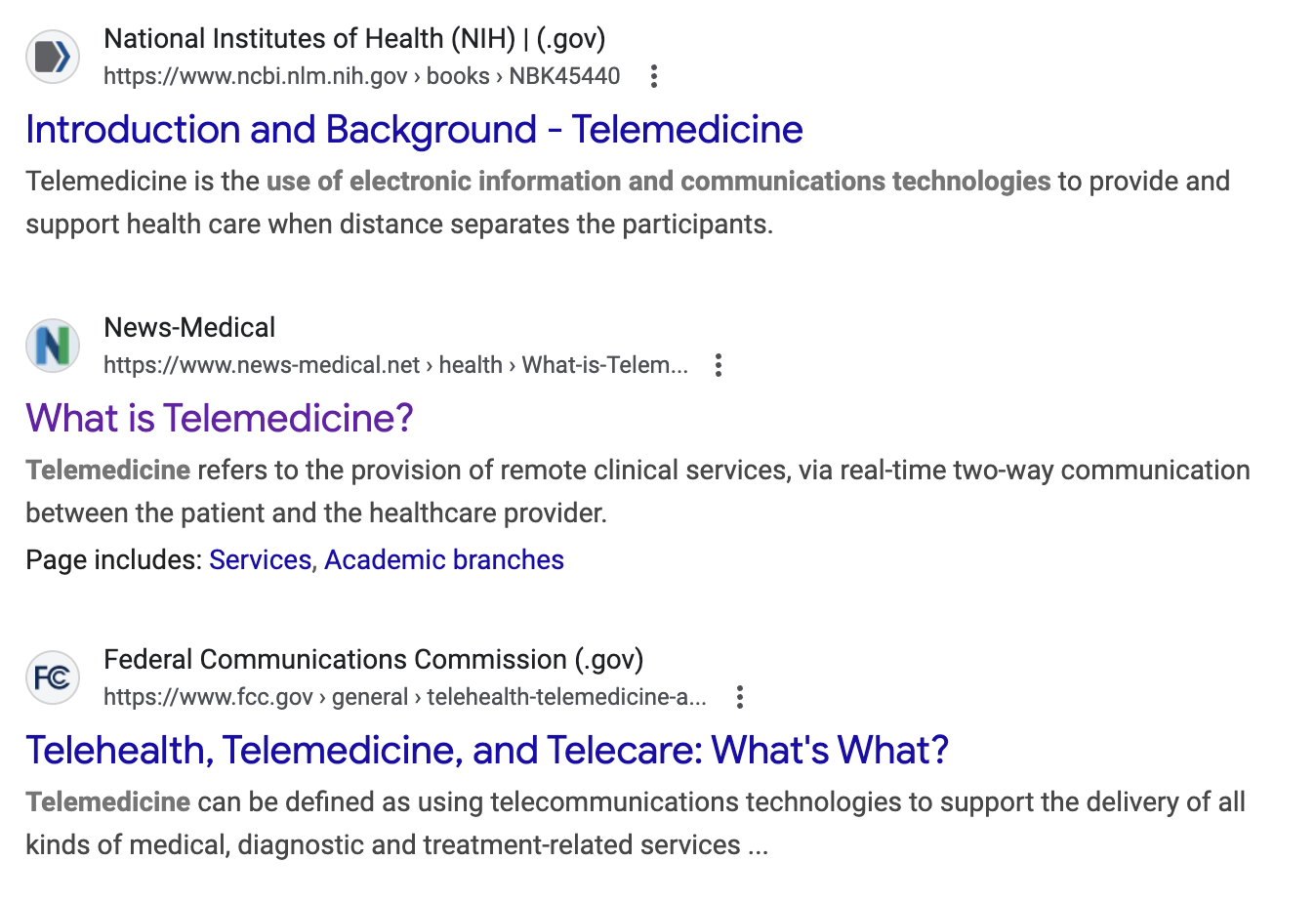
- They write B2B content for beginners: many content strategists try to target keywords like “What is telemedicine?” or “What is HIPAA?”, which healthcare buyers are very likely to have known. There’s no point targeting beginner-level keywords to attract people who won’t have any interest in the products you offer. Also, these keywords are already perfectly answered by gov sites like NIH, and it’s near-impossible to rank against them.
- Too often, B2B healthtech content isn’t grounded in actual expertise: it gets outsourced to freelance writers with no background in healthcare, no understanding of clinical workflows, and no grasp of regulatory frameworks. The result is surface-level content recycled from Google searches labeled as “thought leadership.” But this doesn’t build credibility and it certainly doesn’t drive sales. If the goal is to turn readers into buyers, the content needs to come from people who understand the product, the market, and the real problems healthcare teams face every day. Otherwise, it’s just noise.
If you decide to invest in healthcare content marketing, you’d be better off creating content that is:
- Advanced and expert-led
- BOFU-first
- Written to solve problems, not chasing keywords
2. Content distribution
But of course, there’s always little catch when it comes to content marketing:
- Content written for the masses can rank (thanks to SEO) and rake in traffic, which boosts website authority. However, the more traffic it brings, the more “generic” the terms are, and the traffic quality may not be so high since it’s not super relevant to your offerings. But still, at the end of the day, it’s still tons of traffic, which means brand awareness for you.
- Advanced content written for experts are not as discoverable. People aren’t going to search for “What’s holding back digital health transformation?” on a daily basis. Therefore, content creation activities must go hand-in-hand with content distribution strategy.
There’s a common myth that you need to first produce content and then figure out how to distribute it. But actually, your distribution strategy should shape the content from the very beginning.
In fact, distribution should be the major part of your marketing strategy. It’s the whole point of doing “marketing”, which is getting your materials in front of as many people as possible.
We live in a time where every major platform uses recommendation algorithms. If you want your content to scale organically, you need to build with those algorithms in mind.
This is why I focus so heavily on SEO for healthtech SaaS companies. Google is still the number one place that healthcare providers and patients go when they’re looking for answers.
Just starting out and need ways to kick off distribution? Here are a few smart tactics that work in healthtech:
- Guest content: Contribute to trusted health industry blogs or medical association newsletters, or join podcasts targeting practice managers.
- Email marketing: you can turn existing articles into drip campaigns that educate your target audience
- Communities and aggregators: Don’t overlook niche communities like r/HealthIT or Substack creators. Here are some recommendations for you:
- Health Tech Nerds
- The Keckley Report
- Gist Weekly
- Marketing Powerups
- Paid distribution: If you’ve got budget, amplify your best content through Facebook ads, sponsored placements in MedCity News, or physician newsletters like KevinMD.
3. Events and speaking
In the B2B healthcare space, sponsoring and organizing events can significantly boost brand visibility and accelerate enterprise customer acquisition, especially when selling into the big players.
One company doing this particularly well is Komodo Health in the U.S.
They’ve consistently hosted healthcare-focused events in major hubs like New York and San Francisco, drawing 50+ attendees from health systems, life sciences, and digital health startups. They’ve hosted and participated in panels and roundtables on:
- Real-world evidence and clinical data
- AI applications in healthcare
- Population health and care navigation
They also open their event spaces for healthcare meetups and working groups. This is an underrated tactic that not only builds brand equity but also aids recruiting and partnerships.
If you’re looking for a list of healthcare SaaS or digital health conferences to attend, check out resources like HIMSS or MedCity News Events.
Conclusion
B2B healthcare companies need marketing now more than ever. The industry is getting more competitive and everyone wants to position themselves as the expert.
And yet, you can’t truly become the expert without sharing what you know, and that’s where marketing plays a critical role. In B2B healthcare, if your goal is to grow sustainably, lower customer acquisition costs, and lead your category, owning your marketing strategy and executing it well will take your organization to a completely new level.