
I love software. As a tech guy myself, I see the tremendous growth potential of this field, and if you’re in the software/SaaS industry and have found product-market fit, I believe you’re setting yourself up for a great future.
With that said, to make your user growth sustainable, you still need to invest into an evergreen channel like SEO. Unlike paid ads which stop bringing in leads the moment you pause the campaign, SEO is always on. It keeps bringing in users who search for the queries you’re ranking high for.
In this article, I will share:
- How to do SEO for software companies
- The 5 best practices of SEO for the software niche
- How most SEO programs are doing it wrong
- List of the best SEO agencies that specialize in the software industry
Does SEO work for Software companies?
Yes, SEO absolutely works for software companies, for so many reasons:
- Customers always research on Google before they connect with you: this is especially true in Software. According to Wynter’s State of B2B SaaS Brand Marketing report, 92% of B2B buyers only purchase from the vendors already on their Day-1 shortlist. That means by the time a prospect books a demo, they already have several “final options” in their mind. In fact, customers do 60+% of research before ever talking to the company. Being on the short list to be considered is already half the battle.
- There’s always opportunity for SEO: no matter how niche your software is, there is always keywords relating to it that people are searching for on Google. Even if just 10 people Google those keywords per month, it’s likely that they are interested in the product, and you should strive to rank for them. Once you rank, your website will see visitors increasing. With some Conversion Rate Optimization best practices, you should start to see the leads coming in.
- SEO is the lowest cost, highest ROI channel: it has been and will always be true. Upfront investment can be high when you factor in the cost for content, strategy, and link building, but once it kicks in, the compounding effects will work in your favor.
How to do SEO for Software companies?
Here are the 6 steps I use to grow SEO of many B2B tech brands I’ve worked with:
Let’s dive in!
Step 1. Research what your Audience is talking about
If you don’t understand your audience, how can you effectively communicate your message to them? You need to speak their language. In software, defining the audience persona should start from the pain points:
- What is actively breaking in their day-to-day work?
- What problems have budget attached to them?
- What issues make them look bad internally if not fixed?
For many B2B SaaS companies, the pain points can look like this:
- Missed revenue targets
- Pipeline inefficiency
- Security/compliance risk
- Tool sprawl and rising costs
- Poor data visibility for decision-making
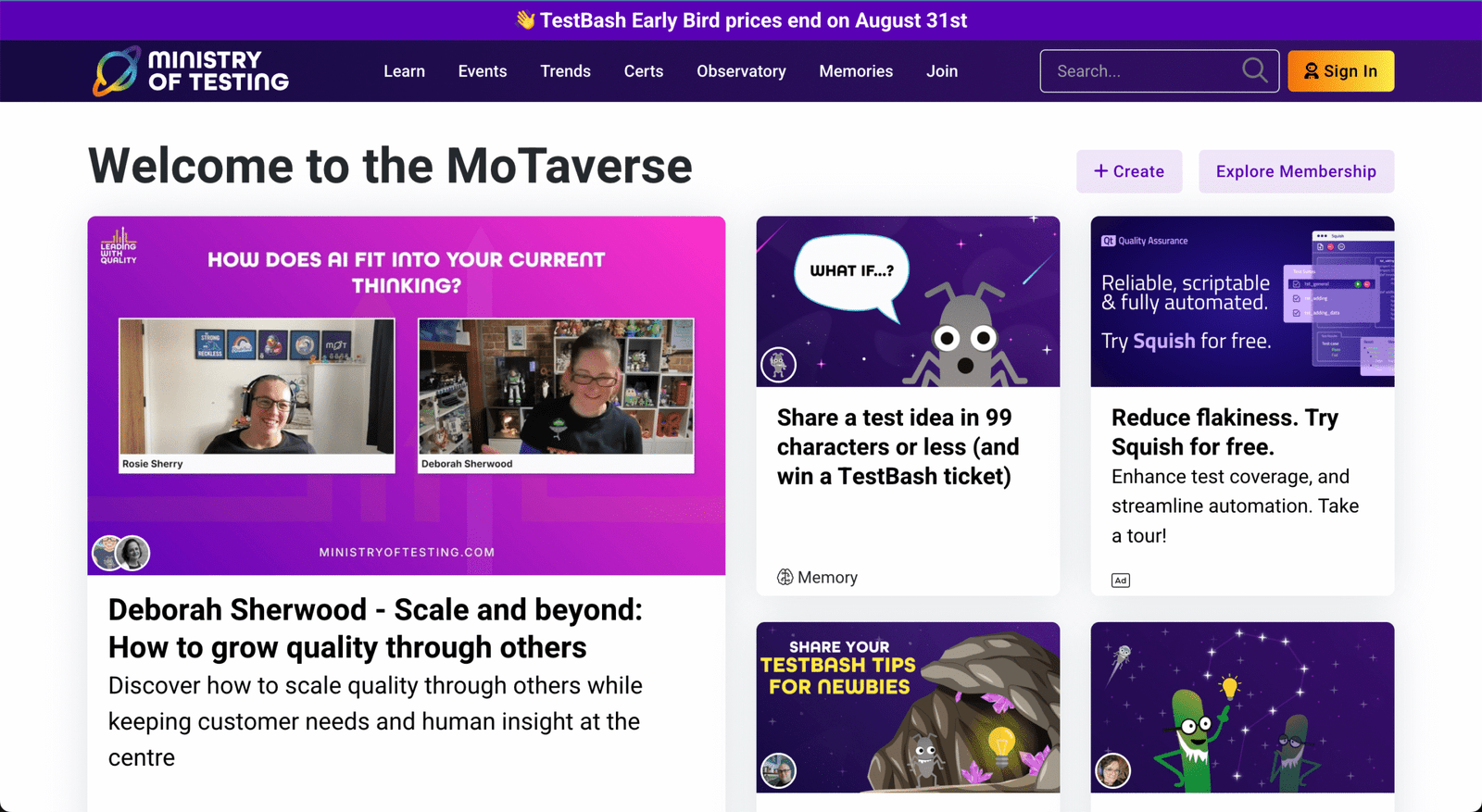
For example, when I created content in the software testing space for a B2B automation testing platform, I spent significant time in communities like Ministry of Testing to gather insights and better understand the audience’s perspective. By reading forum threads, I gained a clear view of their real pain points. I then used those insights to inform and guide my SEO keyword research.
Step 2. Decide your Topical Authority
Now that you understand what your audience wants, the next step is defining your topical authority.
Topical authority is an SEO concept that describes how strongly a website is recognized as a subject-matter expert in a specific area. Google, ChatGPT, and other search engines consistently favor sites that have built deep, sustained authority around a topic over time.
In fact, many SEO practitioners consider topical authority one of the most important ranking factors today.
Here’s a simple way to think about it. Imagine you search Google for “How to build a PC?” On the first results page, you see two websites:
- A site called PCStudio that publishes extensive guides on building PCs, from beginner to advanced levels
- TechCrunch, a technology and startup news site that happens to have a single article on building a PC
Most people would choose the first option, and Google behaves similarly. When you run a query, Google aims to surface websites that cover the topic most thoroughly and comprehensively. To do this efficiently, it has already analyzed and categorized sites by topic, allowing it to retrieve the most relevant results quickly.
Strong topical authority is also a key driver behind Monday.com’s rapid growth:
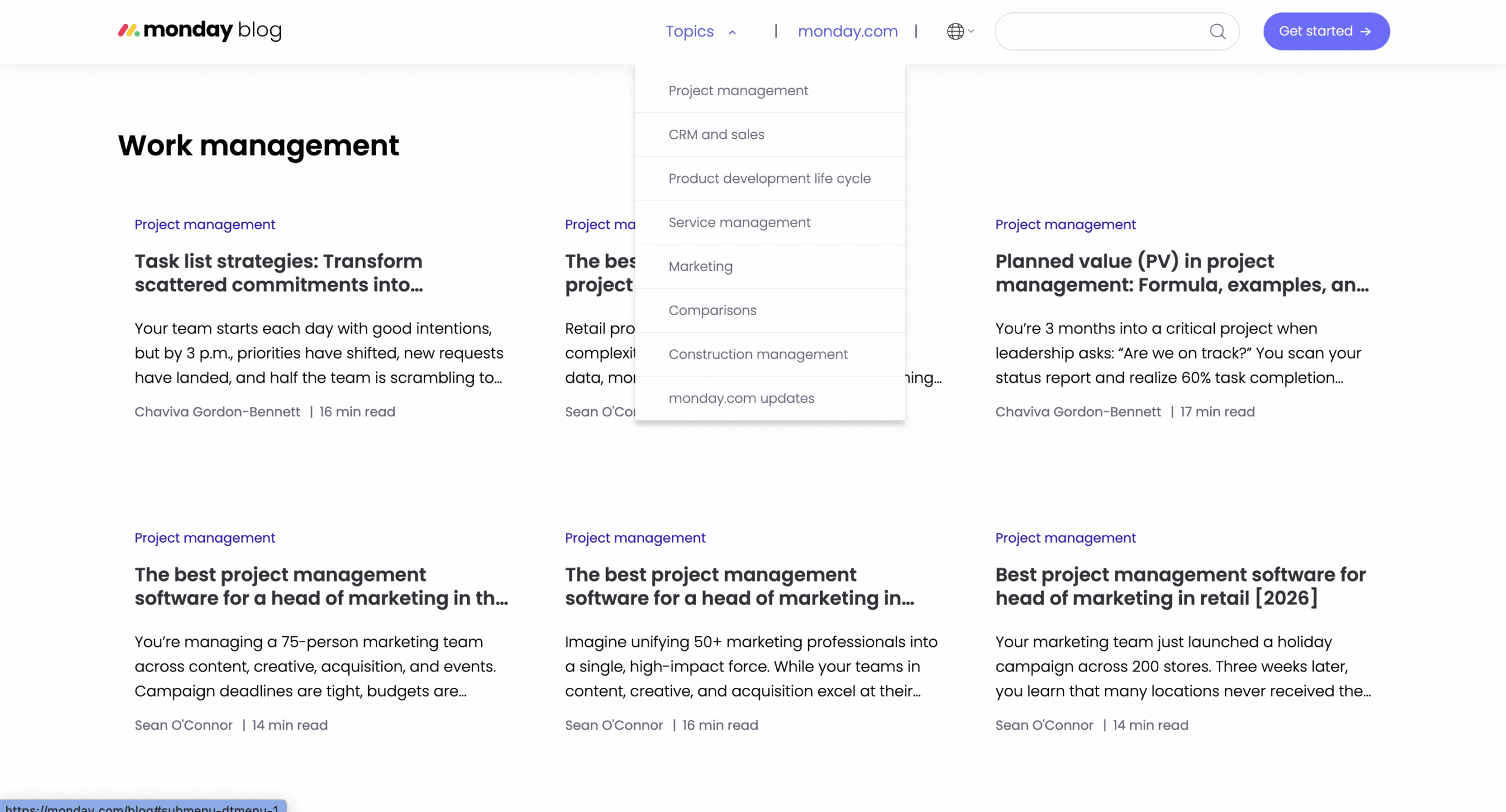
If you want an example of a SaaS that has mastered SEO, meet Monday.com. Their SEO strategy is that they will break the big topic of “project management” down into several smaller sub-topics, like:
- Work management
- CRM
- Sales management
- Product development
- Service management
Rather than trying to cover everything at once, Monday.com commits to one topic at a time. For each subtopic, they publish article after article to cover every angle as thoroughly as possible. Only after fully owning one topic do they move on to the next—repeating the process until the entire space is comprehensively covered.
By flooding the web with tightly connected content around the same themes, Monday.com signals strong topical authority to Google. And since Google’s goal is to return the best possible answer to a user’s query, a site that can address nearly every question related to project management naturally earns top rankings.
The payoff is clear. In 2023, Monday.com generated around 1.5 million monthly organic visits. Even today, they continue to attract roughly 800–900K visits per month, largely driven by their relentless focus on topical authority.

Here are three key SEO takeaways for software companies:
- You content strategy should be centered around topic clusters: Don’t chase individual keywords in isolation. Break your core product category into clear subtopics and systematically cover each one in depth. Search engines reward sites that demonstrate comprehensive expertise over time.
- Let audience pain points guide keyword strategy: Real SEO wins come from understanding how your users think, talk, and search. Community insights, support threads, and product feedback should directly inform your keyword research and content priorities.
- Go deep before going wide: Focus on owning one topic completely before expanding to the next. Publishing many interconnected pieces around a single theme compounds authority faster than spreading efforts thin across unrelated topics.
Step 3. Research Bottom-of-the-Funnel Keywords
Because establishing topical authority requires significant effort, it’s important to be selective about which topics you invest in.
I strongly recommend starting at the BOFU stage—Bottom of the Funnel.
BOFU keywords are the terms people search when they’re close to making a purchase decision. They already understand their problem, have done their research, and are now comparing specific solutions. These topics are often easier to win and represent true low-hanging fruit.
BOFU keywords typically look like this:
- [vendor] alternatives
- [solution] vs [solution]
- best [category] platforms for [industry/role]
- [vendor] pricing
- [vendor] reviews
- top [industry] providers
- [solution] for [specific workflow or department]
- [solution] ROI
- [service provider] case studies in [industry]
I usually group BOFU keywords into four categories, ordered by priority:
| Types of Keywords | What It Means | Why It Works | How to Find Them |
|---|---|---|---|
| Competitor Keywords | Target competitors directly to position your product as the better option. Common formulas are “X alternatives,” “X vs Y,” and “X vs [your tool].” |
People searching for alternatives of your competitors are already solution-aware and close to buying. | Simply list your competitors (that you can reasonably compete with) based on the formulas. Then use keyword tools to find comparison keywords with traffic potential. |
| Listicle Keywords | Keywords that compile multiple tools or solutions in your niche. Examples: Top 10 best tools for [your niche]. |
They capture mid-funnel users who are actively researching options and looking for the best fit. This is perfect for introducing your tool into their consideration set. | Brainstorm all of the ways your tool can be described. What use case does it have? What verticals can it serve? |
| Pain Point Keywords | These keywords address specific problems your audience faces. Examples: “how to do X,” “how to fix Y,” or “why X happens.” |
They attract users with high intent to solve a specific issue, giving you the chance to position your product as the direct solution. | Use forums like Reddit or niche communities to find pain-point questions. |
| Lead Magnet Keywords | Focus on actionable templates, guides, and strategy resources that help users create or improve something right away — like content calendars, social templates, or campaign frameworks. | These attract marketers searching for ready-to-use tools or step-by-step resources. They’re high-value, practical assets that position your brand as both useful and credible. | Look for keywords tied to templates, frameworks, and strategies — e.g., “social media calendar template,” “Instagram templates,” “content pillars,” “image size guide,” or “marketing strategy.” These are the kinds of lead magnets Buffer ranks for. |
For example, in Perceptric case, one of our BOFU keywords is “Top 7 SEO Agencies For Technology Companies“:

We ranked for this keyword relatively easily, and since people who search for this phrase are in research mode for their SEO agency, they immediately put Perceptric on their list.
Notice how we didn’t choose to rank as just another “SEO agency”, but rather an “SEO agency for Technology companies”. That’s because it’s our zone of genius. It’s what we’re best at, and what we can confidently say to our clients that we will drive them results.
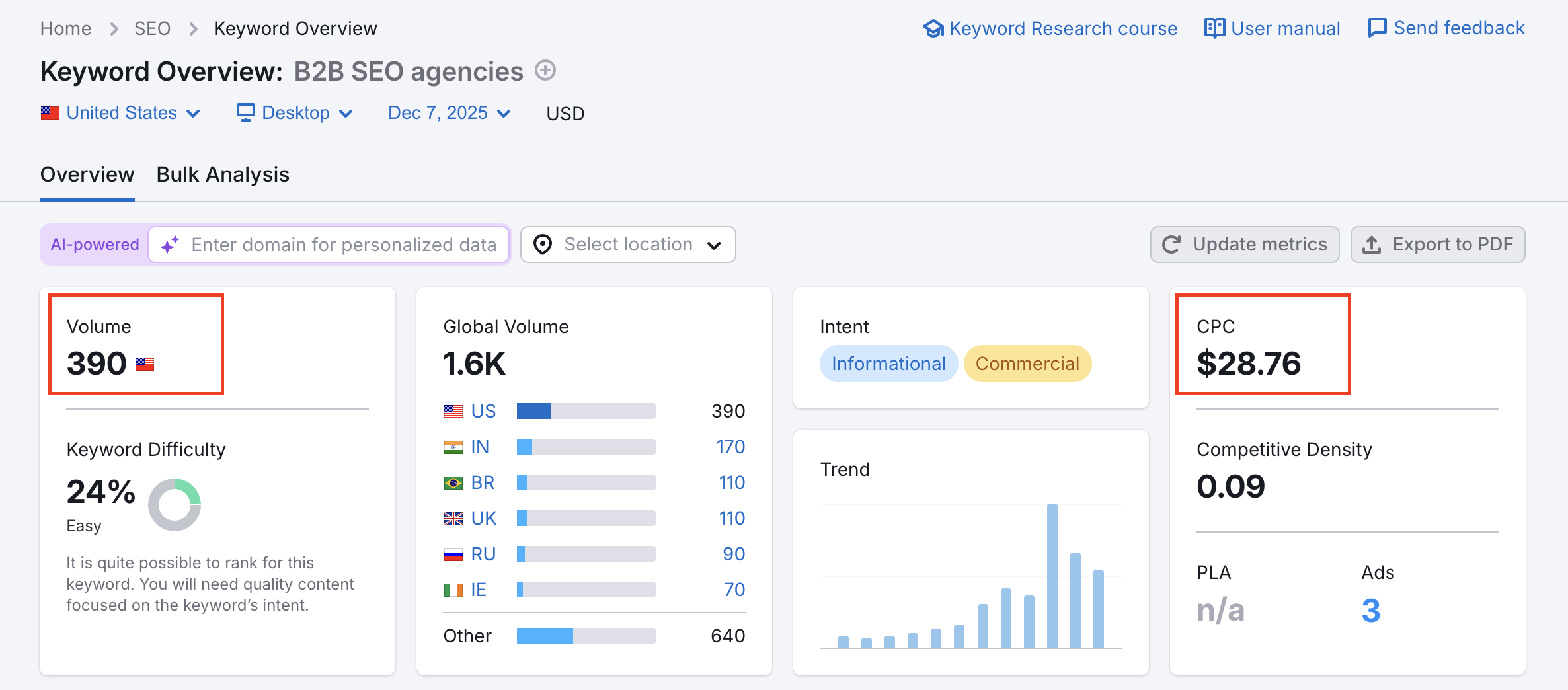
Don’t judge a keyword by its volume. Even if it has low volume, people may still be vying for it in the search ads. For example, this keyword “B2B SEO agencies” only has a volume of 390 in the US, but it has a CPC of $28.76, which is kinda insane. Imagine ranking on the top position for this keyword and bringing in around 200 clicks per month. That’s $5752 in ad spend you saved!
So yes, you totally should rank for BOFU keywords of your software. If you have a keyword research tool like Ahrefs or SEMRush, here are the steps you can do:
- Choose a competitor domain
- Plug it into Ahrefs and SEMRush to reverse-engineer what keywords they are ranking for. Or you can also pick a seed keyword and run the tool to generate phrases that match that seed.
- Pick out the most relevant low-hanging fruits to target (decent volume, low difficulty)
- Rinse and repeat
For example, I’ll demonstrate to you how to do keyword research for a startup called Social Rails, a software to automate content scheduling:
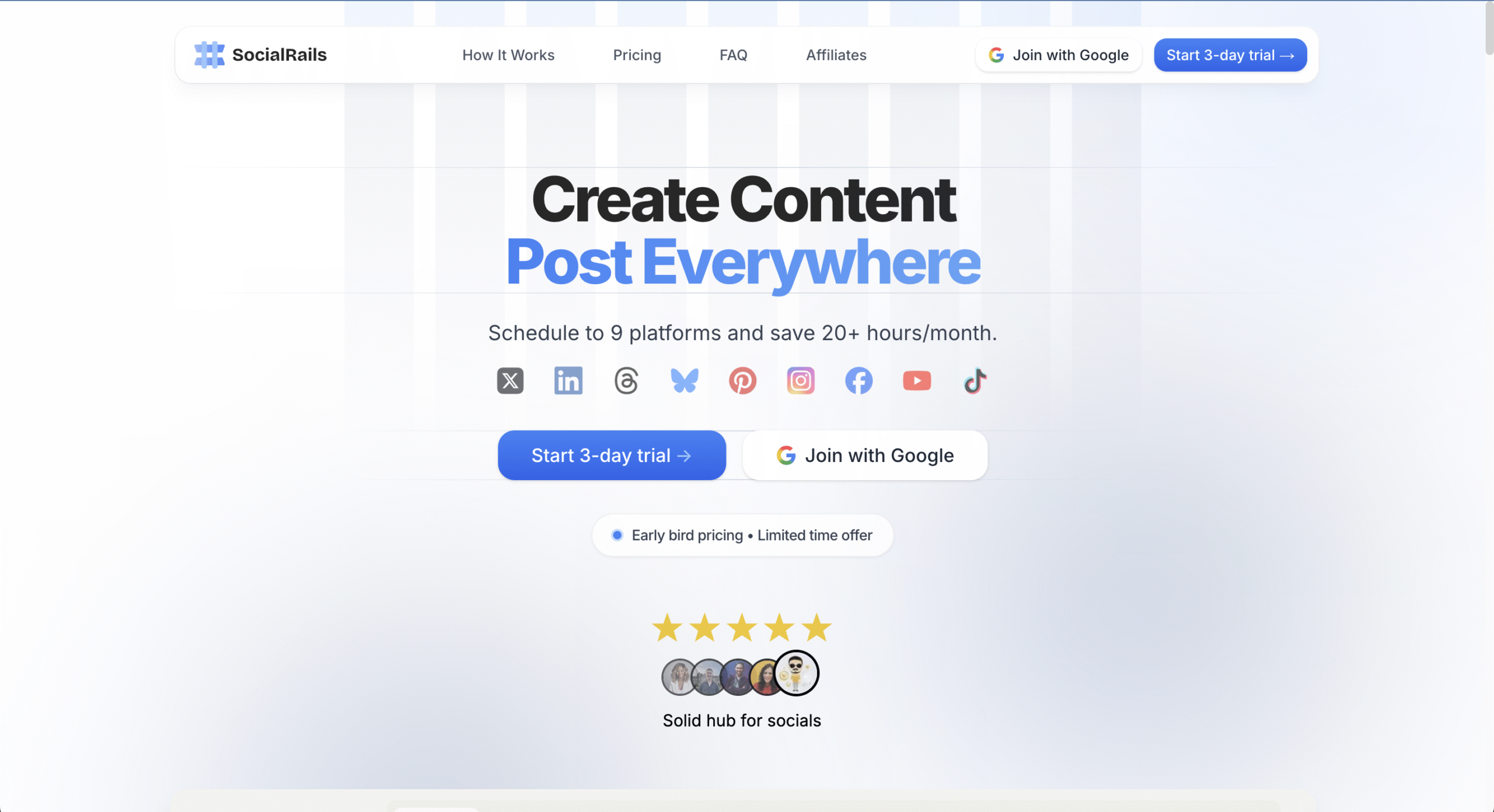
Immediately I come up with 4 major competitors:
- Hootsuite
- Buffer
- Sprout Social
- Social Pilot
- Postiz
Now I have a bunch of competitor keywords to go after:
| Tool Alternatives | Tool Comparisons (X vs Y) |
|---|---|
|
Hootsuite alternatives Buffer alternatives Sprout Social alternatives SocialPilot alternatives Postiz alternatives |
Hootsuite vs Buffer Hootsuite vs Sprout Social Hootsuite vs SocialPilot Hootsuite vs Postiz Buffer vs Sprout Social Buffer vs Social Pilot Buffer vs Postiz |
Simply write a very honest and straightforward article to compare these tools, and elegantly mention your tool as the contender with them. The tricky part is to make your review so detailed that people actually walk away having an informed opinion of the tools you compare.
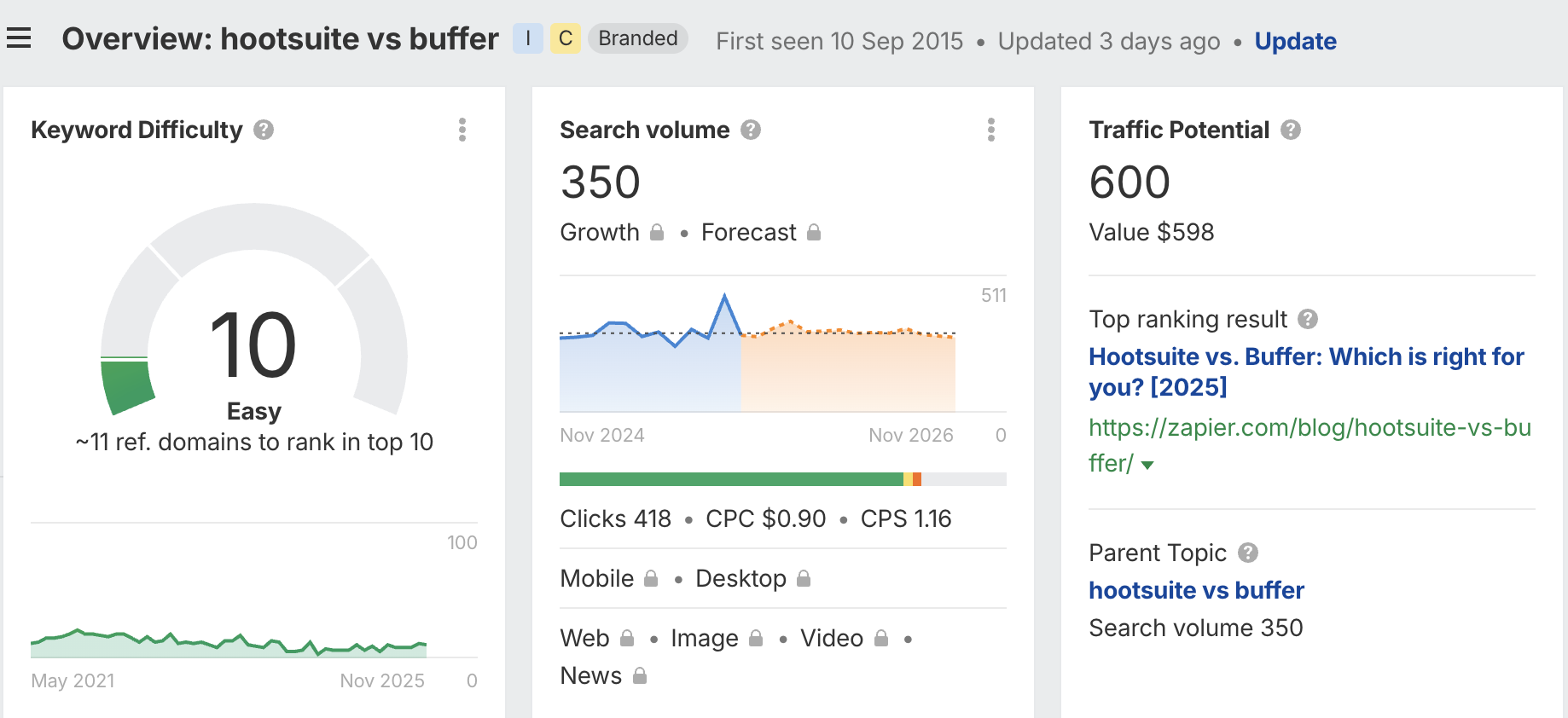
I ran a quick check of the “Hootsuite vs Buffer” keyword on Ahrefs, which shows that it actually has decent volume for a low Keyword Difficulty. Note that I only take Keyword Difficulty metric with a grain of salt. I rely more on the Search volume metric to identify the popularity of the term:
Next, let’s move to Listicle keywords. My tactic is to go to Ahrefs (again), plug a competitor into their Site Explorer feature, and filter out all keywords that they are ranking for that contain the word “top/best” AND “tools”.
It immediately tells us the positioning of Buffer in Google’s eyes:
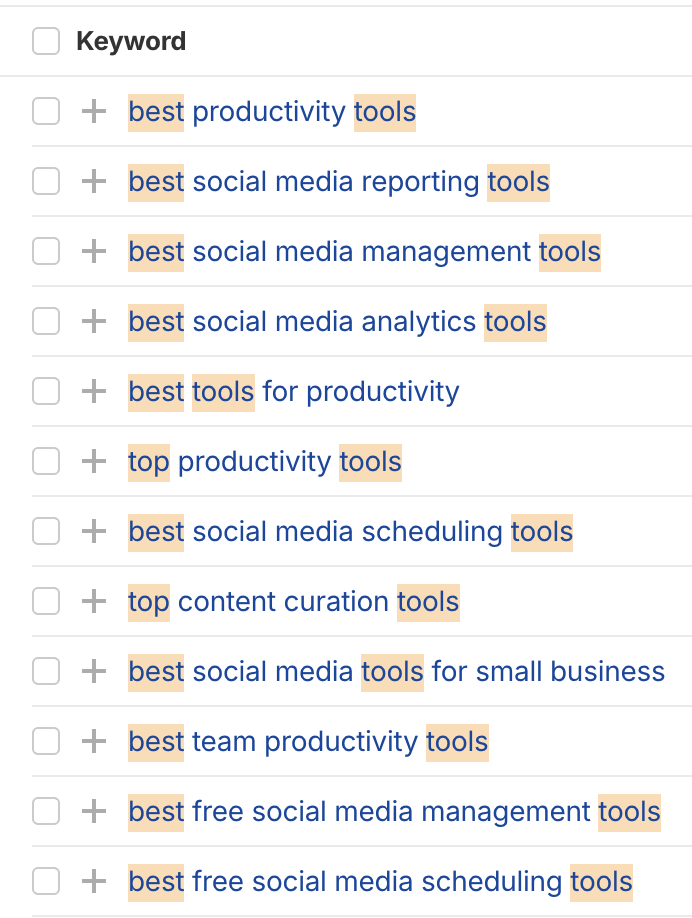
I rinse and repeat the process until I arrive at a list of keywords that I can reasonably create content to compete with.
For Pain Point keywords and Lead Magnet keywords, I also follow the same process: find a competitor, extract their keywords, filter down and shortlist the ones I want. Here is the list I got:
- Pain point keywords: how to get more followers on Facebook, how to increase Instagram followers, how to earn money from Instagram (target the influencer demographic)
- Lead magnet keywords: social media calendar template, instagram templates, content pillars for social media, instagram stories templates
Step 4. Create good content
Here’s a truth: Google isn’t built to rank “high-quality” content. It’s built to rank content that has high utility.
That’s why sometimes content that feels generic and “boring” turns out to get ranked higher than well-written content with tons of images and videos and insights. Google doesn’t know if those images are good for the users. Sometimes users don’t need those images. Sometimes users don’t need those videos. They just want to find a quick answer and go on with their day. They don’t have time to watch a 1-hour video.
That’s why “good” content in the SEO sense is more like “try to give users the answer they need” rather than rambling about things.
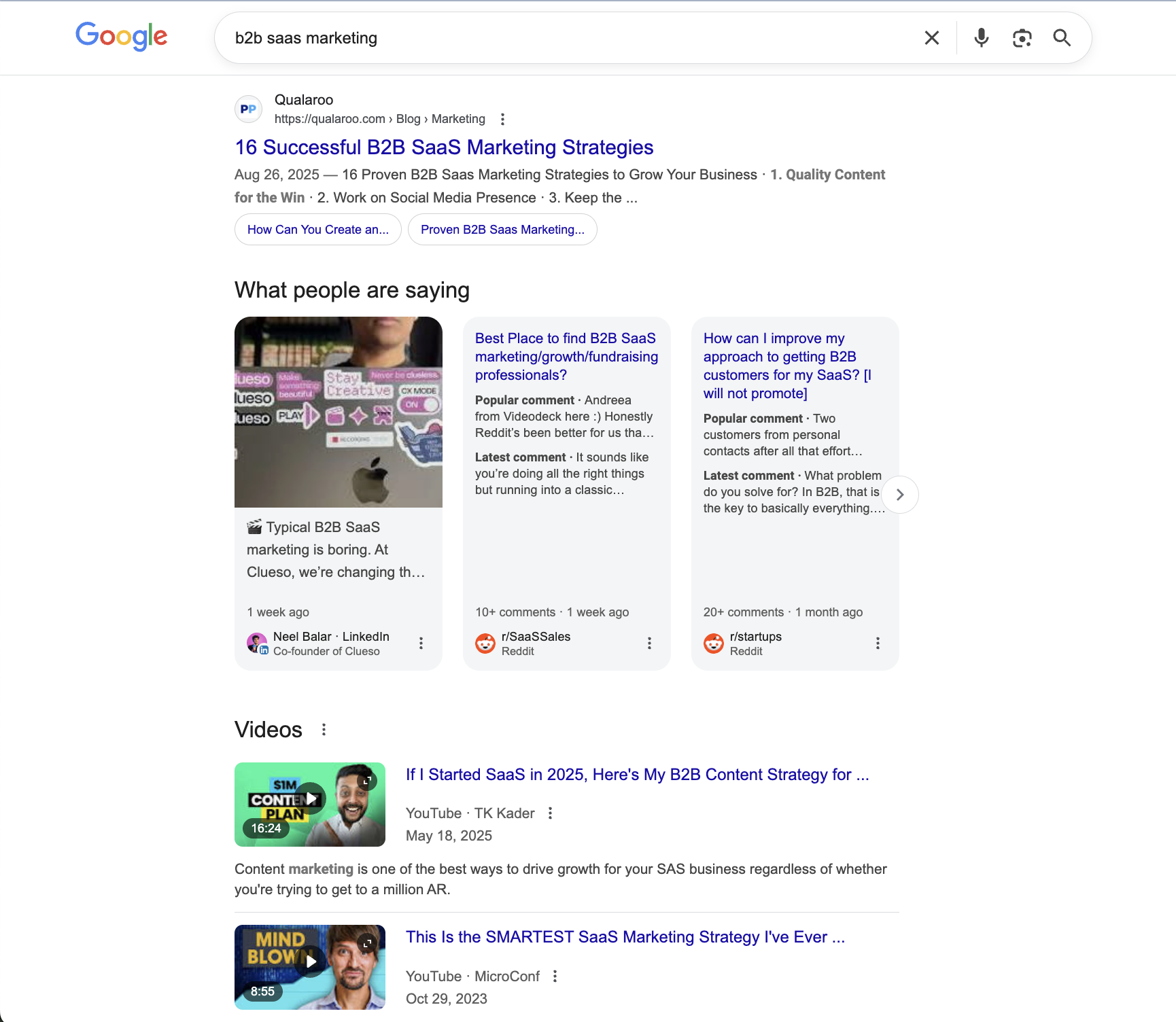
So here are the steps I do to know what Google wants from the search results:
First, I adjust Google to show results for the region I want to target by going to google.com/preferences, choose Other Settings, choose Language and region, then choose the ones I want.
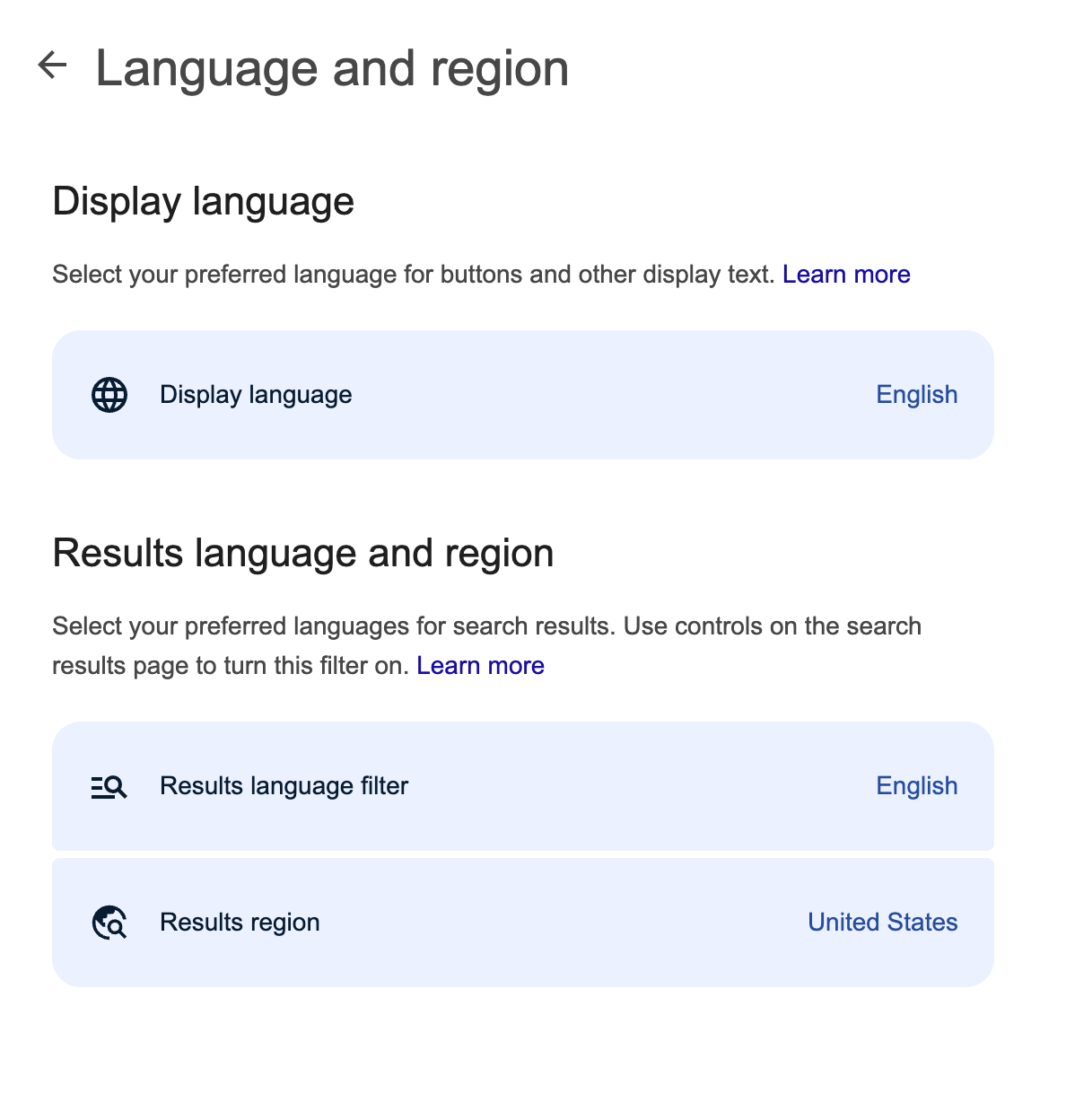
After that, I search the keyword to surface the top ranking results to see:
- The formats that Google favors
- The depth of top articles (and where I can beat them)
- Reddit threads (to see what people actually think about the topic)
Once done, I start writing, like a real wordsmith, with all of the SEO content best practices:
- Match my content to what users actually want to find.
- Focus on only one main keyword and include related supporting keywords naturally.
- Write catchy, benefit-driven titles and meta descriptions to boost click-through rate.
- Use proper heading hierarchy (H1, H2, H3) for structure and scannability.
- I always keep my writing clear, concise, and engaging with short paragraphs, bullet points, and of course, tons of visuals. Screenshots are great because they are much easier to produce compared to graphics, and they deliver more practical information compared to visualized images.
- I place keywords naturally in key spots: intro, subheadings, and conclusion. This has always been done for decades, because it absolutely works!
- I then add internal links to related pages and external links to credible sources. I always link to reputable sites in my niche rather than generic informational sites like Wikipedia. Sometimes it helps that you go back to old pages to link back to your new pages too.
- Always write for humans first, then optimize for search engines.
At the same time, I also incorporate my personal anecdote throughout my entire article. An article should always drive home the idea that my brand (and my targeted topical authority) stands for. A little bit of personal anecdote doesn’t hurt SEO. Quite the opposite, it even boosts SEO up.
For example, here’s an article from Rainforest QA about 5 essential QA testing best practices. If they write it in the traditional SEO way, they would have written the title as a boring “5 essential QA testing best practices”.
But they chose to write about it as “The Rainforest Method”:
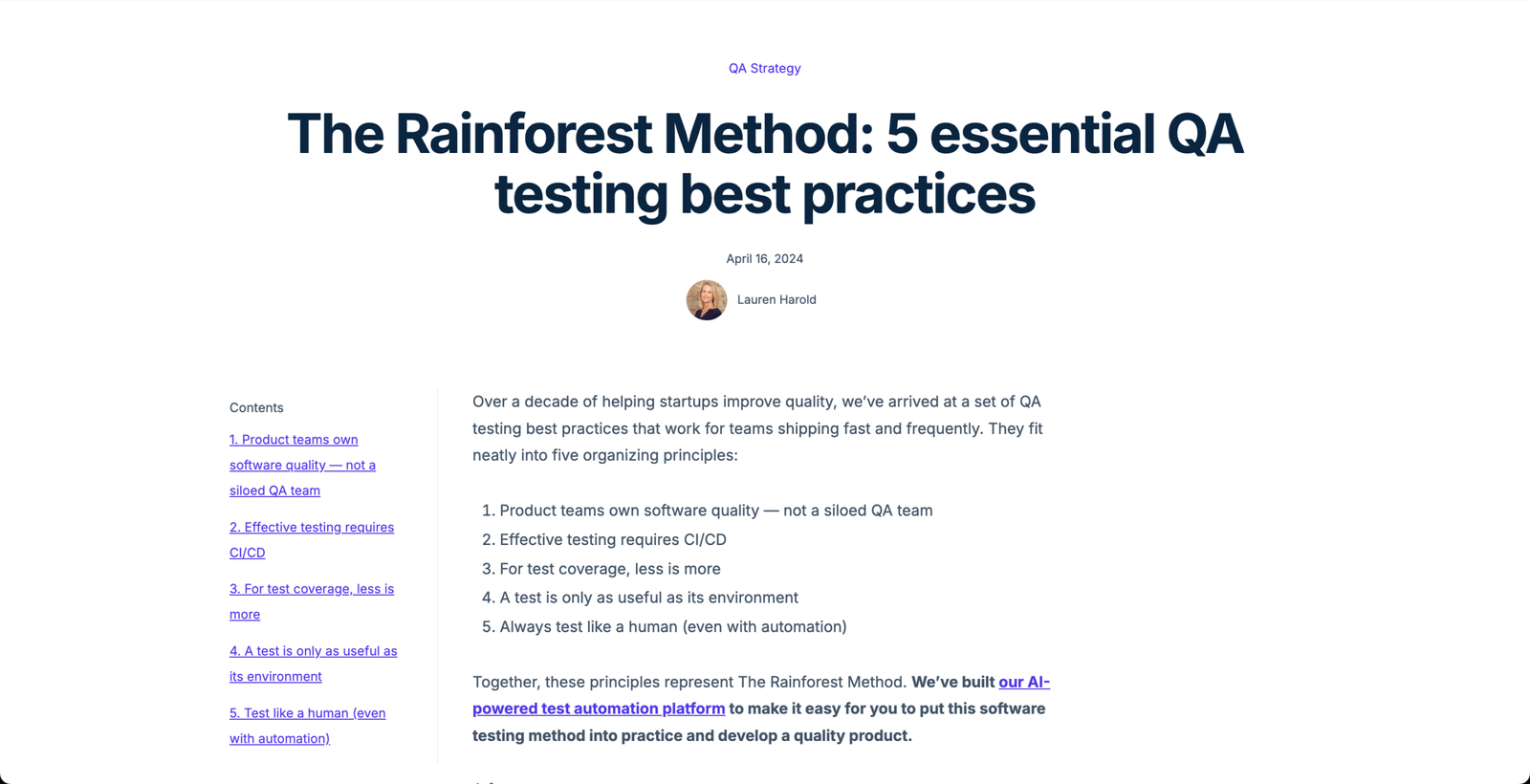
This accomplishes three goals:
- Traditional SEO by optimizing for a target keyword
- Authority building by showcasing methods rooted in real experience
- Engagement by offering original, distinctive content
Here are a few principles I use to make a blog post feel like true thought leadership:
- It should come from people who’ve actually been in the trenches. I hold Perceptric’s blog and our clients’ blogs to this same standard. Expert-led content builds the kind of trust that pure SEO content can never do.
- It should take a clear stance. Even in a basic “what is” article, you need a point of view. Purely neutral explanations rarely help readers decide or take action. An opinion creates hierarchy (“this matters, that doesn’t”) makes the content more memorable.
- It should be written at least 80% by a human. I’ve tested ChatGPT extensively, and while it can approximate human tone, it still lacks the spontaneity and lived context readers connect with.
- It should be data-driven. Statistics strengthen your arguments and increase the likelihood of earning backlinks when others reference your work. For readers, charts and visuals also make the content more engaging and easier to digest.
Step 5. Do on-page SEO for your Solution pages
These are the specialized landing pages that position your product as the ideal answer to a specific use case. You can call them Solution pages, Product pages, Service pages, or whatever. Generally they all fall into 4 major categories:
- Industry (e.g., “Solutions for Ecom/Legal/Fintech/B2B/B2C”)
- Role (e.g., “Solutions for Marketing/Sales”)
- Problem (e.g., “Automate for Web/API”)
- Use Case (e.g., “Instantly collect reviews”)
Why are Solution pages important for B2B SEO? From my experience ranking 20+ B2B sites, I realize that Google knows your market positioning by looking at your Solution pages. Like I said earlier, you want all of your pages on your website to have a unified theme to achieve strong topical authority.
The way you structure your product pages tells Google a lot about what pain points you solve, and they’ll decide whether to rank you for the generic terms or the niche terms.
Step 6. Link building
Link building is honestly the most boring and time-consuming part of SEO, but that’s what drives you SEO forward.
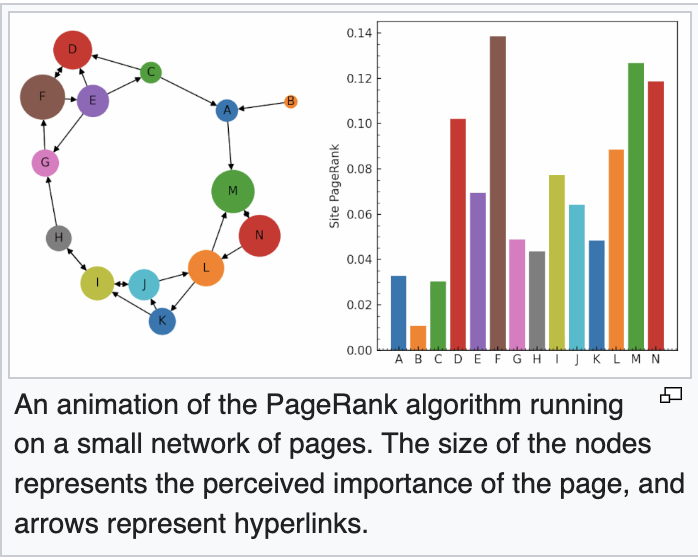
Remember, the core technology behind Google is PageRank, which works “by counting the number and quality of links to a page to determine a rough estimate of how important the website is”. The underlying assumption is that more important websites are likely to receive more links from other websites.
Here’s the graph explaining the mechanism of PageRank. If you want to get all nerdy and technical, check out the Wikipedia page about PageRank.
Google highly recommends that you let links build naturally. However, you can always invest in some link building tactics for the more competitive keywords.
Here are some link building tactics that I find more rewarding:
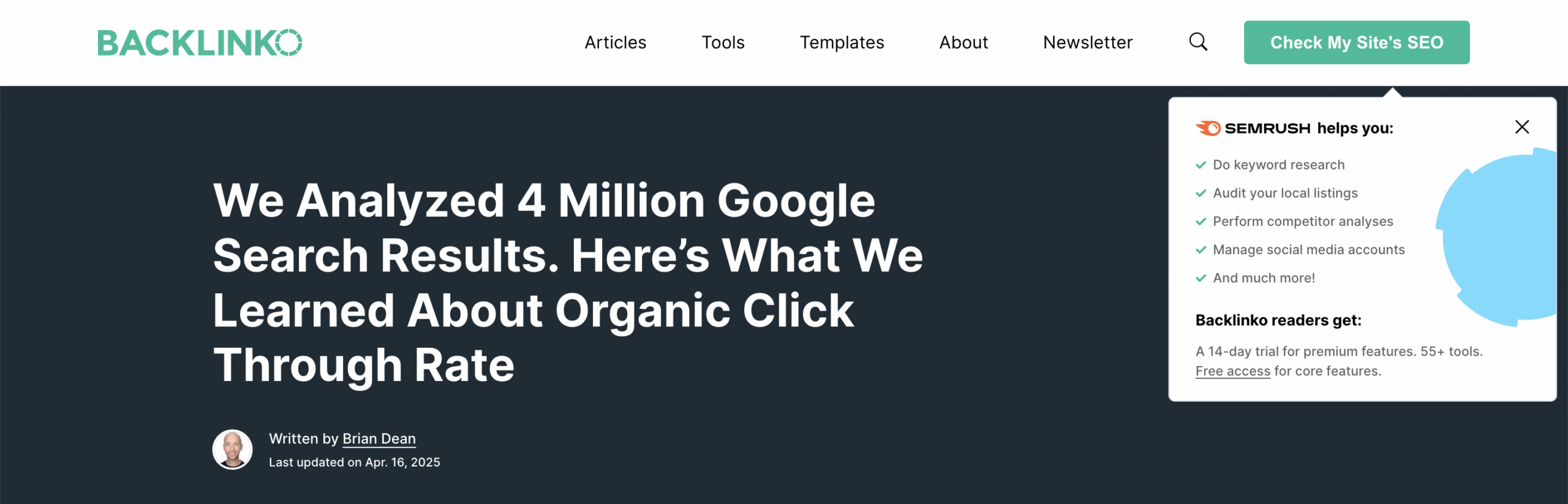
1. Write a data-rich article that you can share on social media. Journalists and bloggers love citing data sources especially if you visualize it well. This is a tactic promoted by Brian Dean from Backlinko, who has had tons of success with it.
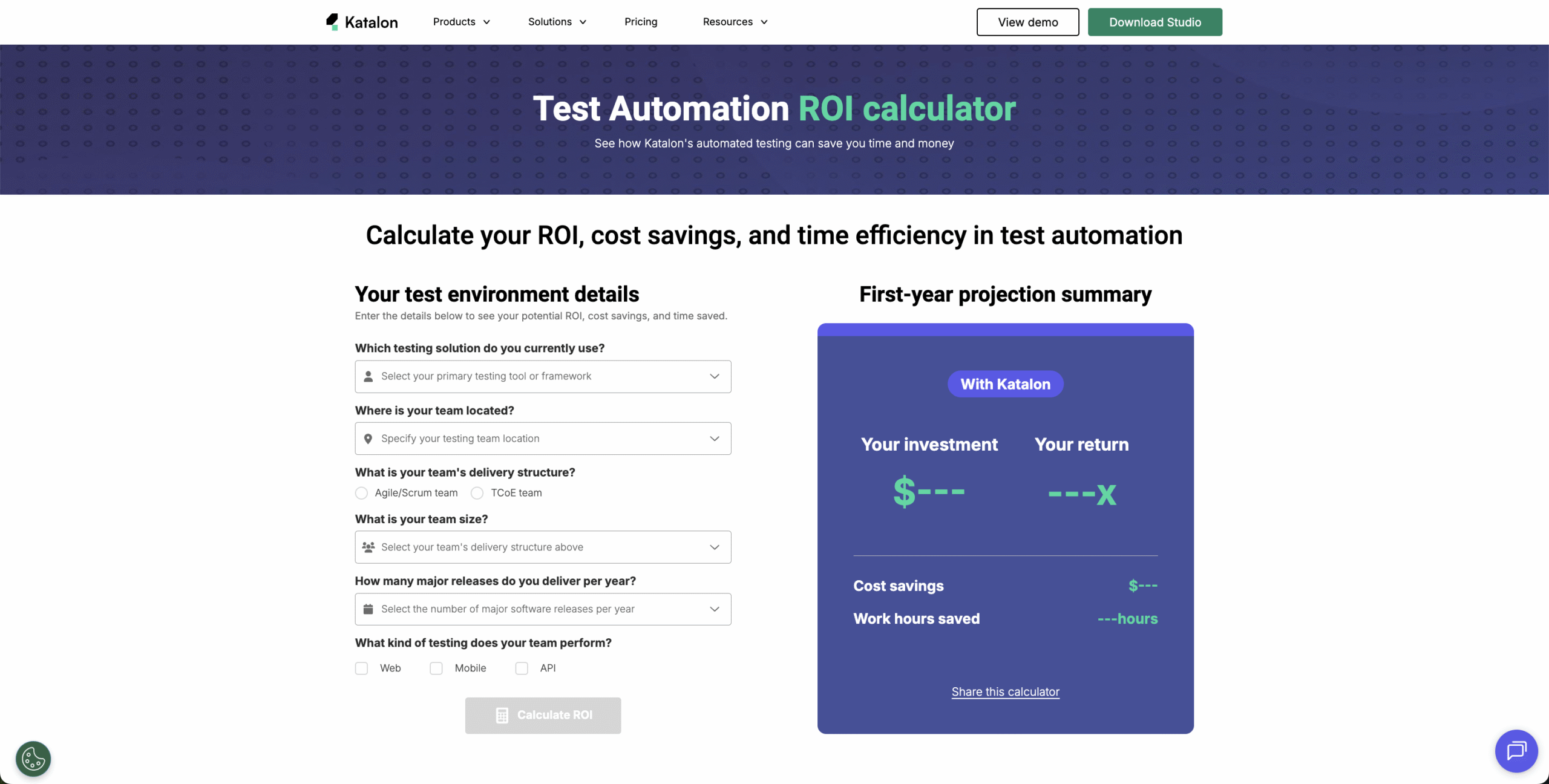
2. You can build simple tools like a “ROI Calculator” or “Automation Cost Estimator” and you can actually attract backlinks from blogs recommending resources, like this ROI Calculator from Katalon.
3. You can also do guest post, but instead of reaching out to “guest post sites”, who probably receive dozens of guest post request emails on a daily basis that they can’t handle, it’s better to reach out directly to founders and entrepreneurs in your niche, offering to contribute an article for them (free of charge).
This group is more than willing to have someone help them grow their visibility, and they are even happier if you can drive real business for them.
Conclusion
At the end of the day, I think the foundational rule of SEO applies for software companies:
- Center the content you publish on your website around one or several core topics. The more tightly connected your articles, the better.
- Your content should be written purely for human readers. Only your meta titles and headings should be optimized for the keyword you want to target. The rest of the article should be written with a lot of the human touch. You want to connect with readers rather than the search engine.
- In many more years to come, PageRank is still the single best ranking system we can possibly have, so it’s crucial that you also invest into link building activities to give your content more “authority” in Google’s eyes.
📊 Want experts to do SEO for your SaaS? Here’s a list of the best SaaS SEO agencies