
Doing SEO for B2B companies requires a very different playbook.
It’s much less about flashy campaigns and more about earning trust.
And it’s getting increasingly harder in a world where B2B buying process looks like this:
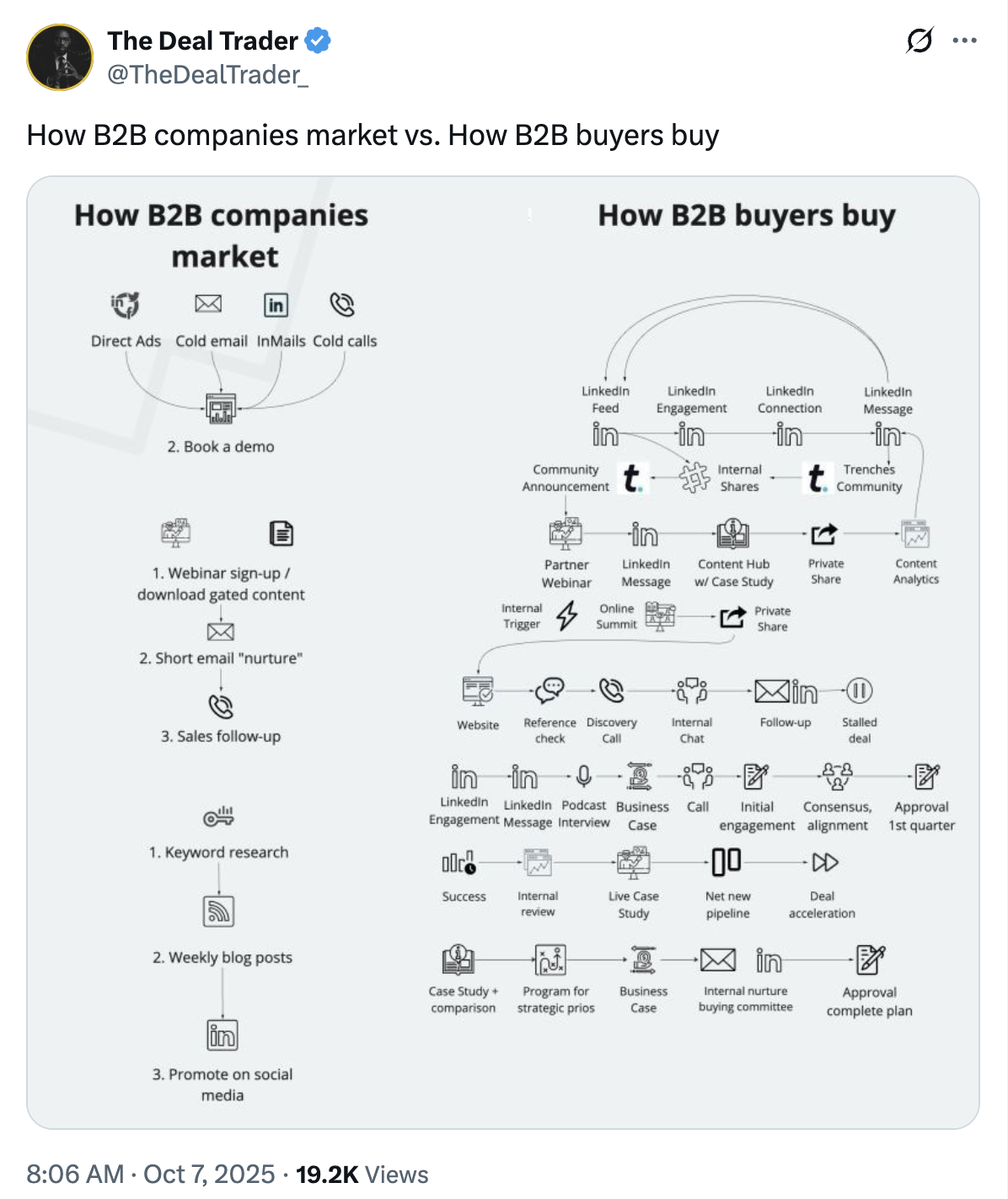
B2B buying decisions almost never happen in isolation. Most deals run through a layered buying committee. Each stakeholder brings their own lens and their own definition of “value.”
That’s why SEO in the B2B deserves a specialized approach. And in this guide, I’ll share exactly how those dynamics work and what it means for your search strategy.
Here’s what I’ll walk you through:
- What makes SEO for B2B uniquely challenging (and more interesting)
- How the core principles stay familiar, but the execution shifts dramatically
- A full walkthrough of the SEO process tailored for complex B2B sales cycles
- Smart keyword research frameworks that map to multi-stakeholder buyer journeys
- Best practices for content that resonates with B2B audiences
- And why real results here require going well beyond SEO alone
There’s a lot to unpack, so dive in or jump to the sections you care about. That said, I’d strongly recommend reading the whole thing front to back.
Why B2B SEO is different?
- Surface-level writing won’t earn trust in B2B. Your audience deals with real complexity every day. If your content reads like it was produced “for SEO,” they’ll bounce immediately. To hold their attention, your work needs genuine depth.
- B2B content also needs real subject-matter credibility. Depending on your product or service, your SEO content needs to break down highly specialized concepts. Without knowledge, it’s impossible to do that.
- Then there’s the long, multi-stakeholder sales cycle. Many B2B deals take months to close, and for high-value solutions, it’s common for timelines to stretch well past a quarter. SEO has to fuel that slow, multi-touch decision-making path with consistent value, not one-and-done content.
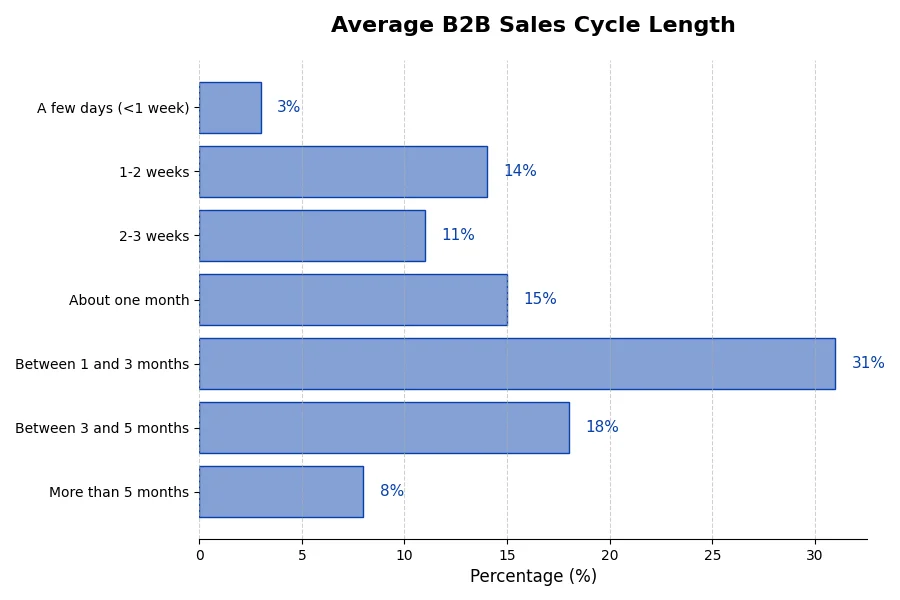
Is it worth investing in SEO for B2B companies?
Based on the data, it is definitely worth investing in SEO if you’re a B2B company:
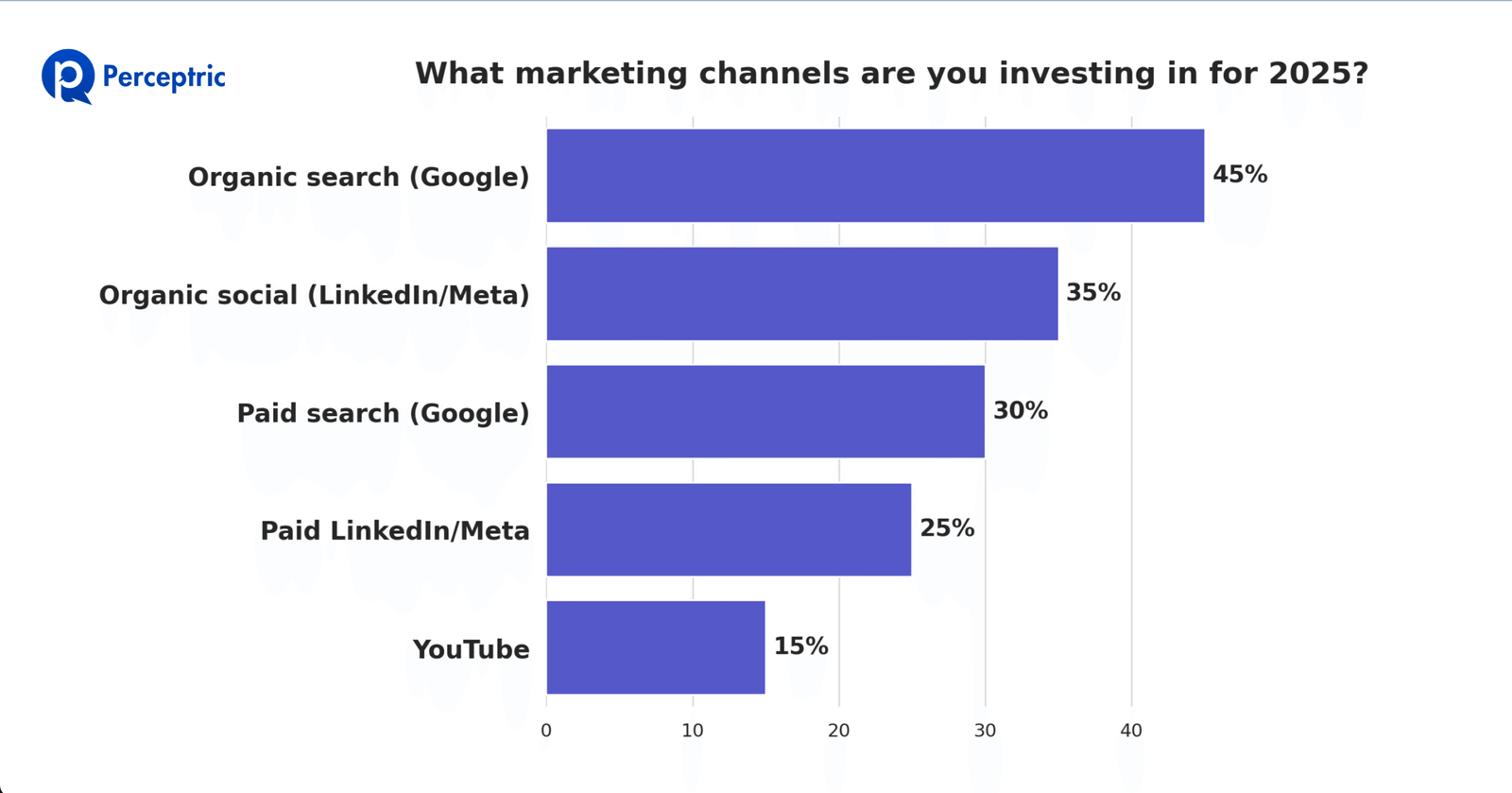
The benefits are pretty easy to see:
1. B2B SEO goes hand-in-hand with content marketing
B2B SEO helps you show up on Google, but that’s only half the equation.
What users see after they click matters just as much. That’s where content marketing comes in to guide buyers and build trust so that they have the much-needed clarity to understand your product.
This is especially important in B2B tech, where buyers are often deeply technical. If your content actually helps them think better and make smarter decisions, they’ll return and eventually convert when the timing makes sense.
2. B2B SEO is a long-term game
It’s common advice, but I think it needs repeating: SEO is a long-term game. It won’t drive a thousand signups overnight, but it will quietly compound behind the scenes, month over month.
This is a perfect chart to demonstrate SEO’s ROI vs SEO effort over time:
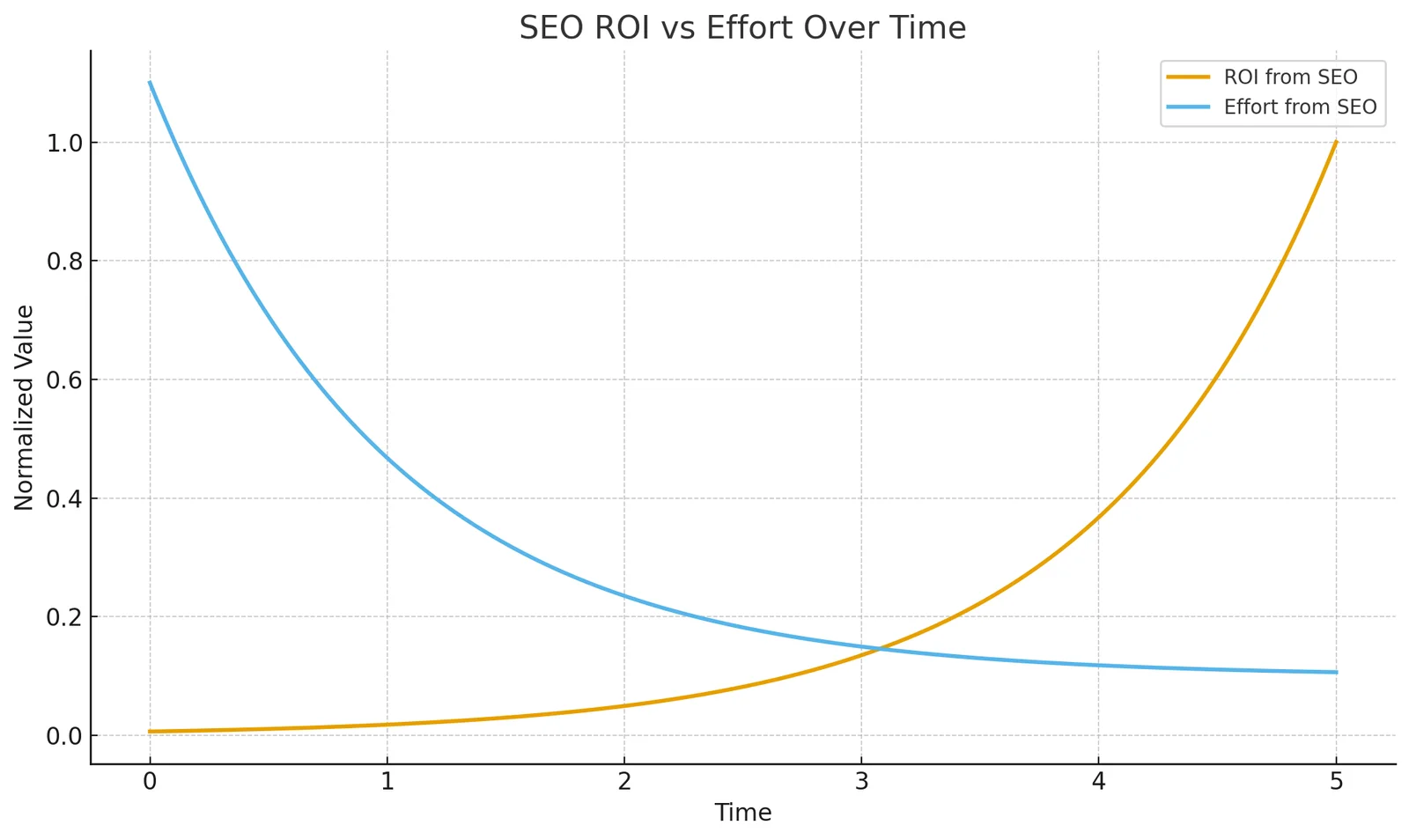
When your site is new and has little authority, fast traction just isn’t realistic. It takes months (even years) to build a content library that compounds into sustained momentum. The problem is that many teams expect a quick payoff. And yes, that can happen if Google already trusts your domain. In that case, every new piece of content has a fair shot at ranking.
But for smaller or newer players, there’s no shortcut. With low ranking power and no existing audience, results take time. Most businesses quit before the flywheel kicks in (right when things are finally about to accelerate).
Explore further: 20 Best B2B SEO Agencies To Drive More Pipeline and Revenue
How to do SEO for B2B companies (6 steps)
Here are the 6 steps I use to grow SEO of many B2B tech brands I’ve worked with:
Let’s dive in!
Step 1. Research what your Audience is talking about
One problem that I find many SEO programs run into is that they don’t start from the Audience.
Without proper audience research, we run the risk of writing content for the wrong kind of people. This happens more often than you’d think.
It’s better to pitch to 10 people with super strong intent than 100,000 people who don’t even care about what you’re selling.
In B2B, defining the audience persona should start from the pain points:
- What is actively breaking in their day-to-day work?
- What problems have budget attached to them?
- What issues make them look bad internally if not fixed?
For many B2B SaaS companies, the pain points can look like this:
- Missed revenue targets
- Pipeline inefficiency
- Security/compliance risk
- Tool sprawl and rising costs
- Poor data visibility for decision-making
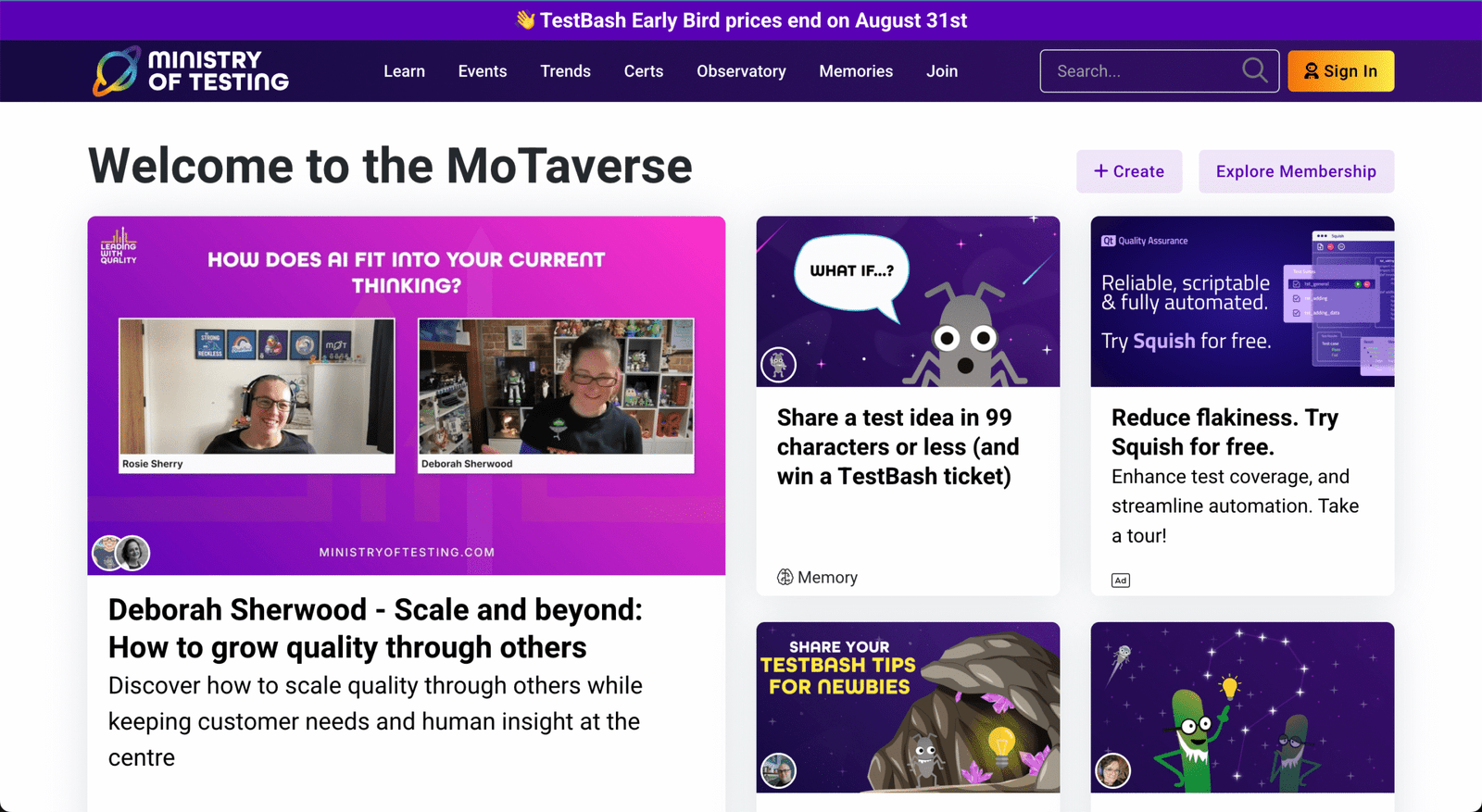
For instance, when I produced content in the software testing space for a B2B automation testing platform, I spent a lot of time in related communities like Ministry of Testing to collect insights and put myself in their position.
Thanks to that, I learned a lot about the pain points of my audience just by reading the forum threads. After that, I apply that knowledge to direct my SEO keyword research.
Step 2. Decide your Topical Authority
Now that you have understood what your audience wants, it’s time to decide on your Topical Authority.
Topical authority is a term used in the SEO community to describe how well a website is known as a subject matter expert in a given topic. Google, ChatGPT, and most search engines love to surface websites that have developed topical authority throughout the years.
In fact, topical authority is one of the most critical ranking factors that many SEO experts have been advocating for.
Here’s a simple example I have to demonstrate topical authority: let’s say you go on Google and search for “How to build a PC?”
In the first search result page, you saw two websites:
- A website called “PCStudio” which has a lot of guides on building PCs, from beginner-level to advanced
- A website called “TechCrunch” which is a startup and technology news site, but it happens to also have a guide on building PC.
We will all choose the former search result anytime. Google works in a similar fashion. When you query something, it wants to surface websites that cover the topic of that query most extensively and comprehensively.
Of course, Google has done the grunt work of analyzing and categorizing websites by their topics beforehand, so that when you query something it can pull from the database to return the search result to you more quickly.
Good topical authority is also the secret behind Monday.com’s insane growth:
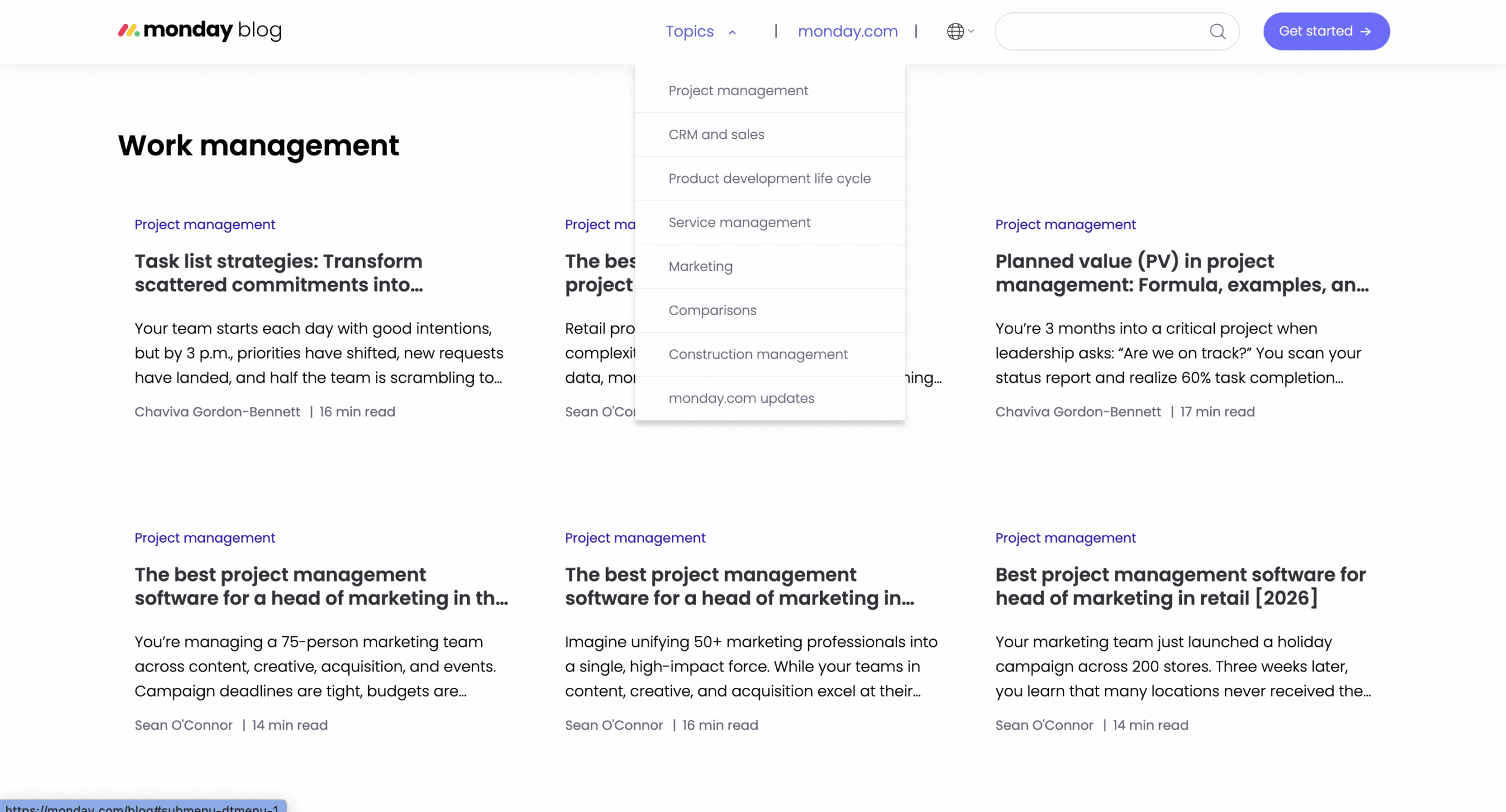
If you want an example of the website that has mastered B2B SEO, meet Monday.com. Their B2B SEO strategy is that they will break the big topic of “project management” down into several smaller sub-topics, like:
- Work management
- CRM
- Sales management
- Product development
- Service management
They then focus on only ONE single topic at a time and try to write articles after articles to cover every single aspect of that topic as exhaustively as possible. Once they have fully conquered one topic, they move to the next, and the next, until there’s nothing left to write about.
Since they literally flood the Internet with interconnected webpages of the same topic, Google assigns them a high level of topical authority.
Remember, Google’s goal is essentially to return the best search result for the user. If Monday.com can answer everything that the user possibly want to ask when it comes to project management, why not bring them to the highest ranking position?
And here’s Monday.com’s reward for consistently going after that one single topic to achieve authority in it: 1.5M in organic traffic every month in 2023. As of now, they still have around 800-900K monthly traffic.

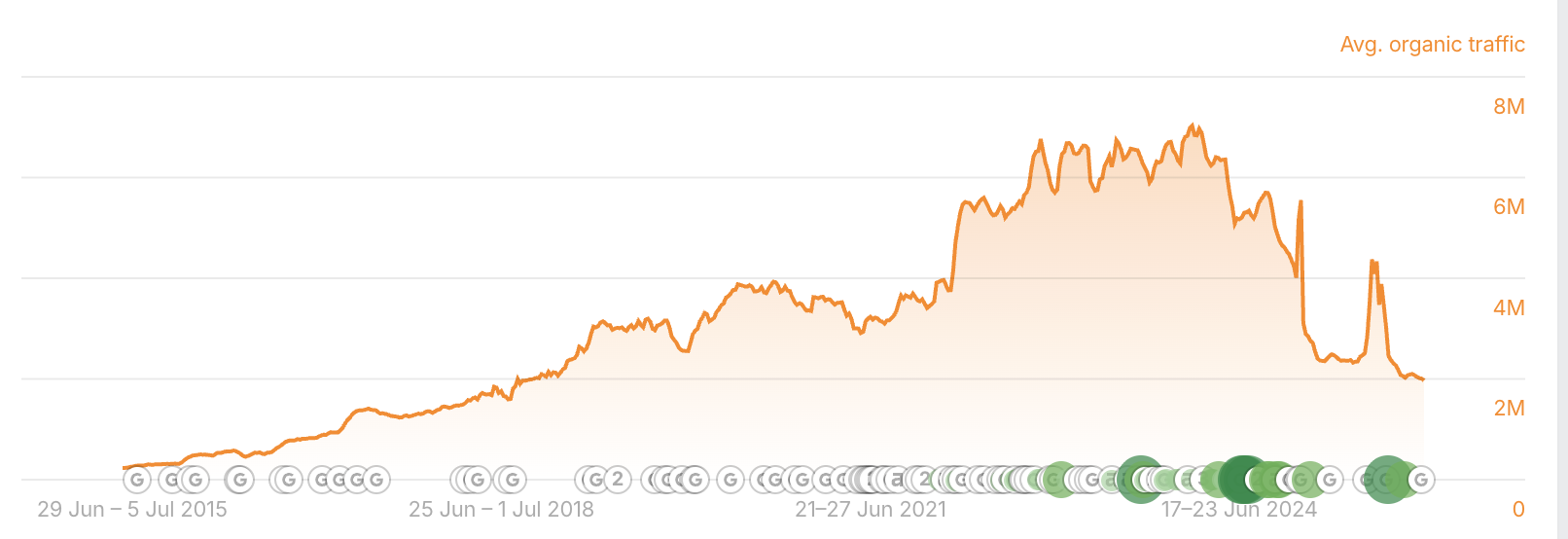
Another good example of a B2B website that has achieved tremendous success with SEO is HubSpot.
They have written so many authoritative articles covering the topic of inbound marketing that Google have to rank them in the highest position when it comes to any search queries in that space.
However, they made one critical mistake, and that is they over-extended themselves and tried to write content for topics that they aren’t REALLY experts in, such as “emojis” and “quotes”.
That led to the “collapse of HubSpot”, bringing their monthly organic traffic from around 5M-8M to 2M (as you can see in the huge drop around mid 2024):
Here are the key takeaways for you:
- Once you have decided what your product is really about, brainstorm the topic that you want to claim the rankings for.
- After that, brainstorm the keywords revolving around the topics. Remember: it’s necessary that you hyper-focus into that topic, covering every single aspect of it. The more topics you manage to cover and get clicks for, the more “topical footprint” you establish, and consequently your topical authority. As your topical authority rises, your rankings also follow suit.
If your content is well-optimized for a certain topic, Google will notice and classify your content into that topic. Google then ranks your content at low positions, maybe page 9 or page 10 (where nobody goes), since that’s where it feels safe to “test the waters” to see how users engage with your content.
If Google notices positive reactions, your content will gradually move up the ranking ladder, until it reaches the much-coveted first position.
Step 3. Research Bottom-of-the-Funnel Keywords
Since it takes so much effort to establish topical authority, it’s smart to cherry-pick the topics to invest in.
I always advocate for starting at BOFU stage. Bottom-of-the-Funnel.
BOFU keywords are the search terms people use when they’re very close to making a purchase decision. They already understand their problem, they’ve done their research, and now they’re evaluating specific solutions.
These are easier topics to go after. They are the low-hanging fruits.
BOFU keywords usually look like this:
- [vendor] alternatives
- [solution] vs [solution]
- best [category] platforms for [industry/role]
- [vendor] pricing
- [vendor] reviews
- top [industry] providers
- [solution] for [specific workflow or department]
- [solution] ROI
- [service provider] case studies in [industry]
I usually categorize my BOFU keywords into four groups, by order of priority:
| Types of Keywords | What It Means | Why It Works | How to Find Them |
|---|---|---|---|
| Competitor Keywords | Target competitors directly to position your product as the better option. Common formulas are “X alternatives,” “X vs Y,” and “X vs [your tool].” |
People searching for alternatives of your competitors are already solution-aware and close to buying. | Simply list your competitors (that you can reasonably compete with) based on the formulas. Then use keyword tools to find comparison keywords with traffic potential. |
| Listicle Keywords | Keywords that compile multiple tools or solutions in your niche. Examples: Top 10 best tools for [your niche]. |
They capture mid-funnel users who are actively researching options and looking for the best fit. This is perfect for introducing your tool into their consideration set. | Brainstorm all of the ways your tool can be described. What use case does it have? What verticals can it serve? |
| Pain Point Keywords | These keywords address specific problems your audience faces. Examples: “how to do X,” “how to fix Y,” or “why X happens.” |
They attract users with high intent to solve a specific issue, giving you the chance to position your product as the direct solution. | Use forums like Reddit or niche communities to find pain-point questions. |
| Lead Magnet Keywords | Focus on actionable templates, guides, and strategy resources that help users create or improve something right away — like content calendars, social templates, or campaign frameworks. | These attract marketers searching for ready-to-use tools or step-by-step resources. They’re high-value, practical assets that position your brand as both useful and credible. | Look for keywords tied to templates, frameworks, and strategies — e.g., “social media calendar template,” “Instagram templates,” “content pillars,” “image size guide,” or “marketing strategy.” These are the kinds of lead magnets Buffer ranks for. |
For example, in Perceptric case, one of our BOFU keywords is “Top 7 SEO Agencies For Technology Companies“:

We ranked for this keyword relatively easily, and since people who search for this phrase are in research mode for their SEO agency, they immediately put Perceptric on their list.
Notice how we didn’t choose to rank as just another “SEO agency”, but rather an “SEO agency for Technology companies”. That’s because it’s our zone of genius. It’s what we’re best at, and what we can confidently say to our clients that we will drive them results.
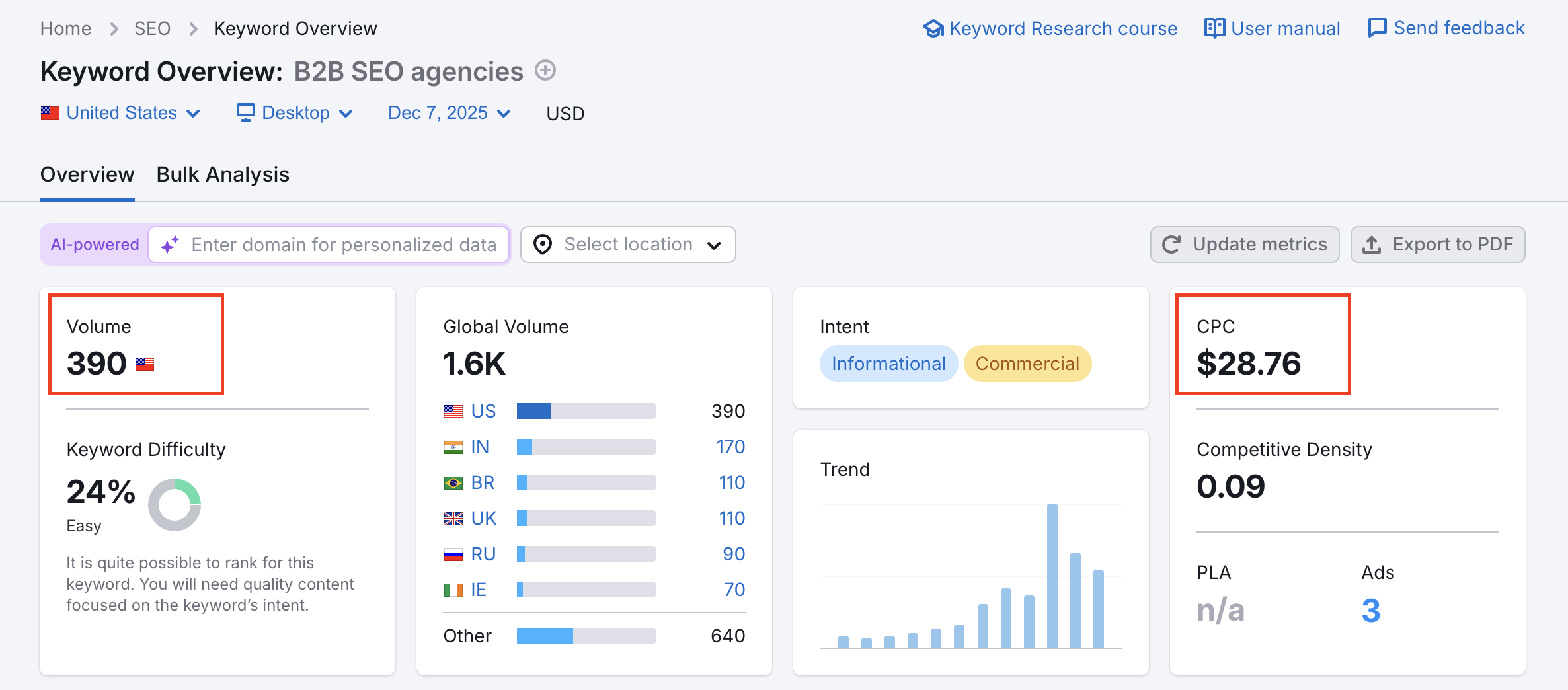
Don’t judge a keyword by its volume. Even if it has low volume, people may still be vying for it in the search ads. For example, this keyword “B2B SEO agencies” only has a volume of 390 in the US, but it has a CPC of $28.76, which is kinda insane. Imagine ranking on the top position for this keyword and bringing in around 200 clicks per month. That’s $5752 in ad spend you saved!
So yes, you totally should rank for BOFU keywords on your B2B site.
If you have a keyword research tool like Ahrefs or SEMRush, here are the steps you can do:
- Choose a competitor domain
- Plug it into Ahrefs and SEMRush to reverse-engineer what keywords they are ranking for. Or you can also pick a seed keyword and run the tool to generate phrases that match that seed.
- Pick out the most relevant low-hanging fruits to target (decent volume, low difficulty)
- Rinse and repeat
For example, I’ll demonstrate to you how to do keyword research for a startup called Social Rails, a tool to automate content scheduling:
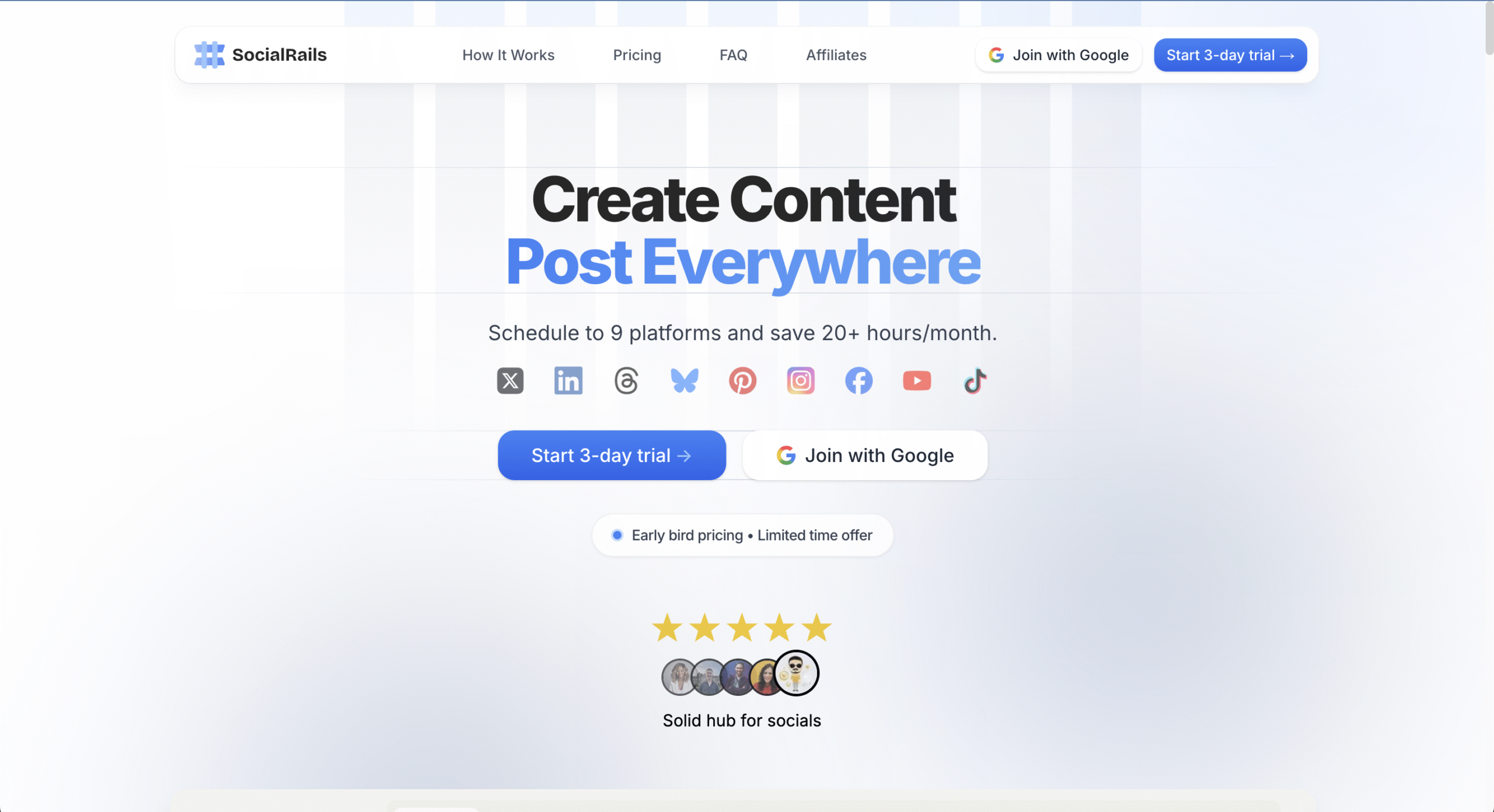
Immediately I come up with 5 major competitors:
- Hootsuite
- Buffer
- Sprout Social
- Social Pilot
- Postiz
Now I have a bunch of competitor keywords to go after:
| Tool Alternatives | Tool Comparisons (X vs Y) |
|---|---|
|
Hootsuite alternatives Buffer alternatives Sprout Social alternatives SocialPilot alternatives Postiz alternatives |
Hootsuite vs Buffer Hootsuite vs Sprout Social Hootsuite vs SocialPilot Hootsuite vs Postiz Buffer vs Sprout Social Buffer vs Social Pilot Buffer vs Postiz |
Simply write a very honest and straightforward article to compare these tools, and elegantly mention your tool as the contender with them. The tricky part is to make your review so detailed that people actually walk away having an informed opinion of the tools you compare.
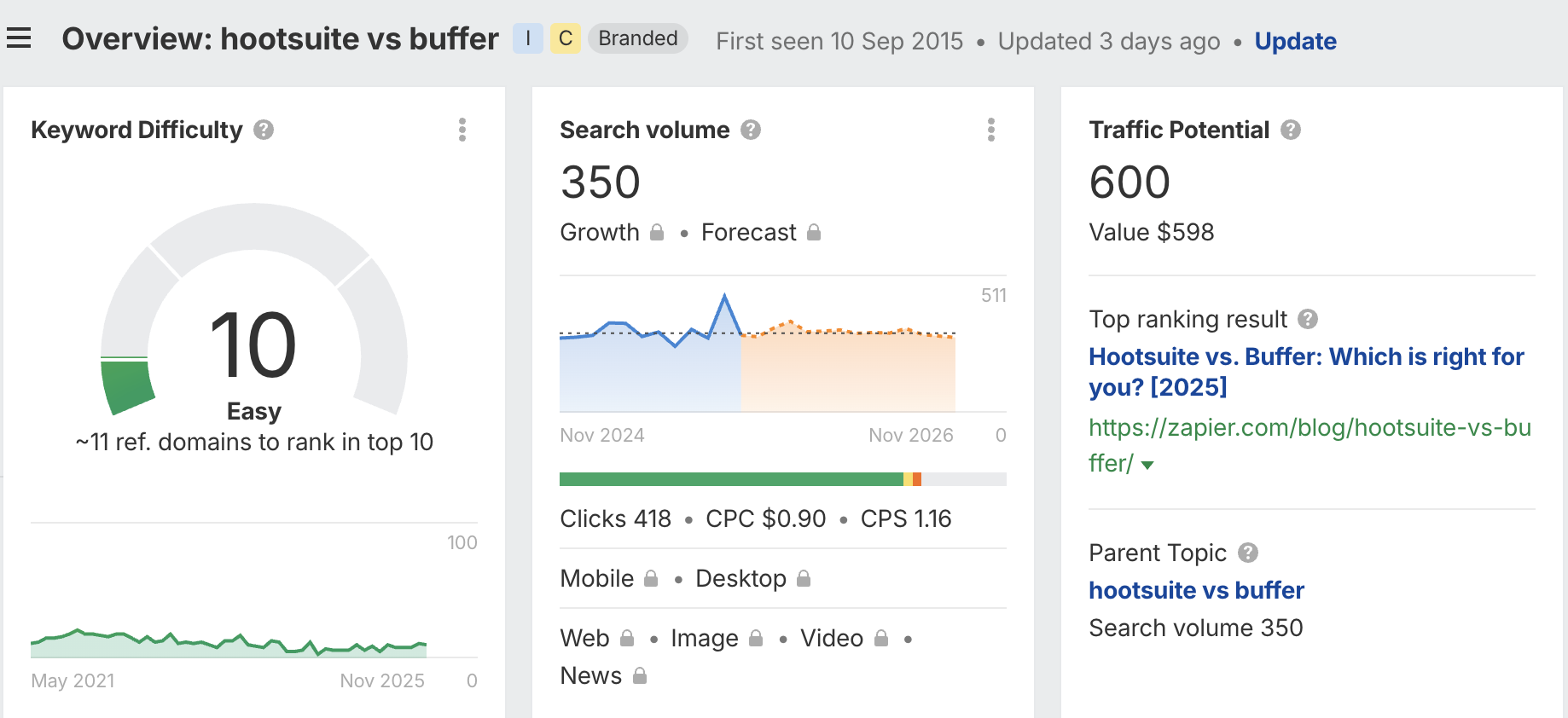
I ran a quick check of the “Hootsuite vs Buffer” keyword on Ahrefs, which shows that it actually has decent volume for a low Keyword Difficulty. Note that I only take Keyword Difficulty metric with a grain of salt. I rely more on the Search volume metric to identify the popularity of the term:
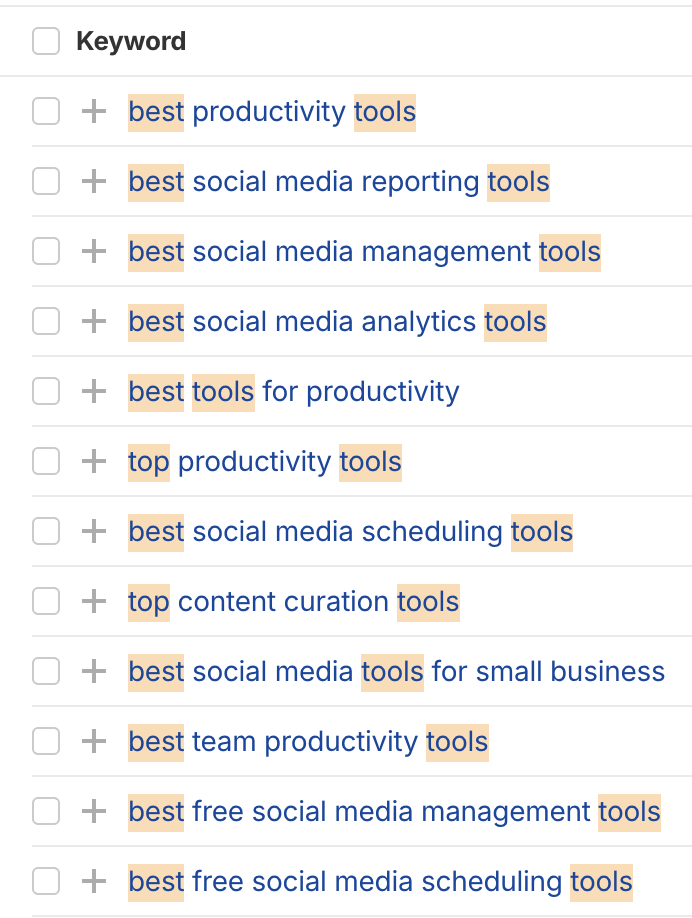
Next, let’s move to Listicle keywords. My tactic is to go to Ahrefs (again), type “buffer.com” into their Site Explorer, and filter out all keywords that they are ranking for that contain the word “top/best” AND the word “tools”.
This should give me a list of all the keywords that buffer.com is ranking for. It also immediately tells us the positioning of Buffer in Google’s eyes:
Next, I search on Google to confirm the search intent of these keywords. I tried searching “best social media scheduling tools”, and here’s what I see:
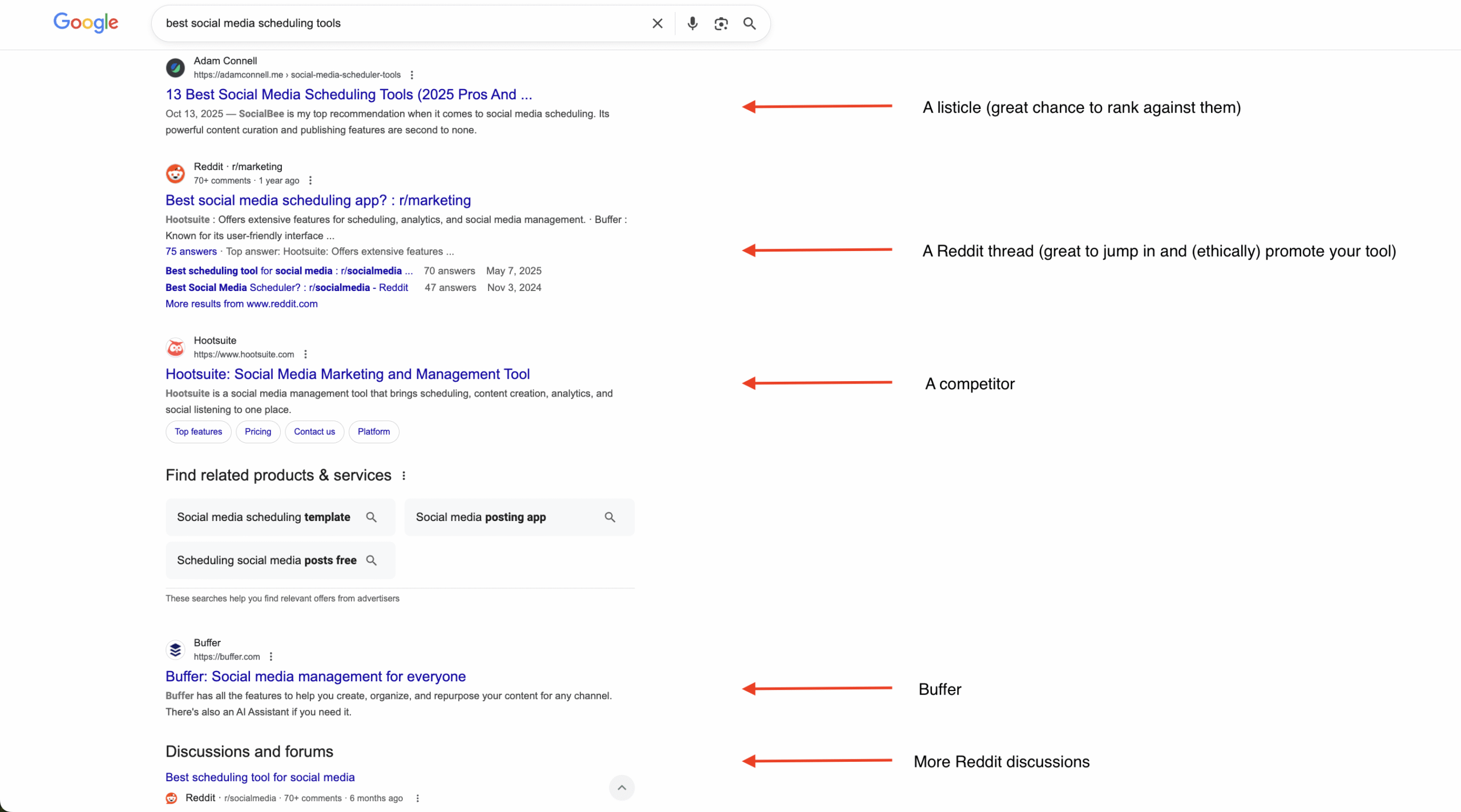
It’s easy to see that the highest ranking article is a listicle. Google is favoring that format for that specific search query.
I rinse and repeat the process until I arrive at a list of keywords that I can reasonably create content to compete with.
For Pain Point keywords and Lead Magnet keywords, I also follow the same process: find a competitor, extract their keywords, filter down and shortlist the ones I want. Here is the list I got:
- Pain point keywords: how to get more followers on Facebook, how to increase Instagram followers, how to earn money from Instagram (target the influencer demographic)
- Lead magnet keywords: social media calendar template, instagram templates, content pillars for social media, instagram stories templates
The How-to keywords are usually “comprehensive guide” types of content.
For example, “How to do good Thought leadership content marketing?” is another really successful piece of How-to content that Perceptric produced. We guide readers through the entire process of doing thought leadership content (that they never thought of before). This article alone earns us a lot of good clients because it shows that we know what we’re talking about.

That’s it for keyword research. But wait, what if you don’t have a keyword research tool like Ahrefs and SEMRush?
Well, you can always go to the most powerful keyword research tool out there: Google.
I will use Google Autocomplete mode to reveal phrases that people are actively searching for.
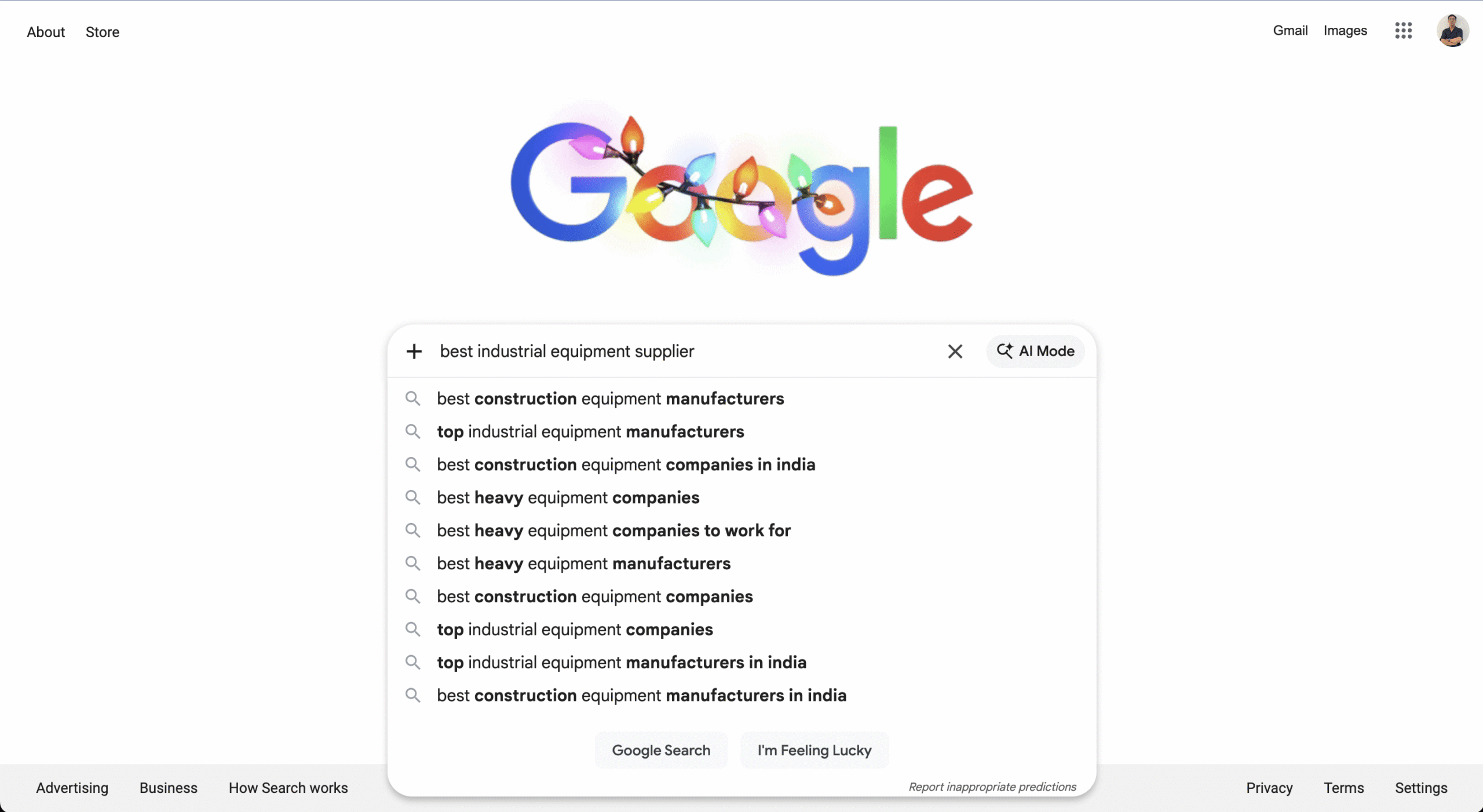
You can also use Google parameters like intitle:, inurl:, and related: to find competitor content or similar domains to mine for topics.
Step 4. Create good content
Here’s a truth: Google isn’t built to rank “high-quality” content. It’s built to rank content that has high utility.
That’s why sometimes content that feels generic and “boring” turns out to get ranked higher than well-written content with tons of images and videos and insights.
Google doesn’t know if those images are good for the users. Sometimes users don’t need those images. Sometimes users don’t need those videos. They just want to find a quick answer and go on with their day. They don’t have time to watch a 1-hour video.
That’s why “good” content in the SEO sense is more like “try to give users the answer they need” rather than rambling about things.
So here are the steps I do to know what Google wants from the search results:
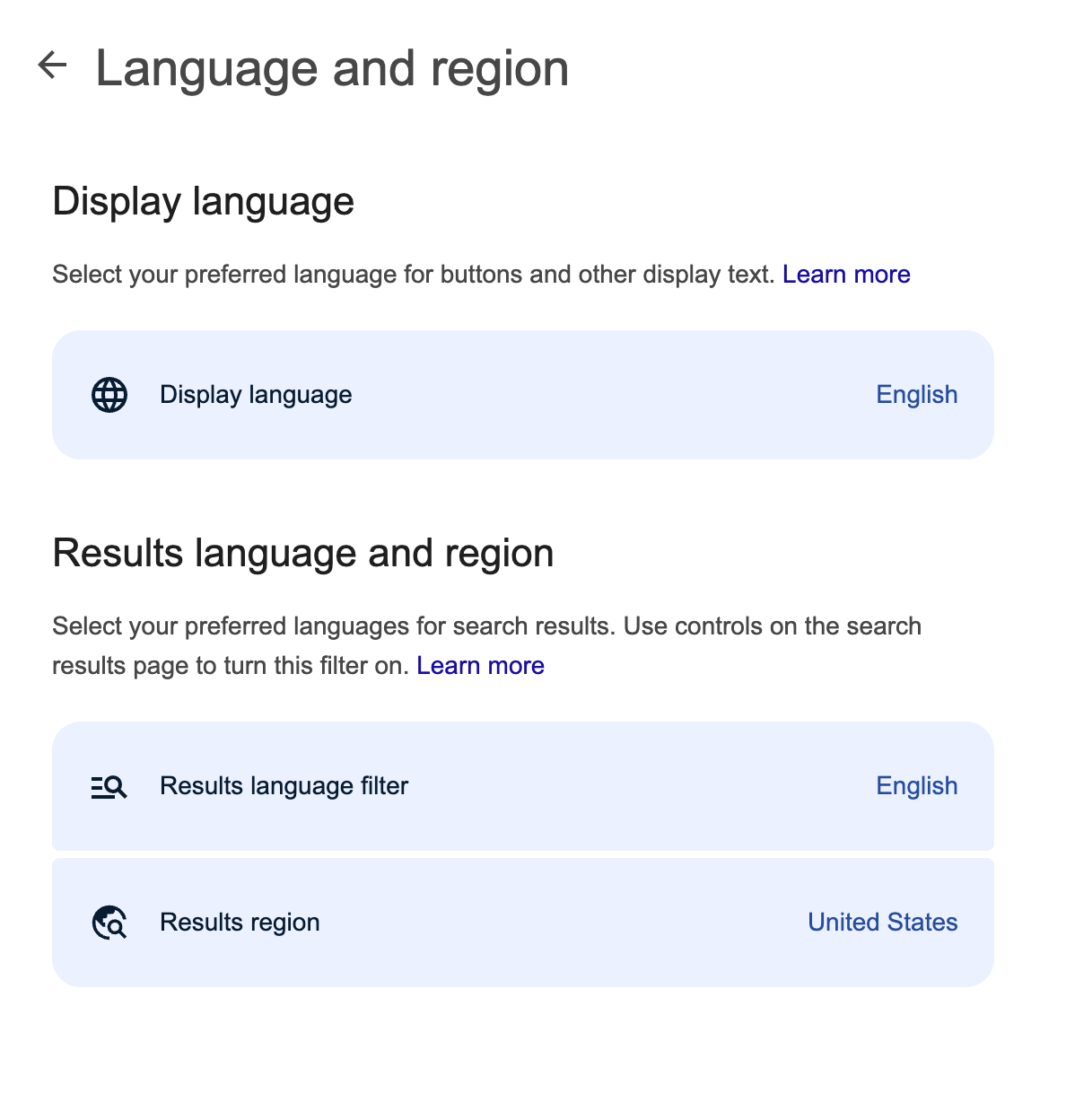
First, I adjust Google to show results for the region I want to target by going to google.com/preferences, choose Other Settings, choose Language and region, then choose the ones I want.
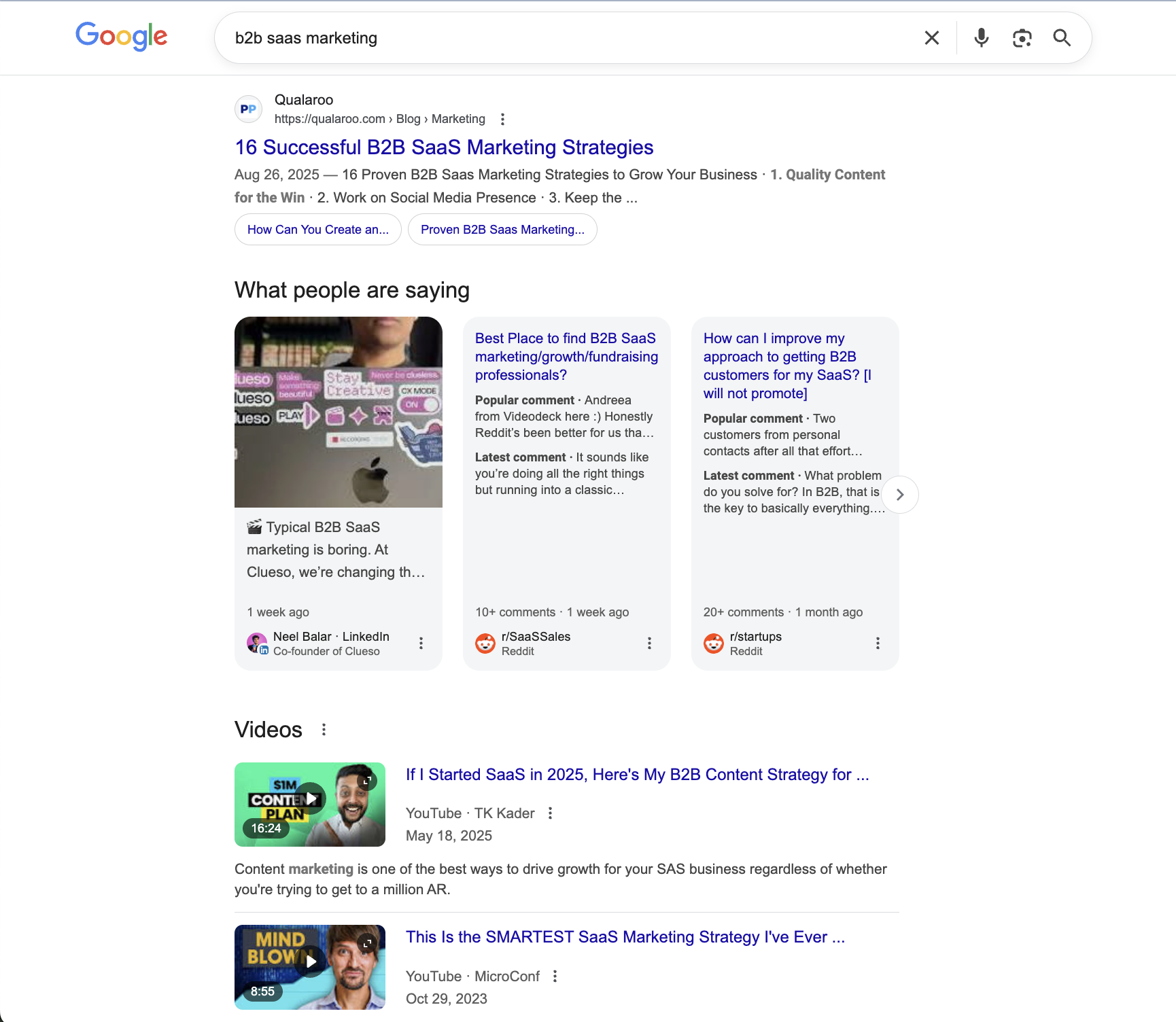
After that, I search the keyword to surface the top ranking results to see:
- The formats that Google favors
- The depth of top articles (and where I can beat them)
- Reddit threads (to see what people actually think about the topic)
Once done, I start writing, like a real wordsmith, with all of the SEO content best practices:
- Match my content to what users actually want to find.
- Focus on only one main keyword and include related supporting keywords naturally.
- Write catchy, benefit-driven titles and meta descriptions to boost click-through rate.
- Use proper heading hierarchy (H1, H2, H3) for structure and scannability.
- I always keep my writing clear, concise, and engaging with short paragraphs, bullet points, and of course, tons of visuals. Screenshots are great because they are much easier to produce compared to graphics, and they deliver more practical information compared to visualized images.
- I place keywords naturally in key spots: intro, subheadings, and conclusion. This has always been done for decades, because it absolutely works!
- I then add internal links to related pages and external links to credible sources. I always link to reputable sites in my niche rather than generic informational sites like Wikipedia. Sometimes it helps that you go back to old pages to link back to your new pages too.
- Always write for humans first, then optimize for search engines.
At the same time, I also incorporate my personal anecdote throughout my entire article. An article should always drive home the idea that my brand (and my targeted topical authority) stands for. A little bit of personal anecdote doesn’t hurt SEO. Quite the opposite, it even boosts SEO up.
For example, here’s an article from Rainforest QA about 5 essential QA testing best practices. If they write it in the traditional SEO way, they would have written the title as a boring “5 essential QA testing best practices”.
But they chose to write about it as “The Rainforest Method”:
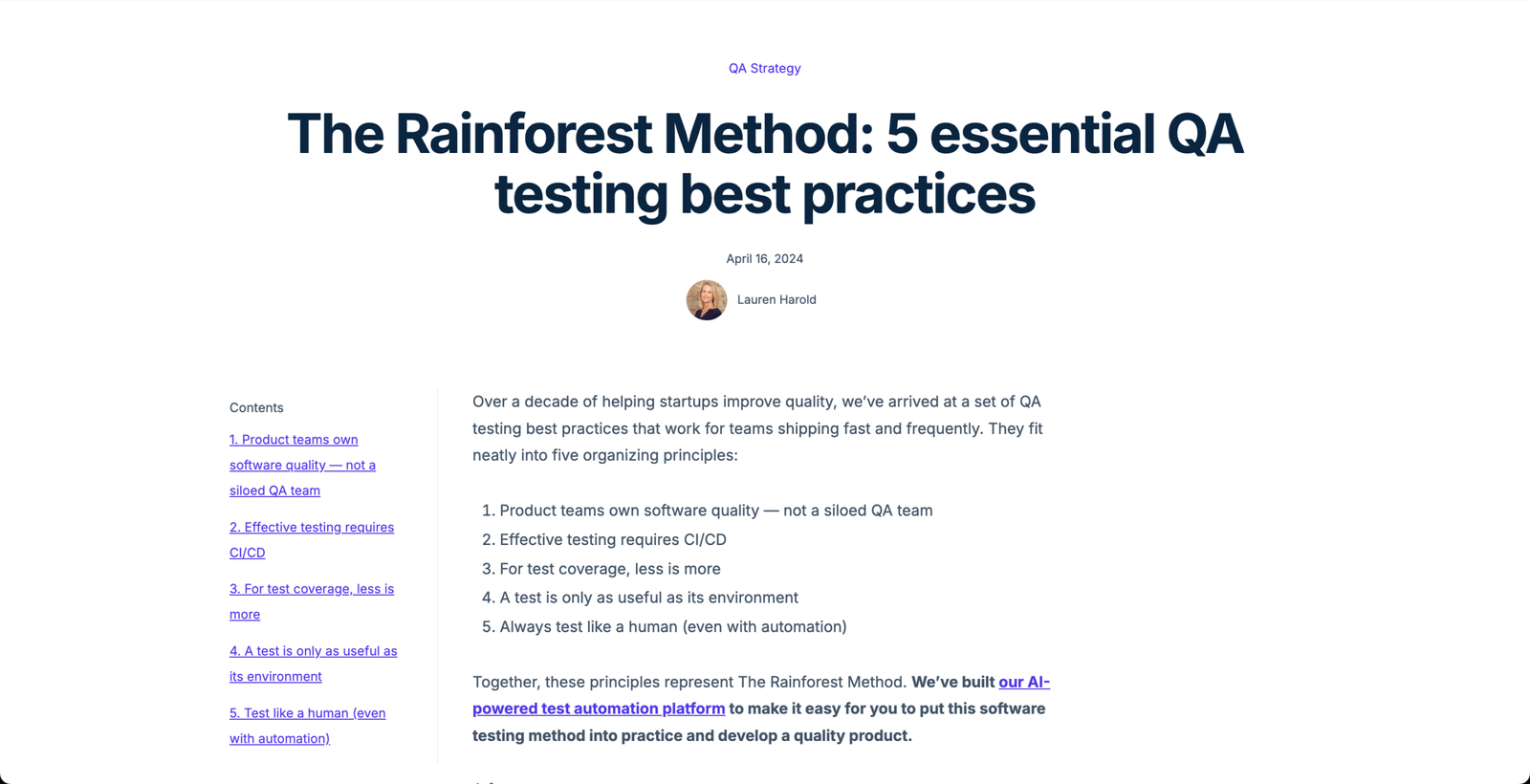
This accomplishes three goals:
- Traditional SEO by optimizing for a target keyword
- Authority building by showcasing methods rooted in real experience
- Engagement by offering original, distinctive content
Here are a few tips to make a blog post feel more like thought leadership:
- It must come from people who have actually been in the trenches. I hold the content on Perceptric’s blog (and our clients’ blogs) to the same standard. Expert-led content is essential.
- It should hold an opinion. Even in a simple “what is” article, you should insert a point of view to establish a clear vantage point. Neutral explanations rarely help readers decide or act. A stance creates hierarchy (“this matters, that doesn’t”), reduces cognitive load, and makes the piece more memorable.
- It should be written at least 80 percent by a human. I’ve experimented extensively with ChatGPT to make its writing feel more human, but AI content still lacks the spontaneity and lived texture readers connect with. They may click, but they rarely stay engaged.
- It should be data-driven. Statistics make your argument more convincing and increase the likelihood of earning backlinks when others cite your charts. For readers, data visualizations also make the content more interesting and easier to consume.
Step 5. Do on-page SEO for your Solution pages
These are the specialized landing pages that position your product as the ideal answer to a specific use case. You can call them Solution pages, Product pages, Service pages, or whatever. Generally they all fall into 4 major categories:
- Industry (e.g., “Solutions for Ecom/Legal/Fintech/B2B/B2C”)
- Role (e.g., “Solutions for Marketing/Sales”)
- Problem (e.g., “Automate for Web/API”)
- Use Case (e.g., “Instantly collect reviews”)
Why are Solution pages important for B2B SEO? From my experience ranking 20+ B2B sites, I realize that Google knows your market positioning by looking at your Solution pages. Like I said earlier, you want all of your pages on your website to have a unified theme to achieve strong topical authority.
The way you structure your product pages tells Google a lot about what pain points you solve, and they’ll decide whether to rank you for the generic terms or the niche terms.
I’ll use Riviera Finance and DAT to demonstrate this point.
- Riviera Finance positions itself broadly within invoice factoring and receivables financing. Their pages focus on “cash flow and invoice factoring” for a wide range of growing businesses. Because the content is general, Google interprets the site as a broad financial-services provider. That works well for generic queries like “invoice factoring company” or “accounts receivable financing,” but it creates far less signal for any specific niche or industry segment.
- DAT Freight & Analytics (formerly DAT Solutions) takes the opposite approach and targets a clearly defined vertical: logistics, freight, trucking, carriers, and brokers. Their Solutions pages are structured around logistics-specific use cases like load boards, freight analytics, and TMS tools. Since the entire site speaks directly to the freight/logistics market, Google can understand the positioning as “financial and operational solutions for logistics” rather than a general financial-services provider.
Here’s what I get when I search for “invoice factoring”, just a generic term, and since Riviera Finance is a full-service invoice factoring company, they show up in search results:
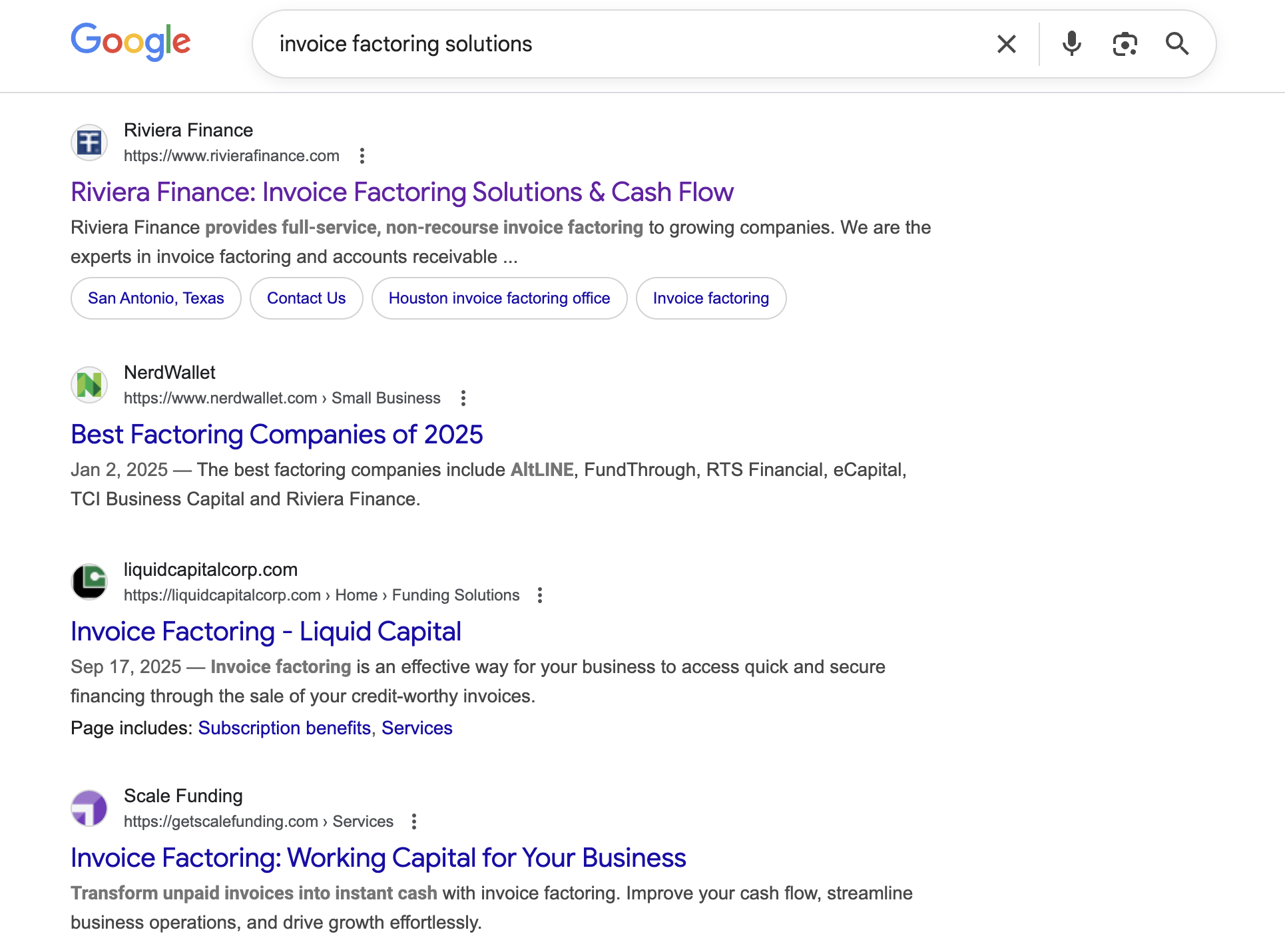
As you can clearly see, Google is ranking either listicles of the best invoice factoring companies, or the service providers that are fully dedicated to doing invoice factoring (which is Riviera Finance, ranking top in this case).
Meanwhile, DAT shows up pretty high for the keyword “invoice factoring companies for logistics companies”:

In short: Google uses the whole solution‑page architecture plus supporting content to triangulate what your business is about.
If your positioning is clear and narrow, you can out‑rank broader competitors in that niche because you speak directly to the user intent. If your positioning is broad, you may rank for many general queries but struggle to dominate the specific long‑tail ones.
Step 6. Link building
Link building is honestly the most boring and time-consuming part of SEO, but that’s what drives you SEO forward.
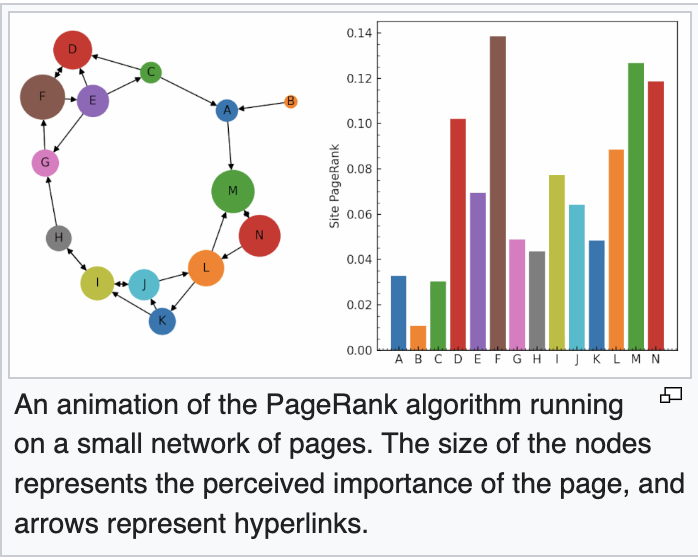
Remember, the core technology behind Google is PageRank, which works “by counting the number and quality of links to a page to determine a rough estimate of how important the website is”. The underlying assumption is that more important websites are likely to receive more links from other websites.
Here’s the graph explaining the mechanism of PageRank. If you want to get all nerdy and technical, check out the Wikipedia page about PageRank.
Google highly recommends that you let links build naturally. However, you can always invest in some link building tactics for the more competitive keywords.
Here are some link building tactics that I find more rewarding:
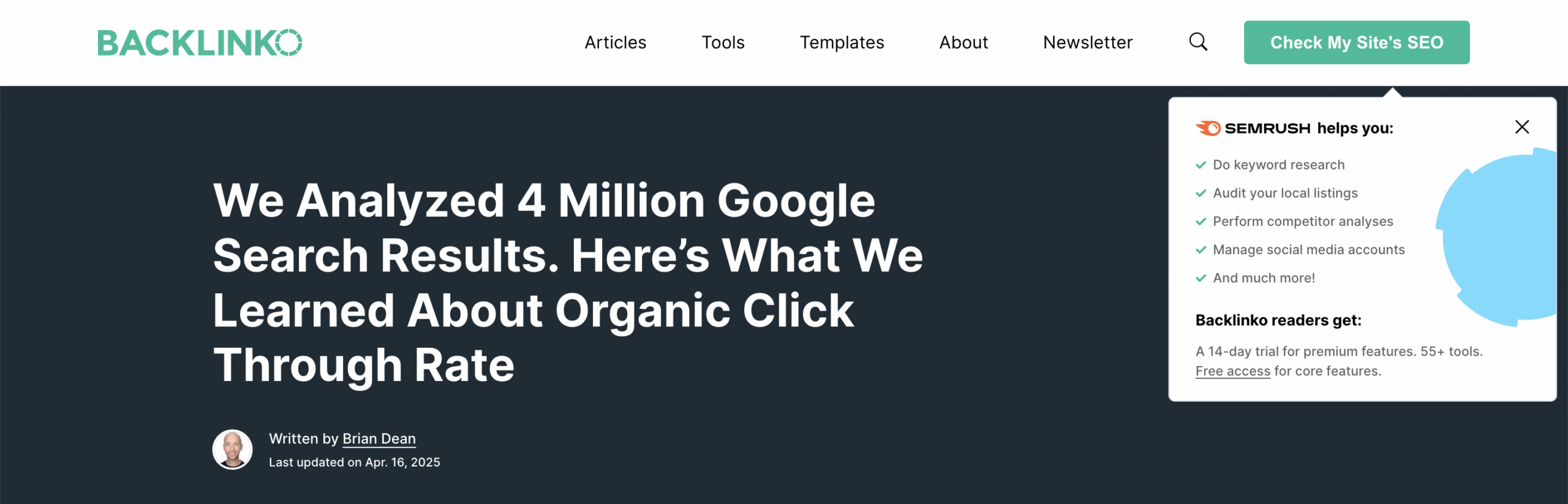
1. Write a data-rich article that you can share on social media. Journalists and bloggers love citing data sources especially if you visualize it well. This is a tactic promoted by Brian Dean from Backlinko, who has had tons of success with it.
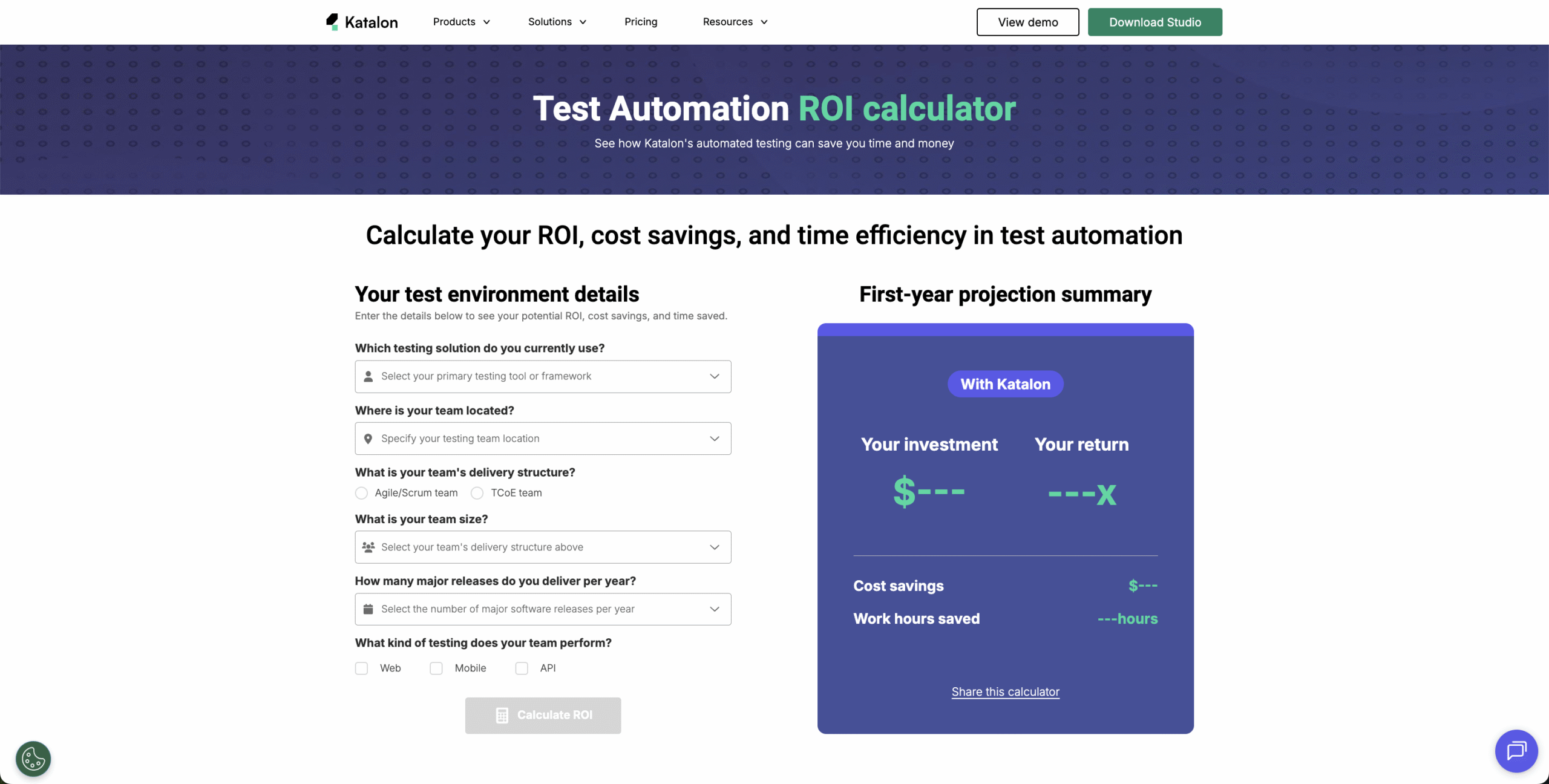
2. You can build simple tools like a “ROI Calculator” or “Automation Cost Estimator” and you can actually attract backlinks from blogs recommending resources, like this ROI Calculator from Katalon.
3. You can also do guest post, but instead of reaching out to “guest post sites”, who probably receive dozens of guest post request emails on a daily basis that they can’t handle, it’s better to reach out directly to founders and entrepreneurs in your niche, offering to contribute an article for them (free of charge).
This group is more than willing to have someone help them grow their visibility, and they are even happier if you can drive real business for them.
Conclusion
At the end of the day, I think that doing SEO for B2B (or for any industries) is basically building credibility. If you stick to white-hat practices and consistently create content that genuinely serves both your audience and Google’s intent, algorithm updates will usually work in your favor. Along the way, you’ll also build a brand that stands out. Remember, content is brand.
In the mean time, here are some even better reading resources for you: