
The sales cycle in B2B deals tend to be pretty long and complex. There are many stakeholders involved, and a lot of product education is needed across all touchpoint. Using content marketing to support each part of the sale funnel helps you close your deal easier.
What is the value of B2B content marketing?
It’s simple.
1. B2B Content = Serious Content
B2B buyers aren’t driven by hype. Unlike B2C, where decisions are fast and emotion-led, B2B purchases are high-stakes, involve multiple stakeholders, and require months of research.
That’s why B2B content is built for education. Buyers want answers to real problems, and they’ll read deeply if your content helps them solve those problems.
Effective B2B content starts with understanding:
- Who you’re targeting (CFOs, CTOs, Ops?)
- What their pain points are
- Where they consume content
- Which format matches their buying stage
The best-performing content strives to solve real problems better than anything else on the internet.
2. Content marketing builds brands in B2B
Great content is brand. In a crowded market of lookalike vendors, what you say and how you say it is what makes you stand out.
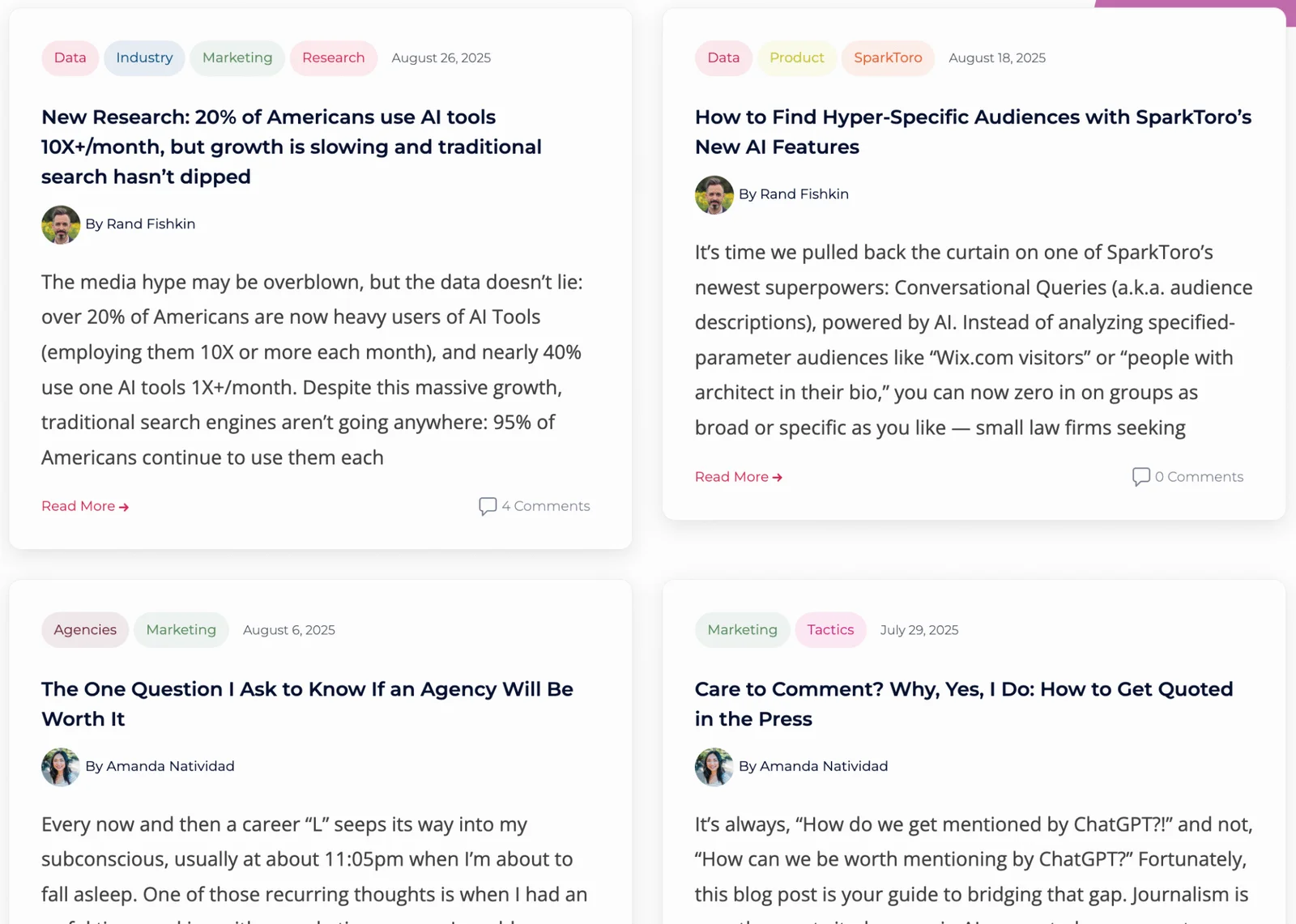
Don’t just echo the same industry jargon. Create content that reflects your point of view and your depth of knowledge. SparkToro is a good example of content marketing done right: they publish sharp, insight-rich pieces that cut through the noise. That’s what builds a brand people trust.
3. In B2B, content works well as Sales Enablement
To guide buyers to realize the value, there’s a lot of education and consulting involved from the Sales team. The content team then plays the role of Sales Enablement by providing Sales with the right materials to shorten the sales cycle.
However, most content marketers are not doing that. In fact, it’s even rare to see Sales and Content work together.
And it’s a huge missed opportunity.
7 B2B content marketing strategies for 2025
Introducing 7 B2B content marketing strategies for your B2B brands:
1. Publish Knowledge-Narrative content
Practically speaking, B2B content marketing needs a two-pronged approach.
That’s why I use the Knowledge – Narrative approach to structure my content strategy. Here’s how it looks like:
- Knowledge content is your educational, search-friendly, problem-solving content. It’s what gets you found and builds trust through expertise. Formats include how-to articles, comparison posts, playbooks, integration guides, SEO-driven explainers, product tutorials.
- Narrative content is your story-led, opinionated, brand-building content. It’s what creates emotional connection and long-term recall. Formats include founder essays, industry predictions, lessons learned, behind-the-scenes stories, product philosophies.
Each content type has their pros and cons:
- The Knowledge content (or we can say SEO-driven content) is written for the masses, and can rank and rake in tons of traffic (thanks to SEO), which boosts website authority. However, the high-traffic terms tend to be informational and therefore the people who visited your website through those keywords may not always care about what you do and your products. Also, SEO content must follow a lot of guidelines that strip away the writer’s ability to write unique, perspective-driven content.
- The Narrative content complements Knowledge content perfectly. This content type is more advanced, written for experts, and has room for you to showcase your opinions (which is very crucial for brand building). However, they are not as discoverable as SEO content. People aren’t going to search for stuff like “What’s holding back digital health transformation?” on a daily basis. Therefore, they need to be placed on high-traffic articles to be discovered properly. And where else could they be placed? Yes, the Knowledge content hub you’ve built.
In short:
- Knowledge-style content rakes in traffic, but usually they don’t offer much space for thought leadership, which is very crucial for B2B.
- Narrative-style content allows more space to show expertise and storytelling, but they don’t get to be organically discovered. They need the traffic from Knowledge-style content.
Let’s look at an example from Orion Health. Here’s a classic Knowledge-style piece of content: What is HL7 and why does healthcare need it?

According to Ahrefs, it is the highest-traffic article from Orion Health’s blog.
It answers a popular question and brings in visitors, but those visitors probably aren’t going to remember Orion Health much (because they only want to know what HL7 is).
On the other hand, this is the kind of article that really sticks with visitors: Will AI cure healthcare’s woes or expose its weaknesses?

A true Narrative-style piece of content doesn’t care about optimizing for keywords, but it gets shared (whether online or in dark socials). It gets people talking about Orion Health, and it helps them gain “mindshare”.
The Knowledge-Narrative content approach strikes a perfect balance in terms of effort needed for content creation:
1. I would argue that Narrative-style content is so much harder to create than Knowledge-style content since you either need a unique perspective (which means you need an expert with experience to provide that perspective), or you have to conduct an extensive industry study, like this SERP analytis article from Backlinko. The payoff is that this content type establishes you as the leader in the niche. High investment, high reward.

2. Meanwhile, Knowledge-style content is easier to create since you only need to explain a concept that is already extensively covered by existing resources. There is more immediate and tangible ROI at a lower investment needed.
Here’s an example from HubSpot. This is a very SEO-driven article about conversion rate optimization, and it fits perfectly into the Knowledge part of my framework.

It doesn’t really show any groundbreaking perspective, and just trying to educate readers on CRO, and it sits at the top 3 of the highest-traffic articles for HubSpot.
Meanwhile, this is a Narrative piece:

There is a clear overarching narrative behind this article (we believe that the future of marketing is humans vs. AI). The writing is much less SEO-driven and more story-driven.
Note that I discover this piece because I subscribe to their Loop Marketing newsletter, not because I search for it. That means it has lower organic discoverability compared to the CRO article.
So, here’s what you should do:
- Embrace the Knowledge-Narrative approach for your content marketing strategy
- For Knowledge-style articles, do extensive B2B keyword research, and choose keywords that drive money first, traffic later.
- For Narrative-style articles, meet with experts in your field, interview them, extract their thoughts, and write content that challenges the status quo, or reveal something about it that not enough people are talking about.
- Distribute your content
Content distribution is another big challenge of B2B content marekting, which leads us to the next strategy.
2. Interview experts to extract insights that fuel your content
There’s a really great quote from Ernest Hemingway that I love to apply to B2B content marketing, and it is this:

Remember: your target audience are usually well-informed experts. They have spent years in the industry, and they can spot fluff content from miles away.
In order to write for your target audience, first you must live their industry. You must become a “semi-expert” of the field.
But the reality? Too often, B2B content isn’t grounded in actual expertise: it gets outsourced to freelance writers with no background in the field. The result is surface-level content recycled from Google searches labeled as “thought leadership.” But this doesn’t build credibility and it certainly doesn’t drive sales.
That’s why you need to interview SMEs to produce content that resonates.
Let’s say I know very little about the subject I’m about to write for, here’s my process to write good content:
- Do a preliminary research: I’ll browse the Internet, read through forums & blog posts about the topic (I only try to cherry-pick the good stuff to read). After that, I’ll try to summarize what I’ve learned, what areas I’m stuck on, and brainstorm a list of questions to ask the SMEs.
- Start the interview: a good interview surfaces a lot of insights that you don’t know that you don’t know. Ask questions to:
- Confirm and deepen your understanding of what you already know
- Clarify the areas you’re stuck at
- Always ask questions that challenge the status quo a little bit: What are the areas that the product fall short? What makes it better than competitors?
- Teach the SME: knowledge is best retained when it is taught. Therefore, at the end of the interview, you should have a “teaching” session where you attempt to explain everything you’ve learned to the SME to the best of your ability. This helps confirm and solidify your understanding of the subject.
Here are some questions to ask specific SMEs to surface insights for your content:
Connect with these people, ask them questions like:
- Sales – “What’s the number-one objection you keep hearing?” “What’s the one thing that always closes a deal?”
- Product – “What’s coming in the roadmap that customers will care about most?” “What hard problem are we solving that no one else can?”
- Product Marketing – “Where are we winning and losing in competitive deals?” “What market narratives are we trying to own this quarter?”
- Product Support – “What’s the most common ‘quick fix’ or workaround customers need?” “What’s the feature everyone wishes they had?”
- Engineering – “What’s the most technically impressive thing we’ve built lately?” “What’s possible that marketing hasn’t talked about yet?
3. Start with Bottom-of-the-funnel content
At Perceptric, we believe that content should align with purchase intent. Even if it’s a thought leadership piece, the opinion must still ultimately drive back to the company’s core offerings.
“Content is king. But it’s not any better than a peasant if it’s not driving revenue.”
That’s why your team should laser-focus on Bottom-of-the-Funnel (BOFU) content.
Here are the types of BOFU content that I recommend:
| BOFU Content Type | Example | Purpose |
|---|---|---|
| Comparison Pages | “Ramp vs Brex vs Jeeves” | Win competitive evaluations |
| Alternatives Lists | “Top 5 Brex Alternatives” | Capture competitor traffic |
| Pricing Pages | “[Product] Pricing Explained” | Set expectations, anchor value |
| Use Case Pages | “Spend Management for Startups” | Address persona/vertical pain |
| Customer Proof | “How X Saved $200K w/ [Product]” | Deliver social proof |
Make sure that you go beyond just text and also bring in:
- Survey-backed data
- Comparison tables
- Interactive elements
- Real product screenshots
Once your BOFU content is live, the goal is to drive as much high-intent traffic as possible. Since BOFU content is highly convertible, running paid traffic to it is a no-brainer. Instead of waiting for SEO, you can amplify these high-intent pages with PPC and social ads to start generating conversions immediately.
- Run LinkedIn & Google Ads to high-intent pages
- Retarget engaged visitors who bounced
- Nurture with tailored email sequences
- Offer trials, discounts, or ROI calculators
4. Create problem-solving content
People search “How to [do something]” when they have a problem. And they want a solution to that problem. That’s when you show up.
“Pain point” keywords exist across virtually every vertical: SaaS, ecommerce, services, education, manufacturing, etc. because people are constantly searching for guidance on how to get something done/solve a certain issue they’re having.
These are buyers in disguise. Here are some examples of how-to keywords:
- How to automate invoice processing (350)
- How to build a Shopify app (900)
- How to reduce churn rate (1.2k)
- How to create a customer journey map (1.8k)
- How to file a chargeback (2.1k)
- How to use QR codes for marketing (1.1k)
- How to calculate lifetime value (1.6k)
- How to ship fragile items (1.9k)
If your products/services can help them solve those problems, it makes perfect sense that you’re creating content to guide your buyers through the process (and pitch your product to them at the same time).
Pain point keywords usually follow these formulas:
- How to [do something]
- Ways to [do something]
- Should I [do something]
- Can I [do something]
How do you find these keywords? Well, you can start with your team. Reach out to:
- Sales (they are in the trenches, talking to customers every day)
- Product (they build the very thing that you’re trying to spread the word about)
- Engineering (if the product is technical)
- Support (they know the dark side of your product i.e. where it falls short)
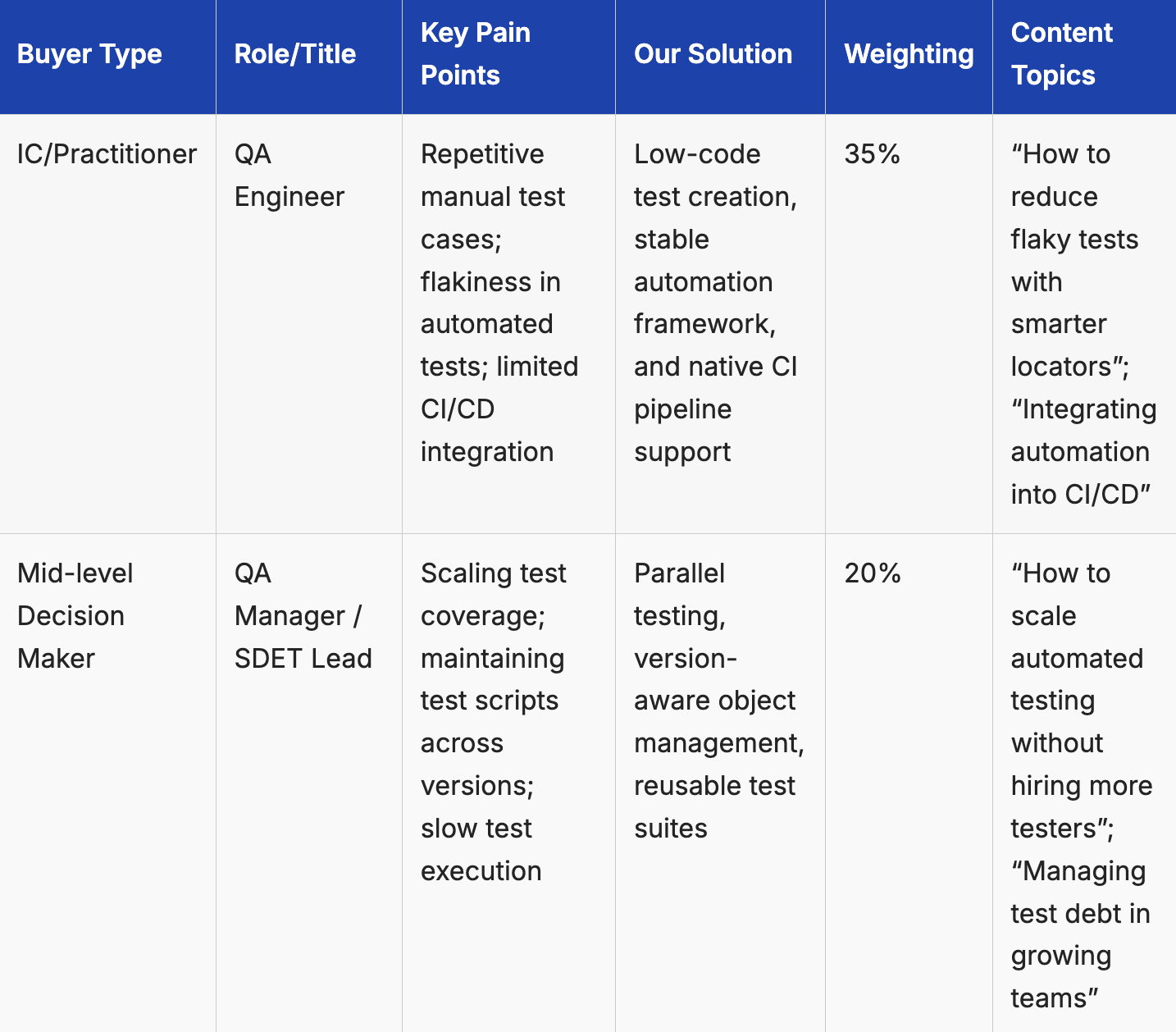
Sit down, have a quick chat, pick their brain, sip some coffee, and you should come up with some pretty good insights about your product. You can jot down your insights in an “Audience Mapping” table like this:
After that, you can start doing some keyword research using your favorite keyword research tools (I use a combination of Ahrefs, SEMRush, and good ol’ Google).
Another great keyword research “tool” that I use to uncover these pain point keywords is Reddit.
Here’s what I usually do:
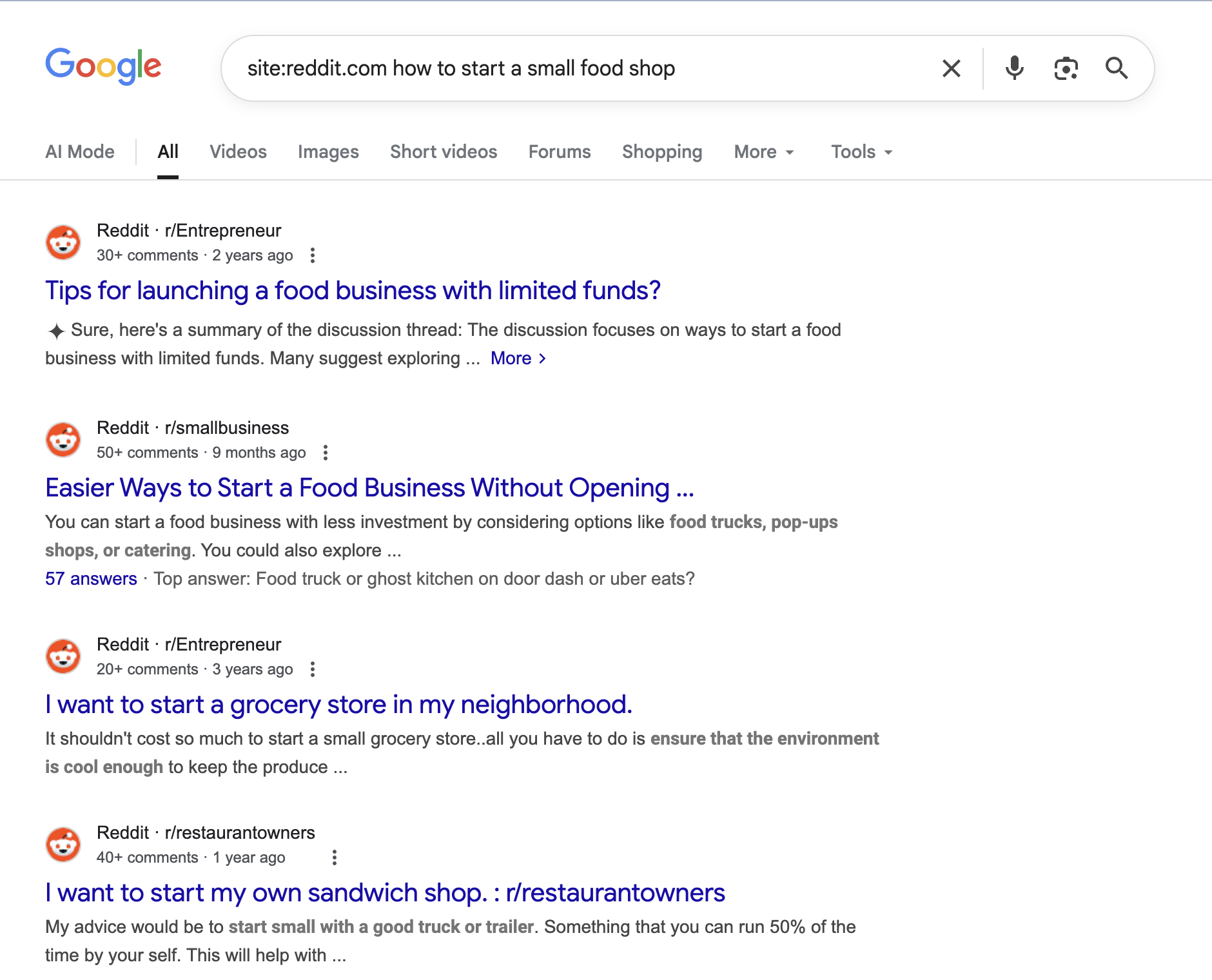
- Starting from the list of content topics I ideated above, I start Googling: site:reddit.com [how to…]
- Browse through the search results and try to see what the main pain points of the readers are
- Note down the most relevant ones
- Of course, I’ll also dive into the Reddit posts to see how people are answering those questions
Here’s an example of me Googling site:reddit.com how to start a small food shop for owner.com, a SaaS for restaurant owners:
When creating content, I simply just strive to be as helpful and informative as possible. And most importantly: no AI! I write by hand, by my own thoughts, and even though it may not be as grammatically perfect as an AI-generated article, it is more authentic than ever.
5. Start a newsletter to curate and distribute content
You’re targeting managers and decision makers, who spend a lot of their time checking and answering emails.
Showing up in their email inboxes is a great way you earn their attention.
I personally think that cold email is not the most effective strategy to maximize the potential of the email channel.
A newsletter is.
A newsletter that brings genuine value to subscribers.
A newsletter where you don’t ever care about selling your products/services. Its main goal is just to share the most fascinating stuff you found about the industry (with occasional promotions, of course).
Your audience would happily read your more promotional stuff if you deliver them genuine value, first.
The goal of a newsletter is to:
- Cut through the noise and surface only the most relevant, actionable insights
- Position you (or your brand) as the trusted guide who filters what matters and helps subscribers stay ahead.
- Create a regular, lightweight touchpoint that keeps your name top of mind without ever feeling intrusive.
- Integrate your product subtly as part of the solution. “Subtly” is key here, because a good newsletter should deliver value instead of feeling like a sales push.
- Build a sense of insider access where readers feel smarter just by being on the list.
When you get those five things right, your newsletter becomes a habit. Like their morning coffee.
Some of the best newsletter platforms I can think of:
- beehiiv – sleek UI, strong analytics, great for growth-focused creators.
- MailerLite – affordable, intuitive, solid automation.
- Kit – designed for commerce-focused newsletters.
- Flodesk – beautiful design templates, simple UX.
- Substack – great for thought leadership and community-building, and it’s gaining a lot of traction recently
Or, if you are using an CMS with integrated newsletter/email system, you can totally leverage that. HubSpot has a built-in newsletter feature that connects well with its analytics side.
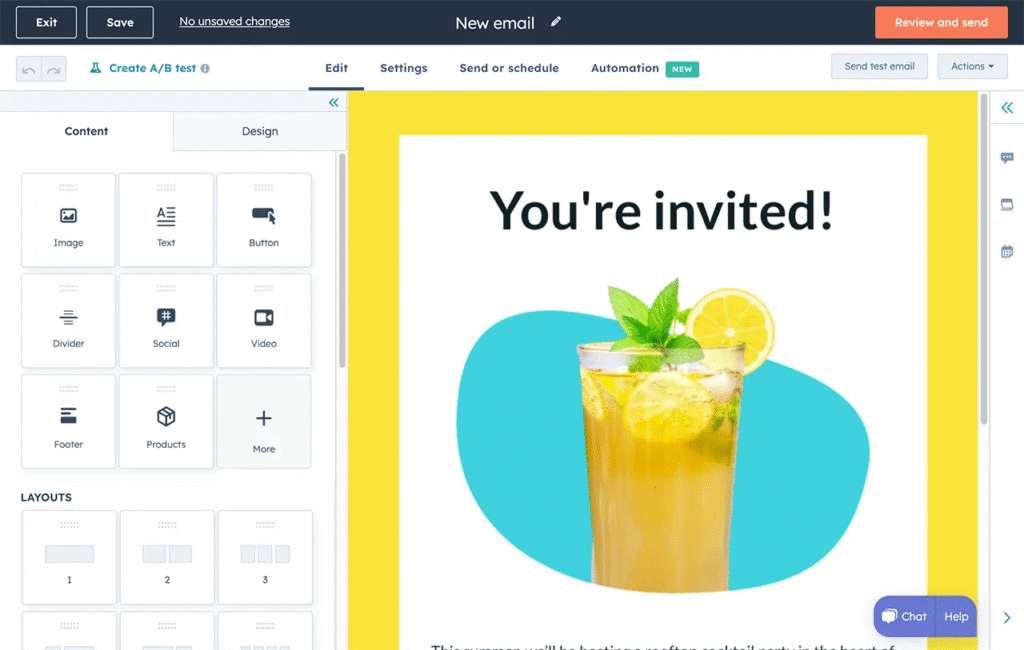
I think one of the most underrated parts of building a newsletter is the potential for forming strong partnerships. When sharing content from niche and “underground” creators, you can strike up a conversation with them
And that’s just one piece of the growth puzzle. Here are a few more newsletter growth strategies worth testing:
- SEO: place a newsletter signup button in your awesome blog post. If your article is great, readers are going to be hungry for more, and they’ll consider subscribing to your newsletter. As long as you maintain a good quality standard on your blog, and your blog drives decent traffic, SEO undoubtedly is the best source of subscribers you can ever find. And guess what? Those newsletter subscribers are going to become returning visitors, which gives Google the signals it need to rank your content high. The ultimate traffic glitch! (The catch: you must write GOOD content).
- Referrals: Many newsletter platforms have built-in referral systems. You can offer small incentives like freebies or exclusive content to encourage your readers to invite others. It’s a win-win loop that can grow fast if the value is clear.
- Social media – In an age flooded with AI-generated noise, real, thoughtful content stands out. So, use that to your advantage. Pull out the best snippets from your newsletter and post them across your social channels. Tag the original creators you reference or curate. They’ll often engage, boosting visibility and helping your content travel farther than you could on your own.
Also, if you have a company page with decent following, it’s a great idea to start a LinkedIn newsletter. NVIDIA AI has has a newsletter called “AI insights for Business” that currently has a readership of 550K subscribers, among which are Engineers and Tech leaders (their target audience):

6. Do employee-led/founder-led LinkedIn content
LinkedIn is THE social media for B2B.
In fact, being active on LinkedIn can increase your sales:
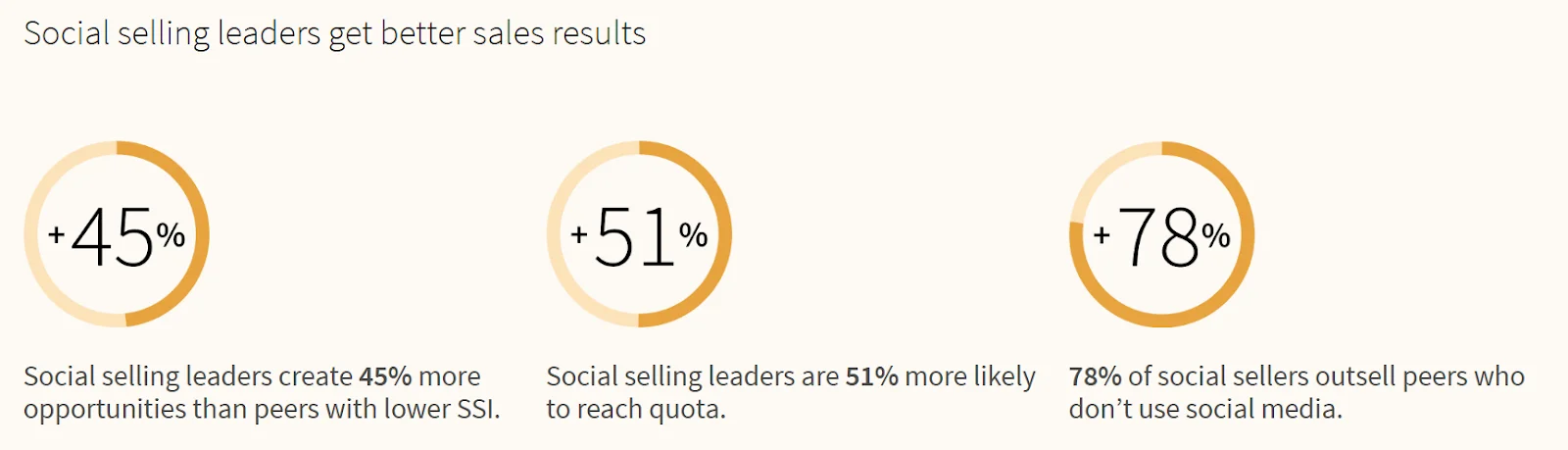
But, as all things else, you need to be strategic with your LinkedIn content.
Here’s my recommendation:
- Look at your existing articles. Break it down into smaller snippets that you can share on LinkedIn (and newsletters).
- Start finding a group of internal “thought leaders” to post those content on their personal account.
@Magier is a graphic design agency that does this really well. Maximilian Fleitmann is the man behind the studio, and he consistently posts about the story @magier in his LinkedIn posts.

And not just him, but his team is also very active on social media. They post about how they work, how they approach their services, and practically everything in between. That makes the brand so much more human and engaging.
But I know that this strategy doesn’t always work, for so many reasons:
- Your team doesn’t have anyone willing to become a champion of the company’s product. It takes someone whose identity is so closely tied to the company to do that (aka the CEO/founders).
- But then the CEO/founders usually don’t have the time to be so active on social media.
That’s why they need ghostwriters.
The secret behind making LinkedIn social media content work for B2B brands is actually ghostwriters: the anonymous writers silently operating the LinkedIn accounts of the C-level.
You’ll be surprised at how much content is actually written by a ghostwriting team. Thought leadership & newsletter can help them:
- Attract & retain investors
- Attract & retain top talent
- Cement their legacy & pass on wisdom
- Attract speaking & conferences opportunities
7. Leverage performance marketing, smartly
Historically, B2B marketers have relied heavily on performance marketing as a fast lane to generate leads. But over the past few years, CPC (cost per click) has been on a consistent upward climb.
As a result, brands are pouring more budget into paid channels (much to Google’s delight). The real question is: are those ad dollars translating into real pipeline?
In my opinion, yes, PPC definitely works for B2B tech, but there’s always a caveat.
Trust remains the cornerstone of any B2B purchase decision. Expecting immediate conversions from cold traffic is like proposing a multimillion-dollar deal after a single coffee chat. It just doesn’t happen that way.
In this space, performance marketing must come after brand building. By the time prospects contact Sales, they have already shortlisted the vendors they love.
The ad itself is just one tiny little node in a larger matrix of brand interactions.
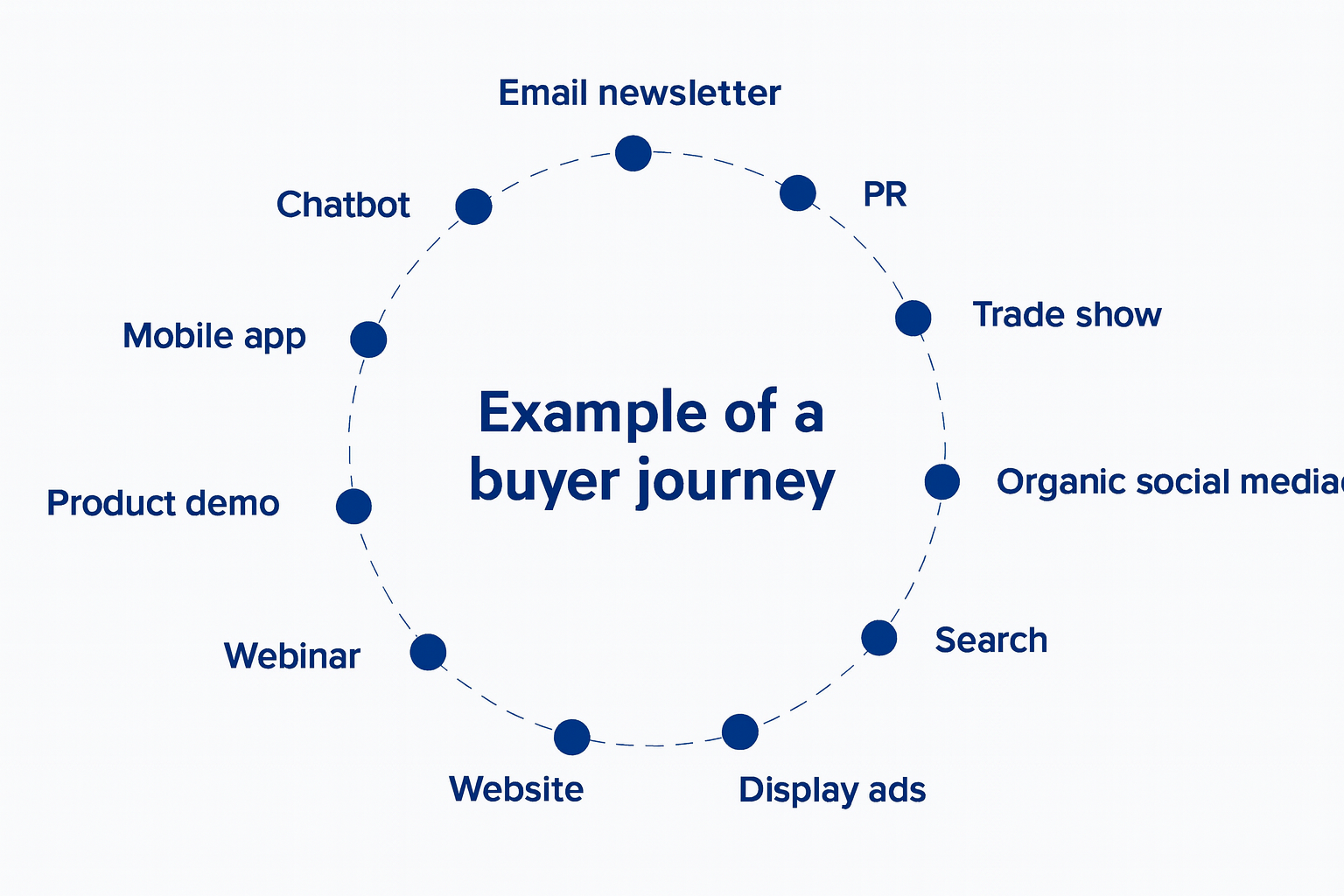
Performance marketing for B2B tech, therefore, has two main goals:
- Demand generation is about seeding awareness: bringing attention to pain points and solutions for those pain points long before a buyer begins searching. Here, high-value content like webinars, research reports, thought leadership pieces work far better than direct offers. This stage expands your reach and fills the top of your funnel.
- Demand capture, on the other hand, focuses on active intent. It targets those already researching solutions, either through prospecting new visitors or retargeting previous ones who’ve shown interest via site visits, content downloads, or webinar attendance (thanks to your Demand Gen work).
Leverage the existing content you have from organic content marketing activities for performance marketing activities. In fact, you can even run ad campaigns to your organic content to boost its visibility.
Top 3 B2B content marketing ideas to inspire you
1. Ahrefs
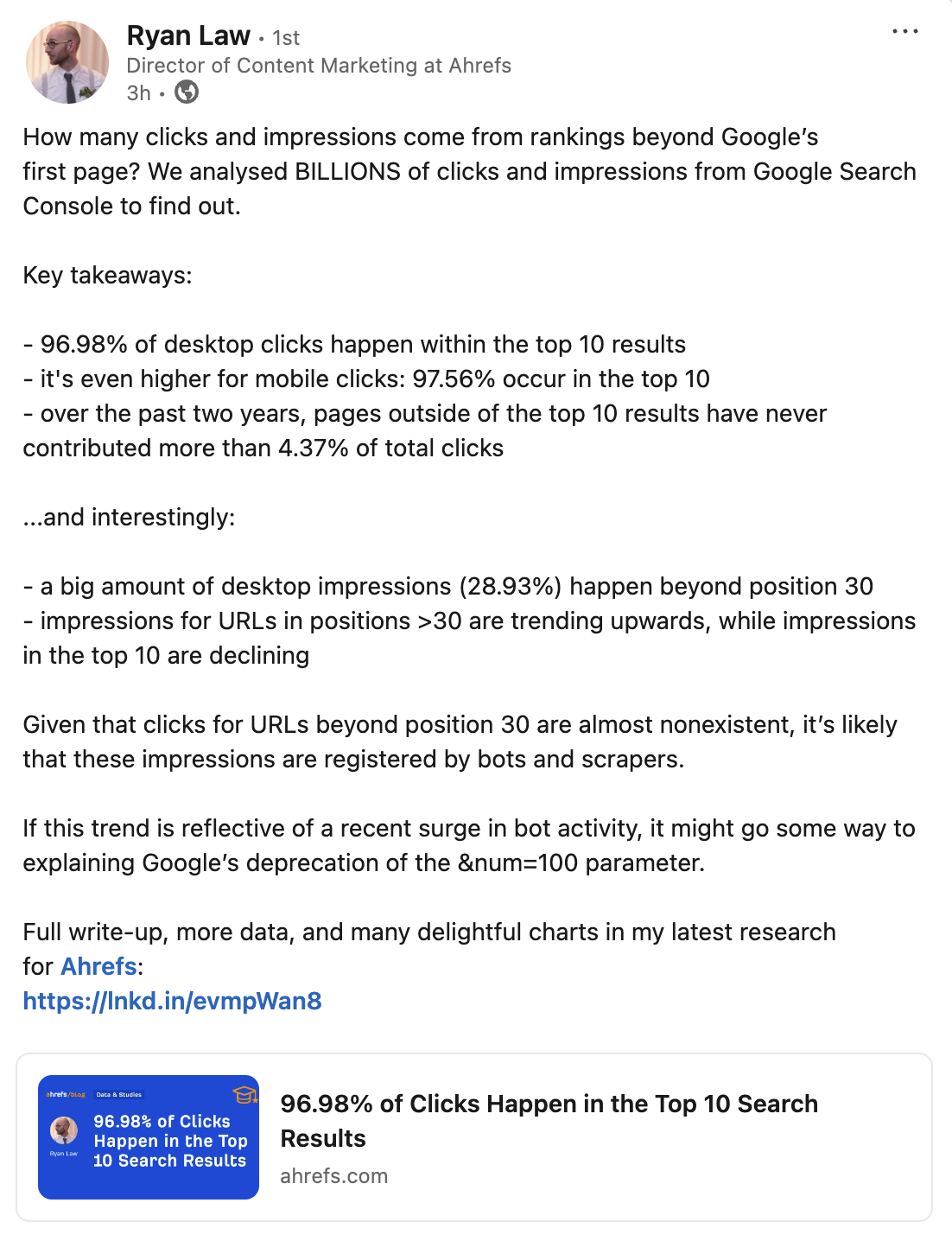
Ahrefs is THE authority on content marketing. They publish world-class data-backed pieces that position them as the true thought leader in the industry.
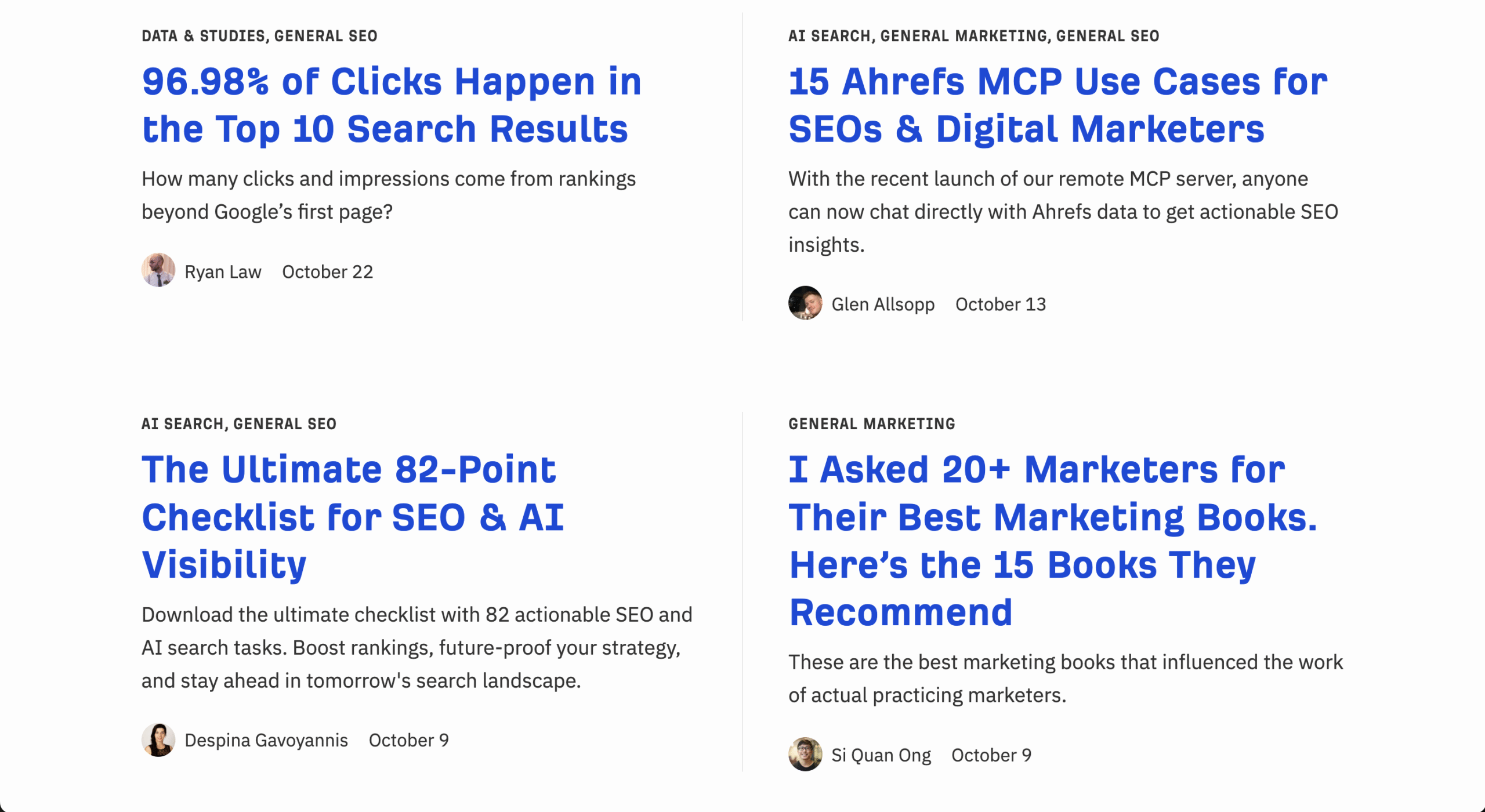
Here’s why Ahrefs wins:
- They follow the Knowledge-Narrative approach (mixing SEO-driven content that brings in consistent traffic with thought leadership pieces that positions themselves as the true leader in the field).
- 100% in-house production, written by experts in content marketing
- Tactical, search-optimized tutorials with advanced use cases
- Every article is tied to a pain point their product solves
- Their writers are really active on LinkedIn, continuously engaging and sharing their articles and ideas, which earns extra attention to the website. Stuff like this:
2. Wise
Wise is a cross-border payments platform in the fintech space, best known for offering fast, low-cost international money transfers. It’s used by individuals and businesses alike to send and receive money globally, often as an alternative to traditional banks.
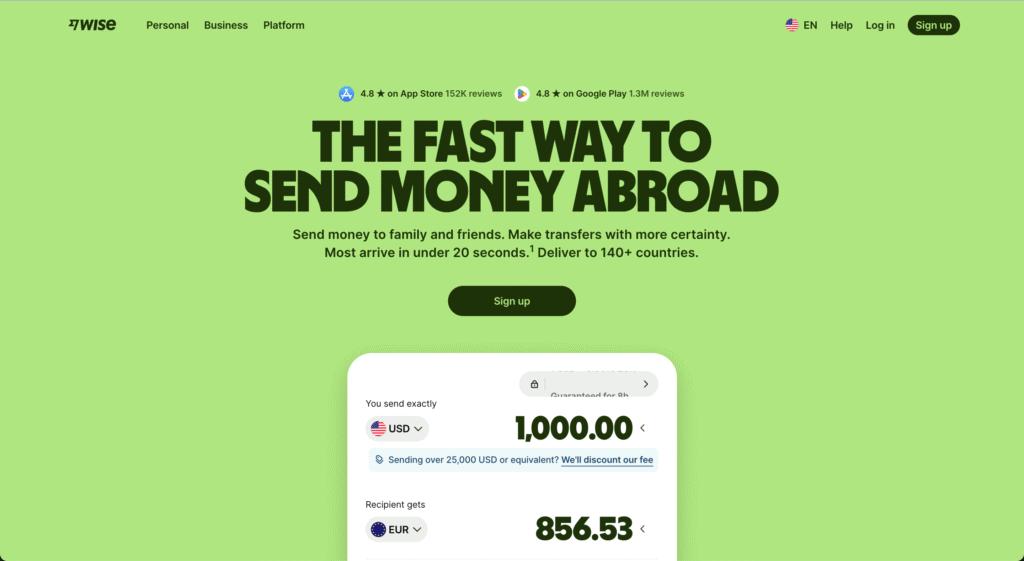
Wise has a really fascinating B2B content marketing strategy: they publish helpful articles that explain how to open or close accounts with their competitors.
Here are a few real examples from their blog:
- How to close your UBank account?
- How to open a bank account with Westpac?
- How to open a Chase bank account?
Why does this work? Let’s take a closer look at the psychology here. Someone Googling “how to close a UBank account” is likely done with UBank. They’re actively searching for a change, perhaps even evaluating alternatives. That puts them at the bottom of the funnel, primed to switch.
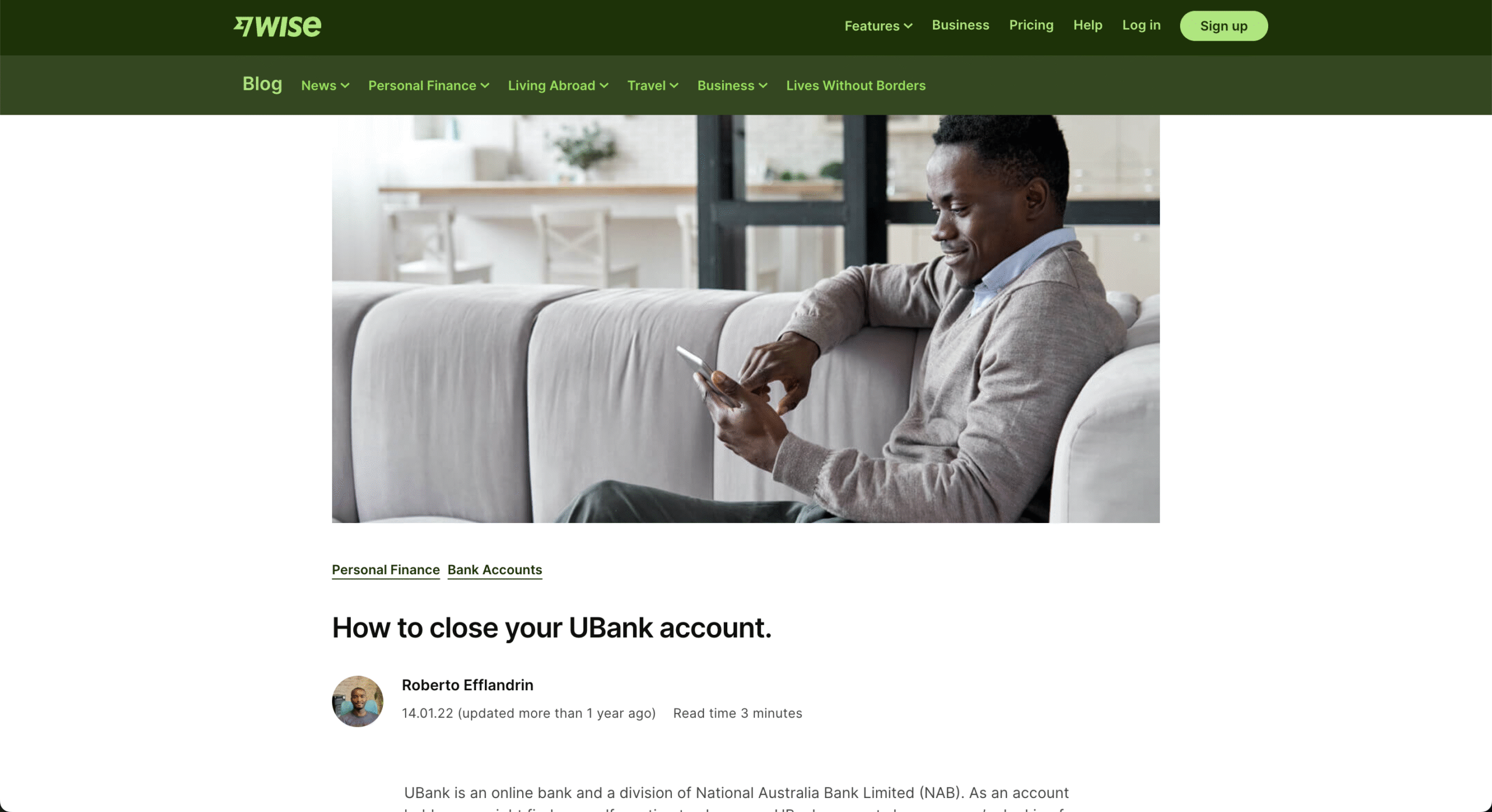
By creating content around this intent, Wise does two things at once:
- Owns the search intent: Instead of letting competitors or third-party forums rank for those terms, they capture the traffic directly.
- Inserts themselves into the conversation: Without being pushy, Wise gets to say, “Here’s how to close that account, and by the way, here’s what we offer.” It’s educational first, persuasive second.
Even when someone is looking to open an account with a competing bank, if they’re reading that guide on Wise’s site, Wise controls the environment and narrative.
3. Gong
Gong has mastered content marketing with a well-balanced mix of formats and topics. Each piece of content is also carefully tailored to resonate with distinct audience segments.
For example, as you arrive at the Gong Revenue AI blog, you can choose to read blogs by Blog Type, Role/Persona, and Topic.
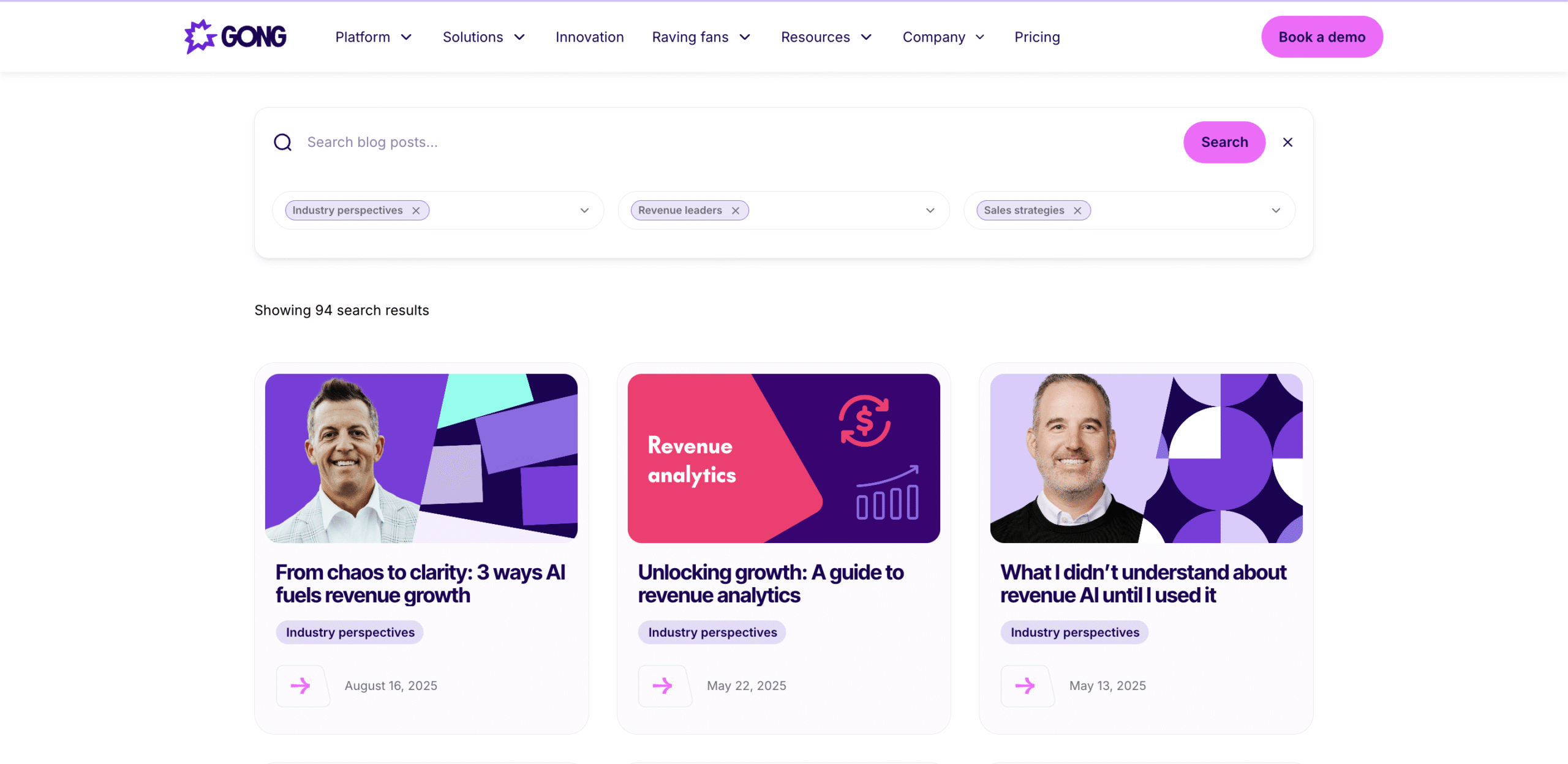
Gong also covers a wide range of B2B content formats, from reports, content with proprietary data, SME-led expert insights, and SEO-driven content. They definitely know how to turn content into their competitive advantage.
Conclusion
B2B content marketing is ultimately all about earning trust from intelligent, skeptical buyers who don’t make decisions lightly. The strategies that work in B2B tech are the ones that respect how people consume content:
- Content that solves real problems.
- Social strategies built on human connection and technical credibility.
- Performance marketing that builds up on thought leadership.
- Newsletters that build habits.
- Communities that foster collaboration
Of course, each niche of B2B requires a slightly different approach, but the general principles stay the same. My personal principles when doing B2B marketing, no matter what industry, is:
- Give them value first, and as much as possible
- Be original
- Showcase your expertise
If you’ve read so far, thank you! I hope that you’ve gained new insights from this article. If you find it helpful, don’t forget to share it to a wider audience.
See you in the next awesome article. Much love, peace out, and cheers to better B2B content marketing!