
A lot of teams are quietly panicking about their content strategy. They’re doubting whether content still works at all. The sentiment sounds familiar:
“Content was doing way worse than last year.”
“Even our LinkedIn numbers are flatlining.”
And of course, they’re not alone. The world is going through a hectic time:
- SERPs are drowning in AI-generated content
- Google’s algorithms seem to be really biased towards big brands like Reddit or Forbes
- AI Overviews are gobbling up all the clicks from informational queries
- Google removes the num=100 leading to loss of keyword visibility for 77% of sites
However, most are only reaching for surface-level fixes: a punchier hook here, a new format there, maybe a lead magnet or some gated fluff to squeeze out more leads.
But none of it’s working, because the game has changed at the root.
In this article, I’m going to unpack why your content isn’t landing anymore. And what to do instead before you burn more hours chasing engagement that isn’t coming back.
- Turn your LinkedIn™ content into qualified leads: My team and I craft a tailored content strategy, rebrand your profile, and build a signature visual identity that makes you stand out. We’ll translate your expertise into infographics and thought-leadership posts—and help you land both inbound and outbound leads.
- Book a 1-hour power session with me (60% OFF your first call): Limited 1:1 advisory sessions to solve your marketing and content strategy questions fast. Past clients say: “No time wasted. Full value. Expertise I haven’t seen elsewhere.” “Helped me rethink my business model and refine my offer. 200% satisfied.”
The history of content marketing
To understand what has genuinely happened with content marketing, let’s take a few steps back and look at the fascinating journey of this field.
1. Pre-ChatGPT era: The easy growth road
I call the period Pre-ChatGPT, which was somewhere before 2022.
Content marketing back then was built around manual processes, large content teams, and SEO-first thinking. Brands invested heavily in writers, editors, and strategists to research keywords, map buyer journeys, and craft long-form blog posts, whitepapers, case studies, and email sequences by hand.
Content ops back then look like this:
- Production cycle: Weeks to ship even one quality asset
- Content types: Blog articles, gated PDFs, pillar pages
- Channel focus: Mostly organic search and email; some social
- Limitations: Scaling content for multiple personas, verticals, or languages was slow and expensive
- Typical team structure: Head of Content + writers + SEOs + external freelancers
It was all about consistency and quality, but output was constrained by human bandwidth. Only a few teams could afford true personalization at scale or full-funnel orchestration.
2. 2023 – 2024: The golden age of AI content
With ChatGPT’s release (and the broader wave of generative AI), content marketing fundamentally shifted.
The bottleneck moved from “who will write this?” to “what should we write, and where does it go?”
ChatGPT was literally the new cool kid in town.
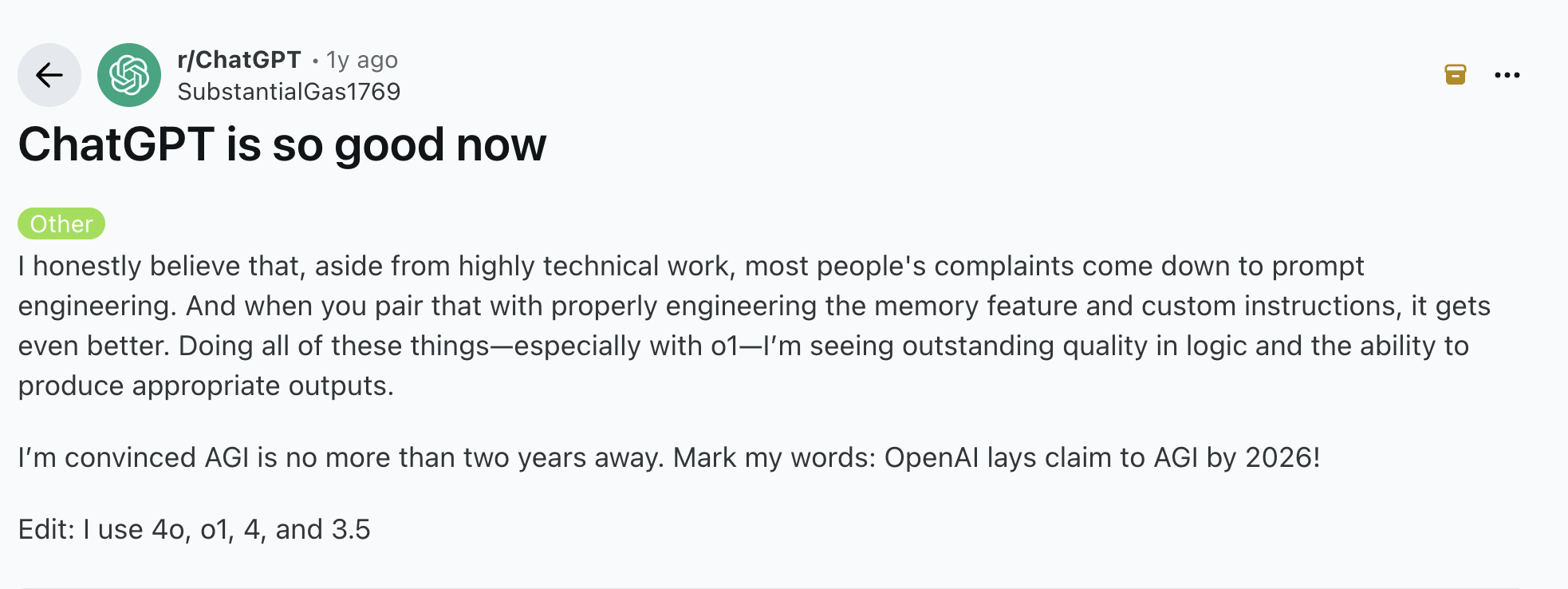
We see a wave of AI content flooding the Internet:
- Acceleration: Blog drafts, outlines, email copy, product descriptions previously taking hours can now be done in minutes
- Democratization: Even non-marketers (PMs, SEs, founders) can generate solid content
- Explosion of quantity: AI-generated SEO content floods the web
- New bottlenecks: Strategy, editorial filtering, differentiation
- Rise of atomic content: AI enables modular writing: snippets tailored to persona, stage, or channel
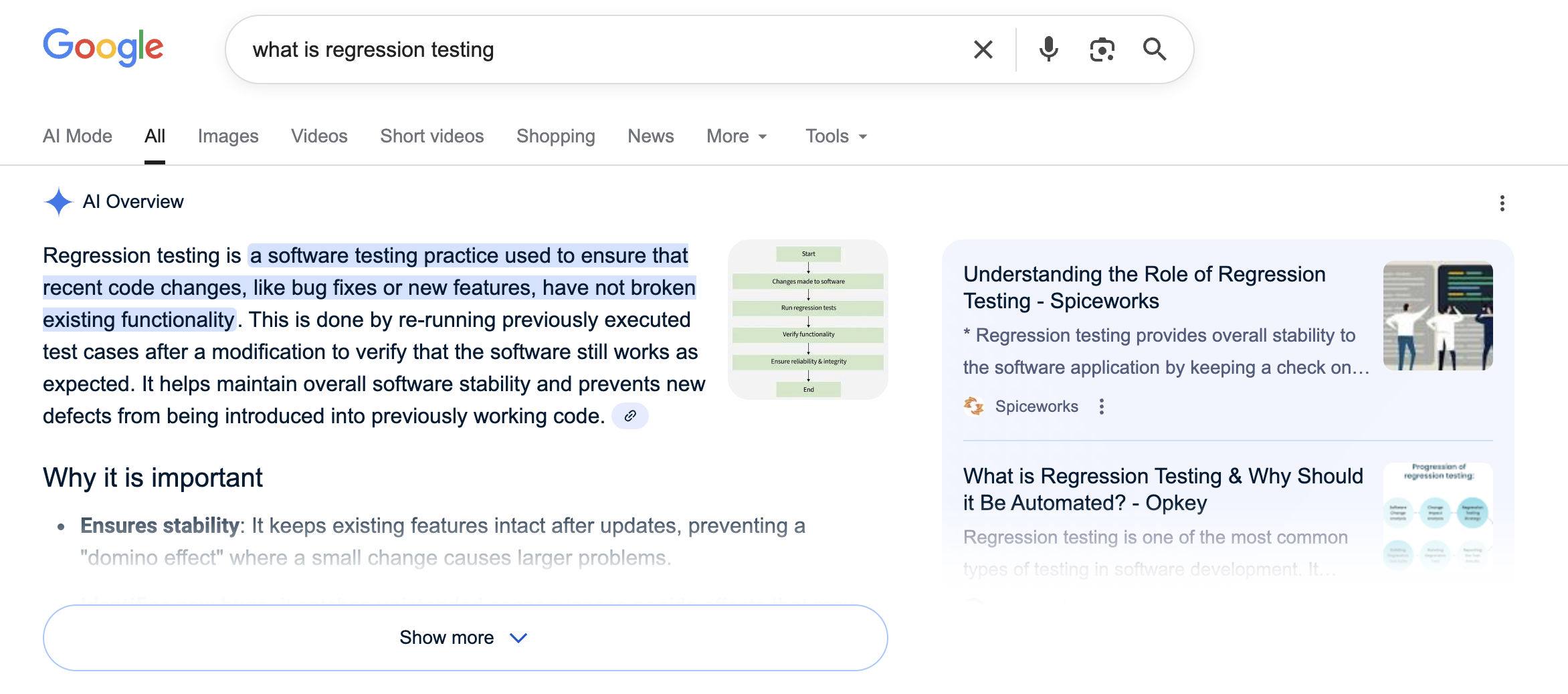
Most importantly, a lot of educational and informational queries have been satisfied by AI Overviews. That means the traditional approach to educational content marketing is pretty much dead:
But that comes with a great opportunity that content teams are only starting to realize
3. 2025 – 2030?: The new era of B2B content (red ocean)
Content marketing is now a red ocean.
Basically a Red Ocean is a saturated, hyper-competitive market where multiple players fight over the same demand. The term comes from Red Ocean Strategy (by Kim & Mauborgne), where “red” symbolizes the metaphorical blood in the water caused by intense competition.
Content marketing today lives in a red ocean because:
- Rising competition: More companies and creators are publishing content than ever, but human attention hasn’t grown. The fight for relevance keeps getting tighter.
- AI fatigue: Audiences are growing weary of AI-generated content. They can recognize it instantly, and it’s making them less inclined to engage with content at all.
- Framework saturation: Everyone (myself included) has shared endless frameworks over the last few years. It’s led to a kind of content overdose.
That’s why you need to shift to a blue ocean: untapped markets and uncontested opportunities where you render competition irrelevant by creating new demand. In other words:
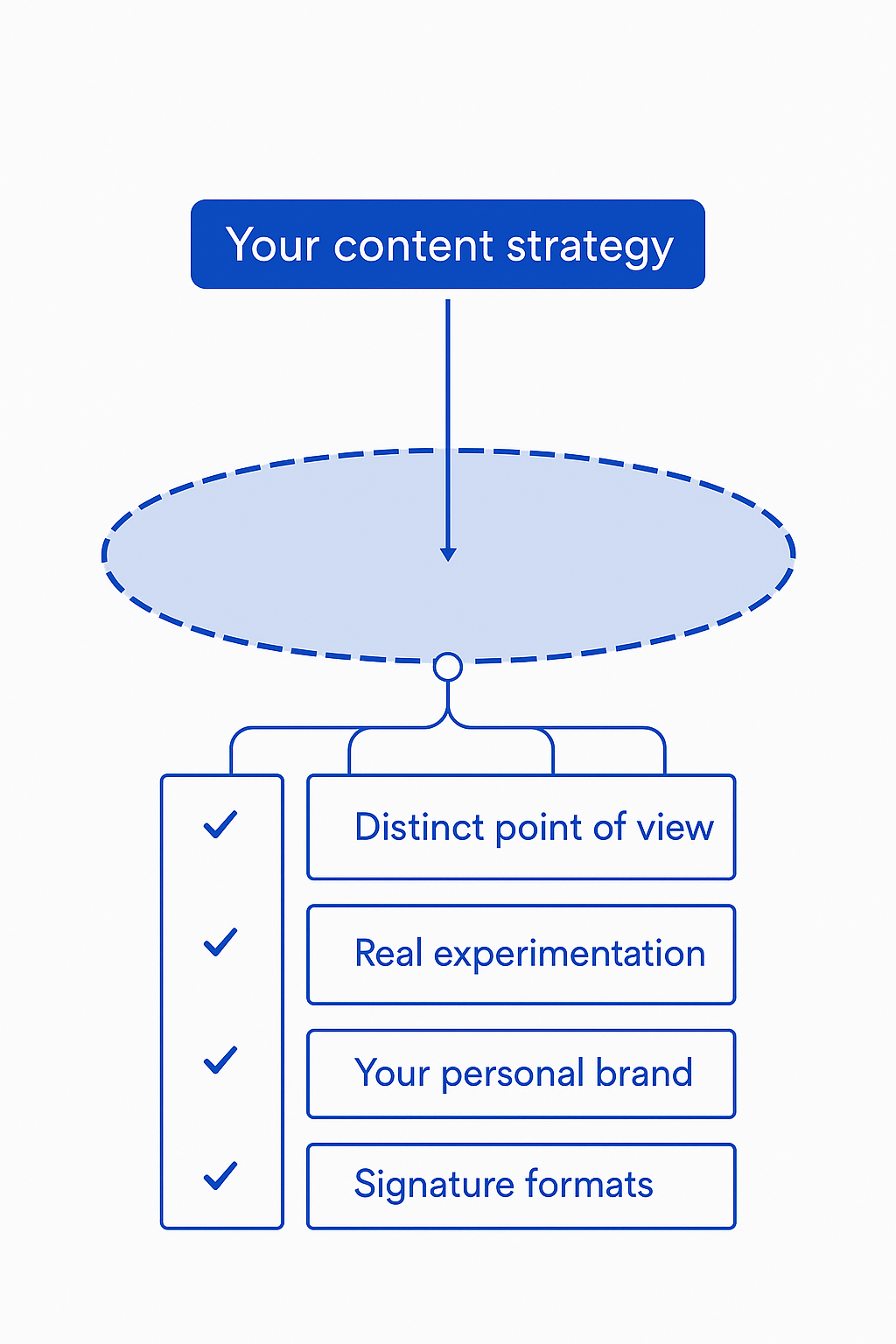
If content is easy to produce, then your strategy needs to be impossible to replicate.
Here’s how your content strategy should look like:
So, it’s time to get brutally honest: are you actually contributing value, or just adding to the noise?
Before you can fix your content strategy, you need a clear picture of what you’re currently putting out. That means running a no-fluff audit. What’s worth doubling down on? What’s just filler? What needs to go?
To figure that out, start with these four questions:
- Is our content genuinely helping our target audience and ICP?
- Can this content be found anywhere else, or is it uniquely ours?
- Are we putting forward a distinct perspective, or just repeating what everyone else says?
- What channels and formats are actually driving results right now?
My approach to B2B content marketing
Moving forward, I believe that B2B content marketing must be incredibly authentic:
- Share your perspective, because your unique lens is irreplacable
- Base your content on real experience and experimentation
- Build in public. Show the process of how you achieve success, not just the success.
- Let your personality and brand shape how the content feels
- Use durable, high-impact formats like infographics and carousels that perform over time
A recap of how to win in content marketing in 2025 and beyond
| Aspect | Content in 2020–2024 | Content in 2025 and beyond |
|---|---|---|
| Competitive Landscape | Moderate to high competition, but still discoverable. Blue ocean moments were common. | Oversaturated. AI has lowered the barrier, leading to red ocean dynamics where standing out is tough. |
| Key Drivers | Strong copy/design skills gave you an edge. Simple content could still break through. | Everyone has the tools. AI-generated content floods the feed. Attention is harder to earn. |
| Winning Strategy | Educational value distilled into quick, skimmable formats. Speed and clarity won. | Credibility comes from firsthand experience and outcomes. Depth over hacks. |
| Mindset | “I know something → I write about it → people learn.” | “I did something → I break it down → people learn through me.” |
| Still Works |
|
|